
Rivalry between Donald Trump and Ron DeSantis deepens with dueling New Hampshire campaign events
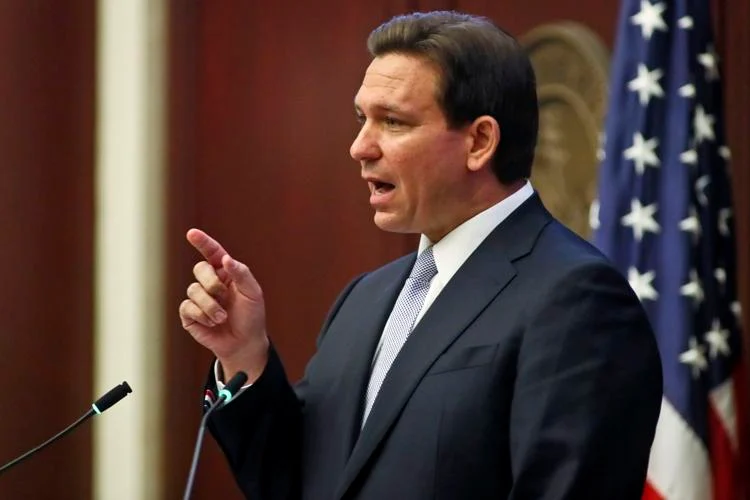
The rivalry between Florida Gov. Ron DeSantis and former President Donald Trump deepened Tuesday as the two leading Republican White House candidates mocked each other during dueling events in the critical early voting state of New Hampshire. Addressing a town hall in Hollis, DeSantis vowed to “actually” build the U.S.-Mexico border wall that Trump tried but failed to complete as president. He also pledged to tear down Washington’s traditional power centers in ways that Trump fell short. Speaking later at a Republican women’s luncheon in Concord, Trump countered that DeSantis was being forced to settle for second place in the primary and accused the governor of supporting cuts to Social Security, Medicare, and other entitlement programs as a way to tame federal spending. Beyond the rhetoric, the conflicting events demonstrated each candidate’s evolving strategy. DeSantis took extensive audience questions — a trademark in New Hampshire politics that he eschewed during his previous visit to the state, drawing criticisms that he was stilted and overly scripted. Trump, meanwhile, offered a free-wheeling speech for more than an hour. He didn’t take questions in Concord, and reporters covering the event were confined to a pen, chaperoned to the bathroom, and told they could not speak to attendees in the conference center ballroom or even in the hallways. But the former president answered questions at a subsequent stop in Manchester, where he opened his New Hampshire campaign office. DeSantis, asked about people who had twice voted for Trump because of his promises to “drain the swamp” in Washington, used his answer to draw some of his sharpest contrasts yet with the former president. “He didn’t drain it. It’s worse today than it’s ever been,” DeSantis said. He added that such promises don’t go far enough because a subsequent president “can just refill it.” “I want to break the swamp,” DeSantis said, pledging to take power out of Washington by instructing Cabinet agencies to halve the number of employees there. DeSantis has tried to gain ground on Trump by questioning the former president’s continued hold on the national Republican party. At his town hall, the governor slammed the GOP’s “culture of losing” under Trump and mentioned the “massive red wave” that many in the GOP predicted but that never materialized nationally in last year’s midterm elections. “We had a red wave in Florida,” DeSantis said, noting he easily won reelection last fall. “But that’s because we delivered results in Florida.” Many leading Republicans remain fiercely loyal to Trump, but there is some evidence that the attacks against the former president are resonating. Speaking about Trump on Tuesday, House Speaker Kevin McCarthy, a California Republican, said, “Can he win that election? Yeah, he can win that election.” “The question is, is he the strongest to win the election?” McCarthy continued on CNBC’s “Squawk Box.” “I don’t know that answer.” He clarified later in the day to the conservative news outlet Breitbart that Trump “is stronger today than he was in 2016.” In his own speech, Trump noted that polls show him with large primary leads. He seized on DeSantis saying that, while Social Security and other programs need to be guaranteed for older adults, there may be work “in a bipartisan way to figure out how do you strengthen this” when it comes to younger people. “You can bet he’ll be doing it later,” Trump said of cuts to the programs. “And he’ll be doing it to you.” Trump also vowed to “drain the swamp once and for all” but used the slogan more to criticize President Joe Biden than the Florida governor. “You can’t drain the swamp if you’re part of the swamp, and Joe Biden and other opponents, many of them, are all owned, controlled, bought and paid for, 100%,” Trump said. The former president also largely echoed DeSantis’ sentiments in promising that “this election will be the end of the world for the corrupt political class in our nation’s capital.” DeSantis was also asked about the pro-Trump mob that overran the U.S. Capitol in January 2021, and responded, “If it’s about relitigating things that happened two or three years ago, we’re going to lose.” “I had nothing to do with what happened that day. Obviously, I didn’t enjoy seeing it,” DeSantis said. “But we’ve got to go forward on this stuff. We cannot be looking backwards.” That, too, clashed with Trump, who repeated baseless claims Tuesday that he was denied a second term by election fraud. Numerous federal and local officials, a long list of courts, top former campaign staffers, and even Trump’s own attorney general have all said there is no evidence of the fraud he alleges. The candidates’ simultaneous visits highlighted the role that New Hampshire, the first-in-the-nation GOP primary state, will play in deciding the next Republican presidential nominee. Much of the focus of the early primary has been on Iowa and South Carolina, where evangelical Christians are dominant. Spending time in New Hampshire, by contrast, gives the candidates were testing their messages in front of a more libertarian-leaning electorate. Trump’s first-place finish in New Hampshire’s 2016 Republican primary, after losing Iowa to Texas Sen. Ted Cruz, helped propel him to party dominance. But his Democratic rivals won the state in the 2016 and 2020 general elections. Before his speech Tuesday, Trump announced that his New Hampshire team features 150-plus dedicated activists and organizers throughout the state’s 10 counties. Sabrina Antle, from the town of Henniker, said she couldn’t afford to attend the Concord lunch. She and her 9-year-old daughter tried to see the former president later in Manchester, but that event reached capacity before they got in. “I’m a Trumper, but I wouldn’t be upset with Ron DeSantis because I think he’d do a stand-up job,” Antle said. “I just don’t know if he has the attitude Trump has, just the assertiveness.” DeSantis’ campaign angered some members of the New Hampshire Federation of Republican Women by scheduling his town hall around the same time Trump was addressing the group’s luncheon. It called DeSantis’ event “an attempt to steal focus from” its
Katie Britt and colleagues introduce legislation to combat fentanyl and illegal immigration
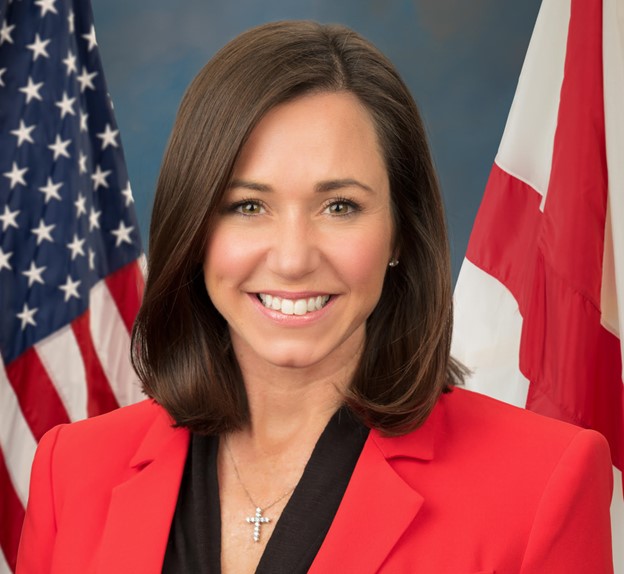
U.S. Senator Katie Britt joined colleagues to introduce the FEND Off Fentanyl Act and the Stop Dangerous Sanctuary Cities Act. The Fentanyl Eradication and Narcotics Deterrence (FEND) Off Fentanyl Act is a bipartisan bill designed to target the flow of the deadly narcotic into the United States by empowering the U.S. Department of the Treasury to target, sanction, and block the financial assets of transnational criminal organizations trafficking fentanyl. In addition, the proceeds from any seized assets would be used to further law enforcement efforts. “The people who are truly profiting from trafficking fentanyl, from the precursor producers in China to the ruthless cartels in Mexico, are well-financed, well-organized, and well-connected,” said Senator Britt. “Giving the Treasury Department the tools to impose meaningful penalties will help ensure that we can curb the deadly flow of fentanyl into our country and work to end the devastation that this poison has brought to our communities, schools, and families.” Fentanyl is now the leading cause of death for Americans under the age of 45, and more than 150 people die each day from overdoses related to fentanyl. This bill is led by Sen. Sherrod Brown (D-Ohio). “I hear over and over from Ohioans that we need new, more powerful tools to prevent the flow of these drugs to our communities,” said Brown. “Our bipartisan bill targets these drugs at the source. We are going after the illicit fentanyl supply chain, from China through Mexico, to help stop increasingly dangerous forms of this drug before they ever reach our communities.” The Stop Dangerous Sanctuary Cities Act will empower local law enforcement and ensure they can work with federal authorities to enforce existing immigration laws. This bill would also pull taxpayer-funded grants from municipalities that adopt “sanctuary cities” policies which forbid their police departments from cooperating with federal authorities in immigrant enforcement actions. “Ensuring that our citizens can live the American Dream regardless of their zip code starts with public safety,” Sen. Britt stated. “At a time when our nation is facing an unprecedented crisis at our southern border, we can’t have municipalities picking and choosing what laws they want to follow. I’m proud to support Senator Cruz’s effort to stop the dangerous policies of sanctuary cities and put power back into the hands of law enforcement.” The legislation is led by Sen. Ted Cruz (R-Texas). “So-called ‘sanctuary cities’ refuse to enforce the laws on the books and release violent criminals in our country illegally—including rapists and murders—who go on to prey on both American citizens and the immigrant community,” Sen. Cruz said. “Moreover, many of these sanctuary jurisdictions actively prevent state and local law enforcement from coordinating with their federal counterparts. They release murderers, rapists, and burglars who end up preying on the community. That is wrong. The American people, and Texas communities in particular, are tired of seeing our laws flouted and the crime that often accompanies illegal immigration. These jurisdictions need to be held accountable, and I will do everything I can to enforce our immigration laws.” Sen. Tommy Tuberville is also one of the co-sponsors. Senator Britt has made three visits to the border since being sworn into office in January. To connect with the author of this story or to comment, email brandonmreporter@gmail.com.
Katie Britt and colleagues introduce the Back the Blue Act

On Monday. U.S. Senator Katie Britt joined U.S. Senator John Cornyn, U.S. Senator Tommy Tuberville, and 37 Republican colleagues to introduce the Back the Blue Act. The announcement coincided with the annual observance of Peace Officers Memorial Day and National Police Week. This legislation will strengthen existing laws that protect police officers, increase the criminal penalties for individuals who target law enforcement, and expand the tools that police can use to protect themselves. “Today, we honor the courageous law enforcement officers who have valiantly made the ultimate sacrifice,” Sen. Britt said. “Every single day, the brave men and women of law enforcement go above and beyond to serve and protect our communities. It is essential that we not only support our police, but we respect the rule of law in our country. I’m proud to join Senator Cornyn and my colleagues in introducing the Back the Blue Act, and I will always stand with our police officers in Alabama and across the country.” “The Back the Blue Act adds stiff, mandatory penalties and makes it a federal crime to kill – or attempt to kill – a law enforcement officer, a federal judge, or a federally funded public safety officer,” Sen. Cornyn said. “We must make it absolutely clear that violence against them will not be tolerated. In honor of National Police Week, we honor the brave men and women who protect us, we pay tribute to those who made the ultimate sacrifice, and we commit to doing everything in our power to ensure that they have all the resources they need to keep our people safe.” “Today marks the start of National Police Week,” Sen. Tuberville said on Twitter. “America’s brave men and women in blue wake up every day prepared to sacrifice their own safety in service to their fellow Americans. It is more important than ever that we show our support. To all who protect and serve, thank you.” In addition to Senators Britt, Tuberville, and Cornyn, this legislation is cosponsored by Senate Minority Leader Mitch McConnell (R-Kentucky), Senate Judiciary Committee Ranking Member Lindsey Graham (R-South Carolina), and Senators Ted Cruz, Thom Tillis, Rick Scott, Jerry Moran, Mike Braun, Kevin Cramer, Marsha Blackburn, John Boozman, Deb Fischer, Shelley Moore Capito, Mike Crapo, Marco Rubio, Jim Risch, Pete Ricketts, Steve Daines, John Barrasso, James Lankford, Cindy Hyde-Smith, John Kennedy, Tom Cotton, John Thune, John Hoeven, Ted Budd, Josh Hawley, Tim Scott, Bill Hagerty, Roger Marshall, Bill Cassidy, Joni Ernst, Chuck Grassley, Todd Young, Eric Schmitt, Cynthia Lummis, and Roger Wicker. The Back the Blue Act has been introduced in Congress multiple times since 2017. Senator Britt is also a cosponsor of Senator Braun’s Thin Blue Line Act, which expands the list of statutory aggravating factors in capital punishment determinations to also include killing or targeting a law enforcement officer, firefighter, or other first responders. To connect with the author of this story or to comment, email brandonmreporter@gmail.com
Tommy Tuberville and GOP Colleagues urge Joe Biden to negotiate on debt limit
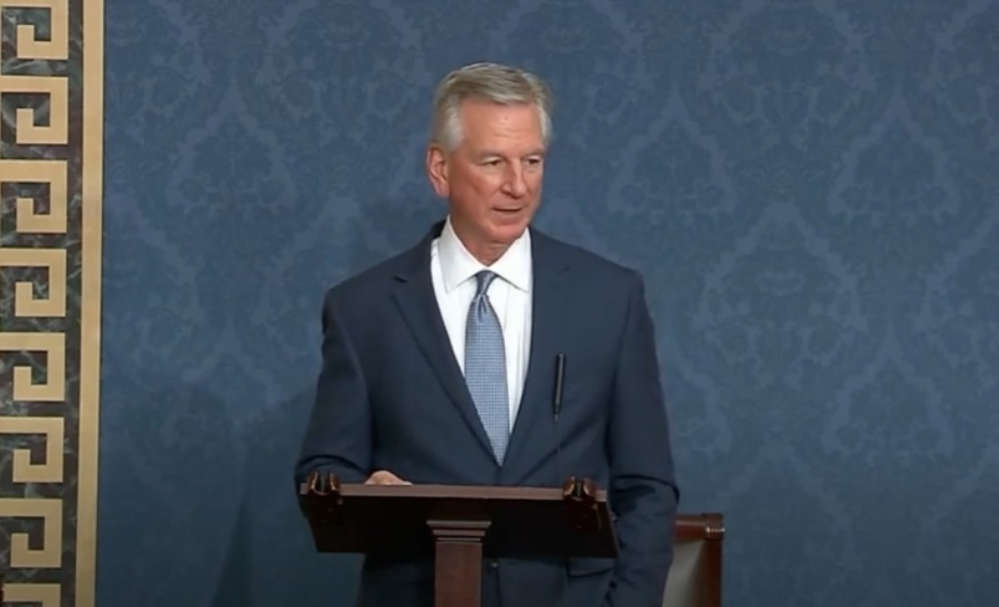
U.S. Senators Tommy Tuberville and Katie Britt joined U.S. Senator Mike Lee and dozens of Republican colleagues in calling for fiscal responsibility and spending control measures in debt ceiling negotiations. Tuberville joined a GOP letter to Majority Leader Chuck Schumer declaring broad Republican opposition to any debt ceiling legislation that lacks significant spending control measures. “It is now clear that Senate Republicans aren’t going to bail out Biden and Schumer. They have to negotiate,” said Sen. Lee. “I thank my colleagues for joining my effort to emphasize this point in the clearest possible terms.” “The Senate Republican conference is united behind the House Republican conference in support of spending cuts and structural budget reform as a starting point for negotiations on the debt ceiling,” wrote the senators. “This trajectory must be addressed with fiscal reforms.” The letter emphasizes the GOP senators’ united front with the House Republican conference, advocating for spending cuts and structural budget reforms as prerequisites for any negotiation on raising the debt ceiling. “Dear Leader Schumer, The Senate Republican Conference is united behind the House Republican Conference in support of spending cuts and structural budget reform as a starting point for negotiations on the debt ceiling. Our economy is in free fall due to unsustainable fiscal policies. This trajectory must be addressed with fiscal reforms. Moreover, recent Treasury projections have reinforced the urgency of addressing the debt ceiling. The House has taken a responsible first step in coming to the table with their proposals. It is imperative that the president now do the same. As such, we will not be voting for cloture on any bill that raises the debt ceiling without substantive spending and budget reforms,” the Senators wrote. Senators Tuberville, Britt, and Lee, current signatories include U.S. Senators Marsha Blackburn, Ted Cruz, Mike Crapo, Ted Budd, Mike Braun, James Lankford, Cynthia Lummis, Roger Marshall, M.D., Ron Johnson, James Risch, Eric Schmitt, Rick Scott, John Cornyn, Kevin Cramer, Markwayne Mullin, Roger Wicker, Steve Daines, Lindsey Graham, John Barrasso, Deb Fischer, Tim Scott, John Hoeven, Thom Tillis, and J.D. Vance. The debt limit — commonly called the ‘debt ceiling’ — is the highest amount the government can borrow under federal law. The federal government hit the debt limit in January 2023. Since then, the U.S. Treasury has employed ‘extraordinary measures’ to continue making payments on debt and new expenses. According to the U.S. Treasury, the United States is on track to exhaust those measures and run out of financial liquidity in a matter of weeks, meaning the federal government would no longer be able to make all of its payments. The debt is continuing to rise. The debt ceiling will have to be increased in the coming weeks. Democrats have advocated for an increase in the amount of money the federal government is allowed to borrow without any reduction in federal spending. Republicans say they will not support any debt ceiling increase without significant reductions in spending. President Biden has repeatedly refused to negotiate a debt ceiling deal with Republicans even though the GOP controls the U.S. House of Representatives. The House Republicans passed the Limit, Save, Grow Act of 2023 — a debt ceiling increase paired with spending cuts — on April 26, 2023. In Fiscal Year 2022, federal tax revenue hit a record high of $4.9 trillion. However, in the same year, the federal government had a deficit of more than $1.38 trillion even though the country is not at war and the economy is at full employment. To connect with the author of this story or to comment, email brandonmreporter@gmail.com.
Katie Britt cosponsors legislation to protect Supreme Court Justices
On Monday, U.S. Senator Katie Britt joined Senator Marsha Blackburn and a group of nine additional Republican senators in introducing the Protect Our Supreme Court Justices Act, a bill to further protect Supreme Court Justices from intimidation and threats of violence. The legislation is partially in response to threats and intimidation that the Justices received following the leaking of the Dobbs versus Jackson Women’s Health Organization decision overturning the controversial Roe versus Wade decision. “Protesters attempting to influence judicial decisions through harassment, intimidation, or violence outside the homes of Justices and judges need to be held accountable to the fullest extent of the law,” Sen. Britt stated. “The rule of law cannot be replaced with mob rule in the United States. The integrity and effectiveness of our judicial system hinges on the ability of judges to impartially interpret the law and rule on the legal merits of cases without fearing retribution to themselves or their families. I’m proud to co-sponsor the Protecting Our Supreme Court Justices Act to ensure we have a strong deterrent that can keep our Justices, judges, and their families safe while safeguarding the rule of law.” “As we saw last summer, the woke liberal mob will go to great lengths to target those they disagree with – even illegally intimidating Supreme Court Justices at their private residences,” said Sen. Blackburn. “It’s extremely concerning that none of these protesters have been arrested for breaking the law, and the DOJ has not issued any guidance on enforcing this statute. The Protecting Our Supreme Court Justices Act will deter intimidation of our Justices and send a message that the Biden administration has refused to send: Justices must be allowed to do their jobs without fearing for the safety of themselves or their families.” The legislation will raise the maximum term of imprisonment for individuals who attempt to unlawfully influence the decision-making of a federal judge from one year to five years, creating a stronger deterrent amid increased threats against the Court. Senators Britt and Blackburn were joined by Sens. Tom Cotton (R-Ark.), John Cornyn (R-Texas), Ted Cruz (R-Texas), Bill Hagerty (R-Tennessee), Josh Hawley (R-Missouri), Marco Rubio (R-Florida), Cindy Hyde-Smith (R-Mississippi), Roger Wicker (R-Mississippi), and John Boozman (R-Arkansas) in introducing the bill. “Conservative Supreme Court justices are facing increasing protests from far-left extremists trying to intimidate or punish the justices for their decisions,” said Sen. Cotton. “This legislation will help protect all Supreme Court justices from threats of violence so they can do their jobs as impartial interpreters of the law.” “Justices must be able to rule without fear of retribution or intimidation, and the politicization of our judicial branch is unacceptable and downright dangerous,” said Sen. Cornyn. “By increasing the maximum term of imprisonment for those attempting to influence judicial decision making, we can ensure Supreme Court justices can operate with impartiality and uphold the Constitution without worrying about their safety or that of their family.” “I’ve been a passionate proponent of protecting our Supreme Court justices and their families from the coordinated campaign of harassment and intimidation following the Dobbs decision last year,” said Sen. Cruz. “Not a single one of those protestors have been prosecuted because President Biden’s attorney general disagrees with the Dobbs decision. I’m proud to join Sen. Blackburn and my colleagues in working to expand the consequences of breaking the law and trying to intimidate Supreme Court justices.” “Protesting at the homes of Supreme Court justices and their families is an unlawful and dangerous intimidation tactic, as we’ve witnessed over the last year,” said Sen. Hagerty. “I’m pleased to join Senator Blackburn in working to stop this indefensible conduct.” “The Biden administration has weaponized the judicial system for two years already,” said Sen. Hawley. “Making matters worse, when Republican-appointed Justices are under attack, this Department of Justice won’t defend them. It’s time for Congress to step into the breach.” “Last summer, in an attempt to intimidate U.S. Supreme Court Justices from doing their job, progressive activists protested outside of their homes,” said Sen. Rubio. “We must ensure that Justices are able to carry out their duties without fear for their safety or that of their families. The Protecting Our Supreme Court Justices Act is a necessary step to deter intimidation and ensure that those who seek to influence the decision-making process of our Justices face the full force of the law.” “There is no other way to view the threats and protests we’ve witnessed recently against Supreme Court justices and other federal jurists as anything other than attempts to influence their decisions through fear and intimidation,” said Sen. Hyde-Smith. “This legislation should not be needed to protect the judiciary, but it is. Enacting this bill will make it crystal clear to everyone that these threatening activities are illegal and will be punished.” “Supreme Court justices should be able to carry out their duties without fear of intimidation,” said Sen. Wicker. “This legislation would help ensure their safety and protect our highest court.” “Intimidating members of the judicial branch into ruling a certain way goes against everything our justice system and democracy were founded on,” said Sen. Boozman. “We cannot continue to let this behavior go unchecked or tolerate further targeted acts of violence and harassment. Our legislation prioritizes the safety of Supreme Court justices and their families and ensures accountability for those responsible for adopting such disturbing, lawless tactics.” Federal law already explicitly prohibits protesting at the residence of a judge with the intent of influencing the decision-making process of a judge in a case. The protestors against the Dobbs decision outside of the Justices’ homes could have all been arrested and prosecuted, facing criminal monetary penalties or a maximum of one year of imprisonment, or both. But since they were political allies, the Biden administration ignored the law. The U.S. Department of Justice, under the leadership of Attorney General Merrick Garland, has refused to arrest, charge, or prosecute any individuals who illegally protested outside of the homes of Supreme Court Justices in 2022. The Protecting Our Supreme
Katie Britt and colleagues introduce legislation to require federal agencies to publish their regulatory guidance on the internet
U.S. Senators Katie Britt and Ron Johnson and 14 of their colleagues reintroduced the Guidance Out of Darkness (GOOD) Act, which requires federal agencies to publish their regulatory guidance on the internet in an easily accessible location. Sponsors claim that the GOOD Act will enhance the transparency of guidance documents issued by government agencies, helping all entities — including small businesses, workers, and households — to comply with regulations. The bill was advanced by the Senate Homeland Security and Governmental Affairs Committee by voice vote twice and passed the House in 2018. “Sunlight is often the best disinfectant, and that’s exactly what the Biden Administration’s runaway red tape regime needs,” said Sen. Britt. “Unelected federal bureaucrats should not be taking actions that affect hardworking Americans’ lives without robust transparency and the opportunity to hold them publicly accountable. This is a commonsense measure that my colleagues on both sides of the aisle should support.” “As an advocate for transparency and accountability in government, I am proud to reintroduce the Guidance Out of Darkness Act. This bill reduces the regulatory burden placed on small businesses, workers, and households by holding federal agencies accountable,” stated Sen. Johnson. “Increasing transparency and simplifying the regulatory process will further economic growth for all Americans. I look forward to working with my colleagues to advance this bill and provide the American people with the transparency they deserve.” Senators Britt and Johnson were joined on the legislation by Sens. Mike Braun (R-Indiana), Kevin Cramer (R-North Dakota), Ted Cruz (R-Texas), Joni Ernst (R-Iowa), Lindsey Graham (R-South Carolina), James Lankford (R-Oklahoma), Mike Lee (R-Utah), Cynthia Lummis (R-Wyoming), Rand Paul (R-Kentucky), Rick Scott (R-Florida), Thom Tillis (R-North Carolina), Bill Hagerty (R-Tennessee), Marsha Blackburn (R-Tennessee), and Mitt Romney (R-Utah). “Transparency in government is crucial. That is why I am proud to join Senator Ron Johnson in sponsoring the GOOD Act. People deserve to know just what government agencies are up to, especially when it comes to their hard-earned tax dollars,” said Sen. Scott. “This bill will bring commonsense reform and shed light on how the government operates—which is something we should all support.” “People in Wyoming deserve transparency from the federal government, which is why I’m joining my colleague Senator Ron Johnson in introducing the Guidance Out of Darkness Act,” said Sen. Lummis. “This bill would require federal agencies to post regulations and guidance to the agency website, making it easy for small businesses, workers, and the people of Wyoming to know about the federal regulations that impact their daily lives.” “Unlike other regulatory actions, agency guidance documents are not required to undergo the public notice and comment process. James Madison warned that our laws would be of little use if they can ‘be repealed or revised before they are promulgated, or undergo such incessant changes, that no man who knows what the law is today, can guess what it will be tomorrow,’” said Sen. Lee. “I’m proud to cosponsor Sen. Johnson’s legislation to reduce the regulatory burden placed on small businesses, workers, and American households and increase transparency for all the entities needed to comply.” Navigating through all of the regulations promulgated by federal agencies and keeping up to date with all of the periodic changes to guidance as well as administrative reinterpretations and changes of previous rules can be very difficult for businesses operating in those regulated agencies. Katie Britt is serving in her first term in the U.S. Senate after her election in November. To connect with the author of this story or to comment, email brandonmreporter@gmail.com.
Things to know about Nikki Haley, GOP presidential hopeful
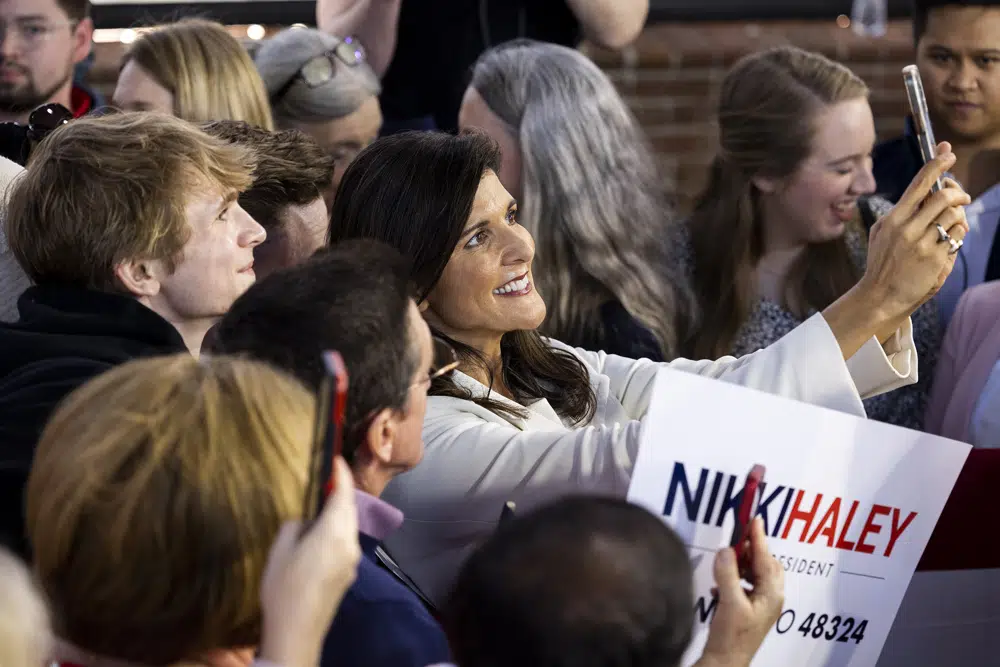
Republican Nikki Haley joined the 2024 race for president this week, becoming the first major rival to former President Donald Trump in a field that is expected to grow in coming months. Here are some things to know about the former South Carolina governor and U.S. ambassador to the United Nations: ‘I WAS DIFFERENT’ Haley, 51, grew up in the small rural community of Bamberg, South Carolina, the daughter of Indian immigrants. Raised in the Sikh faith by a father who wore a turban and a mother who wore a sari, she has described enduring racist taunts and feeling like she didn’t fit in, an experience she says had an impact on her personal and political life. In a video announcing her presidential bid, Haley referenced that past, saying she grew up “not Black, not white — I was different.” She also insisted — as she has in past speeches — that America is not a racist country. “Nothing could be further from the truth,” she said in her formal announcement Wednesday. ___ NOTABLE FIRSTS Before becoming South Carolina governor, Haley was an accountant and served in the state House of Representatives. In her first campaign in 2004, she defeated the state’s longest-serving House member. Three terms later, she made a longshot bid for governor and defeated a field of more veteran politicians to become the first woman and first Indian American to lead South Carolina. At 38, she also was the nation’s youngest governor. Haley is the first woman to be a major candidate for president in 2024, and just the fifth Republican woman this century. ___ ‘DIVISIVE SYMBOL’ Haley’s biggest moment on the national stage as governor came during her second term, when a self-avowed white supremacist who had been pictured holding Confederate flags murdered nine Black parishioners as they gathered for Bible study in a Charleston church. For years before the 2015 killings, Haley had resisted calls to remove the Confederate flag from the Statehouse grounds, even casting a rival’s push for its removal as a desperate stunt. But after the massacre and with the support of other leading Republicans, Haley advocated for legislation to remove the flag. It came down less than a month after the murders. Haley later faced criticism for telling conservative host Glen Beck in a 2019 interview that the Charleston shooter “hijacked” the ideals many connected to the flag, including the “service, and sacrifice, and heritage” it meant to some. After many responded saying that the flag represented treason and racial hatred, Haley said in a statement on Twitter that she stood by her call to remove it. In a 2020 speech to the Republican National Convention that followed weeks of protests alleging racial injustice by police, Haley called the flag a “divisive symbol” that was removed peacefully. ___ HISTORY WITH TRUMP Haley has had a hot-and-cold relationship with Trump, going from harsh critic to ardent supporter and now a 2024 rival. During the 2016 Republican presidential primary, Haley supported Florida Sen. Marco Rubio. She later backed Texas Sen. Ted Cruz. She described Trump as “everything a governor doesn’t want in a president.” But Haley ultimately said she would back the GOP nominee, and shortly after Trump won the presidency, she agreed to serve as the new administration’s ambassador to the United Nations. She was a wholehearted supporter of his 2020 reelection bid. Her most recent reversal: Her decision to seek the presidency after initially saying she wouldn’t challenge Trump if he ran again. Republished with the permission of The Associated Press.
Tommy Tuberville welcomes Nikki Haley to 2024 presidential race
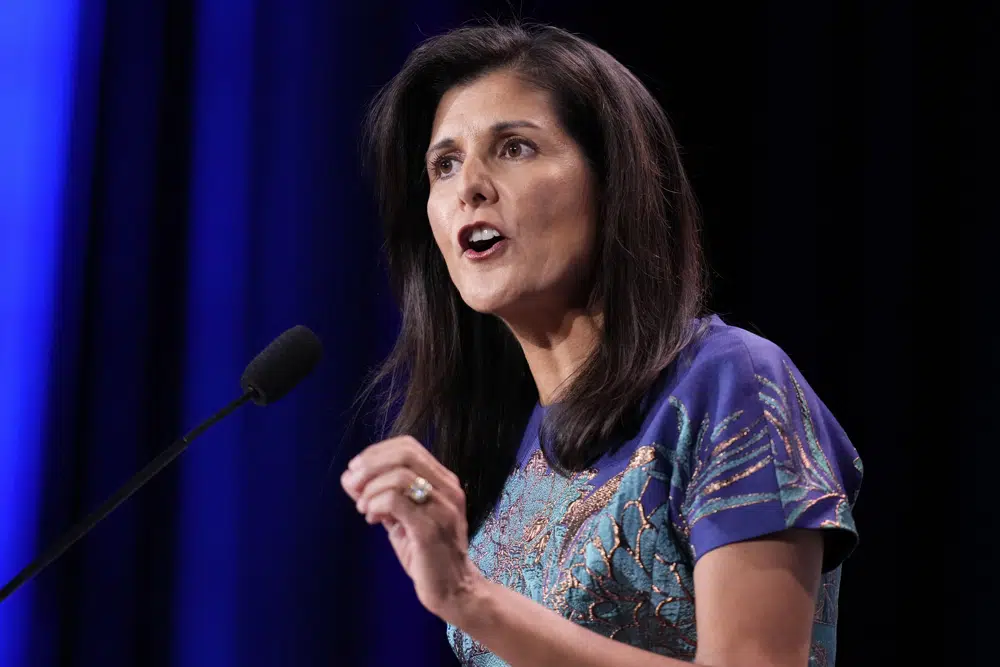
On Monday, former South Carolina Governor and UN ambassador Nikki Haley announced her candidacy for the Republican nomination for President of the United States. U.S. Senator Tommy Tuberville, who has already announced his endorsement of former President Donald Trump, welcomed Haley’s entrance into the 2024 presidential race. Tuberville told reporters that she would be a “great candidate.” Tuberville favors a large GOP primary field and said that he has recently spoken with Trump and told the former President that he hopes “they all get in.” “He needs the challenge as well as anybody,” Tuberville said. “They need to work for it. They need to fight for it.” In the 2020 election, President Trump endorsed Tuberville in his Republican primary battle for U.S. Senate with former Trump Attorney General Sen. Jeff Sessions. Tuberville had spent forty years as a teacher and coach – including stints as head football coach at Ole Miss, Auburn, Texas Tech, and Cincinnati – prior to that 2020 first run for public office. At this point, the only announced GOP candidates for the Republican nomination for 2024 are Haley and Trump, but that is expected to change quickly. Florida Gov. Ron DeSantis, former Vice President Mike Pence, and former Secretary of State Mike Pompeo are widely believed to be seriously looking at entering the race. According to the Hill, former Arkansas Gov. Asa Hutchinson, New Hampshire Gov. John Sununu, former Maryland Gov. Larry Hogan, U.S. Sen. Rick Scott, and Virginia Gov. Glenn Youngkin are also possible presidential candidates. GOP Senators who oppose a third Trump presidential run fear that a crowded GOP primary field makes it easier for Trump to emerge as the eventual GOP nominee. “Look, we were all concerned with the fact that we had 15 or 16 or 17 individuals vying for attention in the last one,” said Sen. Mike Rounds (South Dakota) told the Hill referring to the 2016 election. “We really don’t want to see that happen again. We just don’t.” U.S. Sen. Katie Britt was endorsed by Trump in her 2022 GOP primary battle with then-Congressman Mo Brooks and war veteran and defense contractor Mike Durant. Britt, however, cannot make an endorsement in the Presidential primary because she is serving on the national Republican steering committee. Trump faced a crowded field in 2016 that included U.S. Sens. Ted Cruz, Marco Rubio, Rand Paul, Rick Santorum, and Lindsey Graham, as well as former Florida Gov. Jeb Bush, former Ohio Governor John Kasich, former Arkansas Gov. Mike Huckabee, then-New Jersey Gov. Chris Christie, businesswoman Carly Fiorina, former Virginia Gov. Mike Gilmore, former New York Gov. George Pataki, then Louisiana Gov. Bobby Jindal, and Dr. Ben Carson. Trump won the 2016 Alabama Republican Primary despite the crowded field. Trump went on to win the Republican nomination and then beat former Secretary of State Hillary Clinton in the general election. Trump was unseated by former Vice President Joe Biden in 2020. Biden appears to be virtually unopposed at this point for the 2024 Democratic nomination for President. The 2024 Alabama Republican Primary is only 55 weeks away on March 5. DeSantis will speak to the Alabama Republican Party in Birmingham on March 9. To connect with the author of this story, or to comment, email brandonmreporter@gmail.com.
Nikki Haley faces ‘high-wire act’ in 2024 bid against Donald Trump
Few have navigated the turbulent politics of the Trump era like Nikki Haley. In early 2016, the then-South Carolina governor said she was “embarrassed” by candidate Donald Trump and decried his reluctance to condemn white supremacists. Nine months later, she agreed to join his Cabinet, serving as a key validator as Trump sought to win over skeptical world leaders and voters at home. And shortly after Trump left the White House, Haley, whose resume by then included an ambassadorship to the United Nations, vowed not to step in the way if he ran for the 2024 Republican presidential nomination. Yet on Wednesday, she is poised to become the first major Republican candidate to enter the race against him. “It’s going to be quite the high-wire act,” said veteran Republican strategist Terry Sullivan. “She says she’s always been an underdog. She will be again.” The 51-year-old Haley may be the first to take on Trump, but a half-dozen or more high-profile Republicans are expected to join the GOP’s 2024 presidential nomination contest over the coming months. Some would-be competitors may be more popular than Haley, even in South Carolina, where she lives and has established a campaign headquarters. Likely rivals include Sen. Tim Scott, a fellow South Carolinian and perhaps the most celebrated elected official in a state where Trump has already locked up endorsements from the governor and its senior senator, Lindsey Graham. Florida Gov. Ron DeSantis and former Vice President Mike Pence could also be formidable foes should they run, as widely expected. Indeed, on the eve of this week’s announcement, there is broad agreement that Haley — the only Republican woman of color expected in the 2024 contest, a politician who loves to remind people that she has never lost an election — is about to be tested as never before. Trump, for instance, has already stepped up his attacks on Haley. But allies describe the former governor, who is the daughter of Indian immigrants, as a savvy executive uniquely positioned to lead a new generation of Republicans. They understand that the fight ahead could get ugly. “She took the bull by the horns and said, ‘That doesn’t matter to me, I’m going to run,’” said longtime supporter Gavin J. Smith. “She did that when she ran for governor, and that’s what you’re going to see when she runs for president.” Perhaps more than anyone this young presidential primary season, Haley personifies the Republican Party’s shifting views on Trump. Her reversal on whether to challenge the former president was based less on concerns about his divisive leadership or policy disagreements than the growing belief within the GOP that Trump is losing political strength. New York-based Republican donor Eric Levine says he’s convinced that another Trump Republican nomination would lead to his party’s destruction. Haley, he said, is among the three favorite Trump alternatives. “I think as a woman of color and a daughter of legal immigrants from India, she’d give the Democratic Party no reason to exist. All their woke crap goes out the window,” Levine said. “I think she’s a spectacular candidate.” Haley’s announcement will take place Wednesday in Charleston, the historic coastal city where her campaign will be based. Almost immediately, she’ll travel to meet voters in New Hampshire and Iowa. She’s entrusted her campaign to a collection of senior staff led by longtime aides. Betsy Ankney, who heads up Haley’s PAC, will manage the campaign, with the PAC’s development director, Mary Kate Johnson, as finance director, Haley’s team told The Associated Press. Longtime Haley adviser Chaney Denton and Nachama Soloveichik, who was a spokeswoman for recently retired Pennsylvania Sen. Pat Toomey, will head up communications. Strategist Jon Lerner will serve as senior adviser, and Barney Keller of Jamestown Associates will be Haley’s media consultant. For Haley, this week’s launch marks a significant step on a long road that began in South Carolina’s “Good Old Boys Club,” she wrote in a Friday fundraising appeal. “People thought I was too brown … too female … too young … too conservative … too principled,” she wrote. Born in 1972 in rural South Carolina, Haley has long spoken of a Southern rural childhood in which she felt she didn’t fit. She was raised in the Sikh faith with a mother who wore traditional saris and a father clad in a turban. “Nikki has been regularly underestimated,” said Catherine Templeton, a Republican who served Haley in two roles, leading South Carolina’s labor and public health agencies. “But it makes her work harder.” In her first campaign in 2004, Haley, formerly an accountant, defeated the longest-serving member of South Carolina’s House. After six years in the Legislature, she was considered a longshot when she mounted her 2010 gubernatorial campaign. The GOP field was filled with more experienced politicians, and at times, she faced blatant racism. Then-state Sen. Jake Knotts appeared on a talk show and used a racial slur in reference to Haley. He apologized, saying it was meant as a joke. Still, Haley became the first woman and person of color elected South Carolina’s governor — and the nation’s youngest state executive. After winning reelection in 2014, her second term was marred by crisis. She spent weeks attending funerals of Black parishioners gunned down by a self-avowed white supremacist at a Charleston church in 2015. Later that year, she pushed for and signed legislation to remove the Confederate flag from the Statehouse grounds, where it had flown for more than 50 years. Haley’s political skills were tested in a different way in 2016, as Trump went from late-night television punchline to serious Republican presidential contender. She endorsed Florida Sen. Marco Rubio ahead of South Carolina’s high-stakes Republican primary, then backed Texas Sen. Ted Cruz once Rubio was knocked out. Then, Haley described Trump as “everything a governor doesn’t want in a president.” She also said she was “embarrassed” by his attacks against former President George W. Bush and condemned Trump’s reluctance to disavow the KKK. But shortly after Trump won the presidency, she agreed to serve as the new administration’s ambassador to the United Nations, a Cabinet-level position.
Tommy Tuberville opposes Biden Administration’s efforts to expand abortion access by mail
U.S. Senator Tommy Tuberville joined other lawmakers in two separate letters last week to U.S. Attorney General Merrick Garland and U.S. Food and Drug Commissioner Dr. Robert Califf, urging the officials to revoke guidance that removes what Tuberville called key safeguards required by law to protect expectant mothers and their babies. “The reckless distribution of abortion drugs by mail or other carriers to pregnant mothers who have not been examined in person by a physician is not only dangerous and unsafe, it is criminal,” said Sen. Tuberville. ‘Through its decision to permit no-test, mail-order abortions after a telemedicine visit, the FDA has abandoned its dual obligations to protect the public and vulnerable populations from harm and to comply with Federal law, including Federal requirements to protect patient safety and longstanding Federal criminal laws which expressly prohibit the mailing and shipping of abortion drugs.’ Tuberville has been a leading voice on pro-life issues in the U.S. Senate. Additionally, just last week, Senator Tuberville cosponsored a bill to establish a permanent ban on using federal taxpayer dollars for abortion. On January 3rd, 2023, the FDA released new guidance removing in-person dispensing requirements for chemical abortion drugs such as mifepristone, making self-administered abortion drugs permanently available by mail or through certain pharmacies. Tuberville and the other lawmakers sent a detailed letter to Commissioner Califf explaining their view on the policy and legal faults in the FDA decision, citing it as “dangerous, reckless, and illegal.” They claim that the new policy: · Threatens the health and safety of pregnant mothers by eliminating the requirement for in-person dispensing, increasing risks of potentially life-threatening complications without an in-person screening. · Violates the FDA’s legal obligations to protect the safety of women and girls. · Violates longstanding federal criminal laws barring the mailing and shipping of abortion drugs. · Imperils the conscience rights of pharmacists by failing to provide protections for pharmacists who do not want to participate in the practice of abortion. “Through its decision to permit no-test, mail-order abortions after a telemedicine visit, the FDA has abandoned its dual obligations to protect the public and vulnerable populations from harm and to comply with Federal law, including Federal requirements to protect patient safety and longstanding Federal criminal laws which expressly prohibit the mailing and shipping of abortion drugs,” Tuberville and the other lawmakers wrote. “We therefore insist that the FDA pull the deadly drug mifepristone from the market, or, at minimum, promptly restore and further strengthen the initial basic health and safety requirements for abortion drugs, and comply with Federal criminal law.” The positions outlined in the letter have been endorsed by the SBA Pro-Life America, Americans United for Life, CatholicVote, March for Life, U.S. Conference of Catholic Bishops, National Right to Life, Concerned Women for America, Heritage Action, Students for Life of America, Family Research Council, Scholars with the Ethics and Public Policy Center, Family Policy Alliance, and Ethics and Religious Liberty Commission. Tuberville was joined in the letter to Commissioner Califf by U.S. Senators Cindy Hyde-Smith, James Lankford, Steve Daines, Jim Risch, Mike Crapo, Marsha Blackburn, John Hoeven, J.D. Vance, Marco Rubio, Rick Scott, Roger Marshall, Kevin Cramer, Roger Wicker, Ted Cruz, Mike Lee, John Thune, Bill Hagerty, Todd Young, Markwayne Mullen, Mike Braun, Deb Fischer, Ted Budd, Josh Hawley, along with 54 members of the U.S. House of Representatives. Last December, the Office of Legal Counsel of the U.S. Department of Justice (DOJ) released an opinion saying the U.S. Postal Service is legally allowed to deliver abortion drugs, even to mailing addresses in states that decided to prohibit access to chemical abortion pills by mail as a result of the U.S. Supreme Court’s ruling in Dobbs versus the Jackson Women’s Health Organization that reversed the controversial Roe v. Wade decision. The letter to Garland claims that the DOJ’s memo violates existing laws. “It is disappointing, yet not surprising, that the Biden administration’s DOJ has not only abdicated its Constitutional responsibility to enforce the law but also has once again twisted the plain meaning of the law in an effort to promote the taking of unborn life. The OLC memo should be immediately rescinded or, at minimum, redrafted to articulate an accurate application of the law,” Tuberville and the members wrote. The second letter is supported by the Concerned Women for America Legislative Action Committee, Students for Life, Family Policy Alliance, Americans United for Life, CatholicVote, Scholars with the Ethics and Public Policy Center, Heritage Action, the U.S. Conference of Catholic Bishops, the Ethics & Religious Liberty Commission, Family Research Council, March for Life, and SBA Prolife America. Senator Tuberville represents Alabama in the United States Senate and is a member of the Senate Armed Services, Agriculture, Veterans Affairs, and HELP Committees. He is serving his first term in the Senate after unseating incumbent Sen. Doug Jones in the 2020 election. To connect with the author of this story or to comment, email brandonmreporter@gmail.com.
Katie Britt believes Alabama taxpayers do not want taxes paying for elective abortions
United States Senators Katie Britt and Roger Wicker joined 45 other Senators in introducing the No Taxpayer Funding for Abortion Act. This legislation would establish a single, government-wide standard to permanently prohibit the flow of federal funding for abortion. “The vast majority of Alabamians do not want their hard-earned dollars funding elective abortions in California and New York,” Britt stated. “The Hyde Amendment has saved an estimated 2.5 million lives – approximately half the population of Alabama,” said Sen. Britt. “Sadly, radicals in the Democratic Party continue to trumpet their calls for abortion at any time, for any reason. They have now targeted the long-standing, bipartisan Hyde Amendment, annually passed by Congress since 1976, which ensures federal taxpayer dollars are not used to fund abortions. It is time to make the Hyde Amendment and its lifesaving protections permanent so the far-left does not attempt to hold the nation hostage every year. The vast majority of Alabamians do not want their hard-earned dollars funding elective abortions in California or New York. I will continue to fight to defend life, support parents, grow opportunities for hardworking families, and preserve the American Dream for our children and our children’s children.” “Most Americans do not want their hard-earned tax dollars being used for abortion-on-demand, but our current patchwork of regulations has brought years of uncertainty,” stated Sen. Wicker. “The No Taxpayer Funding for Abortion Act would simplify federal rules, ensuring that American tax dollars are never used for the destruction of innocent, unborn life.” This legislation would make permanent the restrictions on funding for elective abortion and elective abortion coverage, including the Hyde Amendment, which currently relies on yearly approval. It would also eliminate Obamacare’s taxpayer subsidies for elective abortion coverage on the Affordable Care Act exchanges through refundable tax credits. U.S. Sen. Tommy Tuberville (R-Alabama) also co-sponsored the legislation. “Millions of hardworking Americans believe that life begins at conception and don’t want their taxpayer dollars inadvertently funding abortions,” said Sen. Tuberville. “As a Christian and as a conservative, I share their belief that every life is sacred and every American has a right to life. That’s why I’m proud to sign on to this legislation that will solidify abortion funding restrictions that have been in place for decades and better protect the unborn.” Britt, Tuberville, and Wicker joined Sens. Mitch McConnell (R-Kentucky) John Barrasso (R-Wyoming), Marsha Blackburn (R-Tennessee), John Boozman (R-Arkansas), Mike Braun (R-Indiana), Ted Budd (R-North Carolina), Shelley Moore Capito (R-West Virginia), Bill Cassidy (R-Louisiana), John Cornyn (R-Texas), Tom Cotton (R-Arkansas), Kevin Cramer (R-North Dakota), Mike Crapo (R-Idaho), Ted Cruz (R-Texas), Steve Daines (R-Montana), Joni Ernst (R-Iowa), Deb Fischer (R-Nebraska), Lindsey Graham (R-South Carolina), Chuck Grassley (R-Iowa), Bill Hagerty (R-Tennessee), Josh Hawley (R-Missouri), John Hoeven (R-North Dakota), Cindy Hyde-Smith (R-Mississippi), Ron Johnson (R-Wisconsin), John Kennedy (R-Louisiana), James Lankford (R-Oklahoma), Mike Lee (R-Utah), Cynthia Lummis (R-Wyoming), Roger Marshall (R-Kansas), Jerry Moran (R-Kansas), Markwayne Mullin (R-Oklahoma), Rand Paul (R-Kentucky), Pete Ricketts (R-Nebraska), Jim Risch (R-Idaho), Mitt Romney (R-Utah), Mike Rounds (R-South Dakota), Marco Rubio (R-Florida), Eric Schmitt (R-Missouri), Rick Scott (R-Florida), Tim Scott (R-South Carolina), Dan Sullivan (R-Alaska), Thom Tillis, (R-North Carolina), John Thune (R-South Dakota), J.D. Vance (R-Ohio), and Todd Young (R-Indiana). With Democrats in control of the Senate, it is unlikely that Senate Majority Leader Chuck Schumer will allow this bill to even be introduced on the Senate floor. To connect with the author of this story or to comment, email brandonmreporter@gmail.com.
Tommy Tuberville supports bill to permanently ban taxpayer funding for abortions
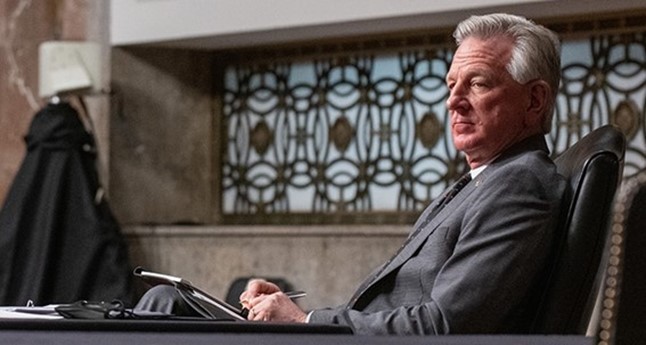
U.S. Senators Tommy Tuberville and Katie Britt joined 45 of their Senate colleagues in introducing the No Taxpayer Funding for Abortion Act to establish a permanent prohibition on federal funding for abortion. Tuberville said in a statement, “Every life is sacred.” “Millions of hardworking Americans believe that life begins at conception and don’t want their taxpayer dollars inadvertently funding abortions,” said Sen. Tuberville stated. “As a Christian and as a conservative, I share their belief that every life is sacred and every American has a right to life. That’s why I’m proud to sign on to this legislation that will solidify abortion funding restrictions that have been in place for decades and better protect the unborn.” “Most Americans do not want their hard-earned tax dollars being used for abortion-on-demand, but our current patchwork of regulations has brought years of uncertainty,” Sen. Roger Wicker said. “The No Taxpayer Funding for Abortion Act would simplify federal rules, ensuring that American tax dollars are never used for the destruction of innocent, unborn life.” The bill seeks to change 40 years of inconsistent policies that have regulated federal funding for abortion. It would make funding restrictions permanent for abortion and elective abortion coverage, including the Hyde Amendment, which requires annual approval. The legislation would also eliminate taxpayer-funded subsidies for elective abortion coverage currently offered on Affordable Care Act exchanges through refundable tax credits. Tuberville, Wicker, and Britt joined Sens. Mitch McConnell (R-Kentucky) John Barrasso (R-Wyoming), Marsha Blackburn (R-Tennessee), John Boozman (R-Arkansas), Mike Braun (R-Indiana), Ted Budd (R-North Carolina), Shelley Moore Capito (R-West Virginia), Bill Cassidy (R-Louisiana), John Cornyn (R-Texas), Tom Cotton (R-Arkansas), Kevin Cramer (R-North Dakota), Mike Crapo (R-Idaho), Ted Cruz (R-Texas), Steve Daines (R-Montana), Joni Ernst (R-Iowa), Deb Fischer (R-Nebraska), Lindsey Graham (R-South Carolina), Chuck Grassley (R-Iowa), Bill Hagerty (R-Tennessee), Josh Hawley (R-Missouri), John Hoeven (R-North Dakota), Cindy Hyde-Smith (R-Mississippi), Ron Johnson (R-Wisconsin), John Kennedy (R-Louisiana), James Lankford (R-Oklahoma), Mike Lee (R-Utah), Cynthia Lummis (R-Wyoming), Roger Marshall (R-Kansas), Jerry Moran (R-Kansas), Markwayne Mullin (R-Oklahoma), Rand Paul (R-Kentucky), Pete Ricketts (R-Nebraska), Jim Risch (R-Idaho), Mitt Romney (R-Utah), Mike Rounds (R-South Dakota), Marco Rubio (R-Florida), Eric Schmitt (R-Missouri), Rick Scott (R-Florida), Tim Scott (R-South Carolina), Dan Sullivan (R-Alaska), Thom Tillis, (R-North Carolina), John Thune (R-South Dakota), J.D. Vance (R-Ohio), and Todd Young (R-Indiana). Swing Republican Sens. Lisa Murkowski and Susan Collins did not sign off on the legislation, and neither did any of the 52 Senate Democrats who hold the majority in the body. U.S. Representative Christopher Smith (R-New Jersey) has introduced similar legislation in the House of Representatives. To connect with the author of this story, or to comment, email brandonmreporter@gmail.com.
