
Winners and losers in Donald Trump’s first budget plan

Military spending would get the biggest boost in President Donald Trump‘s proposed budget. Environmental programs, medical research, Amtrak and an array of international and cultural programs — from Africa to Appalachia — would take big hits, among the many parts of the government he’d put on a crash diet. The budget proposal out Thursday is a White House wish list; it’ll be up to Congress to decide where money goes. If Trump gets his way, there will be more losers than winners among government departments and programs. Some programs would tread water: WIC grants — money to states for health care and nutrition for low-income women, infants and children — are one example. Monday for states grants for water infrastructure projects would be held level as well. Some others would lose everything: Trump proposes to eliminate money for the Corporation for Public Broadcasting, the national endowments for the arts and the humanities and more than a dozen other independent agencies financed by the government. A sampling: WINNERS —The Pentagon. Trump proposes a 10 percent increase in the massive defense budget, adding $52 billion in military spending in one year top expand personnel, equipment and capability. Another $2 billion would go to nuclear weapons. —Veterans Affairs. Up 5.9 percent. That’s an additional $4.4 billion, driven by ever-growing health care costs. —Homeland Security. Up 6.8 percent. That’s $2.8 billion more. Most of the increase, $2.6 billion, would be to help kick-start Trump’s promised border wall. The president has repeatedly said Mexico would pay for the wall; Mexican officials are adamant that they won’t. Trump also wants an extra $1.5 billion for more immigration jails and deportations, and $314 million to hire 1,500 immigration enforcement and border patrol agents. —The National Nuclear Security Administration, which oversees the maintenance and safety of the nuclear arsenal and its research labs. The agency would grow by 11.3 percent, or $1.4 billion, so that it takes up more than half the Energy Department’s budget, which would shrink overall. —Opioid prevention and treatment: a proposed $500 million increase in the Health and Human Services Department to counter the epidemic and more money for the Justice Department to combat the problem. —School choice: $1.4 billion more to expand school choice programs, bringing spending in that area to $20 billion, even as the Education Department’s overall budget would be cut by $9 billion, or 13 percent. LOSERS: —EPA, facing a 31.4 percent cut, or $2.6 billion. The plan would cut 3,200 jobs at the agency, eliminate a new plan for tighter regulations on power plants, and “zero out” programs to clean up the Great Lakes and the Chesapeake Bay. —Health and Human Services, facing the largest cut in dollar terms: $12.6 billion, or 16.2 percent. The plan would cut $5.8 billion from the nearly $32 billion National Institutes of Health, the nation’s premier medical research agency, bringing its total to $25.9 billion. It’s not clear what research on diseases or disorders would lose the most money, although the budget plan specifically calls for elimination of a division that focuses on global health. Already, the NIH’s budget hasn’t kept pace with inflation over the last decade, making it dramatically harder for scientists around the country to win money for research projects into potential new treatments or better understanding of disease. —State Department and U.S. Agency for International Development. Down 28 percent, or $10 billion. Foreign aid would be reduced, as would money to the U.N. and to multilateral development banks including the World Bank. Some foreign military grants would be shifted to loans. —Labor Department. A more than 20 percent cut, or $2.5 billion. To be eliminated: a $434 million program that has helped more than 1 million people 55 and older find jobs, according to the department. The blueprint says the Senior Community Service Employment Program is inefficient and unproven. —Agriculture Department. A nearly 21 percent cut, or $4.7 billion, achieved in part by cutting land acquisition in the National Forest System, rural water infrastructure and statistical capabilities at the department. Trump also proposes reduced staff in county USDA offices, an idea that fell flat in Congress when President Barack Obama proposed a similar reduction. —Transportation Department. Trump proposes a cut of nearly 13 percent, or $2.4 billion. Amtrak, local transit agencies, and rural communities that depend on federal subsidies to obtain scheduled airline service would take the brunt. Trump would eliminate subsidies for Amtrak long-distance train routes, which would most likely mean the end of those routes since they are generally not profitable. Money for the Federal Transit Administration grant program for new light rail and subway construction would be eliminated except for multi-year projects the government has already committed to help fund. —Internal Revenue Service: After years of cuts, the IRS budget would be cut again — by $239 million from this year’s spending levels. The IRS budget is down about $1 billion from its height in 2010. Since then, the agency has lost more than 17,000 employees. As a result, the chances of getting audited have rarely been so low. —Commerce Department. A 16 percent or $1.5 billion cut. The plan would eliminate more than $250 million in National Oceanic and Atmospheric Administration grants, including a program that helps coastal communities adapt to climate change, deal with invasive species and maintain healthy water and fisheries. Also on the chopping block: the Economic Development Administration, which provides federal dollars to foster job creation and attract private investment; and the Minority Business Development Agency, which is dedicated to helping minority-owned business get off the ground and grow. The Trump administration says the two agencies duplicate work done elsewhere. —School programs: The plan would eliminate a $1.2 billion initiative that supports before- and after-school programs as well as summer programs. —Independent agencies supported by tax dollars. If Trump prevails, a hefty contingent of entities would lose all federal money and be shut. Among them, the public broadcasting corporation, the Appalachian Regional Commission, the Chemical Safety Board, the United States
Fueled by Donald Trump opponents, Rachel Maddow’s popularity rises
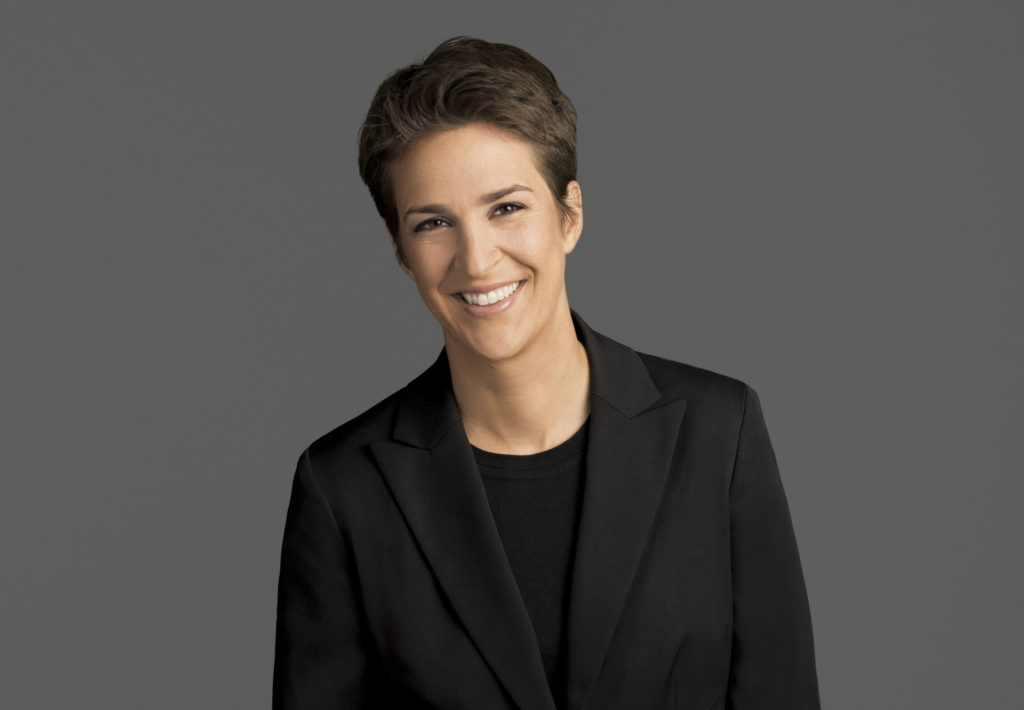
Rachel Maddow can trace the mood of her audience by looking at the ratings. Her MSNBC show’s viewership sank like a stone in the weeks following Donald Trump‘s election, as depressed liberals avoided politics, and bottomed out over the holidays. Slowly, they re-emerged, becoming active and interested again. Maddow’s audience has grown to the point where February was her show’s most-watched month since its 2008 launch. Maddow has emerged as the favorite cable news host for presidential resistors in the opening days of the Trump administration, just as Fox News Channel’s Sean Hannity is one for supporters or Keith Olbermann was the go-to television host for liberals in George W. Bush‘s second term. Trump fascination has helped cable news programs across the political spectrum defy the traditional post-presidential election slump, few as dramatically as Maddow’s. Her show’s average audience of 2.3 million in February doubled its viewership over February 2016, in the midst of the presidential primaries, the Nielsen company said. “I’m grateful for it,” Maddow said one recent afternoon. “It is nice for me that it is happening at a time when I feel we are doing some of our best work.” Those two things — ratings success and Maddow’s pride in the work — don’t always intersect. “We’re making aggressive editorial decisions in terms of how far we’re willing to get off of everyone else’s news cycle,” she said, “but it’s paying off because the news cycle more often than not is catching up with us after we do something.” Maddow has decided to cover the Trump administration like a silent movie, so the show could pay more attention to what is being done rather than what is being said. The central focus is on connect-the-dots reporting about Trump’s business interests and dealings with Russia. Her show is a news cousin to HBO host John Oliver‘s “Last Week Tonight” in its willingness to dive into complex subjects that don’t seem television-friendly, and follow the stories down different alleys. Maddow sounds long-winded when it doesn’t work. When it does, it’s like an absorbing novel stuffed with characters. “It’s not like I am a teacher who is trying to extend the attention span of the American news viewer,” said Maddow, a Rhodes scholar. “I have no goal of trying to privilege complexity. It just so happens that I tend to think in 17-minute bursts.” Maddow said she and her staff try to break news, like reporting on a Department of Homeland Security report on Trump’s immigration policy, and she was aggressive in bringing the Flint, Michigan, water crisis to a national audience. More often than not, she sees her role as explaining how things work. The program spent considerable time last week on a New Yorker magazine piece about foreign investments by Trump’s real estate company. She’s determined not to get lost in the noise, particularly since she believes Trump is skillful at distracting the media with a new story — even an unflattering one — when he doesn’t like the attention being paid to another. “I pray for the day when the most important thing about the Trump administration is that the president said something inappropriate on Twitter,” she said. “There are bigger and more valuable stories to be chasing than that.” When some news organizations were upset at being barred from an informal press briefing held by White House Press Secretary Sean Spicer two weeks ago, Maddow understood why. But the story didn’t really interest her. Since she doesn’t trust much of what the administration says, Maddow wondered what these reporters were really missing by not being there. “Her approach to reality and the president’s couldn’t be further apart,” said Jeff Cohen, an Ithaca University professor and liberal activist. During busy news periods, “certain voices cut through,” said NBC News Chairman Andrew Lack. “And her work is so consistently strong. She doesn’t disappoint, and she’s got a work ethic that is consistently off the charts. … She is a very original and unique voice.” While Maddow delivers opinion pieces instead of straight news, they are well-informed, he said. Lack doesn’t see Maddow as a voice of the resistance. Neither does she. “People want to draft me as an activist all the time, ascribe that role to me,” she said. “I’m not. The reason I know I’m not is that I stopped doing that in order to be the person who explained the news and delivered the news instead. It’s a very clear line to me.” Republished with permission of The Associated Press.
Donald Trump team says ‘we are behind’ but can still win the race
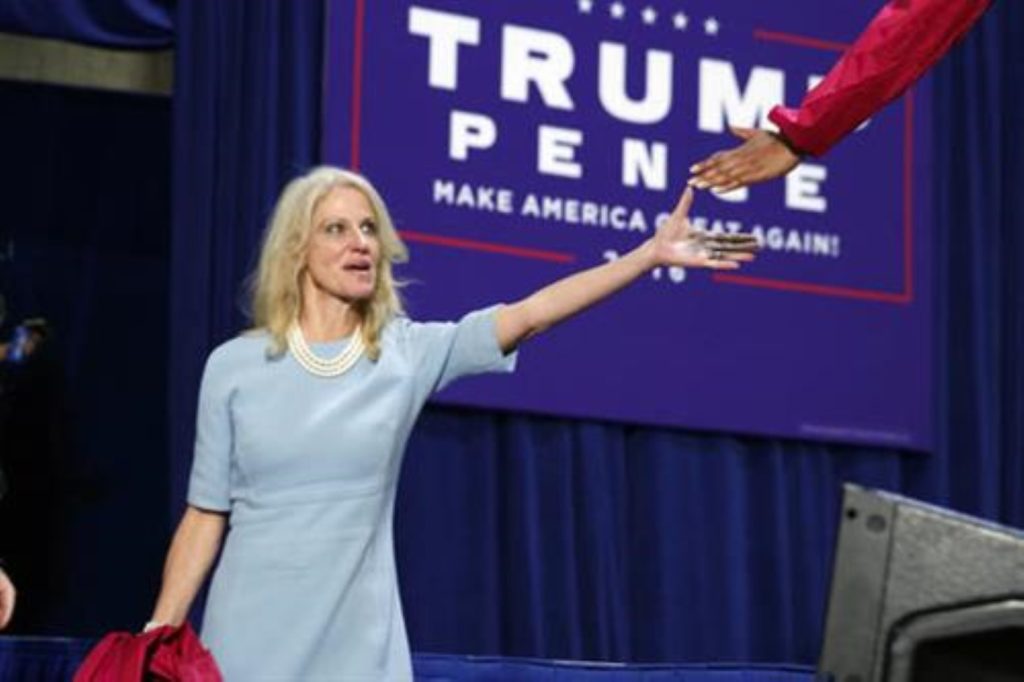
Donald Trump‘s campaign bluntly acknowledged Sunday that the real estate mogul is trailing Hillary Clinton as the presidential race hurtles toward a close, but insisted he still has a viable path to win the White House. With barely two weeks left and early voting underway in most of the U.S., Trump’s team said “the race is not over” and pledged to keep campaigning hard — even in states like Virginia and Pennsylvania that polls show are now trending Clinton’s way. Campaign manager Kellyanne Conway laid out a path to the requisite 270 electoral votes that goes through make-or-break states Florida, Iowa, North Carolina and Ohio. “We are behind. She has some advantages,” Conway said Sunday. Yet she argued that Clinton’s advantages — like a slew of bold-name Democrats campaigning for her — belied her lack of true support. “The current president and first lady, vice president, all are much more popular than she can hope to be.” Added Republican National Committee Chairman Reince Priebus: “We expect to win.” Yet even as Clinton appeared to be strengthening her lead, her campaign was careful not to declare premature victory. “We don’t want to get ahead of our skis here,” said Clinton campaign manager Robby Mook. He said the “battleground states” where both candidates are campaigning hardest “are called that for a reason.” As part of his closing message, Trump was laying out an ambitious agenda for his first 100 days as president. Yet he undermined his own attempt to strike a high-minded tone on policy issues when he announced in the same speech that he planned to sue the numerous women who have accused him of groping and other unwanted sexual behavior. “All of these liars will be sued once the election is over,” Trump said Saturday during an event near the Civil War battlefield of Gettysburg. He added: “I look so forward to doing that.” Asked about Trump’s remarks, Clinton told reporters between rallies Saturday in Pittsburgh and Philadelphia that she was done responding to what her Republican opponent is saying as Election Day nears and would instead focus on helping elect other Democrats. A day earlier, Clinton attacked Pennsylvania’s Republican senator, Pat Toomey, saying in Pittsburgh that he has refused to “stand up” to Trump as she praised his Democratic challenger, Katie McGinty. Noting Trump’s comments about Mexican immigrants and his attacks on a Muslim-American military family, she said of Toomey: “If he doesn’t have the courage to stand up to Donald Trump after all of this, then can you be sure that he will stand up for you when it counts?” Clinton rejected Trump’s allegation, offered without evidence, that the dozen or so women who have come forward are being prompted by her campaign or the Democratic National Committee. The accusers emerged after the former reality TV star boasted of kissing women and groping their genitals without their consent. “These accusations are not coming from our campaign,” Mook said. On Saturday, an adult film actress said the billionaire kissed her and two other women on the lips “without asking for permission” when they met him after a golf tournament in 2006. Trump has denied that all the other allegations, while insisting some of the women weren’t attractive enough for him to want to pursue. “He’s been waterboarded by these issues,” said former Arizona Gov. Jan Brewer, a Trump supporter, lamenting the “oppression” of her candidate in the media. Though mostly a recap of policies he’s proposed before, Trump’s speech included a few new elements, such as a freeze on hiring new federal workers and a two-year mandatory minimum sentence for immigrants who re-enter the U.S. illegally after being deported a first time. In a pledge sure to raise eyebrows on Wall Street, he said he’d block a potential merger between AT&T and media conglomerate Time Warner. Throughout the GOP primary, Trump was criticized for shying away from detailed policy proposals. But his speech, which aides said would form the core of his closing argument to voters, underscored how the billionaire has gradually compiled a broad — if sometimes vague — policy portfolio that straddles conservative, isolationist and populist orthodoxies. Mook and Brewer spoke on CNN’s “State of the Union” and Priebus on CBS’ “Face the Nation.” Conway spoke on “Fox News Sunday” and on NBC’s “Meet the Press.” Republished with permission of the Associated Press.
Moderator Lester Holt under scrutiny during debate
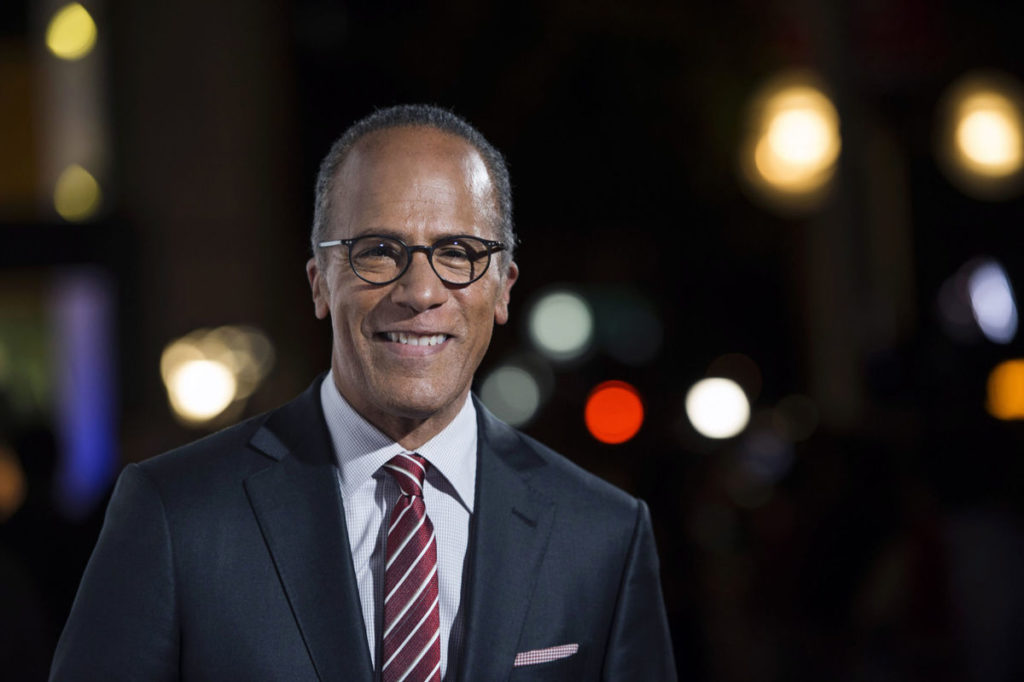
Everyone’s aware of the stakes for Hillary Clinton and Donald Trump during the first presidential debate, but there’s a third person in the equation who faces a different pressure: Lester Holt. The NBC News veteran is moderating his first general election debate, making him solely responsible for the questions asked each candidate and for steering the conversation. His performance will be closely watched, particularly in light of a dispute over the extent to which he should call politicians out for making untrue statements. Holt, 57, has kept quiet about his preparations. The NBC “Nightly News” anchor took over his job last year after predecessor Brian Williams was found to have lied about his role in news stories. Like the moderators for all three presidential debates this fall, it’s Holt’s first time in that role for a general election debate. He hosted a Democratic primary forum in January, and has interviewed Clinton and Trump three times each during the campaign. In a reflection of the attention that will be paid to Holt, his voter registration became an issue last week. “Lester is a Democrat,” Trump said in a Fox News Channel interview. “It’s a phony system. They are all Democrats.” Holt, however, is a registered Republican, according to New York state voting records. Asked about the misstatement on Monday, Trump campaign manager Kellyanne Conway said on MSNBC that it wasn’t a lie because Trump didn’t know Holt’s voter registration. Voting records show that Anderson Cooper of CNN, who is moderating the Oct. 5 debate, is registered unaffiliated with a party in New York and Chris Wallace of Fox News, the moderator on Oct. 19, is a registered Democrat in Washington, D.C. Martha Raddatz, who will join Cooper, lives in Virginia, which doesn’t register voters by party, and ABC would not discuss her affiliation. That illustrates on a small scale the issue of to what extent moderators, and journalists covering the debate, should point it out when a candidate says something untrue. It became part of the pre-debate discussion when Holt’s NBC colleague, Matt Lauer, was criticized for not confronting Trump earlier this month when the Republican falsely claimed he had not expressed support for the war in Iraq during a forum between the two candidates. The Clinton campaign says moderators should police false statements. Trump’s campaign says it’s not their role. Among journalists, there’s no consensus. Janet Brown, executive director of the Commission on Presidential Debates, said on CNN Sunday that in past debates moderators have generally believed the candidates should call their opponents out when something false is said. “I don’t think it’s a good idea to get the moderator into essentially serving as the Encyclopedia Britannica,” Brown said. Television networks were skittish Monday in discussing their fact-checking plans in advance. None admitted in advance to plans of flashing graphics onscreen to identify a false statement; that hasn’t been done in the past. NBC News said it is teaming with PolitiFact for digital fact-checking. CBS said it will assign fact-checkers that will provide context during the debate on the CBSNews.com website. In past years, some networks have assigned reporters post-debate to examine the accuracy of particular statements. The television industry will be watching to see if Monday’s debate can smash the previous record for the biggest presidential debate audience, the 80.6 million people who watched the only debate of the 1980 campaign between Jimmy Carter and Ronald Reagan. The most-watched debate this century was the first between Barack Obama and Mitt Romney in 2012, with 67.2 million voters, the Nielsen company said. During his television journalism career, Holt has been known more for hard work than flashiness. He was a news anchor in Chicago for 14 years before coming to NBC in 2000, and logged long hours on MSNBC during the Iraq War. The bass guitar is his off-screen passion. Last week he set aside debate prep to play during a Manhattan rooftop party for “Dateline NBC,” joining some fellow NBC employees running through songs by Alabama Shakes, Billy Squier and Jefferson Starship. Republished with permission of the Associated Press.
How to stream the high-stakes presidential debates
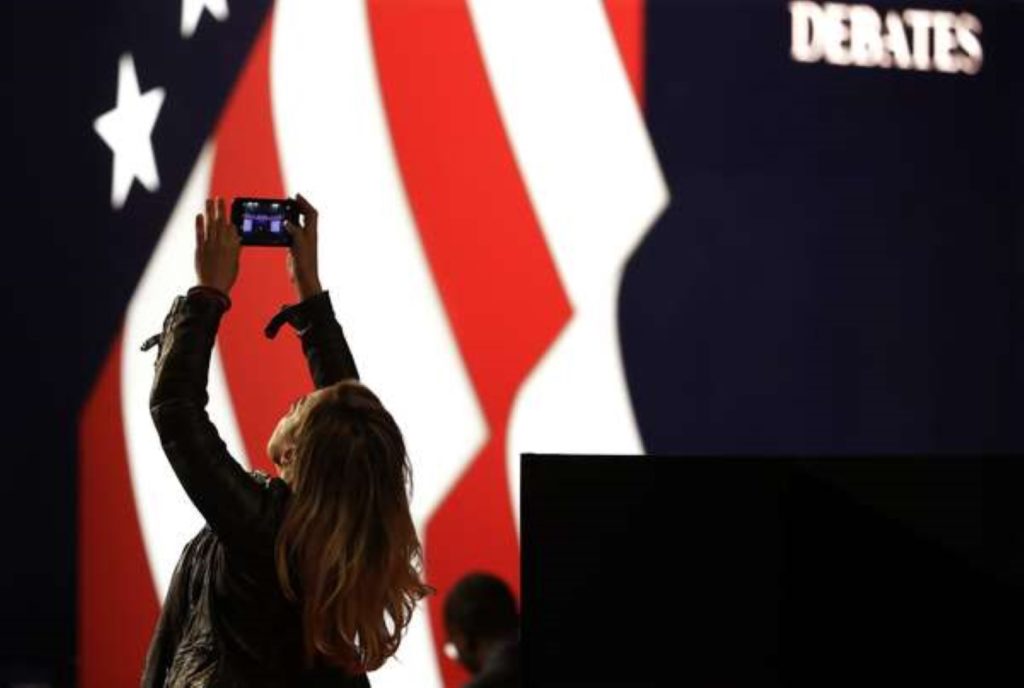
Television viewership for Monday’s presidential debate is expected to be high, but you don’t need a television to watch. There are plenty of ways to stream the showdown for free and get behind-the-scenes content and commentary, ranging from emoji responses to serious fact checks. A bigger question might be: Who isn’t streaming it? If you don’t have cable or satellite TV, or even an antenna, you can catch the streams that major news organizations will offer on their websites and apps. But many social networks and online outlets will offer the debate, too. Here’s your online guide to Monday’s debate, which starts at 9 p.m. EDT. All three presidential debates are expected to have similar streaming opportunities, and many outlets will cover the one for the vice presidential candidates as well. ___ TWITTER The service will stream Bloomberg Television’s live coverage of the presidential and vice presidential debates. To watch, go to https://debates.twitter.com, or visit Bloomberg’s bpolitics Twitter feed. Twitter says the streams will include special political programming and commentary from Bloomberg 30 minutes before and after each debate. You do not need a Twitter account — or be logged in — to watch. ___ FACEBOOK ABC News will show live streams from the debate and offer footage from watch parties, anchors and correspondents. The network says it will “incorporate viewers’ comments, questions and conversations” into its Facebook Live coverage. To find it, go to the ABC News Facebook page. Other organizations are hopping on the Facebook Live bandwagon as well, including Fox News, C-SPAN, The New York Times, CNBC and Telemundo. ___ YOUTUBE Google’s video streaming site is hosting debate streams from several news outlets, including NBC News, The Washington Post, Telemundo and Fox News. In addition, Google says “your favorite YouTube creators” such as the Young Turks and Complex news will be streaming live reports from the debates, using YouTube Live directly from their phones. ___ VIRTUAL REALITY For those with virtual-reality headsets, NBC News is planning special VR streams and content for each of the debates. It will also help organize virtual watch parties. Some of the events require RSVPs. ___ BUT WAIT, THERE’S MORE! Buzzfeed is promising “running emoji commentary of the action on Facebook Live.” Snapchat, meanwhile, will cover each debate as a “Live Story” within its app. CBSN, CBS News’ digital streaming service, will feature Instagram “Stories” in its live streaming coverage. Instagram Stories lets users share photos and videos from their day; they disappear automatically after 24 hours. ___ LAST, BUT NOT LEAST Bars across the country will be showing the debates. As with past debates, there will be drinking games and debate bingo for those interested. In New York City, the blog Gothamist assembled a list of places for “watching, boozing and laughing your way through the debate.” The gay club Eastern Bloc, for example, will feature a dance party and Hillary Clinton fundraiser following the debate. Whether you’re a fan of Clinton or Donald Trump, or you’re still deciding, check Meetup, Facebook or Google to find debate-viewing events near you. Republished with permission of the Associated Press.
Dan Coats says Donald Trump hasn’t made up his mind on VP
The Latest on the 2016 presidential campaign ahead of the Republican and Democratic national conventions (all times EDT): 1:30 p.m. Indiana Sen. Dan Coats says Donald Trump hasn’t made up his mind about who to select as his running mate. Coats told The Associated Press Wednesday that he spoke with Gov. Mike Pence late Tuesday — one of the names on Trump’s shortlist of potential running mates — and Pence told him there’s still no decision. “I think he’s the front-runner,” Coats said, adding, “I think he ought to be the front-runner.” Coats said Pence is “pretty calm about the whole thing.” He added that Trump is cognizant that he needs to make a decision by Friday given gubernatorial succession rules in Indiana. But he concluded that “reading Donald Trump’s mind is not the easiest thing to do.” ___ 1:20 p.m. Hillary Clinton says the Republican Party of Abraham Lincoln has been transformed into “the party of Trump.” Rattling off a series of attacks against her GOP rival, Clinton says Trump is “dangerous,” ”divisive,” ”fear-mongering” and is “pitting American against American.” Even stalwart Republicans, she says, should be alarmed by Trump’s policies and racist rhetoric. Clinton is casting Trump as ignorant of the Constitution, dismissive of U.S. law and lacking the character to be trusted with American security. “Imagine if he had not just Twitter and cable news to go after his critics and opponents, but also the IRS – or for that matter, our entire military,” she says. “Do any of us think he’d be restrained?” ___ 1:07 p.m. Hillary Clinton is calling on the country — including herself — to “do a better job of listening” rather than fueling political and other divisions after a series of high-profile shootings. Clinton says the country must address both gun violence, criminal justice reform and find ways to better support police departments. “I know that just saying these things together may upset some people,” she says. “But all these things can be true at once.” Clinton is speaking in the Illinois Old State House chamber in Springfield, the site of Abraham Lincoln’s his famous address about the perils of slavery. She is trying to use the symbolic site to contrast her call for civility with what she sees as rival Donald Trump’s polarizing campaign. Clinton said she has work to do, as well. She says that as someone “in the middle of a hotly fought political campaign, I cannot claim that my words and actions haven’t sometimes fueled the partisanship that often stands in the way of our progress.” Clinton adds, “I recognize that I have to do better too.” ___ 12:29 p.m. Donald Trump is meeting with finalists for the job of his vice presidential running mate. Trump met Tuesday with New Jersey Gov. Chris Christie and his family. Early Wednesday, Trump and his children met with Indiana Gov. Mike Pence and his family. Former House Speaker Newt Gingrich also was said to be a finalist. All three have auditioned for the job by opening for Trump at campaign rallies over the past week. Trump was expected to make an announcement on Friday. ___ 10:20 a.m. Republican Donald Trump huddled with Indiana Gov. Mike Pence at the governor’s mansion in Indiana on Wednesday morning amid swirling speculation about Trump’s vice presidential deliberations. Pence and Trump walked out of the residence together just before 10:30 a.m. The pair was joined inside by Pence’s wife, Karen, as well as Trump’s daughter, Ivanka, and his son-in-law Jared Kushner. Trump is said to have narrowed his short list down to a trio of top contenders, including Pence. Pence joined Trump at a fundraiser and a rally on Tuesday where he received a warm reception from the crowd. ___ 10:15 a.m. The lead super PAC backing Democratic presidential candidate Hillary Clinton has begun targeting Spanish-speaking voters in Colorado, Nevada and Florida as part of a $35 million online effort it announced earlier this year. An online ad from Priorities USA features video clips of Trump calling Hispanics “drug dealers” and “criminals” and leading his supporters in the chant: “Build that wall! Build that wall! Build that wall!” In Spanish, an on-screen message declares that “hatred is growing in our country.” The ad campaign also includes a website: unidoscontratrump.org, which means “united against Trump.” The same message will appear in banner ads on social media. The three targeted states all have significant Latino populations. Trump insists he can do better among Hispanics than the less-than-30 percent Republican Mitt Romney drew in 2012 after calling for “self-deportation” for immigrants in the country illegally. ___ 7:35 a.m. Bernie Sanders says he agrees with the harsh remarks that Justice Ruth Bader Ginsburg has made about Republican presidential candidate Donald Trump. The Vermont senator declined to say whether it is appropriate for a sitting Supreme Court justice to openly criticize a White House contender. But he tells ABC’s “Good Morning America” that he agrees Trump is a “total opportunist” and said “the record clear is quite clear that he lies just a whole lot of the time.” Ginsburg in a series of interviews with The Associated Press, The New York Times and CNN has called Trump unqualified to be president and joked that she would move to New Zealand if he won. Trump said in a tweet that Ginsburg should resign. Sanders’s comments came a day after he formally endorsed Hillary Clinton as the Democratic nominee for president. Asked if he is open to being her running mate, Sanders said, “I doubt that will happen.” He said his focus is on helping Clinton win. He says, “We cannot have a man with Trump’s temperament with the nuclear code and running this country.” 5:25 a.m. Hillary Clinton is turning to the symbolism of Abraham Lincoln’s “House Divided” speech to argue that the nation needs to repair its divisions after high-profile shootings in Texas, Louisiana and Minnesota. Clinton’s campaign says the Democratic presidential candidate will talk about the importance of uniting
