
High court’s Alabama ruling sparks alarm over voting rights
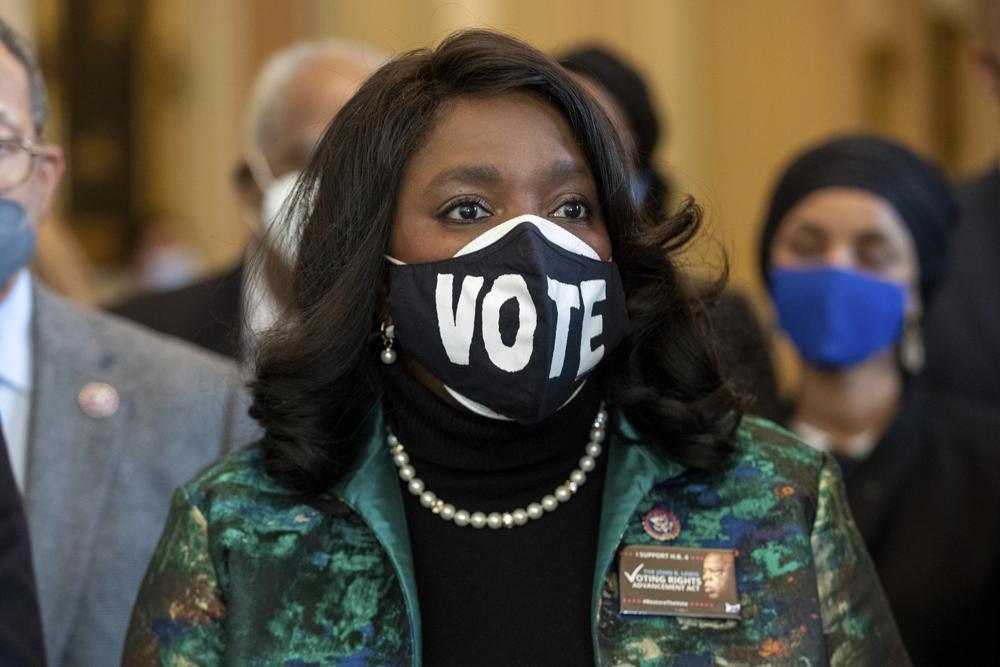
The Supreme Court’s decision to halt efforts to create a second mostly Black congressional district in Alabama for the 2022 election sparked fresh warnings Tuesday that the court is becoming too politicized, eroding the Voting Rights Act and reviving the need for Congress to intervene. The Supreme Court’s conservative majority put on hold a lower court ruling that Alabama must draw new congressional districts to increase Black voting power. Civil rights groups had argued that the state, with its “sordid record” of racial discrimination, drew new maps by “packing” Black voters into one single district and “cracking” Black voters from other districts in ways that dilute their electoral power. Black voters are 26% of Alabama’s electorate. In its 5-4 decision late Monday, the Supreme Court said it would review the case in full, a future legal showdown in the months to come that voting advocates fear could further gut the protections in the landmark Civil Rights-era law. It’s “the latest example of the Supreme Court hacking away at the protections of the voting rights act of 1965,” said Sen. Dick Durbin, D-Ill., chairman of the Judiciary Committee. “Congress must act. We must restore the Voting Rights Act.” The outcome all but ensures Alabama will continue to send mostly white Republicans to Washington after this fall’s midterm elections and applies new pressure on Congress to shore up voter protections after a broader elections bill collapsed last month. And the decision shows the growing power of the high court’s conservative majority as President Joe Biden is under his own pressures to name a liberal nominee to replace retiring Justice Stephen Breyer. Rep. Terri Sewell, the only Black representative from Alabama, said the court’s decision underscores the need for Congress to pass her bill, the John R. Lewis Voting Rights Advancement Act, to update and ensure the law’s historic protections. “Black Alabamians deserve nothing less,” Sewell said in a statement. The case out of Alabama is one of the most important legal tests of the new congressional maps stemming from the 2020 census count. It comes in the aftermath of court decisions that have widely been viewed as chiseling away at race-based protections of the Voting Rights Act. Alabama and other states with a known history of voting rights violations were no longer under federal oversight, or “preclearance,” from the Justice Department for changes to their election practices after the court, in its 2013 Shelby v. Holder decision, struck down the bill’s formula as outdated. As states nationwide adjust their congressional districts to fit population and demographic data, Alabama’s Republican-led Legislature drew up new maps last fall that were immediately challenged by civil rights groups on behalf of Black voters in the state. Late last month, a three-judge lower court, which includes two judges appointed by former President Donald Trump, had ruled that the state had probably violated the federal Voting Rights Act by diluting the political power of Black voters. This finding was rooted, in part, in the fact that the state did not create a second district in which Black voters made up a majority or close to it. Given that more than one person in four in Alabama is Black, the plaintiffs had argued the single Black district is far less than one person, one vote. “Black voters have less opportunity than other Alabamians to elect candidates of their choice to Congress,” the three-judge panel wrote in the 225-page ruling. The lower court gave the Alabama legislature until Friday to come up with a remedial plan. Late Monday, the Supreme Court, after an appeal from Alabama, issued a stay. Justices Brett Kavanaugh and Samuel Alito, part of the conservative majority, said the lower court’s order for a new map came too close to the 2022 election. Chief Justice John Roberts joined his three more liberal colleagues in dissent. “It’s just a really disturbing ruling,” said Sen. Cory Booker, D-N.J., a member of the Judiciary Committee, who called the Supreme Court’s decision “a setback to racial equity, to ideals of one person, one vote.” Rep. Joyce Beatty, D-Ohio, and the chair of the Congressional Black Caucus said the decision “hits at the guts of voting rights.” She told The Associated Press: “We’re afraid of what will happen from Alabama to Texas to Florida and even to the great state of Ohio.” White House Press Secretary Jen Psaki said the court decision exposes the need for Congress to legislate to protect voting rights. The erosion of those rights is “exactly what the Voting Rights Act is in place to prevent.” Critics went beyond assailing the decision at hand to assert that the court has become political. “I know the court likes to say it’s not partisan, that it’s apolitical, but this seems to be a very political decision,” said Democratic Sen. Chris Van Hollen of Maryland. Rep. Hakeem Jeffries, D-N.Y., tweeted that the court majority has “zero legitimacy.” Rep. Barbara Lee, D-Calif., tweeted that the court’s action was “Jim Crow 2.0.” Alabama Republicans welcomed the court’s decision. “It is great news,” said Rep. Mo Brooks, who is running for the GOP nomination for Senate. He called the lower court ruling an effort to “usurp” the decisions made by the state’s legislature. The justices will, at some later date, decide whether the map produced by the state violates the voting rights law, a case that could call into question “decades of this Court’s precedent” about Section 2 of the act, Justice Elena Kagan wrote in dissent. Section 2 prohibits racial and other discrimination in voting procedures. Voting advocates see the arguments ahead as a showdown over voting rights they say are being slowly but methodically altered by the Roberts court. The Supreme Court in the Shelby decision did away with the preclearance formula under Section 5 of the Voting Rights Act. And last summer, the conservative majority in Bronvich vs. the Democratic National Committee upheld voting limits in an Arizona case concerning early ballots that a lower court had found discriminatory under Section 2. With the Alabama case, the court
Alabama leaders respond to Supreme Court redistricting reversal
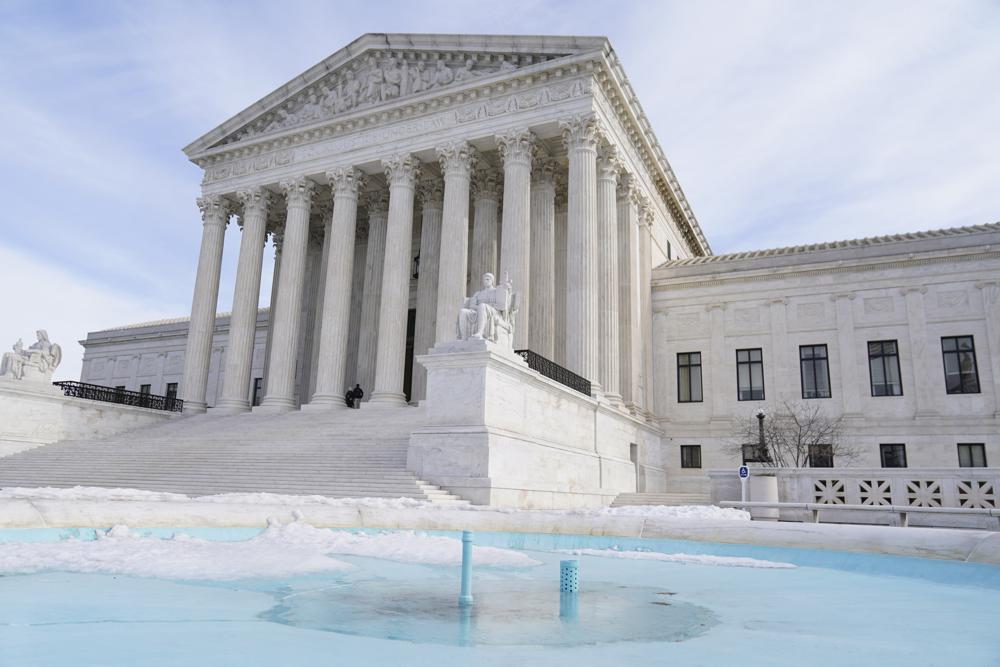
On Monday, the Supreme Court put on hold a lower court ruling that Alabama must draw new congressional districts before the 2022 elections to increase Black voting power. By a 5-4 vote, the court’s action means the upcoming elections will be conducted under the original map. The justices will decide at a later date whether the map produced by the state violates the landmark voting rights law. Alabama leaders are responding to the ruling. Attorney General Steve Marshall declared Monday’s decision a victory. Marshall stated in a press release, “Today, the Supreme Court ensured that such a result will not befall the State this year. We will now have the chance to further brief the case and argue it to the Supreme Court, and we’re confident we will ultimately prevail.” Congressmen Robert Aderholt also applauded the reversal, arguing that the districts were fairly drawn and forcing a change in the congressional maps would have created chaos. Aderholt stated, “I applaud the Supreme Court for this decision. Making wholesale changes to the Congressional maps this late into the 2022 election cycle would have caused chaos, not just for the state’s election officials, but for all Alabama voters. “I’m confident these lines, which were fairly drawn, will stand for this next decade. It is clear that the challenge to these lines is part of a coordinated effort across the nation to challenge Republican-drawn lines. At the same time, we are seeing dramatic gerrymandering in Democrat-led states, like New York, to eliminate Republican districts.” Rep. Terri Sewell expressed disappointment in the ruling. “Today’s Supreme Court order is yet another blow to the fight for fair Black political representation that is at the heart of the Voting Rights Act of 1965 (VRA). The ruling allows the votes of Black Alabamians to be diluted and further undermines Section 2 of the VRA,” Sewell stated in a press release. “This order underscores the urgent need for Congress to enact my bill—the John R. Lewis Voting Rights Advancement Act—which would restore much-needed federal oversight to ensure that minority voters are fairly represented. Black Alabamians deserve nothing less.”
$360 million investment for Medical West Hospital in Bessemer
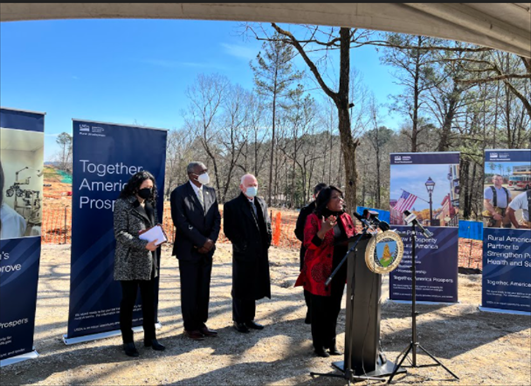
Yesterday U.S. Rep. Terri Sewell welcomed U.S. Department of Agriculture (USDA) Deputy Secretary Jewel Bronaugh and Undersecretary for Rural Development Xochitl Torres Small to Medical West Hospital in Bessemer. During the visit, Deputy Secretary Bronaugh announced more than $1 billion in investments by the USDA, including $360 million for the construction of the Medical West Hospital in Bessemer. Bessemer’s Medical West Hospital Authority will use this $360 million Community Facilities Direct Loan to build a 405,186- square-foot facility located to serve rural west Jefferson County, rural west Tuscaloosa County, and other surrounding rural communities. This project will benefit approximately 333,000 rural people in these communities. Medical West Hospital is one of 737 projects that USDA is helping to fund. The projects will finance emergency response vehicles and equipment; build or improve hospitals and clinics and help fund other essential community facilities. “I was so pleased to welcome USDA Deputy Secretary Bronaugh and Undersecretary Torres Small to Alabama today!” said Rep. Sewell. “I want to thank them and the rest of the Biden-Harris Administration for their commitment to Alabama’s 7th Congressional District and for bringing transformational investments like this right here to our doorstep. Thanks to this $360 million investment, the construction of Medical West Hospital in Bessemer will expand access to critical health care services for thousands of residents in Jefferson and Tuscaloosa Counties and the surrounding rural communities.” “The Biden-Harris Administration has made investing in infrastructure improvements a top priority,” said Deputy Secretary Bronaugh. “These loans and grants will help rural communities invest in facilities and services that are vital to all communities, such as health care facilities, schools, libraries, and first responder vehicles and equipment. When we invest in essential services in rural America, we build opportunity and prosperity for the people who call rural communities home.” Rural Development provides loans and grants to help expand economic opportunities, create jobs, and improve the quality of life for Americans in rural areas. This assistance supports infrastructure improvements, business development, housing, and community facilities. Bronaugh emphasized the critical role that Senator Richard Shelby had in fighting for additional funding for the Community Facilities Direct Loans. Shelby commented on Twitter, “This funding will significantly increase access to health care, education, and public services in rural communities. I will continue to support projects that improve the lives of all Alabamians and appreciate @USDA’s support of @medwesthopital’s new facility.”
What they’re saying: Lawmakers react to raising debt limit
On Tuesday the Senate approved legislation to lift the nation’s debt limit by $2.5 trillion. The 50-49 party-line vote came just one day shy of a deadline set by Treasury Secretary Janet Yellen, who warned that she was running out of maneuvering room to avoid the nation’s first-ever default. A default of the nation’s debt would have consequences to global financial markets, and government payments to Social Security beneficiaries, disabled veterans, and active-duty military personnel would also be called into question. Alabama lawmakers are reacting to the vote. Congressman Gary Palmer voted against raising the debt limit, calling it wasteful. “It seems that the Democrats still can’t accept any limit on wasteful spending, even as we watch inflation inflict financial hardship on American families across the country,” Palmer said in a press release. “The Congressional Budget Office (CBO) also just published the true cost of the Democrats’ massive spending bill, and it would add over $3 trillion to our national debt. The U.S. debt is already 25 percent bigger than the entire economy, and the CBO projects that our debt-to-GDP will be over 200 percent by 2051. That means our debt will be twice as big as our entire economy. Such debt levels will ensure long-term inflation and possibly the loss of the U.S. dollar as the world’s reserve currency. We must recognize the threat to America’s future that such debt levels pose and take action to reduce our debt. We can start by eliminating wasteful spending, eliminating obsolete and unnecessary federal programs, reopening federal lands for oil and natural gas production and increase our exports, eliminating improper payments, and simplifying the federal tax code.” Rep. Terri Sewell voted in favor of raising the debt limit and pointed out that the U.S. has raised the debt limit before, including during the Trump administration. Sewell also emphasized that raising the debt limit doesn’t authorize future spending. It meets obligations the government has already made. “Members of Congress should never play politics with the full faith and credit of the United States,” said Rep. Sewell in a press release. “We have an obligation to pay our bills that have piled up under previous administrations including President Trump’s. Addressing the debt limit is the responsible thing to do, and I was proud to join my Democratic colleagues to protect families from catastrophe and pay our bills.” Senator Richard Shelby voted against the measure, refusing to fund the democrat “liberal wish list”. “Today I voted against a procedure that would allow Democrats to raise the debt ceiling. If Democrats want to continue spending trillions of dollars to fund their liberal wish list, they should do so alone and not with the help of Republicans. I am disappointed that some of my GOP colleagues have assisted them in this process. We said before that we wouldn’t help Democrats increase the debt ceiling again, and we are only as good as our word.” The current debt ceiling is $28.4 trillion.
Members of Congress respond to bipartisan Defense Authorization Act
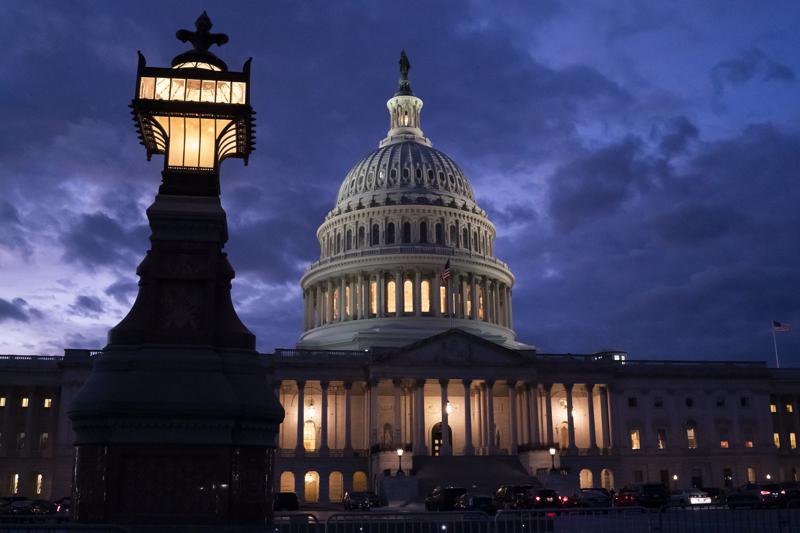
With bipartisan approval, the House has passed the National Defense Authorization Act (NDAA) for Fiscal Year 2022. The NDAA sets policy for the nation’s defense and is critical to national security. The bipartisan agreement authorized $768 billion for national security spending, which is $25 billion more than the Biden administration requested. The House passed the bill Tuesday night by a vote of 363-70 and sent it to the Senate. Rep. Mike Rogers, Lead Republican of the House Armed Services Committee, helped eliminate parts of the Act that the GOP disagreed with, including removing the provisions that would restrict the 2nd Amendment rights of servicemembers and require young women to register for the draft. During a House rules committee hearing, Rogers emphasized the need to pass the legislation, remarking, “Neither side got everything they wanted in this process,” but Rogers called it “a good bill.” “I am grateful for the work by my colleagues in the House and the Senate to craft a bipartisan and bicameral NDAA that bolsters our national security and supports our troops. This bill will prepare our military to face the ever-growing threat of China by banning them from our American supply chain and modernizing our weapon systems. In addition, this bill blocks the left’s attempt to push their social agenda through Congress by eliminating the provisions that would restrict the 2nd Amendment rights of servicemembers and require young women to register for the draft,” Rogers commented. “It also prohibits the DOD from dishonorably discharging servicemembers who choose not to take the COVID-19 vaccine, requires strong accountability measures for the Biden Administration’s debacle in Afghanistan, and provides a 2.7% pay increase for our brave servicemembers. “The FY22 NDAA is critical for Alabama’s proud defense industrial base that employs thousands. I am especially pleased to see funding for the Anniston Army Depot and increased funding for shipbuilding. “Congress has no greater responsibility than to provide for our defense and to make sure the brave Americans who wear the uniform have the best equipment and training to defend our liberty and freedom. I am proud of the role this bill plays in that vital effort,” Rogers concluded. Rep. Terri Sewell voted in favor of the NDAA. “Ensuring that our brave men and women in uniform have the resources they need to defend our nation is one of my most solemn responsibilities as a Member of Congress and one that I do not take lightly,” said Rep. Sewell. “This defense bill not only meets the needs of our servicemembers but also invests in HBCUs, combats sexual assault in the military, promotes climate resiliency, and strengthens our national security.” Barry Moore issued the following statement after voting for the NDAA. “I am thrilled Congressional leaders were able to set aside partisan politics and put forward a true national defense bill that I could proudly support,” said Moore. “As a former Guardsman, I understand the absolute necessity of supporting of our servicemembers, and while imperfect, this bipartisan bill meets that challenge. I thank Ranking Member Rogers, as well as Armed Services Committee members Brooks and Carl, for their countless hours of hard work on this legislation. “Fighting to support our men and women in uniform is my highest priority, and they will always have my unwavering support.” Gary Palmer voted in favor of the Act because some of the provisions the GOP disagreed with were eliminated. “It is critical that we continue to fund and strengthen our military, especially at this crucial time when China and Russia are ever-growing threats,” Palmer stated. “China is determined to supplant the United States as the world’s only superpower, and Russia is projecting power that threatens our Eastern European allies as a test of our resolve. I think our military must be ready to meet emerging threats. A strong military is vital to our national security and to the security of our allies. This legislation has fortunately gone through necessary changes since it was first introduced and no longer contains provisions which would infringe on our service members’ right to keep and bear arms, or would force our nation’s daughters to register for the draft. I commend the Republican Ranking Member on the House Armed Services Committee, Mike Rogers (AL-03), for succeeding on removing these and other onerous provisions from the original bill. As it now stands, the bill will provide necessary resources and stability for our military.” Congressman Robert Aderholt praised the bill and the 5% increase to the budget. “I’m pleased to see and support the revised NDAA before the House that both increases our defense funding and reverses the cuts that the Biden Administration proposed in the previous version,” Aderholt said. “It’s our job in Congress to ensure that our military is not only well funded but continues to maintain the highest standards in strength and capability.” “I would like to thank Rep. Mike Rogers (AL-03), Ranking Member on the House Armed Services Committee, for his leadership in the effort to maintain those standards. From Redstone Arsenal in Huntsville to the military shipbuilders in Mobile, our national defense will always be one of my top priorities. “The revised NDAA boosts the defense topline by $25 billion, a 5% increase over FY2021. It authorizes a 2.7% pay increase and benefits for servicemembers, reverses cuts to shipbuilding and aircraft procurement, includes all-time high investments into research and development, prohibits the Department of Defense from dishonorably discharging servicemembers that refuse the COVID-19 vaccine, mandates accountability on the Afghanistan withdrawal by demanding that the DoD recover all U.S. aircraft, and prohibits any financial support to the Taliban. I am also pleased that this final bill removed the requirement for women to register for the Selective Service.” Mo Brooks initially voted no on the Act arguing that the bill “hastens America’s suffering a debilitating insolvency and bankruptcy.” Brooks voted yes after concessions were made. “On the whole, the Conference Committee’s NDAA version strengthens national security by modernizing the resources our warfighters need to be successful when duty calls while minimizing the policy damage Socialist Democrats hoped to
Steve Flowers: Reapportionment done; Legislative races begin
The new lines are finally drawn for next year’s state legislative and congressional elections. They have just made it under the wire for the late January qualifying deadline and the May 24, 2022 primary elections. The legislature should not be blamed for the late formulation of the lines because the U.S. Census Bureau did not produce the final detailed figures until September 30, 2021. Therefore, the state legislature did a Herculean job by getting the lines drawn so quickly. They went into special session almost immediately after they received the numbers. However, their immediacy could be because it affects them immensely. Alabama’s legislature is tasked with drawing their own legislative lines, as well as the congressional lines for their state, as is called for by both the United States and Alabama Constitutions. Folks, that is the reason that the census is taken every 10 years. It is mandatory by the constitution to allow for all congressional and legislative districts to have approximately the same number of people. This rule is referred to constitutionally and legally as the one-person, one-vote rule. Alabama’s Constitution of 1901 patterns mandated reapportionment every 10 years like the U.S. Constitution does for Congress. However, Alabama lawmakers simply ignored this mandate for 60 years. the legislative lines had become so unfairly unconstitutionally out of proportion that it was comical. As a young page, I observed the representation in the House and knew something was wrong. My county of Pike had 25,000 people and we had two representatives and the Huntsville area had grown to over 200,000 people and they had only two representatives. Lowndes County had a population of 15,000 and had one senator. Jefferson County with a population of 635,000 had one senator. The Black Belt had gotten an unfair distribution of seats during the 1901 constitutional approval debate and had not relinquished their legislative power. Finally, the federal courts stepped in and dictated one-man, one-vote districts in the now-famous Reynolds v. Sims case in the 1960s, which set the one-man, one-vote principle for the entire nation. It still amazes me that the good people of Jefferson, Madison, and essentially all of north Alabama allowed this incredible injustice to exist for 60 years. The recently completed Reapportionment Session has drawn the new lines for our seven congressional seats, our 35 state senate seats, and 105 seats in the state house of representatives, as well as our eight-state board of education districts. It was thought that there may have to be two sessions – one for congressional and one for legislative redistricting. However, we in Alabama dodged the bullet and did not lose a congressional district as was expected. By keeping our seven seats, it made it much easier. However, kudos and accolades go out to the Reapportionment Committees and especially the Chairmen, Senator Jim McClendon (R-St. Clair) and Representative Chris Pringle (R-Mobile). They have worked diligently since the beginning of the quadrennium. Working on reapportionment is a tedious task, however, very important and powerful. They had to be aware of political and legal parameters. We in Alabama are still under the eye of the U.S. Justice Department because of the 1965 Voting Rights Act. Therefore, they have to start with the premise that African American voters have to be given preference and there needs to be a proper number of majority-minority legislative districts. They had to begin the congressional redistricting with the fact that the 7th Congressional District of Terri Sewell had to be looked at and protected. The paramount concern was self-political preservation so the most ardent task was protecting the districts of incumbent legislators. The courts have held that partisan and incumbent protection is permissible as long as you do not get too carried away with gerrymandering. The supermajority Republican legislature was attentive to what might trigger an adverse judicial ruling on the redistricting plans. Chairman Chris Pringle was very attentive to not creating new Republican districts. They figured that the 77 Republican to 28 Democrat advantage in the House and the 27 Republican to 8 Democrats in the Senate was enough. The courts might see that as regressing or suppressing African American Democratic political power. It was actually difficult to avoid adding new Republican seats because the population growth has been in Republican-leaning enclaves. The Democratic Senators and House members are quietly pleased with the plan because it was incumbent friendly. In other words, the cardinal rule in reapportionment is that you take care of yourself first. Party, race, and colleagues come second. Under the new congressional lines, we will more than certainly still have six Republican and one minority Democratic district. See you next week. Steve Flowers is Alabama’s leading political columnist. His column appears in over 60 Alabama newspapers. He served 16 years in the state legislature. Steve may be reached at: www.steveflowers.us.
Terri Sewell secures $17 million for Tuscaloosa’s University Boulevard corridor
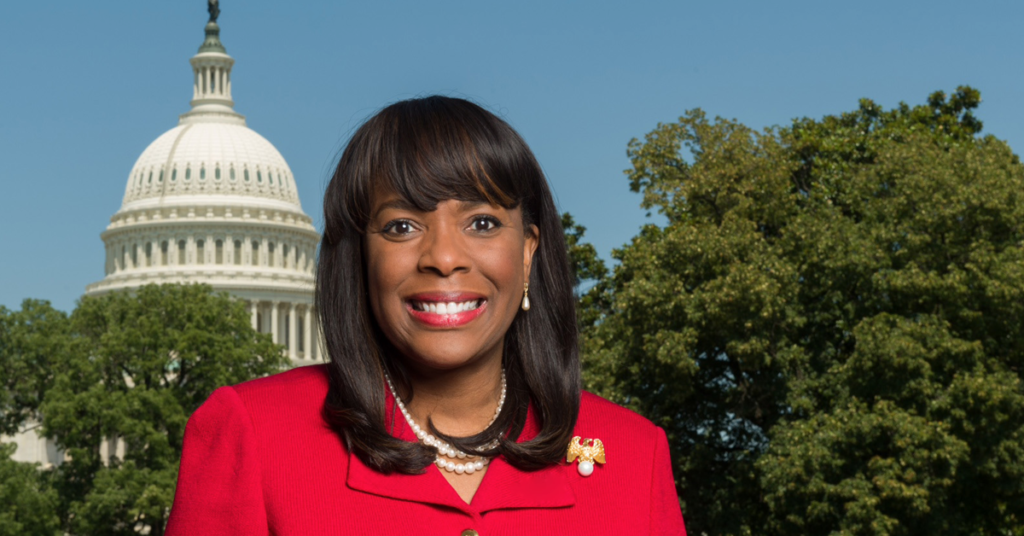
Congresswoman Terri Sewell announced the City of Tuscaloosa has received $17,149,167 in funding from the U.S. Department of Transportation’s(DOT) Federal Rebuilding American Infrastructure with Sustainability and Equity (RAISE) grant program. The funding will be used to support the city’s Tuscaloosa University Boulevard Corridor project for infrastructure improvements. In a press release, Sewell commented, “This is great news for the City of Tuscaloosa and its partners! Investing in our infrastructure provides cities with the revenue they need to not only rebuild but modernize and make room for new innovative development. I applaud the City of Tuscaloosa, the University of Alabama, and the Alabama Department of Transportation for working together to rebuild and revitalize this community. These are the types of funding opportunities that will ensure that the 7th Congressional District can build back better!” According to the DOT website, the program selection criteria for the grants included safety, environmental sustainability, quality of life, economic competitiveness, state of good repair, innovation, and partnerships with a broad range of stakeholders. The grants also wanted to ensure each project would create good-paying jobs, improve safety, apply transformative technology, and address climate change and advance racial equity. The RAISE funding will help with technology upgrades, stormwater drainage improvements, and expand pedestrian access from residential areas to institutional and retail areas in Tuscaloosa. Tuscaloosa Mayor Walt Maddox expressed excitement about the new project. “The City of Tuscaloosa could not be more thrilled to be among the recipients of the Department of Transportation’s RAISE Grant. These funds will give us the opportunity to make improvements to one of the major arteries connecting all of Tuscaloosa and will provide better connectivity across our community,” said stated Maddox. “The enhancements that will be made to the University Blvd corridor will include increased storm drain capacity, streetscape enhancements, advancements in security and safety measures, and the inclusion of bike lanes and underground utilities in several locations.” The RAISE grant program was previously known as the Better Utilizing Investments to Leverage Development (BUILD) and Transportation Investment Generating Economic Recovery (TIGER) Discretionary Grants. Congress has dedicated nearly $8.9 billion for twelve rounds of National Infrastructure Investments to fund projects that have a significant local or regional impact.
Infrastructure bill to support Alabama broadband, road repair; Congressional Republicans rip ‘reckless’ spending

Alabama will receive $5.2 billion in federal highway funding and $225 million for bridge replacement and repairs under the Infrastructure Investment and Jobs Act, according to a news release from U.S. Rep. Terri Sewell of Birmingham. The state’s Republican Congressional delegation criticized the measure for spending more on Democratic wish lists than actual infrastructure. The state will also receive $100 million to improve the state’s broadband coverage. “Broadband internet is necessary for Alabamians to do their jobs, participate equally in school learning, health care, and to stay connected,” Sewell said in the news release. “Yet 18% of Alabama households do not have an internet subscription, and 11.5% of Alabama residents live in areas where, under the FCC’s benchmark, there is no broadband infrastructure.” Alabama will receive $400 million over the next five years for public transportation projects. About a fourth of transit vehicles in the state are “past useful life,” according to Sewell. Sewell said Alabama’s infrastructure “has been falling behind for far too long.” “I fought to ensure that equity is a central focus of this bill, and I’m proud that it will uplift hard-working Alabamians from our biggest cities to our most rural communities,” Sewell said. Alabama will also receive: $782 million for water infrastructure improvements. $140 million to improve the state’s airports $23 million for wildfire protection. $19 million for protection against cyberattacks. The bill passed the House by a vote of 228 to 206. Republican Rep. Gary Palmer of Vestavia Hills voted against the bill. “Our economy is struggling, and our national debt already presents a serious national security threat, but the Democrats have shown they are willing to recklessly push through a bill that costs over a trillion dollars with only about 10 percent going to roads and bridges,” Palmer said in a news release. “I fully support funding for infrastructure that is focused on national priorities rather than wasting hundreds of billions of dollars on a Green New Deal wish list and programs under the guise of human infrastructure that simply expands government control of our lives.” The nonpartisan Congressional Budget Office said the infrastructure bill will increase the federal budget deficit by $256 billion over 10 years. U.S. Rep. Jerry Carl, a Republican from Mobile, said in a tweet over the weekend that he opposed the bill as well. “Late last night, I voted no on the Pelosi/Biden ‘infrastructure’ bill because less than 10% of this massive bill will go toward actual infrastructure projects like roads, bridges, ports, and waterways,” Carl said. “It’s time to get serious about real investments in our infrastructure.” By Kim Jarrett | The Center Square contributor
Terri Sewell announces Job Fair participants

Rep. Terri Sewell has announced the line-up of employers for her 10th Annual Job Fair, which will be held on Tuesday, November 9th from 10 am – 2 pm at the Bessemer Civic Center in Bessemer. This year’s event will feature over 50 employers from 10 industry sectors and will be held in person for the first time since 2019. This is Rep. Sewell’s largest constituent outreach event of the year. Rep. Sewell stated, “We are one week away from our 10th Annual Job Fair, which will be in Bessemer this year! As a key hallmark of our mission to advance economic opportunity for the residents of the 7th District, I have continued to stand firm on my promise of bringing opportunities directly to the people. I am excited to announce that we have an outstanding list of employers confirmed for this year’s Job Fair.” The job fair is free and open to the public. Pre-registration is strongly encouraged but not required. Properly fitted masks are required for entry and attendance. Vaccinations or a negative COVID test within 24 hours of entry are strongly encouraged. Employers attending the 10th Annual Job Fair include: Alabama Department of Youth Services Rural Health Medical Program, Inc. PECO FOODS INC. Alabama Department of Conservation and Natural Resources Selma Fire Department Buffalo Rock Company – Pepsi Birmingham VA HR FCI-Aliceville Montgomery Police Department Alabama Department of Environmental Management Jefferson County Commission GD Copper, USA Inc. City of Selma Police Department Austal USA City of Selma State of Alabama Personnel Department Whatley Health Services, Inc. Personnel Staffing Inc. Personnel Board of Jefferson County Regions Bank Snelling Alabama Department of Labor WorkFaith Birmingham Diverse Staffing Alabama Forestry Commission Alabama Goodwill Vaughan Regional Medical Center Coca-Cola Bottling Company UNITED, Inc. AT&T Blue Cross Blue Shield University of Alabama at Birmingham – Recruitment Services Birmingham Police Department ABC Board Allstate Beverage Company Alabama Department of Human Resources Prystup Packaging Products, Inc. Alabama Power Company Averitt Express Waffle House Dollar General Honda – Alabama Auto Plant (HAAP) Hyundai Rural Health Medical Program, Inc. Federal Bureau of Prisons – FCI Aliceville Alabama Department of Corrections. MainStreet Family Care Mercedes-Benz U.S. International, Inc. Additional employers will be announced in the coming days.
Alabama House approves new congressional district lines
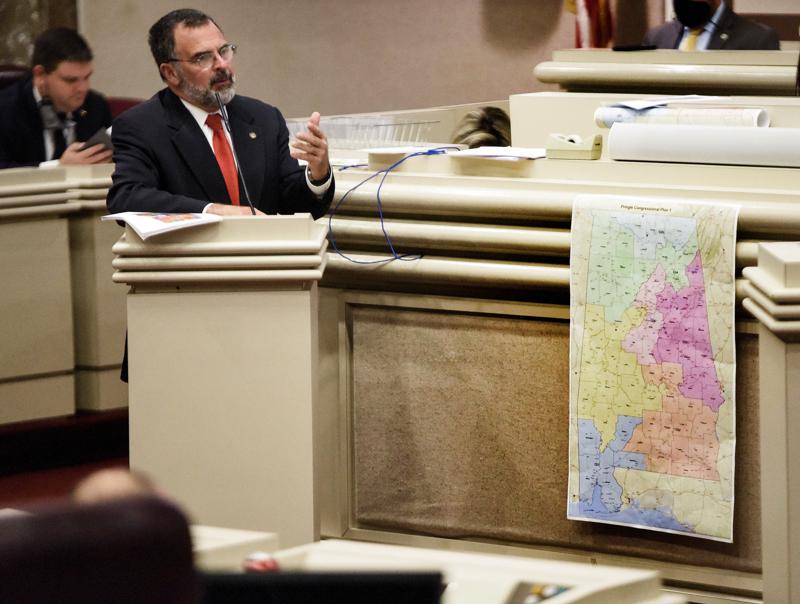
The Alabama House of Representatives on Monday approved new lines for the state’s seven congressional districts as lawmakers try to get required new maps in place for the 2022 elections. Representatives approved the plan on a 65-38 vote with about 10 Republicans joining with Democrats to oppose the new boundary lines for the seven districts. The plan now moves to the Alabama Senate. Some Democrats raised concerns that the process was rushed and that the map packs many Black voters into a single congressional district, preventing them from affecting elections in other districts. The handful of opposed Republicans expressed concern about various changes to the lines. Republican Rep. Chris Pringle, the co-chairman of the redistricting committee and the sponsor of the districting plan, said that lawmakers were careful to comply with the Voting Rights Act and court rulings. “It complies with the law. It complies with our guidelines to the committee. It’s a good plan. It’s a fair plan. It’s an equitable plan,” Pringle, R-Mobile said. Democrats have argued that Alabama, whose population is about 26% Black, should have a second congressional district with a significant African American or minority population. The seven-member delegation has for decades included a single African American, elected from the only district with a majority Black population. The district is now represented by Rep. Terri Sewell, the only Democrat in the state’s congressional delegation. The Republican-supported plan keeps Sewell’s District 7 with a population that is about 55% Black, while the other six districts are overwhelmingly white. “It also serves the other purpose to make sure that those folks can’t go into the Sixth Congressional district and have any real impact on what goes on there,” Democratic Rep. Chris England of Tuscaloosa said of the GOP-backed plan. Representatives in the evening also began debating new district lines for themselves. Several lawmakers in both parties argued that the process had been rushed. “It’s discouraging to me because we’re hurrying. We really don’t have the adequate, accurate information to make the kind of momentous decisions that we’re being asked to make,” said Republican Rep. Mike Holmes of Wetumpka. Pringle said lawmakers are under a time crunch to get the maps ready in time for next year’s elections after receiving their Census data late. The House of Representatives was resuming debate Monday evening. The GOP-controlled Legislature in 2017 had to redraw legislative maps under court order to fix racial gerrymandering in 12 districts. The ruling came after Black lawmakers filed a lawsuit challenging the maps as “stacking and packing” Black voters into designated districts to make neighboring districts whiter and more likely to elect conservative Republicans. Pringle said in drawing the lines this year that they did so without looking at race, based on the existing map and population changes. He said they later calculated the racial composition of districts. The Alabama Senate advanced new lines for state Senate and state school board districts. State senators voted 25-7 for new state Senate lines and 24-4 for new Board of Education lines. Those bills now move to the Alabama House of Representatives. Republished with the permission of the Associated Press.
Alabama lawmakers begin special session on redistricting

The Alabama Legislature convened Thursday for a special session on drawing the state’s legislative, school board, and congressional districts, although many expect the issue will ultimately be headed for federal court. The Legislature is expected to maintain a firm Republican majority under the proposed maps, but some Democrats have raised concerns that the proposed lines don’t reflect a state that has grown more diverse. “We’ve done our best. It’s a balancing act on getting the votes and complying with the courts,” said Republican Sen. Jim McClendon, the co-chair of the Joint Legislative Reapportionment Committee. There is already an existing lawsuit arguing that the state, which has a population that is about 26% Black, should have a second congressional district with a significant African-American population. The seven-member delegation has for decades consisted of a single African American, elected from the only district with a majority Black population. The district is now represented by Rep. Terri Sewell. The GOP-controlled Legislature in 2017 had to redraw legislative maps under court order to fix racial gerrymandering in 12 districts. The ruling came after Black lawmakers filed a lawsuit challenging the maps as “stacking and packing” Black voters into designated districts to make neighboring districts whiter and more likely to elect conservative Republicans. House Minority Leader Anthony Daniels said there are concerns about the proposed districts in the House of Representatives, noting that almost all Republican districts have no less than 60% of one race. “Is that not packing?” Daniels asked. Daniels said that if the goal is to have a community where “no one really sees race and color long term,” then “we have to make sure that our representatives have constituencies that reflect what the future of this state and this country is going to be.” This will be the first full redistricting process that doesn’t require pre-clearance from the Department of Justice, a condition that was instituted under the Voting Rights Act in 1965 in mostly Southern states with a history of voting rights violations. The U.S. Supreme Court effectively ended the requirement in 2013 when it ruled the federal government was using an outdated method to decide which states were subject to it. McClendon said that, even without the requirement, lawmakers were careful to comply with the Voting Rights Act and related court rulings. House Speaker Mac McCutcheon acknowledged that, as in past years, there will probably be some court challenges to the plan. “We’re going to allow the process to work. We’re listening to everyone,” he said.
Terri Sewell votes to hold Steve Bannon in contempt of Congress

Rep. Terri Sewell voted to hold Steve Bannon in contempt of Congress for failing to comply with a congressional subpoena. The subpoena, which the Select Committee issued to Investigate the January 6th Attack on the United States Capitol, required Bannon to produce both documents and testimony relevant to the attack. The House found Bannon in contempt of Congress in a bipartisan 229 to 202 vote. On September 23rd, Chairman Thompson signed and transmitted a subpoena to Bannon, ordering the production of documents on October 7th and requiring his presence for deposition testimony on October 14th. Bannon failed to produce the documents on October 7th and failed to show up for the deposition on October 14th. “We need to make it clear that no person is above the law; we need to take a stand for the committee’s investigation and for the integrity of this body,” said the committee chair, Bennie Thompson. “Steve Bannon appears to have played a multi-faceted role in the events of the January 6th attack. The American people are entitled to hear his testimony,” stated Sewell in a press release. “His refusal to comply with a congressional subpoena is completely unacceptable and demonstrates that he believes he is above the law.” Sewell continued, “Today’s vote shows that the United States House of Representatives will not be intimidated or deterred. We have a responsibility to get to the bottom of this horrific attack in order to prevent future threats to our democracy, and that is exactly what we will do.” On Twitter, Sewell commented, “Steve Bannon is not above the law. The U.S. House of Representatives will not be intimidated or deterred. We have a responsibility to get to the bottom of the horrific Jan. 6th attack in order to prevent future threats to our democracy, and that is exactly what we will do.” The Justice Department will now decide what happens to Bannon. Attorney General Merrick Garland has not said whether he will move forward with charges. “We’ll apply the facts in the law and make a decision, consistent with the principles of prosecution,” he told the House Judiciary Committee during an oversight hearing on Thursday.
