
Legislators react to Kabul attack, soldier deaths

Two suicide bombers and gunmen attacked crowds of Afghans flocking to Kabul’s airport Thursday, Associated Press reported. The attacks killed at least 60 Afghans and 13 U.S. troops. 11 Marines and one Navy medic were among those who died. President Joe Biden said in a speech at the White House, “We will not forgive. We will not forget. We will hunt you down and make you pay.” He also instructed the U.S. military to develop plans to strike the Islamic State, the group that took responsibility for the attacks. Alabama legislators are reacting to the attacks. In a press release, Rep. Gary Palmer said, “I am heartbroken and infuriated by the reports coming out of Afghanistan. President Biden’s incredibly stupid decision to set August 31st as the evacuation deadline, his failure to maintain control of Bagram Airbase, and his failure to secure exit routes for the safe and orderly evacuation of American citizens and Afghan allies have led to this tragedy. Over the last 18 months, no U.S. military members were killed, but today we have lost at least 12. This tragedy was preventable and unnecessary, and it is time for President Biden and his administration to take full responsibility for it. “Twelve American soldiers are now dead, yet the American people have had to wait hours to hear from the President. Whatever his message of condolences might be, it will ring hollow in the face of such incomprehensible incompetence. With our forces essentially surrounded by ISIS-K and the Taliban, President Biden needs to face the crisis head on and react with swiftness and force to make sure we get our people and our allies safely out.” Congressman Mo Brooks wrote on Twitter, “President Biden has embarrassed America with his botched Afghanistan withdrawal. Now his decisions have led to dead Americans in Kabul. Biden should take responsibility for this disgrace and resign immediately.” Rep. Terri Sewell stated on Twitter, “I’m devastated to learn of the explosions outside the Kabul airport. I’m monitoring the situation closely and sending prayers to any U.S. personnel or Afghan citizens wounded or killed in the attack.” Rep. Barry Moore stated, “Devastating. Praying for our troops and every American still stranded in Afghanistan. We MUST bring them ALL home safely.” Senator Richard Shelby said, “Deeply saddened by the attacks today in Kabul and the many U.S. servicemembers killed while heroically working to protect our citizens and allies. Praying for their families and loved ones during this time of tragedy, and for the safety of our forces still on the ground in Kabul.”
Retired Circuit Judge Bobby Ray Aderholt has died
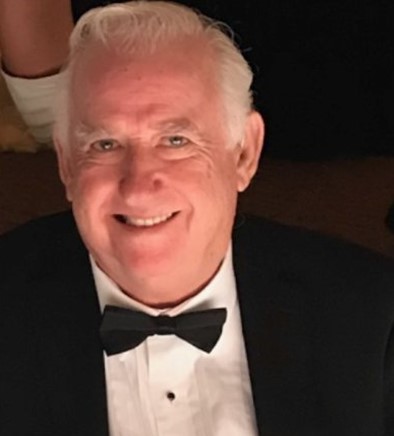
Retired Circuit Judge Bobby Ray Aderholt, father of Congressman Robert Aderholt, has died, after a brief battle with cancer. He passed away peacefully in his home in Hayleyville. He was 85 years old. Judge Aderholt served as judge of the Court of Law and Equity in Winston County from 1962 until 1973. He was elected to circuit judge of the Alabama 25th Judicial Circuit in 1976 and served there until his retirement in 2008. Congressman Aderholt announced his father’s death. “He served the public for more than 50 years and presided over each case that came before him with integrity, and with impartiality. He is someone who had a brilliant legal mind; but most importantly, he always had compassion for all individuals, regardless of their background, level of income or social standing. “He was a man with a strong faith in Christ, who had a great love for his family and his God. In addition to his responsibilities on the bench, he was a businessman and pastored Fairview Congregational Church in Hackleburg, Alabama, for 47 years. “Judge Bobby Ray Aderholt will be missed by so many, but he leaves such a rich and enduring legacy for his family and everyone who knew him.” Gov. Kay Ivey posted on social media, “Congressman Aderholt and his family are most certainly in my prayers for the loss of his father, Judge Bobby Ray Aderholt. @Robert_Aderholt, I know you’ll keep the memories of him close. Losing a parent is difficult, but I pray for peace and comfort for you and your family.” Rep. Terri Sewell stated, “Please join me in keeping Rep. @Robert_Aderholt and his family in your prayers after the passing of his father, Judge Bobby Ray Aderholt.” Rep. Mike Rogers posted on Twitter, “I am praying for my friend and colleague @Robert_Aderholt as he and his family mourn the passing of his father Judge Bobby Ray Aderholt.”
Terri Sewell gets no support from delegation on Voting Rights Act
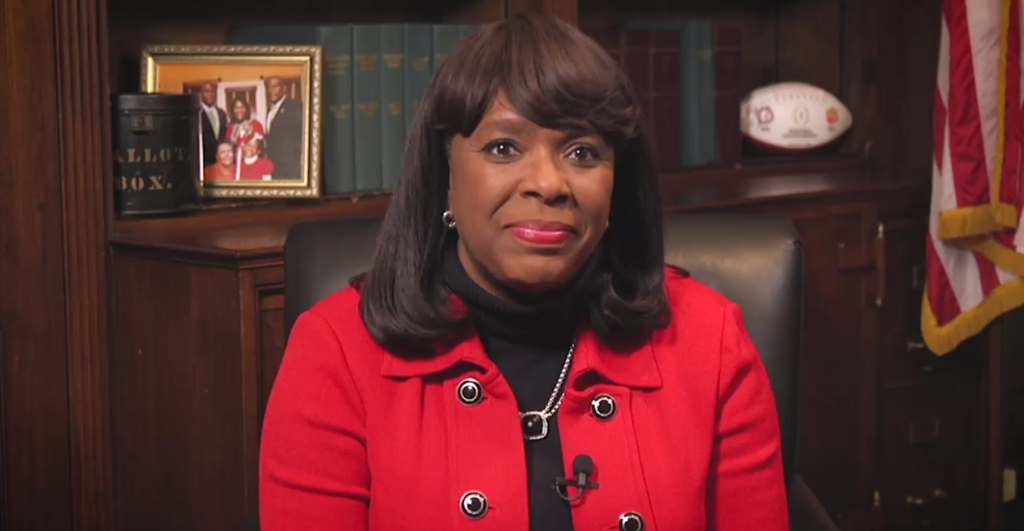
Reps. Mo Brooks and Barry Moore vowed to vote against H.R. 4, the John Lewis Voting Rights Advancement Act. Introduced by Alabama’s own Terri Sewell, the Act passed the House yesterday with no Republican support. Alabama Congressmen all voted Nay, except for Sewell. The bill now moves to the Senate, where it’s unlikely to pass. Democrats do not have enough votes to overcome the opposition from Senate Republicans who claim the bill is “unnecessary.” The bill seeks to restore a key provision of the federal law that compelled states with a history of discrimination to undergo a federal review of changes to voting and elections. The Supreme Court set aside the formula that decided which jurisdictions were subject to the requirement in a 2013 decision and weakened the law further in a ruling this summer, reported the Associated Press. In a press release, Brooks stated, “The Socialist Democrats were dealt a blow when the Senate voted down H.R 1, the ‘Socialist Democrat Election Fraud Enhancement Act.’ Now, they seek to again undermine America’s election systems with H.R. 4, a bill that eliminates state safeguards that protect honest and accurate elections.” On Twitter, Brooks commented, “I will vote against H.R. 4 because much like H.R. 1, it undermines America’s Republic and effectively turns our election results into what we so often see in North Korea, the old Soviet Union, Venezuela and any number of other pretend republics.” Rep. Moore said in a press release, “After failing to federalize our elections through H.R. 1, Pelosi’s deceitful sequel is yet another unconstitutional power grab intended to keep Democrats in power. Despite being named after a Civil Rights icon, the title only serves as a guise to hide Democrats’ true intentions of centralizing election power with the federal government. I cannot support this delusional attack on democracy, but I remain committed to strengthening election integrity for all Americans.” Sewell commented on Twitter, “This is my fourth time introducing a version of the Voting Rights Advancement Act but my first time doing it without John. As I cast my vote for #HR4 later today, I’ll be thinking of John. I know he’ll be watching over us as we get into #GoodTrouble and carry on his legacy.” On Wednesday, Brooks posted on Twitter, “Socialist Democrats seek to undermine America’s election systems with HR4, a bill that eliminates state safeguards that protect honest and accurate elections. I’m glad to stand with @RepBarryMoore and the rest of the Alabama delegation in opposing it.”
House passes bill bolstering landmark voting law

House Democrats have passed legislation that would strengthen a landmark civil rights-era voting law weakened by the Supreme Court over the past decade, a step party leaders tout as progress in their quest to fight back against voting restrictions advanced in Republican-led states. The bill, which is part of a broader Democratic effort to enact a sweeping overhaul of elections, was approved on a 219-212 vote, with no Republican support. Its Tuesday passage was praised by President Joe Biden, who said it would protect a “sacred right” and called on the Senate to “send this important bill to my desk.” But the measure faces dim prospects in that chamber, where Democrats do not have enough votes to overcome opposition from Senate Republicans, who have rejected the bill as “unnecessary” and a Democratic “power grab.” That bottleneck puts Democrats right back where they started with a slim chance of enacting any voting legislation before the 2022 midterm elections when some in the party fear new GOP laws will make it harder for many Americans to vote. But they still intend to try. Speaking from the House floor, Speaker Nancy Pelosi said it was imperative for Congress to counteract the Republican efforts, which she characterized as “dangerous” and “anti-democratic.” “Democracy is under attack from what is the worst voter suppression campaign in America since Jim Crow,” Pelosi said. The John Lewis Voting Rights Advancement Act, named for the late Georgia congressman who made the issue a defining one of his career, would restore voting rights protections that have been dismantled by the Supreme Court. Under the proposal, the Justice Department would again police new changes to voting laws in states that have racked up a series of “violations,” drawing them into a mandatory review process known as “preclearance.” The practice was first put in place under the Voting Rights Act of 1965. But it was struck down by a conservative majority on the Supreme Court in 2013, which ruled the formula for determining which states needed their laws reviewed was outdated and unfairly punitive. The court did, however, say that Congress could come up with a new formula, which is what the bill does. A second ruling from the court in July made it more difficult to challenge voting restrictions in court under another section of the law. The bill’s sponsor, Rep. Terri Sewell, said “old battles have indeed become new again,” enabled by the Supreme Court’s rulings. “While literacy tests and poll taxes no longer exist, certain states and local jurisdictions have passed laws that are modern-day barriers to voting,” said Sewell, an Alabama Democrat. In many cases, the new bill wouldn’t apply to laws enacted in the years since the court’s 2013 ruling. That likely includes the wave of new Republican-backed restrictions inspired by Donald Trump’s false claims of a stolen 2020 election. But if signed into law along with Democrats’ other election bill, the For the People Act, many of those restrictions could be neutralized — and likely prevented from getting approved again. Both laws would likely face legal challenges. In the short term, the vote Tuesday was expected to soothe restive Democratic activists who have been frustrated by inaction on the issue in the Senate. NAACP President Derrick Johnson said he was “encouraged” by the bill’s passage. But he also offered a thinly veiled threat, pledging to watch closely as the Senate takes it up and “keep track of every yea and every nay” vote. “Make no mistake, we will be there, on the ground in 2022, in every state that needs a new Senator,” he said in a statement. Democrats’ slim 50-50 majority in the Senate means they lack the 60 votes needed to overcome a filibuster. For months, progressives have called for scrapping the filibuster, but a number of moderate Democrats oppose the idea, denying the votes needed to do so. It’s also not clear that the John Lewis Voting Rights Advancement Act, as written, would be supported by all Democrats in the Senate, where there are no votes to spare. One provision in the bill would ban many types of voter ID laws, including those already on the books. That’s at odds with a proposal from West Virginia Sen. Joe Manchin, who is the chamber’s most conservative Democrat. He’s spent weeks working with Senate leadership to develop a more narrowly focused alternative to the For the People Act and has specifically called for a voter ID standard that would allow for people to use a document like a utility bill. Republicans, meanwhile, blasted the timing of the measure, noting that Pelosi called Democrats back from August recess to pass the bill, as well as to take votes on Democrats’ spending priorities when the U.S. is dealing with its chaotic withdrawal from Afghanistan. “If there’s any moment in time to put an election aside, if there’s any moment of time to put politics aside, I would have thought today was this day,” said House Minority Leader Kevin McCarthy. Conservatives also criticized the bill as a departure from the 1965 voting law, which used minority turnout data as well as a place’s history of enacting discriminatory voting laws when determining which places would be subject to preclearance. The new bill, instead, leans heavily on looser standards, such as using the number of legal settlements and consent decrees issued in voting rights cases to pull places into preclearance. That would, Republicans argue, play into the hands of Democrats, who have built a sophisticated and well-funded legal effort to challenge voting rules in conservative-leaning states. Rep. Michelle Fischbach, a Minnesota Republican, predicted it would be a boon for Democratic advocacy groups and trial lawyers, who would “file as many objections as possible to manufacture litigation.” “It empowers the attorney general to bully states and seek federal approval before making changes to their own voting laws,” she said. Republished with the permission of the Associated Press.
Terri Sewell introduces bipartisan bill to ensure patients have access to home infusion services
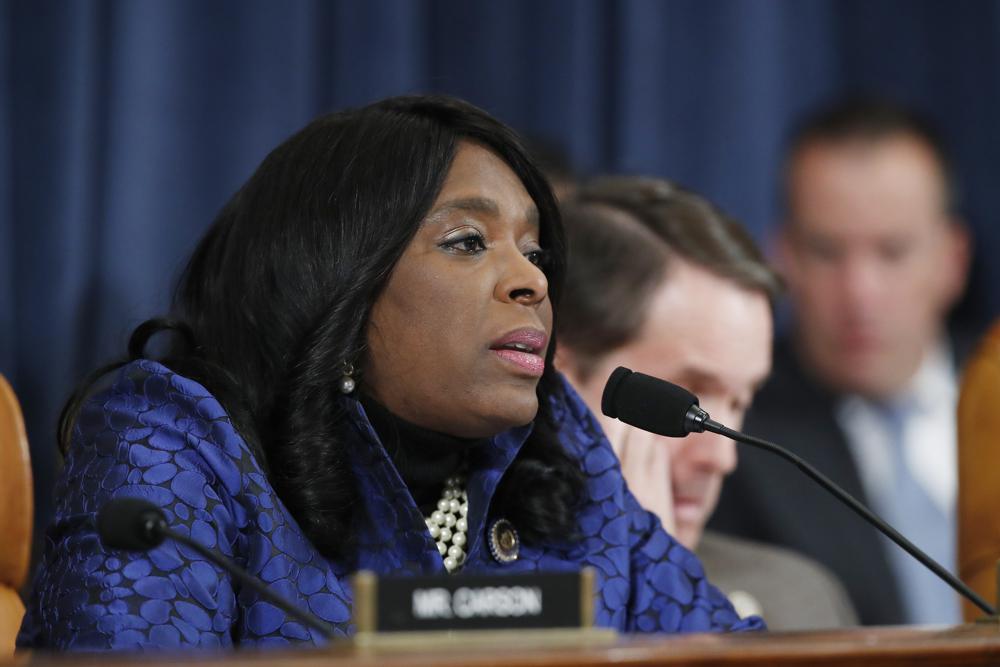
Rep. Terri Sewell joined legislators Fred Upton, Debbie Dingell, and Vern Buchanan to introduce H.R. 5067, the Preserving Patient Access to Home Infusion Act. This bipartisan bill would ensure patients with serious viral and fungal infections, heart failure, immune diseases, cancer, and other conditions receive IV medications they need while at home. Companion legislation was introduced in the U.S. Senate by Mark Warner and Tim Scott. Sewell stated, “Countless Alabamians, especially those in rural communities, rely on home infusion services for life-saving care. With the risks posed by the COVID-19 pandemic, it has never been more critical to ensure that patients continue to receive this care safely in their homes. I’m so proud to introduce this bipartisan bill and urge my colleagues on both sides of the aisle to give it their full support.” Rep. Upton commented, “While the COVID-19 pandemic certainly took so much from so many, it also gave us the opportunity to rethink the way that we care for the most vulnerable among us. Home infusion, in particular, is a perfect example of how we can bring healthcare services into folks’ homes while keeping both patients, their families, and medical professionals safe and healthy. I am proud to co-sponsor this important legislation and will continue to work with my colleagues on both sides of the aisle to expand access to quality, affordable healthcare.” “As we have learned from the coronavirus pandemic, home health services have proven to be invaluable for seniors in my district and across the country,” said Rep. Buchanan. “The aptly-named Preserving Patient Access to Home Infusion Act will ensure that Medicare recipients are able to continue to receive life-saving drugs in a safe and effective way from the comfort of their own home.” Patients with serious infections, cancer, heart failure, immune system diseases, and other conditions who need medications such as IV therapies can receive these medications in their homes rather than hospitals or nursing homes. Research shows that up to 95% of patients would prefer receiving their infusions at home. Congress included provisions for this in the 21st Century Cures Act and the Bipartisan Budget Act of 2018. However, the Centers for Medicare and Medicaid Services (CMS) didn’t implement the benefit properly. They required a nurse to be physically present in the patient’s home for providers to be reimbursed. As a result, provider participation has dropped sharply, and beneficiaries have experienced reduced access to home infusion over the last several years. The act provides technical clarifications that will remove the physical presence requirement, ensuring payment regardless of whether a health care professional is present in the patient’s home. The bill will save $93 million over 10 years. “Home-based infusion services stand out as high-value resources that improve patient quality of life and add capacity to the health care system while providing cost-savings for the Medicare program,” said NHIA President and CEO Connie Sullivan. “Passage of the Preserving Patient Access to Home Infusion Act is critical to ensuring the Medicare program maintains access to home infusion, allowing beneficiaries to safely receive treatment in the setting they overwhelmingly prefer: their homes.” “Providing IV medications in patients’ homes allows individuals to receive their treatments without major sacrifices in their quality of life and without having to rely on transportation to travel to a facility for their treatments,” said Logan Davis, MBA of Vital Care InfusionServices. “This legislation will ensure that the Medicare home infusion therapy benefit is accessible to patients, including many who are located in Alabama’s rural or historically underserved communities.”
Democrats unveil plan to update landmark voting law
House Democrats on Tuesday put forward a new proposal to update the landmark Voting Rights Act, seeking against long odds to revive the civil rights-era legislation that once served as a barrier against discriminatory voting laws. The bill, introduced by Rep. Terri Sewell of Alabama, seeks to restore a key provision of the federal law that compelled states with a history of discrimination to undergo a federal review of changes to voting and elections. The Supreme Court set aside the formula that decided which jurisdictions were subject to the requirement in a 2013 decision and weakened the law further in a ruling this summer. House Speaker Nancy Pelosi, D-Calif., pledged to move quickly and said Democrats plan to pass the bill when the House returns next week. “With the attack on the franchise escalating and states beginning the process of redistricting, we must act,” Pelosi said in a statement. The push comes at a time when a number of Republican-led states have passed laws tightening rules around voting, particularly mail ballots. Democrats have sounded the alarm about the new hurdles to voting, comparing the impact on minorities to the disenfranchisement of Jim Crow laws, but they have struggled to unite behind a strategy to overcome near-unanimous Republican opposition in the Senate. The new House bill, known as H.R. 4, is named after Georgia congressman and civil rights leader John Lewis, who died last year. Sewell announced the introduction of the bill in front of the Edmund Pettus Bridge in Selma, Alabama, where Lewis was beaten during a civil rights march in 1965. The Voting Rights Act was signed into law a few months later. “We’re not looking to punish or penalize anyone. This is about restoring equal access to the ballot box. It’s about ensuring that Americans know their vote counts and their vote will count at the ballot box,” Sewell said. The Lewis bill outlines a new, expanded formula that the Department of Justice can use to identify discriminatory voting patterns in states and local jurisdictions. Those entities would then need to get DOJ approval before making further changes to elections. The bill also includes a provision designed to counter the summer’s Supreme Court ruling that made it harder to challenge potentially discriminatory voting changes. A companion bill pushed by Democrats, known as the For the People Act, has stalled in the Senate amid Republican opposition and disagreement among Democrats about whether to change procedural rules in the evenly divided Senate to get it passed. Democrats have argued both bills are needed to safeguard access to the ballot. They emphasize that the update to the Voting Rights Act would not apply to many voting changes already made by the states. The For the People Act, on the other hand, would create minimum voting standards in the U.S., such as same-day and automatic voter registration, early voting, and no-excuse absentee voting. The bill would also change various campaign finance and ethics laws. Senate Democrats have pledged to take up that more expansive bill when they return next month as the first order of business, though it is unclear how they can maneuver around GOP opposition. Republicans signaled they’ll try to stop the John Lewis Act much as they have the For the People Act. “This bill is a federal power grab and a gift to partisan, frivolous litigators who will use it to manipulate state laws and throw all federal elections into chaos, further undermining voter confidence in fair and accurate elections,” said Jason Snead, executive director of Honest Elections Project Action, a conservative advocacy group. Voting rights groups have been putting pressure on Democrats to eliminate or change the filibuster rules in the Senate, which requires 60 votes to proceed with most legislation, to get around the broad GOP opposition to the bills. That partisan opposition leaves Democrats well short of the needed support to advance them in the 50-50 Senate. At least two Democratic senators, Kyrsten Sinema of Arizona and Joe Manchin of West Virginia, have said they oppose eliminating the filibuster though discussions are ongoing about potential changes to the rules. Groups that back the voting measures are planning marches in several cities on Aug. 28 to call on the Senate to remove the filibuster rule. Republished with the permission of the Associated Press.
HUD Secretary heads to Birmingham to sell Joe Biden’s $1 trillion agenda

Housing and Urban Development Secretary Marcia L. Fudge will be in Birmingham to promote the Biden-Harris Administration’s Build Back Better agenda. The visit comes after the Senate approved a Joe Biden’s $1 trillion infrastructure plan. The plan includes investments in housing construction and rehabilitation, economic development, and community revitalization. The Build Back Better Plan has goals for subsidies that will enable the construction or repair of more than 1 million affordable rental housing units and funding to build and rehabilitate more than 500,000 homes for low- and middle-income homebuyers. Secretary Fudge will be joined by Birmingham Mayor Randall Woodfin, Rep. Terri Sewell, and Birmingham Housing Authority President David Northern Sr. The event will be held at 10 am on Wednesday at the Villas at Titusville in Birmingham. Also on the agenda is a roundtable on affordable housing and community revitalization with community leaders and a tour of Southtown Court public housing community at 2:45 pm. Fudge is the 18th Secretary of the U.S. Department of Housing and Urban Development. She served as U.S. Representative for the 11th Congressional District of Ohio from 2008 to March 2021. She was a member of several Congressional Caucuses and past Chair of the Congressional Black Caucus. I’m so excited to be joining Mayor @randallwoodfin to welcome HUD Secretary Marcia Fudge (@SecFudge) to Birmingham!! Follow along tomorrow as we discuss @POTUS’ plan to invest in affordable housing, revitalize our communities, and #BuildBackBetter!👏🏾 https://t.co/ArkRTIp40K — Rep. Terri A. Sewell (@RepTerriSewell) August 10, 2021
$2.8 million awarded to Alabama historic sites

Rep. Terri Sewell announced Wednesday that over $2.8 million in funding from the National Park Service’s African American Civil Rights Grant Program is being awarded to preserve historic sites in Alabama. Sewell commented, “I am beyond thrilled that over $2.8 million in funding from the National Park Service (NPS) is being invested into Alabama to preserve the living history of the Civil Rights Movement. As Representative of America’s Civil Rights District, I have always fought to secure funding for the preservation of these historic sites as they are critical to ensuring that America’s story lives on. Every year when my colleagues and I join together to commemorate the pilgrimage of the Civil Rights Movement, we are reminded that history is elusive. It is incumbent upon all of us to ensure that our history is preserved and protected for generations to come.” The Historic Preservation Fund (HPF) uses revenue from federal oil leases on the Outer Continental Shelf, assisting with a broad range of preservation projects without expending tax dollars to mitigate the loss of a nonrenewable resource by benefitting the preservation of other irreplaceable resources. Established in 1977, the HPF is authorized at $150 million per year through 2023 and has provided more than $2 billion in historic preservation grants to States, Tribes, local governments, and nonprofit organizations. Administered by the NPS, HPF funds are appropriated annually by Congress to support a variety of historic preservation projects to help preserve the nation’s cultural resources. The National Park Service has awarded the following grants, which total $2,836,313, for historic sites in Alabama: $500,000 to the Saint Paul United Methodist Church for preservation, restoration, and repair $500,000 to the Sixteenth Street Baptist Church for preservation and rehabilitation $236,313 to the Elmore Bolling Foundation for the restoration and preservation of the historic Lowndesboro School $500,000 to the Lincolnite Club, Inc. for phase II structural repairs, window restoration, and building systems replacement of the historic Lincoln Normal School Gymnasium $50,000 to the Alabama Historical Commission for the Freedom Rides Museum exterior exhibit and window displays $500,000 to the Alabama Historical Commission for the phase III rehabilitation of the Moore Building $50,000 to the Selma Center For Non-Violence, Truth And Reconciliation for the Voting Rights Movement Education Project: Engaging history through digital and physical educational resources $500,000 to the Historic Tabernacle Baptist Church Selma AL Legacy Foundation Inc. for the critical complete re-roofing of gabled and domed roofs National Park Service Deputy Director, Shawn Benge stated, “This competitive grant program is just one of the many ways the National Park Service is working to preserve and interpret the lesser-known facets of our nation’s shared history From physical restoration projects to surveys, documentation, and education, this years’ grant funds will help many of our State, Tribal, local, and non-profit partners advance their preservation goals.”
Alabama congressional delegation responds to first day of testimony in January 6th hearing
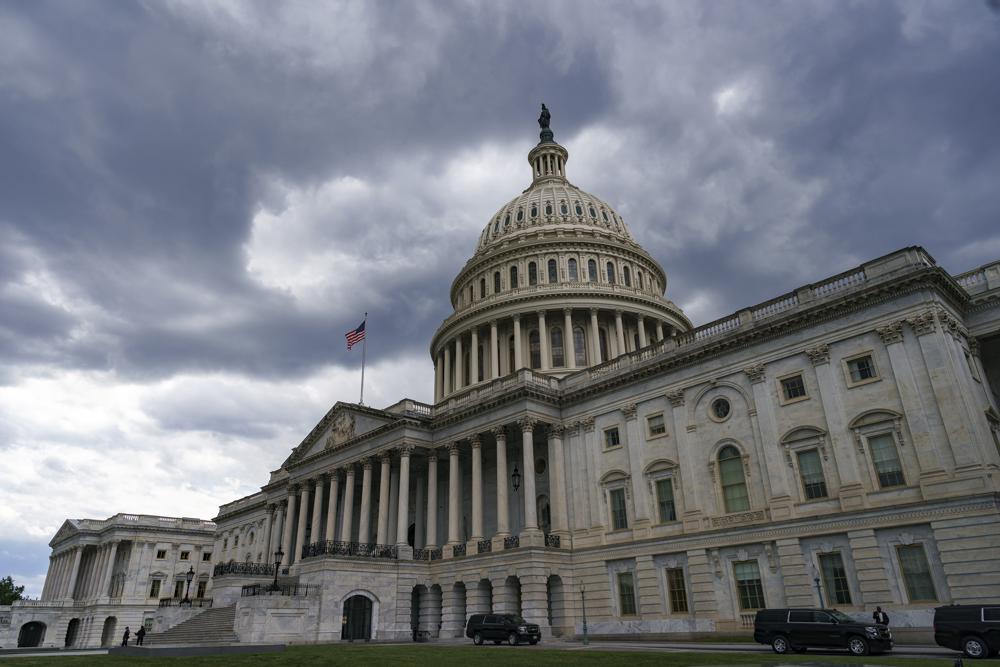
In early July, the U.S. House of Representatives approved legislation to create a committee to investigate the January 6 attack on the U.S. Capitol. House Resolution 503 passed the House, with most Democrats voting for the resolution and most Republicans voting against it. The committee was approved by a 222-190 vote. In Alabama, Republicans Jerry Carl, Barry Moore, Mike Rogers, Robert Aderholt, Mo Brooks, and Gary Palmer all voted against the resolution. Democrat Terri Sewell voted yes. This is the first hearing to investigate the attack by pro-Trump rioters who attempted to stop the certification of the presidential election, which Donald Trump lost to Democrat Joe Biden. As hearings began today for the January 6th investigation, four police officers testified about what they experienced during the riot. According to NPR, Lawmakers on the panel praised the officers’ heroism and criticized leaders who have denied the events of that day. Congressman Jerry Carl released a statement, saying, “As Nancy Pelosi continues wasting time and resources pursuing her partisan investigation into January 6th, I support Leader [Kevin] McCarthy’s decision to boycott this sham process until Pelosi seats all five Republican nominees. Pelosi’s decision to deny the input of members who have served our country in the military and in law enforcement is flat-out wrong and is a complete abuse of power. This is the exact reason why I voted against creating the Select Committee on January 6 – Congress should not waste taxpayer dollars on a partisan witch hunt that will serve no purpose other than demonizing an entire political party and weaponizing the events of January 6.” Terri Sewell tweeted, “I remember #January6th like it was yesterday. I was in the gallery of the House chamber when the breach occurred. I remember lying on the floor huddling with other Members, struggling to fit on a gas mask & hearing a thunderous sound. I trembled and wept for our democracy.” Rep. Barry Moore stated on Twitter, “From soaring inflation to rising crime, Americans are facing real issues across our nation due to Democrats’ failed policies. But instead of finding solutions to these crises, the House is focused on Pelosi’s sham investigation. The American people deserve better.”
Jerry Carl joins Terri Sewell in supporting Disaster Reforestation Act
Congressman Jerry Carl announced his sponsorship of the Disaster Reforestation Act of 2021, which is bipartisan legislation to help timber growers recover from timber loss caused by natural disasters. Introduced by Terri Sewell and Buddy Carter in June, the bill would let private forest owners deduct the value of destroyed timber on their taxes after a natural disaster such as hurricanes and tornadoes while making it easier for timber owners to recover and reforest after a natural disaster. Carl stated, “South Alabama is home to more than 500,000 acres of privately-owned forests, which support 2,000 jobs in the district, so it is critical we amend the tax code to help Alabama’s private forest owners recover and reforest after natural disasters. Working forests create good-paying, sustainable jobs, which are necessary for a stable lumber market and create a natural solution to protect our environment. I urge my colleagues on both sides of the aisle to support this important legislation.” Sewell posted on Twitter, “Our beautiful Alabama forests keep our economy, environment, and people healthy. We must ensure that our tax code helps forest landowners recover after devastating natural disasters.”
Birmingham’s Kamau Marshall joins Joe Biden administration

Former Birmingham resident Kamau Marshall has joined the Joe Biden administration’s communications team as Deputy Assistant U.S. Trade Representative for Media and Public Affairs, Al.com reported. He previously served as a Spokesperson and Senior Advisor for outreach and communications to the CEO and Co-Chairs for the 59th Presidential Inaugural Committee. Most recently, Kamau was the Director of Strategic Communications for the 2020 Biden presidential campaign. Marshall moved to Alabama as a youth, moving from Pittsburgh to Birmingham. “They’re not that far apart culturally,” Marshall told AL.com. “Both are blue-collar cities with strong Black communities; both are steel mill towns. I was very excited as a young child moving, mainly due to the civil rights aspects and its history,” he added. “Yes, I was that child—very excited about moving to Birmingham.” Marshall also served in the Obama-Biden Administration as the Communications Advisor and Speechwriter at the U.S. Department of Agriculture. He was a special assistant to the late Congressman Elijah E. Cummings. “It’s exciting to serve this president and vice president at this time,” said Marshall, who lived in Midfield, Fairfield, and Ensley. “There’s a strong focus on economics and trade—things a lot of people don’t think about regarding how they relate to their day-to-day lives. Economics and trade are how the world goes.” A graduate of Texas Southern University, he considers himself a native of many cities and states, and while his brothers graduated from Wenona High School, they moved to Georgia before he was able to attend. “I loved my time in Birmingham; it played a critical role in my life,” he says. “It’s part of my foundation, especially for a person who previously lived up north—providing a solid sense of community and southern living. Southern manners can take you far.” Marshall’s mother was an Alabama native, and he still has relatives in Alabama—in Tuscaloosa and Huntsville. “It’s really like we never left,” he said.
Leaders split on vote for January 6 Capitol riot investigation
On Wednesday the U.S. House of Representatives approved legislation to create a committee to investigate the Jan. 6 attack on the U.S. Capitol. House Resolution 503 passed the House with most Democrats voting for the resolution and most Republicans voting against it. The committee was approved by a 222-190 vote. In Alabama, Republicans Jerry Carl, Barry Moore, Mike Rogers, Robert Aderholt, Mo Brooks, and Gary Palmer all voted against the resolution. Democrat Terri Sewell voted yes. Rep. Sewell stated on Twitter, “#January6th was a dark day for our democracy & too many questions still remain. Since @SenateGOP voted down a bipartisan commission, I’m glad that the House is establishing a Select Committee to investigate. We cannot prevent future attacks if we don’t fully understand this one.” #January6th was a dark day for our democracy & too many questions still remain. Since @SenateGOP voted down a bipartisan commission, I'm glad that the House is establishing a Select Committee to investigate. We cannot prevent future attacks if we don't fully understand this one. pic.twitter.com/RKLe9LmhnE — Rep. Terri A. Sewell (@RepTerriSewell) June 30, 2021 In a press release, Rep. Moore stated, “During the six months that Speaker Pelosi demanded her committee chairmen sit on their hands while she conducted her political circus, two bipartisan Senate committees concluded exhaustive investigations and the Department of Justice and FBI arrested or charged over 500 people. If Speaker Pelosi was serious about investigating the January 6th riot, she would have already acted instead of pushing her partisan investigation closer and closer to next November’s elections. “Pelosi’s select committee would have a skewed, 8 Democrat and 5 Republican panel of members. The House standing committees have the full authority, jurisdiction, power, and staff to investigate the events of January 6th and are more than capable of conducting such investigations. “This would be a turbo-charged partisan exercise, not an honest fact-finding body that the American people and Capitol Police deserve,” Moore concluded. Rep. Brooks posted on Twitter, “Thanks to @stinchfield1776 for having me on @newsmax to discuss how Nancy Pelosi’s “select” committee on January 6 is for hyperpartisan political gain on the Social Democrats’ part.” Thanks to @stinchfield1776 for having me on @newsmax to discuss how Nancy Pelosi's "select" committee on January 6 is for hyperpartisan political gain on the Socialist Democrats’ part. pic.twitter.com/zmsmvKB0Oa — Mo Brooks (@RepMoBrooks) June 30, 2021
