
Congressman Mike Rogers plays critical role in U.S. missile defense, national security
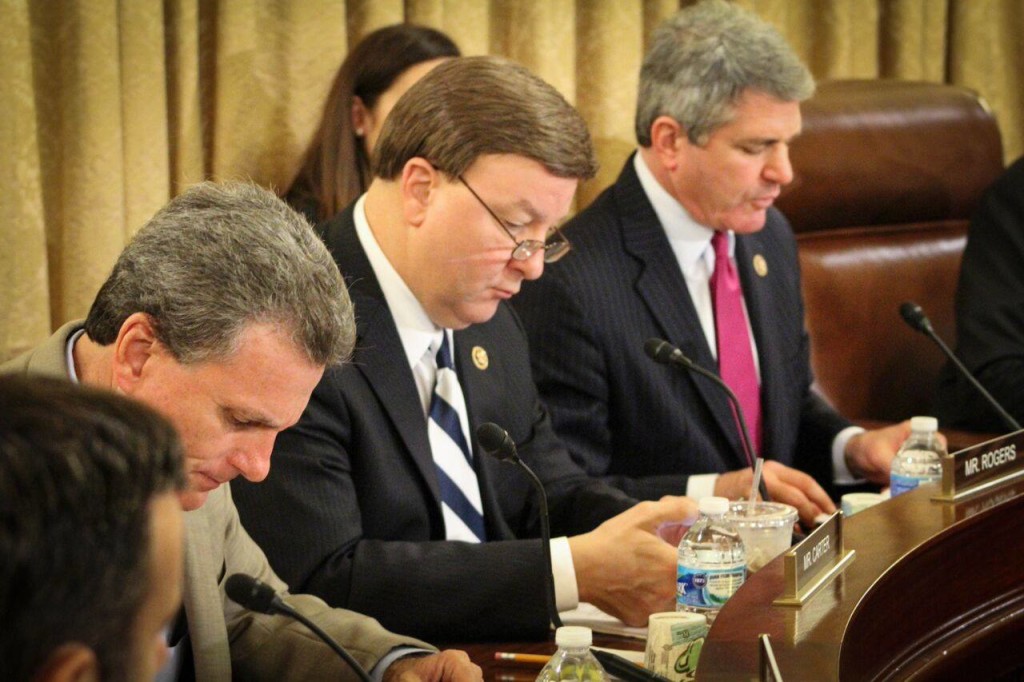
As North Korean missiles soar over the Pacific, Hawaii lawmakers are preparing for a possible nuclear attack by North Korea on the U.S. state. Many Americans across the country believe policymakers in Washington have an obligation to fund systems that can protect Americans here and now. One such lawmaker who plays a key role in Congress’ missile defense decision-making is Alabama 3rd District. U.S. Rep. Mike Rogers. As a senior member of the House Armed Services Committee (HASC), Rogers was selected to serve as Chairman of the Subcommittee on Strategic Forces, which is specifically tasked with dealing with missile defense and nuclear weapons issues. With tensions over North Korea’s weapons systems escalating in recent months — as North Korean dictator Kim Jung Un and his regime have launched tests of multiple intercontinental ballistic missiles (ICBM), some of which could reach North America — Rogers’ job in Congress in more important than ever. Especially given that North Korea recently threatened the U.S., saying it should be “beaten to death like a rabid dog” and reduced to “ashes and darkness.” Hawaii’s leaders are relying on the U.S. missile defense system, whose interceptors are based in California and Alaska, for defense. But as missile tests continue and threats from Pyongyang feel ever more viable, the question is — are America’s missile defense systems enough to defend the Aloha State? The United States? The top U.S. commander in the Pacific theater, Adm. Harry Harris Jr., told lawmakers on Capitol Hill in April Hawaii may not be protected from the North Korean nuclear missile threat. That America needed more radars and more interceptors in the Pacific explaining that the current system could be “overwhelmed” by an ICBM attack. Congress heeded the Admiral’s advice in the 2018 National Defense Authorization Act (NDAA) and passed several measures to bolster Hawaiian missile defense including the Homeland Discrimination Radar Hawaii (HDR-HI), but the billion dollar project could take near a decade to fully develop. Nevertheless, some experts believe it’s too little for a short-term threat of an attack by North Korea. Steve Bucci, a visiting fellow at the Heritage Foundation, said just that. “I’d love to say we have six months, a year, five years, to build in the improvements and then that would be more than adequate, but that’s just not the truth right now,” Bucci told the Washington Free Beacon (WFB). “We have no idea when Kim Jong Un is going to shoot a missile at Hawaii. Rogers agrees. In August, he sent a letter to President Donald Trump asking him to support the additional missile defense funding in the National Defense Authorization Act (NDAA) saying North Korea’s ICBM tests “present an increased threat to our homeland, regional stability, and the 28,500 American service members and their families deployed to the Korean Peninsula.” “This proposed funding would enhance reliability and discrimination capabilities for homeland missile defense by developing space-based sensors for discrimination and increasing the number of ground-based interceptors necessary for spares and tests, increase funding for missile defense technology research, and increase procurement of THAAD and Patriot interceptors,” Rogers explained in the letter. The NDAA is being completed now and should land on President Trump’s desk for signature soon. It remains to be seen if there is any additional funding provided for the protection of Hawaii beyond the long-term radar project.
Martha Roby: Deterrence, diplomacy, and discipline

North Korea has been causing problems for the United States and the world for decades, but their belligerence has recently reached a new level. North Korea’s successful test launch of an Inter-Continental Ballistic Missile (ICBM) is a clear sign of escalated hostilities and confirmation that this nation and its dictator pose a direct threat to the United States. Secretary of Defense James Mattis has called North Korea “the most urgent threat to security and peace,” and that was prior to the regime’s most recent missile test. Secretary Mattis testified before our Defense Appropriations Subcommittee recently and described how horrible a conflict with North Korea would be, especially for neighboring countries like South Korea and Japan. “It would be a war that fundamentally we don’t want,” he said. “Our allies and us would win at great cost.” I concur with the Secretary’s assessment that an armed conflict with North Korea should be avoided, and that’s why I believe the United States is at a turning point in terms of dealing with this rogue nation. Former President Barack Obama’s policy toward North Korea was called “strategic patience,” which amounted to ignoring many of North Korea’s antics with the hopes that isolation from the world community would prompt the regime to reconsider its aggression and pursue a more peaceful course. The problem with that policy is that it depends upon a somewhat rational leader who is looking out for the well-being of his people. Unfortunately, Kim Jong Un is the opposite, which is why many of my colleagues and I warned that this policy was naïve and would only embolden the regime. That ultimately turned out to be correct, and now Kim Jong Un is testing his boundaries to see how the United States is going to respond under the Trump Administration. Dealing with North Korea is not a simple issue, but it is clear that “strategic patience” did not work. Moving forward the United States must take a more direct approach to make it clear that North Korea’s continued aggression will result in crippling consequences. I believe addressing the regime comes down to three components: deterrence, diplomacy, and discipline. First, we need military assets in place in the Pacific to deter and ultimately stop an attack should one happen. That’s the purpose of the Terminal High Altitude Area Defense (THAAD). THAAD is a missile system that can be deployed to intercept and stop ballistic missiles from hostile countries. THAAD is now strategically located in both Guam and South Korea. These are the primary ways we could stop a missile attack from North Korea. If THAAD sounds familiar, that’s probably because these missiles are manufactured at Lockheed Martin’s Pike County Operations Center near Troy. These missiles are a critical component in our efforts to counter North Korea’s aggression, which is why I made missile programs a funding priority in the Fiscal Year 2018 Defense Appropriations bill. Second, our country needs skilled international diplomacy now more than ever. We need to build an international coalition to send a message to North Korea that the world’s patience has run out and that their aggression will no longer be tolerated. I have been pleased with the Trump Administration’s response to the North Korea situation. Secretary of State Rex Tillerson and United Nations Ambassador Nikki Haley have been pitch perfect in their messages internationally, but the real challenges lie ahead. Third, we must use more than just our military to combat North Korea’s aggression. We need to use every available tool to discipline Kim Jong Un where it really counts: his bank account. Congress recently voted to increase economic sanctions against the regime, and that’s a good start. I’d like to see the Trump Administration use our considerable American influence to ensure that nations like China, Russia, and others do not enable North Korea by doing business with the regime. Just like with Iran, we have to make it clear that trade and cooperation with any nation that threatens the United States and our allies is unacceptable. ••• Martha Roby represents Alabama’s Second Congressional District. She lives in Montgomery, Alabama with her husband Riley and their two children.
