Beat the press: Donald Trump’s contempt for media is calculated
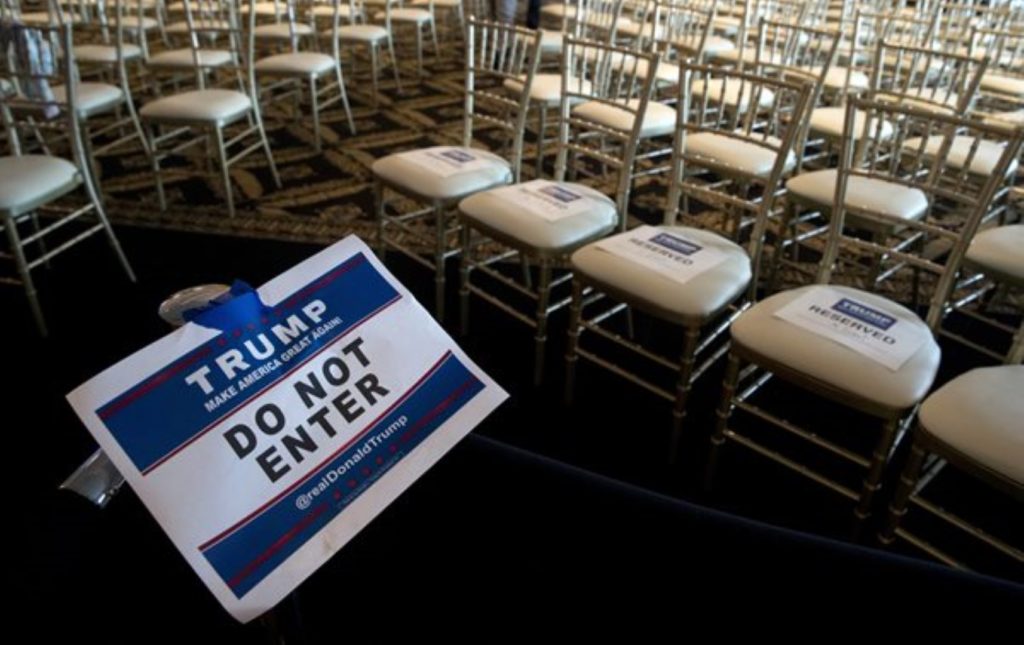
Donald Trump‘s favorite nickname for the news media is the “dishonest press.” He swaps in “disgusting press” from time to time. And sometimes, he puts it all together: “disgusting, dishonest human beings.” The presumptive Republican presidential nominee has a whole menu of takedowns for individual reporters and news organizations. In recent weeks, he’s used his microphone and his tweets to label them “third-rate,” ”not nice,” ”disgraceful,” ”phony,” ”low-life,” ”very unprofessional” and “bad people.” Or, for extra emphasis in a tweet, “BAD.” He’s also been quick to yank or withhold credentials from news organizations whose coverage he doesn’t like — most recently, The Washington Post. Trump seems to be perpetually mad at the press, but there’s a method to his madness. He sees little downside to bashing the media — and plenty of potential benefits. “It’s a truism of American politics that you don’t lose an election by criticizing the media,” said Robert Lichter, president of the private Center for Media and Public Affairs. “It plays well with the public, particularly with Republicans.” While Trump’s language is more incendiary and he lashes out more personally at reporters than typical for past candidates, he’s following a long tradition of modern politicians who shoot barbs at the messenger. Former President Dwight Eisenhower energized the 1964 Republican convention with his complaint about “sensation-seeking columnists and commentators.” Richard Nixon‘s vice president, Spiro Agnew, famously threw shade at “nattering nabobs of negativism” in the press. President George H.W. Bush, who played horseshoes with press photographers and invited reporters to White House picnics and other events, still exhorted voters during his re-election campaign to act on the bumper-sticker slogan: “Annoy the Media: Re-elect Bush.” His wife, Barbara, had some biting advice for Hillary Clinton when the incoming first lady visited the White House in November 1992: “Avoid this crowd like the plague,” Bush told Clinton, sweeping her hand toward the reporters and photographers on the South Lawn. Trump is taking the beat-the-press strategy to a whole new level. In a recent one-month period, he delivered 39 tweets skewering reporters and media organizations, mixed in with a much smaller number of positive and neutral references in his Twitter feed. Just one example: “The media is really on a witch-hunt against me. False reporting, and plenty of it – but we will prevail!” This week, Trump revoked the Post’s credentials, citing what he called the paper’s “incredibly inaccurate coverage and reporting.” Other news organizations he’s banned, either short-term or permanently, include Politico, the Des Moines Register, BuzzFeed, the Daily Beast and the Huffington Post. Post editor Martin Baron called Trump’s latest move “nothing less than a repudiation of the role of a free and independent press.” Kathleen Carroll, executive editor of The Associated Press, said his credentialing bans do a disservice to the public. In the race for the most powerful position on the planet, she said, “the public is interested in what the candidates do and say, and having independent coverage is part of what keeps the public informed.” Why is Trump so quick to pick a fight with the press? For one thing, his over-the-top language can be a successful strategy for changing the subject when he wants to divert attention. Last month, when reporters pressed Trump to document what he’d done with millions of dollars raised for veterans, he turned on them, calling one reporter “a sleaze” and sarcastically referring to another as “a real beauty.” That language itself became a big part of the story, shifting some of the attention away from questions about his handling of the money for veterans. Trump’s constant criticism of the press also helps to inoculate him against future negative news stories. Conservatives, in particular, already are wary of the mainstream media, and Trump’s rhetoric reinforces the message that nothing from the media is to be believed. “Part of what he’s probably decided is that he wants to be very aggressive, to make sure that his supporters routinely discount any kind of news media attack,” former House Speaker Newt Gingrich, a Trump supporter, said in a recent interview with Fox News. With the Republican Party in turmoil over Trump’s candidacy, the billionaire’s broadsides also serve as a unifying theme within the party. GOP faithful may have big differences with Trump on the issues, but they’re at one with him on contempt for the mainstream media. While Trump’s very public display of disdain is strategic, says Lichter, it’s also just “part of his daily dose of pugnacity.” At the same time, though, Trump can be charming in one-on-one interviews, flattering reporters and complimenting their questions. He calls many of them by their first names. He takes questions and offers considerable access, seeming to understand that for all his complaints about the press, he can’t live without them. “You know the press is the most dishonest people ever created by God,” he said at a March press conference. “So I would love to take a few questions from these dishonest people. Go ahead, press.” Republished with permission of The Associated Press.
Walker County grabs national headlines as a hot spot for painkiller abuse

Walker County is usually nowhere to be found in the pages of The Washington Post. But this week, the rural county one hour away from Birmingham was front and center in a long-form story about a family torn asunder by pill mills and opioid addiction. With a dateline from the county seat of Jasper, population 14,222, the article details in depth the suffering of thousands of mostly white, low-income Alabamians resigned to a life that revolves around the cycle of drug abuse, poverty, and recovery. Everyone, writes Anne Hull in Saturday’s version of The Post, has a theory of how things got so bad that painkillers like OxyContin and Roxicodone are commonly used as currency traded for everyday items like lawn mowers and clothing. It was the global economy that took away the coal-mining jobs. It was Purdue Pharma marketing OxyContin as a less-addictive painkiller. It was greedy doctors who needed to pay for their beach condos in Gulf Shores. It was the druggies and scammers abusing the system. It was God being taken out of the schools. It was the government allowing Medicaid patients to get $800 worth of painkillers for a $6 copay. It was too few jobs and too many with headsets. It was 21st-century America, a place so lonely for some that only pills could fill the void. The crisis, in particular, has struck women like a 33-year-old profiled by Hull: The void runs deepest in one group — white, working-class women in rural areas. In the past 15 years, their death rate has risen more sharply than any other demographic in the United States, studies show. Opioid drugs, alcohol and suicide have been the main contributors, with assistance from economic isolation, anxiety over a loss of security and the comfort offered by Purdue Pharma. … Two generations of prescription painkillers have changed the way people die here. Even more, they have changed the way people live. Great-grandparents are now raising the children of addicted parents and grandparents. Four out of 5 arrests in the county are drug-related. Every week a local newspaper called Just Busted publishes the arrest photos, the exhausted faces on display in most minimarts next to the $14.99 synthetic urine products guaranteed to fool drug screenings. Stuck in this landscape where she has spent her whole life, Jessica Kilpatrick drove home from the courthouse on a two-lane road. She had a splitting headache but feared aspirin might show up in her urine so she rubbed her temples. The employee discount hamburger on the seat beside her was for her husband. In four days, he was leaving for prison. Jessica had just found out. “They say God won’t give you more than you can handle,” she said as she turned into the driveway. “I’m beginning to wonder.” Kilpatrick became addicted after a volleyball injury for which doctors would prescribe her 330 pills a month. Now years later, her husband Jeremy now faces four years in prison for a drug-related violent crime, after an extended period of peaceful sobriety. In the meantime, Jessica sustains herself — and distracts herself from a gloomy outlook — by working at a Burger King in town. Her hopes, and so much of Walker County’s hopes, depend on getting her 18-month period of sobriety to last just one more day. And then another. Read the full story here.
Poll: Support for Donald Trump remains strong
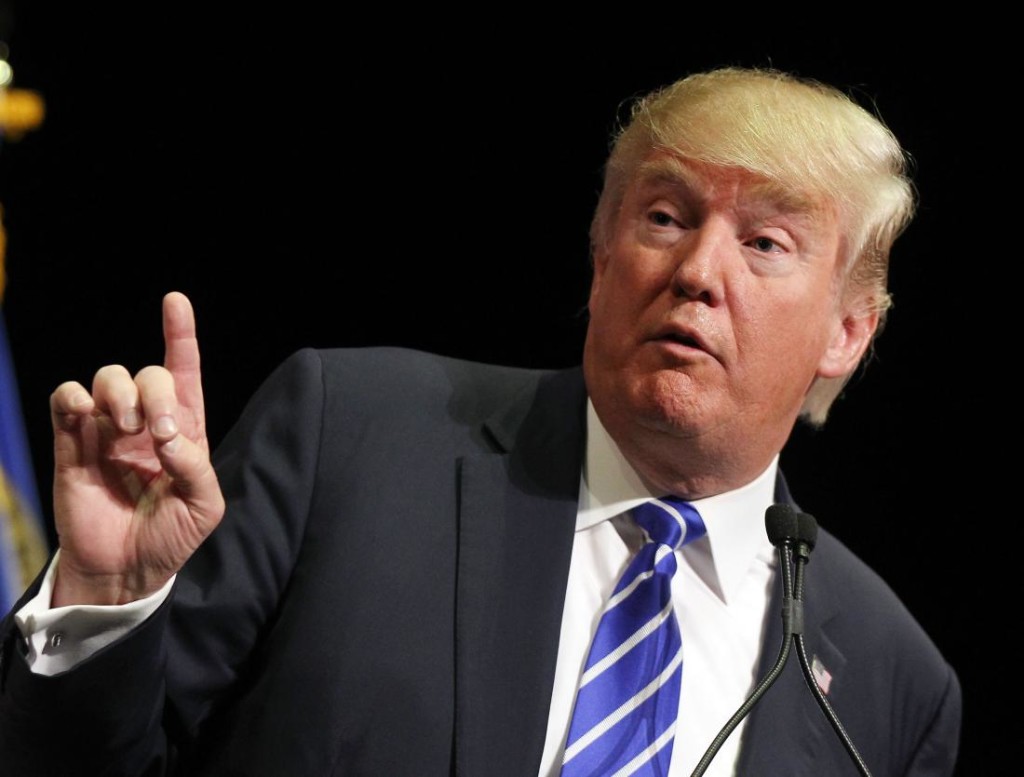
Donald Trump may have the best chance of getting elected president, according to a new Washington Post-ABC News poll. The poll found 56 percent of Republican-leaning voters said Trump had the best chance of getting elected in November 2016, followed by Ted Cruz with 17 percent. No other candidate cracked double digits when asked which Republican candidate had the best chance of winning in November. The poll, released Tuesday, shows Trump leads the Republican field with 37 percent support. Cruz is at 21 percent, while Rubio is in third with 11 percent. The poll shows Ben Carson is at 7 percent, following by Jeb Bush at 5 percent. Republicans said Trump was the candidate they most trusted to handle a variety of issues facing the country, including the economy (55 percent), immigration (44 percent) and terrorism threats (45 percent). The poll found 64 percent of Republican-leaning voters thought Trump was most likely to win the Republican nomination. Cruz followed with 12 percent while Rubio was at 5 percent and Bush and Carson were at 2 percent. Among Republican voters, 65 percent said they would accept Trump as the nominee. The Washington Post-ABC News national poll was conducted between Jan. 21 and Jan. 24. The poll surveyed 356 Republican-leaning registered voters and has a margin of error of 5.5 percent. The first nominating contest of 2016 is Monday, when Iowans voice their opinions in the Iowa caucuses. The New Hampshire primary is Feb. 9.
Elizabeth Lauten: The double-standard of The Washington Post
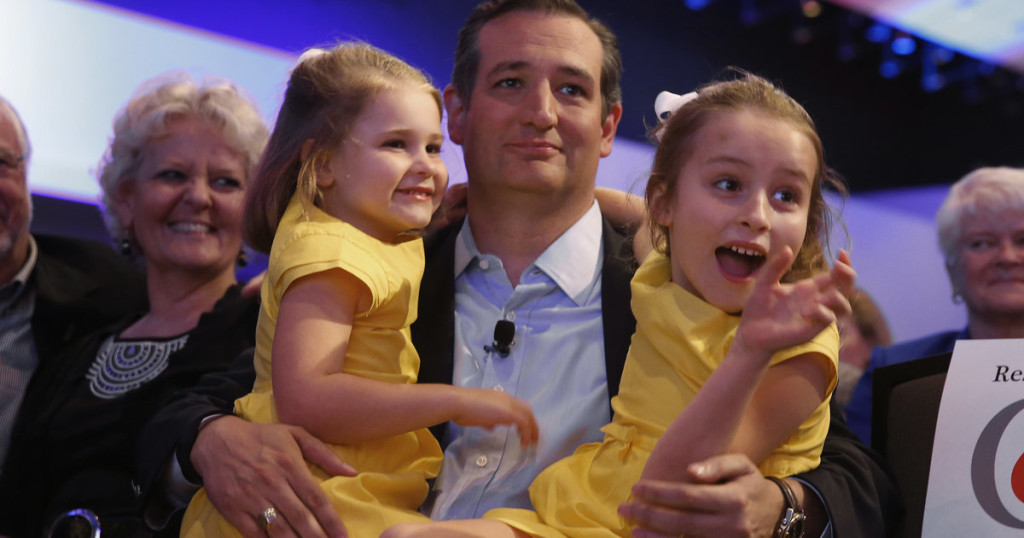
I don’t have public opinions about too many things in politics these days, but Jay Caruso’s piece over on Redstate – WaPo Depicts Cruz’s Daughters As Monkeys, Media Focuses On His Reaction – caught my attention so bear with me. If we’re going to be a society that endeavors to set national standards Americans respect and adhere to (else suffer the consequences), the media needs to do its part in helping maintain those standards rather than breaking them when it’s politically expedient. “The interesting part of all of this is how the media saw it,” Caruso wrote at Redstate. “… the media, who as a whole favor Democrats over Republicans, never focus on the act when something like this happens – when it happens to a Republican.” I know what he’s talking about all too well. Caruso continued, “People may forget the name Elizabeth Lauten, but not what happened to her. She was the communications director for Rep. Steve Fincher of Tennessee. One day on her private (or so she thought) Facebook page, she made some comments about President Obama’s daughters. The comments were relatively tame but the media reacted with a fury as though Lauten posted an ad in the middle of Times Square calling them out.” Needless to say, I would have thought The Washington Post of all places would try and be the standard-bearer in the “kids are off limits” arena having vilified me incessantly, writing nearly two dozen stories in less than a week, for my thoughtless Facebook post last year. Alas, I’m reminded we’re all humans and we all make bad choices sometimes. Do I think Washington Post political cartoonist Ann Telnaes is evil? No. Callous in her cartoon? Sure. Should it cost her her job? No. Should this be a learning lesson for her, the paper, and the nation reminding us yet again that kids should not be made targets in politics? Absolutely. I learned a great deal myself last year when my Facebook post turned my world on its head. What I experienced the week after that day I’d never wish on anyone. It was a level of hopelessness I still have a hard time describing. But in it all there was a divine humility: It took falling to the lowest of lows for me to stop and make my relationship with God a priority again. And that then served as a catalyst for an inexplicable change deep within me. I believe it was part of my destiny to live through something so unimaginably embarrassing and emotionally awful to teach me deep painful lessons and set me on a new trajectory. And it did. So instead of calling and emailing me all day for comments on The Washington Post’s blatant double-standard, know this: Right now, I’m simply reminded that we can ALL do better. We have to. After all, I love this country far too much to condemn it our current status quo. Godspeed, Ann. This too shall pass.
Tom O’Hara: Don’t thank me for my service, just send my disability check
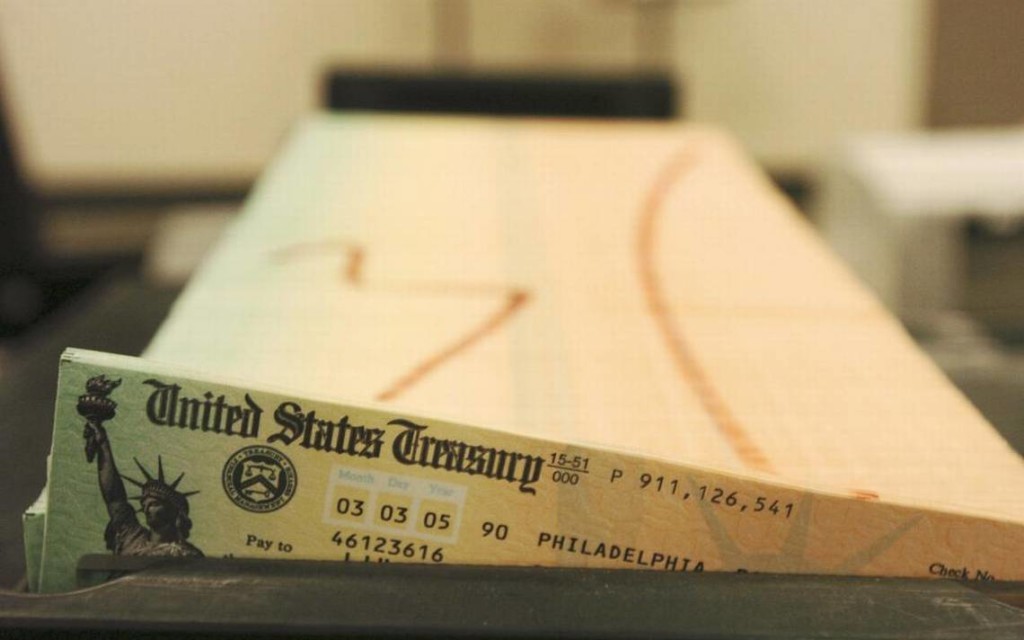
It’s Veterans Day on Wednesday and I’m even more excited than usual. In researching this column, I learned that as a Vietnam veteran I may be eligible to collect VA disability benefits because I have diabetes – even though I’m sure my tedious year at Phu Cat Air Force Base has nothing to do with my blood-sugar levels today. It’s a great time to be a veteran. Gov. Rick Scott and his team are doing everything they can to lure more veterans to Florida. We already have 1.6 million of them here and I doubt they need much coaxing to flee Ohio and New Jersey. Nonetheless, the state has waived out-of-state college fees for vets and offered a buffet of other perks. The college fee waiver is a nifty ruse because few current vets have any interest in getting a college degree. The state has a Department of Veterans Affairs that spends $111 million each year to help more and more vets feed at the government trough. This is very good politics because veterans are overwhelmingly old, white and male. In other words, they vote Republican. And they vote in droves. About 70 percent of America’s 22 million veterans voted in the 2012 presidential election, compared with 56.5 percent of all Americans. Among the vets 65 and older, more than 75 percent cast a ballot. In the 2014 midterm elections, vets voted for Republicans by a 20-percentage-point margin over Democrats in House races, according to The Washington Post. But politicians of every stripe pander to veterans. Even if they don’t vote for you, you sound patriotic and sensitive if you praise them and approve billions of dollars in benefits for them. Veterans account for only 9 percent of the adult population. (I wonder how many people even know a veteran.) Nonetheless, they have extraordinary sway with politicians. Even as the percent of congressmen who served in the military plummets (less than 20 percent today compared with 73 percent in 1971), their urge to throw money at vets escalates. “More than 1.3 million veterans of the Vietnam era received $21 billion in disability pay last year. From Afghanistan and Iraq, the cost was $9.3 billion – but it is growing fast,” the Los Angles Times reported last year. In 1991, the total cost for VA disability payments was $16.6 billion; it’s $50 billion today, the Times reported. Even the Heritage Foundation – a very conservative think tank – is amazed at the exploding veterans largesse. “Nearly 60,000 disabled veterans received cash benefits from three different federal programs simultaneously. More than 2,300 veterans received $100,000 or more in annual benefits each, and the highest annual benefit amounted to more than $200,000,” according to a 2014 foundation article. OK. Where do I sign up? Some guy is getting more than $200,000 by triple dipping into VA disability, military retirement and Social Security disability. And my guess is that he’s a white guy who votes Republican because he’s so disgusted by government waste. I assume this veteran was unperturbed if he had to exaggerate a bit for his benefits. It’s not hard to game the system, however, because it appears VA staff are encouraging the fraud. “A 2014 paper in Psychological Injury and Law identified ‘collusive lying’ between disability-benefits applicants and VA staff as one possible problem” for the soaring costs, according to the Heritage Foundation. Frankly, I’m just jealous. I have not been paying attention. I only recently discovered that you could get a “V” for veteran put on your driver license and get discounts at Home Depot and movie theaters. However, I’m going for the big time now: the diabetes claim. In 2001, the VA added Type 2 diabetes to the list of disabilities. The disease has not been definitely linked to Agent Orange, but veterans groups lobbied to include it, according to the LA Times. “Through 2013, the number of veterans receiving compensation for diabetes climbed from 46,395 to 398,480,” the Times reported. So if you see me on Veterans Day, don’t thank me for my service. Just give me directions to the Veterans Affairs disability claims office so I can get started on my paperwork. Tom O’Hara is a veteran newspaperman. He is the former managing editor of The Palm Beach Post and the Plain Dealer in Ohio.
Steven Kurlander: Donald Trump “phenomenon” defines new age of American ShockReality politics
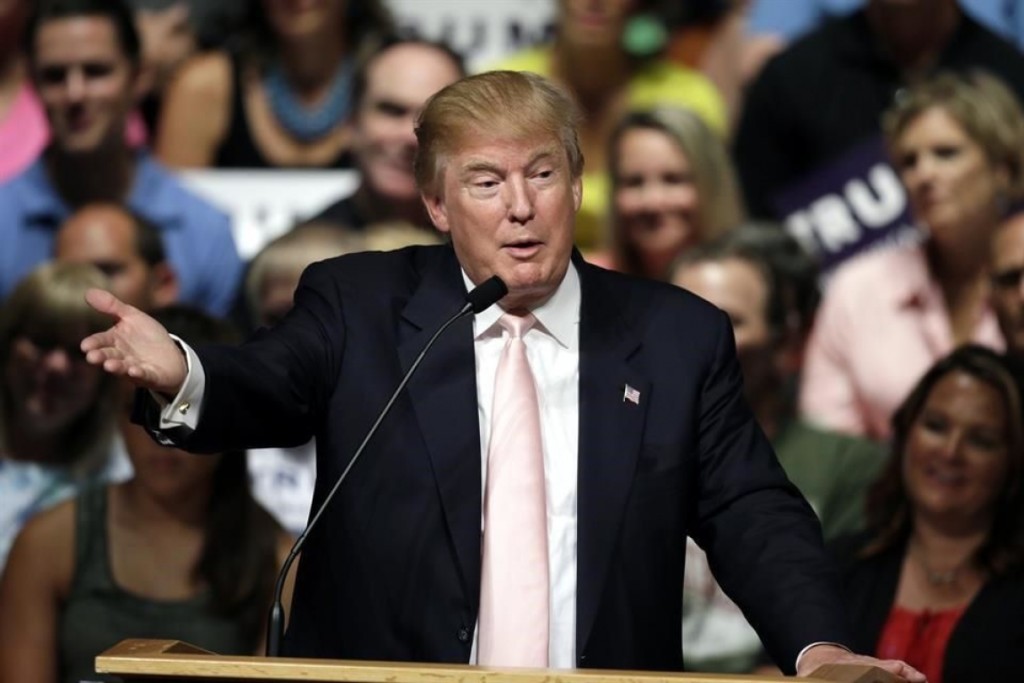
Whether you love him or hate him (I don’t think there’s an in-between), you have to admit Donald Trump has established his personal brand and fortune throughout the years by being extremely brash, creative, and smart: all with a very flippant attitude. Whether you like him or not, you have to admit that first in real estate, then reality TV, and now in politics, Trump has led the way in redefining the conventional and in turn achieving power, success, notoriety, power, and wealth. Now with Trump’s run for the White House, he is redefining American politics in terms of translating his brash, contentious style into what may be an unbeatable methodology of capturing the hearts and minds of disgruntled American voters. Trump has never been afraid to say what’s on the tip of his tongue. In the past, this propensity to attack, detract, and offend has lessened his intellectual credibility by defining his vision as Kardashian reality star style banter. But now his push-the-limit style converted into political rhetoric in a serious run for the White House, is playing well to many voters. He can berate Mexicans and Chinese, call John McCain a fake hero, be accused of raping his ex-wife and consorting with the mob, and even be described as uncharitable in his giving. Right now, he’s more than Ronald Reagan teflon, he’s kryptonite. Whether they are Republican, Democrat or a growing number of independent voters, American voters are tired most living paycheck to paycheck with no hope of digging out of debt. They are frustrated with a lackluster economy, ineffective governance in both Washington and state capitals, and continuous undeclared war. Most importantly, no matter where they stand in the political spectrum, the electorate is fed up with traditional mainstream politics, and even fringe Tea Party and leftist politics, too. In his ShockReality manner, Trump is spouting off truisms that Americans are feeling, but won’t enunciate on their own. If you believe the polls, Trump’s ShockReality messaging is playing well with the Republican base,. with him leaping ahead in a crowded pack of GOP hopefuls. No matter what he says, Americans now used to years of watching reality TV, want more from him, even demand more, with really no severe consequences to his popularity in a fast 24-7 news cycle that keeps moving on to the next sound bite. Some, though, say it’s one thing to practice ShockReality politics, it’s another to get down to the basics of backing up acerbic banter with hard policy. A major criticism, which shows signs of being out of touch with the true state of American politics, says he needs to come up with solutions and not just lash out about systemic problems in 2015 America. In recognizing his success so far in his messaging, David A. Fahrenthold in The Washington Post wrote: “But, so far, he’s missing something basic: a policy platform. A formal list of Trump’s ideas for America.” Here’s the game changer that Trump recognizes and no one else wants to admit: Americans don’t need or demand a policy platform for a presidential candidate to earn their vote. They just want some serious change, no matter how it comes. They want instead, a president, or any politician, who is sympathetic to their many frustrations and fearless enough to say what they feel, what they want, and want they need. It’s simple: They want a great America again. And Trump’s ShockReality political style works better than the Tea Party rhetoric precisely because it is not chained down in inflexible ideology. Instead, it stimulates a hope that President Obama correctly identified and ran on in 2008, but failed, like George W. Bush before him to deliver during his term in office. Donald Trump, and even now Joe Biden too with his own style of shooting off his mouth, is about to change American presidential politics for good. Calling Trump’s ShockReality messaging a phenomenon, and discounting his 2016 run, in our age of disdain is not only a mistake, but a lack of vision of the future of American politics. Steven Kurlander blogs at Kurly’s Kommentary (stevenkurlander.com) and writes for Context Florida and The Huffington Post and can be found on Twitter @Kurlykomments. He lives in Monticello, N.Y.