
Donald Trump stands by ‘culture’ criticism of European immigration
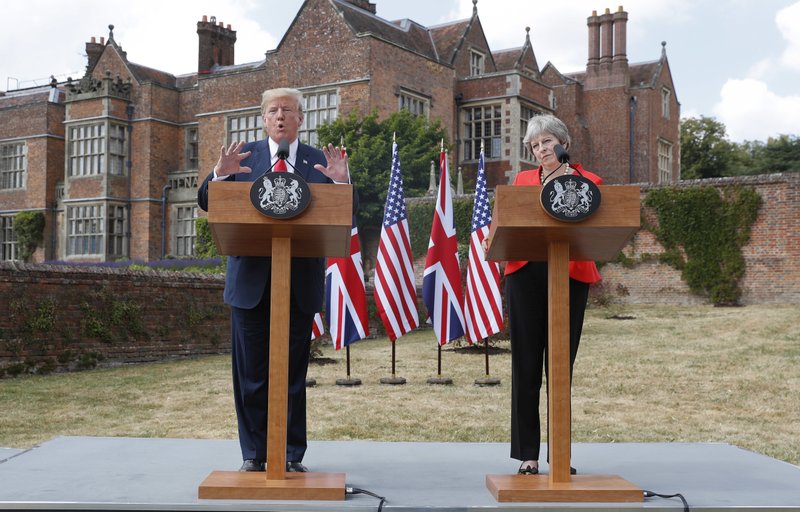
President Donald Trump pressed ahead Friday with his complaints that European immigration policies are changing the “fabric of Europe” and destroying European culture. During a news conference with British Prime Minster Theresa May, Trump backtracked on the criticism of May that he made in an explosive interview released as he began his visit to the country. But he reiterated his belief that Europe’s decision to accept migrants from Middle Eastern and African countries is “a very negative thing for Europe.” Standing next to May at Chequers, the prime minister’s official country estate, Trump acknowledged that his remarks were “politically not necessarily correct.” But he said European countries need to “watch themselves.” “You are changing culture, you are changing a lot of things,” he said, adding, “You see the same terror attacks that I do.” Trump was reiterating a position he articulated in an interview released Thursday by The Sun, in which he also criticized May’s handling of Brexit negotiations and said “I think allowing millions and millions of people to come into Europe is very, very sad.” May quickly rebutted Trump during their joint appearance, saying the U.K. has a “proud history of welcoming people who are fleeing persecution to our country.” “Over the years, overall immigration has been good for the U.K.,” she added. “It’s brought people with different backgrounds, different outlooks here to the U.K. and we’ve seen them contributing to our society and our economy.” Critics have faulted the president for using language that echoes white supremacist laments about the loss of white power. Rep. Adriano Espaillat, D-N.Y., born in the Dominican Republic, said Trump was “trying to throw gasoline on fire and begin a culture war, and it’s unfortunate that he’s divisive in the United States and he’s divisive in Europe as well.” “We all tout our nation as being a nation of immigrants,” Espaillat said. “For him to characterize that as something negative that we should avoid is sort of going against the most important and fundamental tenets of our country.” Rep. Ted Lieu, D-Calif., born in Taipei, Taiwan, said American culture is constantly changing through immigration. “That’s what makes our country amazing and great,” Lieu said. “It is a continual renewal of our American ideals set forth in our Constitution and Declaration of Independence with every new successive generation.” Trump said he believes that the U.K.’s Brexit vote in 2016 was in part a response to lax European immigration laws, and he has frequently tried to use Europe as a cautionary tale for the U.S., where he is seeking to implement more hawkish migration policies. Trump has used tough rhetoric on immigration to motivate his political base at home, at times using racial or ethnic undertones. During the 2016 presidential campaign, he drew global condemnation for a call to ban Muslim immigration to the U.S. Since entering the White House, he has enacted travel restrictions for citizens from some Muslim-majority countries, curtailed refugee admissions to the U.S. and called for “extreme vetting” of those entering the U.S. He drew fire from Democrats earlier this year for describing MS-13 gang members, many of them immigrants to the U.S., as “animals.” Republished with the permission of the Associated Press.
12 Russians accused of hacking Democrats in 2016 U.S. election
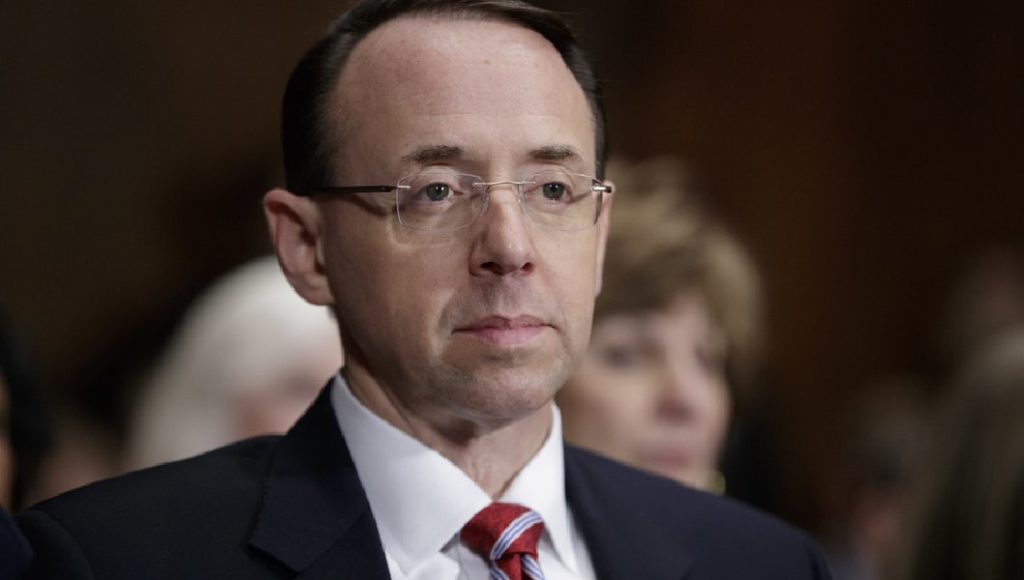
Twelve Russian intelligence officers were indicted on charges they hacked into Democratic email accounts during the 2016 U.S. presidential election and released stolen information in the months before Americans headed to the polls, the Justice Department said Friday. The indictment — which comes days before President Donald Trump holds a summit with Russian President Vladimir Putin — was the clearest allegation yet of Russian efforts to meddle in American politics. U.S. intelligence agencies have said the interference was aimed at helping the presidential campaign of Republican Donald Trump and harming the election bid of his Democratic opponent, Hillary Clinton. The indictment lays out a sweeping and coordinated effort to break into key Democratic email accounts, including those belonging to the Democratic National Committee, the Clinton campaign and the Democratic Congressional Campaign Committee. The charges come as special counsel Robert Mueller investigates potential coordination between Russia and the Trump campaign to influence the presidential election. The indictment does not allege that Trump campaign associates were involved in the hacking efforts or that any American was knowingly in contact with Russian intelligence officers. The indictment also does not allege that any vote tallies were altered by hacking. Still, Deputy Attorney General Rod Rosenstein said the internet “allows foreign adversaries to attack Americans in new and unexpected ways. Free and fair elections are hard-fought and contentious and there will always be adversaries who work to exacerbate domestic differences and try to confuse, divide and conquer us.” Before Friday, 20 people and three companies had been charged in the Mueller investigation. That includes four former Trump campaign and White House aides, three of whom have pleaded guilty to different crimes and agreed to cooperate, as well as 13 Russians accused of participating in a hidden but powerful social media campaign to sway American public opinion in the 2016 election. Hours before the Justice Department announcement, Trump complained anew that the special counsel’s investigation is complicating his efforts to forge a better working relationship with Russia. Trump and Putin are to hold talks Monday in Finland, a meeting largely sought by Trump. Trump said at a news conference Friday near London with British Prime Minister Theresa May that he wasn’t going into the meeting with Putin with “high expectations.” “We do have a — a political problem where — you know in the United States we have this stupidity going on. Pure stupidity,” he said, referring to Mueller’s probe. “But it makes it very hard to do something with Russia. Anything you do, it’s always going to be, ‘Oh, Russia, he loves Russia.’” “I love the United States,” Trump continued. “But I love getting along with Russia and China and other countries.” Republished with the permission of the Associated Press.
Donald Trump will get red carpet treatment in U.K., and big protests
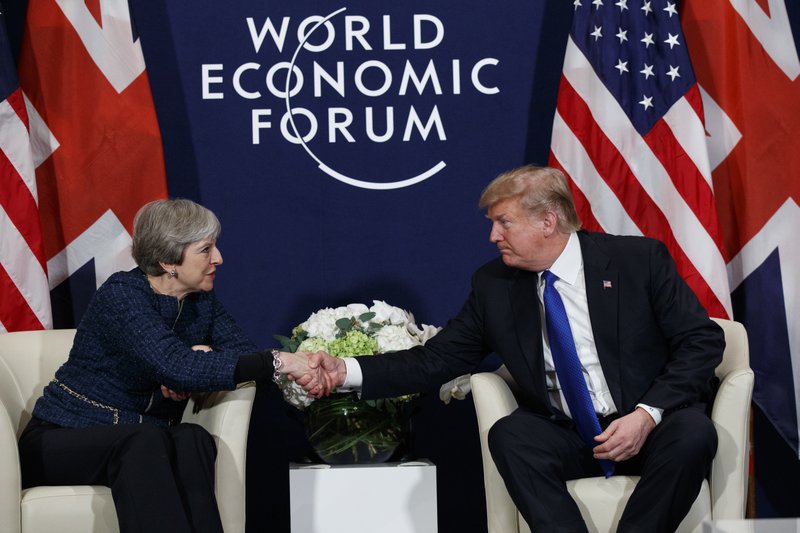
President Donald Trump will get the red carpet treatment on his brief visit to Britain beginning Thursday: Military bands at a gala dinner, lunch with the prime minister at her country residence, then tea with the queen at Windsor Castle before flying off to one of his golf clubs in Scotland. But trip planners may go out of their way to shield Trump from viewing another aspect of the greeting: an oversized balloon depicting the president as an angry baby in a diaper that will be flown from Parliament Square during what are expected to be massive gatherings of protesters opposed to Trump’s presence. Rarely has a foreign leader been so mocked on an official visit — London’s mayor, a Muslim who has challenged Trump’s world view — okayed the balloon, which is an apt symbol of Trump’s tempestuous relationship with Britain, traditionally the United States’ closest ally. It is not simply the protesters, who are expected to dog Trump throughout his visit, including his weekend in Scotland, but his fraught relationship with political leaders accustomed to harmonious exchanges with U.S. leaders, a tradition of unity that goes back at least to the vital World War II partnership of Franklin D. Roosevelt and Winston Churchill. Trump may have ruffled feathers again when he said just before departing for Europe that the UK was in “turmoil,” suggesting it was “up to the people” to decide if Prime Minister Theresa May remains in power after a few days that saw her authority challenged by the resignation of two prominent Cabinet ministers protesting her Brexit policy. He has clashed in the past with May — even though she is a fellow conservative who shares his view that defense spending should be hiked — and with her predecessor, David Cameron, who challenged Trump’s anti-Muslim campaign stance as “divisive, stupid and wrong.” Labour Party legislator Paul Flynn, who has criticized Trump in Parliament, says Trump has outraged Britons — and people around the world — with his harsh treatment of immigrants. “Give us your weary and your oppressed and we’ll divide you from your children,” he said of Trump’s policies. “It seems so un-American. We greatly respect America as a generous place built up by immigrants over the years. People see him as a cheap huckster who happens to have an office we respect as president of the United States.” Trump angered May and many Britons by tweeting inflammatory and unverified videos made by Britain First, an anti-Muslim group whose leaders have been convicted of hate crimes, and by characterizing parts of London and other cities as no-go areas because of a purported Muslim-related crime wave. His “America First” policies, including the decision to pull the United States out of the Paris climate accord and the nuclear deal with Iran, have brought him into conflict with Britain’s leaders over issues of real substance. Both of those accords were the result of years of painstaking diplomacy by European leaders — and Trump unilaterally trashed them. Top it off with the introduction of trade policies that have targeted some European industries — even though European nations are longtime friends accustomed to easy trade with the United States — and it is not surprising that Trump’s itinerary will keep him out of central London on Friday, when large protests are planned. The U.S. Embassy has even warned American citizens to keep a low profile during the visit because of the planned protests — the sort of warning usually issued in more volatile locations. U.S. Ambassador Woody Johnson said Wednesday citizens are often advised to avoid public demonstrations and that he is not upset by the decision to allow the “Trump baby” balloon to be displayed near Parliament. Trump has been quick to criticize British society, telling an NRA convention in May that the British didn’t have guns but had so much knife crime that one hospital was like a military war zone with its floors awash with blood — a statement quickly rebutted by British physicians and politicians. The antipathy between Trump and segments of the British public started during the 2016 presidential campaign, when Trump called for a temporary ban on Muslims entering the United States. That led roughly half a million people to sign a petition calling for Trump to be banned from entering the UK. British law requires any petition supported by more than 100,000 people to be considered for parliamentary debate, even though there was no serious attempt to prohibit Trump from coming to Britain. Still, lawmakers had no qualms about publicly calling Trump a demagogue and a fool. It was an extraordinary rebuke from a close ally. Prime Minister May has abundant reasons to seek a close relationship with Trump — not least, the United States will be an even more vital trade partner once Britain leaves the European Union next year — but it is an uneasy embrace, given her opposition to many of his key policies. May reached out to him just days after Trump was inaugurated, extending the invitation for a coveted state visit that would be hosted by Queen Elizabeth II, but that gesture has proved far more controversial than expected as Trump has shown little interest in maintaining “diplomacy as usual” with European allies. The state visit has never actually been scheduled — there is fierce opposition to it in many quarters of Britain — and this trip is part of a working visit instead, meaning among things that Trump will overnight at Winfield House, the U.S. ambassador’s handsome residence near Regents Park rather than in Buckingham Palace or Windsor Castle as a guest of the queen. Winfield House has one of the largest private gardens in greater London — but it won’t be possible to see the “Trump baby” balloon from its grounds. Republished with the permission of the Associated Press.
Donald Trump heads to Europe, says Vladimir Putin ‘easiest’ of his meetings
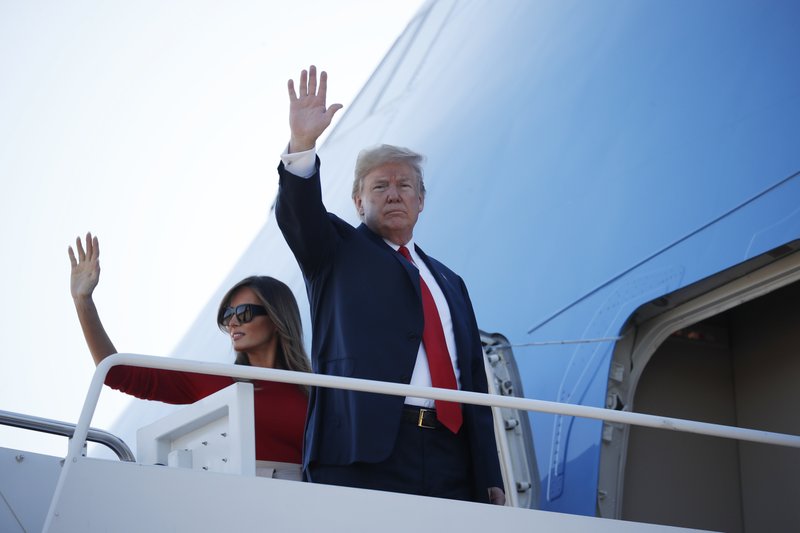
President Donald Trump launched a weeklong Europe trip Tuesday with harsh criticism for NATO allies and predicted the “easiest” leg of his journey would be his scheduled sit-down with Russian President Vladimir Putin. As he departed the White House for a four-nation European tour, Trump did little to reassure allies fretting over the risk of damage he could do to the 69-year-old trans-Atlantic mutual defense pact and his potential embrace of Putin during a summit in Helsinki. Trump said Tuesday he “can’t say right now” if Putin is a friend or foe, but called him a “competitor.” The U.S. intelligence community has concluded that Russia interfered in the 2016 election to boost Trump’s candidacy, and warns of further attempts at interference both in the 2018 midterms and in European elections. Speaking to reporters before leaving Washington for Brussels, where he is to attend the NATO summit, Trump criticized the pact, saying, “Frankly it helps them a lot more than it helps us.” Trump has been pressing NATO countries to fulfill their goal of spending 2 percent of their gross domestic products on defense by 2024. During his presidential campaign, he suggested he might only come to the defense of NATO nations that fulfilled their obligation. He continues to criticize NATO countries for not paying their fair share. From Belgium, Trump’s trip will also take him to London, where Prime Minister Theresa May’s government is in turmoil over her plans for exiting the European Union. European Council President Donald Tusk said on Tuesday in a message to Trump that “it is always worth knowing who is your strategic friend and who is your strategic problem.” Tusk recalled that the Europeans are spending more than Russia and as much as China on defense. NATO estimates that 15 members, or just over half, will meet the benchmark by 2024 based on current trends. “Getting ready to leave for Europe. First meeting — NATO. The U.S. is spending many times more than any other country in order to protect them,” Trump tweeted Tuesday morning, adding: “Not fair to the U.S. taxpayer. On top of that we lose $151 Billion on Trade with the European Union. Charge us big Tariffs (& Barriers)!” On Monday he’d tweeted the situation was “not fair, nor is it acceptable,” and insisted that NATO benefits Europe “far more than it does the U.S.” He added: “NATO countries must pay MORE, the United States must pay LESS. Very Unfair!” Trump, who has compared the sentiment that underpinned the Brexit vote to leave the EU to his own election, will be making his maiden presidential trip to Britain at a fraught time for May. Foreign Secretary Boris Johnson and Brexit Secretary David Davis resigned within hours of each other in protest of her plan. Trump said might meet with Johnson in the UK despite his resignation. Trump’s visit is expected to attract large protests in London and elsewhere in Britain. Trump’s weeklong trip to Europe will continue with a stop in Scotland before ending with a sit-down in Helsinki with Putin. He said that of the high-stakes meetings of his trip, “Putin may be the easiest of them all.” “I think that getting along with Russia, getting along with China, getting along with others is a good thing, not a bad thing,” he added. The meeting will be closely watched to see whether Trump will rebuke or embrace Putin, who has repeatedly denied the allegations of election meddling, in spite of evidence to the contrary. Republished with the permission of the Associated Press.
Donald Trump takes his own brand of diplomacy to North Korea summit
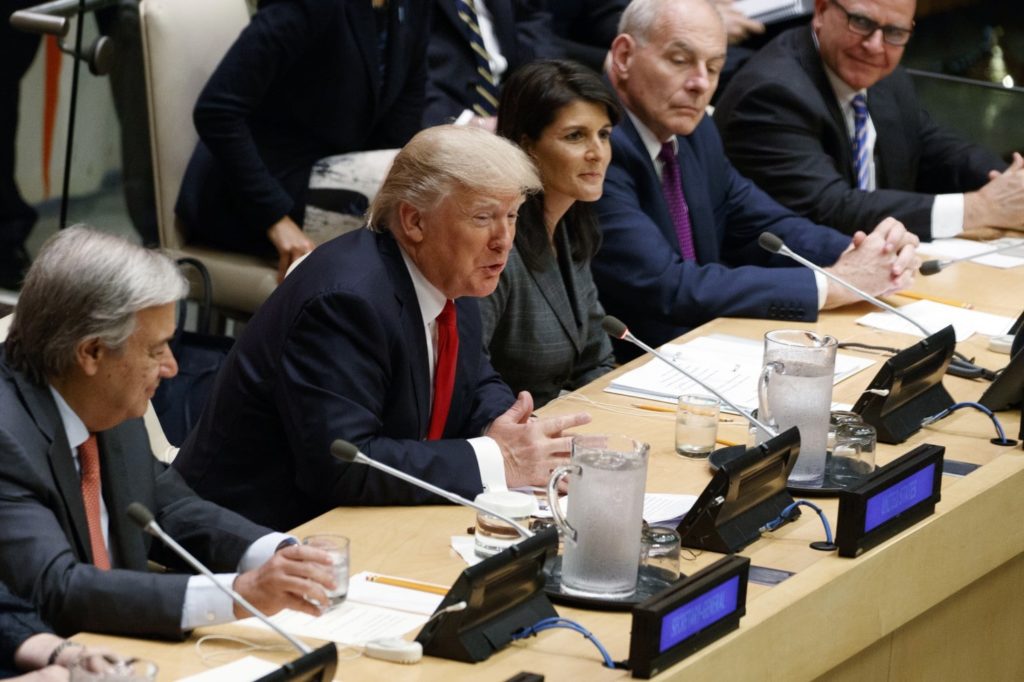
He hectored Mexico’s leader over border wall funding. Lobbed statistics at the Canadian leader without checking his facts. Cajoled the British prime minister to crack down on protesters. Had a tête-à-tête with Russia’s head of state on a whim. Bonded with France’s prime minister over military parades. President Donald Trump rarely conducts business-as-usual diplomacy when he interacts with world leaders. Heading into his expected summit with North Korean leader Kim Jong Un, Trump has a record on the international stage that suggests he’ll seek to charm the dictator and look for an agreement that he can pitch as a win — even if it’s more a triumph of appearance than policy. But never bet against the possibility that he’ll just walk away. Trump’s unpredictable negotiating style has been on full display in the run-up to the historic June 12 summit in Singapore. After months spent deriding Kim as “Little Rocket Man” and boasting about the size of his nuclear button, Trump has shifted tone in recent months, suggesting that a friendship was possible and agreeing to an unprecedented meeting. Even when Trump temporarily backed out of the talks, he spoke of a “wonderful dialogue” building between the two leaders. And now that the talks are back on, Trump is shelving the “maximum pressure” phrase he coined to describe his sanctions against the North. As he approaches the Kim talks, Trump’s avowed “America First” attitude has come increasingly to resemble “America alone.” His eagerness for a deal has unsettled Japan and South Korea. Elsewhere, talk of tearing up trade agreements and his imposition of tariffs to protect the American steel and aluminum industries have angered longtime partners. An overriding theme of the president’s first 18 months of foreign policy has been his willingness to go it alone as he seeks to fulfill his nationalistic campaign promises — even if it unsettles allies. “He just doesn’t care as much,” said Ian Bremmer, a foreign affairs columnist and president of the Eurasia Group. “In terms of postwar American history, no one has done more damage to American alliances than Trump has. All you have to do is talk to American allies.” Critics have labeled Trump an inconsistent force, prone to publicly hectoring friendly partners, embracing foes and resistant to much advice or counsel. His loyal supporters see it all as a mark of Trump’s willingness to hold firm to his promised policies even when the conversations get awkward. After nearly two years spent trying to understand the political novice, many world leaders are still struggling with how to engage Trump, though they have learned he is not easily moved from fulfilling the policies he promised to his most loyal voters during the campaign. Foreign diplomats in the U.S. and leaders overseas have gone to great lengths to charm Trump, a rookie president schooled in New York negotiating who promised a major shift in foreign policy. Those efforts have included getting their messages on to Trump-friendly TV shows like “Fox and Friends” and rolling out the red carpet when Trump visits. In France, Prime Minister Emmanuel Macron invited Trump to view a spectacular military parade on Bastille Day, one that inspired Trump to order up his own parade in Washington. In Japan, Prime Minister Shinzo Abe fêted Trump with golf and American-style hamburgers. But those overtures haven’t always yielded policy results. Macron tried unsuccessfully to keep Trump in the Paris climate accord and the Iran nuclear deal. Abe wanted Trump to stay in the Trans-Pacific Partnership trade deal and has encouraged a more skeptical approach to Kim’s overtures. White House officials privately assess that the world leaders most solicitous toward Trump are rarely the most effective. Germany’s Angela Merkel and Britain’s Theresa May, for instance, have both largely refused to play into Trump’s love for pageantry and have been candid about their disagreements with the president. Indeed, even those who were inclined to buddy up to Trump appear to be changing course. During an April summit at Trump’s Mar-a-Lago, Abe and Trump engaged in what U.S. officials described as a heated economic dialogue over Trump’s tariffs. Just last week, Trump imposed new tariffs on the European Union, Canada and Mexico, despite furious lobbying from those countries. Canadian Prime Minister Justin Trudeau said: “These tariffs are an affront to the long-standing security partnership between Canada and the United States.” Trump, meanwhile, has focused much of his attention on adversaries rather than allies, seeking to sit down with Kim and routinely praising Russian President Vladimir Putin. Fixated on his celebrity and tough-guy image, Trump cares deeply about the pageantry of his interactions with world leaders and also values what he considers respectful treatment. That tone was set on Trump’s first international trip, when Saudi Arabia gave him an opulent welcome. More than a dozen horses flanked the presidential limousine as Trump was slowly driven to the Royal Court in Riyadh. Trumpets played and soldiers stood at attention as the president arrived. Trump declared the spectacle “very impressive.” A key theme in Trump’s calls with foreign leaders has been his need for respect. He badgered Mexico’s president over funding for his border wall, which he views as a face-saving fulfillment of a campaign promise. He nudged the British prime minister to do something about potential protests should he visit the U.K., a potential embarrassment for a diplomatic visit. Trump rarely sweats the small stuff. When it comes to policy meetings and delicate negotiations, Trump is more likely to follow his instincts than stick to a scripted plan. His admission of stretching his information about trade in a call with Trudeau was in keeping with a seat-of-the-pants style that can leave advisers nervous. Advisers say Trump avoids spending extensive time in preparation. He grew frustrated with former national security adviser H.R. McMaster and his briefing style, though he is said to listen more to Secretary of State Mike Pompeo. Still, Trump is not a fan of detailed briefing books, preferring limited preparation and instinct. Those close to
Mike Pompeo: US stands ‘with Israel’ in fight against Iran
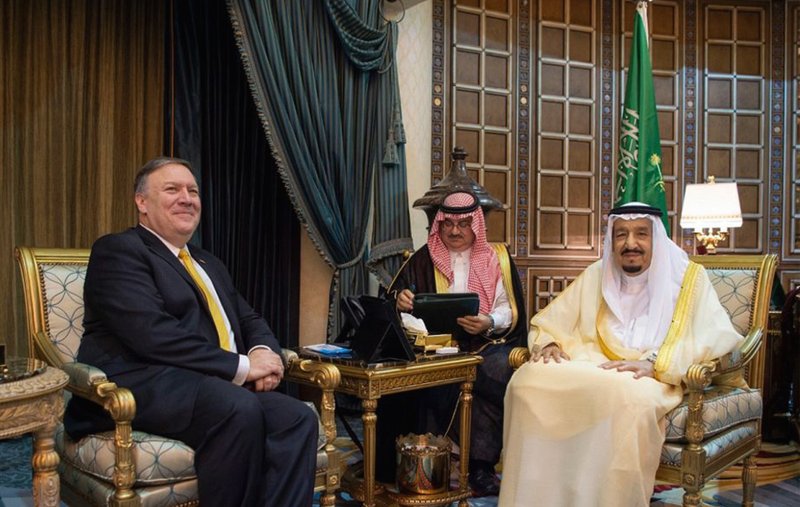
Secretary of State Mike Pompeo on Sunday gave a warm boost of support to Israel in its standoff against Iran, saying “the United States is with Israel in this fight.” Pompeo has been using the Middle East leg of his first trip abroad as America’s top diplomat to call for concerted international action to punish Iran for its missile programs. The tough line was welcomed in Israel, which considers Iran its greatest threat and has been leading calls for the international community to revise its 2015 nuclear deal with Iran. He arrived after visiting Saudi Arabia, another fierce rival of Iran. “We remain deeply concerned about Iran’s dangerous escalation of threats to Israel and the region and Iran’s ambition to dominate the Middle East remains,” Pompeo said after a nearly two-hour meeting with Israeli Prime Minister Benjamin Netanyahu. “The United States is with Israel in this fight.” Israel has called for tough international action against Iran, citing its hostile rhetoric, support for anti-Israel militant groups and development of long-range missiles. It also has complained the 2015 nuclear deal does not do enough to prevent Iran from developing a nuclear-weapons capability, and expressed growing concerns about Iran’s involvement in the civil war in neighboring Syria. It says it will not allow Iran to establish a permanent military presence in Syria, fearing the Iranians will launch attacks. President Donald Trump is to decide by May 12 whether to remain in the nuclear deal. Pompeo repeated the Trump position that “if we can’t fix it, he is going to withdraw.” Netanyahu welcomed the tough U.S. line. “Iran must be stopped, its quest for a nuclear bomb must be stopped, its aggression must be stopped and we’re committed to stopping it together,” he said. Netanyahu also welcomed the U.S. recognition of Jerusalem as Israel’s capital, and the scheduled move of its embassy from Tel Aviv on May 14. Pompeo said the U.S. is “incredibly proud” of the embassy move. The Palestinians, who claim Israeli-annexed east Jerusalem as their capital, have harshly criticized the U.S. move and all but cut off ties with the White House. Earlier in Saudi Arabia, Pompeo also took aim at Iran. “Iran destabilizes this entire region,” Pompeo said in brief remarks to journalists with Saudi Foreign Minister Adel al-Jubeir. He also urged the Saudis and their neighbors to resolve a festering dispute with Qatar that U.S. officials say Iran is exploiting to boost its influence in the region, including in Yemen and Syria. Pompeo on Sunday met with Saudi King Salman, whose country, along with Bahrain, Egypt and the United Arab Emirates, is embroiled in a row with Qatar that had hobbled Gulf Arab unity and frustrated the U.S. as it seeks to blunt growing Iranian assertiveness. “I think they would all agree that it’s in everyone’s best interests that the Gulf states all figure out how to be together,” Pompeo told reporters as he traveled to Israel. “We’ve got a common challenge in Iran I think they all recognize that. We’re hopeful that they will in their own way figure out their dispute between them.” The ex-CIA chief arrived in Riyadh a day earlier, shortly after Iranian-backed Houthi rebels in Yemen fired missiles at Saudi Arabia’s southern city of Jizan, killing one person and underscoring what U.S. officials said is a growing threat emanating from Iran. Senior U.S. officials traveling with Pompeo blamed Iran for smuggling the missiles into Yemen. They said the incident highlighted the importance of the Trump administration’s push to counter Iran in the region. Iran has also provided crucial support to Syrian President Bashar Assad. Al-Jubeir said the kingdom “supports the policy of the Trump administration against Iran and to improve the terms of the nuclear agreement with Iran.” Pompeo’s meetings in Saudi Arabia and Israel, to be followed by discussions in Jordan, come just weeks ahead of several key dates that could bring further volatility to the region. Trump has set a May 12 deadline to decide whether to pull out of the Iran nuclear deal, something he appears likely to do despite heavy pressure to stay in from European and other parties. In London, British Prime Minister Theresa May’s office said that she discussed the deal with her French and German counterparts. It said they agreed that the deal should remain intact, even while addressing shortcomings. The countries “agreed that there were important elements that the deal does not cover, but which we need to address — including ballistic missiles, what happens when the deal expires, and Iran’s destabilizing regional activity,” the statement said. On May 14 comes the U.S. Embassy move, marking a significant shift in decades of American policy toward Israel and the Palestinians. The next day the Palestinians will mark the anniversary of what they term the “catastrophe,” when hundreds of thousands of Palestinians fled or were driven from their homes during the 1948 war that surrounded Israel’s creation. Dozens of Palestinians have been killed by Israeli fire during recent protests along border between Israel and Gaza. Those protests, spearheaded by the Islamic militant Hamas movement, are expected to peak on May 15. Also looming over the trip is uncertainty over Trump’s policy on Syria, which has shifted between a speedy all-out withdrawal of American forces and leaving a lasting footprint to deter Iran from completing a land bridge from Tehran to Beirut. Pompeo also is taking a leading role in Trump’s preparations for an expected summit in May or early June with North Korean leader Kim Jong Un. Pompeo, while en route to Israel, was asked whether a U.S. withdrawal from the Iran nuclear deal would complicate negotiations “I don’t think Kim Jung Un is staring at the Iran deal and saying, ’Oh goodness, if they get out of that deal, I won’t talk to the Americans anymore. There are higher priorities, things he is more concerned about than whether the Americans stay” in the accord, Pompeo said. Republished with the permission of the Associated Press.
A look at what is and isn’t known about the London attack

A look at what’s known and what isn’t about the attack in London that left seven people and three attackers dead: What happened? Police say three men drove a van into pedestrians on busy London Bridge just after 10 p.m. Saturday. The attackers, wielding blades and knives, ran down a set of stairs into Borough Market, a well-known fruit and vegetable market that’s also home to popular restaurants and pubs. There they stabbed people in several different restaurants. Seven people were killed and at least 48 were hospitalized. Still others had minor injuries. The whole thing lasted about eight minutes, according to police. Who did it? Police haven’t said. The attackers were shot dead by police near the Wheatsheaf pub eight minutes after the incident started. The men were wearing what appeared to be vests with explosives, but Prime Minister Theresa May says they weren’t real and were just meant to cause panic. Twelve people have been arrested in Barking in east London. May has characterized the attack as the work of Islamic extremists but no group has claimed responsibility yet. What are the political implications? That’s not clear either. There’s an election Thursday that May called in an attempt to increase her Conservative Party’s majority in Parliament. The Conservatives were far ahead in polls but their lead has narrowed in recent days. The main political parties halted national campaigning Sunday but were expected to resume Monday, and officials said the election would not be canceled or postponed. Has this happened before? This is the third attack in Britain in as many months. Two weeks ago, a suicide bomber blew himself up at an Ariana Grande concert in Manchester, in northwest England, killing 22 people and injuring dozens more. In March, a British convert to Islam ran down people with a vehicle on Westminster Bridge, killing four before fatally stabbing a policeman on Parliament’s grounds. May said Sunday that police had recently foiled five other plots. Republished with permission of The Associated Press.
Donald Trump lectures NATO members on cost sharing

The Latest on President Donald Trump’s first trip abroad (all times local): 4:48 p.m. President Donald Trump is lecturing members of the NATO alliance to pay their fair share on defense during a ceremony at NATO headquarters. Trump says NATO members must “finally contribute their fair share” and meet their obligations. The president has been urging NATO leaders to live up to a 2011 decision to increase spending on defense to 2 percent of gross domestic product by 2024. Trump says 23 of the 28 member nations are not paying what they should and he says it’s “not fair” to the people of the United States. He says many of these nations owe “massive” amounts of money from previous years. The president spoke as the other NATO leaders looked on. ___ 4:41 p.m. President Donald Trump is calling for a moment of silence for the victims of the Manchester concert attack. The president is speaking at a dedication ceremony for a new 9/11 memorial at NATO headquarters in Brussels. He says that “today is a day for both remembrance and resolve” and that the attack demonstrates “the depths of the evil we face with terrorism.” Trump has urged NATO members to spend more money on defense. ___ 4:37 p.m. President Donald Trump is attending a dedication service for two new memorials at NATO headquarters. Trump stood on as German Chancellor Angela Merkel and NATO Secretary-General Jens Stoltenberg unveiled two sections of the Berlin Wall that divided the German city until 1989. The pieces, standing together, form a monument that symbolizes the efforts to end the division of Europe. Trump and Stoltenberg are also unveiling a steel beam from the 107th floor of one of the World Trade Center towers that collapsed on Sept. 11, 2001. It’s a reminder of NATO’s commitment to its collective defense clause — so called Article 5. It has only ever been activated once, after 9/11. ___ 4:35 p.m. President Donald Trump is pledging to “get to the bottom” of leaks of sensitive information. In a written statement Thursday, Trump called recent leaks “deeply troubling.” He said he is asking the Justice Department and other agencies to “launch a complete review of this matter.” Trump adds that “if appropriate, the culprit should be prosecuted to the fullest extent of the law.” Trump’s comments come amid anger from Britain over intelligence leaks and a decision by Manchester police to withhold information from the United States about the investigation into this week’s bombing. British Prime Minister Theresa May has said she will make it clear to Trump that intelligence shared between law enforcement agencies “must remain secure.” ___ 4:20 p.m. President Donald Trump has arrived at NATO headquarters for an afternoon of meetings with fellow world leaders. Trump was greeted by NATO Secretary General Jens Stoltenberg at the organization’s new headquarters in Brussels. Stoltenberg visited the White House last month and touted NATO’s benefits at a joint news conference with Trump. Trump had previously questioned NATO’s relevance. ___ 4:15 p.m. President Donald Trump has done an about-face on NATO, the military alliance he once dismissed as ineffective. Trump says at a White House news conference with NATO Secretary-General Jens Stoltenberg that the organization is “no longer obsolete.” As a candidate, Trump said the 28-member organization had outlived its usefulness. Since taking office, he has expressed support for NATO but has reinforced his view that European members must meet a 2014 agreement for member countries to boost defense spending to 2 percent of gross domestic product within a decade. Just the U.S. and a handful of other countries are meeting the target. Trump says NATO countries will be more secure and the partnership strengthened if other countries pay their fair share and stop relying on the United States. He’s set to participate in a memorial dedication and dinner with other NATO member leaders. ___ 4:04 p.m. British Prime Minister Theresa May says she will press U.S. President Donald Trump on keeping shared intelligence confidential, after leaks from the investigation of the Manchester concert attack. Speaking to reporters upon arrival at a NATO summit in Brussels, May said that the U.S.-British defense and security partnership is built on trust. But she says, “part of that trust is knowing that intelligence can be shared confidently.” She said that when she sees Trump at the summit Thursday she will stress “that intelligence that is shared between law enforcement agencies must remain secure.” She said the Manchester attack shows why it’s important for the international community and NATO to do more about the fight against terrorism. ___ 3:59 p.m. President Donald Trump is on his way to NATO headquarters in Brussels for his first meeting with a group he criticized mercilessly during his campaign. Trump has rattled the group with musings about pulling out of the pact because other countries aren’t dedicating enough money to defense and called the alliance “obsolete.” But he’s softened his stance considerably since taking office in January. Trump is set to deliver remarks at the unveiling of memorials dedicated to the Berlin Wall and one that will serve as a reminder of NATO’s commitment to its collective defense clause — so called Article 5. It has only been activated once, after 9/11. He’ll also attend a working dinner with other member leaders. ___ 3:32 p.m. Several hundred protesters have gathered outside the NATO summit in Brussels to demonstrate against NATO and U.S. President Donald Trump. The group was tiny compared to the 10,000 demonstrators who came out Wednesday to protest Trump’s visit. But the summit won’t start until late afternoon, so the crowds could still swell. Security officials have cordoned off a large protest zone outside NATO headquarters. Protesters there are holding banners that say “NATO game over” and “peace.” At one point, some 50 demonstrators tried to block a road using banners. Stephanie Demblon of the “Agir pour la paix” pacifist group says Trump “makes people scared” and says he’s “shown over the past months that
In Donald Trump’s private moments, it’s small talk and compliments

What do world leaders talk about when they are alone? Not much, it seems. President Donald Trump spent part of his two-day visit to Israel with open microphones nearby, giving the world a small glimpse into his private banter with Israeli Prime Minister Benjamin Netanyahu between official appearances. They chatted about paint on the walls, their wives and where to stand during a ceremony. And they exchanged compliments — lots of compliments. This presidential small talk provided just some of the memorable moments of Trump’s swing through the Middle East, the first stop on his first overseas trip as president. There was an awkward Saudi sword dance, an airport selfie with a pushy Israeli lawmaker and a possible snub by Melania Trump. With Trump now in Rome to meet the pope, here is a look at some of the highlights: SAUDI ARABIA —The Orb: While Trump’s speech before Muslim leaders grabbed headlines, the buzz on social media was the image of him, Saudi King Salman and Egyptian President Abdel-Fattah al-Sissi with their hands on a lighted sphere to mark the opening of state-of-the-art counterterrorism center in the capital, Riyadh. Some joked it looked like the orb from Woody Allen’s 1973 film “Sleeper.” —Always With the Right: In another widely shared moment on social media, Trump and the Saudi monarch are seen drinking traditional Arabic coffee in small cups. Trump is about to take a sip, holding the cup with his left hand — a taboo in the Muslim world — when Salman explains “with the right hand” in accordance with the traditions of the Prophet Muhammad. Trump replies: “Always the right hand, right. Always the right hand.” The video has been viewed more than 184,000 times. —Sword Dance: Taking part in local customs and traditions is a must for American presidents when they travel the world. On Saturday night, Trump and his entourage were treated to a royal dinner hosted by King Salman. The delegation was greeted to a traditional all-male Saudi sword dance. Standing shoulder-to-shoulder with the Saudi king, Trump swayed side to side and briefly joined the groove. —Golf Cart View: In another part of town, American country star Toby Keith performed with an Arabian lute player at a free, male-only concert in Riyadh. Keith performed cover songs of American classics and steered clear of performing his ballads “Whiskey Girl” and “Beer for My Horses” since alcohol is banned in the deeply conservative kingdom. In a bizarre moment, Trump caught a glimpse of the concert with first lady Melania Trump when, in a golf cart, they slowly rolled past a screen broadcasting it live. —Pantsuits and Dresses: Trump’s daughter and adviser, Ivanka, sparked an online sensation when she arrived in Riyadh wearing a long-sleeved, billowy navy dress as her blonde hair blew in the breeze. The hashtag “bint Trump,” meaning Trump’s daughter in Arabic, began trending, with one Twitter user even proposing in an online video. Like other high-level female visitors to Saudi Arabia, Mrs. Trump also did not cover her hair while in the kingdom. For her arrival to Riyadh, she wore a long-sleeved, black pantsuit accented with a wide, gold-colored belt and gold necklace. —Was It a Bow? Trump accepted Saudi Arabia’s highest civilian honor and ignited a debate over whether he bowed to the king. King Salman placed the Collar of Abdulaziz Al Saud — a gold medal hanging from a long, gold chain — around Trump’s neck hours after he arrived in the kingdom. Trump had to bend down so the king could put the medal around his neck, and that ignited debate over whether he had bowed to the king. Russian President Vladimir Putin, British Prime Minister Theresa May and Trump’s predecessor, Barack Obama, have all received the award. Republicans — including Trump — criticized Obama for a move during his 2009 visit to Saudi Arabia, interpreting it as an American president subserviently bowing to a foreign dignitary. ISRAEL —The Selfie: Israel is known for its boisterous and informal behavior, and Trump got a first-hand taste of this at his airport arrival ceremony. Just moments after he landed, a hard-line Cabinet minister asked Trump to recognize Israeli sovereignty over Jerusalem, one of the most explosive issues in the conflict with the Palestinians. Then, a backbench lawmaker who had not even been invited to the ceremony pulled Trump aside for a selfie. With Trump waiting patiently after a camera glitch, and Netanyahu unsuccessfully reaching out to block the scene from unfolding, lawmaker Oren Hazan snapped the shot that made him famous. “Thank you, Mr. President – it was my pleasure!” Hazan tweeted alongside the picture. —Speak to the Hand. The selfie was not the only time that Trump was caught off guard. As he and his wife Melania walked on the red carpet, he turned and reached out to grab her hand. The expressionless Mrs. Trump, wearing dark sunglasses, appeared to brush away his hand, raising speculation in local media of a possible first family fracas. It happened again in Rome on Tuesday: as the couple emerged from the plane, Trump waved to the crowd and seemed to look for her hand. She quickly moved it away, raising it to her head to brush her hair aside. —Budding Bromance: Netanyahu had a strained relationship with Trump’s predecessor, Barack Obama. But he appeared to have an easy rapport with Trump, with the two men repeatedly embracing and professing their deep friendship. At the airport ceremony, Netanyahu playfully warned Trump about the confusing protocol. “What is the protocol? Do you have any idea?” Trump asked. “Who knows?” Netanyahu responded with a smile. —I Share Your Pain: Netanyahu’s wife, Sara, also found common ground with Mrs. Trump. Speaking to the first couple at the airport, Mrs. Netanyahu complained that they were both victims of an unfair press. “The majority of the people of Israel, unlike the media, they love us so we tell them how you are great and they love you,” Mrs. Netanyahu said. “We have very much in common,” Trump said. —Home Sweet Home.
Donald Trump campaigned as a disrupter, begins governing by chaos
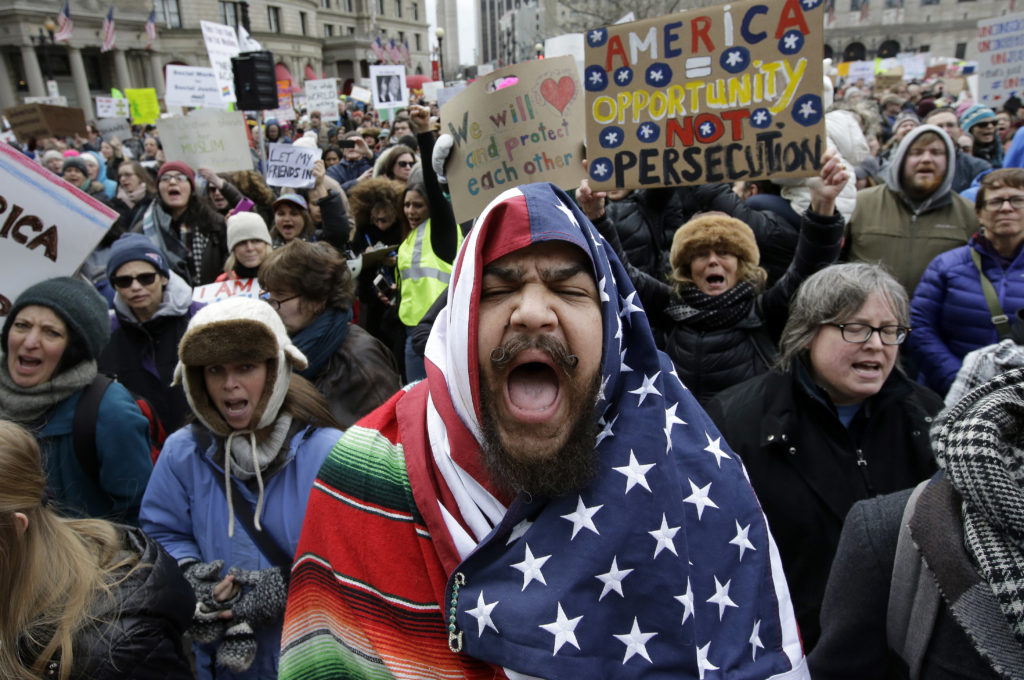
Trump’s temporary halt to the U.S. refugee program — the most consequential policy he’s unveiled in his presidency’s opening days — wreaked havoc at airports and sparked protests across the country. The order left Trump’s own government agencies scrambling, his Republican Party divided and allies around the world uneasy. A federal judge issued an emergency order temporarily blocking part of the measure, setting up a legal battle ahead. Trump could have avoided at least some of these consequences. He could have consulted significantly with the agencies tasked with implementing the order. He could have delivered a speech explaining his action and its intent in detail to the American people. His team could have prepared a contingency plan for the newly banned travelers already en route to U.S. as Trump signed the order. Instead, Trump showed that not only does he intend to follow through on his controversial campaign promises, he plans to do so in the spirit of the mandate his advisers believe he has: disrupting Washington and setting fire to the playbook its leaders have long relied on. It’s not clear whether the White House acted Friday knowing the consequences that would follow. But Saturday, as protesters crowded U.S. airports where legal U.S. residents were stuck in limbo, the president declared he was pleased with the results. “It’s working out very nicely,” Trump said Saturday. Trump is known to tolerate considerable instability and fluidity in his inner circle. His campaign was often improvisational and unpredictable, driven at times by the split decisions of the candidate. As a chief executive of a private company, Trump rarely had to contend with the complexity or scrutiny involved in operating the federal government. Even before the chaos surrounding the refugee restrictions, Trump was sowing confusion in his first days in office. He announced an investigation into voter fraud — on Twitter — but a scheduled signing of the executive action was canceled at the last minute. He clashed with the president of Mexico, one of America’s most important international partners, over his planned southern border wall, prompting President Enrique Pena Nieto to cancel a visit to Washington. A spokesman raised the prospect of paying for the wall with a 20 percent tax on all imports from Mexico, only to quickly backtrack. As the weekend wrapped up, Trump’s White House appeared to be acknowledging the trouble with governing by decree. Top aides scrambled to explain the policy and offer guidance to those implementing it. A statement from the president sought to clarify that Trump was not intending a ban on all Muslims. Aides also backed off earlier assertions that a full ban on entry from seven Muslim-majority countries applied to those with U.S. legal permanent residency “green cards.” The White House, which was largely silent about details of the refugee restrictions after Trump signed the order, hastily arranged two briefings for reporters over the weekend. Still, Trump heads into his second full week in office facing a test on which presidencies can rise and fall: selling a controversial and complicated policy to the public. He’ll do so against the backdrop of a steady stream of sympathetic stories about families split up by the refugee ban, and children and the elderly detained at U.S. airports. Meanwhile, experts dispute Trump’s assertion that the policy is needed to keep Americans safe. Recent acts of deadly extremist violence have been carried out either by U.S. citizens or by individuals whose families weren’t from the nations singled out. Many of Trump’s loyal supporters no doubt back his actions and his decisive, urgent approach. As a candidate, Trump called for a full ban on Muslims coming to the U.S., then shifted his focus to temporarily halting entry from countries with terror ties to give the government time to implement “extreme vetting” measures. Some Republicans also leapt to Trump’s defense, including House Speaker Paul Ryan, who said it was “time to re-evaluate and strengthen the visa-vetting process.” But Trump is otherwise left with few defenders, even within his own party. The White House spent little time briefing lawmakers on the order before the president signed it, leaving even those who might be inclined to support the directive with little information to help make Trump’s case. Other Republicans were willing to publicly break with their party’s new president. “This executive order sends a signal, intended or not, that America does not want Muslims coming into our country,” Republican Sens. John McCain and Lindsey Graham said in a joint statement. “That is why we fear this executive order may do more to help terrorist recruitment than improve our security.” The business executives and Silicon Valley moguls whose support Trump has been trying to cultivate also appeared caught off guard. Some issued statements criticizing the directive, noting the positive impact immigration has had on their businesses. And allies— including British Prime Minister Theresa May, who spoke warmly about building a relationship with Trump after a visit to the White House Friday — panned the measure. For world leaders who depend on America’s stability, Trump’s action seems likely to only deepen their leeriness of his vows to govern unpredictably. “This will be one particularly egregious piece of evidence of their judgment of the whole man — and it’s a pretty negative judgment,” Eliot Cohen, a State Department counselor under former President George W. Bush, said of the world’s response. Republished with permission of The Associated Press.
Sean Spicer says 20 percent tax on Mexican imports just an option

The Latest on President Donald Trump (all times EST): 4:50 p.m. White House Press Secretary Sean Spicer now says slapping a 20 percent tax on imports from Mexico is just one of several options on the table for paying for a wall along the southern border. Spicer says President Donald Trump has yet to make a final decision about how the U.S. will recoup the costs of his proposed border wall. Spicer had said earlier Thursday that Trump wanted to slap a 20 percent tax on all imports from Mexico and predicted the tax would generate $10 billion a year. He had told reporters on Air Force One that Trump has discussed the idea with congressional leaders and wanted to include the measure in a comprehensive tax reform package. But Trump’s chief of staff Reince Priebus said later that the administration has “a buffet of options” to pay for the wall. ___ 4:45 p.m. President Donald Trump still knows how to win a television time slot. ABC reached 7.5 million viewers for its Wednesday night interview special of the president speaking to anchor David Muir. It was billed as Trump’s first network television interview since his inauguration last week. The special beat every other program competing at 10 p.m., according to the Nielsen company. CBS’ “Code Black” drama came in second with 5.6 million viewers. ___ 4:45 p.m. A Democratic congressman says he got a call from President Donald Trump, who wants to meet with him to discuss the price of prescription drugs. Maryland Rep. Elijah Cummings said Thursday he received the short but cordial call a day earlier “to my surprise.” Cummings says Trump told him they would not agree on everything, but they could find some common ground on trying to address the rising costs of prescription drugs. Cummings says he’s looking forward to the meeting, which hasn’t been scheduled yet. Cummings also says Trump asked about the congressman’s special assistant, Katie Malone, who was injured in a fire at her home this month that killed six of her nine children. Cummings says the president said he wanted to make a contribution to help the family and expressed sincere sympathy. ___ 4:40 p.m. President Donald Trump has signed his first presidential proclamation, declaring this week “National School Choice Week.” The proclamation states that because education is important, parents should have the right to a “meaningful choice” about where their children goes to school. Charter schools and school choice are expected to be major elements of federal education policy in Trump’s administration. Betsy DeVos, Trump’s nominee for education secretary, has spent more than two decades advocating for school choice programs. Such programs provide students and parents with an alternative to a traditional public school education. DeVos is awaiting a Senate vote on her nomination. The proclamation adds that a renewed commitment to expanding school choice can make a great education possible for every child in America. ___ 3:35 p.m. President Donald Trump wants to pay for his proposed southern border wall by slapping a 20 percent tax on imports from Mexico. White House spokesman Sean Spicer says Trump has discussed the idea with congressional leaders and wants to include the measure in a comprehensive tax reform package. Spicer spoke to reporters on Air Force One as Trump flew back from a Republican retreat in Philadelphia. He says that taxing imports from Mexico would generate $10 billion a year and “easily pay for the wall.” Spicer says discussions are continuing with lawmakers to make sure the plan is “done right.” But he says it “clearly provides funding” for the wall. ___ 3:30 p.m. President Donald Trump’s chief White House strategist says that the media should “keep its mouth shut.” In an interview with The New York Times, published Thursday, Bannon said that the media is the “opposition party” of the new administration and “should be embarrassed and humiliated” by the unanticipated election result. The article cites Bannon as referring to himself at one point as “Darth Vader.” Asked if he was concerned that press secretary Sean Spicer lost credibility after a forceful opening press conference peppered with false information, Bannon replied, “we think that’s a badge of honor.” He adds, “The media has zero integrity, zero intelligence and no hard work.” ___ 3:15 p.m. Vice President Mike Pence is offering Republican lawmakers a preview of the upcoming Supreme Court pick. He says President Donald Trump will nominate a “strict constructionist” to the high court. Pence is speaking to House and Senate Republicans at a retreat in Philadelphia. He notes Trump plans to announce the Supreme Court pick next week and says he can “already tip you off.” Pence says the choice will be a “strict constructionist,” or a jurist who supports a narrow reading of the U.S. Constitution. The vice president says the choice will have a “top-notch legal mind” and a “commitment to the Constitution.” ___ 2:45 p.m. The United Nations hopes that any measures President Donald Trump takes on refugees are temporary, citing U.S. leadership in resettling people forced to flee their homes. U.N. spokesman Stephane Dujarric told reporters Thursday that taking in refugees is especially important when the world has seen the largest movement of migrants since World War II. He said it’s a basic principle of the United Nations that “refugees need solidarity and need help,” and at this time there’s never been a greater need for their protection. A draft executive order obtained by The Associated Press shows Trump intends to stop accepting Syrian refugees and to suspend the United States’ broader refugee program for 120 days. According to the U.N., refugees total nearly 21.3 million, half of them under age 18. ___ 1:45 p.m. President Donald Trump is claiming that he and Mexican President Enrique Peña Nieto agreed jointly to cancel their planned meeting over disagreements about who will pay for Trump’s promised southern border wall. Trump says during a Republican House and Senate retreat in Philadelphia that, “The president of Mexico and
U.S. election voted top news story of 2016
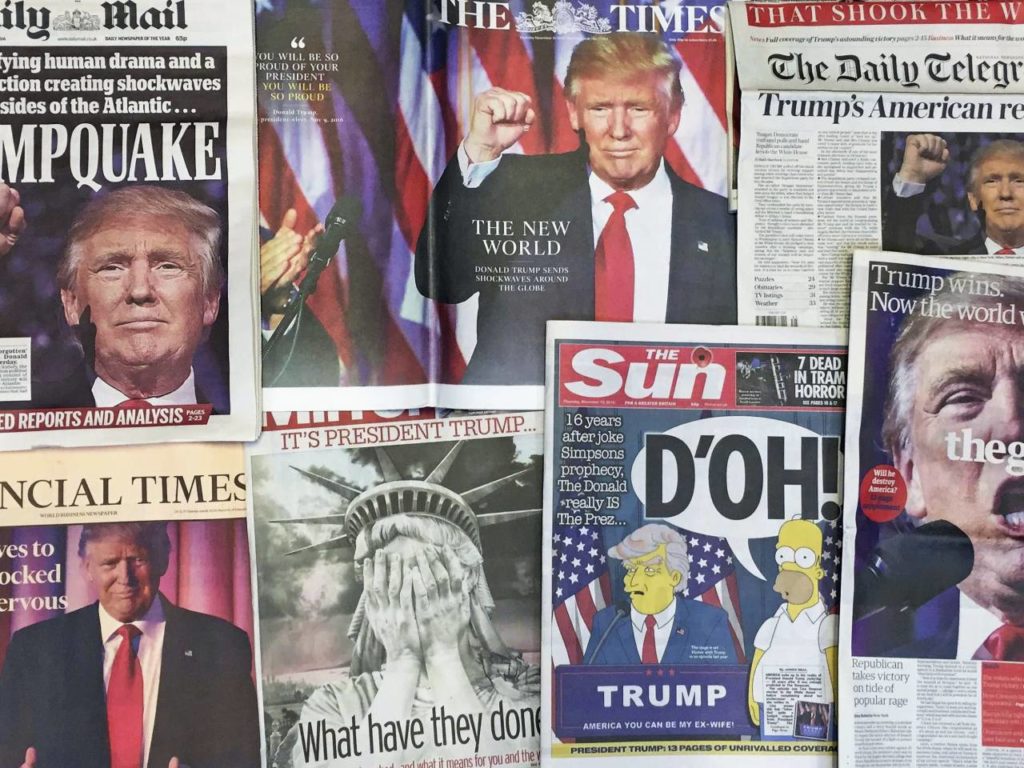
The turbulent U.S. election, featuring Donald Trump‘s unexpected victory over Hillary Clinton in the presidential race, was the overwhelming pick for the top news story of 2016, according to The Associated Press’ annual poll of U.S. editors and news directors. The No. 2 story also was a dramatic upset — Britons’ vote to leave the European Union. Most of the other stories among the Top 10 reflected a year marked by political upheaval, terror attacks and racial divisions. Last year, developments related to the Islamic State group were voted as the top story — the far-flung attacks claimed by the group, and the intensifying global effort to crush it. The first AP top-stories poll was conducted in 1936, when editors chose the abdication of Britain’s King Edward VIII. Here are 2016’s top 10 stories, in order: 1. US ELECTION: This year’s top story traces back to June 2015, when Donald Trump descended an escalator in Trump Tower, his bastion in New York City, to announce he would run for president. Widely viewed as a long shot, with an unconventional campaign featuring raucous rallies and pugnacious tweets, he outlasted 16 Republican rivals. Among the Democrats, Hillary Clinton beat back an unexpectedly strong challenge from Bernie Sanders, and won the popular vote over Trump. But he won key Rust Belt states to get the most electoral votes, and will enter the White House with Republicans maintaining control of both houses of Congress. 2. BREXIT: Confounding pollsters and oddsmakers, Britons voted in June to leave the European Union, triggering financial and political upheaval. David Cameron resigned as prime minister soon after the vote, leaving the task of negotiating an exit to a reshaped Conservative government led by Theresa May. Under a tentative timetable, final details of the withdrawal might not be known until the spring of 2019. 3. BLACKS KILLED BY POLICE: One day apart, police in Baton Rouge, Louisiana, fatally shot Alton Sterling after pinning him to the ground, and a white police officer shot and killed Philando Castile during a traffic stop in a suburb of Minneapolis. Coming after several similar cases in recent years, the killings rekindled debate over policing practices and the Black Lives Matter movement. 4. PULSE NIGHTCLUB MASSACRE: The worst mass shooting in modern U.S. history unfolded on Latin Night at the Pulse, a gay nightclub in Orlando. The gunman, Omar Mateen, killed 49 people over the course of three hours before dying in a shootout with SWAT team members. During the standoff, he pledged allegiance to the Islamic State. 5. WORLDWIDE TERROR ATTACKS: Across the globe, extremist attacks flared at a relentless pace throughout the year. Among the many high-profile attacks were those that targeted airports in Brussels and Istanbul, a park teeming with families and children in Pakistan, and the seafront boulevard in Nice, France, where 86 people were killed when a truck plowed through a Bastille Day celebration. In Iraq alone, many hundreds of civilians were killed in repeated bombings. 6. ATTACKS ON POLICE: Ambushes and targeted attacks on police officers in the U.S. claimed at least 20 lives. The victims included five officers in Dallas working to keep the peace at a protest over the fatal police shootings of black men in Minnesota and Louisiana. Ten days after that attack, a man killed three officers in Baton Rouge, Louisiana. In Iowa, two policemen were fatally shot in separate ambush-style attacks while sitting in their patrol cars. 7. DEMOCRATIC PARTY EMAIL LEAKS: Hacked emails, disclosed by WikiLeaks, revealed at-times embarrassing details from Democratic Party operatives in the run-up to Election Day, leading to the resignation of Democratic National Committee chair Debbie Wasserman Schultz and other DNC officials. The CIA later concluded that Russia was behind the DNC hacking in a bid to boost Donald Trump’s chances of beating Hillary Clinton. 8. SYRIA: Repeated cease-fire negotiations failed to halt relentless warfare among multiple factions. With Russia’s help, the government forces of President Bashar Assad finally seized rebel-held portions of the city of Aleppo, at a huge cost in terms of deaths and destruction. 9. SUPREME COURT: After Justice Antonin Scalia‘s death in February, President Obama nominated Merrick Garland, chief judge of the U.S. Court of Appeals, to fill the vacancy. However, majority Republicans in the Senate refused to consider the nomination, opting to leave the seat vacant so it could be filled by the winner of the presidential election. Donald Trump has promised to appoint a conservative in the mold of Scalia. 10. HILLARY CLINTON’S EMAILS: Amid the presidential campaign, the FBI conducted an investigation into Clinton’s use of a private computer server to handle emails she sent and received as secretary of state. FBI Director James Comey criticized Clinton for carelessness but said the bureau would not recommend criminal charges. Stories that did not make the top 10 included Europe’s migrant crisis, the death of longtime Cuban leader Fidel Castro, and the spread of the Zika virus across Latin America and the Caribbean. Republished with permission of The Associated Press.
