
Iowa swung fiercely to Donald Trump. Will it swing back in 2020?
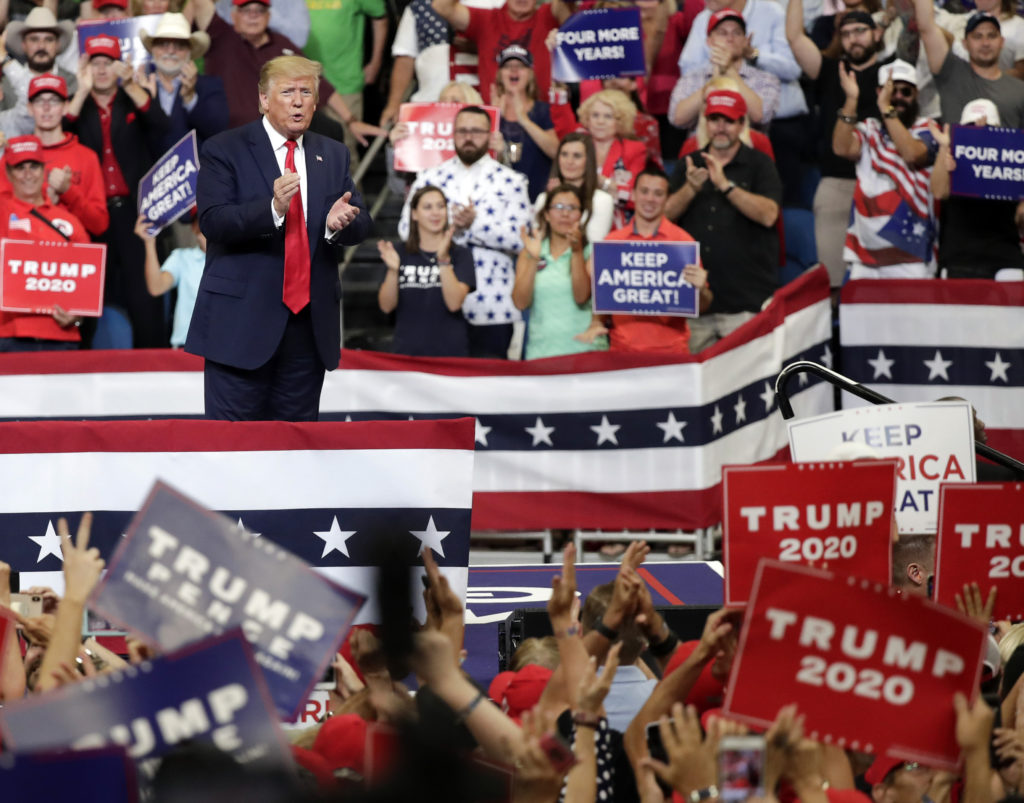
Few states have changed politically with the head-snapping speed of Iowa. Heading into 2020, the question is whether it’s going to change again. In 2008, its voters propelled Barack Obama to the White House, as an overwhelmingly white state validated the candidacy of the first black president. A year later, Iowa’s Supreme Court sanctioned same-sex marriage, adding a voice of Midwestern sensibility to a national shift in public sentiment. In 2012, Iowa backed Obama again. All that change proved too much, too fast, and it came as the Great Recession punished agricultural areas, shook the foundations of rural life and stoked a roiling sense of grievance. By 2016, Donald Trump easily defeated Hillary Clinton in Iowa. Republicans were in control of the governor’s mansion and state legislature and held all but one U.S. House seat. For the first time since 1980, both U.S. Senate seats were in GOP hands. What happened? Voters were slow to embrace Obama’s signature health care law. The recession depleted college-educated voters as a share of the rural population, and Republicans successfully painted Democrats’ as the party of coastal elites. Those forces combined for a swift Republican resurgence and helped create a wide lane for Trump. The self-proclaimed billionaire populist ended up carrying Iowa by a larger percentage of the vote than in Texas, winning 93 of Iowa’s 99 counties, including places like working-class Dubuque and Wapello counties, where no Republican since Dwight D. Eisenhower had won. But now, as Democrats turn their focus to Iowa’s kickoff caucuses that begin the process of selecting Trump’s challenger, could the state be showing furtive signs of swinging back? Caucus turnout will provide some early measures of Democratic enthusiasm, and of what kind of candidate Iowa’s Democratic voters — who have a good record of picking the Democratic nominee — believe has the best chance against Trump. If Iowa’s rightward swing has stalled, it could be a foreboding sign for Trump in other upper Midwestern states he carried by much smaller margins and would need to win again. “They’ve gone too far to the right and there is the slow movement back,” Tom Vilsack, the only two-term Democratic governor in the past 50 years, said of Republicans. “This is an actual correction.” Iowans unseated two Republican U.S. House members — and nearly a third — in 2018 during midterm elections where more Iowa voters in the aggregate chose a Democrat for federal office for the first time in a decade. In doing so, Iowans sent the state’s first Democratic women to Congress: Cindy Axne, who dominated Des Moines and its suburbs, and Abby Finkenauer, who won in several working-class counties Trump carried. Democrats won 14 of the 31 Iowa counties that Trump won in 2016 but Obama won in 2008, though Trump’s return to the ballot in 2020 could change all that. “We won a number of legislative challenge races against incumbent Republicans,” veteran Iowa Democratic campaign consultant Jeff Link said. “I think that leaves little question Iowa is up for grabs next year.” There’s more going on in Iowa that simply a merely cyclical swing. Iowa’s metropolitan areas, some of the fastest growing in the country over the past two decades, have given birth to a new political front where Democrats saw gains in 2018. The once-GOP-leaning suburbs and exurbs, especially to the north and west of Des Moines and the corridor linking Cedar Rapids and the University of Iowa in Iowa City, swelled with college-educated adults in the past decade, giving rise to a new class of rising Democratic leaders. “I don’t believe it was temporary,” Iowa State University economist David Swenson said of Democrats’ 2018 gains in suburban Des Moines and Cedar Rapids. “I think it is the inexorable outcome of demographic and educational shifts that have been going on.” The Democratic caucuses will provide a test of how broad the change may be. “I think it would be folly to say Iowa is not a competitive state,” said John Stineman, a veteran Iowa GOP campaign operative and political data analyst who is unaffiliated with the Trump campaign but has advised presidential and congressional campaigns over the past 25 years. “I believe Iowa is a swing state in 2020.” For now, that is not a widely held view, as Iowa has shown signs of losing its swing state status. In the 1980s, it gave rise to a populist movement in rural areas from the left, the ascent of the religious right as a political force and the start of an enduring rural-urban balance embodied by Republican Sen. Chuck Grassley and Democratic Sen. Tom Harkin. Now, after a decade-long Republican trend, there are signs of shifting alliances in people like Jenny O’Toole. The 48-year-old insurance industry employee from suburban Cedar Rapids stood on the edge of the scrum surrounding former Vice President Joe Biden last spring, trying to get a glimpse as he shook hands and posed for pictures. “I was a Republican. Not any more,” O’Toole said. “I’m socially liberal, but economically conservative. That’s what I’m looking for.” O’Toole is among those current and new former Republicans who dot Democratic presidential events, from Iowa farm hubs to working-class river towns to booming suburbs. Janet Cosgrove, a 75-year-old Episcopal minister from Atlantic, in western Iowa, and Judy Hoakison, a 65-year-old farmer from rural southwest Iowa, are Republicans who caught Mayor Pete Buttigieg’s recent trip. If such voters are a quiet warning to Trump in Iowa, similar symptoms in Wisconsin and Michigan, where Democrats also made 2018 gains, could be even more problematic. Vilsack has seen the stage change dramatically. After 30 years of Republican dominance in Iowa’s governor’s mansion, he was elected in 1998 as a former small-city mayor and pragmatic state senator. An era of partisan balance in Iowa took hold, punctuated by Democratic presidential nominee Al Gore’s 4,144-vote victory in Iowa in 2000, and George W. Bush’s 10,059-vote re-election in 2004. After the 2006 national wave swept Democrats into total Statehouse control for the
Michael Bloomberg opens door to 2020 Democratic run for president
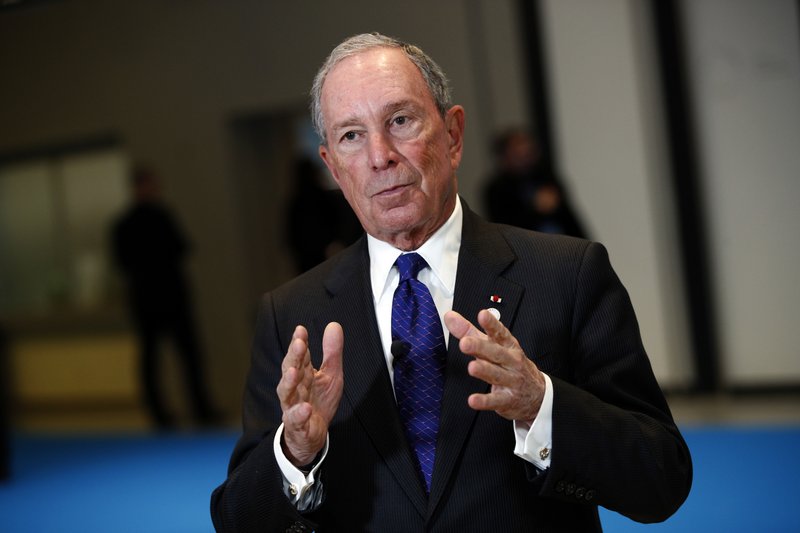
Michael Bloomberg, the billionaire former mayor of New York City, is opening the door to a 2020 Democratic presidential campaign, warning that the current field of candidates is ill equipped to defeat President Donald Trump. Full Coverage: Election 2020 Bloomberg, who initially ruled out a 2020 run, has not made a final decision on whether to jump into the race. If he were to launch a campaign, it could dramatically reshape the Democratic contest less than three months before primary voting begins. The 77-year-old has spent the past few weeks talking with prominent Democrats about the state of the 2020 field, expressing concerns about the steadiness of former Vice President Joe Biden’s campaign and the rise of liberal Massachusetts Sen. Elizabeth Warren, according to people with knowledge of those discussions. In recent days, he took steps to keep his options open, including moving to get on the primary ballot in Alabama ahead of the state’s Friday filing deadline. In a statement on Thursday, Bloomberg adviser Howard Wolfson said the former mayor believes Trump “represents an unprecedented threat to our nation” and must be defeated. “But Mike is increasingly concerned that the current field of candidates is not well positioned to do that,” Wolfson said. Bloomberg’s moves come as the Democratic race enters a crucial phase. Biden’s front-runner status has been vigorously challenged by Warren and Vermont Sen. Bernie Sanders, who are flush with cash from small-dollar donors. But both are viewed by some Democrats as too liberal to win in a general election faceoff with Trump. Despite a historically large field, some Democrats anxious about defeating Trump have been looking for other options. Former Attorney General Eric Holder and former Massachusetts Gov. Deval Patrick have quietly had conversations with supporters urging them to consider a run, but neither appears likely to get in the race. Bloomberg, a Republican-turned-independent who registered as a Democrat last year, has flirted with a presidential run before but ultimately backed down, including in 2016. He endorsed Hillary Clinton in that race and, in a speech at the Democratic Party convention, pummeled Trump as a con who has oversold his business successes. Bloomberg plunged his efforts — and his money — into gun control advocacy and climate change initiatives. He again looked seriously at a presidential bid earlier this year, traveling to early voting states and conducting extensive polling, but decided not to run in part because of Biden’s perceived strength. Biden did not address Bloomberg’s potential candidacy at a fundraiser Thursday night in Boston. With immense personal wealth, Bloomberg could quickly build out a robust campaign operation across the country. Still, his advisers acknowledge that his late entry to the race could make competing in states like Iowa and New Hampshire, which have been blanketed by candidates for nearly a year, difficult. Instead, they previewed a strategy that would focus more heavily on the March 3 “Super Tuesday” contests, including in delegate-rich California. Some Democrats were skeptical there would be a groundswell of interest in the former New York mayor. “There are smart and influential people in the Democratic Party who think a candidate like Bloomberg is needed,” said Jennifer Palmieri, who advised Clinton’s 2016 campaign. “But there is zero evidence that rank-and-file voters in the early states of Iowa and New Hampshire feel the same.” Still, others credited Bloomberg with taking on “some of America’s biggest challenges” and finding success. “While this is not an endorsement, Michael Bloomberg is a friend and I admire his track record as a successful business leader and Mayor who finds practical solutions to some of America’s biggest challenges, from creating good jobs to addressing the opioid crisis and fighting for common-sense gun safety,” said Rhode Island Gov. Gina Raimondo, a Democrat. Bloomberg reached out to several prominent Democrats on Thursday, including Raimondo. One Democrat Bloomberg hasn’t spoken to as he’s reconsidered his run is former President Barack Obama. Bloomberg would pose an immediate ideological challenge to Biden, who is running as a moderate and hopes to appeal to independents and Republicans who have soured on Trump. But the billionaire media mogul with deep Wall Street ties could also energize supporters of Warren and Sanders, who have railed against income inequality and have vowed to ratchet up taxes on the wealthiest Americans. “He’s a literal billionaire entering the race to keep the progressives from winning,” said Rebecca Katz, a New York-based liberal Democratic strategist. “He is the foil.” Warren on Thursday tweeted: “Welcome to the race, @MikeBloomberg!” and linked to her campaign website, saying he would find there “policy plans that will make a huge difference for working people and which are very popular.” Bloomberg would face other challenges as well, particularly scrutiny of his three terms as mayor. He has defended the New York Police Department’s use of the controversial stop-and-frisk policy that has been criticized as targeting African Americans and Hispanics. Black voters in particular are one of the most powerful constituencies in Democratic politics. Bloomberg will have to move quickly in the coming days and weeks to get on the ballot in many of the primary states, including Alabama. New Hampshire’s filing deadline is Nov. 15. In Arkansas, another Super Tuesday state, a Democratic Party spokesman said a person representing a “mystery candidate” reached out Thursday afternoon asking about the requirements to join the ballot. Reed Brewer, communications director for the Arkansas Democrats, said he walked the individual through the process — which simply requires filing documentation with both the state party and secretary of state, as well as paying a $2,500 fee — and was assured that the fee would be “no problem” for the mystery candidate. There is no filing requirement for a candidate to run in the Iowa caucuses, which are a series of Democratic Party meetings, not state-run elections. It means a candidate can enter the race for the Feb. 3 leadoff contest at any time. Associated Press writers Jill Colvin in Washington; Alexandra Jaffe and Thomas Beaumont in Des Moines,
