
Donald Trump picks Brett Kavanaugh for court, setting up fight with Democrats
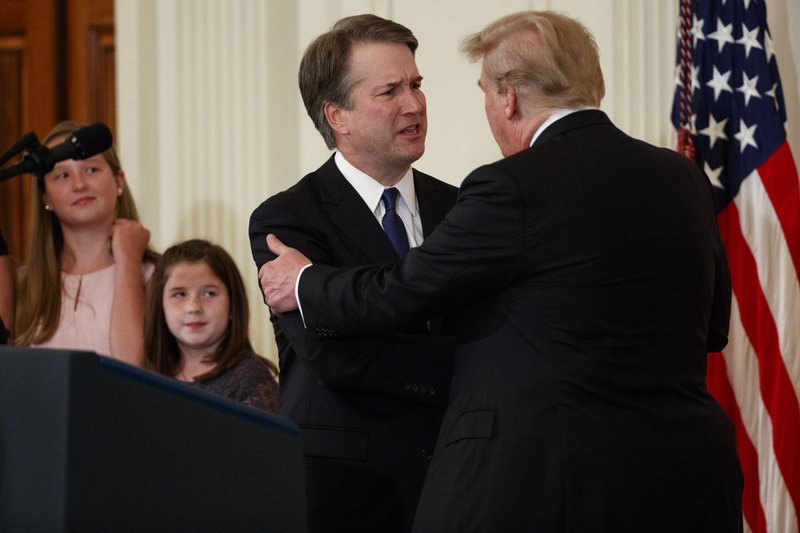
President Donald Trump chose Brett Kavanaugh, a solidly conservative, politically connected judge, for the Supreme Court Monday night, setting up a ferocious confirmation battle with Democrats as he seeks to shift the nation’s highest court ever further to the right. A favorite of the Republican legal establishment in Washington, Kavanaugh, 53, is a former law clerk for retiring Justice Anthony Kennedy. Like Trump’s first nominee last year, Justice Neil Gorsuch, Kavanaugh would be a young addition who could help remake the court for decades to come with rulings that could restrict abortion, expand gun rights and roll back key parts of Obamacare. “He is a brilliant jurist, with a clear and effective writing style, universally regarded as one of the finest and sharpest legal minds of our time,” Trump said in his prime-time televised White House announcement. He added: “There is no one in America more qualified for this position, and no one more deserving.” With Kavanaugh, Trump is replacing a swing vote on the nine-member court with a staunch conservative. Kavanaugh, who serves on the Court of Appeals for the D.C. Circuit, is expected to be less receptive to abortion and gay rights than Kennedy was. He also has taken an expansive view of executive power and has favored limits on investigating the president. Speaking at the White House, Kavanaugh pledged to preserve the Constitution and said that “a judge must be independent and must interpret the law, not make the law. A judge must interpret the Constitution as written.” A senior White House official said Trump made his final decision on the nomination Sunday evening, then phoned Kavanaugh to inform him. The official said Trump decided on Kavanaugh because of his large body of jurisprudence cited by other courts, describing him as a judge that other judges read. On Monday, Trump phoned retiring Justice Kennedy to inform him that his former law clerk would be nominated to fill his seat. Trump signed Kavanaugh’s nomination papers Monday evening in the White House residence. Top contenders had included federal appeals judges Raymond Kethledge, Amy Coney Barrett and Thomas Hardiman. Some conservatives have expressed concerns about Kavanaugh, questioning his commitment to social issues like abortion and noting his time serving under President George W. Bush as evidence he is a more establishment choice. But his supporters have cited his experience and wide range of legal opinions. With Democrats determined to vigorously oppose Trump’s choice, the Senate confirmation battle is expected to dominate the months leading up to November’s midterm elections. Senate Republicans hold only a 51-49 majority, leaving them hardly any margin if Democrats hold the line. Democratic senators running for re-election in states Trump carried in 2016 will face pressure to back his nominee. Senate Majority Leader Mitch McConnell called Kavanaugh “a superb choice” and said senators would start meeting with him this week. Some Republican senators had favored other options. Rand Paul of Kentucky had expressed concerns but tweeted that he looked forward to meeting with Kavanaugh “with an open mind.” Democrats and liberal advocacy groups quickly lined up in opposition. Signaling the fight ahead on abortion rights, Dawn Laguens, executive vice president of Planned Parenthood Federation of America, said in a statement: “There’s no way to sugarcoat it: With this nomination, the constitutional right to access safe, legal abortion in this country is on the line. The White House invited a number of senators to attend the Monday night announcement. Democrats who were invited but declined included Sens. Joe Donnelly of Indiana, Heidi Heitkamp of North Dakota, Doug Jones of Alabama, Joe Manchin of West Virginia and Dianne Feinstein of California. Feinstein is the ranking Democrat on the Judiciary Committee. The others are Republican targets for the confirmation vote who come from Trump-won states where they face re-election this fall. Democrats have turned their attention to pressuring two Republicans, Sens. Susan Collins of Maine and Lisa Murkowski of Alaska, to oppose any nominee who threatens Roe v. Wade. The two have supported access to abortion services. Kavanaugh is likely to be more conservative than Justice Kennedy on a range of social issues. At the top of that list is abortion. A more conservative majority could be more willing to uphold state restrictions on abortion, if not overturn the 45-year-old landmark Roe v. Wade decision that established a woman’s constitutional right. Kennedy’s replacement also could be more willing to allow states to carry out executions and could support undoing earlier court holdings in the areas of racial discrimination in housing and the workplace. Kennedy provided a decisive vote in 2015 on an important fair housing case. Like the other eight justices on the court, Kavanaugh has an Ivy League law degree, spending his undergraduate and law school years at Yale. Since 2006, he has been a judge on the federal appeals court in Washington. He also was a key aide to Kenneth Starr during Starr’s investigation of President Bill Clinton, worked on behalf of George W. Bush’s campaign during the election recount in 2000 and served in the Bush White House. Kavanaugh’s many written opinions provide insight into his thinking and also will be fodder for Senate Democrats who will seek to block his confirmation. He has written roughly 300 opinions as a judge, authored several law journal articles, regularly taught law school classes and spoken frequently in public. Kavanaugh’s views on presidential power and abortion are expected to draw particular attention in his confirmation hearing. Drawing on his experience working on the Clinton investigation and then in the Bush White House, he wrote in a 2009 law review article that he favored exempting presidents from facing both civil suits and criminal investigations, including indictment, while in office. That view has particular relevance as special counsel Robert Mueller is looking into Russian meddling in the 2016 election and whether the Trump campaign played any role in a foreign interference plot. On abortion, Kavanaugh voted in October to delay an abortion for a teenage immigrant who was in government
What to expect in the Supreme Court confirmation battle
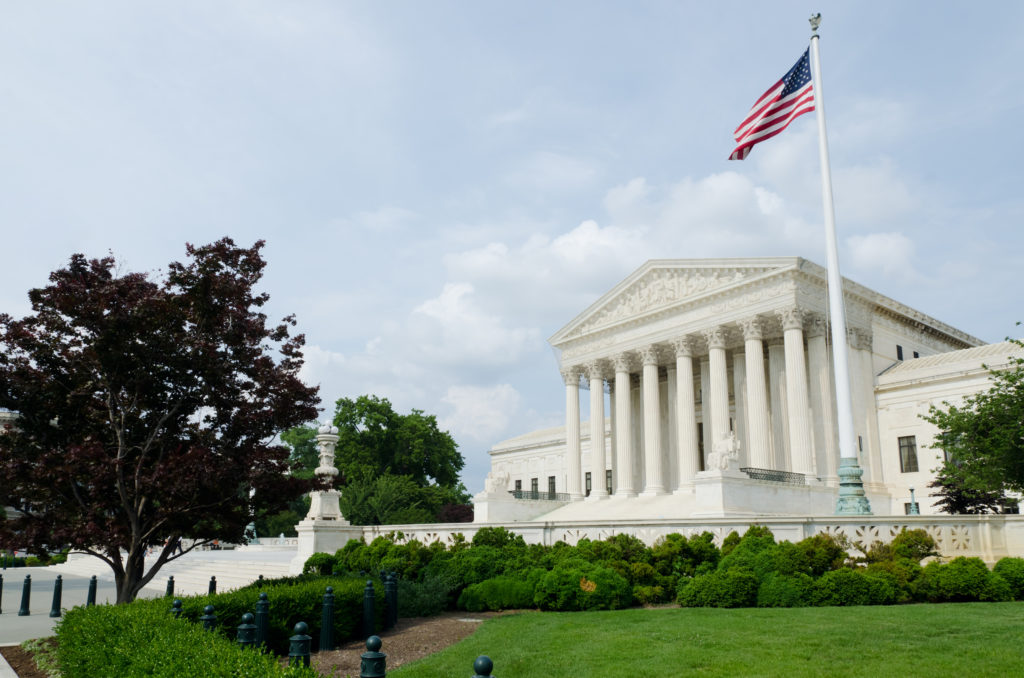
The coming battle over a Supreme Court nominee promises to be a bruising one. Republicans are eager for conservatives to gain a firm majority on the court. Democrats are voicing alarm about what the new justice could mean for charged issues such as abortion rights and gay rights. The stakes are enormous, and advocacy groups that don’t have to unveil their donors are spending heavily to shape the fight. President Donald Trump’s top contenders for the vacancy appear to be federal appeals judges Amy Coney Barrett, Thomas Hardiman, Brett Kavanaugh and Raymond Kethledge. Trump planned to announce his pick Monday night. Regardless of his choice, it’s likely that the closely divided Senate will be holding a momentous confirmation vote just weeks before the midterm election. A look at what to expect: Finding The Votes Republicans may have a narrower margin for error than they did when the Senate confirmed Trump’s first Supreme Court nominee, Neil Gorsuch, by a vote of 54-45 in April 2017. Democratic Sen. Doug Jones of Alabama has replaced Republican Sen. Luther Strange, cutting the GOP’s Senate majority to 51-49. Meanwhile, Republican Sen. John McCain of Arizona is battling brain cancer and has not been back to the Capitol since December. That increases the focus on two Republicans — Sen. Susan Collins of Maine and Lisa Murkowski of Alaska. Both support a woman’s right to have an abortion and will be looking for assurances that the nominee would not overturn the Roe v Wade decision establishing abortion rights. Trump pledged in 2016 that he would be “putting pro-life justices on the court.” On the Democratic side, the focus will be on Sens. Heidi Heitkamp of North Dakota, Joe Donnelly of Indiana and Joe Manchin of West Virginia. All three voted to confirm Gorsuch and are up for re-election in states that Trump won handily. Whatever they decide will upset a large group of voters in their home states. If Collins and Murkowski vote “no” and Democrats all vote “no,” the nomination would be blocked. If McCain were to miss the vote, only one GOP defection would be needed to block the nomination if all Democrats were opposed. Old Wounds Democrats are still stinging from Republicans refusing to even grant a hearing to President Barack Obama’s choice to serve on the Supreme Court, Merrick Garland. They are calling on Senate Majority Leader Mitch McConnell, R-Ky., to wait until after the November election to schedule a hearing and vote. McConnell has rejected that possibility, saying the decision to not fill the vacancy under Obama was prefaced on it being a presidential election year. Democrats say McConnell is being hypocritical in moving forward with the nomination. While that argument won’t sway Republicans, their strategy could stiffen Democratic resolve to oppose the nominee. Liberal advocacy groups are challenging Minority Leader Chuck Schumer, D-N.Y., to keep the Democrats united. Senate Relations Much of the groundwork for a successful confirmation comes in private meetings that the nominee will have with individual senators in the coming weeks. For lawmakers who are not on the Judiciary Committee, it may be their only chance to talk with the nominee personally before a final vote. Gorsuch met with nearly three-quarters of the Senate in advance of his hearings. The process is arduous, with the private meetings giving way to days of testimony before the Senate Judiciary Committee, which has 11 Republicans and 10 Democrats. Hearings for the most recent nominees to the Supreme Court have lasted four or five days, though there were 11 days of hearings for Robert Bork’s nomination in 1987. On average, for Supreme Court nominees who have received hearings, the hearing occurred 39 days after the nomination was formally submitted, according to the Congressional Research Service. The Judiciary Committee need not approve the nomination for it to advance. A negative recommendation or no recommendation merely alerts the Senate that a substantial number of committee members have reservations. The Fight Outside The Capitol Before the president has even made his announcement, advocacy groups are making clear they will play an important role in the coming fight. Groups that support abortion rights are planning a “Day of Action” for August 26, the anniversary of the 1920 adoption of the 19th Amendment giving women the right to vote. The liberal advocacy group Demand Justice will spend $5 million on ads through September and began airing spots Thursday in Maine and Alaska aimed at pressuring Collins and Murkowski. “Why won’t she rule out voting for Trump’s anti-choice picks?” both ads ask. It also plans to run ads next week in Manchin’s, Donnelly’s and Heitkamp’s home states with a softer tone, asking them to continue protecting people with pre-existing health conditions by opposing a nominee who’d threaten that. Meanwhile, the conservative Judicial Crisis Network is targeting vulnerable Democratic incumbents in its ad campaigns. The deep-pocketed group advertised against Senate confirmation of Garland and spent millions more advocating for Gorsuch. Republished with the permission of the Associated Press.
Doug Jones not opposed to confirming Donald Trump’s Supreme Court pick
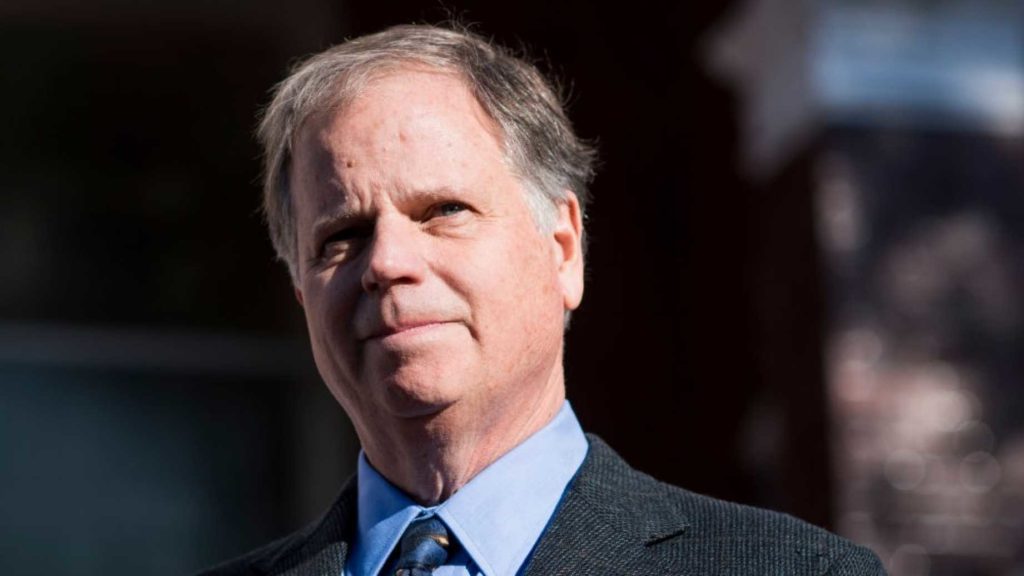
President Donald Trump is expected to announce his decision on who he will nominate to replace retiring Supreme Court Justice Anthony Kennedy in the Supreme Court Monday evening, and Alabama Senator Doug Jones has stated he is open to voting in favor of the new Justice. “I’m open to voting yes. I’m open to voting no. We don’t know who the nominee is going to be yet,” Jones told CNN on the State of the Union Sunday morning. “I don’t think my role is to rubber stamp for the President, but it’s also not an automatic knee-jerk no, either.” As of Monday morning, Trump’s top contenders for the vacant Justice seat are federal appeals judges Amy Coney Barrett, Thomas Hardiman, Brett Kavanaugh and Raymond Kethledge. Trump’s choice is predicted to begin a battle in the Senate between Democrats who are warning that the development may lead to changes on issues such as abortion rights and gay rights; and Republicans who are eager to win a majority in the court. “We’re going to give them a very, very good, hard and fair look to determine what I believe to be the best interest of my constituents, but also the country,” Jones continued. “I don’t think anyone should expect me to simply vote yes for this nominee, just simply because my state may be more conservative than others.” Jones beat out former Chief Justice Roy Moore in the December 2017 special election to fill the U.S. Senate seat previously occupied by Attorney General Jeff Sessions. Since then he’s caused a few controversies within the Alabama Legislature; to the point that the Alabama State Senate passed a resolution condemning his January vote against legislation banning late term abortions, but says he believes the rhetoric on both sides of the aisle isn’t helping. “I would prefer they don’t do that. I would prefer the Republicans would not say they automatically will vote for someone. The problems we have now is a partisan divide. This has become a political issue instead of an independent judiciary. That’s not a good thing,” Jones said during the interview according to AL.com.
Donald Trump weighs 2 or 3 candidates for court, to meet with Mike Pence
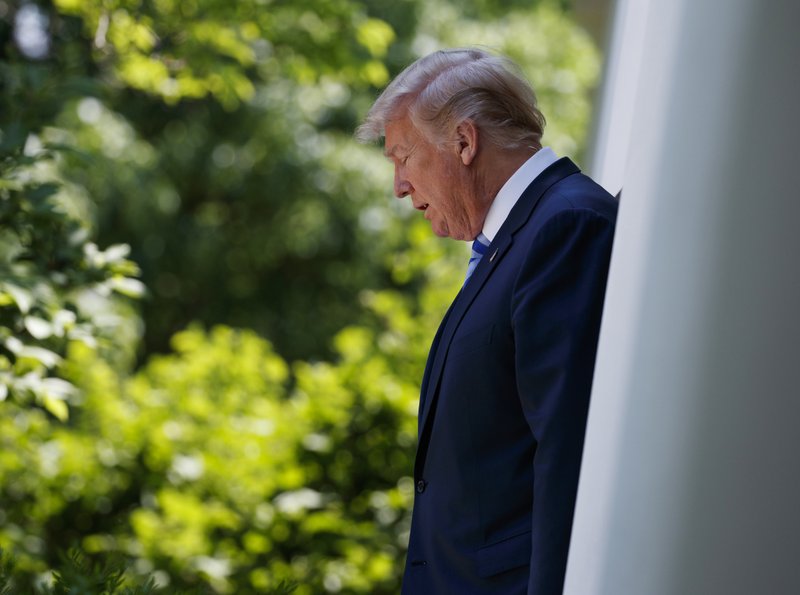
President Donald Trump is closing in on his choice to fill a Supreme Court vacancy created by Justice Anthony Kennedy’s retirement, telling reporters that he’s focused on two or three people ahead of his Monday announcement. “I think I have it down to four people. And I think of the four people I have it down to three or two,” Trump told reporters aboard Air Force One Thursday, as he traveled to a campaign rally in Montana. Trump was at his private golf club in New Jersey Friday and planned to spend the weekend there, consulting with advisers as he picks his court nominee amid intense jockeying from various factions seeking to influence the choice. The president planned to have dinner Friday night with Vice President Mike Pence, who has also been meeting with candidates as part of the vetting process. The president’s top contenders include federal appeals court judges Amy Coney Barrett, Brett Kavanaugh and Raymond Kethledge, with federal appeals court judge Thomas Hardiman still considered in the mix. As part of the roll-out process, the White House has been preparing information packages on all four, said two people familiar with the process who were not authorized to speak publicly. Starting from a list of 25 names vetted by conservative groups, Trump has also given serious consideration to federal appeals court judges Amul Thapar and Joan Larsen, and it’s possible the White House will prepare materials for more people. The president enjoyed the suspenseful process leading up to his announcement last year that he would nominate Justice Neil Gorsuch and is hoping to keep the guessing game going until he announces his pick Monday night. Trump’s social media director Dan Scavino tweeted Friday that the announcement would be at 9 p.m. from the East Room in the White House. Pence met in person with Kethledge and Barrett while he was vacationing in Indiana earlier this week and met with Kavanaugh at the Naval Observatory on July 4, said a person familiar with the process who was not authorized to speak publicly. Pence has also spoken to Republican senators, including Senate Majority Leader Mitch McConnell, Sen. Ted Cruz and Sen. Rand Paul about the process. As the president builds suspense for his second court pick in two years — a nominee who could tip the balance toward conservatives and revisit landmark rulings on abortion access, gay marriage and other issues — momentum is also growing among GOP supporters and detractors of the top contenders. Conservatives and some libertarian-leaning Republicans, including Paul of Kentucky, have raised concerns about Kavanaugh, warning he could disappoint Republicans if his past decisions are a guide. Paul and another Republican, Cruz of Texas, are supporting fellow Sen. Mike Lee, R-Utah, who is not said to be under serious consideration by the White House but is the only lawmaker Trump has considered for the position. To counter that, Kavanaugh’s allies have begun pushing back, reaching out to influential Republicans to ward off potential criticisms, according to one conservative who was the recipient of such outreach and spoke on condition of anonymity Thursday to discuss the situation. The senior administration official, though, said the administration is feeling less heat than earlier in this week over the choices, particularly Kavanaugh, and believes the jockeying in general has calmed somewhat. With the Senate narrowly divided, 51-49, in favor of Republicans, Trump’s announcement will launch a contentious confirmation process as Republicans seek to shift the court to the right and Democrats strive to block the effort. Any GOP defections could begin to doom a nominee. Senate Minority Leader Chuck Schumer, D-N.Y., told the president this week that nominating someone hostile to abortion access, or the 2010 health care law, would tarnish his legacy. Schumer told Trump that such a choice would be “cataclysmic” and create more division than the country has seen in years, according to a person familiar with the conversation who said Trump called Schumer on Tuesday. McConnell said Thursday at an event in Louisville he believes “the president will make a very high-quality appointment.” He acknowledged that his fellow Kentuckian, Judge Amul Thapar, is a finalist, but noted, “The competition at this level is pretty intense.” Trump conducted interviews Monday and Tuesday. Lee, R-Utah, is not viewed as a top prospect, but has consistent support among conservative and libertarian activists, including some Republicans who worry about a nominee not upholding their principles and who say the Utah senator could bring more certainty. Paul has told colleagues he may not vote for Kavanaugh if the judge is nominated, citing Kavanaugh’s role during President George W. Bush’s administration on cases involving executive privilege and the disclosure of documents to Congress, said a person familiar with Paul’s conversations who spoke on condition of anonymity. Some conservatives have pointed to Kethledge as a potential justice in the mold of Gorsuch. Both Kethledge and Gorsuch once served Kennedy as law clerks, as did Kavanaugh. Kethledge, a Michigan Law graduate, would add academic diversity to a court steeped in the Ivy League. Since Trump said his short list includes at least two women, speculation has focused on Barrett, a former law clerk to Justice Antonin Scalia and a longtime Notre Dame Law School professor who serves on the 7th U.S. Circuit Court of Appeals. Conservative groups rallied around Barrett after her confirmation hearing last year featured questioning from Democrats over how her Roman Catholic faith would affect her decisions. Trump’s choice to replace Kennedy — a swing vote on the nine-member court — has the potential to remake the court for a generation as part of precedent-shattering decisions. Recognizing the stakes, many Democrats have lined up in opposition to any Trump pick. Republished with the permission of the Associated Press.
Watch live: President Donald Trump announces Supreme Court pick
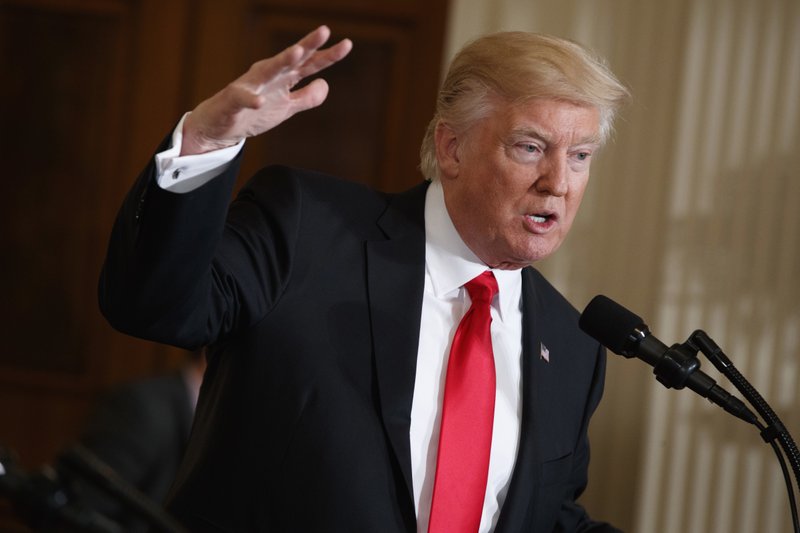
President Donald Trump is scheduled to announce his nominee for the U.S. Supreme Court from the Oval Office Tuesday evening. The nominee to the nation’s highest court, if confirmed, will replace conservative justice Antonin Scalia, who died almost a year ago in February 2016. Federal judges Neil Gorsuch of Colorado and Thomas Hardiman of Pennsylvania, considered to be finalists, are coming to Washington, D.C. for the announcement, according to CNN. Another appeals court judge, William Pryor of Alabama, is also said to be on Trump’s high-court short list. Rumors have circulated throughout Tuesday that 49-year old Gorsuch is Trump’s pick. You can watch President Trump’s announcement here live at 7 p.m. CT.
Donald Trump intends to announce his Supreme Court pick on Feb. 2
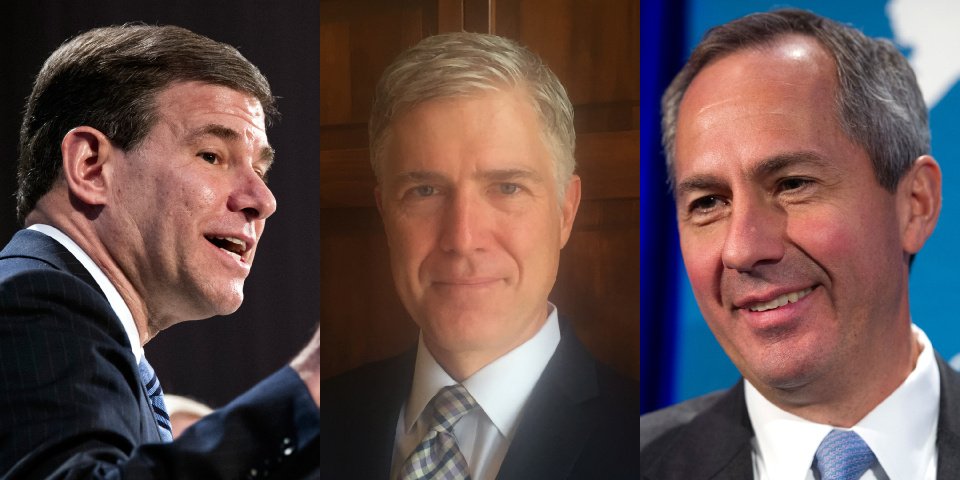
President Donald Trump said Wednesday he intends to announce his nominee for the Supreme Court on Feb. 2, and three federal appeals court judges are said to be the front-runners to fill the lifetime seat held by the late Justice Antonin Scalia, a conservative icon. The leading contenders, who have met with Trump, are William Pryor, Neil Gorsuch and Thomas Hardiman, according to a person familiar with the process who was not authorized to speak publicly about internal decisions and discussed the search on condition of anonymity. The three, ranging in age from 49 to 54, were on the list of 21 potential high court picks Trump announced during his presidential campaign. Pryor, 54, is an Alabama-based judge on the 11th U.S. Circuit Court of Appeals. Gorsuch, 49, is on the Denver-based 10th U.S. Circuit Court of Appeals. Hardiman, 51, is based in Pittsburgh for the 3rd U.S. Circuit Court of Appeals. All were nominated by President George W. Bush for their current posts. In a tweet Wednesday morning, Trump said he will make his high court pick next Thursday. Trump has promised to seek someone in the mold of conservative icon Antonin Scalia, who died nearly a year ago after serving on the Supreme Court for more than 29 years. Senate Republicans prevented President Barack Obama from filling the seat, a political gamble that paid off when Trump was elected. It’s hard to know what might persuade Trump to choose one instead of the others, said John Malcolm, a senior lawyer at the conservative Heritage Foundation. “He’s got to feel comfortable with the guy. It’s a part of his legacy, a very important part of his legacy,” Malcolm said. Justices often serve for decades after the president has chosen them leaves office. The longest serving justice currently on the bench, Anthony Kennedy, was a Ronald Reagan appointee who joined the court in 1988. Democrats and liberal interest groups, fuming over the Republican refusal to consider Obama’s nomination of Judge Merrick Garland to the court, are ready to fight any Trump nominee who is “outside the mainstream,” Senate Democratic leader Chuck Schumer said after a White House meeting about the court vacancy Tuesday. Conservatives said the contenders all share Scalia’s commitment to the text and meaning of the Constitution. “These are not stealth candidates. Their records are there for everyone to see and to understand. Their judicial philosophy is well within the mainstream of American legal thought,” said Leonard Leo, a conservative lawyer who has been advising Trump on the filling the vacancy. Of the three leading candidates, only Pryor faced significant opposition when nominated to the appeals court. Senate Democrats refused to allow a vote on his nomination, leading Bush initially to give Pryor a temporary recess appointment. In 2005, the Senate confirmed him 53-45, after senators reached an agreement to curtail delaying tactics for appellate judgeships. Gorsuch was approved by a voice vote in 2006. Schumer and Feinstein were among the 95 senators who voted for Hardiman’s confirmation in 2007. Hardiman is a colleague of Trump’s sister, Judge Maryanne Trump Barry. Pryor has a reputation as staunch conservative with a taste for academic rigor. He once called the landmark 1973 decision legalizing abortion the “worst abomination in the history of constitutional law.” As Alabama attorney general, he also angered some conservatives for urging a judicial discipline panel to remove Alabama Chief Justice Roy Moore from office after he refused to obey a court order take down a Ten Commandments monument from the lobby of the state judicial building. Some conservatives also have recently criticized Pryor for his vote in 2011 in favor of a transgender woman who sued for sex discrimination. Gorsuch is the closest on Trump’s list to a Washington insider — the son of former EPA administrator Anne Gorsuch, educated in the Ivy League and at Oxford, law clerk to Justice Anthony Kennedy and Bush-era Justice Department official. His opinions and outside writings, praised for their clear, colloquial style, include a call for courts to second-guess government regulations, defense of religious freedom and skepticism toward law enforcement. He has contended that courts give too much deference to government agencies’ interpretations of statutes. He sided with groups that held religious objections to the Obama administration’s requirements that employers provide health insurance that includes contraception. Hardiman has sided with jails seeking to strip-search inmates arrested for even minor offenses and has supported gun rights, dissenting in a 2013 case that upheld a New Jersey law to tighten requirements for carrying a handgun in public. Last year, he joined two 3rd Circuit colleagues in affirming the $1 billion settlement of NFL concussion claims, rejecting complaints that men with depression and mood disorders were left out of the deal. A Massachusetts native, he settled in Pittsburgh, where his wife comes from a family of prominent Democrats. Republished with permission of The Associated Press.
