
Legislature passes legislation to allow law enforcement officers to make arrest for parole or probation violations
On Tuesday, the Alabama Legislature approved bipartisan legislation allowing law enforcement officers to arrest persons for parole or probation violations. Senate Bill 157 (SB157) is sponsored by State Senator Chris Elliott (R-Fairhope) and carried in the Alabama House of Representatives by House Public Safety and Homeland Security Committee Chairman Allen Treadaway (R-Morris). Rep. Treadaway is a retired Birmingham Deputy Chief of Police. “This allows for a law enforcement officer to arrest a parolee that is violating the terms of his parole,” Treadaway explained. “What this bill does is allow the law enforcement officer to make that arrest if he witnesses the parolee committing a parole violation.” Treadaway explained that under current law, only parole officers can arrest a felon for violating the conditions of their parole or probation. Ordinarily, the parole officer will authorize law enforcement to make the arrest. “When we find them violating the terms of parole, we have to notify the parole officer,” Treadaway explained. This legislation was modified in the State Senate to require law enforcement officers who arrest parolees to notify the Bureau of Pardons and Paroles after the law enforcement officer makes the arrest. “He has four hours to notify the Board of Pardons and Paroles that he has taken that action,” Treadaway said. Rep. Thomas Jackson (D-Thomasville) expressed his concerns that this has the potential for an officer to harass a parolee. “You are giving those people some wrong ideas,” Rep. Jackson said. “If his parole says that he can’t go near children, and he is attending children’s events and hanging around schools, don’t you want the law enforcement officer to make that arrest?” Treadaway replied. Jackson responded, “There could be a grudge against someone. You know how that happens.” “The intent is well and good, but this can cause collateral damage and unintended consequences,” Jackson said. SB157, as enrolled, would “Allow a law enforcement officer to arrest a parolee or probationer without a warrant in certain circumstances; to require the Board of Pardons and Paroles to send the Alabama State Law Enforcement Agency the conditions of parole for an individual released on parole; to require a court to provide to the Alabama State Law Enforcement Agency the conditions of probation for an individual released on probation; and to require the Alabama State Law Enforcement Agency to make the conditions of parole or probation available to law enforcement officers and other authorized persons through the Law Enforcement Tactical System.” The House of Representatives passed SB157 in a vote of 80 to 17. The legislation had already passed the Alabama Senate by a vote of 33 to 0. The bill has now gone to the governor for her consideration. Tuesday was Day 30 of the 2023 Alabama Regular Legislative Session. The Alabama Constitution forbids any regular legislative session to go beyond 30 days. Barring a second special session being called by Alabama Governor Kay Ivey, the Legislature will next meet on February 6, 2024. To connect with the author of this story or to comment, email brandonmreporter@gmail.com.
Democrats oppose GOP absentee ballot bill
On May 4, the Alabama House Republicans passed legislation that would severely limit outside groups’ abilities to influence elections. The legislation makes it a felony to pass out absentee ballot applications or assist someone with filling out an absentee ballot application unless they are a family member. On Wednesday, House Democrats held a press conference to express their concerns about that legislation and promote their bills that would make it easier to participate in Alabama elections. House Bill 209 is sponsored by State Representative Jamie Kiel. The House Republicans passed HB209 Thursday on a party-line vote after voting to cloture debate. Rep. Patrick Sellers said, “Sadly, last week, the Alabama House was on the wrong side of history when it passed House Bill 209, strictly along partisan lines, which will criminalize many of those who would help the elderly and disabled with their absentee ballots. Not only is this wrong, it will have a chilling effect of causing some people not to vote at all out of fear. It reminds me of days not too long ago in our nation’s history when we had poll tests and poll taxes, which were clearly designed to keep Black people from voting. How is this different? It appears to me that this bad piece of legislation targets the elderly, the disabled, and nonpartisan civic groups that are doing everything they can to increase voter participation and voter turnout. Voting is our fundamental right to vote as a citizen. Our elections are secure and accurate. HB209 doesn’t prevent election fraud. It is a bill that suppresses the vote and makes people afraid. We need to make voting more accessible and easier, especially for those who genuinely need assistance or accommodation due to age or disability.” Rep. Thomas Jackson said, “The right to vote was initially for White men who owned property. It wasn’t until the passage of the nineteenth amendment in 1920 when women – and let me relate – white women, was able to vote, and that was half the country. My colleague spoke of poll tax and whether or not they were abolished because what we are going through now is a form of poll tax. In 1964 as a nation, we struggled and bled over this most basic right. Today we are still struggling, but we will not quit this fight because our nation is too strong, and the people are too determined, and we are founded on the bedrock and principle of government that is of the people, by the people, and for the people. For our democracy to prosper and flourish, it is vital that we increase our voting turnout, and for everything, we must have increase in participation and not suppression. Our colleagues across the aisle should be making it more accessible for people to vote rather than taking away that right that we already gained some 57 years prior. We must enact legislation for automatic registration at the age of 18, curbside voting, early voting, and guaranteed absentee voting.” Rep. Kenyatte Hassell said, “I agree that freedom is the continuous action we must all must continue to take, especially in protecting our right to vote.” “The right to vote is sacred because without this right, we cannot be free, and we cannot prosper,” Hassell said. “I and my colleagues strongly opposed House Bill 209 and voted against this,” Rep. Adline Clarke said. “We did so because it makes it a crime to assist those who need help the most, and it suppresses the vote using fear, as one of my colleagues already stated, as a tactic. It is morally wrong, and it doesn’t do anything. It doesn’t do one thing to make our elections more secure or more accurate.” HB209 does allow family members to help an elderly or disabled person to assist with absentee voting. “Not all people have families that they can rely on for help,” Clarke said. HB209 targets outside groups paying persons to canvas communities bringing absentee ballot applications to persons who likely would not vote, and then teams of canvassers assisting people in filling out those absentee ballots when they arrive. This has become part of the election process. Generally, those outside groups target communities where they know that voters will be overwhelmingly sympathetic to their party or cause. 501C3 organizations canvassing neighborhoods where they know that demographics and past voting histories are aligned with their political goals was widespread during the 2020 election, particularly in swing states like Georgia, Arizona, Pennsylvania, Ohio, and Wisconsin. “Had we not been clotured last week, Democrats were prepared to offer an amendment that would at least make House Bill 209 a little bit better,” Clarke said. “One of those amendments would allow nonprofit organizations like the League of Women Voters, the NAACP, churches, and other nonprofit 501C3 organizations to continue assisting individuals with the absentee voting process.” “House Bill 209 states that the Secretary of State, probate judges, absentee ballot election managers or their designee,” Clarke said. “Now, it is absolutely unrealistic to believe that these individuals can take up the slack for the hundreds of volunteers that assist voters in every election. It is not humanly possible and will cause a huge decrease in the number of voters who vote absentee. That is a sad thought.” Clarke warned that many people could inadvertently violate SB209 if it became law. “We envision that neighbors and many other well-intentioned people will be caught off guard if this bill passes,” Clarke said. “They will continue to be neighborly. Many will continue assisting elderly neighbors with absentee voting until they are personally notified in writing on a potential violation.” Kiel said that he drafted the legislation with the help of Secretary of State Wes Allen. Under HB209, groups would still be able to conduct voter registration drives and hand out voter registration forms. They would not be allowed to hand out absentee ballot request forms, and canvassers helping persons fill out absentee ballots would be banned. A voter who needs help could call the Secretary
House passed legislation to expand the scope of practice of optometrists
On Tuesday, the Alabama House of Representatives passed legislation that would expand local optometrists’ services. House Bill 349 (HB349) is sponsored by State Representative Danny Garrett. “1995 was the last time we expanded our optometry law in terms of scope of practice,” Garrett said. “A lot of things have changed since 1995. Nobody had smartphones then?” Garrett said that many things have also changed in optometry over the last 28 years. “What this bill does is very strictly limited,” Garrett said. “It allows optometrists to perform three procedures they are already trained to do.” Followers of the Alabama Legislature know that optometrists and ophthalmologists have been fighting for decades over the scope of practice that the state of Alabama will allow trained optometrists to do. “I have been carrying this legislation for seven years,” Garrett said. Garrett explained that this was also about giving citizens access to healthcare as 57 counties have an optometrist practicing there, but only 23 counties have an ophthalmologist. “This is a turf thing,” for the ophthalmologists Garrett said. “We haven’t seen an increase in ophthalmologists in Alabama. I have never seen a plan to expand ophthalmology in Alabama.” Garret explained that this legislation would not allow optometrists to make injections in the eyeball or perform eye surgeries. Rep. Mark Shirey is an optometrist. “We have to be trained under an ophthalmologist,” Shirey said. “The vaccines were suggested by the ophthalmologists.” Rep. Thomas Jackson said, “I have to drive 102 miles to see an ophthalmologist even though we have several optometrists who practice in Thomasville and Clarke County.” House Minority Leader Anthony Daniels said, “I have been here ten years dealing with the scope of practice, and I have not seen any expansion of access to ophthalmologists.” “When you compare this with other states, this is actually the most restrictive bill to expand the scope of practice, and they are still not satisfied,” Daniels said. “We have groups out there who are opposed to things just to be opposed to it.” “I have heard more from the opposition than I have heard in the last eight months,” Daniels continued. “There are always going to be fear tactics used. This is just how some of these folks operate.” “If you are not going to recruit more specialists to the state of Alabama, then these are the things that we are going to look at to provide access,” Daniels said. “I think it is a great piece of legislation. It is more restrictive than what I expected, but it is a start.” Daniels said that the procedures, including corrective lasers, are fairly simple. “I might be able to do that, not that I am seeking to expand the scope of practice to myself,” Daniels said, “The insurance companies that provide the malpractice insurance are not coming out against this. That they are not opposing this legislation makes me wonder what is the real issue here.” “The optometrists will tell you that there are six or seven procedures that ought to be on here,” Garrett said. “This would just allow optometrists to do what they are trained to do it, albeit on a very restricted basis.” Rep. Barry Forte said, “I represent District 84. I represent a lot of poor folks. I have one constituent; she is over 70 years old, and she has to go all the way to Dothan to get this procedure on her eyes. She is 50 miles from Dothan. She has to pay somebody to drive her all the way to Dothan to get this procedure. She lives only half a mile from the doctor’s (optometrist) office. This is the best bill I have ever seen.” Rep. Danny Crawford explained that he had to go out of state for an eye procedure because his optometrist wasn’t allowed to treat the problem. Crawford said, “It (the procedure) took ten minutes. I had to go out of state.” Rep. A.J. McCampbell said, “You may not be able to see if you wait for five or six weeks, as Rep. Crawford said. I have people who struggle to go to the grocery store. It takes my people an hour drive to get medical procedures done that they need.” The House passed HB349 83 to 6. The legislation now goes to the Senate for their consideration. Thursday will be day 20 of the 2023 Alabama Regular Legislative Session. To connect with the author of this story or to comment, email brandonmreporter@gmail.com.
House passed legislation banning employers from requiring that employers be microchipped

On Thursday, the Alabama House of Representatives passed legislation that would prohibit employers from requiring that their employees have microchips inserted in their bodies. House Bill 4 (HB4) is sponsored by State Representative Prince Chestnut. Chestnut said that this bill’s purpose is “preventing the microchipping of employees by employers.” State Rep. Kenneth Paschal said, “I love your original bill as written, but I have a problem with an amendment in the committee substitute.” Chestnut said, “My plan is to table the committee substitute and pass the original bill.” “What are we doing?” Rep. Laura Hall (D-Huntsville) asked. “What is the intent?” “I read a lot, and one of the things that concerned me is a push in certain areas to microchip people in some places in the workplaces,” Chestnut said. “It is really catching on in Europe. It is taking place in parts of this country.” Hall asked where it was being done. “I did find where it is happening at a tech company in Wisconsin,” Chestnut said. “Wisconsin passed legislation after the fact. Nevada has passed legislation prohibiting it, and Arkansas has passed legislation.” Hall asked if it was occurring in Alabama. Chestnut said that it wasn’t happening in Alabama to his knowledge, but this legislation is being proactive rather than waiting until it does happen and legislating after the fact. “If somebody wants to voluntarily get microchipped, you still can,” Chestnut stated. Chestnut explained that the technology exists so people can access a secure building by having a microchip implanted into the body or the hand. There are even applications where people are getting a microchip installed in their body that functions as a debit or credit card; you just put your hand in front of the scanner, and the funds for your purchase are deducted from your purchase account electronically. This bill does not prevent people from voluntarily being microchipped. “What I want to do is stop it from being mandated,” Chestnut said, “That is everyone’s personal body integrity.” Chestnut explained that the committee substitute would “allow prisoners in the Department of Corrections can be microchipped. I talked with Mr. (Cam) Ward at Pardons and Paroles, and he said that the surveillance in place is sufficient. They don’t want it. I don’t want to see it on inmates because sooner or later, it will work its way up to us.” Rep. Matt Simpson said, “I am completely in support of taking off the committee amendment.” Simpson said that the whole Judiciary Committee favored tabling the committee substitute. Rep. Thomas Jackson said, “I understand microchipping a pet so that if it gets lost that it can get back to its master. How does microchipping an inmate ever make sense?” The House voted 105 to 0 to table the House Judiciary Committee substitute and consider HB4 as originally introduced. Rep. Ritchie Whorton said, “I agree with you that we should have a right to decide what goes in our bodies. My bill, HB31, the Healthcare Freedom Act, would have prevented an employer from requiring that employees take vaccines against their will.” Violating this act would be a Class D felony in Alabama. Whorton said that business interests in Alabama blocked his bill and asked where they were on Chestnut’s bill. Chestnut said, “I don’t know who is against it, but I had to work it really hard to get it to the floor.” HB4 passed the Alabama House of Representatives 104 to 0. The legislation now goes to the Alabama Senate for their consideration. It has been referred to the Senate Judiciary Committee. Tuesday will be day 16 of the 2023 Alabama Regular Legislative Session. To connect with the author of this story or to comment, email brandonmreporter@gmail.com.
Alabama House passes financial education legislation

On Tuesday, the Alabama House of Representatives passed legislation requiring Alabama public schools to teach public high school students about personal financial literacy. House Bill 164 (HB164) is sponsored by State Representatives Andy Whitt (R-Harvest). Rep. Whitt is a retired banker. “I have got story after story from thirty years of banking experience of young people who did not have a checking account,” said Whitt. “They go to convenience stores and check cashing places to get their paychecks cashed. One young fellow was working two hours a week just to be able to get his check cashed each week.” “In states with financial literacy, it has been shown that credit scores rise 20- or 30-points saving thousands of dollars on home mortgages,” Whitt said. Whitt said that the class would be “looking at high-interest loans – credit cards. Are there other options? It will look at the percent going into taxes. People don’t understand that when you get paid ten dollars an hour, you are not bringing home ten dollars an hour.” Whitt explained that HB164 gives schools flexibility in how this is taught to give the latitude to put it in a math class. “They have the ability to do that. It may be in a career tech class,” Whitt said. Rep. Roland Hollis said, “Thank you for bringing this. We have kids right now that cannot write a check.” Hollis is a businesswoman. “They need to know the business,” Hollis said. “We have kids who cannot even count the money back to you.” State Rep. Mary Moore said, “My concern is that the people who teach the curriculum; they have to be trained. You got some educators who do not manage their own money well, and they are going to teach children?” Whitt said, “This will be started in high school between the ninth and eleventh grade.” “I think you need to start in middle school,” Moore said. “The earlier you can start it, the better.” Whitt said there would be a test on financial literacy at the end of the instruction. “We are testing our little children to death,” Moore said. “And we are burdening our poor teachers with more paperwork than they can handle now.” Whitt said that this bill is just the start of the process and would bring other financial literacy bills in the future. “Orientation for junior colleges” is a possibility, Whitt said. “I hope this is my first step moving forward.” “This is important – very necessary,” said Rep. Danny Garrett. “A lot of people today don’t write checks. You are looking at EBT cards. They also tend not to carry cash. We are talking about 21st-century financial education.” State Rep. Thomas Jackson said, “Being an educator myself, how times have changed since I was in the classroom. People don’t want checks. They don’t want paper. People deal in electronic payments now.” Jackson said that many students come from poverty, so they have little experience managing money. “The reason they don’t know is that they have nothing to manage,” Jackson said. “Put money in the program and the experience and knowledge in how to get this off the paper and into the classroom.” Whitt said that the education would teach students about savings and investments. State Rep. Laura Hall asked if they would teach the students about Bitcoin. “Bitcoin – that is not covered,” Whitt said. “If you understand Bitcoin, let me know.” House Bill 164 passed the House 104 to 0. Ninety-eight members of the House signed on as cosponsors of HB164. The legislation now goes to the State Senate for their consideration. Tuesday was the eleventh legislative day of the 2023 Alabama Regular Legislative Session. To connect with the author of this story or to comment, email brandonmreporter@gmail.com.
State House passes legislation allowing some social workers to diagnose mental illness
On Tuesday, the Alabama House of Representatives passed legislation allowing certain social workers with master’s degrees to diagnose mental illnesses. House Bill 56 (HB56) is sponsored by State Representative Frances Holk-Jones (R-Foley) The synopsis states, “This bill would provide further for the scope of practice of licensees of the Alabama Board of Social Work Examiners.” The legislation expands the scope of practice of a licensed independent clinical social worker, including the authority to diagnose and develop treatment plans. “The scope of practice does not include the diagnosis, treatment, or provision of advice to a client for problems or complaints relating to conditions outside the boundaries of the practice of social work.” The legislation states that no individual may engage in the independent clinical practice of social work unless they satisfy all of the following: (1) Licensed is licensed under this chapter as a licensed independent clinical social worker; and. (2) Has a doctorate or master’s degree from a school of social work approved, accredited, or in candidacy granted by the Council on Social Work Education; and. (3) Has had two years of full-time or three years of part-time postgraduate experience under appropriate supervision in the specified social work method or four years of full-time or five years of part-time postgraduate experience under appropriate supervision in the specialty in which the applicant will practice. (4) Has passed an examination prepared by the board for this purpose; except, that prior to the time that an examination is prepared by the board for this purpose, no person individual who otherwise meets the requirements of this section will be prohibited from engaging in the private independent practice of social work; and. (5) Has been issued by mail a certified letter of certification stating his or her qualification for private independent practice by the board; and. (6) Has paid an initial certification fee set by the board. “The terms diagnose and treatment, whether considered in isolation or in conjunction with the rules of the board, may not be construed to permit the performance of any act which a licensed clinical social worker is not educated or trained to perform including, but not limited to, any of the following: (1) Administering and interpreting psychological tests or intellectual, neuropsychological, personality, or projective instruments. (2) Admitting any individual to a hospital for treatment of any condition that is outside the boundaries of the practice of social work, as provided in subsection (b). (3) Treating any individual in a hospital setting without medical supervision. (4) Prescribing medicinal drugs. (5) Authorizing clinical laboratory procedures or radiological procedures. (6) Using electroconvulsive therapy. Rep. Holk-Jones explained that the licensed clinical social workers would mostly do counseling. “Prescribing would be done by a doctor.” Rep. Thomas Jackson said, “We have outsourced mental health to the Department of Corrections. They don’t know anything about mental health. We need to get some of those people out of the prisons and into treatment.” Rep. Tim Wadsworth said, “This will allow people in our rural areas to get help quicker.” Holk-Jones said, “It will make it quicker and also bring telehealth into it.” State Rep. Mary Moore questioned if the social workers were competent to make psychiatric diagnoses. Holk-Jones said, “They have a master’s degree in social work and 3000 hours of clinical training. This is all part of the social worker training.” Moore said, “We have got people who are deficient doing clinical diagnosing.” Holk-Jones said, “They are trained to do that. If they need a prescription, they go to a doctor.” Moore said, “You can damage a person for life if they don’t have the proper training to diagnose someone. What some of us call a mental condition is not. We could misdiagnose someone with a condition they don’t have. I would like them to train under a psychiatrist before they start diagnosing someone.” State Rep. Barbara Drummond said, “This hits me raw because I lost a great nephew on Easter Sunday to suicide. He was a veteran.” Drummond said, “The more we can do about mental health in the state, the better.” Holk-Jones said, “This will not be the last time we talk about it.” HB56 passed 104 to 1. HB56 now goes to the Senate for their consideration, where it has been referred to the Senate State Governmental Affairs Committee. To connect with the author of this story or to comment, email brandonmreporter@gmail.com.
Alabama House votes to increase penalties on fentanyl trafficking
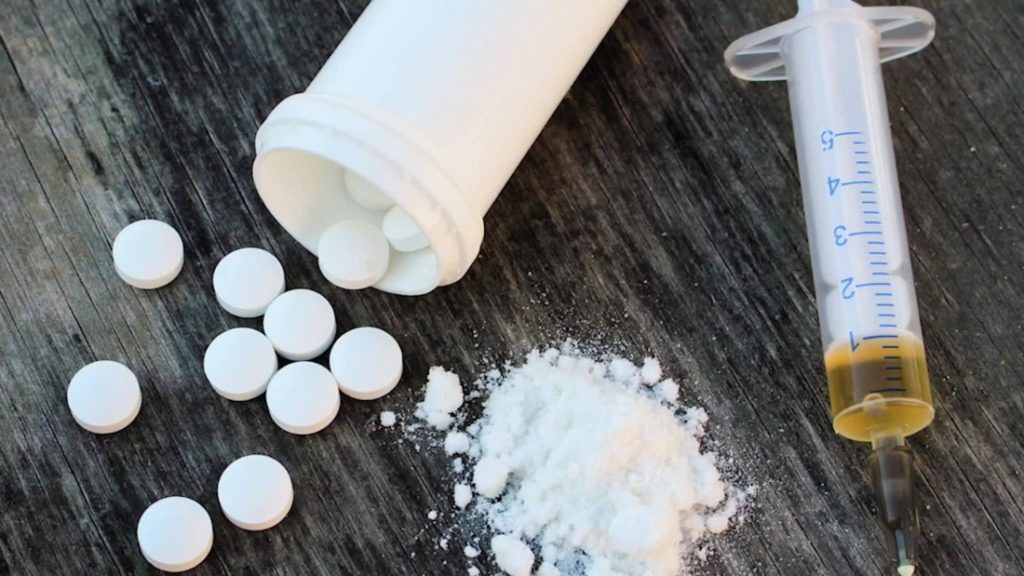
On Thursday, the Alabama House of Representatives unanimously voted in favor of legislation to substantially increase the length of sentences for persons convicted of trafficking fentanyl in the state. House Bill 1 (HB1) is sponsored by State Representative Matt Simpson. “This is going after the distributors, the trafficker, the people bringing this into the communities,” Simpson explained. Fentanyl is a powerful opioid that was designed to make hospital patients unconscious during surgery. It has become the drug of choice for drug dealers as it is cheap, plentiful, highly addictive, and produces a very powerful high. Opioids, and especially fentanyl, have resulted in a massive increase in the number of Americans dying from drug overdoses. A recent report showed 107,000 Americans were killed by drug overdoses in the last 12 months. Rep. Terri Collins said, “Thank you for bringing this bill.” “I have had so many people call me about this,” Collins said. “It is a weapon of mass destruction. Having strong penalties are so important.” HB1, as written, sets the amounts of fentanyl that would constitute trafficking under Alabama law and the sentences in the Alabama criminal code for being caught smuggling or distributing those amounts in the state. Rep. John Rogers said, “I like this bill. I heard on Channel 13 that just a little residue of fentanyl in a pocket can be harmful for a child. In Birmingham, a child gave away some candy at school, and they had to send seven kids to the hospital because of fentanyl residue. “I am very excited about your bill,” Rogers said. “Can it be mixed with the water, like at the waterworks? Simpson replied, “I don’t think that fentanyl is soluble in water.” “Your bill is very good,” Rogers said. “Last week in Birmingham, five people died of fentanyl overdose, and they did not know they had fentanyl.” Simpson said, “We are trying to educate the public. The attorney general has negotiated a $300 million opioid case verdict. That is going to be used to educate the public. Half is going to the cities, and half going to the counties.” Some drug dealers lace other drugs like marijuana, cocaine, methamphetamine, counterfeit prescription drugs, and even candies with fentanyl to increase their clientele. Rogers said, “We have got people selling these dirty, dirty drugs. We have got people saying I don’t want regular marijuana. They want that dirty, dirty stuff. It smells really bad. I can smell it walking down the street in Birmingham.” Simpson said that his bill targets traffickers, not street dealers. “This is not the guy on the street,” Simpson said. “This is the main traffickers.” “I do have it broken down by weight,” Simpson said. “Just two milligrams is a lethal dose.” Rogers said, “Kids are getting it. That is what scares me more than anything else.” State Rep. Thomas Jackson said, “I want to commend you for bringing this bill. I am from southwest Alabama. Baldwin County has a problem. The state has a problem. We don’t know how many people we know who may die from this. We need to make them pay a price so deep that they never see the light again.” “We have had friends in our community that died from fentanyl,” Rep. Thomas said. “We have got a problem at the south border, and if we don’t curtail it now, we are going to lose so many people.” State Rep. Barbara Drummond has successfully sponsored legislation to limit the sale of vaping products to minors. Drummond said, “I am an advocate for young people and vaping. This piece of legislation is so important. Recently a young person’s vape pipe was laced with fentanyl. This stuff is coming out of China, and it is so dangerous.” HB1 passed the House 105 to 0. The passage was followed by a standing ovation on the floor of the House. 101 members of the House signed on as co-sponsors. Alabama Today asked Simpson how much prison time someone caught with 100 pounds of fentanyl would get under this. “Life,” Simpson replied. “This stuff is so dangerous that if police officers even get it on their hands, they are having (health) problems.” The bill had the support of every single member, and 101 of the 105 signed on as co-sponsors. “The biggest message I got from today is that this is bipartisan,” Simpson said. “That shows how dangerous fentanyl is in our communities.” Simpson explained to reporters that the bill addresses pure fentanyl, not fentanyl mixed with other drugs. “The code already has mixtures in the statute,” Simpson said. “If you have a gram of pure fentanyl that could kill 500 people.” Simpson said that the bill sends a message to drug traffickers. “We wanted them to know we are coming after you, and you are going to go to jail for a long time,” Simpson said. “One pill can kill you,” Simpson said. “Fentanyl is fifty to a hundred times more powerful than morphine. When you talk to pathologists, they will tell you that 80% of overdose deaths are fentanyl.” Simpson said that he has talked with the Attorney General, and the state’s half of the opioid settlement should go to educate the public on the dangers of fentanyl and for drug treatment. “Once somebody gets on fentanyl, we need to spend the money to get people off of fentanyl,” Simpson said. Speaker of the House Nathaniel Ledbetter said that passing HB1 and the bill overhauling adoption laws were his two biggest priorities for the session. “We have changed lives for generations to come with these two bills,” Ledbetter said. “These were my top two priorities. I am excited to get those two major bills passed out of the House.” Reporters asked Speaker Ledbetter what the difference was between fentanyl and drugs that came before, like cocaine. “The difference is how deadly it is,” Ledbetter replied. “There is enough fentanyl coming across our borer to kill every man, woman, and child in the United States. Simpson is an attorney and former prosecutor who serves on the House Judiciary Committee
Steve Flowers: Incumbency prevails in 2022 State House races
Folks, believe it or not, we are closing in on six months before next year’s election year. The primary election is set for May 24, 2022. In Alabama, all our major constitutional officers are on the ballot next year. The governor’s office is the premier race in the state, and that coveted and powerful post is set for its four-year quadrennial run. Therefore, this big political year is referred to as the gubernatorial year. Those of us who follow Alabama politics have been salivating with anticipation for a cavalcade of great races. However, the power of incumbency has devasted the big year into a yawn. All the major state offices are held by popular incumbents, who are either running unopposed or have minimal opposition. The consolation prize was that there would be the legislative races. After all, this is where the real power in the state rests. You can simply look at where the special interest and PAC money is spent to verify that fact. However, the omnipotent power of incumbency has also encroached on those races. The Alabama House of Representatives has 105 members. There are 77 Republicans and 28 Democrats. The large majority of incumbents are running for reelection – both Republicans and Democrats. The overwhelming majority of these incumbents will have no opposition. However, in the House, there will be some major changes in leadership because of retirement or moving on to new posts. Speaker of the House Mac McCutcheon is not running for reelection. This has created an interesting and spirited race within the Republican Caucus ranks for Speaker. In addition, Victor Gaston of Mobile, who is Speaker Pro Tem, is also retiring. Bill Poole of Tuscaloosa, who chaired the powerful House Ways and Means Education Budget Committee, has left the House to be the State Finance Director. House Rules Committee Chairman Mike Jones of Andalusia is running for the open Senate seat of retiring Senator Jimmy Holley. Two of the freshman House members are running for statewide office. Wes Allen of Troy is running for Secretary of State, and Andrew Sorrell of Tuscumbia is running for State Auditor. In addition, Connie Rowe of Jasper is leaving the House to become an administrative assistant to Lt. Gov. Will Ainsworth. Some of the veteran House members who are choosing to hang up their legislative cleats include Howard Sanderford of Huntsville, Mike Ball of Huntsville, K.L. Brown of Jacksonville, Kerry Rich of Marshall, Allen Farley of Jefferson, Harry Shiver of Baldwin, Mike Holmes of Elmore, and Becky Nordgren of Etowah. The most noteworthy retiree may be Representative Steve McMillan of Baldwin County, who is retiring after serving close to 43 years in the House. Steve has been a quiet yet very effective voice for the people of Baldwin County. They all will be missed. Some of the high profile and powerful members of the House, who will return for another four years with no or token opposition, are Steve Clouse of Ozark, Nathaniel Ledbetter of Dekalb County, and Danny Garrett, Jim Carns, David Wheeler, and David Faulkner of Jefferson. Danny Garrett has ascended to Chairman of the House Ways and Means Education. Other leaders returning are Chris Pringle, Reed Ingram, Randall Shedd, Tracy Estes, Chris Sells, David Standridge, Ginny Shaver, Jim Hill, Alan Baker, Joe Lovvorn, Chris Blackshear, Kyle South, Paul Lee, Jeff Sorrells, Rhett Marques, Steve Hurst, Joe Faust, and Margie Wilcox. The Democratic leadership will remain intact. There is an illustrious array of House Democratic leaders, including Anthony Daniels, Chris England, Laura Hall, Peb Warren, Barbara Boyd, A.J. McCampbell, Berry Forte, Dexter Grimsley, Thomas Jackson, Kevin Lawrence, Mary Moore, Juandalynn Givan, and veteran John Rogers. Two of the Democratic House veterans from Jefferson County, Louise Alexander and Merika Coleman, are both running for an open Jefferson County Senate Seat, leaving both their House seats up for grabs. There may be an increase in the number of females in the House of Representatives. It has already begun with the election of Cynthia Almond of Tuscaloosa, who was elected without opposition to replace Bill Poole. In addition, Patrice Penni McClammy won the Montgomery District 76 seat of her late father, Thad McClammy. She won with no opposition. See you next week. Steve Flowers is Alabama’s leading political columnist. His weekly column appears in over 60 Alabama papers. He served 16 years in the state legislature. Steve may be reached at www.steveflowers.us.
Alabama House okays proposed teacher retirement change
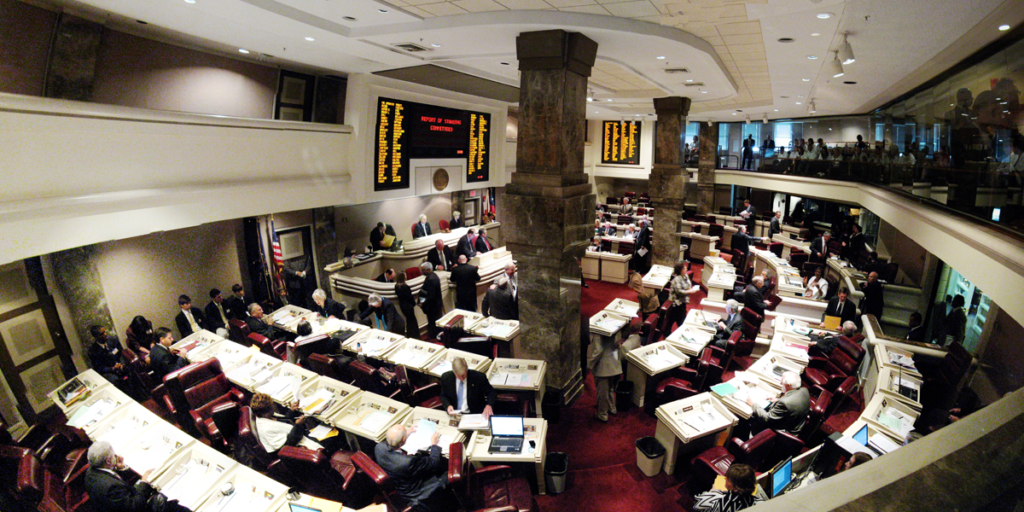
The bill would reverse some of the changes lawmakers implemented in 2013.
