
Daniel Sutter: Freedom and the Fourth of July

America celebrates 222 years of independence this July 4th. Our current political polarization makes many question whether Americans are still united in freedom. I think freedom is still widely embraced, just two distinct visions. The leaders of America’s founding generation studied lessons from political theory and history concerning lost freedom. They were rooted in English liberal political thought. Liberals sought freedom for the people against rule by kings, emperors, or pharaohs and had radically altered government in England and Holland. Thomas Jefferson’s words in the Declaration of Independence encapsulated liberalism: “all men are created equal, that they are endowed by their Creator with certain unalienable Rights … That to secure these rights, Governments are instituted among Men, deriving their just powers from the consent of the governed.” Liberalism’s foundation is the moral equality of all. Slavery represented a glaring inconsistency in America’s experiment in freedom. Liberal principles were inconsistent with slavery; many 19th Century liberals were abolitionists. Throughout human history, monarchs ruled nations, and slavery was ubiquitous. Liberalism eventually ended monarchy and slavery, but change took time. Liberty as freedom from being ruled by a king is straightforward. Divergence occurred with further theorizing about freedom. Is the necessity of work a type of repression, as reflected in Karl Marx’s “wage slavery”? Economists think in terms of constraints on our choices, like a household’s budget constraint. Scarcity, the necessity of producing the goals and services we need and want with limited resources, produces constraints. Making the best choice given the constraints we face is the essential economic problem. The divergent views of freedom can be interpreted as two types of constraints people face. Some constraints result from Nature and scarcity, the need to produce food, clothing, and shelter. Some constraints are placed on us by others, like kings, lords, and slave owners. Liberalism addressed human-imposed constraints and viewed freedom as freedom from interference by others. A second vision of freedom addresses the constraints that Nature places on us through scarcity. Economic rights secured by the government provide people with sustenance for survival and liberate them from the necessity of working hundreds (or thousands) of hours each year in a dreary job. The push for economic rights emerged after political rights and the market economy produced prosperity. A society at the subsistence level has no surplus production to redistribute. With the Great Enrichment and modern prosperity, many people produce more than they need to survive or live comfortably. Proponents of the first approach view government efforts to provide economic rights as coercive. Healthcare or housing must be produced before being provided to anyone by right, and the government pays the cost. Taxpayers face forced labor until Tax Freedom Day to provide the economic rights of others. Proponents of the second vision do not consider this coercive. Representative democracy ensures that citizens must give their deliberate consent to taxes and the welfare state. Taxation with representation is not the tyranny of a king’s armed men seizing your possessions. We have two visions of freedom. One minimizes the constraints from other persons and regards Nature’s constraints as natural. The second balances the impositions from Nature and others. Conservatives and libertarians typically embrace the former, progressives the latter. I think that most Americans still care very deeply about one of these visions of freedom. That the meaning of freedom has been elaborated over the last 250 years should surprise no one. Many great thinkers have explored freedom since Jefferson penned the Declaration. Many people believe that freedom is worth fighting for; the accounts of George Washington and his army or Mel Gibson’s speech in Braveheart inspire many of us. Increasingly Americans on the right and left see themselves in an existential battle to defend their freedom. A battle between two groups of freedom fighters is sure to be ugly. We could perhaps ratchet down the acrimony by recognizing that we all value (different shades of) freedom. Daniel Sutter is the Charles G. Koch Professor of Economics with the Manuel H. Johnson Center for Political Economy at Troy University and host of Econversations on TrojanVision. The opinions expressed in this column are the author’s and do not necessarily reflect the views of Troy University.
Joe Biden issues second veto of his presidency on Clean Water Act regulation

President Joe Biden vetoed the second bill of his presidency on April 6, 2023. Biden vetoed H.J.Res.27, a joint resolution of disapproval under the terms of the Congressional Review Act (CRA) that sought to void an Environmental Protection Agency and Army Corps of Engineers rule from 2023 that specified “which bodies of water fall under the scope of the Clean Water Act and are thereby under federal jurisdiction and protected.” In his veto message, Biden said, “The resolution would leave Americans without a clear definition of ‘Waters of the United States’. The increased uncertainty caused by H.J. Res. 27 would threaten economic growth, including for agriculture, local economies, and downstream communities. […] The resolution would also negatively affect tens of millions of United States households that depend on healthy wetlands and streams.” Overriding a presidential veto requires a two-thirds majority vote in both chambers of Congress. The House of Representatives and Senate both initially passed the resolution by a simple majority. The House of Representatives voted 227-198 to approve the resolution on March 9, 2023. The Senate voted 53-43 to approve the resolution on March 29. Rep. Sam Graves (R-Mo.) introduced the resolution on February 2. President Ronald Reagan issued the most vetoes (87) of all presidents since 1981. Biden, with two vetoes, has issued the fewest. President Donald Trump issued the second-fewest vetoes (9) within this timeframe. Presidents have issued 2,586 vetoes in American history. Congress has overridden 112. President Franklin D. Roosevelt vetoed 635 bills, the most of any president. Presidents John Adams, Thomas Jefferson, John Q. Adams, William H. Harrison, Zachary Taylor, Millard Fillmore, and James A. Garfield did not issue any vetoes. Republished with the permission of The Center Square.
Celebrating Presidents Day
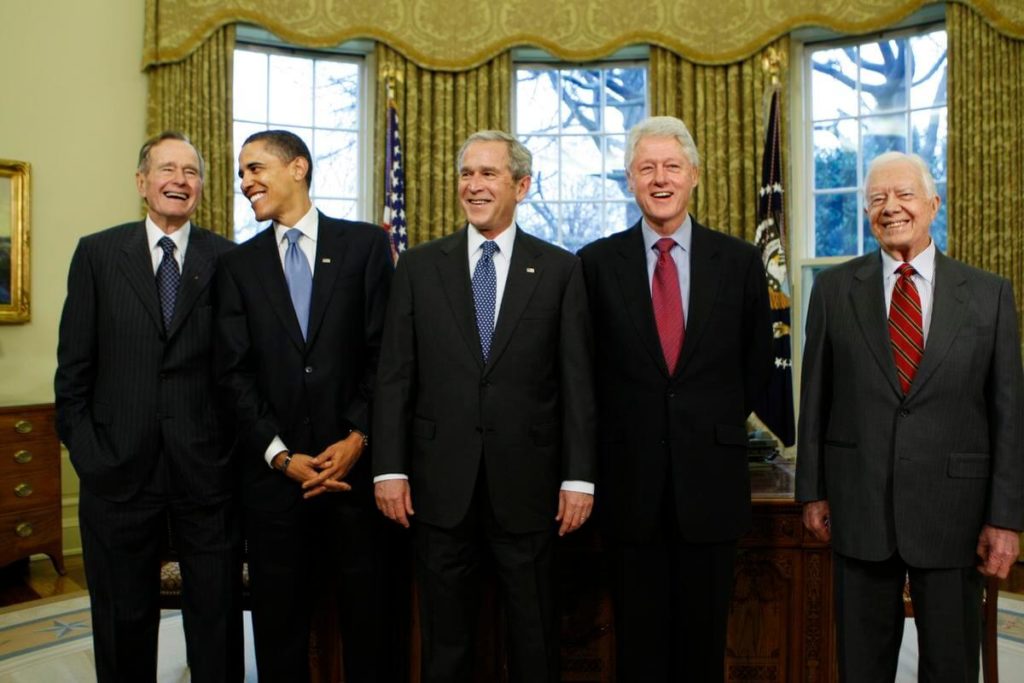
Today is Presidents Day. It is a federal and state holiday, so banks, post offices, government offices, courthouses, schools, and businesses will be closed. This is the annual observance of President George Washington’s birthday. Washington was the first President of the United States, head of the Constitutional Convention, the commander of the Continental Army during the Revolutionary War, a delegate to the Continental Congress, a hero of the French and Indian War, and one of the most revered Americans in history. Washington’s actual birthday is Wednesday, February 22, but we celebrate it on a Monday to have a three-day weekend. Abraham Lincoln’s birthday is February 12. This holiday has evolved into rather than just celebrating Washington’s memory. All 46 U.S. Presidents are remembered and honored today. George Washington is one of the four Mount Rushmore presidents, along with Lincoln, Thomas Jefferson, and Theodore Roosevelt. Washington was born on February 22, 1732, in the Virginia Colony. Washington was the son of Augustine and Mary Ball Washington. Washington was the oldest of their six children. His father also had three children with his first wife, including Lawrence Washington. His half-brother Lawrence was an inspiration and mentor to the young George Washington after their father died in 1743. Washington inherited land and slaves from his father and inherited Mount Vernon from Lawrence’s widow in 1761. Washington could have enjoyed a life of luxury on his inherited estates. Washington was a very enthusiastic farmer. Washington was an active breeder of mules, and generations of American farmers were influenced by Washington’s advocacy for the animals, which are a sterile hybrid cross between a donkey and a horse. Washington was also a very cutting-edge sheep breeder and agronomist. As much as he loved Mount Vernon and managing his lands, Washington spent much of his life elsewhere. He was an accomplished surveyor and mapmaker. He was one of the top military officers in the Virginia Militia. Washington spent years fighting the Revolutionary War, leading an army that had not existed before and training them to fight as an army. Gen. Washington had to fight smallpox, exposure, and malnutrition, which collectively killed more of his soldiers than the British did. Washington’s victory at Yorktown shocked the world. An entire British Army was trapped – and would have been wiped out if the British had not surrendered. Following the War, Washington resisted calls from some of his troops to seize the government by force and instead went home to his farm. When it became clear that the Articles of Confederation were not working, Washington joined calls for a new Constitution and led the Constitutional Convention that drafted the U.S. Constitution. Washington was elected the first president of the United States and served two terms. He could have easily been elected to a third term but chose to go home to his farm instead. Despite poor health, he came out of retirement during Adams’ presidency to head the U.S. Army for an anticipated war with France. Fortunately, Adams averted that War with diplomacy. Washington died at Mount Vernon in 1799. This Presidents Day celebration is overshadowed by the breaking news that former President Jimmy Carter, age 98, has been sent to hospice. Carter, who was President from 1977 to 1981, and Bill Clinton are the last two living twentieth century Presidents. To connect with the author of this story or to comment, email brandonmreporter@gmail.com.
Kevin McCarthy’s race for speaker risks upending House on Day One
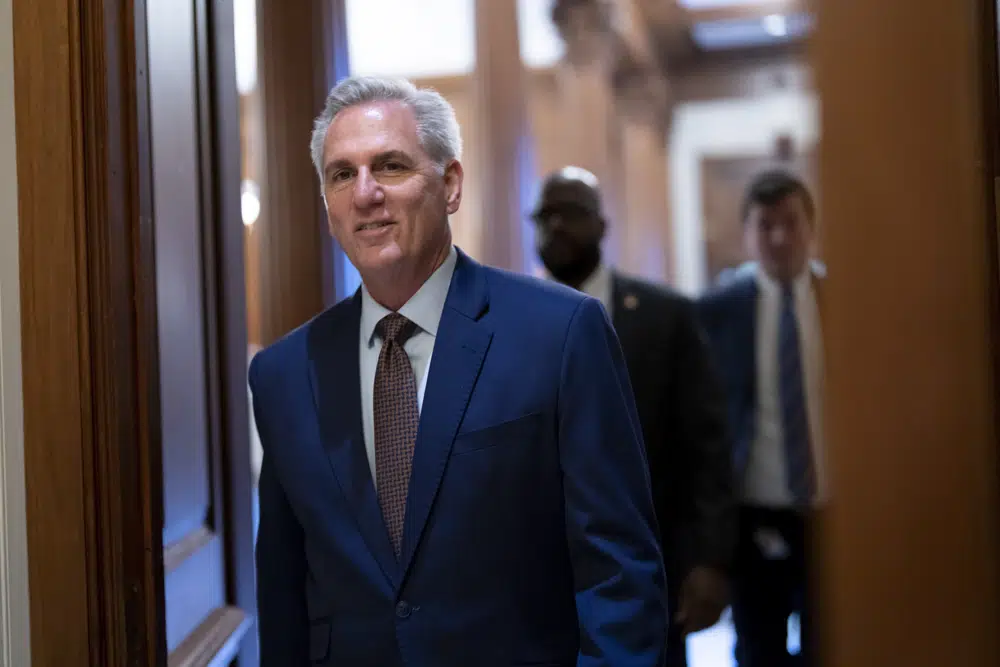
In his quest to rise to House speaker, Kevin McCarthy is charging straight into history — potentially becoming the first nominee in 100 years unable to win the job on a first-round floor vote. The increasingly real prospect of a messy fight over the speaker’s gavel on Day One of the new Congress on Jan. 3 is worrying House Republicans, who are bracing for the spectacle. They have been meeting endlessly in private at the Capitol, trying to resolve the standoff. Taking hold of a perilously slim 222-seat Republican majority in the 435-member House and facing a handful of defectors, McCarthy is working furiously to reach the 218-vote threshold typically needed to become speaker. “The fear is that if we stumble out of the gate,” said Rep. Jim Banks, R-Ind., a McCarthy ally, then the voters who sent the Republicans to Washington “will revolt over that and they will feel let down.” Not since the disputed election of 1923 has a candidate for House speaker faced the public scrutiny of convening a new session of Congress only to have it descend into political chaos, with one vote after another, until a new speaker is chosen. At that time, it eventually took a grueling nine ballots to secure the gavel. McCarthy, a Republican from Bakersfield, California, who was first elected in 2006 and who remains allied with Donald Trump, has signaled he is willing to go as long as it takes in a floor vote to secure the speaker’s job he has wanted for years. The former president has endorsed McCarthy and is said to be making calls on McCarthy’s behalf. McCarthy has given no indication he would step aside, as he did in 2015 when it was clear he did not have the support. But McCarthy also is acknowledging the holdouts won’t budge. “It’s all in jeopardy,” McCarthy said Friday in an interview with conservative Hugh Hewitt. The dilemma reflects not just McCarthy’s uncertain stature among his peers but also the shifting political norms in Congress as party leaders who once wielded immense power — the names of Cannon, Rayburn, and now Pelosi adorn House meeting rooms and office buildings — are seeing it slip away in the 21st century. Rank-and-file lawmakers have become political stars on their own terms, able to shape their brands on social media and raise their own money for campaigns. House members are less reliant than they once were on the party leaders to dole out favors in exchange for support. The test for McCarthy, if he is able to shore up the votes on Jan. 3 or in the days that follow, will be whether he emerges a weakened speaker, forced to pay an enormous price for the gavel, or whether the potentially brutal power struggle emboldens his new leadership. “Does he want to go down as the first speaker candidate in 100 years to go to the floor and have to essentially, you know, give up?” said Jeffrey A. Jenkins, a professor at the University of Southern California and co-author of “Fighting for the Speakership.” “But if he pulls this rabbit out of the hat, you know, maybe he actually has more of the right stuff.” Republicans met in private this past week for another lengthy session as McCarthy’s detractors, largely a handful of conservative stalwarts from the Freedom Caucus, demand changes to House rules that would diminish the power of the speaker’s office. The Freedom Caucus members and others want assurances they will be able to help draft legislation from the ground up and have opportunities to amend bills during the floor debates. They want enforcement of the 72-hour rule that requires bills to be presented for review before voting. Outgoing Speaker Nancy Pelosi, D-Calif., and the past two Republican speakers, John Boehner and Paul Ryan, faced similar challenges, but they were able to rely on the currency of their position to hand out favors, negotiate deals, and otherwise win over opponents to keep them in line — for a time. Boehner and Ryan ended up retiring early. But the central demand by McCarthy’s opponents’ could go too far: They want to reinstate a House rule that allows any single lawmaker to file a motion to “vacate the chair,” essentially allowing a floor vote to boot the speaker from office. The early leaders of the Freedom Caucus, under BC, the former North Carolina congressman turned Trump’s chief of staff, wielded the little-used procedure as a threat over Boehner and later, over Ryan. It wasn’t until Pelosi seized the gavel the second time, in 2019, that House Democrats voted to do away with the rule and require a majority vote of the caucus to mount a floor vote challenge to the speaker. Rep. Chip Roy, R-Texas, said the 200-year-old rule was good enough for Thomas Jefferson, so it’s one he would like to see in place. “We’re still a long way from fixing this institution the way it needs to be fixed,” Roy told reporters Thursday at the Capitol. What’s unclear for McCarthy is even if he gives in to the various demands being made by the conservatives, whether that will be enough for them to drop their opposition to his leadership. Several House Republicans said they do not believe McCarthy will ever be able to overcome the detractors. “I don’t believe he’s going to get to 218 votes,” said Rep. Bob Good, R-Va., among the holdouts. “And so I look forward to when that recognition sets in and, for the good of the country, for the good of the Congress, he steps aside, and we can consider other candidates.” The opposition to McCarthy has promoted a counteroffensive from other groups of House Republicans who are becoming more vocal in their support of the GOP leader — and more concerned about the fallout if the start of the new Congress descends into an internal party fight. Rep. David Joyce, R-Ohio, who leads the Republican Governance Group, was wearing an “O.K.” button on his lapel — meaning, “Only Kevin,” he explained. Some have
Will Sellers: In defense of the Electoral College

This article originally appeared in City Journal. I came of age politically with the 1968 presidential election. Alabama governor George Wallace was running as an independent against Richard Nixon and Hubert Humphrey. My parents were Nixon supporters, and I, their five-year-old son, hopped on the Nixon bandwagon with gusto. The dinnertime conversations in the month preceding the election were all about whether Wallace’s third-party candidacy could work. This all fascinated me, so I asked my mother to let me watch her vote on Election Day. She agreed, but to my dismay, when I joined her in the voting booth, I did not see Nixon, Humphrey, or Wallace listed on the ballot. This made no sense to me; I thought we were here to vote for Richard Nixon? My mother then explained that we didn’t vote for the presidential candidate directly. Instead, we voted for men and women called presidential electors. These people were well-regarded and appointed for the special privilege of casting the deciding votes in presidential elections. This system seemed out of place to me, because in every other election the candidates were listed by name on the ballot. Why not for president? Why should my mother vote for nine people, who would then vote later for president, instead of voting directly for the president? This was my first encounter with the Electoral College. It would not be my last. The first electoral college was a medieval construct dating back at least to the twelfth century, when specific princes were chosen to elect the Holy Roman Emperor. They were influential noblemen, who, because of the importance of their respective kingdoms, were given the hereditary title of “elector.” After the death of the emperor, they met, much like the College of Cardinals, to choose a successor. Whether this idea influenced the deliberations of the Constitutional Convention is speculation, but, like most of the other aspects of the Constitution, the mechanics of the new government were based on historical facets of self-government. The new American nation was built on traditions of representative government expressed in the English parliamentary system, the organization of Protestant church government, and the colonial experience with various local governments in the New World. Important questions necessarily arose during the Constitutional Convention concerning the process of electing the president. How exactly would a president be chosen, and to whom or what would he owe allegiance? Some advocated for election to take place in the House of Representatives, or in the Senate, or even in the several states. The obvious problem with these proposals is that they would create an axis between the president and the electing body. If the states elected the president, then the larger, wealthier, and more populous states would receive greater attention and more favorable treatment by the executive branch than would the smaller, less populous states. A similar imbalance of power would occur were the president chosen by the House or the Senate. Thus, the mechanics of electing the chief executive required balancing various interests to give the executive branch the requisite independence from other political bodies, while maintaining co-equality. According to the chosen scheme, each state would appoint “electors” based on the number of House and Senate members comprising the state’s congressional delegation. These electors were appointed for the sole purpose of electing the president, and a simple majority of their votes would decide the election. This created another means by which the spheres of Congress and the federal government were balanced and divided from that of the states. The Constitutional Convention viewed electors as not necessarily aligned with a faction, but as citizens of honesty, integrity, and political acumen. Originally, electors voted for two people; the person with the most electoral votes became president, and the runner-up became vice-president. Flaws in this system became evident with the presidential election of 1796, when John Adams was elected as president and his archrival, if not nemesis, Thomas Jefferson, was elected vice president. Four years later, Jefferson and Aaron Burr received the same number of electoral votes—neither had the required majority. This unworkable situation was remedied by the 12th Amendment to the Constitution, which prescribed that electors would separately vote for a president and vice president on the same ballot. Later, state legislatures, as they were constitutionally permitted and as the two-party system grew, allowed electors to run as proxies for the presidential and vice-presidential party nominee. For at least the first 100 years, the system worked well, and, other than the 12th Amendment, no major attempts were made to alter the process of electing the president and vice president. Several times, the election was submitted to the House of Representatives after the electors failed to achieve a majority vote for president. For example, in 1824, the election was submitted to the House, where power plays resulted in the election of John Quincy Adams, though Andrew Jackson won significantly more of the popular and the electoral vote. Rutherford B. Hayes, a Republican, lost the 1876 popular vote to Samuel Tilden, a Democrat, but became president because he had prevailed in the electoral vote, though voter fraud in some jurisdictions seemed certain. Many Democratic candidates running for federal office embraced the idea of abolishing the Electoral College, not least Sam Rayburn, who, in his first congressional election in 1912, advocated electing the president by popular vote. If there was any momentum for this aspect of the Progressive movement, it lost steam as other, more critical issues advanced. Today, the constitutional method for electing the president is under siege. The result of the 2016 election—with Donald Trump winning the presidency despite losing the popular vote—led pundits and politicians to call for the presidential election to be based on the popular, not electoral, vote. But lamenting results that saw two presidents in recent memory fail to win the popular vote obscures the effect that abolishing the Electoral College would have on a national campaign. A presidential campaign aimed at achieving a popular vote majority would completely ignore
Bradley Byrne: After the election: One nation under God
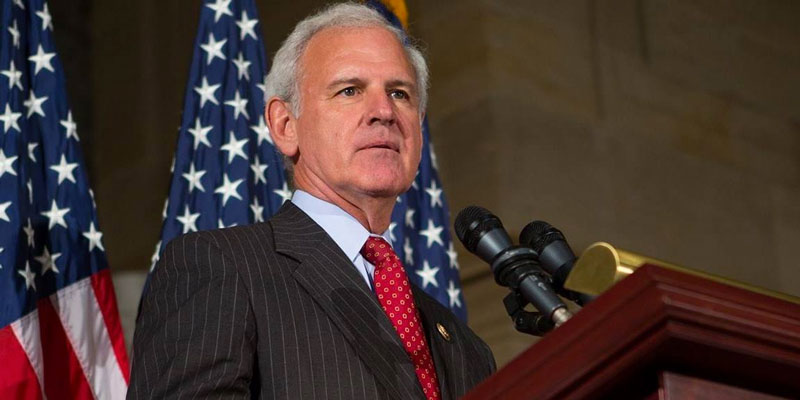
I’ll never forget sitting in the US House Chamber in January of 2017, watching the counting of the Electoral College votes from the 2016 presidential election. Under the Twelfth Amendment to the Constitution, the sitting Vice President opens and counts the votes as submitted and certified by the electors chosen from each state, and the Vice President must do so “in the presence of the Senate and the House of Representatives.” Because Inauguration Day was still several days away, the sitting Vice President was Joe Biden, and as a member of the House, I was entitled to be there. Procedurally, any Representative or Senator can object to any state’s electoral college votes, but at least one member from the other house must agree with the objection before it can be considered. Alabama was the first state up, and Jim McGovern, a very liberal Democrat member from Massachusetts who served on the Rules Committee with me, stood up and objected because the Russians supposedly interfered with our vote for Donald Trump. He also made a blatantly false allegation that our state violated the Voting Rights Act and suppressed thousands of votes. No Senator agreed with him, and Vice President Biden ruled the objections out of order, which kept me from having to argue against McGovern’s silly and frankly slanderous objections. The count went on, and as every Trump state’s votes came up, a Democrat House member would stand up and object, but because no senator agreed with the objections, Biden would rule them out of order. Finally, after several of these, Biden leaned into the microphone and said firmly to his fellow Democrats, “it’s over.” Though they hated the result, he was saying, the Constitution calls for the person with the most electoral votes to be President. And that person was Donald Trump, not Hillary Clinton. This has been an extraordinary year, with the pandemic, a record economic downturn and recovery, riots and violence, and an unprecedented number of hurricanes. It will be an extraordinary election, too, as record numbers of people have already voted in many states, but their votes can’t be counted until election day, and many of those states’ election processes require days to count all those votes. There will also be challenges to the counting of some, perhaps many, ballots because they weren’t filled in or submitted properly. So, we aren’t likely to know the result on Election Day. We didn’t know the result of the 2000 election until December, weeks after the election, and that took an extraordinary decision by the Supreme Court to resolve it in favor of George W. Bush. The Twelfth Amendment was passed and ratified because the 1800 presidential election resulted in an electoral college tie between Thomas Jefferson and his supposed running mate Aaron Burr. That threw the election into the House of Representatives which took 36 ballots to finally make Jefferson the president, three months after the election. In both cases, the nation moved on and accomplished great things. Though this year’s election isn’t likely to be over as quickly as we are used to, all of us should be patient and trust in our Constitution and the institutions which have served us so well for over 230 years. There will be plenty of eyes on the process, and nothing inappropriate is going to go unnoticed. Our intelligence and law enforcement communities have been closely monitoring foreign actors and will continue to do so after the election. Be careful of the information you receive during and after the election because we know there’s a lot of truly fake “news” out there, designed to divide us as a nation. And when we have a result, if your candidate doesn’t win, let’s not have a replay of 2016 when Democrats refused to accept the result, who wouldn’t let it be “over” and shamefully called themselves the “resistance,” a slap in the face of the Constitution and our tradition of peaceful transfer of power. We’ve wasted too much time in Washington over the Mueller report and a failed impeachment effort, attempting to reverse the 2016 election. And we’ve had too much violence this year – we don’t need more due to the election. If your candidate loses, the appropriate response is to be the loyal opposition – loyal to our nation and its Constitution but opposed to the policies of the victorious party. Remember, in American politics, today’s loser is often tomorrow’s winner. Our greatest enemy isn’t a foreign nation but our internal division, driven by a hyper-partisan news media and entertainment industry ready to exploit every fault line in our country and craven before the far worse fault lines of countries where that industry makes a lot of money. Let’s ignore the media and entertainment industry and return to what we learned in school about the traditional values which make us great. As a unified nation there is nothing we can’t do, no problem or issue we can’t solve. We are one nation under God. Let’s keep it that way. Congressman Bradley Byrne currently represents Alabama’s 1st congressional district.
Bradley Byrne: Impeachment lessons from the distant past
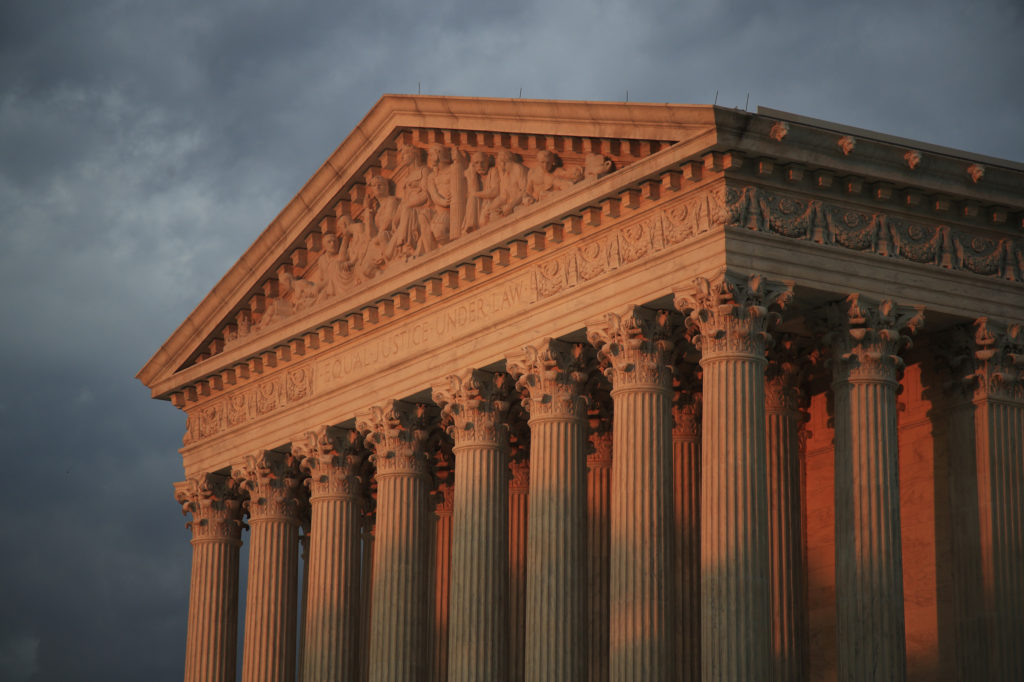
The first true test of the Legislative branch’s impeachment powers occurred over two centuries ago in 1805. Its parallels with the current impeachment process, and the important precedent it set for determining impeachable conduct, make it worth examining today. That long-ago impeachment battle was waged against Samuel Chase of Maryland, a justice of the United States Supreme Court. The episode is a stern warning against the use of the power of impeachment for political purposes. In 1804, President Thomas Jefferson resoundingly won reelection, and his Democratic-Republican party won large majorities in both the House and the Senate. With his control over the Executive and Legislative branches secure, Jefferson looked to the third branch – the Judiciary. The Supreme Court, comprised at that time of only seven justices, consisted primarily of appointees of George Washington and John Adams, both members of the opposing Federalist party. Jefferson had been angered by several Supreme Court rulings and considered the court an obstacle to his political agenda. He resolved to remove that obstacle. Jefferson saw Chase, an unabashed Federalist appointed by Washington, as the justice most vulnerable to being removed by a partisan impeachment. Jefferson and his allies blamed Chase’s partisanship for several of his rulings against Jefferson. They claimed this conduct was worthy of impeachment. However, what some of Chase’s opponents considered “judicial excesses” weren’t the real issue. Chase’s partisan leanings were merely a convenient excuse to eliminate an obstacle to the Democratic-Republicans’ unchecked political power. Our Founders warned against falling into the trap of impeachment over partisan squabbles. In the Federalist Papers, Alexander Hamilton warned of the “danger that the decision will be regulated more by the comparative strength of parties, than by the real demonstrations of innocence or guilt.” Therefore, the Constitution makes clear that the only impeachable offenses are “Treason, Bribery, or other high Crimes and Misdemeanors.” Did this disagreement on policy grounds rise to an impeachable offense? Nevertheless, with Jefferson’s directive, the House impeached Justice Chase on a party-line vote in a partisan show eerily reminiscent of today’s episode. It would be in the Senate, where Chase’s trial was to take place, where the Democratic-Republicans’ political motivations would come to a head with the Founders’ intentions. Some partisans would ignore the intent of our Founders. Senator William Giles of Virginia said impeachment is “nothing more than inquiry, by the two Houses of Congress, whether the office of any public official might not be better filled by another.” Of course, that contradicts what the Constitution clearly says about impeachment. Yet Chase’s opponents would leave no stone unturned in seeking a charge to stick as an impeachable offense. One of his defenders said Chase’s “footsteps are hunted from place to place, to find indiscretions, which may be exaggerated into crimes.” Does this sound familiar? Those Senators were keenly aware of the important precedent at stake. Most realized that whatever short-term political gains they might achieve would pale in comparison to the lasting detriment to our young nation if the Constitution and its separation of powers were to be undermined. Ultimately, after great deliberation, the Senate acquitted Chase, even with the Senate’s 24 Democratic-Republicans outnumbering its nine Federalists. Despite lacking evidence of an impeachable offense, Democrats have gone too far towards impeaching President Donald Trump to turn back. Never mind that only months ago, Speaker Pelosi said “impeachment is so divisive to the country that unless there’s something so compelling and overwhelming and bipartisan, I don’t think we should go down that path because it divides the country.” Just like in 1805, one party seeks impeachment to gain political power. This time, a president is targeted. This poses a great threat to our Republic, and I’ll continue fighting hard to stop this scheme and protect our Constitution.
The Latest: House passes rules package for impeachment probe
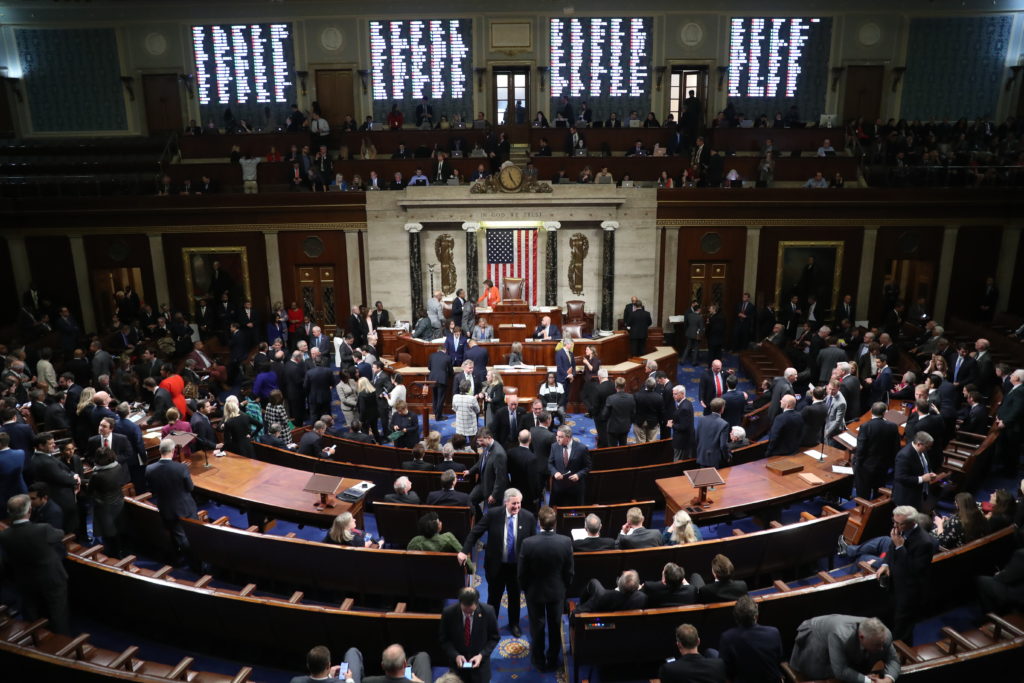
The Latest on President Donald Trump and the House impeachment resolution (all times local): 9:25 p.m. Democrats have swept a rules package for their impeachment probe of President Donald Trump through a divided House, as the chamber’s first vote on the investigation highlighted the partisan breach the issue has only deepened. By 232-196, lawmakers have approved the procedures they’ll follow as weeks of closed-door interviews with witnesses evolve into public committee hearings and — almost certainly — votes on whether the House should recommend Trump’s removal. All voting Republicans opposed the package. Every voting Democrat but two supported it.Trump tweeted, “Now is the time for Republicans to stand together and defend the leader of their party against these smears.” 12:10 p.m. House Minority Leader Kevin McCarthy says Democrats are abusing their power and discrediting democracy by “trying to impeach the president because they are scared they can’t defeat him at the ballot box.” The California Republican is speaking out against a package of impeachment rules approved Thursday. McCarthy says that ever since Donald Trump’s election, Democrats have waged a “permanent campaign to undermine his legitimacy. They have predetermined the president’s guilt. They have never accepted the voters’ choice to make him president. So, for 37 days and counting, they have run an unprecedented, undemocratic and unfair investigation. This resolution only makes it worse.” McCarthy says Democrats are “using secret interviews and selective leaks” to portray Trump’s legitimate actions as an impeachable offense. He is referring to the closed-door hearings in the House as Democrats gather evidence in the impeachment inquiry. 12:05 p.m. Ivanka Trump is quoting a letter from Thomas Jefferson to his daughter following the House near party-line vote approving rules for its impeachment inquiry into her father. Ivanka Trump tweets “Some things never change, dad!” after quoting a portion of the Jefferson letter that talks about being surrounded by enemies and spies “catching and perverting every word that falls from my lips or flows from my pen, and inventing where facts fail them.” Ivanka Trump has generally avoided weighing in on the impeachment probe. The probe is focused on the president’s effort to have Ukraine investigate Democrats and a potential 2020 rival, Joe Biden, while the administration was withholding military aid to the Eastern European ally. It’s illegal to seek or receive foreign help in U.S. elections. Trump says he did nothing wrong. 11:40 a.m. The White House says the House vote approving rules for its impeachment inquiry has enshrined “unacceptable violations of due process into House rules.” Press secretary Stephanie Grisham says in a statement moments after the House vote that the process “is unfair, unconstitutional, and fundamentally un-American.” Thursday’s near party-line 232-196 vote was a victory for Democrats, who will control the investigation in the House. It gives them the ability to curb the ability of Republicans to subpoena witnesses and of White House lawyers to present witnesses. Grisham says President Donald Trump “has done nothing wrong” and that Democrats have an “unhinged obsession” with impeachment. Her statement was echoed by Trump’s reelection campaign which accused Democrats of trying to legitimize their process after the fact. Campaign manager Brad Parscale says: “Voters will punish Democrats who support this farce and President Trump will be easily re-elected.” 11:30 a.m. A sharply divided House has approved the rules for its impeachment inquiry of President Donald Trump. Thursday’s near party-line 232-196 roll call was the chamber’s first formal vote on a process that’s likely to take months, possibly stretching into the early weeks of the 2020 election year. Underscoring the gravity of the vote, House Speaker Nancy Pelosi presided over the chamber as it voted on the rules package. The vote was a victory for majority Democrats, who will control the investigation in the House. It gives them the ability to curb the ability of Republicans to subpoena witnesses and of White House lawyers to present witnesses. Republicans said the process was skewed against them and the White House. The vote showed how neither side has budged in their fight over whether Trump’s effort to squeeze Ukraine for dirt on his Democratic political foes merits forcing him from office. 10:25 a.m. House Speaker Nancy Pelosi says a vote to approve ground rules for their impeachment inquiry of President Donald Trump is a solemn but necessary duty for lawmakers. In a floor speech before Thursday’s vote, Pelosi said, “This is not any cause for any glee or comfort.” Standing next to a large U.S. flag in the well of the House, Pelosi said the impeachment inquiry was necessary to defend the Constitution and prevent an abuse of power by Trump.“The times have found each and every one of us in this room,” Pelosi said. She urged lawmakers to vote in favor of the impeachment rules “to protect the Constitution of the United States. What is at stake in all of this is nothing less than our democracy.”The investigation is focused on Trump’s efforts to push Ukraine to investigate his Democratic political opponents by withholding military aid and an Oval Office meeting craved by the country’s new president. 9:37 a.m. Speaker Nancy Pelosi is asking all Democratic lawmakers to come to the House floor as a show of solidarity for the impeachment inquiry resolution. The House is set to take its first vote Thursday on the resolution that affirms the investigation into President Donald Trump and outlines the process for public hearings and possibly drafting articles of impeachment. Pelosi sent out word for lawmakers to join the floor debate as proceedings were getting underway, according to a person familiar with the situation and granted anonymity to discuss it. Few Democrats are expected to oppose the plan in a vote that is expected to fall largely along party lines. 12:08 a.m. House Democrats and Republicans alike are rounding up votes on the ground rules for considering the impeachment of President Donald Trump. A near party-line vote is expected Thursday on the eight pages of procedures, which are certain to be passed
‘Rosa Parks Day’ approved by Senate committee, moves to full Senate
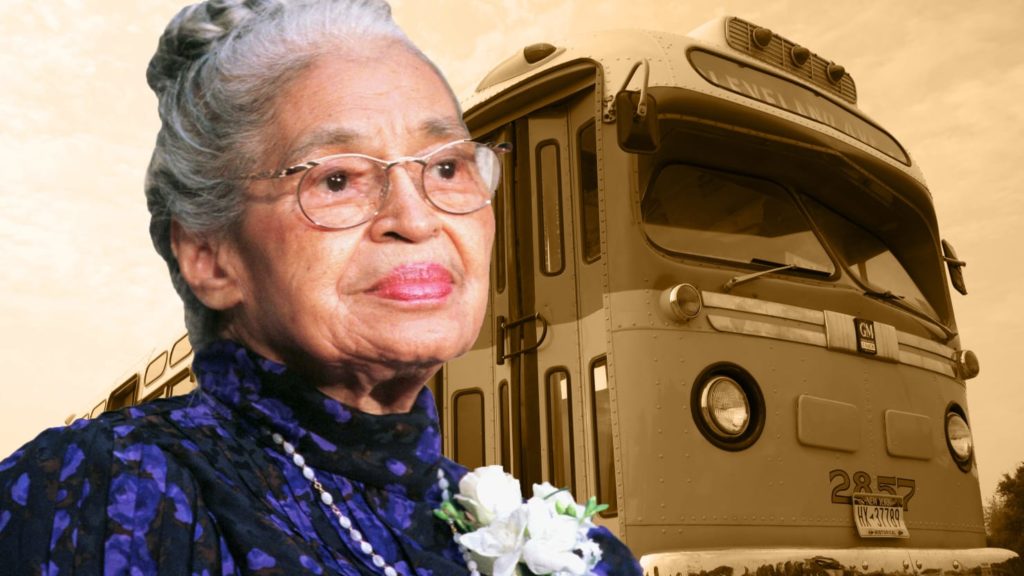
On Tuesday, the Senate Governmental Affairs Committee approved a bill which designates December 1 as “Rosa Parks Day” in Alabama. The bill, SB365, sponsored by Mobile-Democrat State Sen. Vivian Davis Figures, moves to the ful Senate. Montgomery Police arrested Parks on Dec. 1, 1955 when she refused to give her seat to a white bus passenger. Parks’ arrest set the Montgomery Bus Boycott into motion, a boycott which is now seen as a catalyst for the Civil Rights Movement. Parks received the Presidential Medal of Freedom and Congressional Gold Medal during her lifetime. She died in 2005, at the age of 92. Rosa Parks Day is already celebrated on December 1 in Ohio and Oregon while California and Missouri celebrate the holiday on her birthday, February 4th. However, the bill does not make the day a state holiday but gives counties and cities the option of declaring Dec. 1 a local holiday. Huntsville-Democrat Rep. Laura Hall, who filed a similar bill in the House last month, stated that in order to avoid debates over cost, they are not pushing to make the day a full state holiday. According to the Montgomery Advertiser, Alabama officially recognizes 15 legal holidays, though six of them share a date with another one. Martin Luther King Jr. and Robert E. Lee‘s birthday are observed on the same day in January. Presidents Day in the state marks the births of George Washington and Thomas Jefferson. Columbus Day, Fraternal Day, and American Indian Heritage Day are all celebrated on the same day in October.
Daniel Sutter: The most significant presidential election
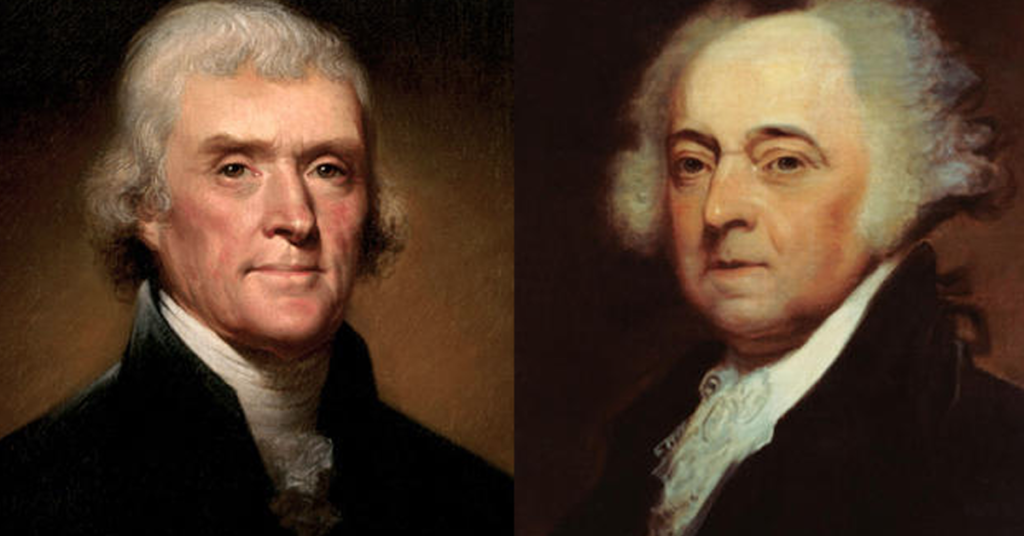
Every presidential election appears like the most important ever, but history provides some perspective. The election of 1800, in which Thomas Jefferson defeated incumbent John Adams to become our third president, offers a case in point. Jefferson later called this the “revolution of 1800,” rivaling the American Revolution in significance. Adams and Jefferson contested the 1796 presidential election to succeed George Washington. Conflict between Adams’ Federalists and Jefferson’s Republicans escalated during the term, highlighted by an undeclared naval war with France. Perhaps even more ominous were the Alien and Sedition Acts. These acts lengthened the residency required to become a naturalized citizen (immigrants tended to support the Republicans), allowed the president to imprison or deport aliens or citizens of a foreign nation during war, and allowed prosecution of newspaper editors for criticizing the government. The Acts seriously threatened the Constitution’s principles of freedom and limited government. Political turmoil brought the nation to the verge of civil war. Some Federalists wanted to raise a provisional army to suppress Republicans in Pennsylvania and Virginia. Just years after the founding, America’s experiment with freedom was coming apart. States selected the delegates to the Electoral College in 1800, and the Republicans had influence in many state governments. States selected electors at different times through the year, and the Electoral College was tied 65-65 when the last state, South Carolina, chose electors for Jefferson. President Jefferson extended an olive branch to the Federalists and the Alien and Sedition Acts were repealed. The Election of 1800 transferred power from one party to another for the first time, a historic achievement. Elections have ensured a peaceful, albeit often contentious, process for transferring power. Previously, monarchs and emperors held power, and a change in leadership required a civil war. How do elections bring peace to politics? Alternatively, why doesn’t civil war break out after every election? Because losing candidates do not try to occupy office via force; in other words, they “accept” the results. So why do losing candidates accept the results? Two factors are relevant. First, regular elections offer the opportunity to contest for office again relatively soon. A loss is not forever, and losers can win office in the future if they do not resort to violence now. Limiting the powers of government also fosters peace. We can tolerate the “wrong” people in power when government wields less power over our lives. If government can take away your property or jail you, you could lose everything before the next election. The First Amendment’s separation of church and state illustrates the value of limiting government. America’s founders separated church and state not because they thought religion unimportant, but because of its importance. People will fight and die to worship as they choose, and sadly, many wars have been fought over religion. The losing side is less likely to “accept” an election outcome if the government can ban their church. Elections must be held regularly to ensure they work. Political scientists talk about the institutionalization of democracy in a nation, which refers to people adjusting to the election outcome. The Obamas, for instance, will vacate the White House in January. When the idea of forcibly staying in office after losing an election seems crazy, elections are institutionalized. Elections both transfer power peacefully and limit the potential for extreme action by officeholders, since such action will result in defeat in the next election. The democratic peace is indispensable for prosperity. As economist Ludwig von Mises observed, “There can be no lasting economic improvement if the peaceful course of affairs is continually interrupted by internal struggles.” Modern life would be impossible without secure supplies of food, water, and electricity. Peace between nations allows international extension of commerce. We will soon elect a new president. The turmoil of the present often seems unprecedented. The election of 1800 demonstrated power could be transferred peacefully and that animosity can recede after an election. ••• Daniel Sutter is the Charles G. Koch Professor of Economics with the Manuel H. Johnson Center for Political Economy at Troy University and host of Econversations on TrojanVision. The opinions expressed in this column are the author’s alone and do not necessarily reflect the views of Troy University.
Darryl Paulson: Voters don’t understand or like the Electoral College

Here are a few basic facts about the electoral-college system. First, very few voters understand how it works. Second, most voters hate the system. Third, the system is almost impossible to change. Those who drafted the Constitution had little trust in democracy. James Madison, in The Federalist Papers, wrote that unfettered majorities tend toward “tyranny.” John Adams, signer of the Declaration of Independence and second President, noted that “Democracy never lasts long. It soon wastes, exhausts, and murders itself. There never was a democracy that did not commit suicide.” Reflecting their distrust of democracy, the drafters of the Constitution wanted to create a process where the president would be indirectly selected. Direct election was rejected because they believed that most voters were incapable of making a wise choice. Voters would likely vote for a well-known person, especially one from a voter’s home state. A Committee of Eleven was appointed and they recommended a compromise where each state would appoint presidential electors equal to the number of representatives and senators. The electors would cast a vote for president and vice president. The candidate with the most votes would be president and the candidate with the second highest vote would be vice president. The compromise was accepted and Alexander Hamilton described the electoral-college plan “if the manner of it be not perfect, it is at least excellent.” The compromise worked until the 1800 presidential election when electors cast an equal number of votes for Thomas Jefferson, who the Anti-Federalists wanted to be president and Aaron Burr, who they wanted as vice president. After 36 ballots, the House selected Jefferson as president. The 12th Amendment, adopted in 1804, separated the electoral vote for president and vice president. There is little doubt that Americans hate the Electoral College system and prefer the direct election of the president. The system has allowed the election of four presidents who lost the popular vote, but won the electoral vote. In 1824, Andrew Jackson won the popular vote, but lost when the House selected John Quincy Adams. In 1876, Samuel Tilden won the popular vote by a quarter million votes, but lost the electoral vote to Republican Rutherford B. Hayes. In 1888, Grover Cleveland received more popular votes but lost to Republican Benjamin Harrison. Finally, in 2000, Democrat Al Gore won the popular vote, but lost the election when Florida’s electoral votes were awarded to George W. Bush. Another complaint about the electoral college is that the winner-take-all feature does not reflect the popular will. A candidate with a plurality of the popular vote would win all of a state’s electoral votes in a three or four person race. Critics contend that the system discourages candidates from campaigning in states that they are sure to win or lose. No sense wasting time and money campaigning in those states. Instead, all of the attention is focused on a half-dozen competitive states like Florida and Ohio. If no candidate gets a majority of the electoral votes (270), the election is thrown into the House of Representatives. Each state, regardless of population, gets one vote. The least populated state has one vote; the most populated state gets one vote. If a state delegation’s vote is equally split, they get no vote until the deadlock is broken. Although reforms of the system have been pushed, the likelihood of reform is small. Small states, which have disproportionate power under the plan, are not likely to give up that power to support direct election. Supporters of direct election argue that it is the most democratic, which is precisely why the drafters of the Constitution dismissed it. Supporters also argue that it would force candidates to conduct national campaigns since every vote would matter. Critics of direct election argue that it would create gridlock in close elections. Imagine having to review over 100 million votes in a close election to see if they should be counted or dismissed. Would voters have confidence if a candidate won by a few thousand votes? What does the electoral-college system tell us about 2016. Hillary Clinton is a flawed candidate seeking a third consecutive win for Democrats, something that is difficult to do. However, we know that Republicans are not happy with either Donald Trump or Ted Cruz. The possibility of a contested convention further muddies Republican chances. A look at the electoral-college maps shows that Democrats usually win fewer states than Republicans, but they win the states with large numbers of electoral votes. While the electoral-college map of America looks overwhelmingly red, it is likely the Republicans will end up feeling blue. Larry Sabato, of the University of Virginia, projects that in a Clinton-Trump election, Clinton is likely to win 347 electoral votes to Trump’s 191. If so, an easy Clinton victory means there will be no pressure to reform the electoral-college system. *** Darryl Paulson is Professor Emeritus of Government at USF St. Petersburg.
Martin Dyckman: Smart Republicans need to start thinking, acting on their own
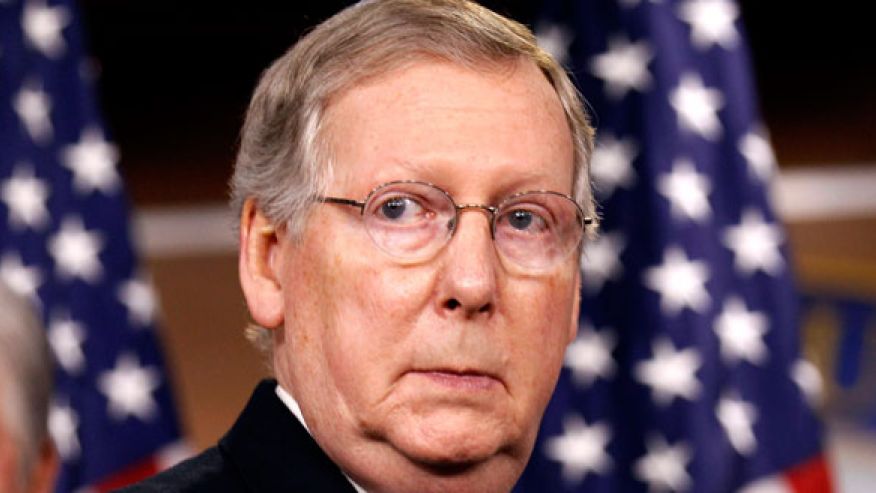
In 1789, as the new United States of America was just taking root, Thomas Jefferson wrote to a friend that “If I could not go to heaven but with a party, I would not go there at all.” The quotation is making one of its frequent rounds on the Internet. The remark was ironic, if not to say hypocritical, considering Jefferson’s subsequent energetic role in organizing the anti-Federalist movement into what he called the Democratic-Republican Party. Present-day Democrats claim him and Andrew Jackson as co-founders. But the full context — rarely quoted — of what he wrote makes great sense now as a trenchant description of how the party system has gone off the cliff. “I never submitted the whole system of my opinions to the creed of any party of men whatever, in religion, in philosophy, in politics, or in anything where I was capable of thinking for myself,” Jefferson explained. “Such an addiction is the last degradation of a free and moral agent. If I could not go to heaven…” Party discipline, the plague that Jefferson deplored, gives us a U.S. Senate whose majority party leader refuses even to permit the body to consider fulfilling its constitutional duty to approve or reject a president’s nominee to fill a vacancy on the nation’s highest court. Moreover, in rationalizing why he would not allow it even in a post-election session should there be a Democratic president-elect, Mitch McConnell had this to say: “I can’t imagine that a Republican majority Congress in a lame duck session after the American people have spoken would want to confirm a nominee opposed by the NRA, the NFIB, and the New York Times says he would move the court dramatically to the left. This nomination ought to be made by the next president.” What he really was saying is this: Even if the next president is a Democrat, and even if the Republicans lose their Senate majority, they’ll fight hard, they’ll fight long, they’ll fight dirty, and they’ll filibuster to keep anybody opposed by the likes of the gun lobby and the National Federation of Independent Business from replacing Antonin Scalia at the Supreme Court. He neglected to mention the Koch brothers. One of their front organizations declared war on any Barack Obama nominee even before he selected one. Now I cannot find in the Constitution — nor can McConnell — anything that says a president’s second term is for only three years rather than four. Or anything to say that lobbies unelected by the people or billionaires whose father was a John Bircher have veto power over what used to call itself the “greatest deliberative body in the world.” Nor is anything to be found in the New York Times online files where the newspaper ever asserted that Merrick Garland‘s confirmation would “move the court dramatically to the left.” What the paper did say, in an article describing Garland as essentially a centrist, was this: “Conservative groups, who said Judge Garland would move the court sharply to the left, raised questions about his commitment to gun rights, although they based their objection on fairly thin evidence.” (Emphasis supplied) McConnell can’t even get his sources right, let alone his constitutional duty. (For the record, the NRA’s objection to Garland appears to owe entirely to his vote in one case: the challenge to the District of Columbia’s strict firearms law. After a panel of three other judges voted 2-1 to overturn it, Garland voted in the minority that the entire court should rehear the case. Such a procedural vote does not necessarily predict how he would vote on the merits. The case went directly to the Supreme Court instead, where Scalia wrote the opinion in a 5-4 decision rejecting the law — and a century’s worth of precedents — by finding an individual constitutional right to own firearms.) The Republican Senate’s pathetic submission to McConnell and the right-wing lobbies is reason enough for voters to elect a Democratic majority. And now that Marco Rubio has returned to his Senate duties, owing his party nothing, it would be a good time for him to join the handful of other Republican senators who have said they would be willing to give Garland the hearing that he — and the American people — deserve. This isn’t to suggest that the Democrats are virginal on the question of senseless party discipline. At their 1992 convention in New York, they infamously kept Pennsylvania Gov. Robert P. Casey off the speaker’s rostrum because he wanted to say how it was possible to be both liberal and opposed to abortion. But not since Robert Bork‘s nomination in 1987 have the Democrats defeated a Republican President’s Supreme Court nominee. Even in Bork’s case, two Democrats defected in his favor despite the prevailing view that he was an extremist. Six Republicans voted no. The majority party also gave him the floor vote he demanded despite the Judiciary Committee’s disfavor. The nation will need Republicans to break ranks en masse in the eventuality that the uncouth, erratic, self-centered and dangerously demagogic Donald Trump becomes their nominee for president. Already, such hack party figures as Florida Gov. Rick Scott and Attorney General Pam Bondi are crawling aboard the perceived victor’s bandwagon for whatever favors a President Trump might bestow. Republicans who truly respect their party, on the other hand, will not want a chronically dishonest racist with no coherent policy proposals to symbolize the party of Abraham Lincoln to the nation and to the world. One Nixon was enough, and he was a gentleman compared to Trump. Some Republicans oppose Trump because he has strayed from their ideologies in the past, others because they fear they couldn’t control him, and others because he simply disgusts them. That last reason is the compelling one. As another Republican president, Rutherford B. Hayes, said at his inaugural, “He serves his party best who serves his country best.” *** Martin Dyckman is a retired associate editor of the St. Petersburg
