
Joe Biden pivots focus to Donald Trump amid coronavirus concerns

The new coronavirus has upended the presidential campaign at a crucial moment.
Outside groups deal themselves in for GOP delegate game

After burning through millions of dollars in a mostly failed attempt to sway Republican primary voters, big-money outside groups opposing Donald Trump have turned to a far smaller target audience: the delegates who will actually choose the presidential nominee. Our Principles, which is devoted to keeping Trump from winning, and super PACs backing Ted Cruz and John Kasich are spending their time and money researching the complex process of delegate selection and reaching out to those party insiders. None of the groups have put up ads for Tuesday’s New York primary. Delegates are the people – typically longtime Republicans and state party activists – who will have their say at the GOP convention this summer in Cleveland if Trump does not lock up the nomination first in the remaining voting contests. The hot pursuit of such low-profile people by outside groups is yet another unprecedented twist in a history-defying presidential primary season. The delegate focus comes after the groups’ earlier efforts turned out to be money not particularly well spent. GOP-aligned groups spent at least $218 million on presidential television and radio ads, according to advertising tracker Kantar Media‘s CMAG. In one example, last month Our Principles put $2.3 million into ads trying to persuade Florida voters to ditch Trump, but he won the state anyway. “At this stage, the delegate fight is the most important part of the race,” said Tim Miller, a spokesman for Our Principles. “The work we’re doing on it is how we get the biggest bang for our buck.” The Trump, Cruz and Kasich campaigns all pay specialists to help them with their own delegate strategy. Yet the outside groups can’t resist crafting a role for themselves. By law, candidates cannot direct their helpful super PACs on how to spend money on paid communications. However, candidates and the outside groups keep a close eye on what the others are doing. At a donor event last weekend at the Venetian casino resort in Las Vegas, pro-Cruz super PAC officials explained to a rapt audience how they are diving into data about Republican delegates. That super PAC event took place on the same floor as a Cruz campaign finance event, which delved into similar material. Douglas Heye, a former communications director for the Republican National Convention, said the organizational nature of a potential delegate fight plays into Cruz’s strengths. The Texas senator has cultivated relationships with conservative leaders across the country. Now they’re helping him woo delegates. “Cruz hasn’t done things in haphazard fashion,” said Heye, who opposes Trump but is otherwise unaligned. “It takes a real team and the hard work of surrogates and coalitions to succeed at mastering the process in all 50 states.” New Day for America, a super PAC backing Kasich, is “executing a delegate outreach strategy,” said spokeswoman Connie Wehrkamp. She declined to give details. — THE FREE AGENTS There are two phases to this fight for delegates. The first involves free agents in states where voters don’t have a say. Each time an anti-Trump delegate is selected, it gets a little harder for the front-runner to reach the 1,237 he needs to avoid a contested convention. Our Principles has keenly focused on these delegates, who hail from North Dakota, Colorado and Wyoming. The group began reaching out via online advertising back in February, Federal Election Commission filings show. It then worked the phones and mailed literature. Finally, at the state convention site in Colorado Springs last weekend, three of its paid employees and about a half-dozen volunteers distributed “voter guides” likening Trump to President Barack Obama. In both Colorado and North Dakota, Trump was shut out of delegates. Wyoming selects delegates this weekend. — POTENTIAL CONVERTS If Trump can’t win outright, most of the delegates who are initially pledged to him by state rules gain the freedom to vote at the convention for whomever they choose. That’s why the three candidates are looking to make friends with them. Incidentally, there are few rules limiting the ways candidates and outside groups can influence the delegates, Republican election lawyers say. So it’s easy to imagine a deep-pocketed super PAC paying for delegates’ accommodations in Cleveland and giving them other perks. Our Principles’ Miller said the group is assessing what it will do in this second phase of the delegate hunt. Another Trump opponent, the Washington group Club for Growth, has also at least temporarily stopped its TV ads. Spokesman Doug Sachtelben said that while it hasn’t done anything with delegates yet, “nothing is off the table.” Pro-Trump forces are also keen to get into the game. “We’re running ads and a data program to fill as many delegate slots as we can with delegates who like Trump,” said Jesse Benton, a spokesman for Great America PAC. The group has reported to the FEC its plans to spend more than $1 million in ads across the country – some aiming to whip up anger about a potential contested convention. “Donald Trump will have the most delegates by a wide margin, but the GOP establishment is determined to deny him the nomination in any way possible, even if it means a contested convention,” a narrator says in one. Callers are asked to give money to the super PAC as a show of support for Trump. Republished with permission of the Associated Press.
Jeb Bush finding place for brother’s tenure in 2016 campaign
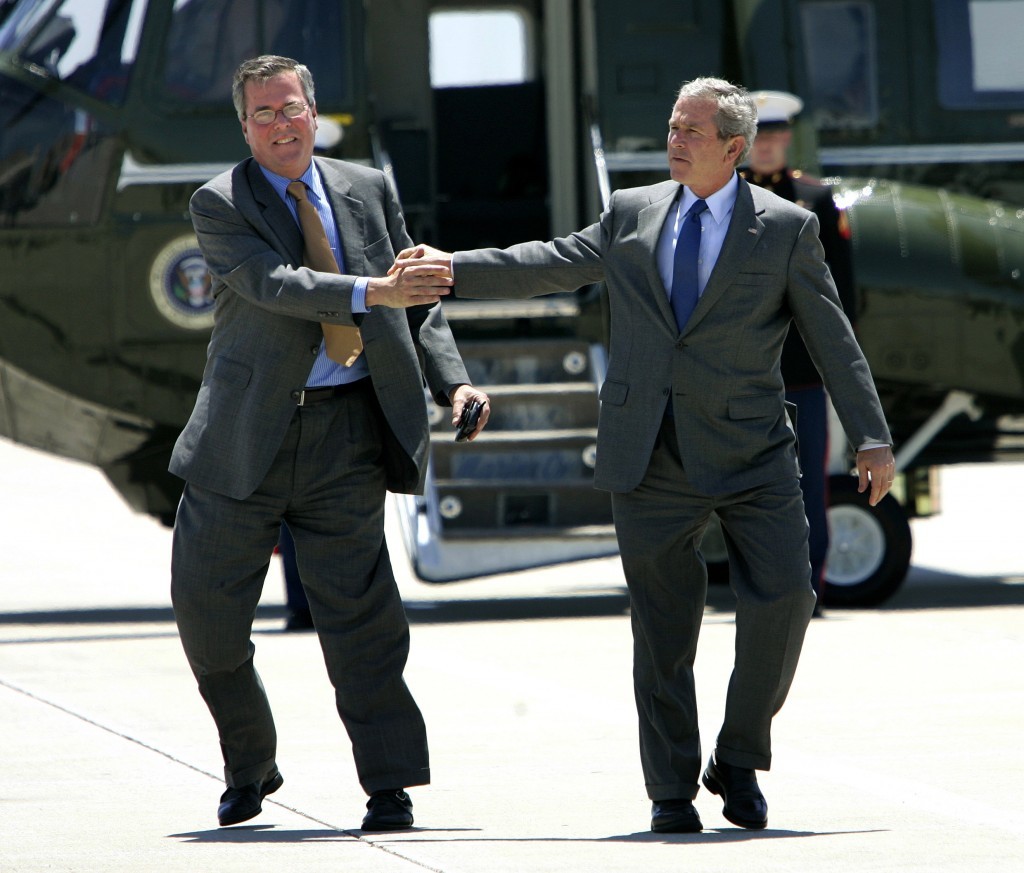
After initially struggling with questions about the Iraq War and his brother’s tenure as the nation’s leader, Jeb Bush has tossed aside any hesitations about embracing former President George W. Bush’s legacy and is searching for new ways to incorporate him into his White House campaign. It’s a shift due in no small part to the jabs of Republican front-runner Donald Trump, who isn’t backing down from his assertions that Bush’s brother bears some responsibility for 9/11. “In the latest episode of the reality show that is Donald Trump’s campaign, he has blamed my brother for the 9/11 terrorist attacks on our nation,” Bush wrote in a column published Tuesday in National Review. “That Trump echoes the attacks of Michael Moore and the fringe left against my brother is yet another example of his dangerous views on national-security issues.” Spurred on by Trump, Bush is showing none of the hesitation in embracing his brother’s presidency that tripped him up in the weeks leading to the formal launch of his 2016 campaign. Jeb Bush fumbled answers to questions about his brother’s decision to invade Iraq in 2003 for an entire week in May, struggling to explain whether he would have done the same. Bush is on much more comfortable ground when it comes to his brother’s response to 9/11. “The simple fact is that when we were attacked, my brother created an environment where, for 2,600 days, we were safe,” Bush said Monday night on Fox News. “No one attacked us again. And he changed the laws, he did everything necessary, he united the country, and he kept us safe.” The back and forth between the two candidates began at the second Republican debate, when Bush defended his brother as a president who kept the nation safe after the billionaire businessman claimed George W. Bush’s presidency “gave us Barack Obama, because it was such a disaster.” While George W. Bush’s favorability among all Americans remains mixed, nearly three-quarters of Republicans have a favorable view of him, according to a Pew Research poll in May. Jeb Bush scored his biggest applause of the evening when he pivoted to his right to face Trump and said calmly, “As it relates to my brother, there’s one thing I know for sure. He kept us safe.” The debate hall at the Ronald Reagan Presidential Library erupted in applause, and the comment has since become a part of the former Florida governor’s campaign stump speech. “The reaction to Donald Trump’s remarks show that no one accepts them,” said longtime Bush supporter and donor Al Hoffman. “Jeb isn’t afraid, and what he’s saying is we’re brothers and we’re going to support each other.” Yet Trump shows no signs of slowing his ridicule of Bush’s applause line. On Monday, he tweeted links to stories about pre-9/11 intelligence failures and continued to talk it up Tuesday in a pair of television interviews. “What happened is that Jeb Bush started talking about it and then instead of just letting it go, he started talking about it and now everybody virtually … is agreeing with me,” Trump said in an interview with CNBC’s Stuart Varney. “Because, let’s face it, you can’t say the country was safe when the World Trade Center came down during his regime.” In the past week, George W. Bush has written two emails to supporters asking for donations, and the campaign is using his name to appeal to donors, including one Sunday where Jeb Bush asks supporters to “help me defend my brother against Trump’s comments.” Former President George W. Bush, as well as the brothers’ father former President George H. W. Bush and their mother, Barbara, plan to attend a Jeb Bush campaign donor conference in Houston this weekend. The elder Bush brother will also headline a fundraiser next Thursday, invitations coming from two of his chiefs of staff while in office. Meanwhile, Bush’s 2016 presidential campaign is looking anew at how best to build on the positive response the former president’s name has invoked. Voters, specifically those who identify fighting terrorism as a top priority, continue to view the former president favorably, said Bush campaign spokesman Tim Miller. “We’ve seen a very positive response to emails from President Bush,” Miller said. Republished with permission of The Associated Press.
New ad blasts Jeb Bush for debate comment that his brother “kept us safe”

Progressive liberals are taking Jeb Bush to task for his comment during the second GOP debate that his brother — former President George W. Bush — “kept us safe.” A new attack ad from Americans United for Change will start nationwide on Monday. The campaign, which already premiered on the group’s Facebook page, will appear on several cable news stations and run for the next few days. “It’s as if Jeb Bush believes his brother’s presidency began on September 12th, 2001,” Americans United for Change President Brad Woodhouse told the Tampa Bay Times. “But we’re not letting Jeb rewrite history.” Woodhouse added that it was “convenient but not honest” to ignore the facts surrounding the worst attack on American soil since Pearl Harbor, happening on George W. Bush’s watch after the administration dismissed notices from intelligence officials on Osama bin Laden. Warnings were that bin Laden was “determined to strike in U.S.,” possibly using hijacked American planes. Before September 11, 2001, terrorism was a low priority for Bush, Woodhouse said; six months after the attacks, catching bin Laden was not a priority either, illustrated when Bush said, “I truly am not that concerned about him.” Bush spokesperson Tim Miller responded to the United for Change ad by telling the Times it was “Hillary Clinton’s political machine resorting to attacking Jeb over 9/11” and a “depressing example of just how extreme” the left has become. “If there’s one thing we should all agree on,” Miller continued, “it’s that in response to that horrific attack, the country came together with resolve in the face of evil to ensure we keep our country safe. “Today, while Jeb has offered a plan to defeat ISIS the Democrats have no strategy so they are left to make these craven attacks.”
Jeb Bush shuffles campaign staff again
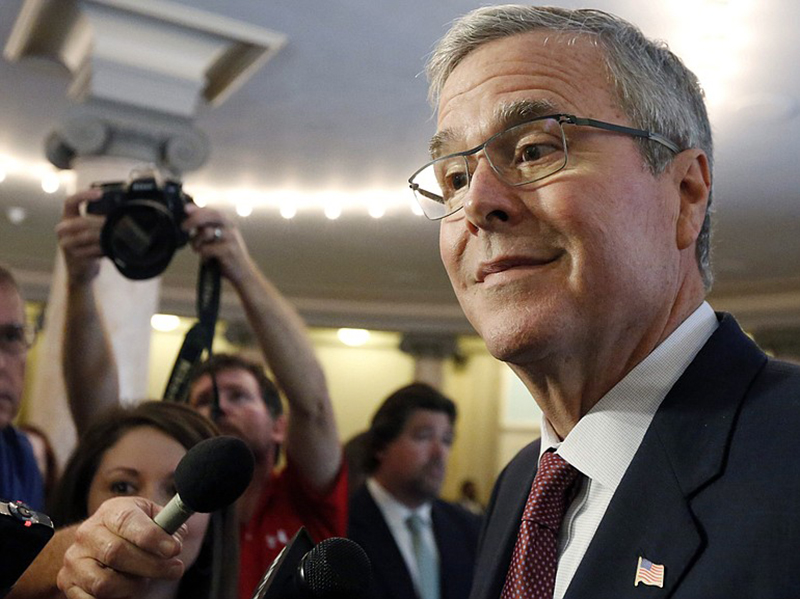
For the second time in less than two weeks, Jeb Bush is shuffling the top tier of his 2016 campaign staff, The Wall Street Journal reports. The job of political director, expected to go to Kentucky-based consultant Scott Jennings, will instead be filled by David James, senior adviser to Mitt Romney’s 2008 and 2012 presidential campaigns. He has also worked at the Republican National Committee and helped lead the Pennsylvania Republican Party. “After a successful announcement where Jeb really laid out how he is uniquely prepared to fix the problems in Washington, we are happy to be building out a political operation with David, Scott and the rest of the team that will spread that message in the primary and caucus states,” said Tim Miller, a spokesman for Bush.
Jeb Bush, Hillary Clinton take different tracks on potential matchup
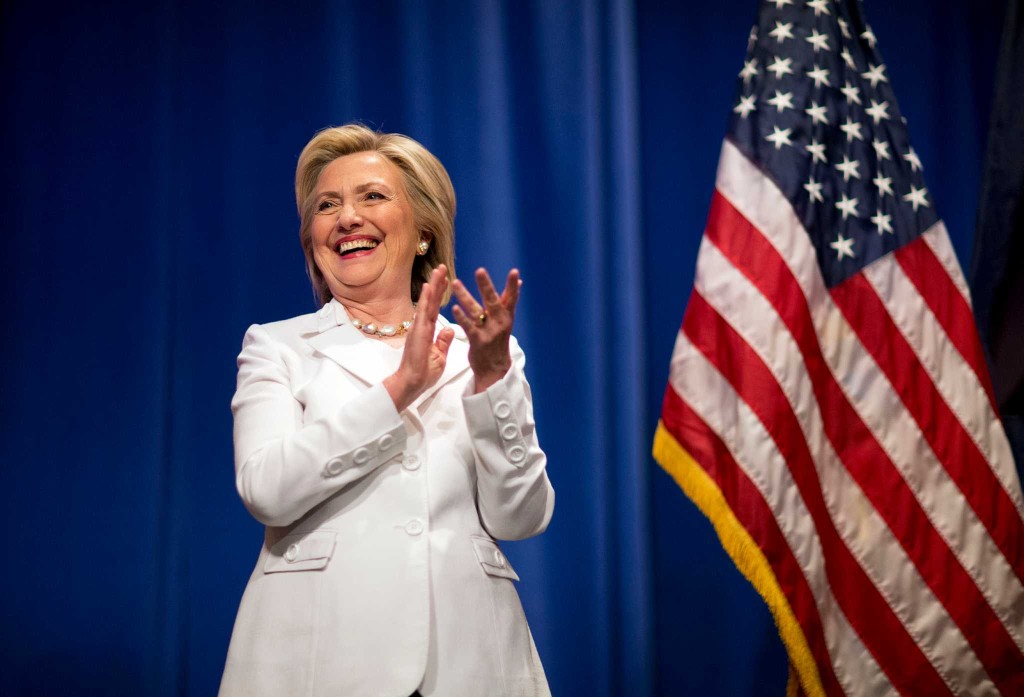
To judge them solely by their travels during the past month, you might think Jeb Bush has already plunged into the general election and Hillary Rodham Clinton has a serious fight on her hands for the Democratic nomination. The conventional thinking, though, is quite the opposite: He’s got a real primary race to settle first and she doesn’t. Bush, who has yet to declare his candidacy for the Republican nomination, has been stopping in states far from the early testing grounds of Iowa and New Hampshire. In the past month, he’s made appearances in Ohio, North Carolina and Colorado, all crucial general election states. On Saturday, he’ll be in Virginia, which will also be hotly contested in November 2016, even as most of his Republican nomination rivals are appearing in South Carolina: an important state in the primary race. “It’s a conscious effort, as he goes through the consideration process, to talk to and hear from people across the board,” Bush spokesman Tim Miller said. “That means in the early primary states and other states that would play a role in the process.” Bush’s strategy carries potential risks. Voters in early primary and caucus states are used to personal attention from candidates and could see Bush’s apparent flirtation with the general election as premature. Clinton, in contrast, is narrowly focusing her travel schedule on the first four states in the primaries, suggesting she wants voters to know she’s taking nothing for granted despite her dominant position in the party. To be sure, Bush isn’t avoiding the early states. He’s made visits to Iowa and New Hampshire, as well as South Carolina and Nevada, which round out the first four primary contests, and is headed back to Nevada and Iowa next week. Also, he does not have paid staff on the ground in the battleground states. But a candidate’s time remains one of any campaign’s most valuable assets and how and where the candidate spends it provides the clearest glimpse into their strategy. Bush’s relentless travel schedule has been largely driven by his aggressive fundraising campaign. But he took time out in Ohio last month to speak to the influential Ohio Chamber of Commerce conference, a coveted speaking engagement in a perennial swing state. This weekend, Bush will give the commencement address at Liberty University in Virginia, a state that Democrat Barack Obama carried twice. In just the past month, Bush has also spoken in Colorado and North Carolina. Ohio, Virginia, Colorado and North Carolina were each decided by less than five percentage points in the 2012 election, and are expected to be pivotal in 2016. Since announcing her campaign in early April, Clinton has limited her campaign appearances to Iowa, New Hampshire and Nevada. She also plans to travel to South Carolina in the coming weeks. It’s not a liability for Bush to dip a toe into a key fall election state, because such travel is still a priority, said veteran GOP presidential adviser Charlie Black. “Your first driving force is fundraising,” he said, referring to travel plans. “Second is early-primary states and third is swing states. Sometimes it’s a major speech, or a national speech that’s driving them.” Black presumed that Clinton would alter her schedule under the right conditions. “If there were a NARAL conference in St. Louis, you can bet she’d be there,” he said, referring to the pro-abortion-rights group. Clinton’s campaign is initially raising money for the primaries, not the general election. But it’s clear she is keeping an eye on Bush, who is viewed by many of her advisers as the toughest potential GOP candidate in a general election. For example, Clinton had planned to wait until May to start headlining fundraising events. However, she told aides that because Bush was raising money at such an aggressive pace, she needed to pick up her pace on that front. Fundraisers were added to her April schedule in New York and Washington. Campaign officials said Clinton’s travel plans haven’t been swayed by Bush’s flirtation with general election states. They don’t expect her to appear in states such as Ohio until late summer at the earliest. But her team is looking for other ways to engage the general election states. Campaign chairman John Podesta met donors in Colorado on Monday and is expected to make similar stops in states that will be crucial on Election Day. The campaign has also pledged to have employees in all the states, working with volunteers and organizing efforts to get out the vote. While campaign officials said those efforts are currently focused on the primaries, they are also a way to start building a foundation for the general election. Republished with permission of The Associated Press.
