
Wee hours U.S. Senate drama: GOP colleagues on the floor battle Tommy Tuberville blockade
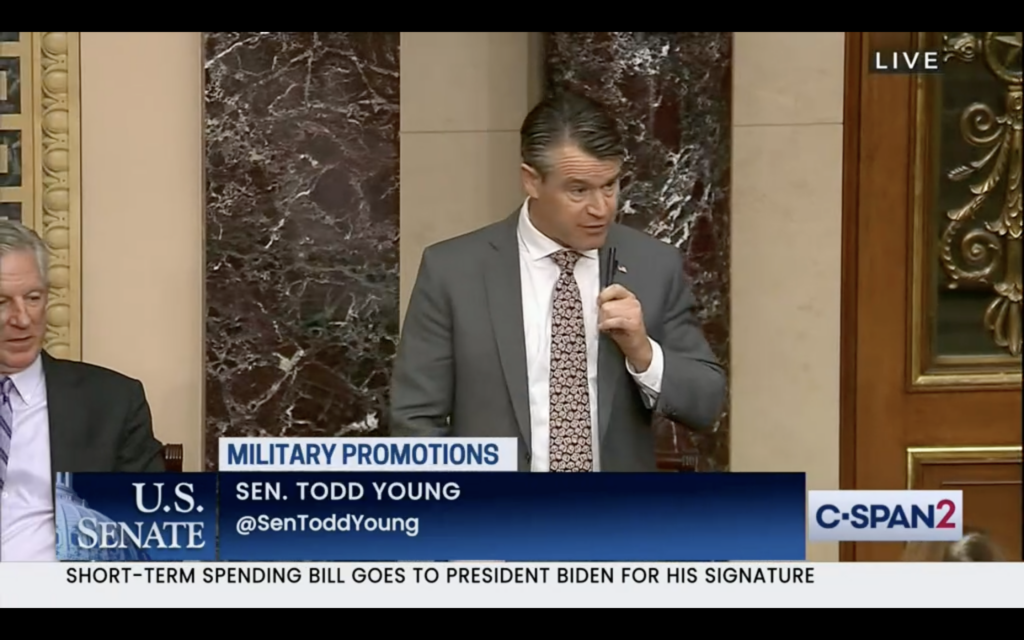
Ashley Murray, Arizona Mirror WASHINGTON — After a marathon day and late-night vote to avert a Thanksgiving government shutdown, four U.S. Senate Republicans held the floor until the wee hours Thursday, urging their Alabama colleague to lift his months-long objections to hundreds of U.S. military nominations. Sens. Dan Sullivan of Alaska, Todd Young of Indiana, Joni Ernst of Iowa, and Lindsey Graham of South Carolina asked for unanimous consent on two stalled nominees and spoke on the matter until nearly 4 a.m. Republican Sen. Mike Lee of Utah objected to both on behalf of GOP Sen. Tommy Tuberville of Alabama, speaking at length in defense of the minority party’s right to block nominations as leverage and about his own opposition to the Pentagon’s abortion policy that Tuberville is protesting. Lee’s objections meant the nominations remained stalled. This was the second time Tuberville’s Republican colleagues brought nominees to the floor to challenge the Alabama senator’s tactic, showing how frustration has bubbled to the surface in his own party. Pentagon officials warn that Tuberville’s freeze on promotions is disrupting the military’s chain of command. Until Nov. 1, only Democratic senators had asserted opposition on the floor. Tuberville has objected to unanimous voice vote approval of military generals and flag officer promotions since early 2023, and now Senate Republicans are on the defense against a Democratic-led resolution that could allow the chamber to hold roll call votes on the nominees en masse, potentially saving weeks to months of precious Senate floor time. Here’s what the senators had to say early Thursday morning: Sullivan Prior to speaking out against Tuberville on the floor this month, the Alaska senator joined him in collecting cloture petition signatures to bring top generals, including the chair of the Joint Chiefs of Staff, to the floor for successful votes. But Sullivan, a colonel in the U.S. Marines Corps Reserve, said Thursday that he and fellow GOP lawmakers who are now protesting Tuberville’s strategy have “received hundreds of text messages, emails from military families saying, ‘Thank you for having our back. Somebody has our back.’” “So we told them, we’re gonna do that, as we’re moving into Thanksgiving, my colleagues and I, we’re gonna keep our word to our military.” “During the last two weeks, we’ve all worked hard together. Sen. Tuberville is here, Sen. Lee’s on the floor. We’re all working hard trying to resolve this. We have ideas … But the backlog grows. Right now, when the Armed Services (Committee) reports out the next batch of military (nominees), it will be 450 one-, two-, three- and four-star generals.” The latest figures from the Pentagon state 359 nominees are stalled, and the list could grow to between 650 and 850 by year’s end if Tuberville continues his blockade. “This is a huge readiness challenge and a huge moral challenge,” Sullivan said. Tuberville was present at times but did not speak on the floor during the nearly four-hour period. Ernst The Iowa senator said Thursday morning she “led on the effort to overturn this (Biden administration) policy.” Ernst, a retired lieutenant colonel in the Iowa Army National Guard, twice attempted but failed to insert language into this year’s annual defense authorization bill to ban the Pentagon’s recent abortion policy. “So, again, I am pro-military and pro-life,” she said. “I also do not relish that I am standing on the floor this (morning) as we try to bring these nominations forward, but I understand the national security risks that are out there and the detriment to readiness as we continue to hold over 450 of the finest men and women that have served their nation honorably under the flag of our nation and our uniform.” “So I will go through one by one. I have a binder full of nominees, and I do hope our colleague from Alabama will allow us to bring them up one by one for a voice vote.” Graham Graham suggested a legal strategy against the Biden administration as a way for Tuberville to change course and smooth out the military’s chain of command this year. “How do you right wrongs? You don’t create another wrong. I want to right the wrong of having abortion paid for by public taxpayer dollars from the defense coffers. I think it not only violates the Hyde Amendment, it’s just bad policy. Count me in, Coach (Tuberville), I’m with you on that, Mike (Lee). You say it’s illegal. I tend to agree with you. Go to court.” “One way you right a wrong in America if you think a law is broken, you actually bring a lawsuit, and I think we found a way talking to (attorney) Jay Sekulow to bring a lawsuit challenging the defense policy of President Biden using taxpayer dollars to pay for transportation costs from DoD funds to perform abortions,” Graham said. Sekulow is chief counsel of the Christian-based American Center for Law and Justice, and specializes in religious liberty and anti-abortion litigation, according to his website. The Biden administration and Defense Secretary Lloyd Austin maintain the policy is legal, and the Department of Justice in 2022 delivered an opinion concluding the policy does not violate the Hyde Amendment. The policy, announced in February, grants service members time off and travel reimbursement when seeking an abortion in states where it remains unrestricted. The Pentagon policy was authorized after last year’s landmark Supreme Court ruling. Roughly 80,000 active-duty female service members are stationed in states where legislatures enacted full or partial bans, according to RAND. Young The Indiana senator asked to take up and confirm by unanimous consent two nominees Thursday morning, Capt. Kurtis A. Mole to rise to a rear admiral of the Navy, and Capt. Thomas J. Dickinson also for a promotion to rear admiral. Lee objected both times. “There are now tens, tens of Americans watching us on C-SPAN 2, captivated I know by the presentation this (morning),” Young said. “I think they’re perhaps divided. Some may look upon these proceedings and think what
Katie Britt and colleagues demand answers after Biden Administration hands over $6 billion to Iran
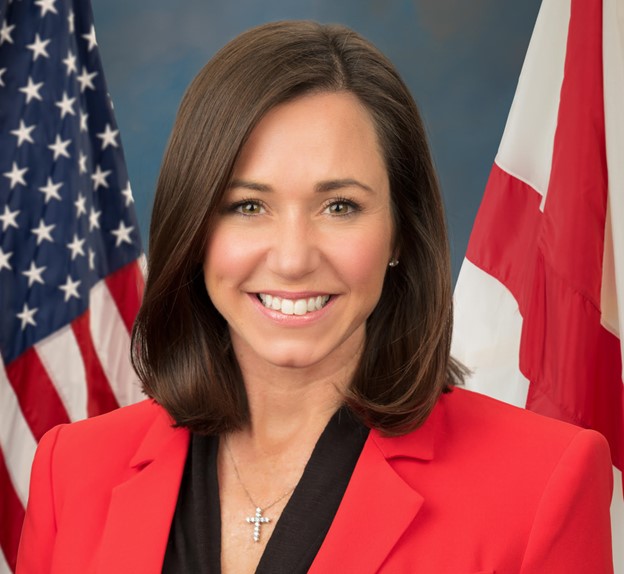
On Monday, U.S. Senator Katie Britt (R-Alabama) joined a letter by Sen. Tim Scott (R-South Carolina), the ranking member of the Senate Committee on Banking, Housing, and Urban Affairs, and 24 of her Republican colleagues in demanding answers from the Biden Administration about the approximately $6 billion reportedly paid to Iran in exchange for Americans wrongfully being held as political hostages by the Iranian regime. “Handing $6 billion to the world’s largest state sponsor of terrorism is a reckless and disastrous decision that threatens the lives of Americans and our allies across the globe,” said Senator Britt. “Once again, the Biden Administration has chosen to appease our adversaries and set a dangerous precedent. President [Joe] Biden’s weakness will only embolden hostile actors to engage in further aggression around the world. We must achieve peace through strength, and I will always fight to hold this Administration accountable for putting American families at risk.” In a letter to Secretaries Antony Blinken and Janet Yellen, the senators wrote, “When the Obama administration released $400 million in liquidated assets to Iran in 2016, we warned that this dangerous precedent would put a price on American lives. Seven years later, the current administration is providing a ransom payment worth at least fifteen times that amount to the world’s largest state sponsor of terror, in yet another violation of the United States’ long-standing ‘no concessions’ policy. In the release of Executive Order 14078 on July 19, 2022, the White House admitted that ‘terrorist organizations, criminal groups, and other malicious actors who take hostages for financial, political, or other gain—as well as foreign states that engage in the practice of wrongful detention, including for political leverage or to seek concessions from the United States—threaten the integrity of the international political system and the safety of United States nationals and other persons abroad.’ The release of such a significant sum to the Iranian regime runs entirely counter to that claim and will only serve to encourage additional hostage-taking for financial or political gain.” Joining Senators Britt and Scott on the letter were Senators Jim Risch (R-Wisconsin), Roger Wicker (R-Mississippi), Tom Cotton (R-Arkansas), Bill Hagerty (R-Tennessee), Bill Cassidy (R-Louisiana), Chuck Grassley (R-Iowa), Lindsey Graham (R-South Carolina), Steve Daines (R-Montana), Marsha Blackburn (R-Tennessee), Kevin Cramer (R-North Dakota), Ted Budd (R-North Carolina), J.D. Vance (R-Ohio), John Cornyn (R-Texas), Joni Ernst (R-Iowa), Pete Ricketts (R-Nebraska), John Hoeven (R-North Dakota), Todd Young (R-Indiana), Mike Crapo (R-Idaho), Roger Marshall (R-Kansas), James Lankford (R-Oklahoma), Thom Tillis (R-North Carolina), John Kennedy (R-Louisiana), John Barrasso (R-Wyoming), and Shelley Moore Capito (R-West Virginia) After more than two years of quiet negotiations, Iran has released five Iranian American dual citizens into house arrest, according to original reporting by the New York Times – quoting officials at the State Department and the National Security Council. “This is just the beginning of a process that I hope and expect will lead to their return home to the United States,” Secretary of State Antony Blinken said on Thursday. “There’s more work to be done to actually bring them home. My belief is that this is the beginning of the end of their nightmare.” The prisoners are Siamak Namazi, Emad Sharghi, and Morad Tahbaz, who had all been jailed on unsubstantiated charges of spying, as well as two others whose families have withheld their names. One of the unnamed Americans is a scientist, and the other is a businessman, according to sources. In addition to releasing the $6 billion in seized oil funds, the U.S. has agreed to hand over imprisoned Iranians as part of the prisoner swap. Britt and her colleagues had objected to paying the ransom before the deal had been finalized. Britt was elected to the Senate in 2022. To connect with the author of this story or to comment, email brandonmreporter@gmail.com.
Katie Britt and colleagues introduce the Back the Blue Act

On Monday. U.S. Senator Katie Britt joined U.S. Senator John Cornyn, U.S. Senator Tommy Tuberville, and 37 Republican colleagues to introduce the Back the Blue Act. The announcement coincided with the annual observance of Peace Officers Memorial Day and National Police Week. This legislation will strengthen existing laws that protect police officers, increase the criminal penalties for individuals who target law enforcement, and expand the tools that police can use to protect themselves. “Today, we honor the courageous law enforcement officers who have valiantly made the ultimate sacrifice,” Sen. Britt said. “Every single day, the brave men and women of law enforcement go above and beyond to serve and protect our communities. It is essential that we not only support our police, but we respect the rule of law in our country. I’m proud to join Senator Cornyn and my colleagues in introducing the Back the Blue Act, and I will always stand with our police officers in Alabama and across the country.” “The Back the Blue Act adds stiff, mandatory penalties and makes it a federal crime to kill – or attempt to kill – a law enforcement officer, a federal judge, or a federally funded public safety officer,” Sen. Cornyn said. “We must make it absolutely clear that violence against them will not be tolerated. In honor of National Police Week, we honor the brave men and women who protect us, we pay tribute to those who made the ultimate sacrifice, and we commit to doing everything in our power to ensure that they have all the resources they need to keep our people safe.” “Today marks the start of National Police Week,” Sen. Tuberville said on Twitter. “America’s brave men and women in blue wake up every day prepared to sacrifice their own safety in service to their fellow Americans. It is more important than ever that we show our support. To all who protect and serve, thank you.” In addition to Senators Britt, Tuberville, and Cornyn, this legislation is cosponsored by Senate Minority Leader Mitch McConnell (R-Kentucky), Senate Judiciary Committee Ranking Member Lindsey Graham (R-South Carolina), and Senators Ted Cruz, Thom Tillis, Rick Scott, Jerry Moran, Mike Braun, Kevin Cramer, Marsha Blackburn, John Boozman, Deb Fischer, Shelley Moore Capito, Mike Crapo, Marco Rubio, Jim Risch, Pete Ricketts, Steve Daines, John Barrasso, James Lankford, Cindy Hyde-Smith, John Kennedy, Tom Cotton, John Thune, John Hoeven, Ted Budd, Josh Hawley, Tim Scott, Bill Hagerty, Roger Marshall, Bill Cassidy, Joni Ernst, Chuck Grassley, Todd Young, Eric Schmitt, Cynthia Lummis, and Roger Wicker. The Back the Blue Act has been introduced in Congress multiple times since 2017. Senator Britt is also a cosponsor of Senator Braun’s Thin Blue Line Act, which expands the list of statutory aggravating factors in capital punishment determinations to also include killing or targeting a law enforcement officer, firefighter, or other first responders. To connect with the author of this story or to comment, email brandonmreporter@gmail.com
Tommy Tuberville opposes Biden Administration’s efforts to expand abortion access by mail
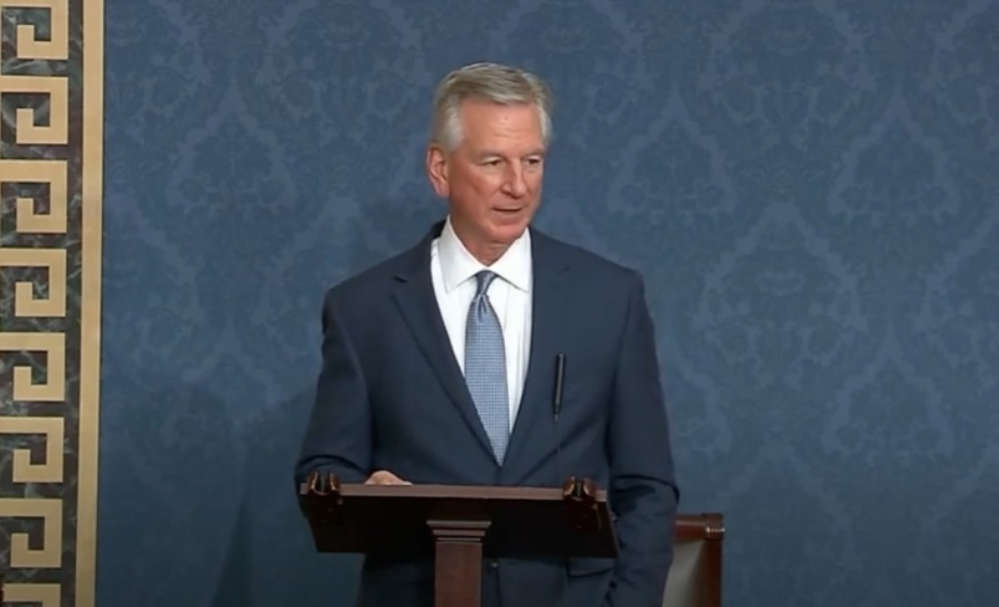
U.S. Senator Tommy Tuberville joined other lawmakers in two separate letters last week to U.S. Attorney General Merrick Garland and U.S. Food and Drug Commissioner Dr. Robert Califf, urging the officials to revoke guidance that removes what Tuberville called key safeguards required by law to protect expectant mothers and their babies. “The reckless distribution of abortion drugs by mail or other carriers to pregnant mothers who have not been examined in person by a physician is not only dangerous and unsafe, it is criminal,” said Sen. Tuberville. ‘Through its decision to permit no-test, mail-order abortions after a telemedicine visit, the FDA has abandoned its dual obligations to protect the public and vulnerable populations from harm and to comply with Federal law, including Federal requirements to protect patient safety and longstanding Federal criminal laws which expressly prohibit the mailing and shipping of abortion drugs.’ Tuberville has been a leading voice on pro-life issues in the U.S. Senate. Additionally, just last week, Senator Tuberville cosponsored a bill to establish a permanent ban on using federal taxpayer dollars for abortion. On January 3rd, 2023, the FDA released new guidance removing in-person dispensing requirements for chemical abortion drugs such as mifepristone, making self-administered abortion drugs permanently available by mail or through certain pharmacies. Tuberville and the other lawmakers sent a detailed letter to Commissioner Califf explaining their view on the policy and legal faults in the FDA decision, citing it as “dangerous, reckless, and illegal.” They claim that the new policy: · Threatens the health and safety of pregnant mothers by eliminating the requirement for in-person dispensing, increasing risks of potentially life-threatening complications without an in-person screening. · Violates the FDA’s legal obligations to protect the safety of women and girls. · Violates longstanding federal criminal laws barring the mailing and shipping of abortion drugs. · Imperils the conscience rights of pharmacists by failing to provide protections for pharmacists who do not want to participate in the practice of abortion. “Through its decision to permit no-test, mail-order abortions after a telemedicine visit, the FDA has abandoned its dual obligations to protect the public and vulnerable populations from harm and to comply with Federal law, including Federal requirements to protect patient safety and longstanding Federal criminal laws which expressly prohibit the mailing and shipping of abortion drugs,” Tuberville and the other lawmakers wrote. “We therefore insist that the FDA pull the deadly drug mifepristone from the market, or, at minimum, promptly restore and further strengthen the initial basic health and safety requirements for abortion drugs, and comply with Federal criminal law.” The positions outlined in the letter have been endorsed by the SBA Pro-Life America, Americans United for Life, CatholicVote, March for Life, U.S. Conference of Catholic Bishops, National Right to Life, Concerned Women for America, Heritage Action, Students for Life of America, Family Research Council, Scholars with the Ethics and Public Policy Center, Family Policy Alliance, and Ethics and Religious Liberty Commission. Tuberville was joined in the letter to Commissioner Califf by U.S. Senators Cindy Hyde-Smith, James Lankford, Steve Daines, Jim Risch, Mike Crapo, Marsha Blackburn, John Hoeven, J.D. Vance, Marco Rubio, Rick Scott, Roger Marshall, Kevin Cramer, Roger Wicker, Ted Cruz, Mike Lee, John Thune, Bill Hagerty, Todd Young, Markwayne Mullen, Mike Braun, Deb Fischer, Ted Budd, Josh Hawley, along with 54 members of the U.S. House of Representatives. Last December, the Office of Legal Counsel of the U.S. Department of Justice (DOJ) released an opinion saying the U.S. Postal Service is legally allowed to deliver abortion drugs, even to mailing addresses in states that decided to prohibit access to chemical abortion pills by mail as a result of the U.S. Supreme Court’s ruling in Dobbs versus the Jackson Women’s Health Organization that reversed the controversial Roe v. Wade decision. The letter to Garland claims that the DOJ’s memo violates existing laws. “It is disappointing, yet not surprising, that the Biden administration’s DOJ has not only abdicated its Constitutional responsibility to enforce the law but also has once again twisted the plain meaning of the law in an effort to promote the taking of unborn life. The OLC memo should be immediately rescinded or, at minimum, redrafted to articulate an accurate application of the law,” Tuberville and the members wrote. The second letter is supported by the Concerned Women for America Legislative Action Committee, Students for Life, Family Policy Alliance, Americans United for Life, CatholicVote, Scholars with the Ethics and Public Policy Center, Heritage Action, the U.S. Conference of Catholic Bishops, the Ethics & Religious Liberty Commission, Family Research Council, March for Life, and SBA Prolife America. Senator Tuberville represents Alabama in the United States Senate and is a member of the Senate Armed Services, Agriculture, Veterans Affairs, and HELP Committees. He is serving his first term in the Senate after unseating incumbent Sen. Doug Jones in the 2020 election. To connect with the author of this story or to comment, email brandonmreporter@gmail.com.
Katie Britt believes Alabama taxpayers do not want taxes paying for elective abortions
United States Senators Katie Britt and Roger Wicker joined 45 other Senators in introducing the No Taxpayer Funding for Abortion Act. This legislation would establish a single, government-wide standard to permanently prohibit the flow of federal funding for abortion. “The vast majority of Alabamians do not want their hard-earned dollars funding elective abortions in California and New York,” Britt stated. “The Hyde Amendment has saved an estimated 2.5 million lives – approximately half the population of Alabama,” said Sen. Britt. “Sadly, radicals in the Democratic Party continue to trumpet their calls for abortion at any time, for any reason. They have now targeted the long-standing, bipartisan Hyde Amendment, annually passed by Congress since 1976, which ensures federal taxpayer dollars are not used to fund abortions. It is time to make the Hyde Amendment and its lifesaving protections permanent so the far-left does not attempt to hold the nation hostage every year. The vast majority of Alabamians do not want their hard-earned dollars funding elective abortions in California or New York. I will continue to fight to defend life, support parents, grow opportunities for hardworking families, and preserve the American Dream for our children and our children’s children.” “Most Americans do not want their hard-earned tax dollars being used for abortion-on-demand, but our current patchwork of regulations has brought years of uncertainty,” stated Sen. Wicker. “The No Taxpayer Funding for Abortion Act would simplify federal rules, ensuring that American tax dollars are never used for the destruction of innocent, unborn life.” This legislation would make permanent the restrictions on funding for elective abortion and elective abortion coverage, including the Hyde Amendment, which currently relies on yearly approval. It would also eliminate Obamacare’s taxpayer subsidies for elective abortion coverage on the Affordable Care Act exchanges through refundable tax credits. U.S. Sen. Tommy Tuberville (R-Alabama) also co-sponsored the legislation. “Millions of hardworking Americans believe that life begins at conception and don’t want their taxpayer dollars inadvertently funding abortions,” said Sen. Tuberville. “As a Christian and as a conservative, I share their belief that every life is sacred and every American has a right to life. That’s why I’m proud to sign on to this legislation that will solidify abortion funding restrictions that have been in place for decades and better protect the unborn.” Britt, Tuberville, and Wicker joined Sens. Mitch McConnell (R-Kentucky) John Barrasso (R-Wyoming), Marsha Blackburn (R-Tennessee), John Boozman (R-Arkansas), Mike Braun (R-Indiana), Ted Budd (R-North Carolina), Shelley Moore Capito (R-West Virginia), Bill Cassidy (R-Louisiana), John Cornyn (R-Texas), Tom Cotton (R-Arkansas), Kevin Cramer (R-North Dakota), Mike Crapo (R-Idaho), Ted Cruz (R-Texas), Steve Daines (R-Montana), Joni Ernst (R-Iowa), Deb Fischer (R-Nebraska), Lindsey Graham (R-South Carolina), Chuck Grassley (R-Iowa), Bill Hagerty (R-Tennessee), Josh Hawley (R-Missouri), John Hoeven (R-North Dakota), Cindy Hyde-Smith (R-Mississippi), Ron Johnson (R-Wisconsin), John Kennedy (R-Louisiana), James Lankford (R-Oklahoma), Mike Lee (R-Utah), Cynthia Lummis (R-Wyoming), Roger Marshall (R-Kansas), Jerry Moran (R-Kansas), Markwayne Mullin (R-Oklahoma), Rand Paul (R-Kentucky), Pete Ricketts (R-Nebraska), Jim Risch (R-Idaho), Mitt Romney (R-Utah), Mike Rounds (R-South Dakota), Marco Rubio (R-Florida), Eric Schmitt (R-Missouri), Rick Scott (R-Florida), Tim Scott (R-South Carolina), Dan Sullivan (R-Alaska), Thom Tillis, (R-North Carolina), John Thune (R-South Dakota), J.D. Vance (R-Ohio), and Todd Young (R-Indiana). With Democrats in control of the Senate, it is unlikely that Senate Majority Leader Chuck Schumer will allow this bill to even be introduced on the Senate floor. To connect with the author of this story or to comment, email brandonmreporter@gmail.com.
Tommy Tuberville supports bill to permanently ban taxpayer funding for abortions
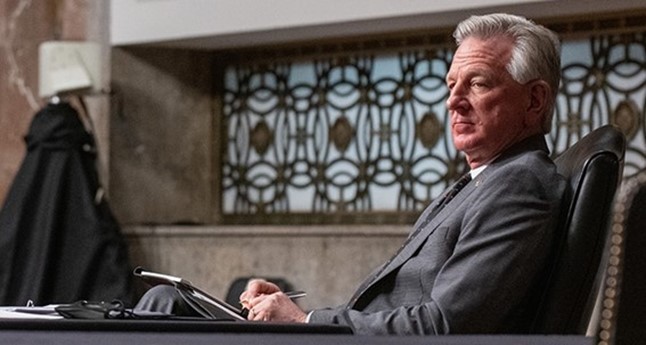
U.S. Senators Tommy Tuberville and Katie Britt joined 45 of their Senate colleagues in introducing the No Taxpayer Funding for Abortion Act to establish a permanent prohibition on federal funding for abortion. Tuberville said in a statement, “Every life is sacred.” “Millions of hardworking Americans believe that life begins at conception and don’t want their taxpayer dollars inadvertently funding abortions,” said Sen. Tuberville stated. “As a Christian and as a conservative, I share their belief that every life is sacred and every American has a right to life. That’s why I’m proud to sign on to this legislation that will solidify abortion funding restrictions that have been in place for decades and better protect the unborn.” “Most Americans do not want their hard-earned tax dollars being used for abortion-on-demand, but our current patchwork of regulations has brought years of uncertainty,” Sen. Roger Wicker said. “The No Taxpayer Funding for Abortion Act would simplify federal rules, ensuring that American tax dollars are never used for the destruction of innocent, unborn life.” The bill seeks to change 40 years of inconsistent policies that have regulated federal funding for abortion. It would make funding restrictions permanent for abortion and elective abortion coverage, including the Hyde Amendment, which requires annual approval. The legislation would also eliminate taxpayer-funded subsidies for elective abortion coverage currently offered on Affordable Care Act exchanges through refundable tax credits. Tuberville, Wicker, and Britt joined Sens. Mitch McConnell (R-Kentucky) John Barrasso (R-Wyoming), Marsha Blackburn (R-Tennessee), John Boozman (R-Arkansas), Mike Braun (R-Indiana), Ted Budd (R-North Carolina), Shelley Moore Capito (R-West Virginia), Bill Cassidy (R-Louisiana), John Cornyn (R-Texas), Tom Cotton (R-Arkansas), Kevin Cramer (R-North Dakota), Mike Crapo (R-Idaho), Ted Cruz (R-Texas), Steve Daines (R-Montana), Joni Ernst (R-Iowa), Deb Fischer (R-Nebraska), Lindsey Graham (R-South Carolina), Chuck Grassley (R-Iowa), Bill Hagerty (R-Tennessee), Josh Hawley (R-Missouri), John Hoeven (R-North Dakota), Cindy Hyde-Smith (R-Mississippi), Ron Johnson (R-Wisconsin), John Kennedy (R-Louisiana), James Lankford (R-Oklahoma), Mike Lee (R-Utah), Cynthia Lummis (R-Wyoming), Roger Marshall (R-Kansas), Jerry Moran (R-Kansas), Markwayne Mullin (R-Oklahoma), Rand Paul (R-Kentucky), Pete Ricketts (R-Nebraska), Jim Risch (R-Idaho), Mitt Romney (R-Utah), Mike Rounds (R-South Dakota), Marco Rubio (R-Florida), Eric Schmitt (R-Missouri), Rick Scott (R-Florida), Tim Scott (R-South Carolina), Dan Sullivan (R-Alaska), Thom Tillis, (R-North Carolina), John Thune (R-South Dakota), J.D. Vance (R-Ohio), and Todd Young (R-Indiana). Swing Republican Sens. Lisa Murkowski and Susan Collins did not sign off on the legislation, and neither did any of the 52 Senate Democrats who hold the majority in the body. U.S. Representative Christopher Smith (R-New Jersey) has introduced similar legislation in the House of Representatives. To connect with the author of this story, or to comment, email brandonmreporter@gmail.com.
U.S. Senators Katie Britt and Tommy Tuberville support school choice week

U.S. Senators Katie Britt and Tommy Tuberville released statements supporting the annual National School Choice Week, which runs from January 22 through January 28, 2023. Sens. Britt and Tuberville have co-sponsored bipartisan resolutions authored by Senator Tim Scott that would formally designate this week as “National School Choice Week” and celebrates educational freedom and excellence throughout our country. “This National School Choice Week, let’s recommit to ensuring that every single child across Alabama and our nation has the opportunity to unlock the American Dream through a high-quality education,” said Sen. Britt. “No child’s zip code should determine their destiny. School choice empowers families with the freedom to make important decisions to help their children achieve their full potential and secure a bright future.” “Nothing rivals the opportunity and freedom that come with a quality education,” Sen. Tuberville said. “The COVID-19 pandemic underscored the need for ensuring our students aren’t subject to educational disadvantages because of their background or location. I’m committed to breaking down educational barriers so that the next generation of leaders are empowered to achieve the American Dream, which is why I’m proud to join this resolution recognizing National School Choice Week.” Other resolution sponsors include U.S. Sens. Mike Braun (R-Indiana), Ted Budd (R-North Carolina), Bill Cassidy (R-Louisiana), John Cornyn (R-Texas), Tom Cotton (R-Arkansas), Kevin Cramer (R-North Dakota), Ted Cruz (R-Texas), Steve Daines (R-Montana), Lindsay Graham (R-South Carolina), Bill Hagerty (R-Tennessee), Cindy Hyde-Smith (R-Mississippi), Ron Johnson (R-Wisconsin), James Lankford (R-Oklahoma), Mitch McConnell (R-Kentucky), Mitt Romney (R-Utah), Marco Rubio (R-Florida), Rick Scott (R-Florida), Thom Tillis (R-North Carolina), and Todd Young (R-Indiana). Tuberville is a former coach, mentor, and educator for more than 40 years. Tuberville spoke on the floor of the Senate, expressing his commitment to promoting educational choice opportunities for students. Tuberville called on the U.S. Department of Education to reconsider proposed rules to redefine the Charter School Program (CSP) that would strip parents of the ability to choose the best school for their child. Tuberville also introduced the Children Have Opportunities in Classrooms Everywhere (CHOICE) Act to allow low-income families with children in grades K-12 to use federal education funds for educational options that best fit their needs. Last week Britt visited Dunbar Magnet School in Mobile, Alabama, where she attended a civics class, a dance class, and a physical education class before speaking to a school-wide assembly. Dunbar is a public magnet school for grades six through eight. When it comes to education, Britt said that she believes that one size does not fit all. Every family should be empowered to make the best possible choice for their child’s education. For many, that may be their local traditional public school. For others, it might be a traditional public school elsewhere. It could be a public charter or magnet school, a private school, a trade school, homeschooling, or a virtual academy or hybrid solution. “I trust parents to make the best choices for their individual children,” Britt said. “In the Senate, I will fight for their right to do just that.” Congressman John Moolenaar (R-Michigan) introduced the companion resolution in the U.S. House of Representatives. Tuberville and Britt are serving in their first terms representing Alabama in the Senate, with Tuberville being elected in 2020 and Britt being elected in 2022. To connect with the author of this story, or to comment, email brandonmreporter@gmail.com.
Sen. Katie Britt votes against confirming Brendan Owens

On Monday, U.S. Senator Katie Britt today cast her first-ever vote in the Senate; when she voted against the confirmation of Brendan Owens to serve as Assistant Secretary for Energy, Installations, and Environment in the Department of Defense. Owens was originally nominated by President Joe Biden in March 2022 but failed to muster the support to get a floor vote during the 117th Congress. President Biden re-nominated Owens in January 2023 at the start of the 118th Congress. “The Biden Administration has consistently prioritized their reckless leftwing political agenda to the detriment of our military readiness,” said Sen. Britt. “This nominee would simply be the tip of the spear in continuing President Biden’s radical ‘Green New Deal’ priorities at the Department of Defense, which should be focused on ensuring our incredible men and women in uniform are the best equipped, resourced, and trained in the world. We achieve peace through strength, not wokeness. The last thing we need is a DOD appointee from the ESG movement.” The U.S. Senate confirmed Owens on Monday night with 60 “yea” and 35 “nay” votes. A number of Republicans voted to confirm Owens, including Sens. Shelley Moore Capito of West Virginia, Susan Collins of Maine, John Cornyn of Texas, Joni Ernst of Iowa, Lindsey Graham of South Carolina, Chuck Grassley of Iowa, Mitch McConnell of Kentucky, Jerry Moran of Kansas, Mitt Romney of Utah, Mike Rounds of South Dakota, Thom Tillis of North Carolina, Roger Wicker of Mississippi, and Todd Young of Indiana. Britt was elected in a landslide by the voters of Alabama in November after besting four rivals in the Alabama Republican Primary last spring. Senate is the first elected office she has ever held. Britt and her husband, Wesley, live in Montgomery with their two children. To connect with the author of this story, or to comment, email brandonmreporter@gmail.com.
U.S. Senate to vote on Respect for Marriage Act; several groups say it’s unconstitutional
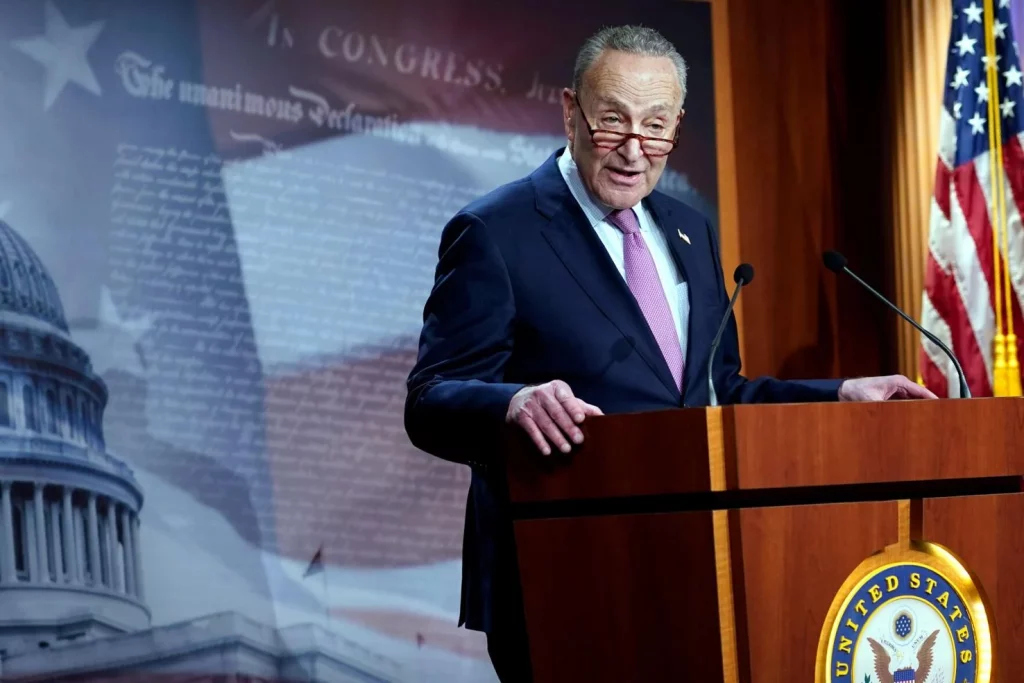
Several groups argue the Respect for Marriage Act (ROMA) currently before the U.S. Senate is unconstitutional and, if enacted, will eventually be struck down by the U.S. Supreme Court. The bill, HR 8404, was introduced in the House by U.S. Rep. Jerry Nadler, D-NY, on July 18 and passed by a vote of 267-157 the next day. The U.S. Senate took it up on Nov. 14. It would provide “statutory authority for same-sex and interracial marriages” and repeal several provisions of the 1996 Defense of Marriage Act (DOMA). The 1996 law received bipartisan support, including from then U.S. Sen. Joe Biden and U.S. Rep. Chuck Schumer, D-NY, and from Democratic President Bill Clinton, who signed it. When a constitutional amendment was proposed to ban same-sex marriage in 2006, Sen. Biden told Meet the Press’s Tim Russert, “I can’t believe the American people can’t see through this. We already have a law, the Defense of Marriage Act … where I voted and others … that marriage is between a man and a woman, and states must respect that. … Why do we need a constitutional amendment? Marriage is between a man and a woman.” Sixteen years later, President Biden now supports replacing DOMA provisions, which “define, for purposes of federal law, marriage as between a man and a woman and spouse as a person of the opposite sex,” with ROMA provisions “that recognize any marriage that is valid under state law,” according to the bill summary. The summary also notes that the Supreme Court ruled three marriage-related laws as unconstitutional: DOMA (U.S. v. Windsor, 2013) and state laws banning same-sex marriage (Obergefell v. Hodges, 2015), and interracial marriage (Loving v. Virginia 1967). The bill would also allow “the Department of Justice to bring a civil action and establishes a private right of action for violations,” its summary states. When filing a cloture motion on a substitute amendment on Nov. 17, now Senate Majority Leader Schumer said the Senate would vote on ROMA when it returned on Monday after Thanksgiving. He said, “Let me be clear,” passing it “is not a matter of if but only when.” He also thanked his colleagues from both sides of the aisle “who led this bill.” Twelve Republicans voted with Democrats to allow it to move forward, eliminating a filibuster threat: Sens. Roy Blunt, Richard Burr, Shelley Capito, Susan Collins, Cynthia Lummis, Rob Portman, Mitt Romney, Dan Sullivan, Thom Tillis, Joni Ernst, Lisa Murkowski, and Todd Young. After their vote, Biden said, “Love is love, and Americans should have the right to marry the person they love,” adding their vote made “the United States one step closer to protecting that right in law.” Schumer also said he had “zero doubt” the bill “will soon be law of the land.” But multiple groups disagree, arguing it’s unconstitutional for the same reasons the Supreme Court struck down DOMA. Because the court already ruled Congress doesn’t have the constitutional authority to define marriage under Article 1 of the U.S. Constitution, and because ROMA is nearly identical to DOMA, they argue it will also likely be struck down. In a letter to Congress, the nonprofit religious freedom organization Liberty Counsel argues the court ruled in Windsor, “DOMA, because of its reach and extent, departs from this history and tradition of reliance on state law to define marriage.” It also ruled, “[b]y history and tradition the definition and regulation of marriage . . . has been treated as being within the authority and realm of the separate States.” Liberty Counsel Founder and Chairman Mat Staver, said, “The Constitution cannot be said to prohibit the exercise of power to define marriage in one manner yet authorize the opposite definition of that same unconstitutional exercise of power. If Windsor noted that Congress lacked authority in this realm, then it necessarily lacks the power here.” While a bipartisan amendment was introduced claiming to protect religious liberty, Sen. Mike Lee, R-Utah, argues it really doesn’t. “Religious Americans will be subject to potentially ruinous litigation, while the tax-exempt status of certain charitable organizations, educational institutions, and non-profits will be threatened. My amendment would have shored up these vulnerabilities,” he said. Heritage Foundation President Kevin Roberts said, “Conservatives are deeply disappointed by the betrayal of Senate Republicans to protect Americans’ religious freedom and won’t soon forget the votes of the 12 Republican senators who cast aside an essential right in a bill that will weaponize the federal government against believers of nearly every major religion.” Gregory Baylor, senior counsel with Alliance for Defending Freedom, also said the law is “unnecessary and could have a disastrous effect on religious freedom. While proponents of the bill claim that it simply codifies the 2015 Obergefell decision, in reality, it is an intentional attack on the religious freedom of millions of Americans with sincerely held beliefs about marriage.” It also “threatens religious freedom and the institution of marriage” by codifying a “false definition of marriage in the American legal fabric,” ADF argues. It also “opens the door to federal recognition of polygamous relationships, jeopardizes the tax-exempt status of nonprofits that exercise their belief that marriage is the union of one man and one woman, and endangers faith-based social-service organizations by threatening litigation and liability risk if they follow their views on marriage when working with the government.” Republished with the permission of The Center Square.
Senate passes bill to boost computer chip production in U.S.

A bill designed to encourage more semiconductor companies to build chip plants in the United States passed the Senate on Wednesday as lawmakers raced to finish work on a key priority of the Biden administration. The $280 billion measure, which awaits a House vote, includes federal grants and tax breaks for companies that construct their chip facilities in the U.S. The legislation also directs Congress to significantly increase spending on high-tech research programs that lawmakers say will help the country stay economically competitive in the decades ahead. Senate passage came by a 64-33 vote. The House vote is expected later this week as lawmakers try to wrap up business before returning to their home states and districts in August. House Speaker Nancy Pelosi, D-Calif., has said she is confident there is enough GOP support to overcome potential defections from Democrats who view the subsidy effort to boost semiconductor companies as a misplaced priority. Seventeen Republicans voted for the measure. Sen. Bernie Sanders, I-Vt., broke ranks with Democrats in voting against the bill. Proponents of the legislation say other countries are spending billions of dollars to lure chipmakers. Backers say the U.S. must do the same or risk losing a secure supply of the semiconductors that power automobiles, computers, appliances, and some of the military’s most advanced weapons systems. Senate Majority Leader Chuck Schumer, D-N.Y., said the bill represented one of the nation’s largest investments in science and manufacturing in decades and that with the Senate’s approval, “we say that America’s best years are yet to come.” Opponents have been critical of the bill’s price tag. It is projected to increase federal deficits by about $79 billion over ten years. President Joe Biden said the bill would create jobs and lower costs on a wide range of products from cars to dishwashers. “For decades, some ‘experts’ said we needed to give up on manufacturing in America. I never believed that. Manufacturing jobs are back,” Biden said. “Thanks to this bill, we are going to have even more of them. The House should promptly pass it and send this bill to my desk.” The bill has been in the works for years, starting with efforts by Schumer and Sen. Todd Young, R-Ind., to increase the government’s investment in high-tech research and development. While the bill has taken several twists and turns, one constant theme that lawmakers repeatedly emphasized during Wednesday’s debate was the need to keep up with China’s massive investments in cutting-edge technology. China’s government is planning on “winning the (artificial intelligence) race, winning future wars and winning the future,” Young said. “And the truth is, if we’re being honest with ourselves, Beijing is well on its way to accomplishing these goals.” Sen. Roger Wicker, R-Miss., said: “Regrettably, we are not in the driver’s seat on a range of important technologies. China is.” Congress, he said, now has “a chance to move us back in the right direction and put America back into a place to win the game.” The bill provides more than $52 billion in grants and other incentives for the semiconductor industry, as well as a 25% tax credit for those companies that invest in chip plants in the U.S. It calls for increased spending on various research programs that would total about $200 billion over ten years, though Congress will have to follow through by approving that money in future spending bills. Despite years of work, the bill’s future did not look so promising about a month ago. That’s when Senate Republican leader Mitch McConnell tweeted that there would be no chips legislation as long as Democrats pursued a party-line package of energy and economic initiatives. GOP support is critical in the Senate to get the 60 votes needed to overcome a filibuster. But when Sen. Joe Manchin of West Virginia quashed the idea of imposing higher taxes on the rich and corporations, key Republicans said that was an opening to go forward on semiconductors. Meanwhile, the Biden administration pushed to get a bill passed before the August recess, even if meant considerably narrowing the focus to just the $52 billion in semiconductor incentives. Commerce Secretary Gina Raimondo told lawmakers behind the scenes and publicly that semiconductor companies were making plans on how to meet the increased demand for chips. She said the growth in the industry would move forward with or without the United States and if lawmakers didn’t act quite soon, those companies would simply choose to build in other countries offering significant financial incentives. Schumer said that after McConnell’s statement, he called the CEOs of chipmakers and companies such as General Motors and Ford and reached out to “unlikely allies” like the U.S. Chamber of Commerce and the Business Roundtable. He urged them to reach out to Republican senators about the importance of the bill. “And they changed things,” Schumer told The Associated Press. “They really, for the first time, industry really helped a good government program.” The House could take up the bill as soon as Thursday. While most Republicans are expected to oppose it, some of the ranking Republicans on committees dealing with national security — Reps. Michael McCaul of Texas, Michael Turner of Ohio, and John Katko of New York — support the measure. So do many of the Republicans on a bipartisan group called the Problem Solvers Caucus, which is made up of moderates from both parties. Republished with the permission of The Associated Press.
Tommy Tuberville, colleagues stand up for agriculture producers
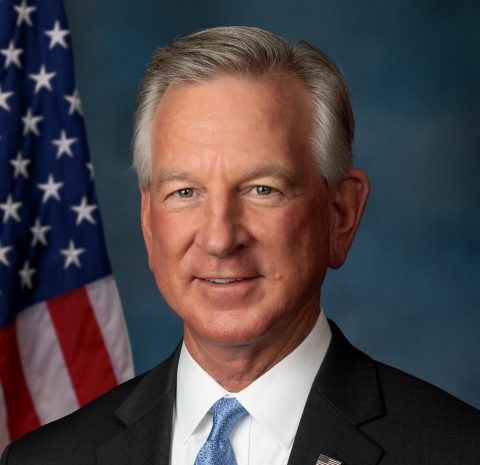
On Monday, Sen. Tommy Tuberville joined 31 colleagues in sending a letter to the Securities and Exchange Commission (SEC) to push back against overreach that would place climate disclosure regulations on farmers, ranchers, and agriculture producers. The senators are concerned about the proposed rule on “Enhanced and Standardization of Climate-Related Disclosures for Investors.” The proposed rule would require publicly-traded companies to include certain climate-related disclosures in their registration statements and periodic reports. The group believes this will impose burdensome greenhouse gas reporting requirements on all entities within a company’s value chain, including farmers and ranchers who fall outside of the SEC’s congressionally-provided authority. “The SEC’s congressionally-mandated mission is to protect investors; foster fair, orderly, and efficient markets; and facilitate capital formation,” the senators wrote. “However, this proposed rule moves well beyond the SEC’s traditional regulatory authority by mandating climate change reporting requirements that will not only regulate publicly traded companies, but will impact every company in the value chain. Should the SEC move forward with this rule, it would be granted unprecedented jurisdiction over America’s farms and ranches, creating an impractical regulatory burden for thousands of businesses outside of the scope of the SEC’s purview, including our nation’s farmers and ranchers,” they continued. Other signers include U.S. Senators John Hoeven (R-ND), Tim Scott (R-SC), Cynthia Lummis (R-WY), Roger Marshall (R-KS), James Risch (R-ID), Mike Crapo (R-ID), Steve Daines (R-MT), Thom Tillis (R-NC), Richard Burr (R-NC), Ted Cruz (R-TX), John Barrasso (R-WY), Bill Hagerty (R-TN), Tom Cotton (R-AR), Rick Scott (R-FL), Chuck Grassley (R-IA), Roger Wicker (R-MS), Deb Fischer (R-NE), Kevin Cramer (R-ND), John Kennedy (R-LA), Bill Cassidy (R-LA), Mike Braun (R-IN), Mike Rounds (R-SD), Joni Ernst (R-IA), James Lankford (R-OK), John Cornyn (R-TX), Jerry Moran (R-KS), Lindsay Graham (R-SC), John Thune (R-SD), Todd Young (R-Ind.), John Boozman (R-AR) and Josh Hawley (R-MO).
Joe Biden has long-term inflation plan, but voter patience short
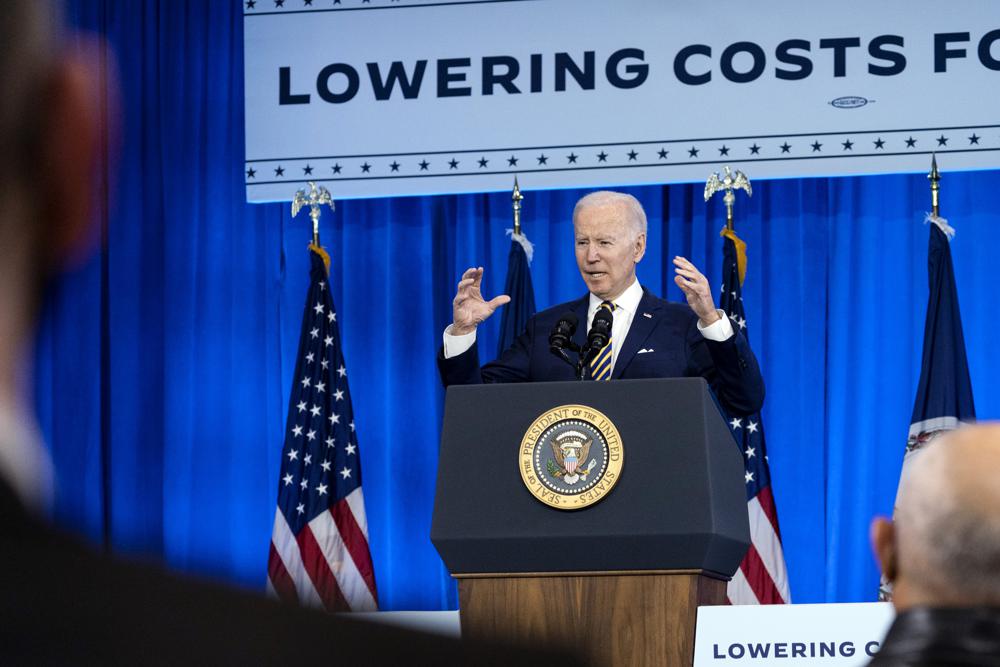
President Joe Biden came into office with a plan to fix inflation — just not the particular inflationary problem that the country now faces. He believes that a cluster of companies controls too many industries, which reduces competition for both customers and workers. That leads to higher prices and lower wages in what the White House says is an average cost of $5,000 annually for U.S. families. Biden is now trying to remedy the situation with 72 distinct initiatives — everything from new rules for cell phone repairs to regulations on meatpacking to more merger reviews. “The dynamics of the modern American economy — the increased consolidation and lack of competition — has distorted market incentives in important ways,” said Brian Deese, director of the White House National Economic Council. “The president gave us the direction that he wanted us to come back and say what could we do to address this issue of consolidation across industries in a way that would be durable.” But even administration officials acknowledge that the initiatives outlined by the president’s seven-month-old competition council aren’t designed to quickly stop the 7.5% inflation that’s frustrating Americans and damaging Biden’s popularity. Furthermore, business groups dispute the fundamental premise that competition has faded within the U.S. economy, and they are prepared to challenge the administration’s new initiatives in court. “It will strangle economic growth,” said Neil Bradley, executive vice president and chief policy officer of the U.S. Chamber of Commerce. “Ironically, what this will do is actually lead to more inflation.” Part of Biden’s dilemma is that reorienting a bureaucracy to promote competition takes time, and voters want to see inflation — running at a 40-year peak— start dropping now. Voters feel the bite of inflation with every trip they make to the grocery store or the gas station, yet the president is traveling the country to discuss solutions such as competition and new infrastructure that predate the current predicament and would have a much more gradual impact. America’s current inflation woes stem from the pandemic. Supply chains for computer chips, clothes, furniture, and other goods are under stress. At the same time, consumer demand has surged after a historical amount of government aid flowed into the economy. Despite efforts to get the kinks out of the supply chain, price increases have stayed high in recent months instead of fading, as many initial forecasts suggested. That has the Federal Reserve ready to increase interest rates to lower inflation. In a January survey by the University of Chicago, two-thirds of leading economists said that the concentrated power of companies does not explain the current rash of inflation. New York University economist Thomas Philippon has welcomed the administration’s approach — while allowing it would do little to bring down prices. As the author of the 2019 book, “The Great Reversal: How America Gave Up on Free Markets,” Philippon is the source of the administration’s statement that market concentration places a $5,000 drag on an average family. What Philippon observed was that other nations had embraced a level of antitrust enforcement and competition that no longer exists in America, resulting in lower costs for cell phone service, internet, and airline tickets in Europe relative to the U.S. “As a way to fight current inflation, it is unlikely to have a big impact in the short term, but it can still be useful,” Philippon said. “I think of it more as a positive side effect of something that should be done in any case.” The Biden administration contends that even if the lack of competition didn’t directly trigger the recent spike in prices, it has contributed to inflation. The White House Council of Economic Advisers blogged in July about how more sectors of the economy are effectively controlled by a smaller number of companies. It cited studies that show how mergers led to higher prices for hospital services, health insurance, airline tickets, and beer. It also documented a decline in government reviews of mergers and noted that the 2020 federal lawsuits against Google and, separately, Facebook were the first major monopolization cases in 22 years. After the second meeting of the government-wide competition council in late January, the White House charted its progress. The Food and Drug Administration has proposed selling hearing aids over-the-counter, “lowering their cost from thousands of dollars to hundreds of dollars,” according to a White House statement. The Federal Trade Commission will increase enforcement against restrictions that companies place on people repairing their own electronic devices. The Transportation Department figures it can cut prices of airline tickets in the New York City area by opening up 16 slots to a low-cost carrier at the airport in Newark, New Jersey. For proof that more competition can lead to lower prices, administration officials cite the example of eyeglasses. Before 1979, people could only buy eyeglasses from doctors who wrote their prescriptions. The FTC then passed a rule that forced doctors to give out prescriptions, causing the average price of glasses to fall 30.4% to $178 (in 1979 dollars). The issue does not break cleanly along partisan lines. Republican Sens. Todd Young of Indiana and Kevin Cramer of North Dakota have sponsored a bill to limit companies from using non-compete agreements, which can keep workers from going to another employer for more money. But many in the business sector dispute Biden’s core premise that the U.S. economy has become less competitive. They argue that mergers allow companies to operate more efficiently, and the resulting gains in productivity benefit consumers. The U.S. Chamber of Commerce says market concentration had waned by 2017, and it intends to challenge some of the administration’s regulatory actions in court. Airlines for America, a trade association, says that consumers are better off under industry consolidation. In inflation-adjusted terms, it said the average price of a roundtrip ticket has fallen nearly $100 since 2010 to $306 in 2020. The Business Roundtable, a group representing CEOs, said that at a time of high inflation, “more burdensome government regulations are not what the economy or Americans need.”
