
AG Steve Marshall accuses ethics chief of ‘self-dealing’ with estate trust
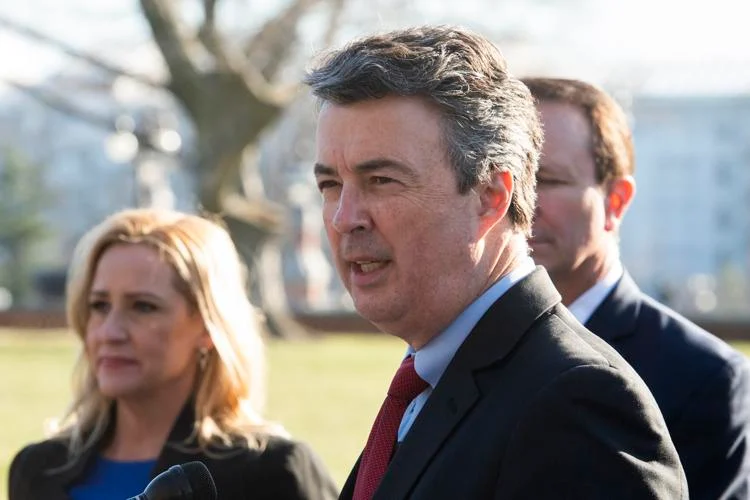
The state attorney general has accused the head of the Alabama Ethics Commission of mishandling a charitable trust, named for a former secretary of state, by allowing his children to benefit from its scholarships. Alabama Attorney General Steve Marshall made the accusation this week in an ongoing civil lawsuit regarding the trust, accusing Tom Albritton of improperly benefiting from a charitable trust for which Albritton was a board member. Marshall asked to have Albritton added as a defendant in the ongoing civil litigation over the Mabel Amos Memorial Trust. The Tuesday court filing was first reported by the south Alabama newspaper Lagniappe, which has written extensively about the scholarships and dispute over the trust. Albritton, executive director of the Alabama Ethics Commission, did not immediately respond Thursday to an email from The Associated Press seeking comment. The commission is the state agency that helps enforce Alabama’s ethics law. “Thomas A. Albritton, as a member of the Board of the Mabel Amos Memorial Fund, allowed or caused his own children to impermissibly receive scholarship awards from the very trust he was charged with administering,” Marshall’s office wrote in the court filing. The motion said, “Albritton caused, allowed, or otherwise acquiesced in the award of scholarships to his children from the Trust totaling more than $100,000,” calling that “prohibited self-dealing,”” and a violation of the terms of the Trust. Mabel Amos served as Alabama’s secretary of state from 1967 to 1975. Before she died, she filed a will to create the Mabel Amos Memorial Trust at a bank, which eventually merged with Regions. According to the motion, she wanted to fund scholarships for Alabama students who needed financial assistance for college. Family members last year filed a lawsuit against Regions alleging breach of trust, saying fees increased dramatically after oil was discovered on the Amos property and that board trustees benefited personally. Republished with the permission of The Associated Press.
Attorneys brief legislators on ethics laws
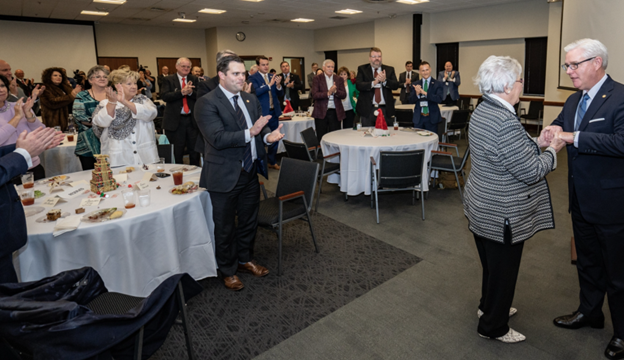
On Wednesday, members of the Alabama Legislature attended orientation training at the Alabama Statehouse. Among the many topics covered in the two-day seminar was ethics training. The presentation was led by Legislative Services Agency (LSA) General Counsel Jimmy Entrekin. The presenters were Greg Butrus, a Partner at Balch & Bingham, and Raymond Bell, a shareholder at Maynard, Cooper & Gale. “This presentation does not replace the official training on January 11 from Alabama Ethics Commission Director Tom Albritton,” Entrekin told the legislators – most of them new legislators. “Tom Albritton has a great session that he provides. We will have mandatory ethics training during the organizational session.” “We give advice on this (ethics and campaign finance) all the time,” Bell said. “We want you all to be able to come down here and serve your constituents and not have any problems with any legal issues.” “FCPA applies to your campaign political and electioneering activities,” Entrekin cautioned. “You are now more regulated than a coal mine in California.” “Ethics applies to all areas of your life that connect to your public service,” Bell said. “Be aware of lobbyist/principal restrictions. Know the rules or employ someone who does. Check first act later.” “Keep good records,” Bell advised. “A lot of what we come across is people forgetting to file something.” Bell explained that one major topic they address frequently is that campaign account funds can be used for expenses in furtherance of official duties. Still, campaign accounts cannot be used for personal expenses. The second major topic is conflicts of interest in the dual role of citizen legislators. Greg Butrus explained that campaign funds can be used to purchase things like office furniture/equipment used in constituent services. It can also be used for travel activities/mileage and meal reimbursements, inaugural expenses, computers, cell phones, vehicle-related purchases, and legal expenses. Prohibited uses include personal living expenses. “You want to be very careful,” Butrus said. “Common scenarios that bump into that gray area include cable tv. Is that for personal enjoyment or for news gathering? Cable TV in the office or on a device is an approved use of campaign dollars if used for information gathering, but what about sports channels?” “Purchasing a coffee maker for your office while the legislature is in session is an appropriate use, but can you take that coffee maker home with you at the end of the session? That is where you get into trouble,” Butrus warned. “With a coffee machine, you are not going to get into scrutiny, but if you are buying a $1000 cappuccino machine, that is another story,” Butrus said. One legislator asked if their personal phone records could be requested under the Freedom of Information Act. “I hate this answer, but it depends on a case-by-case basis,” Entrekin said. “We are trying to protect you.” Entrekin said that phone and email records of legislators are more protected than would be the records of someone in an executive branch position. “There is a good bit of stuff that is protected.” “In our world, we think of open records as separate from ethics,” Butrus said. “Legislative privilege is found to be pretty robust.” “My advice to folks is to be very conservative on the legislative side,” Bell said. “You have got to be very careful with something you bought with campaign money.” “If the campaign fund is paying for travel, make sure that it is connected with the campaign,” Butrus said. “Make sure you don’t double reimburse. Many organizations will reimburse you for your travel expenses.” Butrus explained that if a legislator travels to an event for campaign or office-related reasons, those travel expenses are a legitimate use of campaign dollars. However, if the group that you are speaking with reimburses the legislator for travel and that is not properly accounted for in the financial records, then that is illegally converting campaign funds for personal use. “It can be tricky, but the key to that is to keep good records and include why you spent that money,” Bell said. While staying in Montgomery for the session, Entrekin explained, “Campaign funds can be used for miles, lodging, or meals. Make sure you don’t double reimburse.” Legislators get a $100 per diem from the state for travel to Montgomery during official business. The campaign can cover any costs above that, but using campaign fund dollars for the full costs and then cashing the per diem check would be a double reimbursement and, thus, an illegal transfer of campaign funds for personal use. Butrus said legislators can use their campaign funds for legal expenses but warned, “That is very broad, but it is not unlimited. You can’t use it for your divorce or for child support, in criminal matters or something like that.” Butrus said candidates can make political party contributions with their campaign funds but explained, “There is a statutorial limit to how much money you can spend. You are limited to $5000 in a two-year period.” Butrus also warned about contributions that might be a felony violation of Alabama’s Pac to Pac law. He also cautioned about communications with a political action committee that might also be working on their behalf. “Make sure you don’t coordinate with them,” Butrus said. “Under the ethics law, if you have to stop and think about it, it is probably wrong,” Bell said, explaining the conflict of interest. “Remember with conflicts of interest. It is bigger than money.” “You have to be very careful when you come here and advocate for something that benefits you or your employer,” Bell said. “You should not get a benefit for passing a bill.” “This also applies to a family member,” Bell said. “You have to be careful that you are not passing a bill that benefits a family member.” “Tom Albritton does a great job in explaining that you are not expected not to have a conflict of interest,” Entrekin said. “Avoid acting in furtherance of an impermissible conflict of interest. The main thing that you deal with ethics law is how you
AG Steve Marshall files lawsuit against Alabama Ethics Commission policy
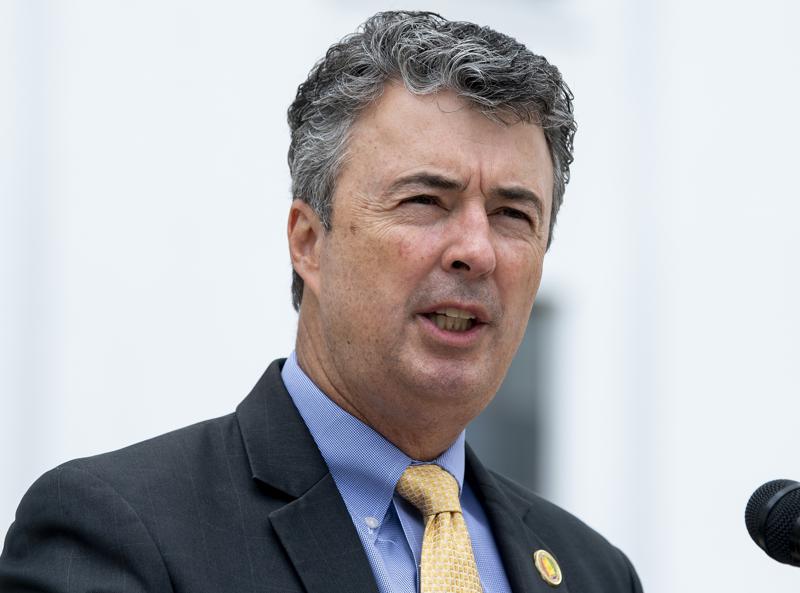
Attorney General Steve Marshall has filed a lawsuit against the Alabama Ethics Commission, seeking to revoke a recent advisory opinion. According to the Alabama Political Reporter, this type of lawsuit, where one state agency sues another, is quite rare. The lawsuit, filed Monday in Montgomery County Circuit Court, names Commissioners John Plunk, Stan McDonald, Lynn Stuart, Ed Crowell, and executive director Tom Albritton as defendants. The lawsuit says the Ethics Commission’s rule 2022-13 is in violation of the Alabama Administrative Procedures Act. The commission adopted an opinion this year stating that it had no responsibility to disclose to individuals under investigation any exculpatory information it might uncover during the course of the investigation. The lawsuit argues that the Brady rule was established in a 1963 federal case, Brady v. Maryland, and requires prosecutors to disclose material favorable to the accused as a matter of due process. In the lawsuit, Marshall says his office cannot trust the referrals for criminal investigation or administrative resolutions because of the policy of not disclosing exculpatory information to the person under investigation, a policy supported by an Ethics Commission advisory opinion adopted in July. Essentially, the Ethics Commission’s ruling argues that if, during the course of an investigation, evidence is found that would aid the person under investigation, the Commission has no responsibility to disclose said information, even if it could end the investigation and clear that person’s name. “Thus, the respondent can neither be confident that he fully understands the case against him, nor that the exculpatory evidence has been considered by the Ethics Commission before it votes on whether to refer the matter for prosecution or administrative resolution,” the lawsuit states. “In either case, the respondent’s legal defense is impeded.” In a statement this morning, Albritton defended the policy. “We disagree with the AG’s analysis and conclusions because the Opinion accurately reflects existing case law on the issue, and the Commission is bound by that precedent,” Albritton stated. “As stated by the Commission publicly when they approved the Advisory Opinion, however, the Commission welcomes a court of competent jurisdiction to review these issues in light of the applicable statutory provisions and existing case law and will abide by whatever direction that Court gives us.” According to the Ethics Commission website, the mission of the Commission is to ensure that public officials are independent and impartial, that decisions and policies are made in the proper governmental channels, that public office is not used for private gain, and that there is public confidence in the integrity of government.
Family members of Alabama’s former Secretary of State Mabel Amos file lawsuit

A lawsuit filed against Regions Financial Corp. alleges that the bank holding company mismanaged a charitable trust named for a former Alabama secretary of state — charging exorbitant fees and steering scholarship money to children of the trust board members. The suit, dated July 7, was filed in Montgomery County Circuit Court by family members of Mabel Amos, who served as Alabama Secretary of State from 1967 to 1975, al.com reports. The lawsuit contends that the board trustees benefited personally “using the funds in the Trust to educate their children at expensive out-of-state colleges and were not in financial need, while members of Amos’ immediate family were in financial need.” The suit seeks to remove Regions as the trustee bank and require it to pay back all distributions to the trustee children, as well as compensatory and punitive damages. In 1993, Amos filed her will, establishing a memorial trust in her name with Union Bank, which eventually merged with Regions. According to the lawsuit, Regions began charging “outrageous” fees when oil was discovered on Amos’ property, in contrast to “reasonable” fees when there were only natural gas wells there. For example, in the suit, the plaintiffs claim that Regions was paid about $7,000 for spending five hours a week administering the trust in 2010. Within a year, that same five hours a week cost $92,736. From 2002 to 2018, the suit claims, the trust paid more than $1 million in administration fees to Regions. At the same time, the number and dollar amount of scholarships also increased, from $21,794 through five scholarships in 2011 to $214,000 among 17 scholarships two years later. Among those scholarships were “thousands of dollars” for the children of two attorney trustees, the suit claims, who did not attend colleges in Alabama, which was not Amos’ intent in setting up the trust. In addition, Lagniappe Mobile reported the son and daughter of Alabama Ethics Commission Executive Director Tom Albritton received $120,000 from the trust to attend the University of Texas. Al.com reached out to Jennifer Elmore, vice president of corporate media and public relations for Regions, who would not comment directly on the suit. “Regions’ fee is less than one percent of the market value of the assets under management, and that is consistent with our standard rates and competitive with industry rates,” Elmore stated. Republished with the permission of The Associated Press.
Alabama Court of Criminal Appeals to rule on ethics commissioner rewriting ethics law
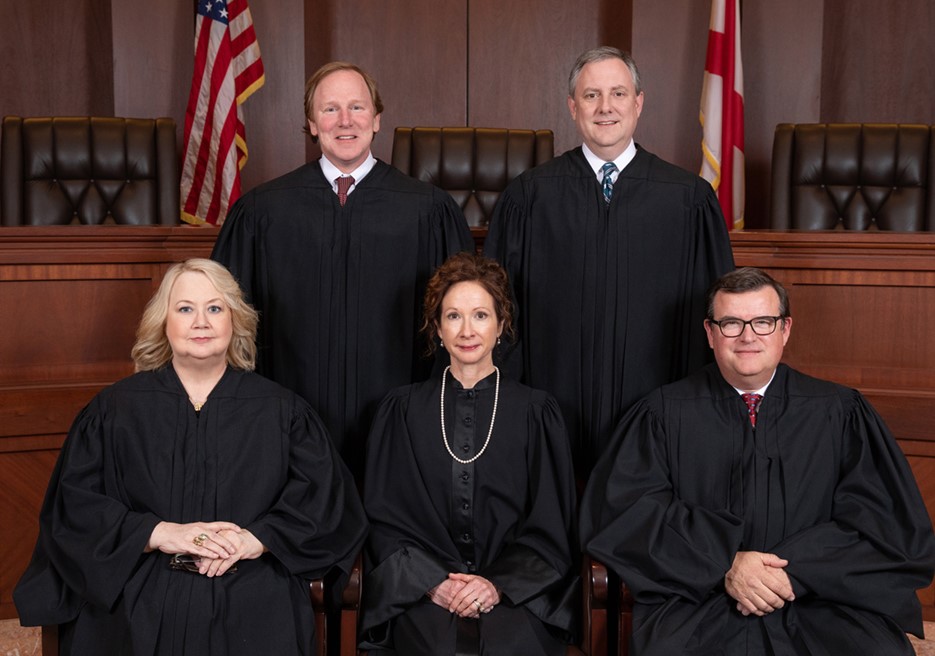
When faced with a single goal, in this case, embarrass Donald Trump’s administration; there is little doubt that one would choose the path of least resistance. That’s exactly what Cynthia Propst Raulston did when she pursued charges against Trump’s southeast regional director for the Environmental Protection Agency. Unfortunately for her, her weapon of choice, the Alabama Ethics Law, is clear – there’s a straight line from Point A (a complaint) to Point B (a resolution). By her actions, skipping the legally declared path for resolving a complaint, Raulston unilaterally declared herself and her office as powerful as that of Attorney General Steve Marshall. Let me explain how. The Alabama Ethics law is written without much room for interpretation. The “shall’” versus the “may” doesn’t leave room for guessing. Any first-year law student can tell you that. The process as described by the Ethics office requires a commission vote prior to going to a grand jury. Don’t believe me? Here are the exact words from the Ethics Commission website and I quote: Upon investigation a complaint may be: Closed because the Ethics Commission does not have jurisdiction regarding the alleged wrongdoing or the Statute of Limitations has expired. Dismissed due to lack of evidence to support the complaint. >Presented to Commission for Determination of Probable Cause. “Presented to the commission for determination of probable cause.” Nope, no ambiguity there. I don’t even need a law degree to understand the process. Going to the commission is an important step of due process of those facing complaints given the commission is not controlled by any one individual and the commission itself is charged with enforcing the ethics law. The makeup of the commission’s members is 2 appointees by the governor, 2 by the speaker of the house and 1 by the lieutenant governor. Each of which after being appointed has to be confirmed by the state senate. The current commissioners are: It was these five members Raulston circumvented by going straight to the grand jury. Read Anderton’s declaration, as filed, below: While her gumption and creativity could be lauded the effects of letting it stand presents a potentially chilling reality for the state of Alabama. Every time a new precedent is made chipping away at the structure of the law it weakens the law itself. This weakened foundation means that rouge prosecutors can go after just about anyone at any time in any manner they decide but more so the constant ambiguity also lends to the defense of those in the future who may seek an out when they do in fact break the law. Don’t for a moment think anyone is immune to the consequences of the decision before the court now. Due process is as important to the rule-followers as the rule-breakers because without it the process to determine which is which gets very fuzzy. The law § 36-25-4 says so very clearly, “In all matters that come before the commission concerning a complaint on an individual, the laws of due process shall apply.” The biggest problem in all of this is that either Propst Raulston unilaterally decided the rules didn’t apply to her or she did so with the support of the commissioners who have been silent to date. Right now the Alabama Court of Criminal Appeals has in front of them a motion to right the wrong made by Propst Raulston and the Alabama Ethics Commission. Will they choose to take it?
Lies and coverups: Did Ethics Commission attorney lie?
The narrative that an Alabama environmental group, activists and some journalists sold in November sounded menacing: “Indictments had been brought against Donald Trump‘s Regional EPA appointee Trey Glenn and former business partner, Scott Phillips, a state environmental board member.” But the problem with this narrative, in their own words, is that these charges were an effort of the environmentalists at Alabama’s GASP themselves. GASP claimed in a November tweet, “Just so y’all know, Gasp made this possible. We were the ones whose presentation was shared by Glenn and Phillips. We paid for the exhibits in PACER so we could piece this story together. We did the leg work and the organizing. We need your support to keep doing it.” Once GASP “did and the leg work and organizing,” the indictments were spearheaded and pushed for by Ethics Commission lawyer Cynthia Propst Raulston. If Raulston’s maiden name sounds familiar, it’s because her sister, Stacie Propst, is the former the Executive Director of GASP. Stacie Propst and others took issue with the fact that a presentation she was to give before the Alabama Department of Environmental Management (ADEM) commission, which Phillips sat on, was given to Glenn before the meeting. The presentation, which had been formally submitted to the commission, was already subject to Alabama’s open records laws, but that didn’t stop Propst’s supporters from crying foul once it was brought to light Phillips shared it with Glenn (who then shared it with his clients). AL.Com’s John Archibald described Propst’s in a column decrying the fact it was shared saying, “So Propst walked headlong into a buzz saw. She was, according to videos and minutes of the meeting, greeted with tough questions about data, degrees of health danger and whether you’d have to have a condition that makes you eat dirt to be harmed…” Certainly, there’s more to the charges being brought than just GASP and their former executive director’s sister, right? Kyle Whitmire from AL.Com broke the news of the indictments with a statement provided by the ethics commission. Whitmire reported, that, “The Alabama Ethics Commission lead the investigation after being asked for help by the Jefferson County District Attorney’s office.” He supported that with the following statement from the commission. “The Alabama Ethics Commission is committed to working with Alabama’s District Attorneys, and all enforcement agencies, whenever needed and asked to do so, to ensure enforcement of Alabama’s Ethics laws on behalf of the citizens of Alabama; and these indictments are evidence of that,” Alabama Ethics Commission Director Tom Albritton said in a press release. “I want to recognize the hard work from the Jefferson County DA’s office which requested our assistance in this important matter; and from our office, Cynthia Raulston, the Commission’s General Counsel, as well as Special Agents Dustin Lansford, Byron Butler and Chief Special Agent Chris Clark for their hard work and dedication to the enforcement of our Ethics laws.” That would be great except, The former Jefferson County DA, Mike Anderton, under penalty of perjury, has filed a formal declaration with the Circuit Court of Jefferson County that directly contradicts Whitmire’s reporting and the referenced Ethics Commission press statement. In it he says that Raulston was behind the entire case and that his office “had no plans to present any related matter to the grand jury.” He goes on to say his entire role in the case was just to facilitate Raulston’s use of the Jefferson County grand jury again, at her repeated request. Read Anderton’s declaration, as filed, below: So at the end of the day either the statement and claims from Allbrighton are factually incorrect or the sworn statement from Anderton is. Fortunately, we have the answer to how this all started, the tweet from Gasp says it all. So what’s next for those involved? At the February 11 arraignment of Glenn and Scott, where the charges were changed and some dropped, the defense filed for dismissal of the case in part for “malicious prosecution.” The judge made it clear that he would hold a hearing on the motion and that Raulston should be prepared to deal with the facts. The facts seem to point very clearly to misconduct on the part of the Ethics Commission and toward malicious prosecution.
John Merrill: The people of Alabama need an Ethics Commission that will enforce the laws

I am disappointed to find myself, once again, in a position to ask what purpose the Alabama Ethics Commission serves to the people of this state. To whom are the elected officials or those seeking public office to look to for ethical political leadership? The people of Alabama need an Ethics Commission that will enforce the laws and regulations it is charged with enforcing, with consistency. When campaigns file their fundraising disclosures with the Secretary of State’s office, they are required to file on a given date no later than 11:59 p.m. When candidates and political action committees (PACs) fail to file these reports in a timely manner, the law requires the Secretary of State’s Office to issue a civil penalty based on the amount of contributions and expenditures from that reporting period. In the event that a candidate or PAC wishes to appeal the penalty, the Secretary of State’s office is required to send those requests to the Alabama Ethics Commission, allowing members of the Commission to determine whether the penalty should be upheld or not. At three previous Ethics Commission meetings, in February, April and June of 2018, the commission waived fines on 12 appeals that were filed outside the 14-day window allowed by law. However, during the Commission’s meeting on Sept. 5, they declined to hear cases filed outside the 14-day window, saying they didn’t have jurisdiction and declining to rule on whether that penalty would stand — despite having previously done so previously 12 times in 2018. It the position of the Secretary of State’s Office that these specific matters were improperly set aside and should be reinstated by the Commission. And, in spite of a request from counsel for the Ethics Commission, the Secretary of State’s Office will continue to adhere to the requirements of state law which clearly establishes the Commission as the sole body with authority to overturn a penalty issued for a campaign or political action committee filing a financial disclosure form after the due date. Previously, Ethics Commission Executive Director Tom Albritton stated, “the commissioners reviewed those files and discussed them in detail before our meeting. So they reviewed every one of them as they have for every meeting.” If that is true, then why have they just now become aware of these appeal date issues? Each appeal delivered to the Alabama Ethics Commission is delivered as a file which includes each file that was not timely filed and a copy of the date the appeal was filed. The Code of Alabama directs the Secretary of State’s Office to work in conjunction with the Alabama Ethics Commission to administer the Fair Campaign Practices Act. Therefore, without communication and cooperation between our agencies, as well as the commission’s consistent application of the laws and rules established by the legislature, the FCPA does not work. ••• John Merrill is the Secretary of State of Alabama, a position which he has held since 2015. He is a member of the Republican Party.
Ethics Commission director says bill weakens ethics law
The director of the state Ethics Commission said a bill before Alabama lawmakers could open up a potentially wide loophole in state ethics law by carving out an exemption for people doing economic development work. “I think it’s a bad bill that weakens the ethics law considerably,” Alabama Ethics Commission Executive Director Tom Albritton said. The House of Representatives on Tuesday approved a bill to exempt economic developers from the definition of lobbyist under the state ethics law. Supporters argued it is needed to help Alabama compete with other states for projects and factories by keeping developers’ activity confidential, but critics said it opens up an exemption in the ethics law that governs interactions with government officials. The bill says that an economic development professional — defined as a person who does full-time economic development work or works part-time and is “precertified” by the Ethics Commission — shall not be considered a lobbyist. “It exempts people from the definition of lobbying when I think most people would agree that what they are doing is in fact lobbying,” Albritton said. “You are also declaring that the other portions of the ethics act related to a lobbyist’s transaction with public officials no longer apply to them. That’s where the problem lies in my view.” He said another danger is that “economic development is “often used as kind of catch all designation for activity that people want to conduct with executive branch agencies, or executive offices or the legislature itself.” “At the end of the day, there’s a good bit of activity that could be argued is economic development,” Albritton said. Alabama Commerce Secretary Greg Canfield, who oversees the state’s industry recruitment efforts, said his department and professional economic developers asked for the legislation because of confusion that began arising in 2015 on whether developers should register as lobbyists. “If we don’t clarify this under the law, professional site consultants are going to draw a big red line around Alabama,” Canfield said. “That red line is going to say avoid bringing projects to the state of Alabama because there are too many states that will, for one, protect the confidentiality of your project and two, not require you go through training and registration on a regular basis. It will be easier to conduct professional economic development activities in these other states,” Canfield said. Rep. Ken Johnson, the bill’s sponsor, said the state should not put a “hurdle” on professional site developers by requiring them to register as lobbyists. Johnson said the five-member Alabama Ethics Commission previously tabled an advisory opinion on the matter so lawmakers could attempt to address the issue. Johnson said he believes lawmakers have prevented it from becoming a wide loophole by specifying that the exemption couldn’t be claimed by legislators, other public officials and people who are otherwise lobbyists. The Alabama Attorney General Steve Marshall said he opposed the bill at first but was pleased with changes to the bill, before its House passage, that he said creates a “narrowly-drawn exemption for full-time economic development professionals.” Albritton said a better way, in his view, would be to keep the developers under the state ethics law, but allow the reports on their activity to remain confidential for a period of time so deals in the making are not publicly disclosed. The bill now moves to the Alabama Senate. Senate President Pro Tem Del Marsh said he wanted to speak with both Marshall’s office and the state ethics commission. “I’m not going to move anything unless the attorney general and the ethics commission are on board with it,” Marsh said. Republished with the permission of the Associated Press.
Alabama Ethics Commission schedules special meeting Sept. 1
A special meeting of the Alabama Ethics Commission has been called for Thursday, Sept. 1. While the commission regularly meets every 60 days, and is scheduled to meet again in October, the special meeting was called to process a backlog of requests for advisory opinions “on a range of issues,” Ethics Commission Executive Director Tom Albritton told Alabama Today. In the wake of former House Speaker Mike Hubbard‘s June ethics conviction, the Ethics Commission has received a larger number of opinion requests in the month that followed. “I’m not aware of any direct connection between the number of opinions we have pending and the former speaker’s trial, but the commission does not want to delay the resolution of the issues until October,” Albritton explained. “We want to make our opinions process as reasonable as we can and give timely a response to those who have asked for guidance on these issues. Moreover, it is our desire to take some of the pressure off our October meeting.” The Ethics Commission, established by the Legislature in 1973, is the state agency responsible for monitoring the ethical behavior of approximately 200,000 public officials and employees at the municipal, county, and state levels. Formal advisory opinions are approved by all five members of the commission — all of whom are nominated jointly by the governor, lieutenant governor, speaker of the Alabama House, and are confirmed by the state Senate — are published to public and provide protection from prosecution if appropriately followed.
Alabama Ethics Commission wants scrutiny of outside pay for state workers
The Alabama Ethics Commission has taken a dim view of the idea of public employees being paid by outside sources. Commissioners on Wednesday issued an opinion saying the arrangements are presumed to be in conflict with the underlying principles of state ethics law. Commissioners said they will only approve such arrangements on a case-by case basis made through formal opinion requests. Ethics Commission Executive Director Tom Albritton said the opinion process will bring the arrangements into the open and allow public scrutiny. Gov. Robert Bentley has used the so-called executive loan arrangement to fill a key position in his cabinet. Former Bentley Chief of Staff Seth Hammett was paid by PowerSouth Energy Cooperative during his 17 months working for the governor Hammett has returned to his job in the private sector. Republished with permission of the Associated Press.
