
Key takeaways from Democratic presidential debate in Iowa
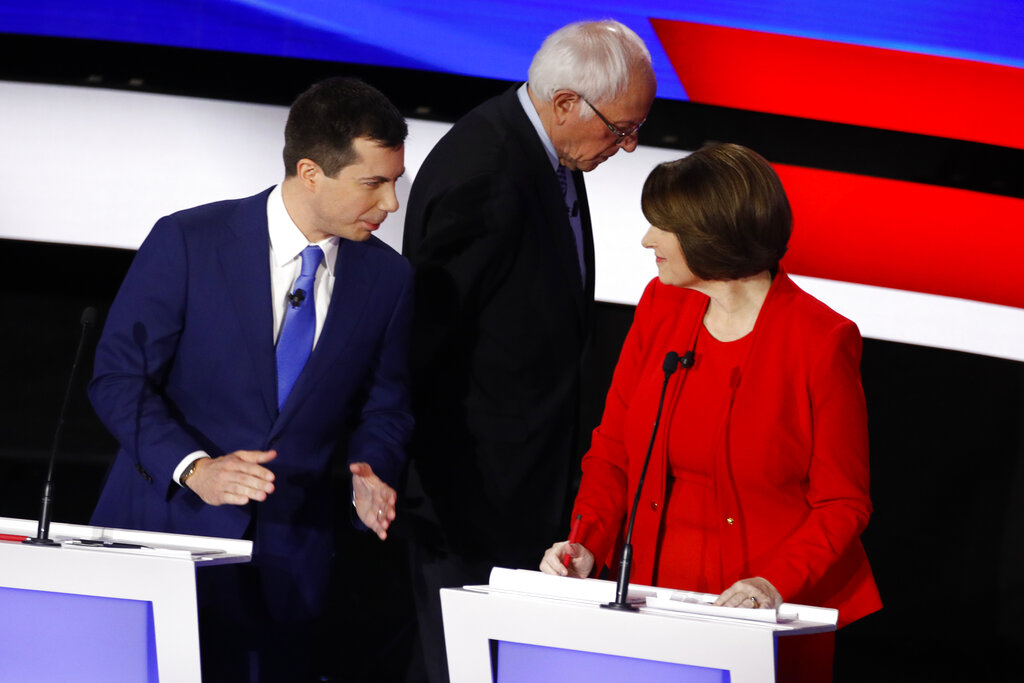
There were several notable moments in the debate.
2020 Watch: Messy primary finally meets election year
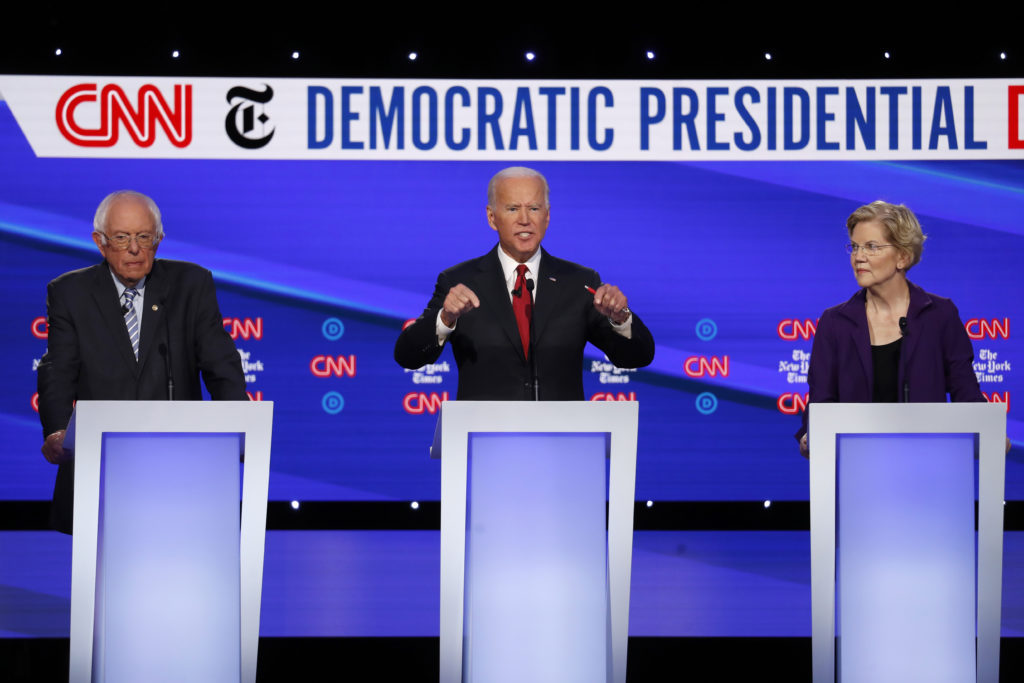
The presidential politics calendar turned to 2020 nearly a year ago. This week, the actual date catches up. What we’re watching as the preseason closes and election year opens: Days to Iowa caucuses: 35 Days to general election: 309 THE NARRATIVE The ups, downs and swerves of 2019 yielded a stable top slate. Former Vice President Joe Biden leads most national polls of Democratic primary voters, with Sens. Bernie Sanders of Vermont and Elizabeth Warren of Massachusetts within striking distance. Yet in the first caucus state of Iowa and the first primary state of New Hampshire, there’s a jumble of Biden, Sanders, Warren and Mayor Pete Buttigieg of South Bend, Indiana. At first glance, it’s a clean choice: Biden and Buttigieg hail from the center-left; Warren and Sanders come from the progressive left. Reality is more layered. All four have weaknesses within Democrats’ diverse electorate; each makes a different case for carrying the banner against President Donald Trump, who is now impeached but a near certainty to survive a Senate trial. If that’s not enough indecision, several wildcards — including two billionaires — still hope to scramble the contest. THE BIG QUESTIONS Money: Who can (sort of) compete with Michael Bloomberg’s wallet? The fourth-quarter fundraising period ends Tuesday. Warren and Sanders set the early curve for grassroots donations, outpacing Buttigieg and Biden, who tap traditional deep-pocketed contributors in addition to online donors. Now those small-donor juggernauts must compete with former New York Mayor Michael Bloomberg, who’s used a share of his estimated $50 billion personal fortune to blanket television and digital advertising and build an expansive staff in Super Tuesday states. For his rivals, it’s not so much about keeping up; Bloomberg can easily outspend every other campaign, including that of fellow billionaire Tom Steyer. But there’s only so much television time for sale, and if Warren and Sanders want to plow big money into Super Tuesday, especially the expensive television markets of California, they’ll need as much cash as possible ahead of time. Biden, meanwhile, has already secured his best fundraising quarter (a relative comparison for a candidate who’s lagged other top-tier contenders). The question is whether Biden’s “best” mollifies establishment Democrats who waved red flags when he reported having less than $9 million on hand at September’s end. Money, Part II: How long can Cory Booker keep going? The year-end deadline is critical for New Jersey Sen. Cory Booker as he reaches for relevance. The last of two African American candidates (along with former Massachusetts Gov. Deval Patrick), Booker made a do-or-die money appeal in September, and it worked. But it’ll take more than scraping by to fund the turnaround he envisions: a surprise finish in overwhelmingly white Iowa to kick-start a dramatic rise in more diverse primary states that follow (Barack Obama’s 2008 path). Campaigns that hit big fundraising numbers tend to leak that news before Federal Election Commission filings are due. Candidates with bad news tend to wait. So, it bears watching how Booker’s team plays it to start January. Is Amy Klobuchar being overlooked in Iowa? Those previously mentioned Iowa and New Hampshire jumbles omit Amy Klobuchar. But the Minnesota senator is plugging away in both states. She just hit her 99th Iowa county (that’s all of them), demonstrating her effort to use complex caucus rules that can reward candidates with a wide geographic footprint. Notably, Klobuchar’s strategy tracks Biden. Both aim for a more consistent appeal across 1,679 precincts than Warren, Sanders and Buttigieg muster on Feb. 3. The question becomes how many precincts give both Biden and Klobuchar the minimum 15 percent support required to count toward delegates. Anyone who doesn’t hit that viability mark drops from subsequent ballots, their backers going up for grabs. Biden’s Iowa hopes depend in part on picking up moderates on realignment votes (read: Klobuchar and Buttigieg supporters). If Klobuchar is as strong as she hopes to be, she could turn that strategy around on Biden, driving him below viability and attracting his supporters on later ballots. Biden returns to Iowa this week for another bus tour, though not as lengthy as his eight-day jaunt after Thanksgiving. Is Sanders a true contender this time? Sanders lost the 2016 nomination because of Hillary Clinton’s advantage among non-white Democrats. Since then, Sanders has deepened his ties among Latinos, African Americans and other non-whites. Warren and Buttigieg are still chasing that success. Sanders’ advisers believe the senator is well-positioned to challenge Biden among non-whites if he’s able to build early momentum in New Hampshire and Iowa, where Sanders will spend New Year’s Eve. If they’re right, that would open avenues to delegates Sanders didn’t get in 2016. Is Trump’s position improving? The president has never been popular judged in a vacuum. In 2016, he won GOP primaries with pluralities and lost the general election popular vote. As president, he’s never reached majority job approval in Gallup’s polling. But he’s still hovering in the 40s, not far from where his immediate predecessors were 11 months before winning second terms. Impeachment proceedings haven’t affected Trump’s standing. Meanwhile, the same Democratic-run House that impeached him approved his new North America trade pact. Top-line economic numbers shine, even if the on-ground reality is uneven. And Trump could be on the cusp of a peace deal in Afghanistan after the Taliban ruling council on Sunday agreed to a temporary cease-fire. As frenetic as Trump’s messaging is, he proved in 2016 that he relishes framing binary choices for voters, and he’s more than convinced he has a case in 2020. THE FINAL THOUGHT Most voters are just tuning into a presidential race that’s raged for a year. They’ll find a Democratic contest featuring stark options on policy and personality, but lacking an undisputed favorite. Candidates are navigating primary politics: dancing along the progressive-liberal-moderate spectrum and carefully choosing when to go after each other. At the same time, Trump dominates the 2020 narrative, a fact demonstrated most recently as Biden spent two days talking about whether he’d testify in a Senate trial on Trump’s removal from office.
Takeaways from the democratic presidential debate
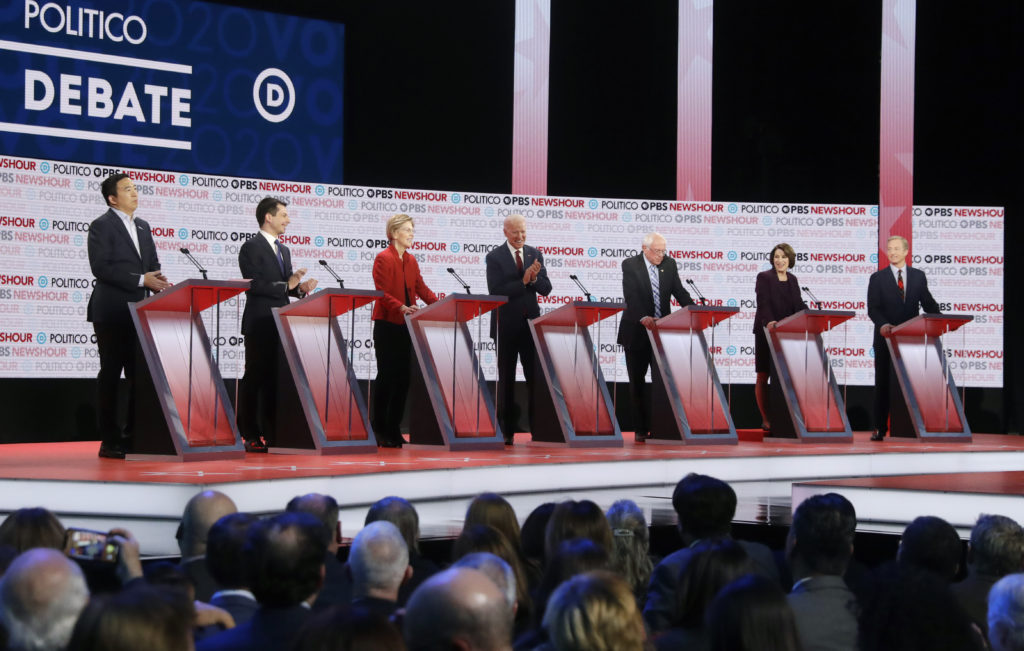
Democratic presidential candidates offered two very different debates during their final forum of 2019. In the first half, they spent much of their time making the case for their electability in a contest with President Donald Trump. The second half was filled with friction over money in politics, Afghanistan and experience. MONEY TALKED The candidates jousted cordially over the economy, climate change and foreign policy. But it was a wine cave that opened up the fault lines in the 2020 field. That wine cave, highlighted in a recent Associated Press story, is where Mayor Pete Buttigieg of South Bend, Indiana, recently held a big-dollar Napa Valley fundraiser, and Sen. Elizabeth Warren — who along with Sen. Bernie Sanders has eschewed fundraisers in favor of small-dollar grassroots donations — slammed him for it. “Billionaires in wine caves should not pick the next president of the United States,” Warren said. Buttigieg struck back, noting that he was the only person on the stage who was not a millionaire or billionaire. He said that if Warren donated to him he’d happily accept it even though she’s worth “ten times” what he is. He also added that Warren had only recently sworn off big money donations. “These purity tests shrink the stakes of the most important election,” Buttigieg snapped. It was an unusually sharp exchange between Warren and Buttigieg. The two have been sparring as Warren’s polling rise has stalled out and Buttigieg poached some of her support among college-educated whites. And Warren was not the only one going after Buttigieg. Sen. Amy Klobuchar of Minnesota hit him on another front, namely what she said was his lack of experience compared to her Senatorial colleagues on stage. Still, the divide is about more than Warren and Buttigieg. It’s about the direction of the party — whether it should become staunchly populist, anti-corporate and solely small-dollar funded, or rely on traditional donors, experience and ideology. IMPEACHMENT AS PROXY The first question in the debate was about impeachment. But the answer from the Democratic candidates was about electability. Most candidates had no answer to their party’s biggest challenge — getting Trump’s voters to abandon him over his conduct. Warren talked about one of her favorite themes, “corruption” in Washington. Sanders talked about having to convince voters Trump lied to them about helping the working class. Klobuchar, a former prosecutor, laid out the case against Trump as if she were giving the opening statement in his Senate trial. Buttigieg said the party can’t “give into that sense of hopelessness” that the GOP-controlled Senate will simply acquit Trump because Republican voters aren’t convinced. But Buttigieg didn’t provide any other hope. Only businessman Andrew Yang gave an explanation for why impeachment hasn’t changed minds. “We have to stop being obsessed about impeachment, which strikes many Americans like a ball game where you know what the score will be.” Instead, Yang said, the party has to grapple with the issues that got Trump elected — the loss of good jobs. BIDEN STEADY Former Vice President Joe Biden has held steady throughout the Democratic race as one of the top two or three candidates by almost any measure. He has done that with debate performances described as flat, uneven, and uninspired. He had a better night Thursday, even on a question about of one of his views that causes fellow Democrats to groan: that he can work with Republicans once he beats Trump in November. “If anyone has reason to be angry with the Republicans and not want to cooperate it’s me, the way they’ve attacked me, my son, my family,” Biden said, a reference to Trump’s push to investigate his son Hunter that led to the president’s impeachment. “I have no love. But the fact is we have to be able to get things done and when we can’t convince them, we go out and beat them.” Unlike others on the stage, he said pointedly that he doesn’t believe it’ll be impossible to ever work together with the other party. “If that’s the case,” Biden said, “we’re dead as a country.” He came close to trouble by initially saying he would not commit to a running for a second term, them quickly said that would be presumptuous to presume a first one. AMERICAN ROLE IN THE WORLD Is the greatest danger to America’s foreign interests and alliances coming from within the White House? Democratic presidential candidates faulted Trump on multiple fronts for his failure to lead in key disputes and areas of international friction, including in the Middle East and China. Buttigieg said Trump was “echoing the vocabulary” of dictators in his relentless attacks on the free press. Klobuchar said the president had “stood with dictators over innocents.” And Tom Steyer warned against isolating the U.S. from China, saying the two nations needed to work together on climate change. On Israel, Biden argued that Trump had played to fears and prejudices and stressed that a two-state solution was needed for peace to ever be achieved. The former vice president said Washington must rebuild alliances “which Trump has demolished.’” With China, “We have to be firm. We don’t have to go to war,” Biden said. “We have to be clear, “This is as far as you go, China,” he added. YANG’S PRO MOVES In June, Yang was a political punchline. During the first few Democratic debates, the entrepreneur, who has never before run for office, looked lost onstage, struggling to be heard over the din of nine other candidates. But on Thursday night, Yang looked like a pro. When the candidates debated complex foreign policy, Yang talked about his family in Hong Kong, the horror of China’s crackdown there and how to pressure them to respect human rights. When some candidates equivocated over whether nuclear energy should be used to combat climate change, Yang had the last word when he said: “We need to have everything on the table in a crisis situation.” And when a moderator noted that Yang was
Kamala Harris ends campaign for presidential bid, citing lack of funding
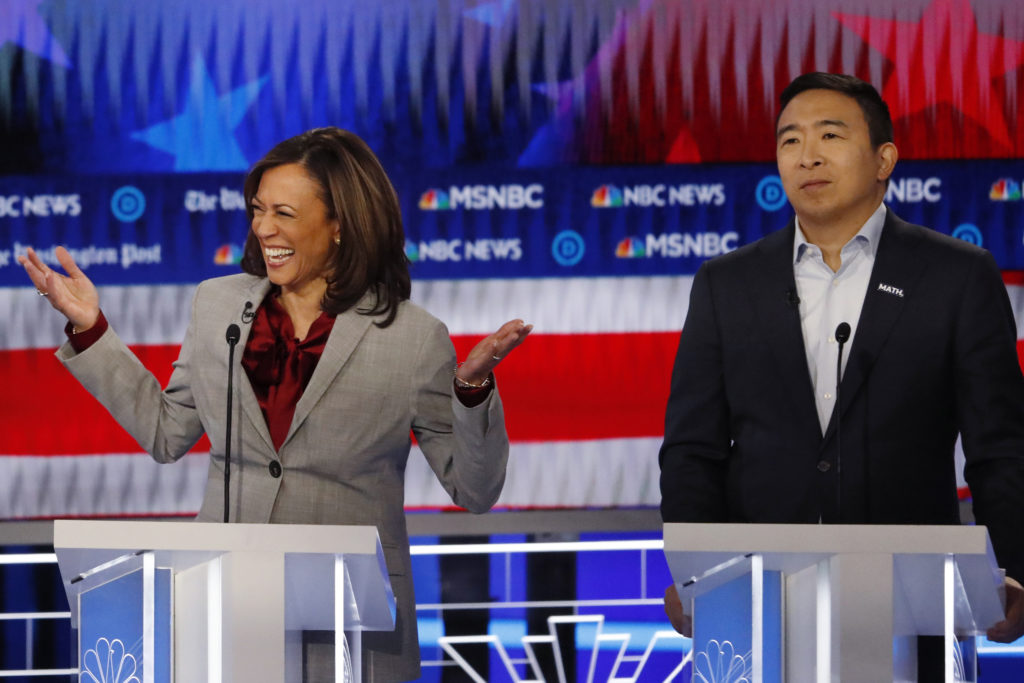
Sen. Kamala Harris told supporters on Tuesday that she was ending her bid for the 2020 Democratic presidential nomination, an abrupt close to a candidacy that held historic potential. “I’ve taken stock and looked at this from every angle, and over the last few days have come to one of the hardest decisions of my life,” the California Democrat said. “My campaign for president simply doesn’t have the financial resources we need to continue.” A senior campaign aide said Harris made the decision Monday after discussing the path forward with family and other top officials over the Thanksgiving holiday. Her withdrawal marked a dramatic fall for a candidate who showed extraordinary promise in her bid to become the first black female president. Harris launched her campaign in front of 20,000 people on a chilly January day in Oakland, California. The first woman and first black attorney general and U.S. senator in California’s history, she was widely viewed as a candidate poised to excite the multiracial coalition of voters that sent Barack Obama to the White House. Her departure erodes the diversity of the Democratic field, which is dominated at the moment by a top tier that is white and mostly male. “She was an important voice in the race, out before others who raised less and were less electable. It’s a loss not to have her voice in the race,” said Aimee Allison, who leads She the People, a group that promotes women of color. Harris ultimately could not craft a message that resonated with voters or secure the money to continue her run. She raised an impressive $12 million in the first three months of her campaign and quickly locked down major endorsements meant to show her dominance in her home state, which offers the biggest delegate haul in the Democratic primary contest. But as the field grew, Harris’ fundraising remained flat; she was unable to attract the type of attention being showered on Pete Buttigieg by traditional donors or the grassroots firepower that drove tens of millions of dollars to Elizabeth Warren and Bernie Sanders. In her note to supporters, Harris lamented the role of money in politics and, without naming them, took a shot at billionaires Tom Steyer and Michael Bloomberg, who are funding their own presidential bids. “I’m not a billionaire,” she said. “I can’t fund my own campaign. And as the campaign has gone on, it’s become harder and harder to raise the money we need to compete.” Harris suffered from what allies and critics viewed as an inconsistent pitch to voters. Her slogan “For the people” referenced her career as a prosecutor, a record that was viewed skeptically by the party’s most progressive voters. Through the summer, she focused on pocketbook issues and her “3 a.m. agenda,” a message that never seemed to resonate with voters. By the fall, she had returned to her courtroom roots with the refrain that “justice is on the ballot,” both a cry for economic and social justice as well as her call that she could “prosecute the case” against a “criminal” president. At times, she was tripped up by confusing policy positions; particularly on health care. After suggesting she would eliminate private insurance in favor of a fully government-run system, Harris eventually rolled out a health care plan that preserves a role for private insurance. Stumbles, often of the campaign’s making, continued to dog Harris into the winter, stymieing her ability to capitalize on solid moments. Harris kicked off November with a well-received speech at a massive Iowa dinner, just a day after her campaign announced it would fire staff at its Baltimore headquarters and was moving some people from other early states to Iowa. Her message was regularly overshadowed by campaign aides and allies sharing grievances with the news media. Several top aides decamped for other campaigns, one leaving a blistering resignation letter. “Because we have refused to confront our mistakes, foster an environment of critical thinking and honest feedback, or trust the expertise of talented staff, we find ourselves making the same unforced errors over and over,” Kelly Mehlenbacher wrote in her letter, obtained by The New York Times. Mehlenbacher now works for businessman Bloomberg’s campaign. With Harris’ exit, 15 Democrats remain in the race for the nomination. Several praised her on Tuesday. Former Vice President Joe Biden, who had a memorable debate stage tussle with Harris this summer, called the senator a “solid person, loaded with talent.” Vermont Sen. Bernie Sanders commended Harris for “running a spirited and issue-oriented campaign.” New Jersey Sen. Cory Booker, one of two black candidates still in the campaign, called Harris a “trailblazer.” Harris anchored her campaign in the powerful legacy of pioneering African Americans. Her campaign launch on the Martin Luther King Jr. holiday included a nod to Shirley Chisholm, the New York congresswoman who sought the Democratic Party’s presidential nomination 47 years ago earlier. One of her first stops as a candidate was to Howard University, the historically black college that she attended as an undergraduate. She spent much of her early campaign focusing on South Carolina, which hosts the first Southern primary and has a significant African American population. But Harris struggled to chip away at Biden’s deep advantage with black voters who are critical to winning the Democratic nomination. Harris and her aides believe she faced an uphill battle — and unfair expectations for perfection — from the start as a woman of color. Her campaign speech included a line about what Harris called the “donkey in the room,” a reference to the thought that Americans wouldn’t elect a woman of color. Harris often suggested it was criticism she faced in her other campaigns — all of which she won. Her departure from the presidential race marks her first defeat as a political candidate. Associated Press writers Steve Peoples in New York and Bill Barrow in Mason City, Iowa, contributed to this report. By Kathleen Ronayne and Nicholas Riccardi Associated Press. Republished with the Permission of the Associated Press.
Democrats aim to catch up to Donald Trump’s 2020 cash advantage
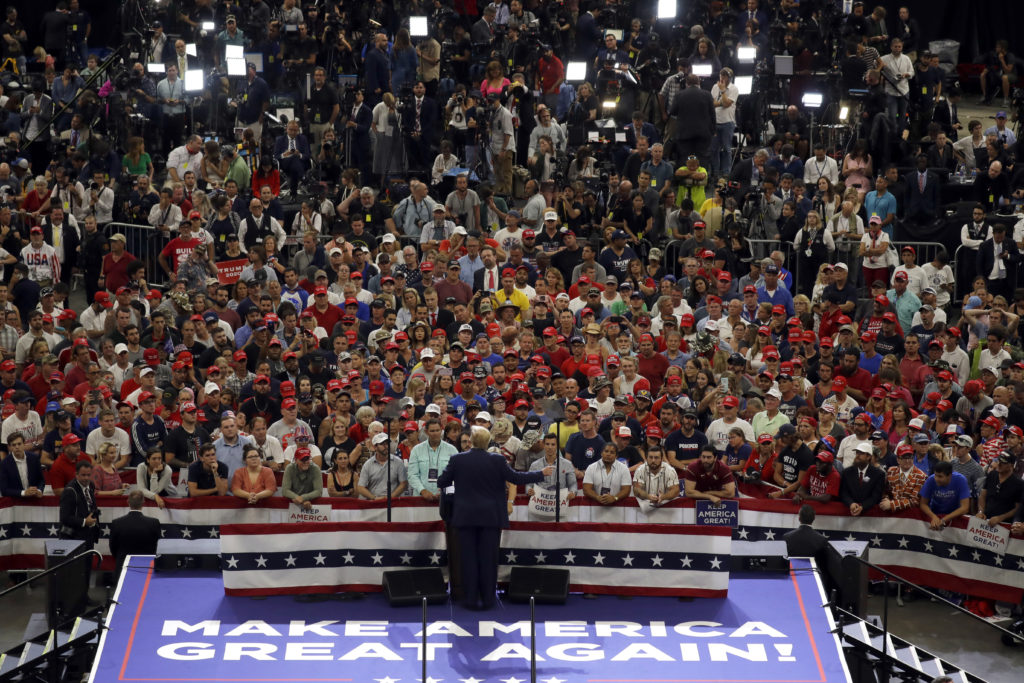
Democrats are narrowing President Donald Trump’s early spending advantage, with two billionaire White House hopefuls joining established party groups to target the president in key battleground states that are likely to determine the outcome of next year’s election. Priorities USA and American Bridge, two of the leading Democratic outside groups, are ramping up operations. The organization ACRONYM recently pledged to spend $75 million. And former New York Mayor Michael Bloomberg has pledged to spend $100 million on ads targeting Trump, while California billionaire Tom Steyer promised $50 million. The billionaires have come under fire from some Democratic rivals for trying to buy the presidency. But the influx of cash is soothing anxiety in some corners of the party that Trump, who has repeatedly broken fundraising records, was off to an unprecedented early start in the 2020 advertising wars. Some had argued that the Democrats’ overwhelming focus on the sprawling presidential primary field allowed the president to burnish a reelection narrative unchallenged ahead of what is expected to be an exceptionally close election. “It’s safe to say the gap is closing,” said David Brock, who leads several Democratic groups, including American Bridge. “People can breathe a little bit of a sigh of relief that there is a major Democratic response now and that Trump’s spending will be met.” The money has put Democrats on firmer footing in states such as Florida, Wisconsin, Michigan, Pennsylvania, North Carolina and Arizona, which will be key to victory in 2020. But it’s unclear how long it will last. Trump has built a massive money-raising machine that has fused a traditional network of big-dollar Republican donors with a sophisticated digital operation that has raked in small contributions from rank-and-file supporters. Sitting presidents have long used their office to draw a spotlight and rake in money while the party out of power fights its way through a primary. Trump, however, never really ceased campaigning and has been running for reelection essentially since taking office, giving him a far earlier head start. For months, his campaign has spent comparatively little on digital advertising in battlegrounds, while dumping money in population-dense states like New York, California and Texas, which are rich in potential donors but won’t decide the outcome of the election. Yet the money he is raising there will enable him to flood important states with advertising early next year. Over the summer, the lack of spending fueled worries — and some snipping — that not enough was being done counter Trump. “We welcome other efforts. But we also need to remember that Trump has yet to start spending money big in swing states,” said Patrick McHugh, the executive director of Priorities USA, which spent roughly $200 million during the 2016 election. “Matching dollar for dollar now would come at the detriment of matching his spending online and on television once he begins spending in earnest in states that matter.” While the economy overall has performed well during Trump’s presidency, Priorities is driving a message that aims to move beyond the toplines and connect peoples’ frustration with their own financial well-being directly to the president. The group has yet to say how much it will spend on the 2020 contest, but it has outspent Trump $6.5 million to $2.2 million since July on Facebook and Google in Florida, Wisconsin, Pennsylvania and Michigan. American Bridge, which has traditionally focused on conducting opposition research, has launched a $50 million radio, TV and digital advertising campaign in the same states that is geared toward rural and exurban voters in about 80 counties that Barack Obama carried but later switched to Trump. “It’s a margins game that we’re playing, but we think that we can get enough people to defect,” Brock said. The group ACRONYM will spend $75 million between now and Election Day on online advertising highlighting the “broken promises” and perceived corruption of the Trump administration. Recent ads have attacked Trump for failing to deliver on his pledge to bring manufacturing jobs back to the U.S. by highlighting the decision by General Motors to close its Lordstown, Ohio, plant. Organizations financed by Steyer, meanwhile, are working to register young people to vote. That includes a door-knocking campaign, as well as digital advertising by NextGen America, where he was president until stepping down over the summer to launch his campaign. An early salvo of ads run by Bloomberg accuses Trump of not caring about health care and questions his temperament and social media use. One recent Facebook ad captioned “What did he tweet today?” features an image of a man facepalming his forehead. “The president is out making his case. And we’ve got to make sure that he doesn’t make it unrebutted,” said Bloomberg chief adviser Howard Wolfson. Since Trump took office, many Democrats have celebrated an outpouring of small-dollar online contributions from an energized grassroots base. Some progressives have touted this success as a viable alternative to the party’s historic reliance on wealthy donors, whom they criticize for having outsized influence. But the reality is both streams of money will be needed against Trump. Particularly before the nominee is chosen, outside groups and the Democratic National Committee — they depend on major donors to finance their efforts — will be handling the lion’s share of general-election work. During a recent DNC fundraiser headlined by Obama, tech CEO and philanthropist Amy Rao fired up a well-heeled crowd of about 100 who gathered at the home of megadonor Karla Jurvetson, high in the hills overlooking Silicon Valley. Defeating Trump, she said, was so important that they should be digging in to their “retirement and what you thought you were going to leave to your children” to support the party regardless of who becomes the nominee. She encouraged the crowd to give “so much that it actually hurts.” “It’s only money. You’ll never miss it,” Rao said. “The biggest gift you can give to the generations that follow us is to make sure this president loses in 2020.” AP National Political Writer Steve Peoples in New
Takeaways from the democratic presidential debate
Democrats spent more time making the case for their ability to beat President Donald Trump than trying to defeat each other in their fifth debate Wednesday night. Civil in tone, mostly cautious in approach, the forum did little to reorder the field and may have given encouragement to two new entrants into the race, Mike Bloomberg and Deval Patrick. Here are some key takeaways. IMPEACHMENT CLOUD HOVERS The impeachment inquiry of President Donald Trump took up much of the oxygen early in the debate. The questions about impeachment did little to create much separation in a field that universally condemns the president. The candidates tried mightily to pivot to their agenda. Massachusetts Sen. Elizabeth Warren talked about how a major Trump donor became the ambassador at the heart of the Ukraine scandal, and reiterated her vow to not reward ambassadorships to donors. Former Vice President Joe Biden tried to tout the investigation as a measure of how much Trump fears his candidacy. Impeachment is potentially perilous to the Democratic candidates for two reasons. A Senate trial may trap a good chunk of the field in Washington just as early states vote in February. It also highlights a challenge for Democrats since Trump entered the presidential race in 2015 — shifting the conversation from Trump’s serial controversies to their own agenda. Vermont Sen. Bernie Sanders warned, “We cannot simply be consumed by Donald Trump, because if you are you’re going to lose the election.” OBAMA COALITION Perhaps more than in any debate so far, Democrats explicitly acknowledged the importance of black and other minority voters. California Sen. Kamala Harris said repeatedly that Democrats must reassemble “the Obama coalition” to defeat Trump. Harris, one of three black candidates running for the nomination, highlighted black women especially, arguing that her experiences make her an ideal nominee. Another black candidate, New Jersey Sen. Cory Booker, added: “I’ve had a lot of experience with black voters. … I’ve been one since I was 18.” Neither Booker nor Harris, though, has been able to parlay life experiences into strong support in the primary, in no small part because of Biden’s strong standing in the black community. Biden’s standing is also a barrier to other white candidates, including South Bend, Indiana, Mayor Pete Buttigieg, who is surging in overwhelmingly white Iowa but struggling badly with black voters in Southern states like South Carolina that have proven critical to previous Democratic nominees. Buttigieg acknowledged as much, saying he welcomes “the challenge of connecting with black voters in America who don’t yet know me.” The exchanges show that candidates seemingly accept the proposition that the eventual nominee will have to put together a racially diverse coalition to win, and that those whose bases remain overwhelmingly white (or just too small altogether) aren’t likely to be the nominee. CLIMATE CRISIS GETS AIR The climate crisis, which Democratic voters cite as a top concern, finally gained at least some attention. There were flashes of the debate Wednesday night, as billionaire environmental activist Tom Steyer swiped at Biden by suggesting the former vice president wants an inadequate, piecemeal approach to the crisis. Biden hit right back, reminding Steyer that he sponsored climate legislation as a senator in the 1980s while Steyer built his fortune in part on investments in coal. Buttigieg turned a question about the effects of Trump’s policies on farmers into a call for the U.S. agriculture sector to become a key piece of an emissions-free economy. But those details seem less important than the overall exchange — or lack thereof. Perhaps it’s the complexities of the policies involved. Or perhaps it’s just the politics. Whatever the case, the remaining field simply doesn’t seem comfortable or willing to push climate policy to the forefront, and debate moderators don’t either. HEALTH CARE GROUNDHOG DAY Before every debate, Democratic presidential campaigns aides lay out nuanced, focused arguments their candidates surely will make on the stage. And every debate seems to evolve quickly into an argument over health care. So it was again. Within minutes of the start, Warren found herself on the defensive as she explained she still supports a single-payer government run insurance system — “Medicare for All” — despite her recent modified proposal to get there in phases. Not to be outdone, Sanders reminded people that he’s the original Senate sponsor of the “Medicare for All” bill that animates progressives. “I wrote the damn bill,” he quipped. Again. Biden jumped in to remind his more liberal rivals that their ideas would not pass in Congress. The former vice president touted his commitment to adding a government insurance plan to existing Affordable Care Act exchanges that now sell private insurance policies. The debate highlights a fundamental tension for candidates: Democratic voters identify health care as their top domestic policy concern, but they also tell pollsters their top political priority in the primary campaign is finding a nominee who can defeat Trump. The top contenders did nothing to settle the argument Wednesday, instead offering evidence that the ideological tug-of-war will remain until someone wins enough delegates to claim the nomination. DID YOU HEAR THE ONE … The debate was so genial that some of the most memorable moments were the candidates’ well-rehearsed jokes. Asked what he’d say to Russian President Vladimir Putin if he’s elected to the White House, technology entrepreneur Andrew Yang said his first words would be, “Sorry I beat your guy.” Minnesota Sen. Amy Klobuchar drew laughs for an often-repeated anecdote about how she set a record by raising $17,000 from ex-boyfriends during her first campaign. She also pushed back at fears of a female candidacy by saying, “If you think a woman can’t beat Donald Trump, Nancy Pelosi does it every day.” Booker, criticizing Biden for not agreeing to legalize marijuana, said, “I thought you might have been high when you said it.” And Harris may have issued the zinger of the night at the president when discussing his nuclear negotiations with North Korea: “Donald Trump got
7 questions heading into the 2020 democratic debate
New uncertainty hangs over the Democratic presidential primary as 10 candidates meet on the debate stage once again. No longer is there a clear front-runner. The fight for African American voters is raging. And there are growing concerns that impeachment may become a distraction from the primary. Those issues and more will play out Wednesday night when the Democratic Party’s top 10 face off in Atlanta just 75 days before primary voting begins. Seven big questions heading into the debate, to be carried on MSNBC: WHO IS THE FRONT-RUNNER? Turbulent polling across the early voting states has created a murky picture of the top tier of the 2020 class. As much as Joe Biden is still a front-runner, so are Elizabeth Warren, Pete Buttigieg and Bernie Sanders. The question is who gets the front-runner treatment in Wednesday’s debate. Warren was under near-constant attack last month as a new leader. Will Warren continue to face the heat, or will the ascendant Buttigieg or weakening Biden take more hits? HOW WILL OBAMA PLAY? Former President Barack Obama, the most popular Democrat in America, inserted himself into the 2020 primary in recent days by warning candidates against moving too far to the left. His comments create a challenge for Warren and Sanders and an opening for moderates Buttigieg, Biden and Amy Klobuchar to attack. At the same time, Obama’s involvement offers a powerful reminder of the massive role African Americans will play in the presidential nomination process. As we know, all candidates not named Biden have serious work to do when it comes to winning over the black vote. Race and Obama’s legacy could play a major role in shaping the action. WHAT SAY YOU, IMPEACHMENT JURY? They have all come out in favor of impeachment — some more aggressively than others — but it’s noteworthy that five of the 10 Democrats onstage will serve as jurors in the Senate impeachment trial should the House vote to impeach President Donald Trump. It’s a complicated topic for Democrats. Some senators worry that a prospective impeachment trial will interfere with their ability to court voters early next year. Others fear that impeachment could hurt their party’s more vulnerable candidates in down-ballot elections next year. Either way, what the prospective jurors do or don’t say on the debate stage could be relevant if and when the Senate holds an impeachment trial, which is increasingly likely. WILL THEY BASH THE BILLIONAIRES? Never before has wealth been under such aggressive attack in a presidential primary election. And with one billionaire onstage and another likely to join the field in the coming days, the billionaire bashing could reach new heights. Tom Steyer has largely gone under the radar, but the even wealthier Michael Bloomberg has generated tremendous buzz as he steps toward a run of his own. Of the two, only Steyer will be onstage, but expect Bloomberg’s shadow in particular to generate passionate arguments about wealth and the role of money in politics. WILL SOMEONE STAND UP FOR THE ESTABLISHMENT? Biden continues to be the favorite of many establishment Democrats, but his underwhelming candidacy has created an opening for another pragmatic-minded Democrat to step up. That’s why former Massachusetts Gov. Deval Patrick and Bloomberg are moving into the race. Buttigieg stepped aggressively into the establishment lane in the last debate, but many donors and elected officials remain skeptical of the 37-year-old small-city mayor’s chances. The opportunity is there for lower-tier candidates including Kamala Harris, Klobuchar and Steyer. DOES SHE HAVE A PLAN FOR THAT? No single issue has dominated the initial Democratic primary debates more than health care, and it’s safe to assume that will be the case again Wednesday night. And no one has more riding on that specific debate than Warren, who hurt herself last month by stumbling through questions about the cost of her single-payer health care plan. Given that policy specifics make up the backbone of her candidacy, she can’t afford another underwhelming performance on the defining policy debate of the primary season. Expect the policy-minded senator to have a new strategy this time around. CAN THEY SAVE THEMSELVES? New Jersey Sen. Cory Booker, Hawaii Rep. Tulsi Gabbard, businessman Andrew Yang and Steyer are under enormous pressure to break out given their status as the only candidates onstage who haven’t yet qualified for the December debate. They likely won’t have the same number of opportunities to speak as their higher-polling rivals, but these are dire times for the underdogs. They need to do something if they expect to stay relevant in the 2020 conversation. By Steve Peoples AP National Political Writer. Catch up on the 2020 election campaign with AP experts on our weekly politics podcast, “Ground Game.” Republished with the permission of the Associated Press.
Climate change champion and Donald Trump impeachment advocate Tom Steyer launches 2020 campaign
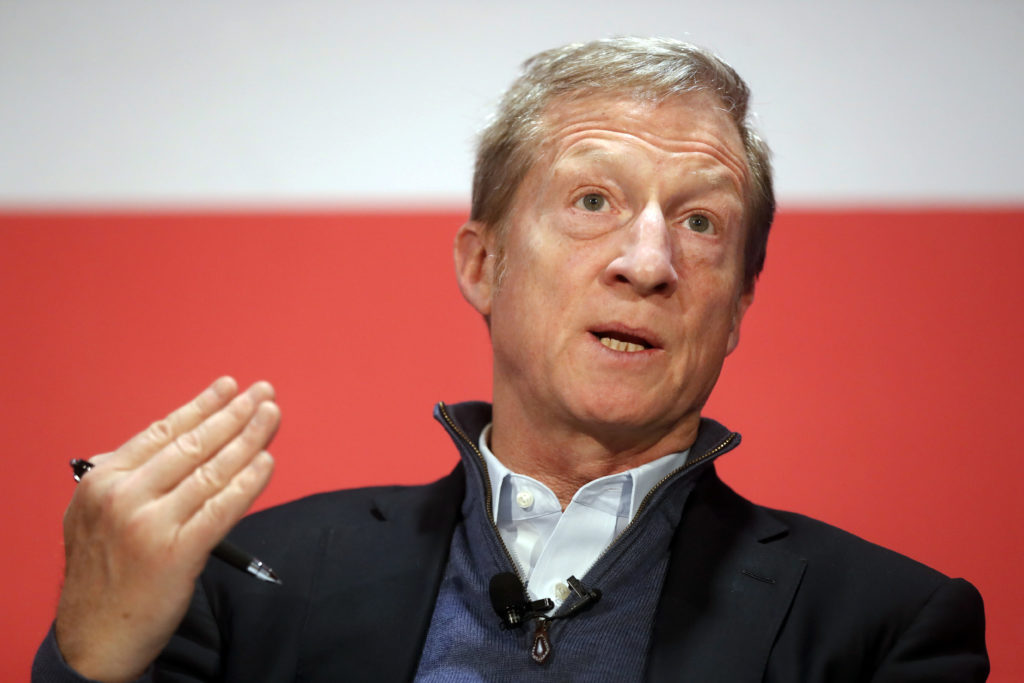
Tom Steyer, the billionaire investor and activist, said Tuesday he’s joining the race for the Democratic presidential nomination, reversing course after deciding earlier this year that he would forgo a run. Steyer, 62, is one of the most visible and deep-pocketed liberals advocating for President Donald Trump’s impeachment. He surprised many Democrats in January when he traveled to Iowa, home to the nation’s first presidential caucus, to declare that he would focus entirely on the impeachment effort instead of seeking the White House. Since then, Steyer, of California, has said he’s grown frustrated at the pace at which the Democratic-controlled House is approaching Trump. Roughly half of the Democratic presidential contenders, seeking to appeal to the party’s progressive base, have called on House Democrats to start an impeachment inquiry. But Speaker Nancy Pelosi has resisted, warning that Democrats need to collect the facts and that a rush to impeachment could ultimately help Trump politically. Despite becoming a national voice on the impeachment issue, Steyer made no mention of it in his campaign announcement. Instead, he said his campaign will focus on reducing the influence of corporations in politics. He also plans to target climate change, which is the focus of the Steyer-backed advocacy group NextGen America. Washington Gov. Jay Inslee, another Democratic presidential contender, also has made climate change the central issue of his campaign. “The other Democratic candidates for President have many great ideas that will absolutely move our country forward, but we won’t be able to get any of those done until we end the hostile corporate takeover of our democracy,” Steyer said in a statement. Citing issues including climate change and the opioid crisis, Steyer said that in nearly every “major intractable problem, at the back of it, you see a big money interest for whom stopping progress, stopping justice is really important to their bottom line.” “Americans are deeply disappointed and hurt by the way they’re treated by what they see as the power elite in Washington, D.C., and that goes across party lines and it goes across democracy,” Steyer said in a video his campaign was releasing Tuesday. “We’ve got to take the corporate control out of our politics.” As he seeks the presidency, Steyer is resigning his leadership positions in both NextGen America and Need to Impeach. He says he has committed more than $50 million through 2020 to the two organizations. Steyer joins the race three weeks before the next presidential debates , and he could struggle to get a spot on the stage. He likely won’t meet polling requirements to participate but could clear a fundraising threshold.There are 20 spots at the debate for a field that includes two dozen candidates . If more than 20 people qualify, the Democratic National Committee will hold a tiebreaker to determine who gets on stage. Steyer also could potentially face challenges hiring staff. Several of his former NextGen America staffers have joined Inslee’s campaign. A former Steyer spokeswoman, Aleigha Cavalier, recently joined Beto O’Rourke’s 2020 campaign. The sprawling Democratic field is in flux as Steyer becomes the newest contender. Some lower-tier candidates are facing increasingly dire prospects if they don’t secure spots on the debate stage this fall.California Rep. Eric Swalwell exited the race on Monday , and former Colorado Gov. John Hickenlooper’s campaign has undergone a shake-up after his debate performance last month, with some staffers encouraging him to consider a Senate campaign instead. This is not the first time Steyer has considered running for office. He eyed bids for governor of California in 2018 and the Senate in 2016. His net worth, according to Forbes, is estimated at $1.6 billion. Republished with the permission of the Associated Press.
Hillary Clinton has more cash; Donald Trump forgives loans
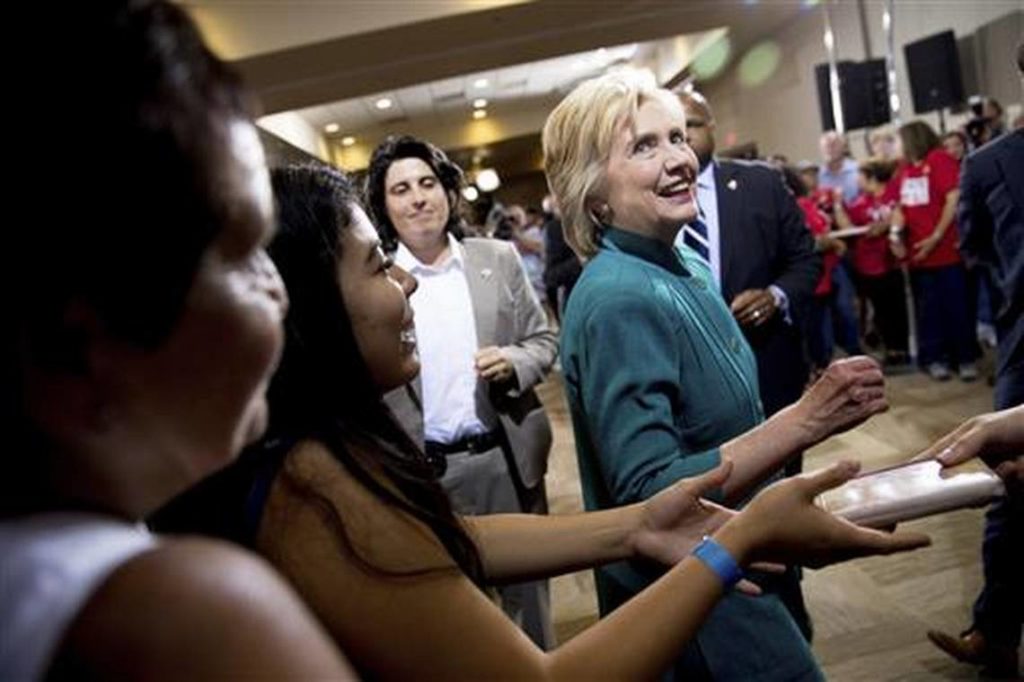
Democratic presidential candidate Hillary Clinton and her party entered July with nearly $11 million more on hand than her Republican counterpart’s operations, a strong showing of fundraising as both campaigns dive into the general election. Republican nominee Donald Trump also zeroed-out more than $47 million in personal loans he’s made to his own campaign since last year. Trump and the Republican Party, which officially selected Trump as its White House contender Tuesday, had $41 million cash on hand compared with Clinton and the Democrats’ $52 million. New campaign finance reports released Wednesday reveal the state of the 2016 money race as candidates and their supportive groups turn their attention to the November election. Fundraising has historically been a key metric in a campaign’s financial health, with funds paying campaign staffers and pricey TV ads. Despite being outraised by Clinton, Trump had more appeal among small donors. He raised more than $12.1 million from contributors giving $200 or less, since making his first-ever appeal for online contributions on June 21. That small-donor harvest was about double Clinton’s, despite Trump’s late start. Trump’s haul comes after a disappointing May report, during which the billionaire’s campaign finished with only $1.3 million to spend. With Trump and Clinton now becoming the official nominees, they’ll be able to make use not only of their campaign funds but also much of the money raised by their respective parties. On the GOP side, the Republican Party made up about half — or roughly $21 million — of the available cash on hand. For the Democrats, Clinton’s own fundraising accounted for most of the money left in the bank at the beginning of July. She had $44 million to spend. Clinton is expected to be formally nominated next week at the Democratic National Convention in Philadelphia. As with the 2012 election, “super” political action committees are adding to the financial might of both candidates. Outside political groups backing Clinton reported a money advantage over similar committees behind Trump. Priorities USA, the main super PAC helping Clinton, had more than $40 million in the bank at the beginning of July after spending nearly $24 million last month, the bulk on advertising targeted at swing-state voters. It received $1 million each from the National Education Association teachers union and Working for Working Americans, the super PAC of the United Brotherhood of Carpenters and Joiners. On the GOP side, the National Rifle Association’s political fund, which has been airing ads backing Trump and opposing Clinton, reported $13 million cash on hand at the beginning of July after raising $1.3 million last month. The NRA group also gave $60,000 to the Republican Party last month, including $45,000 for its convention in Cleveland this week. Rebuilding America Now, a super PAC supporting Trump, raised about $2.2 million in June, nearly all of which came from real estate developer Geoffrey H. Palmer. The majority of that money, about $1.4 million, went toward television ads attacking Clinton. Great America PAC, another group airing ads supporting Trump, brought in about $2.6 million in total. Make America Number 1 reported about $1.1 million in cash on hand at the beginning of this month, but it took in only $97.86 in revenue — a $25 donation and $72.86 in bank interest. The group was formerly a super PAC backing Texas GOP Sen. Ted Cruz‘s presidential bid, and also benefited from nearly $14 million in contributions from hedge fund billionaire Robert Mercer. Conservative-leaning American Crossroads received its biggest single donation last month, $1 million, from a trust linked to Joseph Craft of Tulsa, Oklahoma. Craft is the president and chief executive of Alliance Resource Management GP LLC, which oversees coal production. Democratic donor Tom Steyer, a former hedge-fund manager and climate-change activist, poured $7 million into the coffers of the Clinton-aligned NextGen Climate Action Committee. So far this election cycle, Steyer has given $18 million to the group. NextGen separately reported more than $9.4 million left to spend. Super PACs like Priorities USA and American Crossroads benefit from the 2010 U.S. Supreme Court decision in the Citizens United case. The decision allowed corporations and unions to contribute in unlimited ways to political races, so long as that money comes through super PACs that are not directly coordinated with the candidates. ___ Keep track on how much Clinton and Trump are spending on television advertising, and where they’re spending it, via AP’s interactive ad tracker. https://elections.ap.org/content/ad-spending ___ Republished with permission of the Associated Press.
Presidential Primary Brief: 407 days until Election Day
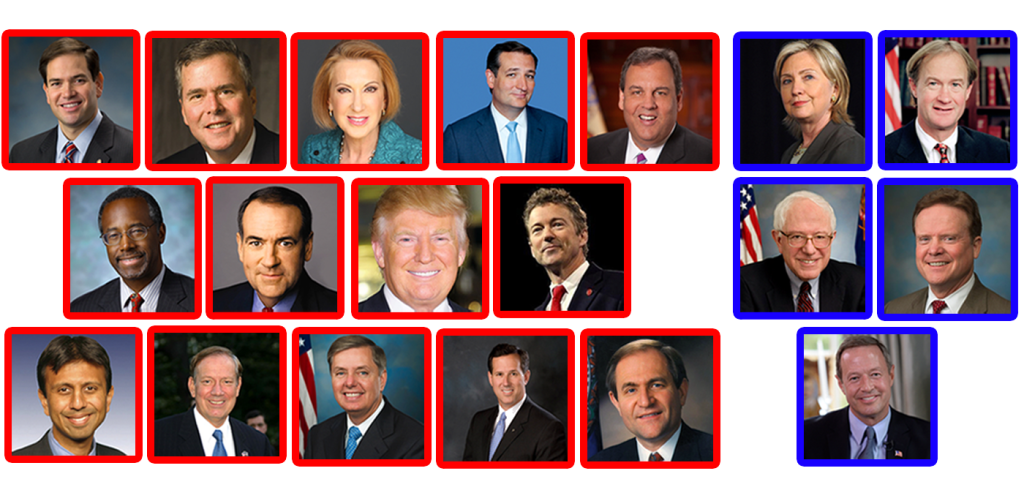
153 days until AL Presidential Primary 407 days until Election Day Convention Dates: Republican July 18-21 2016, Democratic July 25-28 2016 Weekly Headlines: 2016 debate calendar set Scott Walker drops out of 2016 presidential race Poll: Carson ties Trump; Biden draws from Clinton Press Clips: John Boehner’s resignation spells trouble for Jeb Bush (CNN 9/25/15) As if Jeb Bush needed another problem. House Speaker John Boehner’s abrupt resignation Friday — after an insurrection by grassroots activists infuriated at the failure of Washington Republicans to thwart President Barack Obama — was another bad omen for a campaign wilting amid anti-‐establishment fury. In the 2016 presidential race, outsiders are in, insiders are out and the messy power struggle that is splintering the GOP is going to make winning the nomination — and then capturing the White House — very tough for a party standard bearer like Bush. Billionaire Steyer calls for more Democratic debates (Politico 9/25/15) Billionaire Democratic donor Tom Steyer on Friday afternoon called on the party to add another debate focused on climate change and clean energy, adding his voice to a pitched disagreement over the number of Democratic debates. Steyer, an environmentalist who is one of the party’s major financiers and who already hosted a fundraiser for Hillary Clinton, said he wants the debate to occur before the Iowa caucuses in February. Donald Trump promises top of the line national security team (CBS News 9/22/15) Republican presidential frontrunner Donald Trump said on Monday that he’ll soon roll out a national security team that will be “top of the line.” “We’re going to be announcing something very soon,” Trump said Monday to conservative radio host Hugh Hewitt. “So many great national security people, including generals, have come to us and called us — and at the top level — and they want to be involved. And I think they like what I say about other things, also. But they want to be involved, and we have a great team in place, or shortly will be in place.” Third GOP debate sets off wave of anxiety (Politico 9/27/15) The uncertain terms of the next Republican debate are setting off a wave of anxiety among middle and bottom tier campaigns, with several lashing out at the Republican National Committee for failing to provide clarity on how many candidates will appear on stage. The campaigns fear the entry criteria for the Oct. 28 debate is being designed to reduce the number of candidates on stage for the third primetime debate — a life-or-death matter for White House hopefuls on the bubble. Biden backers seeking staffers for White House bid (US News 9/25/15) Advisers to Joe Biden are attempting to enlist staffers for a potential 2016 presidential campaign – the latest sign the vice president is inching closer to entering the race. A Democratic operative tells U.S. News he was approached this week about working for Biden if he pulled the trigger on a run. The operative also says Biden has already secured a fundraising consulting firm in order to quickly ramp up financing following a possible announcement. State Dept. to send Benghazi committee nearly 1,000 Clinton emails (Politico 9/25/15) The State Department announced Friday that it is sending the House Benghazi committee nearly 1,000 emails from Hillary Clinton’s private account — a batch three times larger than the set of Clinton messages her former agency sent to Capitol Hill back in May. A senior State Department official said the decision to provide the new set of about 925 emails is linked to Clinton’s expected testimony to the panel next month and to a clearer understanding by State officials that Congressional investigators want all Libya-‐related records, not just those involving security issues related to the deadly 2012 attack on U.S. facilities in Benghazi. Presidential super PACs push campaign limits (USA Today 9/22/15) When Donald Trump slammed Carly Fiorina’s looks recently, the response was swift: an online video that extols her face and that of other Republican women. The rebuke, however, didn’t come from Fiorina’s campaign, Carly for President. Instead, the video was the work of CARLY for America, a super PAC that has raised more than double Fiorina’s campaign haul but is barred from coordinating its spending with Fiorina.
Hillary Clinton aims to raise just-right amount for ’16 campaign

The stars are out to raise money for Hillary Rodham Clinton: Lady Gaga and Tony Bennett at the Plaza Hotel, Jon Bon Jovi at home in Jersey. So, too, are the Democratic Party’s wealthiest donors, from a Facebook co-founder to the heiress of a brewing fortune. Yet even as Clinton picks up the pace of fundraising this month, the front-runner for her party’s presidential nomination is holding back in some ways — a “just enough” strategy that her supporters say will pay off over time. The goal when she files her first fundraising report next month is to post a number that reassures Democrats she will have the resources to compete with the eventual Republican nominee, but doesn’t chase away the small-dollar donors who would make up her strongest base of support in the general election. “Her approach has been smart, disciplined and focused on the long-term,” said Chris Lehane, a Democratic strategist who worked with hedge fund billionaire Tom Steyer on one of Clinton’s first fundraisers this year. Lehane said the 100-person reception sold out within 24 hours. “They easily could have put on a far bigger event of 1,000 people or more.” Clinton’s supporters have tried to tamp down the expectations for the fundraising totals her campaign will disclose next month, when she and the other declared candidates for president will report how much they have raised through the end of June. Unlike in 2008, Clinton is collecting money only for the primary contest, an amount capped at $2,700 per individual. If Clinton wins the Democratic nomination, she can return to her donors to ask for another $2,700 for the general election. Since announcing her candidacy in mid-April, Clinton has raised at least $17 million, based on the number of people her campaign says have attended 49 fundraising events through Tuesday night. She held fundraisers Tuesday in Chicago and in St. Louis, where she raised money at Grant’s Farm, a historic home owned by the Busch family, at an event hosted by beer heiress Trudy Busch Valentine. Clinton is focused primarily on raising money for her actual campaign. Others have emphasized super PACs, which can accept donations of unlimited size but are prohibited from coordinating directly with the candidates they support. Republican Jeb Bush spent six months raising money for a super PAC before beginning traditional campaign fundraising. That approach has helped him amass as much as $100 million already. Most of Clinton’s fundraisers have also been smaller events at private homes, with audiences of no more than 250 people each giving the maximum. While backers says she could draw much larger crowds, many of the events have been half that size, putting the former secretary of state into what supporters say is her comfort zone. “She was phenomenal,” said John Morgan, a Florida lawyer who held a 220-person reception last month at his home near Orlando. “She took a photo with every single guest.” Many of the biggest Democratic donors have already feted Clinton, or plan to in the next few weeks. Among them: billionaire Facebook co-founder Chris Hughes and Chicago media billionaire Fred Eychaner. And she’s relied upon celebrities, too. “Spiderman” star Tobey Maguire held a backyard event last week that raised $500,000. Next week, Bon Jovi will perform at his New Jersey home for Clinton and some of her donors. Among small donors — those who give $200 or less, usually online — Clinton has competition. The campaign of Vermont Sen. Bernie Sanders has suggested it has raised $8 million, with an average contribution amount of $40, through mid-June. Yet Clinton is also applying some of the best practices of President Barack Obama, who raised almost 65 percent of the $33.2 million he collected in the first three months of his re-election campaign from small-dollar donors. Her campaign this week has been promoting a raffle to attend dinner with Clinton. She is hawking cutesy souvenirs such as $30 red T-shirts that look like her go-to pantsuits. And the campaign has an array of $20 happy hours planned, including one Friday at Union Cafe in Columbus, Ohio. Kiki McLean, a former 2008 Clinton campaign adviser, headlined a happy hour Tuesday night in Washington. McLean said she has no official role with the campaign, but said small events such as hers encourage involvement. “I want to make sure they are up to speed on what they can do as volunteers,” McLean said, “just like me.” Republished with permission of The Associated Press.
