
Kay Ivey gets a ‘D’ in report card stacking up U.S. governors’ fiscal policies
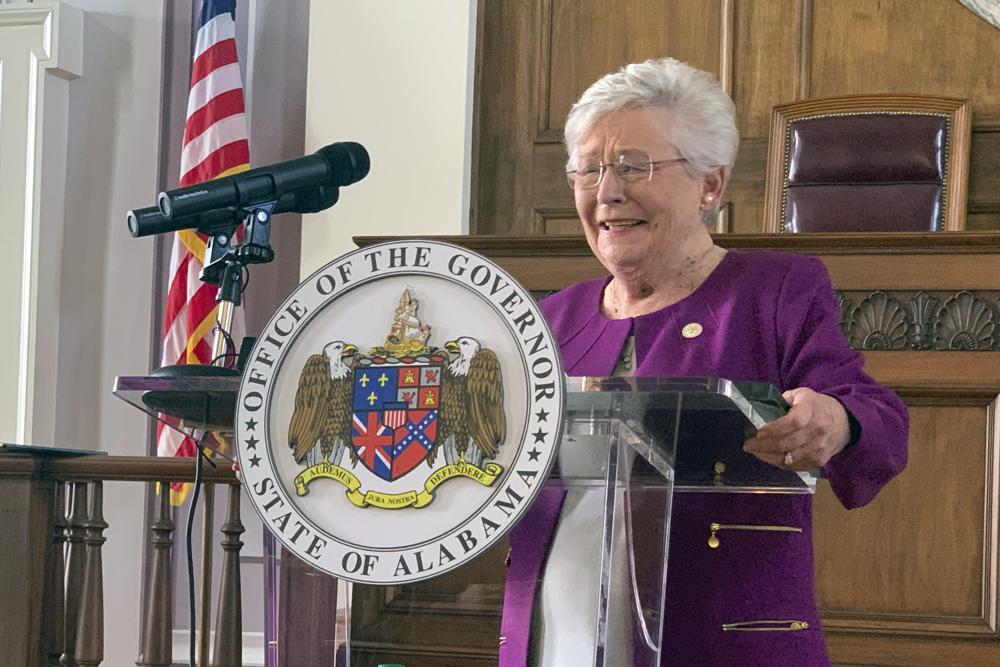
Gov. Kay Ivey’s years-long support of an increased gas tax in Alabama landed her in the bottom tier of a new report grading states’ top-level leaders on their fiscal policies. The Cato Institute, a public policy organization focused on limited government, recently released its 2022 Fiscal Policy Report Card on America’s Governors. Co-authors Chris Edwards and Ilana Blumsack gave Ivey, who is seeking a second full term in office this fall, a score of “D.” In their analysis of Ivey’s fiscal performance throughout her first full term in office, Edwards and Blumsack elaborated on why they gave the governor a low score. “Running for a full term in office in 2018, Ivey said she opposed tax increases,” Edwards and Blumsack wrote. “Nonetheless, she has raised some taxes, including the gas tax by 10 cents per gallon in 2019 and an assessment on nursing home facilities in 2020.” In their report, the authors did note some of Ivey’s more recent tax-cutting overtures in her run-up to reelection and against the backdrop of inflation. “Ivey switched direction recently and approved modest tax cuts, including raising the standard deduction, exempting $6,000 of retirement income from taxes, increasing an adoption credit, and exempting small businesses from the business privilege tax,” Edwards and Blumsack wrote. Early this year, during the most recent legislative session, Ivey also touted her support of House Bill 231, which she signed into law in February. “I am proud to sign this needed tax relief into law so that money will return directly into the hands of hardworking Alabamians,” Ivey said in the news release. Ivey’s support of a gas tax, and her denial of cutting it back this spring, has been a source of criticism since she first signed the legislation into law in 2019. Proceeds from portions of the increased gas tax have been poured into Ivey’s 2019 Rebuild Alabama Act, which required the state’s Department of Transportation to annually allocate $10 million from excised gas taxes. “Since becoming governor, with the support of Rebuild Alabama, we have embarked on more than 1,500 new road and bridge projects worth more than $5 billion,” Ivey said in March. “We certainly have more work in front of us, and I am proud to continue those efforts today.” While the Cato Institute’s newest report did not have a clear-cut partisan divide in the granular state-by-state rankings, there was a prevailing theme. The top-performing governors in this year’s report were Republican, while the lowest-scoring leaders were Democrats. “The results are data-driven. They account for tax and spending actions that affect short-term budgets in the states,” Edwards and Blumsack said of their methodology. “But they do not account for longer-term or structural changes that governors may make, such as reforms to state pension plans.” Five governors, all Republican, received an “A” in this year’s Cato Institute report: Doug Ducey of Arizona; Brad Little of Idaho; Kim Reynolds of Iowa; Pete Ricketts of Nebraska; and Chris Sununu of New Hampshire. On the bottom end, eight Democrat governors received an “F” in the Cato Institute’s analysis of their fiscal policies: Kate Brown of Oregon; Jay Inslee of Washington; Phil Murphy of New Jersey; Gavin Newsom of California; J.B. Pritzker of Illinois; Tim Walz of Minnesota; Gretchen Whitmer of Michigan; and Tom Wolf of Pennsylvania. Republished with the permission of The Center Square.
Court rejects GOP redistricting plans in North Carolina, Pennsylvania

In a victory for Democrats, the Supreme Court has turned away efforts from Republicans in North Carolina and Pennsylvania to block state court-ordered congressional districting plans. In separate orders late Monday, the justices are allowing maps selected by each state’s Supreme Court to be in effect for the 2022 elections. Those maps are more favorable to Democrats than the ones drawn by the states’ legislatures. In North Carolina, the map most likely will give Democrats an additional House seat in 2023. The Pennsylvania map also probably will lead to the election of more Democrats, the Republicans say, as the two parties battle for control of the U.S. House of Representatives in the midterm elections in November. The justices provided no explanation for their actions, as is common in emergency applications on what is known as the “shadow docket.” While the high court did not stop the state court-ordered plans from being used in this year’s elections, four conservative justices indicated they want it to confront the issue that could dramatically limit the power of state courts over federal elections in the future. The Republicans argued that state courts lack the authority to second-guess legislatures’ decisions about the conduct of elections for Congress and the presidency. “We will have to resolve this question sooner or later, and the sooner we do so, the better. This case presented a good opportunity to consider the issue, but unfortunately, the court has again found the occasion inopportune,” Justice Samuel Alito wrote in a dissent from the Supreme Court’s order, joined by Justices Neil Gorsuch and Clarence Thomas. Justice Brett Kavanaugh made a similar point but said he didn’t want to interfere in this year’s electoral process, which already is underway. The filing deadline in North Carolina was Friday. The state courts were involved because of partisan wrangling and lawsuits over congressional redistricting in both states, where the legislatures are controlled by Republicans, the governors are Democrats, and the state Supreme Courts have Democratic majorities. In Pennsylvania, Democratic Gov. Tom Wolf vetoed the plan the Republican-controlled Legislature approved, saying it was the result of a “partisan political process.” The state, with a delegation of nine Democrats and nine Republicans, is losing a seat in the House following the 2020 Census. Republicans said the map they came up with would elect nine Democrats and eight Republicans. State courts eventually stepped in and approved a map that probably will elect 10 Democrats, the GOP argued. North Carolina is picking up a seat in the House because of population gains. Republican majorities in the Legislature produced an initial plan most likely to result in 10 seats for Republicans and four for Democrats. The governor does not have veto power over redistricting plans in North Carolina. After Democrats sued, the state’s high court selected a map that likely will elect at least six Democrats. Lawsuits are continuing in both states, but the Supreme Court signaled in Monday’s orders that this year’s elections for Congress in North Carolina and Pennsylvania would take place under the maps approved by the states’ top courts. Republished with the permission of the Associated Press.
New CDC guidelines set off rush to reimpose mask mandates

New guidance from the federal government set off a cascade of mask rules across the nation Wednesday as cities, states, schools, and businesses raced to restore mandates and others pushed back against the guidelines at a time when Americans are exhausted and confused over constantly shifting pandemic measures. Nevada and Kansas City, Missouri, were among the locations that moved swiftly to re-impose indoor mask requirements following Tuesday’s announcement from the Centers for Disease Control and Prevention. But governors in Arizona, Pennsylvania, and South Carolina said they would resist reversing course. The federal recommendations quickly plunged Americans into another emotionally charged debate over the face coverings meant to curb easy transmission of the deadly coronavirus. In Florida, a Broward County School Board meeting devolved into a screaming match between irate parents and board members on Tuesday. Some protesters even took to burning face masks outside the building. In suburban Atlanta, Jamie Reinhold said she would pull her kids from school if the district stuck to the CDC’s guidance, which the 52-year-old believes takes the country “backward” and damages confidence in the vaccines. “If you believe in the masks, go ahead, but don’t try to tell me what to do for my child’s health and safety and immune system,” she said. “It’s my child. It’s my choice.” And in New Orleans, Lisa Beaudean said she was not convinced mask mandates would inspire the unvaccinated — who account for most new infections — to take the virus seriously and get inoculated. “I’m very frustrated,” the St. Louis woman said as she strolled the French Quarter without a mask. “For the last 18 months, I’ve done everything I’m supposed to do, and there are no repercussions for those who haven’t done what they’re supposed to do.” Elsewhere, Ford Motor Co. said it would reinstate mask protocols for all employees and visitors at its Missouri and Florida facilities. The two states are among the hardest hit by the summer surge in which the U.S. is now averaging more than 60,000 new cases a day, driven by the highly contagious delta variant. Google also postponed a planned Sept. 1 return to the office for most of its more than 130,000 employees until mid-October, following a similar move by Apple. Google said Wednesday that it will also eventually require everyone on staff to be vaccinated, a mandate that President Joe Biden said he’s also weighing for federal employees. Other government leaders, meanwhile, said they will hold off reinstating mask rules for now. Pennsylvania Gov. Tom Wolf said he’s not considering imposing a mask mandate in schools or statewide, arguing that such orders were necessary before there was a vaccine. “People have the ability to make the decision to get a vaccine,” the Democrat told a Pittsburgh radio station Tuesday. “If they do, that’s the protection.” The CDC’s new guidance applies to places with at least 50 new cases per 100,000 people in the last week, which is roughly 60% of all U.S. counties, federal officials said. Nearly all of the South and Southwest are subject to the guidance, but most communities in the Northeast — with the exception of major metro areas like New York City and Boston — are exempt for now, according to the CDC’s COVID tracker. The stark partisan divide over mask-wearing set up the potential for a patchwork of regulations within states and counties. In Florida’s Miami-Dade County, Mayor Daniella Levine Cava imposed an indoor mask mandate Wednesday at county facilities. The Democrat’s announcement, which does not apply to businesses or restaurants, comes after Republican Florida Gov. Ron DeSantis signed a new law in May giving the state the power to invalidate local pandemic measures, including mask mandates and limits on business operations. “We have all come too far. We have all sacrificed too much in this past almost year and a half. We cannot turn back now,” Levine Cava said. In Missouri, the St. Louis County Council voted Tuesday to reverse the county’s mask mandate, just a day after it became one of the first reinstated in the country. But Democratic County Executive Sam Page insisted Wednesday that the mandate remained in effect and blamed the pushback on politics. On the other side of the state, Kansas City Mayor Quinton Lucas, a Democrat, reinstated a similar indoor mask mandate for Missouri’s largest city. State Attorney General Eric Schmitt, who is running for the U.S. Senate as a Republican, has sued to block the St. Louis-area mandate and has vowed to do the same for Kansas City’s requirement, saying on Twitter that the mandates are “about politics & control, not science.” The CDC’s updated guidance was prompted by new data suggesting vaccinated people can pass on the virus in rare cases. But the agency’s director, Rochelle Walensky, stressed that the vaccines are working by preventing greater levels of hospitalization and death. Unvaccinated people account for the vast number of new infections. Two-thirds of the vaccine-eligible population in the U.S. has received at least one dose. “I know this is not a message America wants to hear,” Walensky told CNN on Wednesday. “With prior variants, when people had these rare breakthrough infections, we didn’t see the capacity of them to spread the virus to others, but with the delta variant, we now see that you can actually now pass it to somebody else.” In Provincetown, Massachusetts, where officials earlier this week re-imposed an indoor mask requirement following a surge in COVID-19 cases this month, store owner Patrick Patrick says he doesn’t mind asking customers to mask up once more. The owner of Marine Specialties, a long-running Army-Navy store, had been leery of the decision to drop nearly all virus safety mandates ahead of the busy summer season. He even tried to impose his own in-store mask mandate before relenting last month. “If we’d stuck with masks all along, I don’t think we’d be having this conversation,” Patrick said. “We wore them all last summer, and we didn’t have a single case in Provincetown. Now see where we’re at.” As of Wednesday, the town had reported more
Presidency hinges on tight races in battleground states
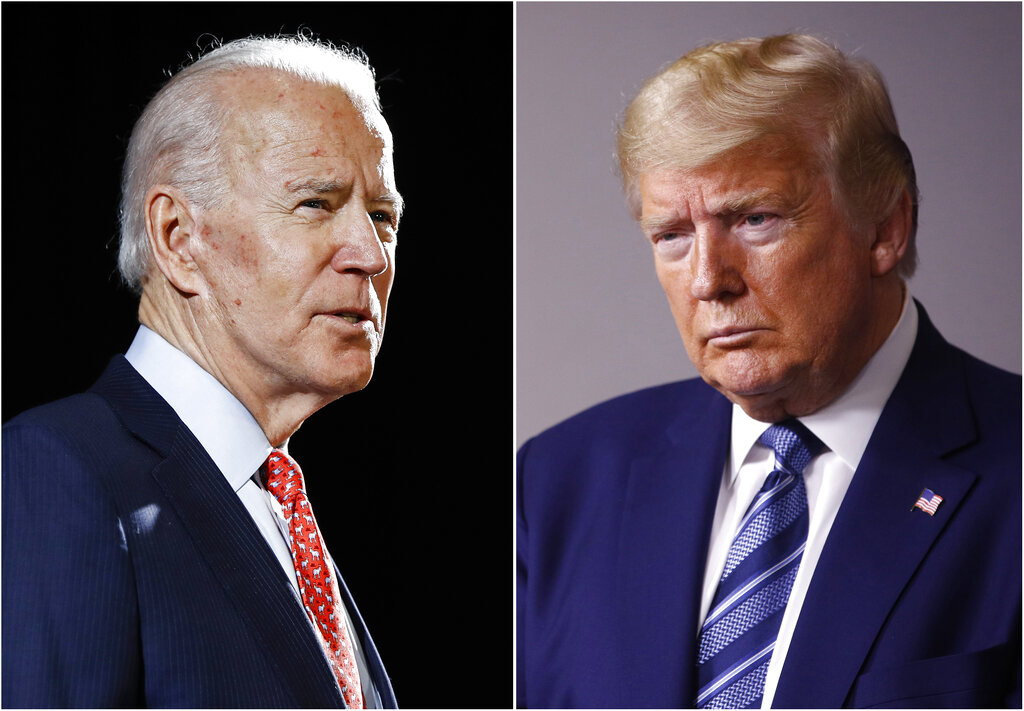
The fate of the United States presidency hung in the balance Wednesday morning, as President Donald Trump and Democratic challenger Joe Biden battled for three familiar battleground states — Wisconsin, Michigan and Pennsylvania — that could prove crucial in determining who wins the White House. It was unclear when or how quickly a winner could be determined. A late burst of votes in Michigan and Wisconsin gave Biden a small lead in those states, but it was still too early to call the race. Hundreds of thousands of votes were also outstanding in Pennsylvania. The high stakes election was held against the backdrop of a historic pandemic that has killed more than 230,000 Americans and wiped away millions of jobs. Both candidates spent months pressing dramatically different visions for the nation’s future and voters responded in huge numbers, with more than 100 million people casting votes ahead of Election Day. But the margins were exceedingly tight, with the candidates trading wins in battleground states across the country. Trump picked up Florida, the largest of the swing states, while Biden flipped Arizona, a state that has reliably voted Republican in recent elections. Neither cleared the 270 Electoral College votes needed to carry the White House. Trump, in an extraordinary move from the White House, issued premature claims of victory and said he would take the election to the Supreme Court to stop the counting. It was unclear exactly what legal action he might try to pursue. Biden, briefly appearing in front of supporters in Delaware, urged patience, saying the election “ain’t over until every vote is counted, every ballot is counted.” “It’s not my place or Donald Trump’s place to declare who’s won this election,” Biden said. “That’s the decision of the American people.” Vote tabulations routinely continue beyond Election Day, and states largely set the rules for when the count has to end. In presidential elections, a key point is the date in December when presidential electors met. That’s set by federal law. Several states allow mailed-in votes to be accepted after Election Day, as long as they were postmarked by Tuesday. That includes Pennsylvania, where ballots postmarked by Nov. 3 can be accepted if they arrive up to three days after the election. Pennsylvania Gov. Tom Wolf tweeted that his state had over 1 million ballots to be counted and that he “promised Pennsylvanians that we would count every vote and that’s what we’re going to do.” Trump appeared to suggest those ballots should not be counted, and that he would fight for that outcome at the high court. But legal experts were dubious of Trump’s declaration. “I do not see a way that he could go directly to the Supreme Court to stop the counting of votes. There could be fights in specific states, and some of those could end up at the Supreme Court. But this is not the way things work,” said Rick Hasen, a professor of law and political science at the University of California-Irvine. Trump has appointed three of the high court’s nine justices including, most recently, Amy Coney Barrett. Democrats typically outperform Republicans in mail voting, while the GOP looks to make up ground in Election Day turnout. That means the early margins between the candidates could be influenced by which type of votes — early or Election Day — were being reported by the states. Throughout the campaign, Trump cast doubt about the integrity of the election and repeatedly suggested that mail-in ballots should not be counted. Both campaigns had teams of lawyers at the ready to move into battleground states if there were legal challenges. The tight overall contest reflected a deeply polarized nation struggling to respond to the worst health crisis in more than a century, with millions of lost jobs, and a reckoning on racial injustice. Trump kept several states, including Texas, Iowa and Ohio, where Biden had made a strong play in the final stages of the campaign. But Biden also picked off states where Trump sought to compete, including New Hampshire and Minnesota. But Florida was the biggest, fiercely contested battleground on the map, with both campaigns battling over the 29 Electoral College votes that went to Trump. The president adopted Florida as his new home state, wooed its Latino community, particularly Cuban-Americans, and held rallies there incessantly. For his part, Biden deployed his top surrogate — President Barack Obama — there twice in the campaign’s closing days and benefitted from a $100 million pledge in the state from Michael Bloomberg. Democrats entered the night confident not only in Biden’s prospects, but also in the the party’s ability to take control of the Senate. But the GOP held several seats that were considered vulnerable, including in Iowa, Texas and Kansas. The House was expected to remain under Democratic control. The coronavirus pandemic — and Trump’s handling of it — was the inescapable focus for 2020. For Trump, the election stood as a judgment on his four years in office, a term in which he bent Washington to his will, challenged faith in its institutions and changed how America was viewed across the globe. Rarely trying to unite a country divided along lines of race and class, he has often acted as an insurgent against the government he led while undermining the nation’s scientists, bureaucracy and media. The momentum from early voting carried into Election Day, as an energized electorate produced long lines at polling sites throughout the country. Turnout was higher than in 2016 in numerous counties, including all of Florida, nearly every county in North Carolina and more than 100 counties in both Georgia and Texas. That tally seemed sure to increase as more counties reported their turnout figures. Voters braved worries of the coronavirus, threats of polling place intimidation and expectations of long lines caused by changes to voting systems, but appeared undeterred as turnout appeared it would easily surpass the 139 million ballots cast four years ago. No major problems arose on Tuesday, outside the typical glitches
In 2020 finale, Donald Trump combative, Joe Biden on offense
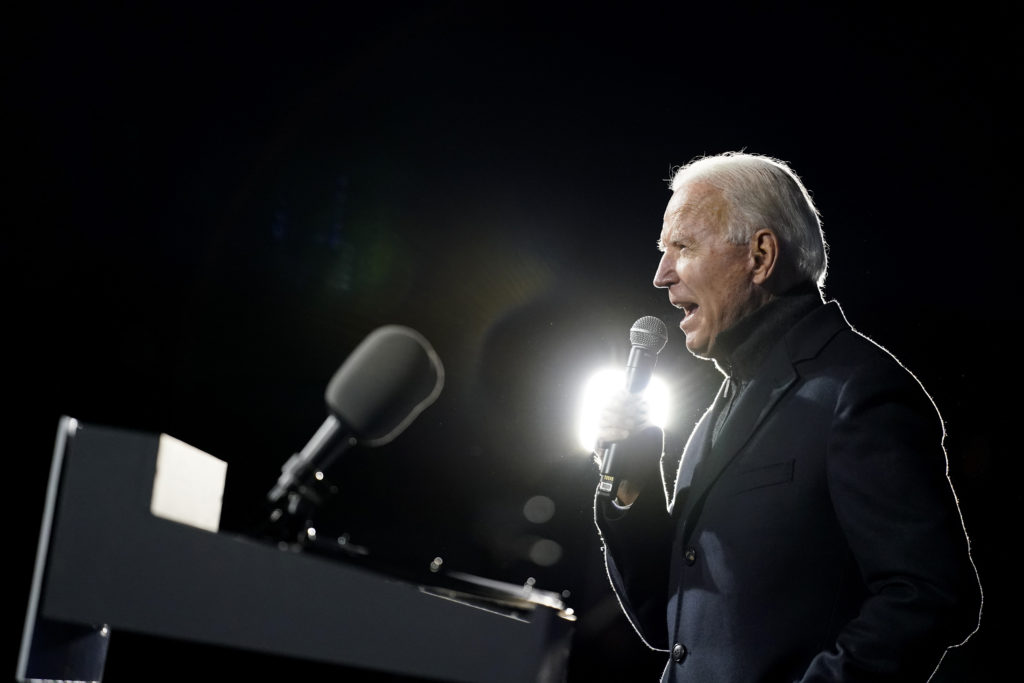
In the closing hours of a campaign shadowed by a once-in-a-century pandemic, President Donald Trump charged across the nation Monday delivering an incendiary but unsupported allegation that the election is rigged, while Democratic challenger Joe Biden pushed to claim states once seen as safely Republican.
In battlegrounds, absentee ballot rejections could triple
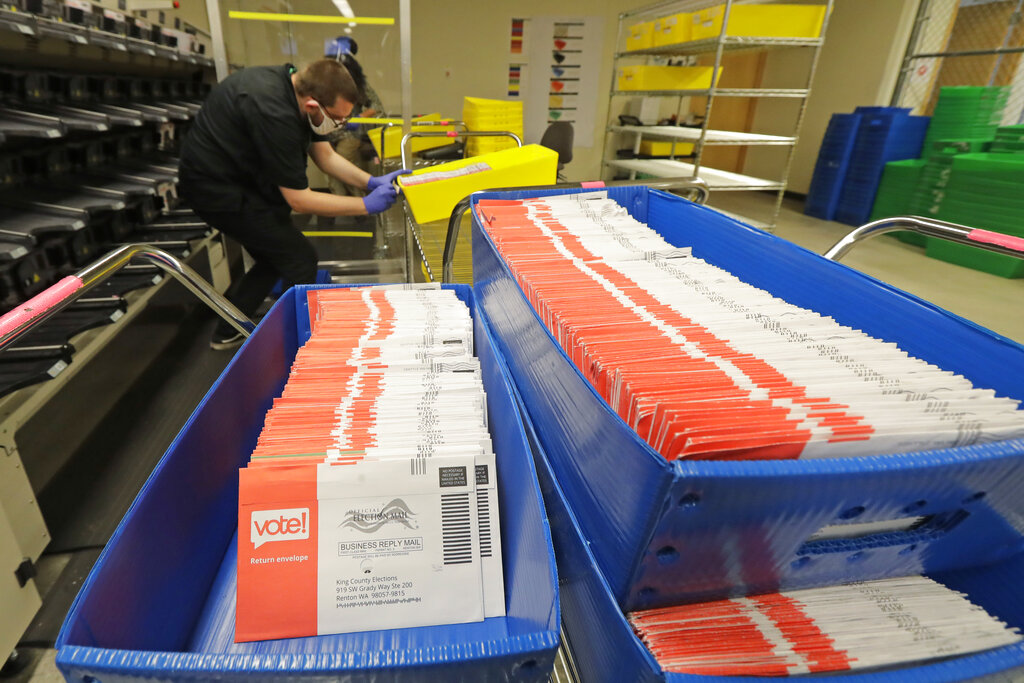
With the coronavirus creating a surge in mail-in balloting and postal delays reported across the country, the number of rejected ballots in November is projected to be significantly higher than previous elections.
Swing-state Republicans pin virus fallout on Democrats

Backlash comes as some governors, mostly Republicans, are beginning to ease their stay-at-home orders.
Mike Bloomberg’s influence stretches far and wide
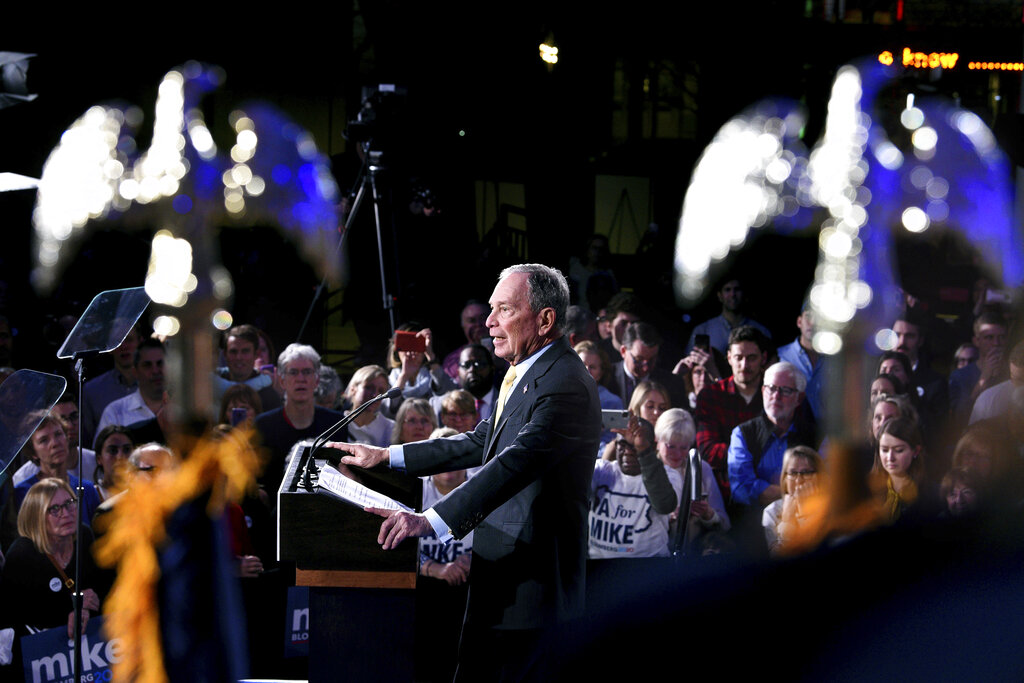
The impact of Mike Bloomberg’s business connections and foundation reaches far and wide.
Democrats find a Republican they can cheer for
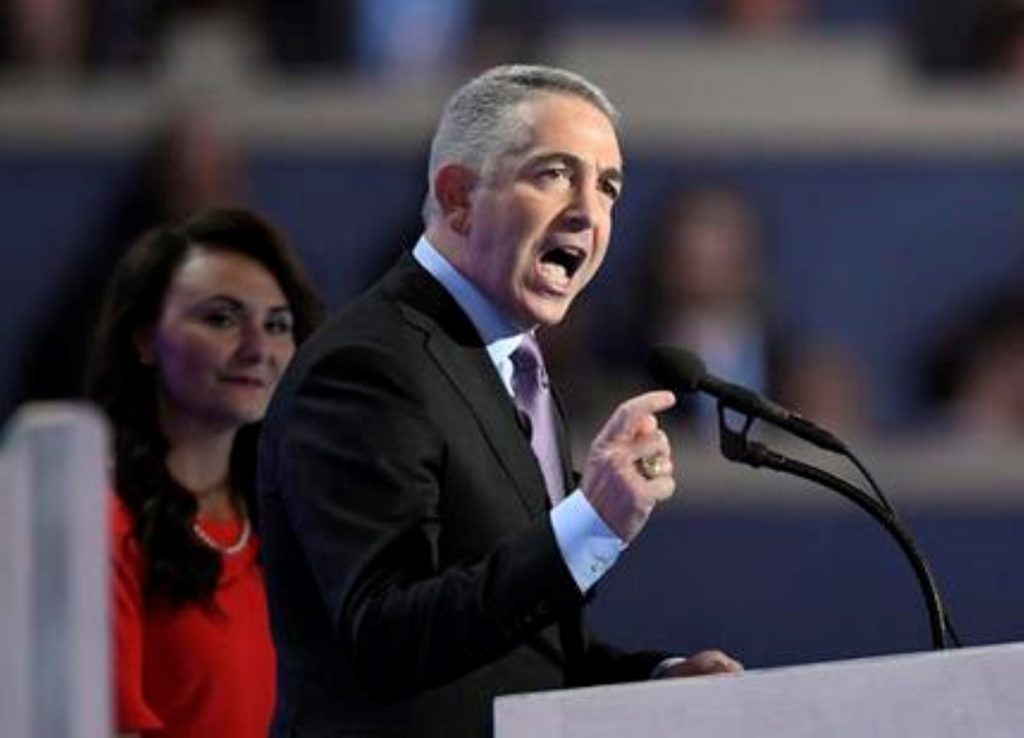
The Latest on the Democratic National Convention and 2016 presidential campaign. (all times EDT): 8:50 p.m. Doug Elmets is a Republican who Democrats can cheer for. Elmets – who worked in the Reagan White House – earned a roar from the crowd at the Democratic convention Thursday night when he took the stage and said he was backing Democratic presidential nominee Hillary Clinton. Elmets says Clinton will be the first Democrat to get his vote – and he’s blaming Donald Trump for driving him away from the Republican Party. He’s borrowing a line from the late Lloyd Bentsen – the Democratic vice presidential nominee in 1988 – to tweak Trump for likening himself to Reagan. Elmets says: “I knew Ronald Reagan. I worked for Ronald Reagan. Donald Trump, you are no Ronald Reagan! 8:25 p.m. They held a political convention and the governor of the host state actually came. And spoke. That was Tom Wolf on the stage Thursday night at the Democratic National Convention in Philadelphia, and he was taking shots at Republican presidential nominee Donald Trump. Wolf’s presence in the convention hall is a reminder that Republicans couldn’t feature a home-state governor at their convention in Cleveland last week. That’s because Ohio Republican John Kasich is a former Trump primary rival and sharp critic. Kasich steered clear of the GOP convention Wolf says, unlike Trump, Hillary Clinton will “reward companies that share profits with their employees.” 8:20 p.m. Chants of “lock her up” are going up at a Mike Pence rally in suburban Detroit. It’s the most raucous scene the GOP vice presidential nominee has faced since going out as a solo campaigner as Donald Trump’s running mate. At times, Pence had to wait for the crowd’s jeers of Democrat Hillary Clinton or chants of “Trump! Trump! Trump!” to die down. They cheered when Pence criticized Clinton’s handling of the Benghazi attacks in Libya and when Pence praised Trump’s call to build a wall on the border with Mexico. One of the biggest applause lines came when Pence said: “Hillary Clinton must never become president of the United States.” 8:10 p.m. Democrats are targeting Donald Trump in their convention speeches, and the Republican presidential nominee is getting tired of it. He says he wanted to “hit” some of them “so hard their heads would spin.” Trump isn’t identifying any of them. But he tells a crowd in Iowa that one certain speaker – Trump describes him as “a little guy” who he used to work with – particularly bothered him. Might that be former New York City Mayor Michael Bloomberg? He had some dealings with Trump – a New York real estate developer – as the city’s leader. By the way, Bloomberg is listed as 5-foot-8 inches. Republished with permission of the Associated Press.
