
Department of Education preparing top personnel cuts
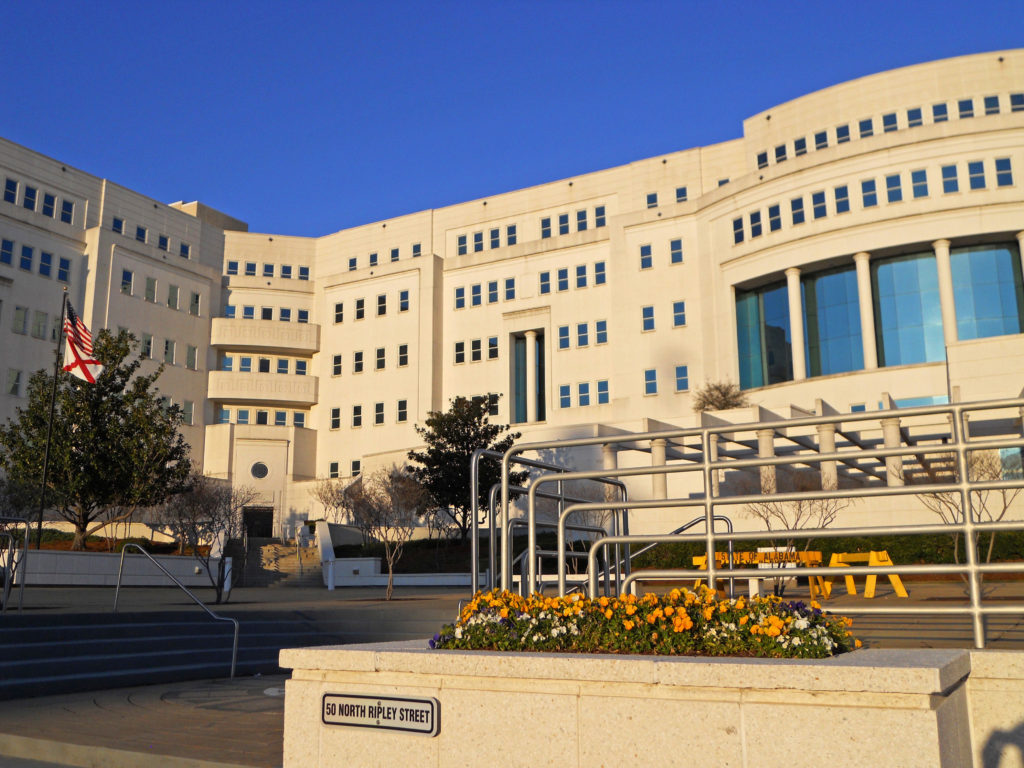
During a work session on Thursday, interim state Superintendent Dr. Ed Richardson announced major changes for 31 high-ranking department of Education employees. The reorganization of the department began in October, with the overall goal being “to organize this department so that it has fewer moving parts and will be able to function better, and communicate more efficiently,” Richardson told AL.com. The department has long been criticized for “bureaucratic bloat,” and Richardson is willing to do what is necessary to get the department back to a reasonable size. Richardson will be reducing the number of “at-will” and “exempt” employees, and plans to realign each area within the department. “I cannot solve the issue of titles, positions, salaries without making some hard decisions, and I intend to do it.” he said. According to Wrady & Michel, LLC, a Birmingham employment law firm; “at-will” employees are defined as employees who don’t have a written employment contract that can be terminated for any reason, or no reason at all. In order to fix the system, Richardson recommended board members lift a resolution adopted in 2015, it was passed with former state Superintendent Dr. Tommy Bice‘s endorsement. The resolution authorized the “State Superintendent of Education to appoint individuals to serve in “at will” positions of Deputy Superintendent, Assistant Superintendent, Director, and Coordinator as needs and vacancies arise and report such appointments to the Alabama State Board of Education at its regularly scheduled meetings.” “It left the door wide open both in terms of number and salary of individuals (who were hired),” said Richardson. He also mentioned that the law requires that the employment of at-will employees ends when the superintendent who hired them leaves their office. Richardson met with all at-will employees as a group on Friday to discuss the reorganization, and met individually with the 31 individuals to explain what their options are. “It has to be done now, that way the next superintendent doesn’t have to do this.” he told AL.com. The department’s current organizational chart has the department split into four major administrations, with a Deputy Superintendent heading each area. Richardson’s proposed chart divides the department into two branches, instruction and administration, and reduces the number of Deputy Superintendents to two. Richardson has served as the interim State Superintendent since September, and previously served as the Alabama State Superintendent of Education from October 1995 to January 2004. Here are the organizational charts, originally uploaded by Trisha Powell Crain on Scribd.
Six finalists named for Alabama School Superintendent
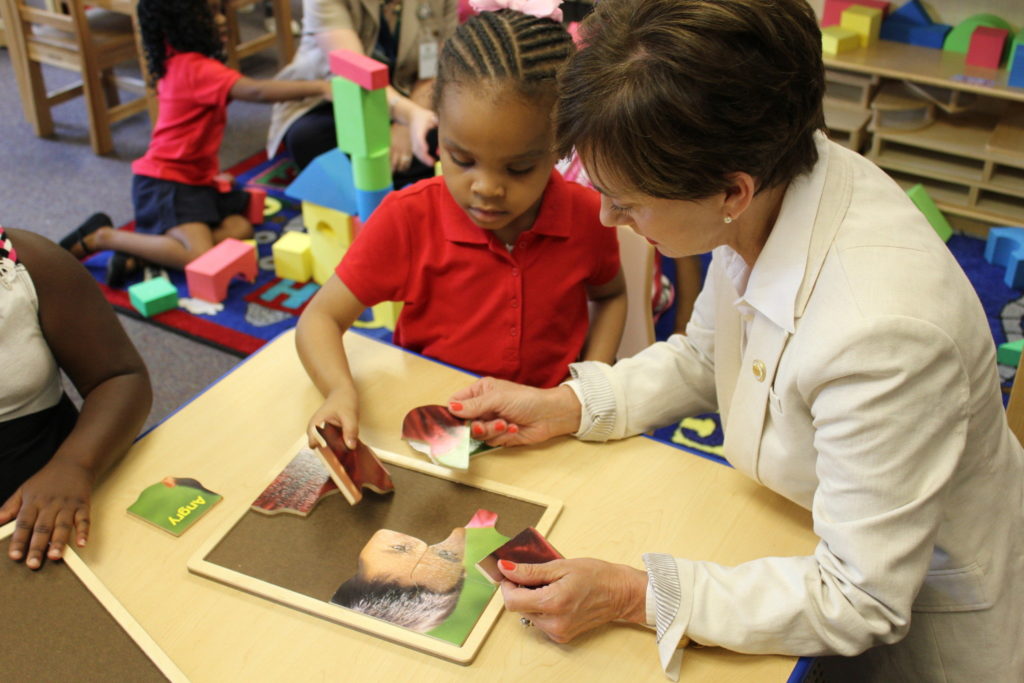
Six finalists have been identified by the Alabama State Board of Education to become the next superintendent of Alabama schools. The board received 12 applications from educators across the country after Tommy Bice announced his retirement in March, and managed to winnow the list down to the final six at the board meeting Tuesday. The finalists include three local school superintendents, including one veteran of the state Department of Education: Bill Evers: research fellow at Stanford University Dee Fowler: superintendent of Madison City Schools Craig Pouncey: superintendent of Jefferson County Schools and former deputy state superintendent Jeana Ross: secretary of the Alabama Department of Early Childhood Education Michael Sentance: former Massachusetts Secretary of Education and regional representative to the U.S. Department of Education. Janet Womack: superintendent of Florence City Schools The candidates will begin the interview process Aug. 4 with State Board of Education members, and a selection will be made at the Aug. 11 board meeting. The finalists’ applications can be viewed here.
Andrew A. Yerbey: Diplomas of duplicity

Two weeks ago, Tommy Bice announced his plans to step down as Alabama’s superintendent of education. Reflecting on his tenure, Bice singled out one accomplishment with especial pride: the nearly 90% graduation rate of public-school students in Alabama. This is not, however, an accomplishment that should be celebrated: it will go down as the most pernicious failure of the Bice superintendency. When the high-school diploma has been as devalued as it has, its benefits–economic and otherwise–become a false promise. By way of background, compare the presentation Bice delivered a few months back, emblazoned “Every Child a Graduate,” with a journal article published in 1954, entitled “A High School Diploma for All!” The similarities do not end with semantics. The journal article was penned by the principal of an Alabama school that had undertaken a new approach to graduating its students. The principal encapsulated the “experiment” thus: “It calls for awarding a . . . diploma to any student who has spent three years [grades ten through twelve] in high school. . . . Scholastic achievement is no longer the basis for awarding the diploma.” The mastery of “theoretical” material, such as mathematics and science, was not required for students to graduate. This policy was approved by the Alabama State Department of Education at the time–and has essentially been institutionalized by the Alabama State Department of Education of today. Evidence is provided by the meteoric rise in the graduation rate of public-school students in Alabama. The rate has skyrocketed seventeen points in four years, from 72% in 2011 to 89% in 2015. To put this percentage in perspective, if the graduation rates of the other forty-nine states were to remain unchanged from 2014, then Alabama’s graduation rate would now rank third nationally. The problem, of course, is that Alabama has seen nothing remotely similar occur with regard to scholastic achievement, which remains dismal–among the worst of the worst in the United States. Consider the results of the ACT. The ACT defines college readiness as “about a 75% chance of obtaining a C or higher in the corresponding credit-bearing college courses . . . based on the actual performance of students in college.” In an era of grade inflation, a grade of C in a first-year college course is not a very high benchmark. Yet, the percentage of Alabama students who graduated ready for college-level coursework in English, math, reading, and science was a mere 16% in 2015, down from a mere 18% in 2011; the national average was 28%. It is no wonder, then, that 32% of Alabama public-school graduates who attend college need remediation. Consider the results of the ACT Plan, an assessment (now the ACT Aspire) taken by tenth-graders that predicts success on the ACT. School-level data is available for the ACT Plan, and surveying it shocks the conscience. Assuming that the ACT Plan scores are representative of upperclassmen, more than two dozen high schools in Alabama–with a combined graduation rate of 83%–could have graduated a group of students without a single one of those graduates being college-ready. These schools might be the worst, but they are most certainly not outliers. Consider the results of the National Assessment of Education Progress (NAEP), known as “The Nation’s Report Card” and considered the standard for measuring scholastic achievement. According to the 2015 scores, only 17% and 26% of Alabama eighth-graders are, respectively, proficient in math and reading–with neither score changing significantly since 2011, and both scores remaining significantly below the national average. A recent report by the Urban Institute, which adjusted the 2013 scores to account for student demographics, thereby allowing more accurate state-to-state comparisons, brings it all back home. Ranking forty-eighth in the nation, ahead of only Hawaii and West Virginia, Alabama can “thank God for Mississippi” no longer. Did it not occur to the superintendent that our state having (1) among the worst scholastic achievement in the country and (2) among the highest graduation rate in the country was not a reason for celebration–that it was, in fact, the opposite? It should have, and once did: “We celebrated it–we put up billboards, we gave parties, we put out ice cream, we gave certificates. All we did was lie to our kids and their parents about how successful they were.” That was Bice, back in 2014. He was speaking not about the graduation rate, but about the exit exam, which he lambasted as useless “because . . . 31% of the [students who took the ACT in 2013, the last year of the exit exam] met the college-readiness benchmark in math.” Two years later, in 2015, the same measure was 23%–having plunged eight points, even as the graduation rate soared. “All we did was lie to our kids and their parents about how successful they were,” indeed. The next superintendent will have to rebuild the trust that has been lost in Alabama’s high-school diploma. This means ensuring that it reflects scholastic achievement. This does not mean undue emphasis on standardized tests or a return to the misguided policies of No Child Left Behind. But it will be helpful to glance backward as we go forward, to recall what those policies were meant to combat: “the soft bigotry of low expectations.” How better to describe the act of awarding diplomas without requiring scholastic achievement? • • • Andrew A. Yerbey is Senior Policy Counsel for the Alabama Policy Institute (API). API is an independent, nonpartisan, nonprofit research and educational organization dedicated to the preservation of free markets, limited government, and strong families.
Presidential mock election to give Alabama students opportunity to vote, learn
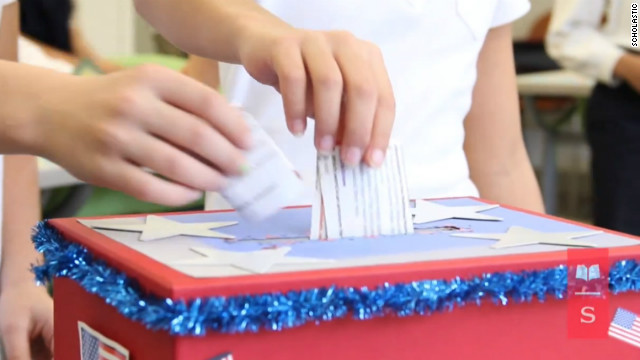
The Secretary of State’s office, in collaboration with the Alabama State Department of Education (ALSDE), the American Village and the Alabama Independent Schools Association (AISA), will host an “Alabama Votes” Student Mock Election October 25. The program is open to Alabama students in fourth through twelfth grades. “One of the most fundamental rights we as Americans are afforded is our right to vote,” Secretary of State John Merrill said in a press release. “Our students in the state of Alabama have the opportunity to be a powerful voice in the electoral process, and we must do everything we can to educate them on the importance of their right to vote.” The event gives students an early opportunity to become familiar with the electoral process and will generate awareness among Alabama’s student population. Ballots will be distributed to all of Alabama’s 1,500 schools, as well as various home school networks, via the ALSDE and AISA, the data from which will then be forwarded to the central office and on to the Secretary of State’s Office. “The ‘Alabama Votes’ Mock Election is a great way to generate interest and spur excitement among Alabama’s student population about civic responsibility, democratic principles, and the upcoming presidential election,” said ALSDE Superintendent Tommy Bice. “This opportunity gives students a platform to discuss their individual viewpoints on everything from social and domestic issues to foreign policy and economics. The Mock Election will focus squarely on getting young people engaged in the voting process as they simulate voting for a real-life presidential candidate.” The American Village will host a Student Mock election Convention July 12 through 14 for students in ninth through twelfth grade in any of Alabama’s public, private, parochial or home schools. The last day to register for the event is April 22 and can be done from the American Village website.
After 39 years of public service, State Superintendent Tommy Bice announces retirement

Tommy Bice, Alabama’s State Superintendent of Education, announced his retirement Tuesday morning after over 39 years of service to public education. Bice has held his current position since January 2012. Bice, 61, is the state’s chief executive officer of the state Department of Education and exercises general control and supervision over the public schools of the state. Bice said the trajectory of public education in Alabama is moving in the right direction and he is certain teachers and administrators will continue to do what they have always done, aggressively pursue quality education for the state’s greatest commodity: students. “I retire knowing that public education in our state is moving forward at an accelerated pace due to the dedicated teachers and leaders who have embraced the policy environment created by our State Board of Education,” Bice said. Bice’s retirement is effective March 31. After a short break, he plans to join the Mike and Gillian Goodrich Foundation as its education director later this spring. “While I may be retiring from formal public education, my work on behalf of students is far from over,” Bice said. “I will return to where my greatest passion lies – working with inner city students, their teachers and leaders to transform not only the educational opportunities for students, but the communities in which they live.”
State Department of Education seeks increase of $300 million for K-12 budget

Tommy Bice, state Superintendent of the Alabama Department of Education, laid out his department’s budget needs for the upcoming year to the Alabama House Ways and Means Committee and the Senate Finance and Taxation Committee on Tuesday. Bice boasted that Alabama’s graduation rate has climbed steadily from 75 percent in 2012 to 89 percent in 2015 and 70 percent of Alabama students are considered “college and career ready.” A 90 percent goal is set for Alabama’s college and career ready standards and, if met, the “economic output would be $430 million higher” and “Education Trust Fund revenues would be increased by $22 million.” Currently, more than $1 billion in local funding is paying for instructional services, instructional support services, operation and maintenance services, transportation, and general administrative services. By contract, federal funds for those services come out to $446.6 million. A document handed out during the budget hearing noted the disparity of per pupil spending in various counties across the state: In Homewood City, $4,859 is being spent per pupil while only $82 is being spent per pupil in Coosa County. The department’s priorities for the upcoming school year include $70 million for transportation, $70 million for teacher units/class size reduction, $75 million for “other current expenses,” and $54 million for classroom instructional support, such as student materials, classroom technology, library enhancement, professional development, textbooks/content and common purchases. The request for full foundation funding comes in at $269 million, with the option to fund it at $135 million over two years. The department is also seeking a $5.5 million increase in funding for virtual learning, $2.1 million to assist educators in becoming National Board Certified Teachers, and $15 million for arts education. In all, officials are seeking a $334.3 million dollar increase in funding for K-12 over last year’s appropriations for administration services, financial assistance programs and other programs.
Superintendent: Department to recommend raise for Alabama teachers

Alabama Department of Education superintendent says he will propose raising teacher salaries over the next three years. Superintendent Tommy Bice said Thursday the department would recommend raising teachers’ salaries 5 percent in fiscal year 2017, which begins next October. The state government will have the final word on public school spending next year. According to the department, the raise would cost $160 million. Bice said he would seek further raises in 2018 and 2019, with the goal of bringing teacher salaries in line with inflation. Alabama teachers with a bachelor’s degree start at $36,867 a year. A master’s degree bumps that starting salary to $42,395. Since 2008, educators have received one salary increase, which was a 2 percent raise in 2013. Republished with permission of The Associated Press.
Alabama ranks No. 30 for best state for teachers

Another study, another mediocre ranking for the Yellowhammer State. Released just in time for International World Teachers’ Day on Oct. 5, a new study of the 50 states and the District of Columbia found Alabama ranks the 30th best state for teachers. Conducted by the personal finance website WalletHub, the in-depth analysis found that teachers across the U.S. are shortchanged every year — their salaries consistently fail to keep up with inflation — all the while the law demands they produce better students. The same is true for Alabama. While the study found Alabama’s average teacher starting salary to be $39,346, the 5th best in the country, teacher income growth potential in the state ranks 50th — essentially, Yellowhammer teacher salaries don’t progress with their careers. That statistic doesn’t bode well for improving education across the state. According to the National Center for Education Statistics, nearly one-fifth of all new public school teachers leave their positions before the end of their first year and almost half don’t last more than five years. Without good teachers who are happy to stay in their jobs, the quality of Alabama education is bound to suffer. But Yellowhammer families shouldn’t be too discouraged, there’s hope yet for the state. Earlier this year, the Alabama Legislature passed a $6 billion Education Fund budget that includes a $13 million increase for textbooks and more than $10 million for the Alabama’s nationally acclaimed Pre-K program. Gov. Robert Bentley also signed a law authorizing Alabama’s first charter schools, allowing for the creation of public schools with the ability to develop curriculum and select teachers bound by contracts instead of regulations set by the state. Before this, Alabama was one of only eight states without charter schools, according to the Alabama Coalition for Public Charter Schools. When asked about the latest ranking, Alabama’s State Superintendent of Education, Dr. Tommy Bice told Alabama Today, “Our primary goal is making sure the students of Alabama receive a quality education that adequately prepares them for life after high school, be it college or the workforce. Our teachers are essential in making that happen. We do not focus on rankings and comparisons. Rather we do all that we can to support our teachers, provide research-based professional growth opportunities, provide comprehensive induction and mentoring programs, and invest in efforts to recruit and retain great educators.” “We are faced with unprecedented budgetary struggles and challenging expectations – yet our teachers come to school every day with steadfast dedication and a resolve to make a difference in the lives of our students,” Bice continued. “Making sure our teachers are well-prepared, resourced, supported and effective so they can make sure our students graduate from school prepared for life is our goal. There are an assortment of surveys and rankings from numerous sources that judge and categorize schools and teachers with a wide variety of criteria and methodologies. Our intention is to stay committed to being the best we can be for Alabama students as we meet the goals of Alabama’s plan of continuous improvement – PLAN 2020.” The following are the statistics that were released regarding being a teacher in Alabama and how it ranks with the rest of the United States. (1=Best; 25=Average) Average starting salary for teachers: 5th Median annual salary for teachers: 23rd Teachers’ income growth potential: 50th Projected number of teachers per student by 2022: 15th Unemployment rate: 40th 10-year change in teacher salaries: 10th WalletHub “School Systems” ranking: 39th Pupil-to-teacher ratio: 22nd Safest schools: 13th WalletHub “Underprivileged Children” Ranking: 42nd Public school spending per student: 44th As for how neighboring states fared, Alabama was in good company — Mississippi ranked 48th, Georgia 37th, Tennessee 33rd, and Florida 27th. Source: WalletHub
Alabama governor, education board OK charter school commission
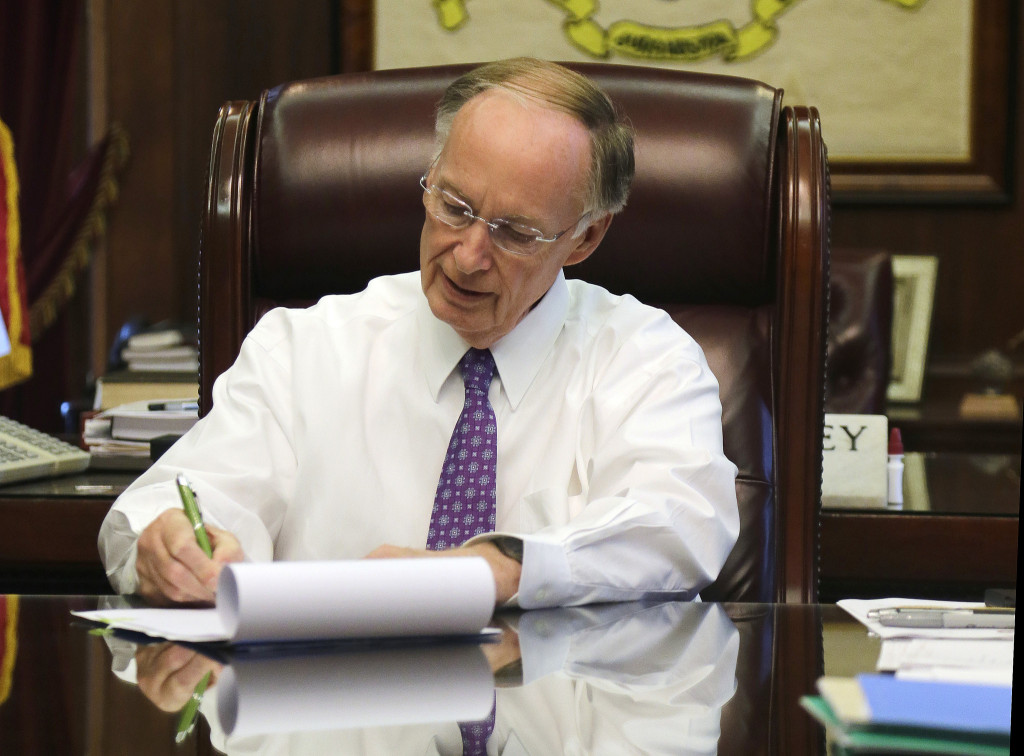
The Alabama State Board of Education confirmed a list of appointed nominees on Tuesday for the state’s new charter school commission. Gov. Robert Bentley, who is president of the board but rarely attends meetings, made a surprise appearance. He said he attended after it became clear the board couldn’t make a quorum without him. “This was put in legislation and we need to get the board in place and so I felt like we needed a quorum so I came over to make a quorum and chair the meeting,” he said. Earlier this month, the board angered members of the Alabama Legislature by refusing to confirm the commission, which is designated with hearing appeals of charter school applications rejected on the local level. Earlier this year, Bentley and the Legislature approved a plan to allow charter schools. According to the law, the commission is appointed by the governor, lieutenant governor, House speaker and Senate president pro tem. The nominees then must be confirmed by the state board. The delay had prompted Republican Rep. Terri Collins of Decatur to introduce a bill that would cut the state board out of the confirmation process. Several board members who contested the first confirmation vote were absent on Tuesday because of funerals or illnesses. “I think they need a place,” Bentley said of the board. “They need a board that people can apply to and bring their grievances to, so I think a board being in place is important and I think it is good for the process.” Hours later, Collins withdrew her bill from the House calendar. State Superintendent Tommy Bice said the board will serve the commission as administrative support. “I know there are some members that may have differing opinions and that’s why we have a board,” he said. “Everybody’s not expected to show up and have the same opinion, so it was voted on today, it’s done now, we have the commission and we look forward to working with them.” Bice said the majority of the state’s charter school structure will not involve the commission, but because the BOE oversees K-12 education it’s important for it to stay involved in the process. “I mean, at the end of the day, the implementation, of the charter bill law rests with the state department of education,” he said. “We’re putting together the regulations; we’re putting together the implementation procedures, all those things associated with it, even with this commission.” Board member Ella Bell, who said she was absent for the funeral of her longtime friend and campaign manager, said she was glad the governor attended. “They are his people,” Bell said. One of the board members who voted was Mary Scott Hunter. Hunter said she’s heard other states also have had early difficulties in creating charter schools, but expects future votes will be “more normalized.” “I certainly can see why it was filed,” she said of the bill Collins sponsored. “It was filed as an insurance policy against this board not getting the vote that it needed. But now this board has gotten the vote that it needed, in the normal course, and has shown that it can get this done.” Republished with permission of The Associated Press.
