
States divided on gun controls, even as mass shootings rise
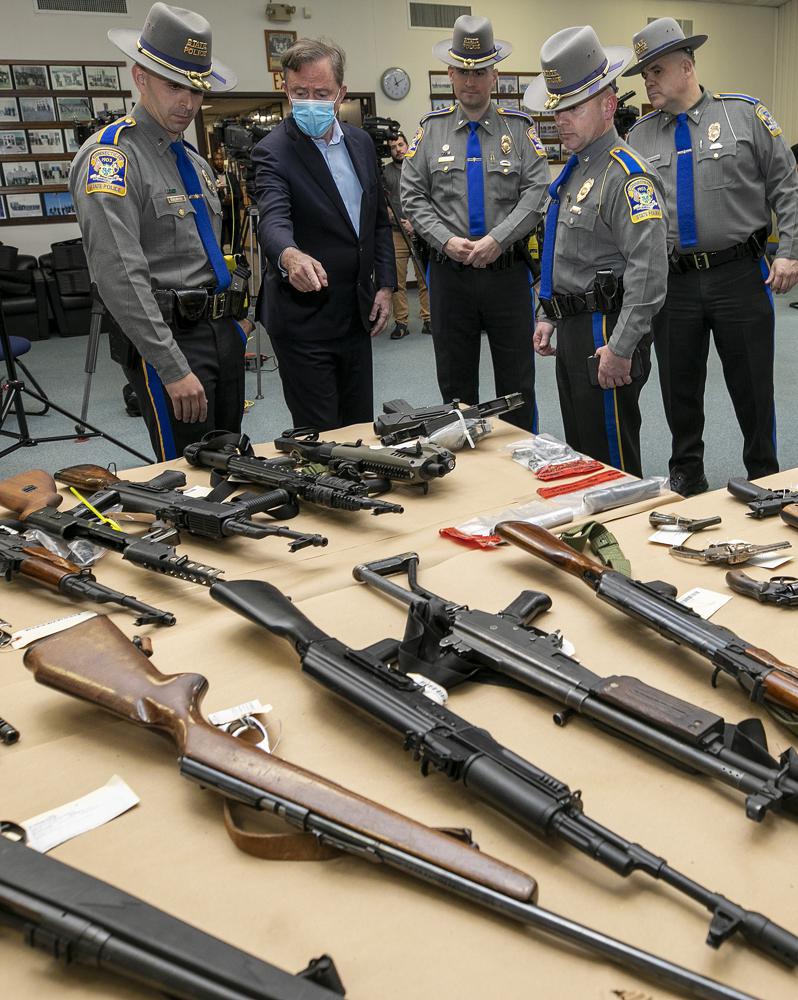
Washington Gov. Jay Inslee was quick to react to this week’s carnage at a Texas elementary school, sending a tweet listing the gun control measures the Democratic-controlled state has taken. He finished with: “Your turn Congress.” But gun control measures are likely going nowhere in Congress, and they also have become increasingly scarce in most states. Aside from several Democratic-controlled states, the majority have taken no action on gun control in recent years or have moved aggressively to expand gun rights. That’s because they are either controlled politically by Republicans who oppose gun restrictions or are politically divided, leading to a stalemate. “Here I am in a position where I can do something, I can introduce legislation, and yet to know that it almost certainly is not going to go anywhere is a feeling of helplessness,” said state Sen. Greg Leding, a Democrat in the GOP-controlled Arkansas Legislature. He has pushed unsuccessfully for red flag laws that would allow authorities to remove firearms from those determined to be a danger to themselves or others. After Tuesday’s massacre at Robb Elementary School in Uvalde, Texas, that left 19 students and two teachers dead, Democratic governors and lawmakers across the country issued impassioned pleas for Congress and their own legislatures to pass gun restrictions. Republicans have mostly called for more efforts to address mental health and to shore up protections at schools, such as adding security guards. Among them is Texas Gov. Greg Abbott, who has repeatedly talked about mental health struggles among young people and said tougher gun laws in places like New York and California are ineffective. In Tennessee, GOP Rep. Jeremy Faison tweeted that the state needs to have security officers “in all of our schools,” but stopped short of promising to introduce legislation during next year’s legislative session: “Evil exists, and we must protect the innocent from it,” Faison said. Wisconsin Gov. Tony Evers has repeatedly clashed with the GOP-controlled Legislature over gun laws. He has called for passage of universal background checks and “red flag” laws, only to be ignored by Republicans. Earlier this year, Democrats vetoed a Republican bill that would have allowed holders of concealed carry permits to have firearms in vehicles on school grounds and in churches located on the grounds of a private school. “We cannot accept that gun violence just happens,” Evers said in a tweet. “We cannot accept that kids might go to school and never come home. We cannot accept the outright refusal of elected officials to act.” On Wednesday, a day after the Texas shooting, legislative Democrats asked that the Wisconsin gun safety bills be taken up again, apparently to no avail. Republican Senate Majority Leader Devin LeMahieu and Assembly Speaker Robin Vos did not return messages seeking their response. In Pennsylvania, an effort by Democratic lawmakers Wednesday in the GOP-controlled Legislature to ban owning, selling, or making high-capacity, semi-automatic firearms failed, as House Republicans displayed their firm opposition to gun restrictions. The GOP-majority Legislature has rejected appeals by Democratic governors over the past two decades to tighten gun control laws, including taking steps such as expanding background checks or limiting the number of handgun purchases one person can make in a month. The situation is similar in Michigan, which has a Democratic governor and Republican-controlled Legislature. On Wednesday, Democrats in the state Senate were thwarted in their efforts to advance a group of bills that would require gun owners to lock up their firearms and keep them away from minors. “Every day we don’t take action, we are choosing guns over children,” said Democratic Sen. Rosemary Bayer, whose district includes a high school where a teen was charged in a shooting that killed four in November and whose parents are charged with involuntary manslaughter, accused of failing to lock up their gun. “Enough is enough. No more prayers, no more thoughts, no more inaction.” Republican state Sen. Ken Horn responded by urging discussion about the other potential causes of gun violence. “I would just point out that there are political solutions, but there are just as many spiritual solutions,” he said. “We don’t know what’s really happening in this world, what’s happening in this country, what’s happening to young men.” Florida stands out as a Republican-controlled state that took action. The 2018 shooting at a high school in Parkland that left 14 students and three staff members dead prompted lawmakers there to pass a law with a red flag provision that lets law enforcement officers petition a court to have guns confiscated from a person considered a threat. Democrats now want that expanded to allow family members or roommates to make the same request of the courts, but there has been little appetite among Republicans to amend the law. Instead, Republican Gov. Ron DeSantis said he wants lawmakers to allow people to carry handguns without a permit. The state currently requires a concealed weapons license. While Republicans have supported red flag laws in some other states, most legislative action around gun control in recent years has been in states led by Democrats. In Washington state, the governor earlier this year signed a package of bills related to firearm magazine limits, ghost guns, and adding more locations where guns are prohibited, including ballot counting sites. In California on Wednesday, Gov. Gavin Newsom and top Democratic legislative leaders vowed to fast-track gun legislation, identifying about a dozen bills they plan to pass this year. Newsom highlighted a bill that would let private citizens enforce a ban on assault weapons by filing lawsuits – similar to a law in Texas that bans most abortions through civil enforcement. Oregon’s Democratically controlled Legislature has passed bills that require background checks, prohibit guns on public school grounds, allow firearms to be taken from those who pose a risk, and ensure safe storage of firearms. On Wednesday, a group of six Democrats said more must be done after the mass shooting in Texas and the racially motivated massacre in Buffalo, New York. They pledged additional action next year. “We ran for
States declare emergencies, close capitols ahead of rallies
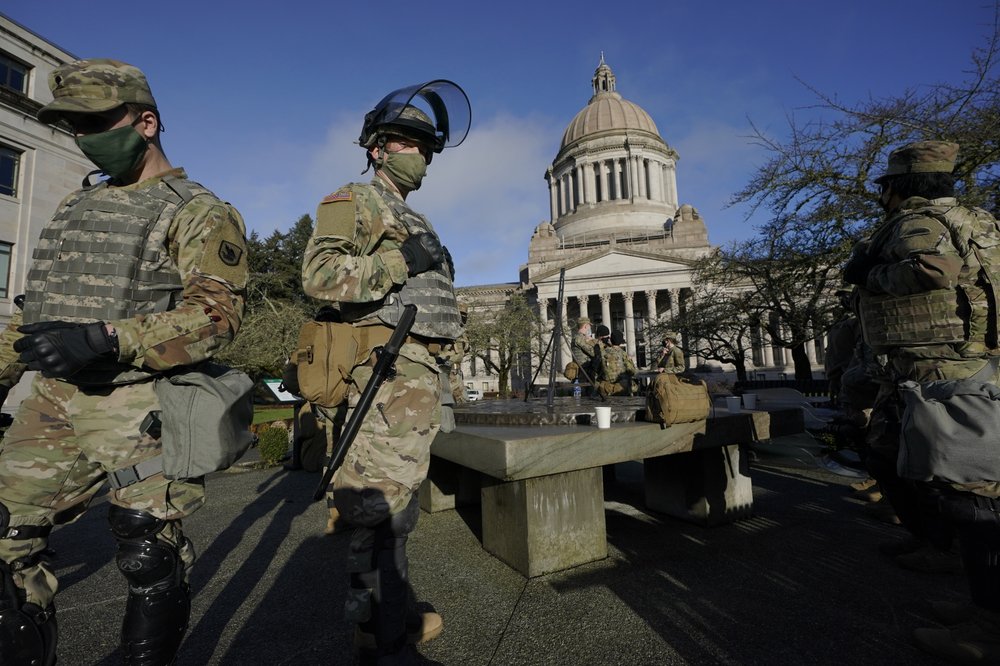
Responding to warnings of potentially violent demonstrations, governors across the nation are calling out National Guard troops, declaring states of emergency and closing their capitols to the public ahead of President-elect Joe Biden’s inauguration next week. Though details remain murky, demonstrations are expected at state capitols beginning Sunday and leading up to Biden’s succession of President Donald Trump on Wednesday. State officials hope to avoid the type of violence that occurred Jan. 6, when a mob of Trump supporters stormed the U.S. Capitol, leaving a Capitol Police officer and four others dead. The FBI has warned of the potential for violence at all state capitols and has said it is tracking an “extensive amount of concerning online chatter,” including calls for armed protests. Governors across the country are sending thousands of National Guard troops to Washington, D.C., where the National Mall has been closed to the general public as part of an intense security effort. More than a dozen governors also have called out the Guard to protect their own state capitols and aid local law enforcement officers. “We are prepared for the worst, but we remain hopeful that those who choose to demonstrate at our Capitol do so peacefully, without violence or destruction of property,” Michigan State Police Col. Joe Gasper said Friday, as Democratic Gov. Gretchen Whitmer announced the Guard’s role. Crews installed a six-foot fence around the Michigan Capitol ahead of expected protests, and ground-level windows were boarded up at a nearby building that houses the governor’s office. Gasper said an increased state police presence would remain at the statehouse at least through mid-February. Some windows also were boarded at capitols in Wisconsin and Illinois, both of which activated the National Guard to help with security. Though the Wisconsin Capitol already was closed to the public because of the coronavirus, Democratic Gov. Tony Evers’ administration told those who had been coming into the Capitol to instead work remotely for the rest of the month. Law enforcement officials were reducing parking around the capitol building in Madison this weekend and urging people to avoid the area as they braced for potential unrest. There was only one known organized event for the day, an anti-fascist demonstration where free food, drinks and clothes were to be distributed. California Gov. Gavin Newsom is mobilizing up to 1,000 National Guard members over concerns of civil unrest. State officials on Thursday erected a chain link fence around the Capitol, bolstering other temporary and permanent barriers. The California Highway Patrol is refusing to issue permits for rallies at the Capitol. “We’re treating this very seriously and deploying significant resources to protect public safety, critical infrastructure and First Amendment Rights,” Newsom said in a video message. “But let me be clear: There will be no tolerance for violence.” Other governors were encouraging people to stay away from capitol buildings during the coming days. Ohio Gov. Mike DeWine, a Republican, closed the Capitol until after Biden’s inauguration and activated hundreds of National Guard members. Citing the possibility of armed protests, Kansas Gov. Laura Kelly on Friday began a one-week restriction on public access to the Capitol. Only those who have business with the Legislature or governor’s office will be allowed inside, and they will have to provide an email showing they have a meeting or are testifying to a legislative committee. Kelly and Pennsylvania Gov. Tom Wolf closed their Capitol buildings for a couple days next week, coinciding with the presidential inauguration. The Pennsylvania Capitol complex already had been closed to the general public because of the coronavirus pandemic, but the new order advises state employees who work in person to take off Tuesday and Wednesday; Monday is the Martin Luther King Jr. holiday. “While we are not aware of any specific threats at this time, we want to act with an abundance of caution to keep employees safe,” Wolf’s administration said on its website. Uncertainty heading into the weekend was a common theme among state officials and law enforcement officers. Many were enhancing security based on past demonstrations or general warnings but without specific expectations about how many protesters, if any, would show up outside state capitol buildings in the coming days. The National Guard is supplementing security at Washington’s capitol, where people broke a gate and entered the grounds of the governor’s mansion last week. But Washington State Patrol spokesman Chris Loftis said Friday that there are “no known explicit threats” detailing the time, place and action of future demonstrations. “We cannot be dismissive of the possible dangers but we should not be alarmists either,” Loftis said in an email to media. The state patrol “has been directed to meet this discomforting uncertainty with caution, preparedness, resolve, and calm — certainly, a wise course of action for all.” Legislatures in several states, including Michigan, also were canceling or limiting their work next week. Oregon’s Legislature will convene Tuesday. But the House and Senate have canceled floor sessions and committee hearings, and there will be no in-person meetings. Senate President Peter Courtney, a Democrat from Salem, said the decision was made after consulting with police. Last month, a violent crowd entered the Oregon Capitol, fought with police and damaged the building. The Republican-led South Carolina House and Senate won’t convene in full session next Tuesday or Wednesday, and committees will meet virtually. The Capitol building will be closed from Saturday through Wednesday “out of an abundance of caution,” state and local authorities said in a joint statement. Republican leaders of the Missouri House also canceled session for next week. Though several House members had expressed security concerns following the unrest in the nation’s capitol, a written statement from GOP leadership cited a rising number of COVID-19 cases in the Capitol building as a reason for the cancellation. New Mexico Gov. Michelle Lujan Grisham, a Democrat, and Utah Gov. Spencer Cox, a Republican, both declared states of emergency on Thursday ahead of potential demonstrations at their capitols. Fencing was installed in a wide radius around
Completed Wisconsin recount confirms Joe Biden’s win over Donald Trump
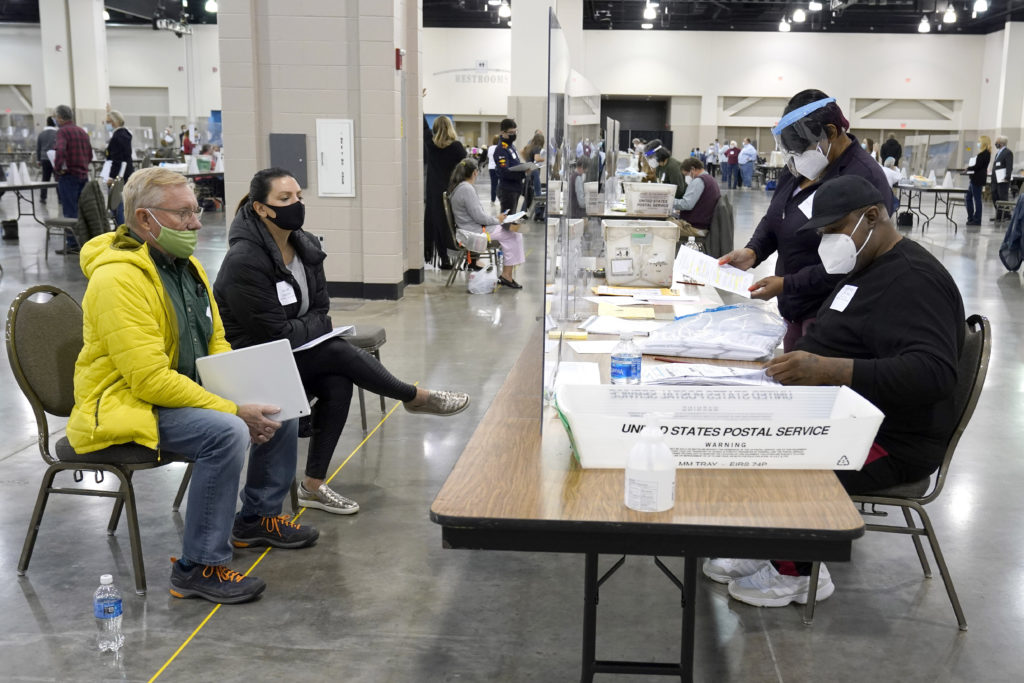
Wisconsin finished a recount of its presidential results on Sunday, confirming Democrat Joe Biden’s victory over President Donald Trump in the key battleground state. Trump vowed to challenge the outcome in court even before the recount concluded. Dane County was the second and last county to finish its recount, reporting a 45-vote gain for Trump. Milwaukee County, the state’s other big and overwhelmingly liberal county targeted in a recount that Trump paid $3 million for, reported its results Friday, a 132-vote gain for Biden. Taken together, the two counties barely budged Biden’s winning margin of about 20,600 votes, giving the winner a net gain of 87 votes. “As we have said, the recount only served to reaffirm Joe Biden’s victory in Wisconsin,” Danielle Melfi, who led Biden’s campaign in Wisconsin, said in a statement to The Associated Press. Trump campaign spokeswoman Jenna Ellis said in a statement that the Wisconsin recounts have “revealed serious issues” about whether the ballots were legal, but she offered no specific details to validate her claim. “As we have said from the very beginning, we want every legal vote, and only legal votes to be counted, and we will continue to uphold our promise to the American people to fight for a free and fair election,” Ellis said. With no precedent for overturning a result as large as Biden’s, Trump was widely expected to head to court once the recount was finished. His campaign challenged thousands of absentee ballots during the recount, and even before it was complete, Trump tweeted that he would sue. “The Wisconsin recount is not about finding mistakes in the count, it is about finding people who have voted illegally, and that case will be brought after the recount is over, on Monday or Tuesday,” Trump tweeted on Saturday. “We have found many illegal votes. Stay tuned!” The deadline to certify the vote is Tuesday. Certification is done by the Democratic chair of the Wisconsin Election Commission, which is bipartisan. The Wisconsin Voters Alliance, a conservative group, has already filed a lawsuit against state election officials seeking to block certification of the results. It makes many of the claims Trump is expected to make. Gov. Tony Evers’ attorneys have asked the state Supreme Court to dismiss the suit. Evers, a Democrat, said the complaint is a “mishmash of legal distortions” that uses factual misrepresentations in an attempt to take voting rights away from millions of Wisconsin residents. Another suit filed over the weekend by Wisconsin resident Dean Mueller argues that ballots placed in drop boxes are illegal and must not be counted. Trump’s attorneys have complained about absentee ballots where voters identified themselves as “indefinitely confined,” allowing them to cast an absentee ballot without showing a photo ID; ballots that have a certification envelope with two different ink colors, indicating a poll worker may have helped complete it; and absentee ballots that don’t have a separate written record for its request, such as in-person absentee ballots. Election officials in the two counties counted those ballots during the recount but marked them as exhibits at the request of the Trump campaign. Trump’s campaign has already failed elsewhere in court without proof of widespread fraud, which experts widely agree doesn’t exist. Trump’s legal challenges have failed in Arizona, Georgia, Michigan, Nevada, and Pennsylvania. Republished with the permission of the Associated Press.
State leaders facing 2nd wave resist steps to curb virus
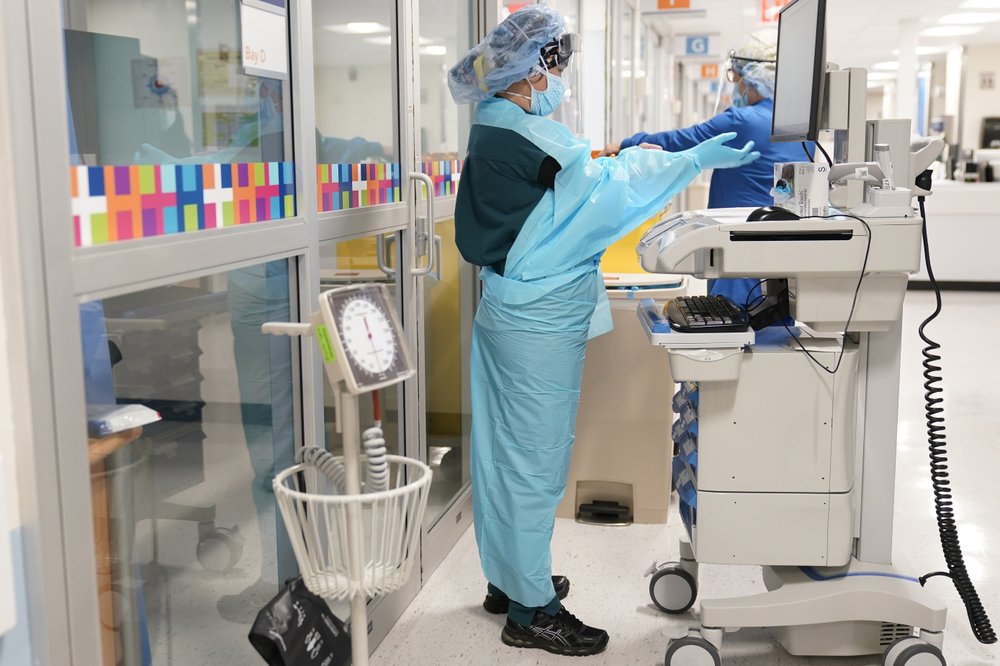
Even as a new surge of coronavirus infections sweeps the U.S., officials in many hard-hit states are resisting taking stronger action to slow the spread, with pleas from health experts running up against political calculation and public fatigue. Days before a presidential election that has spotlighted President Donald Trump’s scattershot response to the pandemic, the virus continued its resurgence Friday, with total confirmed cases in the U.S. surpassing 9 million. The number of new infections reported daily is on the rise in 47 states. They include Nebraska and South Dakota, where the number of new cases topped previous highs for each state. The record increases in new cases have eclipsed the spikes that set off national alarms last spring and summer. During those outbreaks, first in the Northeast and then in Sun Belt states, many governors closed schools and businesses and restricted public gatherings. But this fall’s resurgence of the virus, despite being far more widespread, has brought a decidedly more limited response in many states. Most are led by Republican governors backing a president who insists, falsely, that the country is getting the virus under control. Over the past two weeks, more than 76,000 new virus cases have been reported daily in the U.S. on average, up from about 54,000 in mid-October, according to Johns Hopkins University. Deaths, which usually lag case numbers and hospitalizations, are also rising, from about 700 to more than 800 a day. The virus has now killed more than 229,000 Americans. Nevertheless, many officials have resisted calls to enact measures like statewide mask mandates or stricter curbs on the size of gatherings, casting the response to the virus as a matter of individual decision-making. “At the end of the day, personal responsibility is the only way. People will either choose or not choose to social distance, or choose to wear a mask or not,” said Tennessee Gov. Bill Lee, a Republican. “What we can do is to remind them is that personal responsibility can protect them.” Lee’s state is among those without a blanket mask mandate despite a study released this week showing that areas of Tennessee where people are not required to wear them are seeing the most hospitalizations. In Iowa, where a record 606 coronavirus patients were hospitalized Friday, one health expert said officials there had been too quick to reopen, along with several neighboring states. “If we follow the course that the other Midwestern states like Wisconsin, North Dakota and South Dakota have, we’re going to have trouble keeping up,” said Dr. Ravi Vemuri, an infectious disease specialist at MercyOne hospitals. Republican Gov. Kim Reynolds, who has rejected mask requirements and said Iowans must learn to live with the virus, continued this week to downplay efforts to contain it. On Wednesday, Reynolds, who has made frequent campaign appearances for Trump and other candidates surrounded by crowds of often maskless supporters, poked fun at Theresa Greenfield, a Democrat running in a tight Senate race, for suspending a campaign tour after a staff member was exposed to someone who tested positive. “Theresa didn’t get very far on her RV tour, did she?” Reynolds said. She went on to accuse Greenfield and other Democrats of “hiding in their basements.” The pandemic has put similar pressures on states with Democratic governors, but the politics have played out differently. Kansas Gov. Laura Kelly, a Democrat, has repeatedly tried to impose restrictions but been stymied by the Republican-controlled legislature. She is considering calling lawmakers into a special session to impose a statewide mask mandate. In Wisconsin, where the virus has raged since September, Democratic Gov. Tony Evers pleaded with residents this week to shelter in place to slow the spread. Evers issued a formal stay-at-home order in March, but the state’s conservative Supreme Court struck it down in May. He was subsequently sued over a mask mandate and limits on gatherings in bars and restaurants. The parrying by governors and legislators reflect the way that politics and the personal beliefs of a significant sector of the population have become entangled with supposedly nonpartisan matters of public health. Michelle Riipinen, a 38-year-old resident of Boise, Idaho, said state-mandated school closings, business shutdowns and mask requirements are “draconian measures” that do more harm than good. She said she chooses not to wear a mask. “I believe in personal responsibility and that it is our responsibility as American citizens to choose if we want to wear it or not,” she said. “Our government shouldn’t be making that choice for us.” In Utah, Republican Gov. Gary Herbert has ordered mask mandates and limited social gatherings to 10 people or fewer only in counties with the highest transmission rates, not the entire state. The latter measure includes exceptions for religious services and school events. Full Coverage: Virus Outbreak “This is not an easy thing to enforce. As you drive down the road, you talk about people getting tickets for speeding, but how many are actually speeding?” Herbert said when asked about his resistance to broader mandates. Herbert said Friday he was “disgusted” after someone shot at a state health department office. The incident came a day after anti-mask protesters gathered outside the home of Utah state epidemiologist Dr. Angela Dunn, who recommended that the state reinstate restrictions to avoid overwhelming hospitals. “It’s taken a really big toll on my family and myself,” Dunn said. “I think it’s really unfortunate we live in a state where people feel that it is OK to harass civil servants.” Herbert, who has not heeded Dunn’s recommendation, said protesters were within their rights to criticize him or other elected officials, but that they should leave state employees alone. “I know we’re asking a lot of the people of Utah to be patient,” the governor said. “We know that their time is valuable. I would hope that they would put that in a constructive effort.” Republished with the permission of the Associated Press.
‘Fanning the flames’: Dems accuse Donald Trump of stoking violence
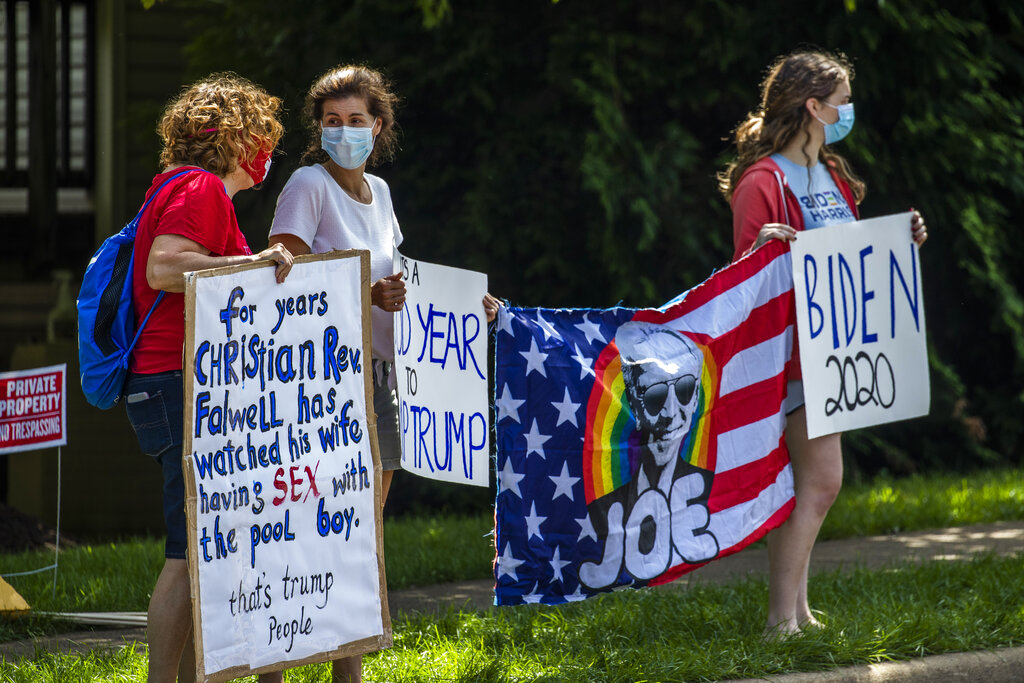
Trump was accused of trying to inflame racial tensions and incite violence to benefit his campaign.
Barack Obama endorses Joe Biden as the best leader for ‘darkest times’

The endorsement marked Obama’s return to presidential politics more than three years after leaving the White House.
Election limbo as coronavirus outbreak upends US primaries
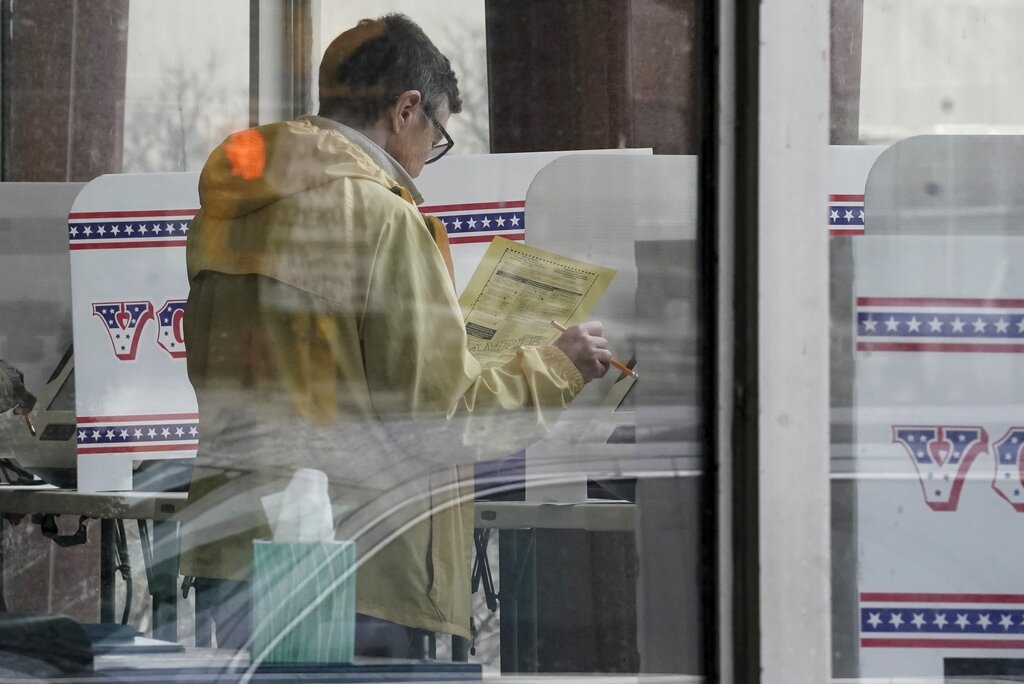
States that have yet to hold their primaries find themselves in a seemingly impossible situation.
