
Donald Trump signals changes to US interrogation, detention policy
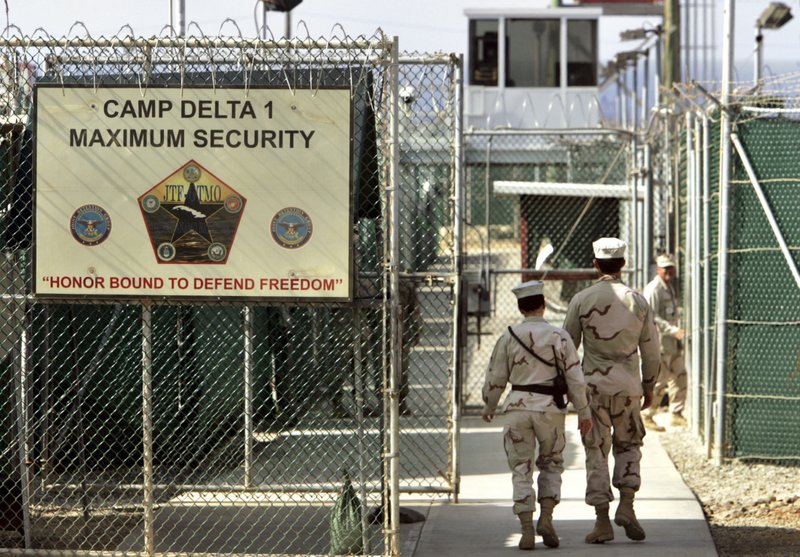
President Donald Trump‘s renewed embrace of torture in the fight against Islamic extremism sets up a heated dispute with a long line of opponents both at home and abroad of Bush-era interrogation policies and CIA-run “black site” prisons. “We have to fight fire with fire,” Trump told ABC in an interview aired Wednesday after The Associated Press and other news organizations obtained a copy of a draft executive order that signals sweeping changes to U.S. interrogation and detention policy. The draft order would reverse President Barack Obama’s order to close the military detention center at Guantanamo Bay, Cuba — a place Trump has said he wants to fill up “with bad dudes.” It orders up recommendations on whether the U.S. should reopen CIA detention facilities outside the United States. Critics said the clandestine sites marred America’s image on the world stage. The draft directive also orders a review of interrogation methods used on terror suspects and calls for suggested modifications that would not violate the U.S. legal ban on torture. Trump, who has pushed for tougher interrogation techniques, said he would consult with new Defense Secretary James Mattis and CIA Director Mike Pompeo before authorizing any new policy. But he said he had asked top intelligence officials: “Does torture work? And the answer was ‘Yes, absolutely.’” Mattis and Pompeo did not know about the draft executive order, according to a congressional aide who was not allowed to publicly discuss the matter and spoke on condition of anonymity. When asked specifically about waterboarding, an interrogation method that simulates drowning, Trump cited the extremist group’s atrocities against Christians and others and said he wanted to do “everything within the bounds of what you’re allowed to do legally.” Provisions of the draft order are not surprising based on Trump’s remarks on the campaign trail. Trump spoke emphatically about toughening the U.S. approach to fighting Islamic State militants, saying he would re-authorize waterboarding and a “hell of a lot worse.” However, many intelligence and military officials, human rights groups and both Democratic and Republican lawmakers have widely disputed Trump’s claim that harsh interrogation methods are effective in getting critical intelligence from detainees. The AP obtained the draft order from a U.S. official, who said it had been distributed by the White House for consultations before Trump signs it. The official wasn’t authorized to speak publicly on the matter and spoke on condition of anonymity. Trump spokesman Sean Spicer said the draft order was “not a White House document.” House Speaker Paul Ryan said it was his understanding that the draft order was written by someone who had earlier worked on the Trump transition team. “This is not something the Trump administration is planning on, working on,” Ryan said. Whatever changes to U.S. interrogation and detention policy that Trump eventually proposes will face political, practical and statutory hurdles. Republican Sen. John McCain of Arizona, who was beaten as a prisoner during the Vietnam War, will be Trump’s most formidable foe on Capitol Hill. “The president can sign whatever executive orders he likes. But the law is the law. We are not bringing back torture in the United States of America,” said McCain, chairman of the Senate Armed Services Committee. After the Sept. 11, 2001, attacks, President George W. Bush authorized a covert program that led to dozens of detainees being held in secret locations overseas and to interrogation tactics that included sleep deprivation, slapping and slamming against walls, confinement in small boxes, prolonged isolation and even death threats. Three detainees faced waterboarding. Many developed psychological problems. Elisa Massimino, president of Human Rights First, said: “America paid a high price for its trip to the dark side. Our allies grew reluctant to cooperate with us and our enemies gained a potent recruitment tool that drew foreign fighters to the battlefield who killed American soldiers.” While some former government officials insist the program was effective, many others say the abuses weakened America’s moral standing in the world and hurt morale among intelligence officers before Obama shut it down. They say harsh interrogation techniques break down trust with a suspect and often prompt them to say anything to stop the harsh treatment. Retired General Charles C. Krulak, former commandant of the Marine Corps, said reviving torture is illegal, harms U.S. national security and betrays American ideals. Krulak was one of 176 retired high-ranking officers, including 33 four-star generals and admirals, who sent a letter to Trump in October urging him to denounce torture. Besides scrapping Obama’s order to close Guantanamo, the draft order would revoke other Obama directives that closed the CIA detention facilities, gave the International Red Cross timely access to all detainees and prohibited the U.S. from using any interrogation technique not listed in the Army Field Manual. Among the interrogation techniques banned by the manual were forced nakedness, hooding, beatings, sexual humiliation, threatening with dogs, mock executions, electric shocks, burning and waterboarding. Wanting to ensure that no future president could simply tear up that order, McCain teamed up with Sen. Dianne Feinstein, D-Calif., to turn it into law. Their anti-torture amendment, which was adopted in a 78-21 bipartisan vote and became law late last year, requires the Army to conduct a review of the field manual every three years in consultation with the attorney general, the FBI director and the director of national intelligence. The first review deadline is Dec. 19. Trump could rewrite the field manual to include harsher interrogation techniques, but whatever is added cannot “involve the use or threat of force,” according to the current law. That could bring the argument down to the definition of whether waterboarding or extreme stress positions, for example, constitute a “use or threat of force,” said Robert Chesney, professor at the University of Texas School of Law. Pompeo, Trump’s CIA director, said in his confirmation hearing that he would abide by all laws. But he also said he’d consult with CIA and other government experts on whether current restrictions on interrogation were an “impediment to
Donald Trump reverses stance on torture and targeting civilians
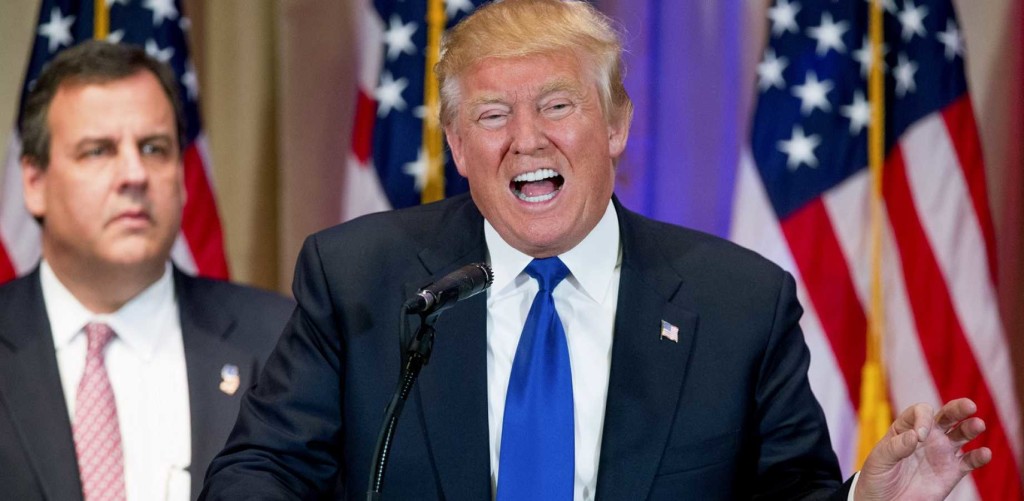
Donald Trump retreated Friday from his promise that if elected president he would order the military to kill family members of militants who threaten the United States. Trump’s campaign issued a statement quoting him as saying he would not order the military to take actions contrary to international or U.S. law. But fewer than 24 hours earlier, in Thursday’s GOP debate, Trump stuck to his position on targeting family members of militants and on an expansive use of torture against captured militants. When a debate moderator asked him what he would do if the military refused to carry out such orders, Trump replied: “They’re not going to refuse me. Believe me.” The use of torture and the killing of civilians are barred by the Geneva Conventions, to which the United States is a signatory. Congress outlawed waterboarding and any so-called enhanced interrogation techniques after the administration of George W. Bush carried out such acts against suspected al-Qaida fighters. Members of the U.S. military are bound by duty and tradition to refuse orders they know to be illegal. This includes intentionally targeting civilian noncombatants. The issue drew additional attention this week when more than 100 Republican defense and national security figures, including former senior Pentagon officials, issued a statement blasting Trump’s foreign policy positions and calling his embrace of the expansive use of torture “inexcusable.” Defining when aggressive interrogation techniques such as waterboarding amount to torture is a matter of debate, but Trump had made clear that as president he would not hesitate to go beyond waterboarding. “We should go for waterboarding and we should go tougher than waterboarding,” he said at Thursday’s debate. He also had defended his position on targeting the family of militants, which he first raised in a “FOX and Friends” interview last December. “The other thing with the terrorists is you have to take out their families. When you get these terrorists, you have to take out their families. They care about their lives, don’t kid yourself. When they say they don’t care about their lives, you have to take out their families.” On Friday, however, Trump reversed course. “I will use every legal power that I have to stop these terrorist enemies,” the statement issued by his campaign said. “I do, however, understand that the United States is bound by laws and treaties and I will not order our military or other officials to violate those laws and will seek their advice on such matters. I will not order a military officer to disobey the law. It is clear that as president I will be bound by laws just like all Americans and I will meet those responsibilities.” The Trump campaign also has announced that Sen. Jeff Sessions, an Alabama Republican and member of the Senate Armed Services Committee, is Trump’s adviser on national security matters during the campaign. Sen. Lindsey Graham, an early contender for the Republican presidential nomination, said Friday he wrote to Gen. Joseph Dunford, chairman of the Joint Chiefs of Staff, asking his views on whether the intentional targeting of noncombatant family members of militants, including children, is legal under the laws of war. Graham, a former military lawyer, also asked Dunford what advice he would give troops if ordered to target such civilians. Republished with permission of the Associated Press.
Jeb Bush leaves door open for use of torture by government
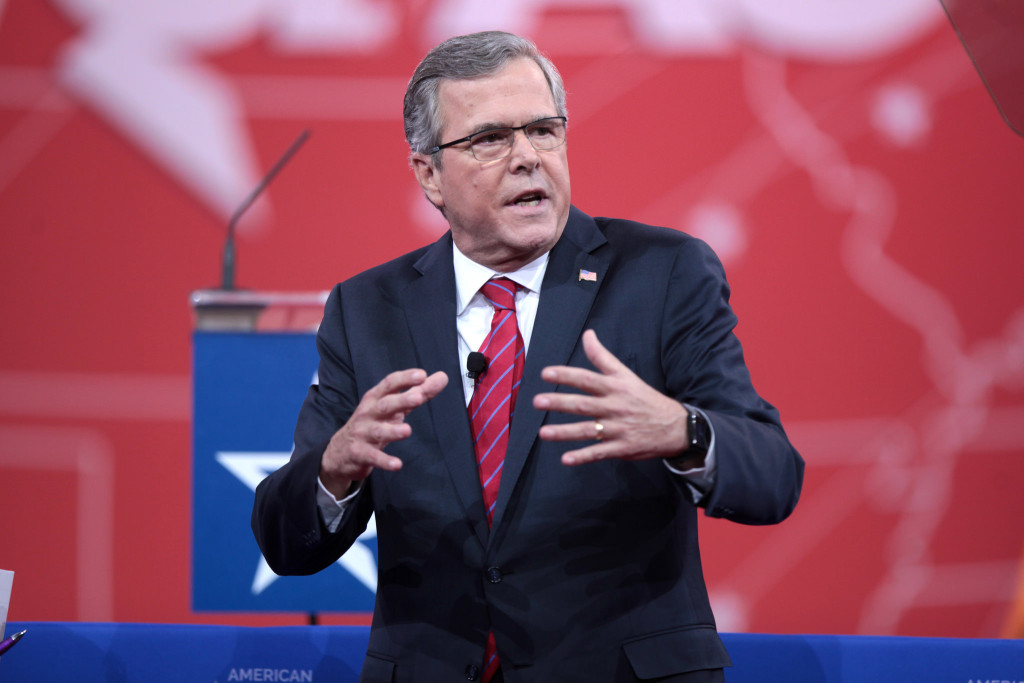
Republican presidential candidate Jeb Bush on Thursday declined to rule out resuming the use of torture under some circumstances by the U.S. government. “I don’t want to make a definitive, blanket kind of statement,” Bush told an audience of Iowa Republicans, when asked whether he would keep in place or repeal President Barack Obama‘s executive order banning so-called enhanced interrogation techniques by the CIA. “This is something that I’m actually struggling with because I’m running for president … and when you are president your words matter,” he said. The former Florida governor said that in general, he believes torture is inappropriate, and that he was glad his brother, former President George W. Bush, largely ended the CIA’s use of the techniques before he left office. The CIA used waterboarding, slapping, nudity, sleep deprivation, humiliation and other methods to coerce al-Qaida detainees – methods the military would be prohibited from using on prisoners of war. A Senate report released last year cited CIA records in concluding that the techniques were more brutal than previously disclosed, that the CIA lied about them, and that they failed to produce unique, life-saving intelligence. The CIA and its defenders take issue with the report. Jeb Bush said he believed that the techniques were effective in producing intelligence, but that “now we’re in a different environment.” He suggested there may be occasions when brutal interrogations were called for to keep the country safe. “That’s why I’m not saying in every condition, under every possible scenario,” Bush said. Bush has been walking a careful path, seeking to disassociate himself from some of the unpopular aspects of his brother’s legacy while praising him. In discussing the Iraq war, for example, Bush, who previously acknowledged that the intelligence didn’t support the decision to invade, on Thursday said he had learned from some of the mistakes made during the occupation, including what he said was a wrong decision to disband the Iraqi military. He said his brother also now believes that was a mistake. Bush blames the rise of the Islamic State group on what he said was Obama’s failure to negotiate an agreement to leave U.S. troops there in 2011. Asked if it was true that there would be no IS absent a U.S. invasion of Iraq, he said there was no way to know. He repeated his call for a more aggressive posture toward the Islamic State group but, like the Obama administration, he opposes sending in regular U.S. ground forces. He does favor putting special operations troops on the battlefield. Bush spoke at a foreign policy forum sponsored by Americans for Peace, Prosperity and Security, a group chaired by Mike Rogers, a former Republican congressman from Michigan who chaired the House Intelligence Committee. Republished with permission of the Associated Press.
