
Road to passage for Texas ‘bathroom bill’ getting far harder
The path for Texas to enact its version of a North Carolina-style bathroom bill is poised to get far tougher after the Republican-controlled state House ran out the clock Thursday on a key midnight bill deadline. A proposal mandating transgender people to use public restrooms according to their birth certificate gender sailed through the Texas Senate weeks ago, but a similar measure that bans schools and local communities from passing ordinances to protect LGBT rights in bathrooms has been bottled up in the House. That’s despite Republican Gov. Greg Abbott urging fellow members of his party to support it and even calling pastors at top evangelical churches around the state to increase public pressure. Outnumbered House Democrats have been using tactics to delay a vote on this and other hot-button issues since late last week. House Speaker Joe Straus, a San Antonio Republican who sees the bill as bad for business, hasn’t intervened. Bills not approved by midnight aren’t dead, but need some maneuvering to live on. Top firms and lobbyists have opposed the bathroom bill. Many Hollywood actors and music stars have suggested state boycotts, and the NFL and NBA have warned about canceling future Texas events if it passes. State Rep. Ron Simmons, who has been the issue’s top House champion, said supporters will now look to attach public bathroom restrictions for schools onto education legislation — even if wider bans fizzle. “I think the likelihood of something getting passed this session as it relates to schools is pretty good,” said Simmons, a Republican from Carrollton in suburban Dallas. “We’re looking for opportunities to amend to other bills that would allow us to be able to protect the school scenario, which is where our number one concern is.” Texas’ legislative session ends May 29, so while there is still time, it’s beginning to run short. Efforts to save the bathroom bill will have to compete with other conservative priorities that have bogged down, including efforts to further restrict abortion in the nation’s second-largest state. Top Republicans vowed to hit back at the U.S. Supreme Court, which last summer struck down most of Texas’ tough 2013 abortion law, which caused about 20 clinics around the state to close. As stalling tactics became more widespread, a series of Republics took to the floor to lament “pro-life bills dying.” One abortion bill that did get approved Thursday requires medical clinics to offer quick, detailed reports of any complications from abortions, and have Texas’ health department produce an annual report compiling that data. Another removes ectopic pregnancy surgery from the state definition of abortion. Ectopic pregnancies occur when an egg is fertilized but attaches itself somewhere other than a woman’s uterus. Such cases require tissue removal via surgery. Neither of those bills has been lauded by anti-abortion activists as major wins. Democrats delayed other hot-button bills with lengthy debates on noncontroversial issues. The slow pace kept tensions on the House floor relatively low and there were few protests in or around the state Capitol, where groups both supporting abortion rights and opposing the procedure have staged small demonstrations throughout the session. “It’s no secret the legislative process in Texas is designed to kill more bills than pass bills and that’s why these deadlines are in place,” said Rep. Chris Turner, of Grand Prairie, who heads the House Democratic Caucus. Asked about legislation surviving in different forms he said, “We’re always on the lookout for any amendments that are harmful to the state and the so-called bathroom issue is certainly near the top of that list.” Republished with permission of The Associated Press.
What happens if Trump pulls transgender bathroom guidance?
The Trump administration could revise or withdraw an Obama-era directive requiring public schools to let transgender students use bathrooms and locker rooms that match their chosen gender identity. White House spokesman Sean Spicer said Tuesday the Justice Department is working on a new set of guidelines on bathroom access but offered no other details. “I think that all you have to do is look at what the president’s view has been for a long time, that this is not something the federal government should be involved in, this is a states’ rights issue,” he said. The Justice Department declined to comment. But Spicer’s comment stoked concerns among transgender-rights advocates about a reversal of the Obama administration’s protections. Here’s a look at the issue and what could happen: WHAT IS THE FEDERAL BATHROOM GUIDANCE FOR SCHOOLS? The Obama administration in May told public schools nationwide that they are obligated to treat transgender students in a way that matches their gender identity, even when records differ or it makes others uncomfortable. It was the administration’s determination that Title IX, the federal law prohibiting sex discrimination in education and activities, also applies to gender identity. About 150,000 youth — 0.7 percent— between the ages of 13 and 17 in the United States identify as transgender, according to a study by The Williams Institute at the UCLA School of Law. The Obama-era guidance held no force of law but sent a warning that schools could lose funding if they did not comply with the administration’s interpretation of the law. Republicans immediately pushed back, arguing it was an example of federal government overreach and the Obama administration meddling in local matters. Texas Lt. Governor Dan Patrick equated it to “blackmail” and said at the time that the state was ready to forfeit federal education money rather than comply with the guidance. Thirteen states sued to challenge the directive. A federal judge in Texas temporarily blocked the guidance in August, and the Trump administration this month said it would no longer fight to limit the injunction. WHAT COULD HAPPEN IF THE GUIDANCE IS WITHDRAWN? Advocates said federal law would still prohibit discrimination against students based on their gender or sexual orientation even without the Obama guidelines. “To cloak this in federalism ignores the vital and historic role that federal law plays in ensuring that all children (including LGBT students) are able to attend school free from discrimination,” Vanita Gupta, who was head of the Justice Department’s Civil Rights Division when the guidance was issued, said in a statement. Still, legal experts say a change in position could have consequences for unresolved court cases dealing with Title IX. The Supreme Court could decide to send a case about a transgender teen in Virginia back to a lower court. The high school senior was born female, but identifies as a male and wants to use the boys’ bathroom at his school. The high court is scheduled to hear the case in March. Courts are unsettled about whether, in the absence of guidance from the federal government, anti-discrimination laws require schools to allow students to use bathrooms and locker rooms based on their gender identity. The justices could direct lower courts to decide that issue. Similar lawsuits are still playing out across the country. “Some courts might say the fact that they go back and forth on this every time the administration changes, maybe we shouldn’t defer to it, maybe we should just decide for ourselves,” said Arthur Leonard, a professor at New York Law School who has studied LGBT legal history. WHAT WOULD THE CHANGE MEAN FOR SCHOOLS? A patchwork of state laws dealing with the bathroom issue will continue to emerge. Fifteen states have explicit protections for transgender students in their state laws, and many individual school districts in other states have adopted policies that respected such students on the basis of their gender identity, said Sarah Warbelow, legal director of the Human Rights Campaign. Just one state, North Carolina, has enacted a law restricting bathroom access to the sex at birth. But so far this year, lawmakers in more than 10 states are considering similar legislation, according to the National Conference of State Legislatures. Transgender-rights advocates argued the guidance was a helpful tool for districts in understanding federal law. Without it, more schools could be subject to lawsuits as districts try to sort through the confusion, said Rachel Tiven, CEO of the LGBT advocacy group Lambda Legal. revising or rescinding the guidance “The important thing to understand is that it doesn’t change the underlying law, but it’s an invitation to harm the most vulnerable kids in school,” Tiven said of any efforts to revise or rescind the guidance . Republished with permission of The Associated Press.
Parents of transgender students appeal to Donald Trump on bathrooms
Hundreds of parents across the country have called on President Donald Trump to embrace Obama-era protections for transgender students that call for letting them use school bathrooms in accordance with their gender identity. In a letter sent to the president by the Human Rights Campaign late Tuesday, more than 780 parents stressed that “all students deserve equal access to a safe, welcoming school and a high quality education no matter who they are.” The call follows a decision by the Trump administration last week to abandon a defense of the guidelines issued by the Obama administration. A court issued an injunction against those guidelines last summer in response to a lawsuit filed by 13 states. President Barack Obama appealed the injunction, but the Trump administration decided to back off from the appeal. Parents of transgender students say that revoking the right of students to use school bathrooms according to their gender identity amounts to discrimination and it creates a hostile learning environment for transgender students. “These policies are wrong, they hurt our children, and they violate the principle of equal education,” the letter said. Conservative activists firmly oppose the idea, saying it endangers the privacy and safety of other students. Newly confirmed Education Secretary Betsy DeVos has not voiced a position on the bathrooms controversy other than to say that she is against discrimination and will support all students. During the election campaign Trump said that transgender students can use the bathroom they like. Republished with permission of The Associated Press.
Alabama state senator’s controversial pre-filed ‘bathroom bill’ aims to protect privacy
Silently waiting for the upcoming 2017 legislative session, you’ll find dozens of pre-filed bills in the Alabama Legislature. Perhaps the most controversial of the current bunch is Rainbow City-Republican, state Sen. Phil Williams‘ “bathroom bill,” SB 1. Titled the Alabama Privacy Act, the bill aims to protect the privacy of public bathroom goers by mandating “[a]ny person or entity that makes restroom, bathroom, or changing facilities available to the public shall do so in a manner that ensures the privacy of each individual” using the facility. The bill specifies the types of public rest rooms that may be provided based on the gender of the user. According to the text, the requirement could be fulfilled in one of three ways: a single user facility; facilities separated by the physical gender of the users; or, if facilities are provided in a unisex/transgender manner, an attendant for each facility must be onsite to address any concerns or questions of the general public. For entities that fail to provide what Williams deems “appropriate” facilities to the public, they will face harsh civil penalties in the following amounts: A fine of not less than two thousand dollars ($2,000) for the first violation imposed upon the person or entity payable to the local governing body from whom the person or entity received its license to so provide the facilities. A fine of not less than three thousand five hundred dollars ($3,500) for each subsequent violation. Williams also provides a private right of action in court for those individuals who have been harmed or aggrieved where the appropriate facilities were not available. “My legislation is designed to provide security to the public at large, and this bill could just as easily protect a transgender user of a public facility from being harmed as well,” Williams wrote in an op-ed back in May following President Barack Obama‘s executive transgender bathrooms directive. The president’s controversial directive stipulated that schools must allow students access to restrooms and locker rooms of their gender “identity,” rather than their sex, or lose federal funding .
Alabama goes to court over Obama’s ‘unconstitutional’ transgender bathroom policy
In May, President Barack Obama issued public schools across the country an ultimatum: allow students to use bathrooms and locker rooms corresponding to their gender identity rather than their biological sex, or risk losing your federal aid. In response, 13 states, including Alabama, immediately filed a joint lawsuit to push back against the Obama administration on the grounds the directive is unconstitutional. “Defendants have conspired to turn workplaces and educational settings across the country into laboratories for a massive social experiment, flouting the democratic process, and running roughshod over commonsense policies protecting children and basic privacy rights,” the complaint reads. Friday, those 13 states will appear before a federal judge in Fort Worth seeking to halt the Obama’s administration’s directive. “The Obama administration’s new guidance document is just one more example of the kind of federal overreach that we have come to expect from this White House,” Alabama Attorney General Luther Strange said in May in a statement regarding Obama’s directive. “School bathroom use is an issue that should be decided by parents, teachers, and principals — not federal bureaucrats. “The DOJ guidance document is also wrong on the law,” AG Strange continued. “Title IX allows schools to have separate facilities for separate sexes. The law says ‘sex,’ not gender identity.” Status of Transgender “Bathroom Bill” Legislation States that have considered legislation in 2016 that would restrict access to sex-segregated facilities on the basis of biological sex. Data as of May 25, 2016. Arizona, Georgia, Kentucky, Louisiana, Maine, Mississippi, Oklahoma, Tennessee, Texas, Utah, West Virginia and Wisconsin join Alabama in the suit.
Luther Strange to State Board of Education: Ignore Obama’s transgender bathroom rules
Alabama Attorney General Luther Strange sent a letter to the State Board of Education in response to many questions from Alabama’s school systems on the ramifications of President Obama‘s recent executive actions requiring public schools to allow transgender students to use the restrooms and locker rooms corresponding to their preferred gender. In the letter, Strange advised the school board to simply ignore the president’s directive until the issue is taken up and settled in federal court. “Although the (federal guidance) letter states that it ‘does not add requirements to applicable law,’ it clearly purports to change the law by redefining the word ‘sex’ in Title IX of the Education Amendments of 1972 to mean ‘gender identity,’” wrote Attorney General Strange. “…Title IX is about discrimination ‘on the basis of sex,’ not gender identity.” AG Strange filed suit on behalf of the state against the Obama administration last week, joining 10 other states in pushing back against the executive order. “The Obama administration has taken government overreach to an unprecedented level, directly challenging the personal privacy of America’s school children while threatening to withhold funds from schools which refuse to accept this form of coercion,” said Strange in a press release announcing the lawsuit. “President Obama does not have legal grounds to rewrite the law. Congress was absolutely clear that federal law allows schools to have separate facilities based on the ‘sex’ of the individual, not their gender preference. This disturbing attempt to transform America’s classrooms into laboratories for the Obama administration’s social experiments will not stand up to the test of law.” The issue has become increasingly heated in the weeks following President Obama’s order, with everyone from presumptive GOP nominee Donald Trump to Alabama Today’s own Apryl Marie Fogel weighing in on the subject. Find the entire text of the letter to the State Board of Education below. Dear Members of the Board of Education: My Office has received numerous inquiries from educators and others about the “significant guidance letter” issued by the United States Department of Education and Department of Justice on May 13, 2016. Although the letter states that it “does not add requirements to applicable law,” it clearly purports to change the law by redefining the word “sex” in Title IX of the Education Amendments of 1972 to mean “gender identity.” It is my understanding that principals and teachers in Alabama have considerable discretion in how to accommodate transgendered students. The question of how to accommodate a transgendered student is presently resolved on a case-by-case basis in consultation with the student’s parents, teachers, and principals. But it appears that the most frequent accommodation is to encourage the student to use a single-occupancy bathroom. Unfortunately, that commonsense practice would be inconsistent with the “significant guidance letter,” which states that “a school may not require transgender students . . . to use individual-user facilities.” In my opinion, the guidance letter is based on a legally erroneous interpretation of Title IX. Title IX forbids disparate treatment “on the basis of sex.” 20 U.S.C. §1681(a). But Title IX provides that “nothing contained herein shall be construed to prohibit any education institution . . . from maintaining separate living facilities for the different sexes.” 20 U.S.C. § 1686. Similarly, the 1975 regulation that implements Title IX expressly authorizes “provid[ing] separate toilet, locker room, and shower facilities on the basis of sex.” 33 C.F.R. § 106.33. In other words, Title IX is about discrimination “on the basis of sex,” not gender identity. Unlike subjective gender identity, sex is an objective biological reality. The American Psychological Association defines “sex” as “a person’s biological status” based on indicators such as “sex chromosomes, gonads, internal reproductive organs, and external genitalia.” Gender, on the other hand, “connotes cultural or attitudinal characteristics distinctive to the sexes, as opposed to their physical characteristics.” Hopkins v. Baltimore Gas & Elec Co., 77 F.3d 745, 749 n.1 (4th Cir. 1996). To redefine “sex” as “gender identity,” the guidance letter erroneously relies on judicial decisions that are distinguishable and unpersuasive. Judicial decisions in which transgender plaintiffs have been allowed to pursue discrimination claims have involved penalizing the transgendered person for failing to look, act, or dress the way “real” men or women are culturally expected to. Most of these cases did not even mention bathroom usage, and none of them turned on bathroom-related claims. The guidance letter ignores, however, the numerous courts that have held that schools may provide separate bathrooms on the basis of biological sex differences. E.g., Jeldness v. Pearce, 30 F.3d 1220, 1228 (9th Cir. 1994); R.M.A. v. Blue Springs R-IV Sch. Dist., 477 S.W.3d 185, 187 (Mo. Ct. App. 2015); Johnston v. Univ. of Pittsburgh of Com. Sys. of Higher Educ., 97 F. Supp. 3d 657, 670 (W.D. Pa. 2015); Doe v. Clark Cty. Sch. Dist., No. 206-CV-1074-JCM-RJJ, 2008 WL 4372872 at * 4 (D. Nev. Sept. 17, 2008). Because the guidance letter is based on an erroneous view of Title IX, I believe the threat that schools will lose federal funding for failing to comply with the guidance is ultimately an empty one. On May 25, I filed suit on behalf of Alabama, along with officials from ten other States, to prevent the Department of Justice and Department of Education from enforcing the guidance letter. This lawsuit will determine whether the Department of Justice and Department of Education have the authority to implement the policy announced in the guidance. I have attached a copy of our complaint to this letter. Until the lawsuit is resolved, I would encourage educators to simply ignore the guidance letter. Sincerely, Luther Strange Attorney General
Bathroom debate: It’s my choice when I introduce sensitive topics to my kids
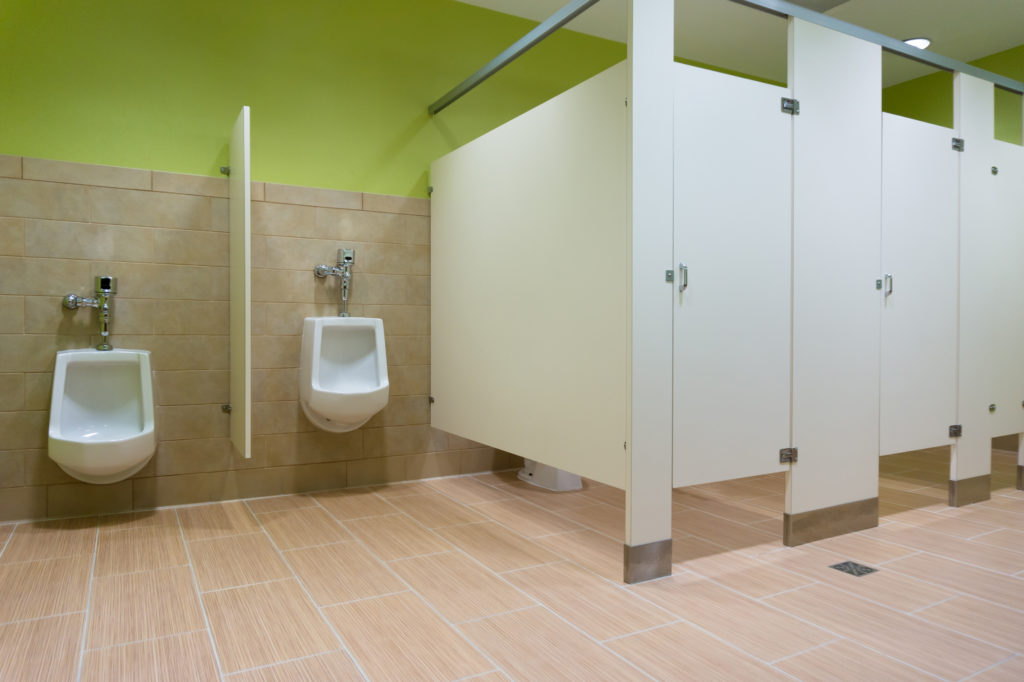
In a sign of the times, bathroom access is the topic du jour. Never mind the more serious issues we face as a nation. Issues such as national security, education policy, oh and the fact Hillary Clinton and Donald Trump look like they’re going to be the best we’ve got for presidential contenders. This debate should really be about two issues: one, public restrooms and two, places where people (namely children or families) are undressing. Thus I have two positions. First, as far as public restrooms where people enter, do their business and leave this should be a states’ rights and private property issue. Pervs will be pervy regardless of laws. I don’t believe transitioning or transitioned transgendered individuals pose a threat. Maybe this discussion will make parents, business owners and security more vigilant about those who seek to enter the wrong bathroom for malicious reasons, but I don’t see much changing in the way of personal safety due to the current discussion. That said, I do take issue with and would actively participate in opposing allowing locker rooms and public school bathrooms where my children would be to be open to transgender students or adults. I believe that parents at a local level or at the level of individual school or facility should have a say in this matter. Life is complicated, and as a parent I have a responsibility to my children to teach them about the more delicate issues of sexuality and alternative lifestyles. Gender identification beyond girl and boy falls in the sensitive and complicated topics that should be explained on the basis of when children are developmentally ready. No one else should decide when it’s the time for my children to be presented with such complex situations. I’ve seen stories of young children under the age of 10 being recognized as transgender. National outlets covered a story about a transgender first grader winning the right to use their identity-based bathroom instead of their birth designation. I believe we are doing those children, as well as those around them, a disservice by behaving as though the concept of gender identity is any more flexible than other genetically-determined factors such as race or ethnicity. If an adult wants to transition understanding the full consequences of their actions. that’s one thing, but to introduce such a conversation into young ages is irresponsible. We as a society understand that children lack the maturity or rational judgment to make lifelong, life-altering decisions. This is why some of the strongest laws we have in the nation focus on child welfare. This is why first graders don’t choose their career paths, decide to tattoo their favorite cartoon character or band member on their bodies, or allow to get married. Children lose their innocence too soon. Kids now are frequently exposed to adult topics such as violence and sexuality before they’re able to recognize their context. I understand that my love of my children is no greater than the love than that of the parent of a child who is experiencing gender identification questions feels. I’m greatly sympathetic to the need for flexibility and accommodations for children with disabilities including severe allergies, learning disabilities, and behavioral issues, but those have a scientific and medically documented explanation that make sense even to children. The accommodations required for standard special needs students also don’t have broader implications for social, religious and political perceptions. Gender dysphoria or gender identity disorder (GID) is still being debated by the medical community as a mental illness or not, with well respected medical professionals believing that it is in fact a mental health issue. Children who believe in the tooth fairy, play with dolls and have imaginary friends shouldn’t be facing discussions about this at a young age. So my two cents: let adults, voters, businesses make accommodations and decisions about public bathrooms and let kids be kids in schools, public pools, at the gym and in sports. We can all acknowledge that regardless of what we think or feel about those living a transgender life, it’s their life and that’s between them, their God, and their loved ones. Oh and for the pervs everyone seems to think will be creeping into all the bathrooms in wigs and dresses let’s change the dialogue of this debate and put a priority on finding them where they are — usually in positions of power or influence of children, lurking on the Internet, sitting beside you at your soccer game — and lock them up and throw away the key.
Katherine Robertson: Alabama’s shrinking sovereignty
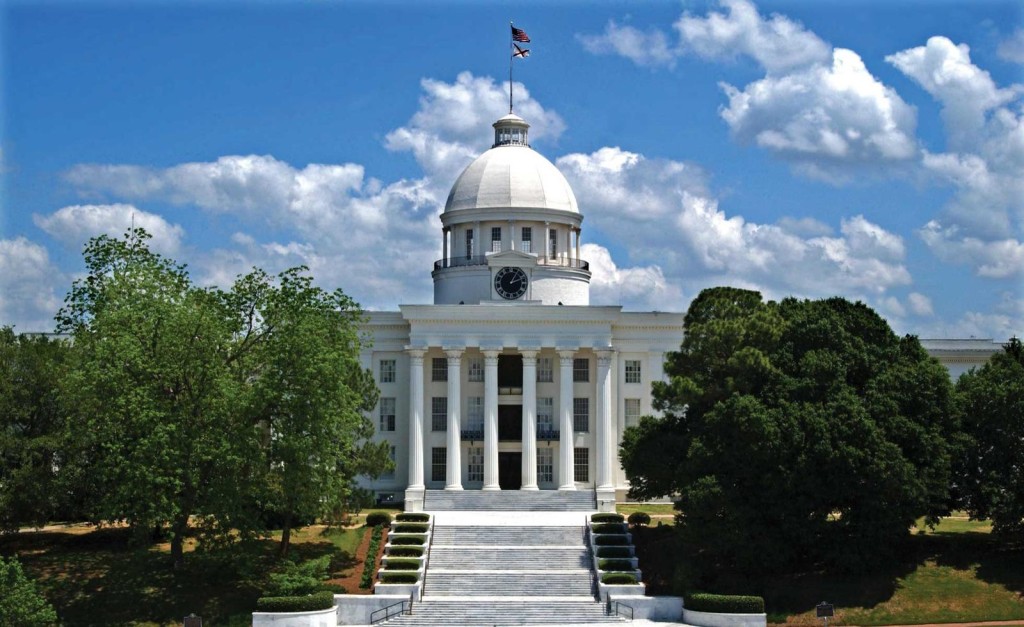
On Friday, the omnipotent U.S. Department of Education threatened to pull federal funding from public school districts that refuse to fall in line over transgender bathrooms. Many school districts will submit, knowing that they cannot afford to jeopardize their federal cash flow. Setting aside for a moment the broader social debate over the directive, it remains a glaring illustration of just how far federalism has fallen from the days of the Founders. While federal overreach has become commonplace, so has the voluntary surrender of the states’ constitutional authority over matters–something that is rarely acknowledged or discussed as states clamor for more and more federal dollars. Alabama landed at number three this year in a report ranking the federal dependency of the states. Largely blamed on the state’s poverty rates, Alabama’s dependency on the federal government has reached dangerously high levels. According to the PEW Charitable Trusts, Alabama’s share of federal funds accounts for roughly 30% of the state’s gross domestic product, 10 points higher than the national average. Estimates derived from Alabama’s Executive Budget Document and the comptroller’s 2014 Comprehensive Annual Financial Report show that the state received $8.5 billion in federal dollars in 2014. Only 10 years prior, Alabama received $5.6 billion. That means that our state is 50% more dependent on the federal government than it was in 2004. These dollars are dedicated to an array of services, the largest of which are Medicaid, education, and human services. From No Child Left Behind to the Affordable Care Act, thousands of laws have been passed by Congress to lure states into ceding their authority in exchange for federal funding. In addition to the concern that federal funds will deplete over time, Alabamians should be troubled by the fact that the state has given up meaningful control–typically, with little to no debate–over many of its own agencies and programs via the severe mandates and regulations that come with accepting federal dollars. In his book, Saving Congress from Itself, former U.S. Sen. James L. Buckley summarizes the problem: “Those governing our towns and states are no longer in control of a large proportion of the government activities that affect our lives.” “In too many respects,” Buckley notes, “our state officials now serve as administrators of programs designed in Washington by civil servants who are beyond our reach, immune to the discipline of the ballot box, and the least informed about our particular conditions and needs.” With Alabama’s own funding challenges to deal with, state agency heads and appropriators have little regard for the nation’s fiscal condition and often take a short-sighted approach to accepting federal dollars. In Montgomery, the common refrain is that we ought to take as much “free” federal money as we can get, never mind the mandates that come with it. In the short term, this “free” money means free political points; in other words, politicians can reap the rewards of the spending without making tough budgetary decisions or facing any real opposition. States officials take federal money for things they know taxpayers either cannot or will not pay for. Congress counts on exactly this mentality to push its own agenda down to the states. Sometimes, the federal government will merely “change the rules” after states have become reliant on the money. As the nonpartisan Congressional Budget Office explains, “States and localities may be too deeply invested in particular activities to be able simply to forego federal dollars when new conditions are placed on existing programs and their associated funding streams.” Listening to debate in the State House, it is clear that Alabama is not well-situated to forfeit many federal dollars. As such, a substantial amount of state policymaking will continue to occur in Washington, far removed from what will best serve Alabamians. Will we continue to carelessly sell our sovereignty–and, with it, our values–to the federal government? Or will we begin to take seriously Chief Justice John Roberts’ admonishment when he said, writing for the majority of the Supreme Court: “In the typical case, we look to States to defend their prerogatives by adopting ‘the simple expedient of not yielding’ to federal blandishments when they do not want to embrace the federal policies as their own. The States are separate and independent sovereigns. Sometimes they have to act like it.” ••• Katherine Green Robertson is vice president of the Alabama Policy Institute (API). API is an independent, nonpartisan, nonprofit research and education organization dedicated to the preservation of free markets, limited government and strong families.
Luther Strange: Bathroom issue is just another Obama overreach
Alabama Attorney General Luther Strange signaled in a press release Friday his stance on the growing nationwide conversation over where transgender men and women should be permitted to use the restroom. “The Obama Administration’s new guidance document is just one more example of the kind of federal overreach that we have come to expect from this White House,” said Strange. “School bathroom use is an issue that should be decided by parents, teachers, and principals—not federal bureaucrats. The DOJ guidance document is also wrong on the law. Title IX allows schools to have separate facilities for separate sexes. The law says ‘sex,’ not gender identity. If the Obama Administration tries to enforce this absurd edict, I will work with other Attorneys General to challenge it.” The recent rise in awareness of the issue has been sparked by a number of states and localities dictating whether or not people must use the bathroom corresponding to their gender at birth. This week the Obama administration’s Department of Justice filed suit against a recently-passed North Carolina law which says public schools must enforce gender-at-birth bathroom policies. Proponents of the law, including Strange, fear the administration’s move could signal a move toward forcing public schools across the country into allowing students to use the bathrooms and locker rooms consistent with their gender identity. Strange isn’t the only Alabama figure to speak out against the trend. Representative Will Ainsworth, Republican of Guntersville, railed against the practice in a Facebook post Friday. “Gender is not a choice,” Ainsworth wrote. “It is a fact that is determined by biology and by God, not by how masculine or feminine you feel when you wake up in the morning. Dressing like a pirate doesn’t make you a pirate, dressing like an astronaut doesn’t make you an astronaut, and dressing like the opposite sex doesn’t make you a man or a woman.” Ainsworth promised to sponsor legislation standing against the president’s stance in the next legislative session. “Our nation’s morals, our state’s values, and our children’s future are at stake,” he concluded, “so we must take action now.” State Senator Phil Williams of Rainbow City also argued in favor of blocking the administration’s effort in a op-ed published on Alabama Today Friday. “In Alabama, the courts have long held that the citizens of this state have a right to privacy and a right to feel secure;” said Williams, “and that these rights extend not just to the physical, but also to the mental and emotional wellbeing of the individual. The right to privacy of an individual in a place in which they would ordinarily and reasonably expect to be secluded, even where that secluded place is public in nature, has been upheld by the state and federal courts in Alabama for years. By implication this principle would have to extend to restroom, bathroom and changing facilities.”
Phil Williams: Push for transgender bathrooms could jeopardize right to privacy
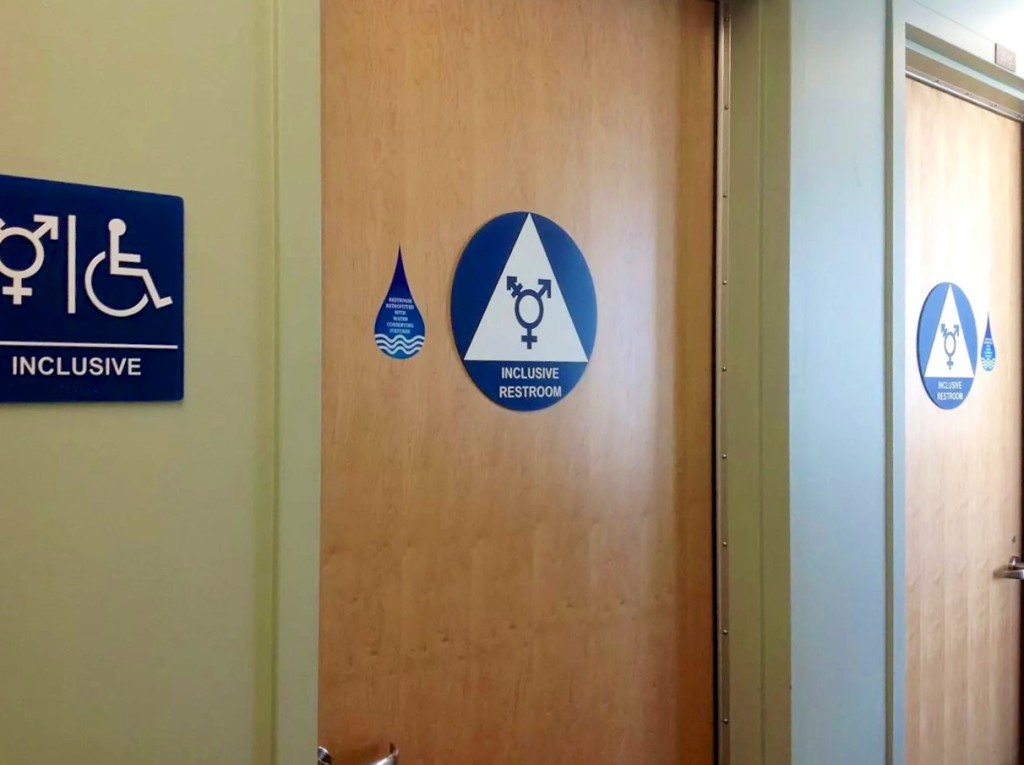
Do not sacrifice the rule for the exception Across our nation there is a deafening debate about the “rights” of those who claim a gender preference or identity other than the one with which they were born. Make no mistake: it is a debate that is happening even here in the very conservative state of Alabama. As I write this, a big-box retailer with multiple outlets in this state has decided to make all of their multi-stall restrooms unisex, with a complete disregard for long-standing law, tradition, and biology. More egregiously, this decision was made with no concern for the privacy and security concerns of their customers. In essence, Target has thrown out the rule in favor of the exception. In North Carolina, the city of Charlotte passed an ordinance requiring public restrooms to allow persons to use bathrooms according to their own gender self-identification. So if a man identified as a woman, the city of Charlotte would force a restaurant owner to allow the man identifying as a woman to use the ladies’ restroom. Sensibly, the North Carolina legislature passed a law requiring people to use the bathroom that corresponds to the gender on their birth certificate, thus overriding the city of Charlotte’s dangerous ordinance. That law is being litigated even now and Alabama must be ready by the next legislative session to deal with the outcome. Today, after careful research and review, I have filed a bill to deal with this issue in Alabama. I admire the stand made by the North Carolina legislature. But I chose to come at the problem from a different angle in the event that North Carolina’s law does not prevail in court. It is important that the instigators of social change be confronted with the customs and laws of the various locales they are dealing with. In Alabama, the courts have long held that the citizens of this state have a right to privacy and a right to feel secure; and that these rights extend not just to the physical, but also to the mental and emotional wellbeing of the individual. The right to privacy of an individual in a place in which they would ordinarily and reasonably expect to be secluded, even where that secluded place is public in nature, has been upheld by the state and federal courts in Alabama for years. By implication this principle would have to extend to restroom, bathroom and changing facilities. The argument that a self-professed “gender identity” affords access to a facility over the deep concerns of other members of the public is a violation of that right to privacy. Even the liberal Supreme Court Justice Ruth Bader Ginsberg has stated that the notion that a ban on sex discrimination requires unisex restrooms in public places is “emphatically not so.” So let’s be clear. If the priests of political correctness are going to call for the sacrifice of the privacy and security of the vast majority of the citizenry then there is going to be a fight. If my bill passes, which I believe that it will, the law of this state will reaffirm that privacy and security are inherently and naturally given to the public in this state. If North Carolina’s law is struck down then my legislation will become a backstop to say that if any person or entity provides public restrooms, bathrooms, or changing facilities then they will do so in one of three ways: a single user facility; facilities separated by the physical gender of the users; or, if facilities are provided in a unisex/transgender manner, an attendant for each facility must be onsite to address any concerns or questions of the general public. Failure to do so would result in civil penalties and provide a private right of action in court for those individuals who have been harmed or aggrieved. There will be push back on this. Liberals do not agree with anyone having a say in their debate. But my legislation is designed to provide security to the public at large, and this bill could just as easily protect a transgender user of a public facility from being harmed as well. The bottom line is that we have a right to privacy in place now; and liberals should not for a second think that Alabamians will simply stand by and allow the exceptions to throw out the rule. ••• Phil Williams represents Etowah, Cherokee, Dekalb and St. Clair counties in the Alabama Senate. You may reach Senator Williams by phone at (334) 242-7857 or by e-mail at phil@williamsstatesenate.com. Follow him on Twitter for the latest legislative updates: @SenPhilWilliams.
