
Trump administration’s use of biological definition of gender leaves some upset
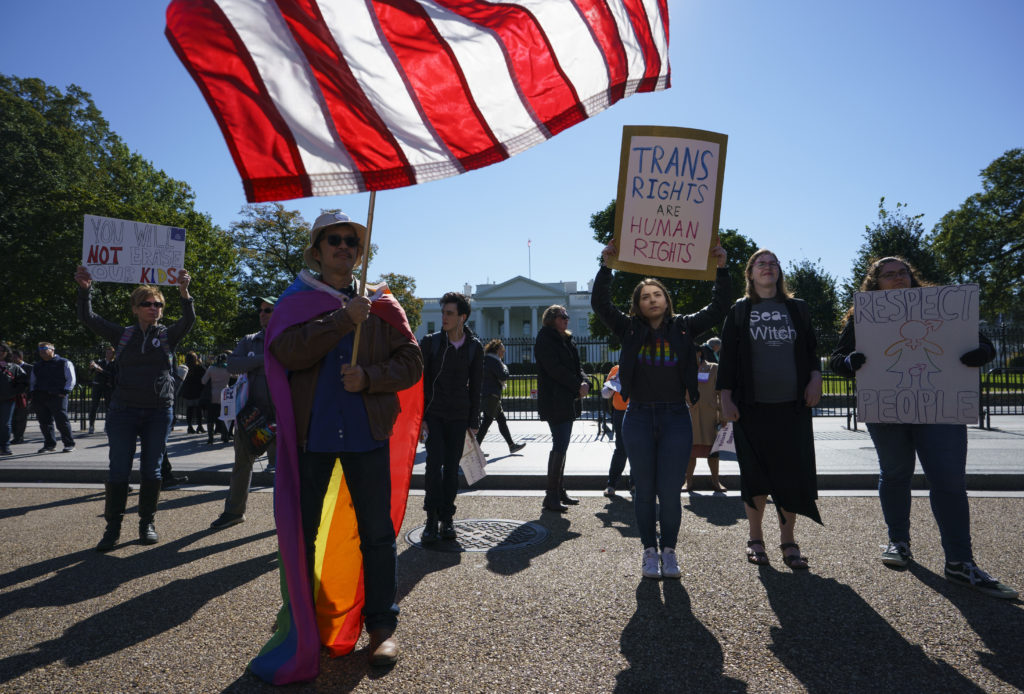
LGBT leaders across the U.S. reacted with fury Monday to a report that the Trump administration is considering adoption of a new definition of gender that would effectively deny federal recognition and civil rights protections to transgender Americans. “I feel very threatened, but I am absolutely resolute,” Mara Keisling, executive director of the National Center for Transgender Rights, said at a news conference convened by more than a dozen activist leaders. “We will stand up and be resilient, and we will be here long after this administration is in the trash heap.” The activist leaders, speaking amid posters reading “#Won’tBeErased“, later addressed a protest rally outside the White House. On Sunday, The New York Times reported that the Department of Health and Human Services was circulating a memo proposing that gender be defined as an immutable biological condition determined by a person’s sex organs at birth. The proposal would define sex as either male or female, and any dispute about one’s sex would have to be clarified through genetic testing, according to the Times’ account of the memo. President Donald Trump addressed the matter briefly as he left the White House for a political trip to Houston, but left unclear how his administration plans to proceed. “We have a lot of different concepts right now,” Trump said. “They have a lot of different things happening with respect to transgender right now — you know that as well as I do — and we’re looking at it very seriously.” Trump added: “I’m protecting everybody.” The Cabinet agency had acknowledged months ago that it was working to rewrite a federal rule that bars discrimination in health care based on “gender identity.” It cited a Texas-based federal judge’s opinion that the original rule went too far in concluding that discrimination based on gender identity is a form of sex discrimination, which is forbidden by civil rights laws. The department said Monday it would not comment on “alleged leaked documents.” It did release a statement from Roger Severino, head of its Office for Civil Rights, saying his agency was reviewing the issue while abiding by the 2016 ruling from the Texas-based federal judge, Reed O’Connor. LGBT activists, who pledged legal challenges if the reported memo leads to official policy, said several other courts had issued rulings contrary to O’Connor’s. “For years, courts across the country have recognized that discriminating against someone because they are transgender is a form of sex discrimination, full stop,” said Diana Flynn, Lambda Legal’s litigation director. “If this administration wants to try and turn back the clock by moving ahead with its own legally frivolous and scientifically unsupportable definition of sex, we will be there to meet that challenge.” Shannon Minter, a transgender attorney with the National Center for Lesbian Rights, called the reported plan a “cynical political ploy to sow discord and energize a right-wing base” before the Nov. 6 election. UCLA legal scholar Jocelyn Samuels, who ran the HHS civil rights office in the Obama administration, said the Trump administration would be going beyond established law if it adopted the policy in the memo. “What they are saying is you do not get to decide your sex; it is the government that will decide your sex,” said Samuels. For LGBT-rights leaders, it’s the administration’s latest attack on transgender Americans. Among the others are an attempt to ban them from military service; a memo from Attorney General Jeff Sessions concluding that civil rights laws don’t protect transgender people from discrimination on the job; and the scrapping of Obama-era guidance encouraging school officials to let transgender students use school bathrooms that matched their gender identities. Omar Gonzalez-Pagan, a lawyer with Lambda Legal, said the proposed rule change appears to still be undergoing White House review. It would need to be signed off by the departments of Justice, Labor and Education, which are also involved with civil rights enforcement. He said “the purpose of this rule is to erase transgender people from existence, to write them off from federal law, and to institute a definition that is contrary to case law, contrary to medical and scientific understanding, and contrary to the lived experience of transgender people.” While social mores enter into the debate, medical and scientific experts have long recognized a condition called “gender dysphoria” — discomfort or distress caused by a discrepancy between the gender that a person identifies as and the gender at birth. Consequences can include severe depression. Treatment can range from sex-reassignment surgery and hormones to people changing their outward appearance by adopting a different hairstyle or clothing. According to an estimate by the Williams Institute at the UCLA School of Law, there are about 1.4 million transgender adults in the United States. Republished with permission from the Associated Press.
Religious freedom could top Jeff Sessions civil rights priorities
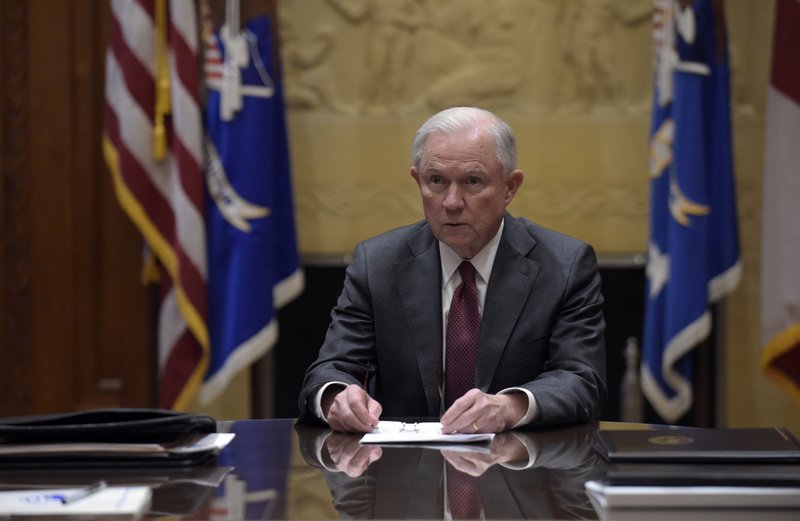
When President Donald Trump spoke to the National Prayer Breakfast this month, he underscored his vow to defend the religious rights of the conservative Christians who helped propel him to power. Now, they expect the Justice Department under new Attorney General Jeff Sessions will reposition itself as a champion of what they see as that religious freedom. It would be a welcome change for conservative Christians who say their concerns were marginalized under the Obama administration in favor of First Amendment and LGBT issues. Exactly how Sessions will approach the issue remains to be seen, but he has given them plenty of reasons to be hopeful. As a Republican senator from Alabama, Sessions, a devout Methodist, argued that the separation of church and state is unconstitutional, and that the First Amendment’s bar on an establishment of religion has been interpreted too strictly, while its right to free exercise of religion has been diminished. Asked at his confirmation hearing whether a “secular person” has “just as good a claim to understanding the truth as a person who is religious,” Sessions replied, “Well. I’m not sure.” That backdrop suggests Sessions’ Justice Department could more eagerly insert itself into religion-oriented cases such as that of the bakery fined for refusing to make a gay wedding cake, or the high-school football coach fired for praying on the field after games, who Trump repeatedly mentioned during his campaign. “Religious conservatives have sort of been the forgotten people,” said Hiram Sasser, deputy chief counsel for First Liberty Institute, a law firm that specializes in issues of religious liberty. “Now, we have a refreshing sort of reboot to be able to have at least a voice, and to be able to once again have a seat at the table.” Sessions could bring major changes throughout the Justice Department. But the department’s civil rights division traditionally is subject to the most radical shift in agendas with each change in presidential administration. Where the Obama Justice Department wanted to leave its mark on reforming troubled police departments, Sessions will likely use its resources differently. On his first full day on the job, Sessions signaled a shift away from Obama priorities when the Justice Department changed its legal position in a case involving transgender rights. The department is no longer asking a judge to limit an injunction restricting the federal government from telling schools that students should be able to use bathrooms and locker rooms corresponding to their gender identity. Transgender rights were a focus of the department under former Attorney General Loretta Lynch, who sued the state of North Carolina over a bathroom bill that the government said discriminated against transgender people. Such a move would be improbable in an administration like Trump’s, which has already signaled its deference to states’ rights. It’s unclear exactly what priorities Sessions will pursue when it comes to the civil rights division. The Justice Department declined to comment on his plans for enforcement of religious freedom. He has faced intense criticism of his record on civil rights with regard to race. A renewed focus on religious causes would be “especially troubling in light of the fact that increasing numbers of Americans are not religious,” said Marci Hamilton, a Yeshiva University legal expert on religious liberty. “This landscape is radically different.” But it would help satisfy Trump’s campaign promise to his Christian political base. While the appointment of Sessions is a promise fulfilled, some religious conservatives remain concerned that Trump won’t deliver. When he was Indiana’s governor, Vice President Mike Pence signed a religious freedom law but softened it after criticism that it was discriminatory, a move that disappointed some conservatives. Trump still has not signed an executive order to boost protections for those with religious objections to gay marriage and create a working group within the Justice Department to protect “the religious freedom of persons and religious organizations.” Groups ranging from the U.S. Conference of Catholic Bishops to Sasser’s First Liberty Institute have launched campaigns urging Trump to enact broad protections for religious objectors to laws such as gay marriage and abortion. His civil rights division could bear a close resemblance to that of the Bush administration, which took a keen interest in matters of religious freedom. It touted its work on human trafficking, an issue of importance to religious conservatives, as a counter to claims that it was weak on civil rights enforcement. Such trafficking cases could again dominate the civil rights division’s criminal caseload, while prosecutions of police officers for rights violations, for example, might move to the back burner, said William Yeomans, who spent 24 years as a lawyer in the civil rights division during Democratic and Republican administrations. The department could insert itself in federal lawsuits on behalf of faith-based groups, among other actions. It could aggressively enforce the provision of the Civil Rights Act that bans workplace bias based on religion, and also a law designed to let churches and other religious institutions skirt zoning restrictions, which the Obama administration used to sued several cities that refused to allow the construction of mosques. Said Mat Staver, founder and chairman of Liberty Counsel: “You’re going to see a big effort to protect religious freedom. It’s a welcome change.” Republished with permission of the Associated Press.
Luther Strange praises SCOTUS stay of transgender restroom policy
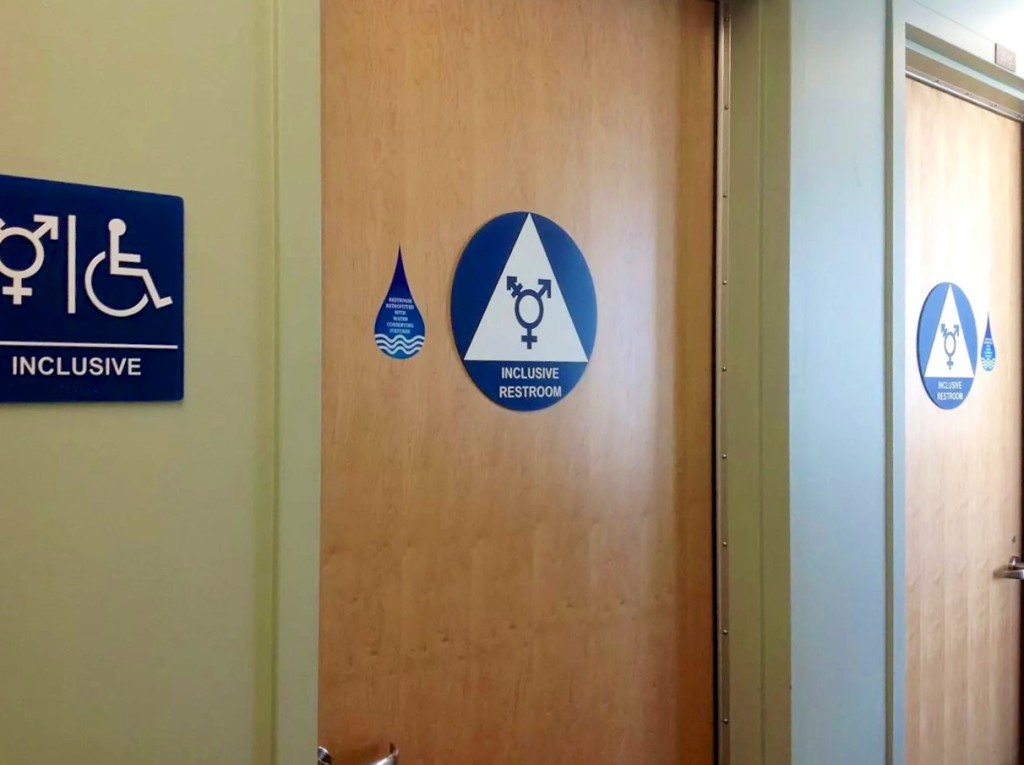
The U.S. Supreme Court Wednesday intervened for the first time in the controversy over transgender rights and granted a stay sought by a Virginia school district to prohibit a transgender boy from using the high school restroom that fits his “gender identity” when the school re-opens in September. The court voted 5-3 to grant the stay sought by the Gloucester County school district after Chief Justice John G. Roberts Jr. referred the stay application he received last month to the full court. Roberts was joined by Justices Anthony M. Kennedy, Clarence Thomas, Stephen G. Breyer, and Samuel A. Alito Jr. in granting the stay. Breyer said in a short statement he was voting for the stay “as a courtesy.” Without Breyer’s vote, a 4-4 split on the question would have meant no stay. Justices Ruth Bader Ginsburg, Sonia Sotomayor, and Elena Kagan said they would deny the stay. Alabama Attorney General Luther Strange welcomed the high court’s decision. “This is a positive development and an indication that the U.S. Supreme Court could eventually overturn the Obama administration’s order mandating that America’s public schools allow students access to restrooms and locker rooms of their gender identity rather than sex,” said AG Strange. “The Supreme Court’s five-to-three decision in the case of Gloucester County School Board v. G.G. certainly raises the possibility that the high court will also rule in support of a separate legal challenge against the Obama administration filed by Alabama and 10 other states in May. “As I stated in my letter to the Alabama State Board of Education in May, the recent federal transgender restroom directive to America’s public schools is based on a legally erroneous interpretation of federal law and will not stand up to legal scrutiny,” Strange added.
Phil Williams: Push for transgender bathrooms could jeopardize right to privacy
Do not sacrifice the rule for the exception Across our nation there is a deafening debate about the “rights” of those who claim a gender preference or identity other than the one with which they were born. Make no mistake: it is a debate that is happening even here in the very conservative state of Alabama. As I write this, a big-box retailer with multiple outlets in this state has decided to make all of their multi-stall restrooms unisex, with a complete disregard for long-standing law, tradition, and biology. More egregiously, this decision was made with no concern for the privacy and security concerns of their customers. In essence, Target has thrown out the rule in favor of the exception. In North Carolina, the city of Charlotte passed an ordinance requiring public restrooms to allow persons to use bathrooms according to their own gender self-identification. So if a man identified as a woman, the city of Charlotte would force a restaurant owner to allow the man identifying as a woman to use the ladies’ restroom. Sensibly, the North Carolina legislature passed a law requiring people to use the bathroom that corresponds to the gender on their birth certificate, thus overriding the city of Charlotte’s dangerous ordinance. That law is being litigated even now and Alabama must be ready by the next legislative session to deal with the outcome. Today, after careful research and review, I have filed a bill to deal with this issue in Alabama. I admire the stand made by the North Carolina legislature. But I chose to come at the problem from a different angle in the event that North Carolina’s law does not prevail in court. It is important that the instigators of social change be confronted with the customs and laws of the various locales they are dealing with. In Alabama, the courts have long held that the citizens of this state have a right to privacy and a right to feel secure; and that these rights extend not just to the physical, but also to the mental and emotional wellbeing of the individual. The right to privacy of an individual in a place in which they would ordinarily and reasonably expect to be secluded, even where that secluded place is public in nature, has been upheld by the state and federal courts in Alabama for years. By implication this principle would have to extend to restroom, bathroom and changing facilities. The argument that a self-professed “gender identity” affords access to a facility over the deep concerns of other members of the public is a violation of that right to privacy. Even the liberal Supreme Court Justice Ruth Bader Ginsberg has stated that the notion that a ban on sex discrimination requires unisex restrooms in public places is “emphatically not so.” So let’s be clear. If the priests of political correctness are going to call for the sacrifice of the privacy and security of the vast majority of the citizenry then there is going to be a fight. If my bill passes, which I believe that it will, the law of this state will reaffirm that privacy and security are inherently and naturally given to the public in this state. If North Carolina’s law is struck down then my legislation will become a backstop to say that if any person or entity provides public restrooms, bathrooms, or changing facilities then they will do so in one of three ways: a single user facility; facilities separated by the physical gender of the users; or, if facilities are provided in a unisex/transgender manner, an attendant for each facility must be onsite to address any concerns or questions of the general public. Failure to do so would result in civil penalties and provide a private right of action in court for those individuals who have been harmed or aggrieved. There will be push back on this. Liberals do not agree with anyone having a say in their debate. But my legislation is designed to provide security to the public at large, and this bill could just as easily protect a transgender user of a public facility from being harmed as well. The bottom line is that we have a right to privacy in place now; and liberals should not for a second think that Alabamians will simply stand by and allow the exceptions to throw out the rule. ••• Phil Williams represents Etowah, Cherokee, Dekalb and St. Clair counties in the Alabama Senate. You may reach Senator Williams by phone at (334) 242-7857 or by e-mail at phil@williamsstatesenate.com. Follow him on Twitter for the latest legislative updates: @SenPhilWilliams.
Drag queen is suspended Chief Justice Roy Moore’s nightmare
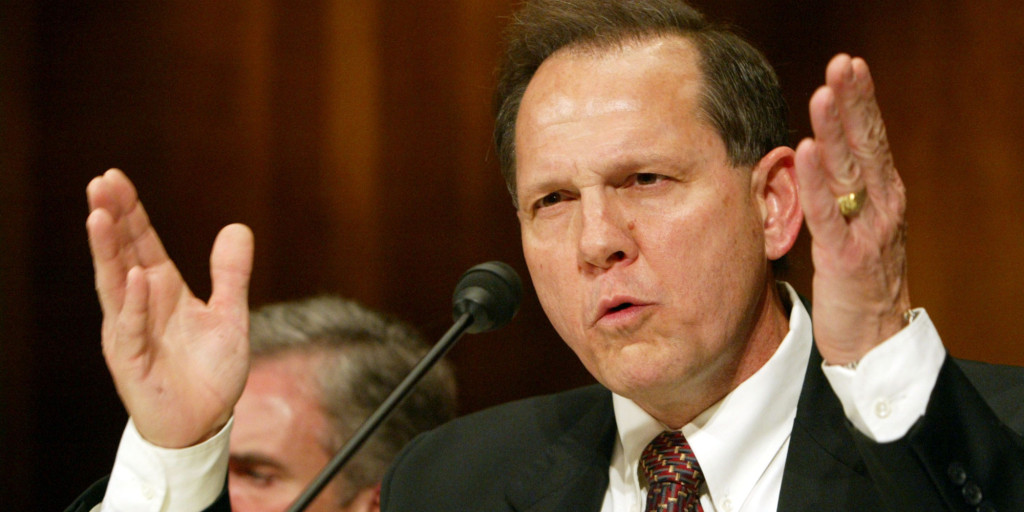
Wearing big hair, loads of makeup and high heels, small-town drag queen Ambrosia Starling is the new worst nightmare of suspended Alabama Chief Justice Roy Moore. Moore has called out Starling twice by name in recent days while defending himself against allegations of violating judicial canons with his opposition to same-sex marriage. During a news conference and in a written statement, Moore cited the cross-dressing entertainer as a reason he’s at risk of losing his job for the second time since 2003. That’s fine with Starling, who helped lead an anti-Moore rally on the steps of the Alabama Supreme Court building in January. Opponents that day filled out more than 40 complaints against Moore, who already was the subject of other complaints and now faces removal from office if convicted of violating judicial ethics. “If it takes a drag queen to remind you that liberty and justice is for all, here I am,” Starling said Tuesday between sips of coffee. Moore contends the effort to oust him is unfounded and politically motivated. Born and raised in the southeast Alabama city of Dothan, Starling is a gay man who dresses up like a woman to perform drag shows. Most days, the 43-year-old Starling dresses like a male and goes to a regular job, referring to himself as “he.” But the entertainer prefers the pronoun “she” when dressed as Ambrosia Starling, a stage name for drag shows. Fearful of losing his day job or endangering others in a Deep South state where many gays still fear violence or discrimination, Starling agreed to an interview on the condition that only the stage name was used. “I have a 71-year-old mother who lives with me that I have to worry about,” Starling said. “Her well-being and safety is No. 1 for me.” Starling wore her drag outfit to that demonstration against Moore outside the Supreme Court five months ago. In a long blue dress and light-colored coat, Starling referred to Moore as a bigot and asked crowd members to submit complaints against Moore to the Alabama Judicial Inquiry Commission, which accused the Republican Moore of wrongdoing on Friday, resulting in his suspension. The complaint filed by the Judicial Inquiry Commission accuses Moore of willfully failing to respect the authority of federal court decisions that cleared the way for gay marriage, which Moore opposes on the basis of faith and the law. He issued an administrative order to state probate judges in January that said state laws against gay marriage remained in place months after the U.S. Supreme Court effectively legalized gay marriage nationwide. An attorney for Moore, Mat Staver, said Moore issued the order because probate judges were asking questions about how to proceed. Staver said Moore will file a response within 30 days asking the Alabama Court of the Judiciary to dismiss charges against him. Moore has been tossed once before from the office of chief justice. Thirteen years ago he refused to abide by a federal judge’s order to remove a Ten Commandments monument Moore had erected in the rotunda of the state judicial building, resulting in judicial ethics charges and his removal by the Court of Judiciary. During a news conference last week in that same rotunda, Moore said Starling and similar people would have been classified as having a “mental disorder” just a few years ago. Moore also accused Starling of performing a “mock wedding” in violation of a state court order against same-sex marriage, a claim Starling dismissed as untrue. Describing himself as a churchgoing Christian who lives a normal life when not dressed in drag, Starling said he doesn’t mind being singled out by Moore. Many more lesbians, gays, bi-sexuals and transgender people also oppose Moore’s tactics, Starling said, it’s just that not everyone can speak out. “I’ll take the hit for the entire LGBT community if it gets the message across,” Starling said. Republished with permission of the Associated Press.
