
How moving to Ala. took me from ‘right-wing nut job’ to ‘Republican in name only’

I know a woman’s not supposed to reveal her age, but at 37 I’ve been in and around the political process for about 15 years now. The first several years were mainly observational and administrative. From there I was able to get a real feel of things on the campaign trail, as a lobbyist, and then with various non-profit issue advocacy organizations. These groups are where I found my passion in grassroots advocacy. This included speaking to groups large and small all around the nation about what’s going on from the local to the federal levels. I’ve been fortunate to work with a handful of incredible elected officials and with hundreds of passionate grassroots advocates. I was honored to be a part of the true Tea Party movement when it first began. I attended rallies. I waved signs and banners. I took too many bus rides, to both state and national capitols, to count. I’ve worked two election cycles as a field rep for the National Rifle Association’s campaign arm, NRA-ILA, electing Second Amendment supporters, and two Koch-backed groups including the largest grassroots organization in the country, American’s for Prosperity, as well for 60 Plus Association. With a resume like that you can only imagine the names I’ve been called personally and on a whole for the company I keep and the things I believe. From “right-wing nut job” to “Tea Party crazy,” I’ve heard it all. Nearly every time I write an opinion column liberal or progressive commenters have a fit about how conservative I am sometimes I’m even too conservative for republicans or libertarians. For those who don’t know me well and have never seen me in person, know that I have a full color Republican elephant tattooed on my foot. True story. I was young and it was ridiculous, but it’s there and it is what it is. So it’s funny to me (that is more ironic funny, than ‘haha’ funny) that since moving to Alabama and speaking out against the status quo here — simply pressing for answers and better behavior from those who most Republicans in the state never dare question — I have had my allegiance to the true conservative principles, to which I’ve dedicated my life, questioned. I’ve suddenly found myself being called a RINO or Republican in name only in whisper campaigns and in comments and conversations others have had with friends and acquaintances. It seems to be happening more often these days as well so let me set the record straight about who I really am: I’m a pro-life Catholic. I’m a mother. I’m a second amendment supporter. I’m a small business owner. I’m a fiscal conservative. I’m libertarian on most social issues (including legalization of marijuana and getting the government out of the marriage business). I believe in school choice including vouchers and charter schools. I believe less government is always preferable to the alternative. I think we should sunset most laws so they have to be revisited and not just stay on the books indefinitely. I don’t support term limits in congress – we have elections for that. I think business licensing is usually a way for the government to get money not protect consumers. I believe that the goodness of people and churches could and should fulfill most of the safety net programs that the government pays for. I want secure borders and our immigration system to be fixed to improve the process for qualified individuals. I believe in criminal justice reform but I also support the death penalty. Here’s what seems to upset the establishment republicans here in AL: I want accountability and transparency from our elected officials all of them, regardless of party. The fact is, everyone should. I started ticking-off the establishment when I first spoke out against then Speaker Mike Hubbard during his tenure and trial. Lately it’s only gotten worse as I’ve spotlighted my concerns with staff and transparency in Governor Kay Ivey’s office. (Still wondering why they can’t/won’t just provide a list of gubernatorial appointees like Robert Bentley’s office did within hours. Mind boggling I tell you. Can someone please get her a new Communications Director who understands how to do their job?) I’ve really been hard on John Cooper over at ALDOT for his lack of transparency and accountability in how his department has handled a bridge down in Baldwin County. I ticked-off a member of our congressional delegation when his staff tried to get me not to run a valid story decrying it as “Fake News” because they didn’t want it reported on and I both ran the story then wrote an op-ed about the ridiculous use of “Fake News” to decry news stories a subject doesn’t like. I could go on and on about the ways in which I’ve shown myself to be a traitor to the Party, but you get the point. Never mind that I’ve also called attention to the severe problems with policies like the minimum wage increase Birmingham City passed, have wondered out loud about the status of the city as a sanctuary or friendly city, I’ve questioned the fact Mayor Randall Woodfin needs to focus on crime not magazine covers, and that Mayor William Bell before him was wasting a lot of money on his personal security detail. I’ve pointed out Walt Maddox doesn’t stand a chance in the governor’s race. Regardless of party and and position we need to be questioning those who represent us. Our responsibilities as active citizens doesn’t end when we vote or go to the polls. We have to do more. We have to follow what our elected officials and their staff are doing and follow them more closely than how they present themselves on social media or in press releases we have to question more than the talking points they or their staff give us. Donald Trump is a great example of the type of Republican that leaves someone like me scratching their heads. There have many moments, both in
Priority 1 for next session: Beef up open records laws
I have been long-railing against the insanity that is Alabama’s public records laws, or the way executive offices — specifically the Governor’s office, and more recently the Department of Transportation — and as Kyle Whitmire wrote about today, the Attorney General’s office also likes to hide documents, ignore requests and duck the law that allows residents to see what’s really happening behind closed doors. Enough is enough folks. Any elected official who’s office hides what should be accessible information and cherry picks who gets it, and when, needs to face consequences. Any staffer working within the government that obstructs requests — here’s looking at you Daniel Sparkman and Josh Pendergrass in Gov. Kay Ivey‘s press shop — needs to be fired on the spot. This is ridiculous. We as residents of the state, taxpayers, voters, yes and even in the press are responsible for holding our elected officials and those working for them accountable. We have every right to see what’s going on behind closed doors when it comes to state government and if you’re in impeding our ability to do so you need to go. Moreover there should be criminal sanctions for those who take pride and pleasure in obstructing transparency. It’s infuriating that there is no recourse when, either as individuals or as media, we are lied to, documents are withheld, or information is given by the discretion of others. We have to globally, across the state, raise our voices and do more. Demand better. When the Legislature comes back they are going to tackle ethics reform and a substantial part of that needs to include actual ramifications for public employees who hide information, for departments who don’t comply in a timely manner, or with full information on records requests. For our appointed and elected officials and those who work for them, transparency is a cornerstone of our democracy. Without it we cannot hold government officials accountable. Information doesn’t belong behind closed doors, shrouded in secrecy. Every single person in the state, regardless of your political party or position on issues, every single Alabamian should reach out to their state representatives, their state senators, the Governor and the Attorney General and tell them that we won’t take stonewalling in producing public information. Here’s a link to contact the Governor’s office , you can also tweet to her and her campaign and the attorney general. There’s an election right around the corner and not a single soul should be elected or reelected without promising to give Alabama’s open record law teeth and to hold their staff and appointees accountable when they don’t.
Ask the candidates: Gubernatorial responses on transparency and accountability
Alabama Today sent the candidates a copy of a sitting governor’s daily schedule as sent the evening before to press and interested parties. We noted in the email that Governor Robert Bentley and Governor Kay Ivey had chosen not to do so. It turns out that Governor Ivey has sent her schedule out to some media for several months. Neither her official office nor campaign was able to provide a response as to why Alabama Today was originally included on the list of recipients only to be removed within days leading to the conclusion they weren’t providing them anymore. Good news: It looks as though in a crowded field of candidates transparency is key to many. Here is the question as posed and their responses. The following question: If elected, in the name of transparency and accountability, would you be willing to implement a policy to do so (provide a public schedule to press)? If not why? *In the order in which they were received with the exception of Ivey whose official office and campaign responded at separate times but are being published together. Governor Kay Ivey via Brent Buchanan (campaign): Buchanan, “Governor Kay Ivey promised transparency and to clean up the mess in Montgomery. She has done and will continue to do both. Governor Ivey has been releasing her schedule to the media – any of whom can publish more widely than a government website – for many months.” Governor Kay Ivey via Daniel Sparkman (official office): Sparkman re: Alabama Today request to receive the governor’s schedule*, “it is solely to be used for planning purposes and not for publication. It is also not to be shared outside of your organization.” * Ivey’s official schedule is released at the beginning of each week. We are unsure if it is amended or updated based on changes as is Governor Rick Scott‘s of Florida. It is unlikely, though possible, the governor’s office remains fixed days in advance. Scott Dawson (Republican candidate): The people of Alabama have lost trust in their leadership and the way to regain that trust is by taking openness and transparency beyond what is normally expected. The corporate world talks about “exceeding expectations.” Can you imagine how much better Alabama would be if our leadership talked in those same terms? That’s why I will implement a calendar policy to keep the people informed about how their governor is spending time in their service and more importantly, I will work to be sure that each moment of the day is devoted to the highest degree of ethical behavior and making Alabama a better place for everyone. Mayor Walt Maddox via Chip Hill, Communications Director (Democrat candidate): Walt Maddox not only believes transparency and accountability are vital, he’s taken action that proves it. For example, as Mayor of Tuscaloosa he implemented an online portal where anyone can access the details of city spending. Announced last year, this online portal was established to provide information and data on the city’s budgetary revenues and spending as well as up-to-date crime reports and demographics for Tuscaloosa, among other features. This portal made city information more readily available while allowing taxpayers to see how funds are budgeted and, ultimately, where they are spent. State Sen. Bill Hightower via Chris Brown, campaign advisor (Republican candidate): Bill Hightower firmly believes that the Governor’s office does not belong to any one public official, but it instead belongs to the voters of Alabama. As Governor, Bill Hightower will be committed to transparency and making sure his public schedule is available so that the people of Alabama will know where and how his official time is being spent working for them. Justice Sue Bell Cobb (Democrat candidate): I believe it is paramount for public servants to be open and accountable to those they serve. I would absolutely implement a policy within my administration that the press should be notified in advance of my public schedule. Democracy relies on informed, engaged citizens, and it is the responsibility of leaders to offer themselves for dialogue with whom they serve. We will do just that in the governor’s office
Bradley Byrne: Transparency and accountability in Congress
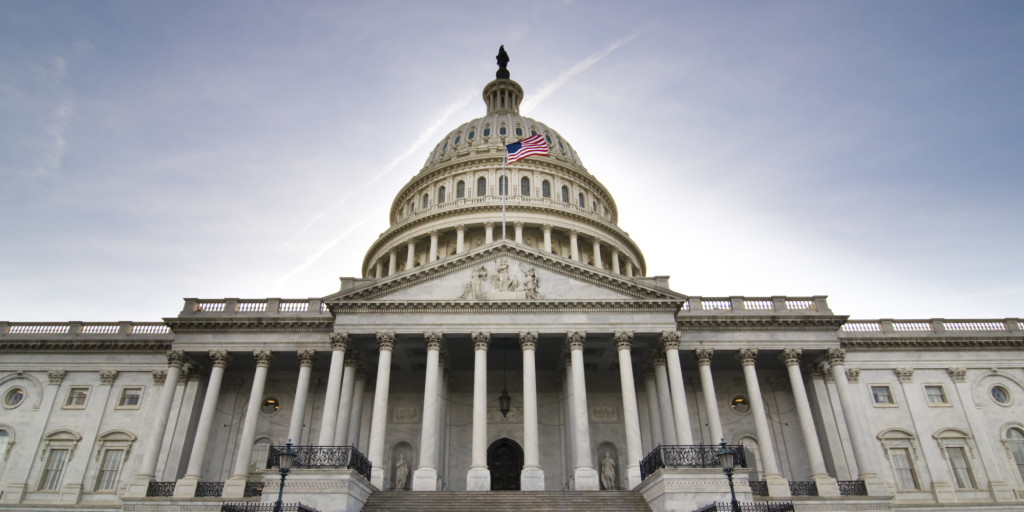
Last year, the country was shocked to learn terrible stories of sexual harassment taking place in the halls of Congress. The stories themselves were horrific, but even worse was the fact that some Members of Congress used taxpayer money to pay settlements. Prior to coming to Congress, I worked for thirty years as a labor and employment attorney in Alabama, so I have a background in these issues. I advised clients on how to prevent sexual harassment and how to navigate the process if a harassment claim was made. Quite frankly, I was shocked to see how complicated the Congressional process for handling sexual harassment and other employment law claims was. Even worse, I was flabbergasted to learn that Members of Congress were able to use taxpayer money to pay the settlements and the information was held secret from the American people. The process was so fundamentally different from how businesses in the private sector have handled sexual harassment and other employment law claims for decades. It just did not make sense. Congress should not have special perks or benefits that other Americans don’t have. So, I reached out to the House Administration Committee and some of my colleagues to work on legislation to fix the problem and ensure a fair and transparent process. I worked hand-in-hand with a number of my colleagues from the other side of the aisle to solve the problems and bring the Congressional workplace into the 21st Century. One of my biggest partners in the effort was Congresswoman Jackie Speier. We had a conservative, Republican congressman from Alabama working to solve the problem with a liberal, Democrat congresswoman from California. It was a truly bipartisan effort. The bill makes numerous reforms to the process of handing harassment and other employment law claims, and you may be surprised at just how commonsense many of the changes are. Most important, the bill ensures that Members of Congress, not taxpayers, are responsible for paying out sexual harassment settlements. No longer will a congressman be able to use taxpayer money to settle a harassment claim. Eqaully important, the bill increases transparency by requiring that basic information about any sexual harassment or other claims be made public so the American people are fully aware of what is happening in Congress. The American people should know about such claims and settlements related to their elected officials. The current process for settling a claim is overly complicated and tends to unfairly favor the accused. Our bill creates a fairer and simpler process for employees to file an employment law claim and for the claim to be resolved. The bill creates an office of employee advocacy to ensure staff has access to legal counsel, just as congressmen are provided. The process is also simplified to make the claims process smoother, faster, and fairer. The bill also paves the way for every Congressional office to have a clearly defined anti-harassment and anti-discrimination policy, and all Members of Congress and staff will be required to take part in anti-harassment training. These reforms alone will result in greater awareness. Finally, our plan prohibits Members of Congress from engaging in a sexual relationship with any staff member under their supervision and makes clear that sexual harassment is a violation of the Code of Official Conduct and will not be tolerated. At the end of the day, our effort is all about ensuring Members of Congress are held accountable and do not get any special benefits or exceptions. I am proud to have helped craft this landmark, bipartisan legislation, and I will continue working to ensure transparency in our government. • • • Bradley Byrne is a member of U.S. Congress representing Alabama’s 1st Congressional District.
Donald Trump’s voting commission criticized for lack of transparency
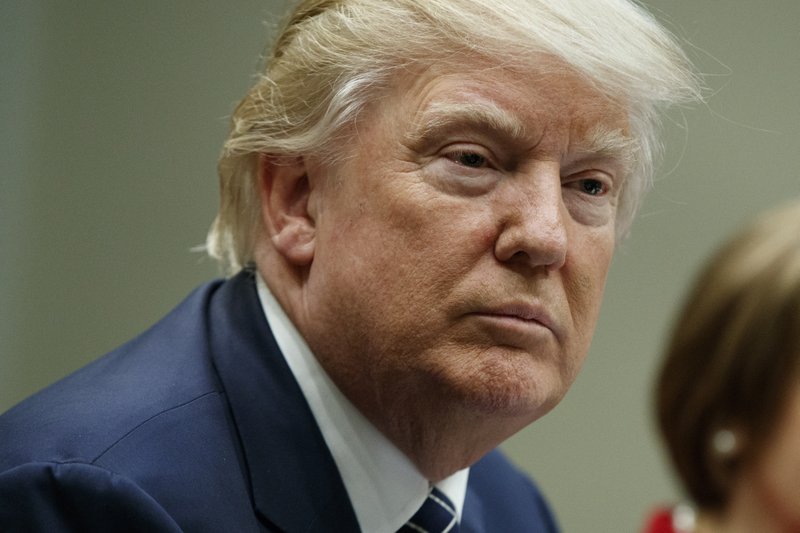
President Donald Trump‘s advisory commission on election integrity has integrity questions of its own — with some of its own members raising concerns about its openness. This past week, two members fired off letters to commission staff complaining about a lack of information about the panel’s agenda and demanding answers about its activities. That comes as Democratic U.S. senators are requesting a government investigation of the commission for ignoring formal requests from Congress. The criticism from the commissioners was remarkable because it came from insiders — the very people who are supposed to be privy to its internal discussions and plans. In a letter sent Oct. 17, Maine Secretary of State Matthew Dunlap said it was clear he was not being made aware of information pertaining to the commission. He requested copies of all correspondence between commission members since Trump signed the executive order creating it in May. “I am in a position where I feel compelled to inquire after the work of the commission upon which I am sworn to serve, and am yet completely uninformed as to its activities,” Dunlap wrote in his letter to Andrew Kossack, the commission’s executive director. He said he had received no information about the commission’s research or activities since its last meeting, on Sept. 12. He also said he continued to receive media inquiries about commission developments “that I as a commissioner am blind to.” A commissioner from Alabama, Jefferson County Probate Judge Alan L. King, said he sent a similar letter late last week. He said the only information he has received since the commission’s meeting more than a month ago was an email informing him of the death of a fellow commissioner, former Arkansas state lawmaker David Dunn. “Here I am on this high-level government committee, and I don’t know when the next meetings are or how many meetings there will be,” he said in a telephone interview. “I am in the dark on what will happen from this point on, to tell you the truth.” King and Dunlap are two of four Democrats on the 11-member commission. Requests for comment sent to Kossack, the commission’s executive director, and the commission’s vice chairman, Kansas Secretary of State Kris Kobach, were not returned. J. Christian Adams, a commission member who was a Justice Department attorney under former President George W. Bush, said in an email that all commissioners were receiving the same information. “Once upon a time election integrity was bipartisan,” Adams said in the email. “Apparently not all agree. That’s a shame.” The commission has stirred controversy from the moment it was established last spring. Critics say Trump is using it to find support for his unsubstantiated claims of widespread voter fraud that cost him the popular vote during the 2016 election. Democrat Hillary Clinton received 2.8 million more votes nationwide than Trump. While there have been isolated cases of voter fraud in the U.S., there is no evidence of it being a widespread problem, as Trump suggests. Critics argue the commission is stacked with people who favor voting restrictions, rather than those who want to expand access, and that the commission has a predetermined agenda that will result in recommendations making it more difficult for people to register to vote, stay registered and cast ballots. Its first significant action was to request a wide range of information about all registered voters in every state, including partial Social Security numbers, dates of birth, addresses and voting history. The commission scaled back its response after stinging criticism. A tally by Associated Press reporters nationwide shows that 15 states denied the request, raising questions about how useful the information will be. In August, the AP filed a records request with the commission under the federal Freedom of Information Act. The law specifies that agencies — including presidential commissions — have 20 business days to respond or 10 calendar days if the request was filed on an expedited basis, as the AP’s was. To date, the AP has received no response from the commission despite multiple attempts to get one. The commission’s secrecy prompted a lawsuit by the Lawyers’ Committee for Civil Rights Under Law, which alleges the commission is violating federal open meetings and disclosure laws. The group’s executive director, Kristen Clarke, said she was hard-pressed to think of another commission that had acted in such secrecy. “We have found that, in every respect, this commission has been carrying out its activities in an almost covert fashion,” she said. The lack of openness even applies to members of Congress. Democratic senators have filed at least five separate requests for information with the commission since June, and a Sept. 12 follow-up letter noted that none of those had received a response. “The Commission has not responded to a single letter from Senators with oversight jurisdiction over the Commission and continues to be rebuked for its questionable activities,” said the letter by Democratic Sens. Amy Klobuchar of Minnesota and Sheldon Whitehouse of Rhode Island. Last week, a group of three Democratic senators wrote the Government Accountability Office seeking an investigation into the commission because of its lack responsiveness and transparency. The letter signed by Sens. Michael Bennet of Colorado, Cory Booker of New Jersey and Klobuchar cited a lack of transparency on the commission and concern that its conclusions would diminish confidence in the democratic process. “It is incredible that they are not responding to any of this stuff, and that’s why it’s appropriate for GAO to take a look,” Bennet said in an interview. Republished with permission from the Associated Press.
Study: Alabama earns a “D” in lobbying transparency
According to a new national survey, Alabama ranks near the bottom of the pack among states when it comes to lobbying transparency and disclosure practices. The Sunlight Foundation, a Washington, D.C.-based public interest watchdog group, gave Alabama a D in a new study. State lobbying ethics laws were scrutinized via five different rubrics — Alabama’s were docked points in two, scored a “0” in one and was appraised positively in just one. The state was dinged in the report for lobbyist compensation and expenditure reporting laws, while the foundation gave the state neutral scores for disclosure of what issues lobbyists actively work on and accessibility of documents via the state’s online “ALISON” system. Alabama was specifically cited three times throughout the report, including negative remarks on thresholds for disclosure (as opposed to all activities being reported) and access to records, and a positive comment about disclosure of conflicts of interest. “Disappointingly, few states force lobbyists to explicitly name the bills, politicians or executive agencies that they are hoping to influence or how they want the legislator to vote,” reads the study. “This winds up being fairly opaque in states like Alabama, where a politician must receive over $500 in a quarter from a lobbyist to be revealed.” “It’s nice to see states actively disclose potential conflicts of interest,” the report goes on. “Alabama … has a similar requirement.” Finally, the Sunlight Foundation uncorked this one regarding the code of Alabama. “Alabama can work to improve the public’s access to lobbying data. Currently, if you are interested in learning about lobbying in the state, you must file a request online for the expenditure reports of specific lobbyist or lobbyists. The request must ask for information exactly as it is provided on the website. After the files are delivered to you, they expire after 72 hours, regardless of whether you have opened them or not.” Alabama was joined in receiving its “gentleman’s D,” as it were, by 11 other states including fellow southern states Tennessee and Arkansas. The Yellowhammer state beat out West Virginia and Florida, which both received failing grades. Massachusetts took top honors.
