
Amid attendance attacks, Marco Rubio focuses on Iowa
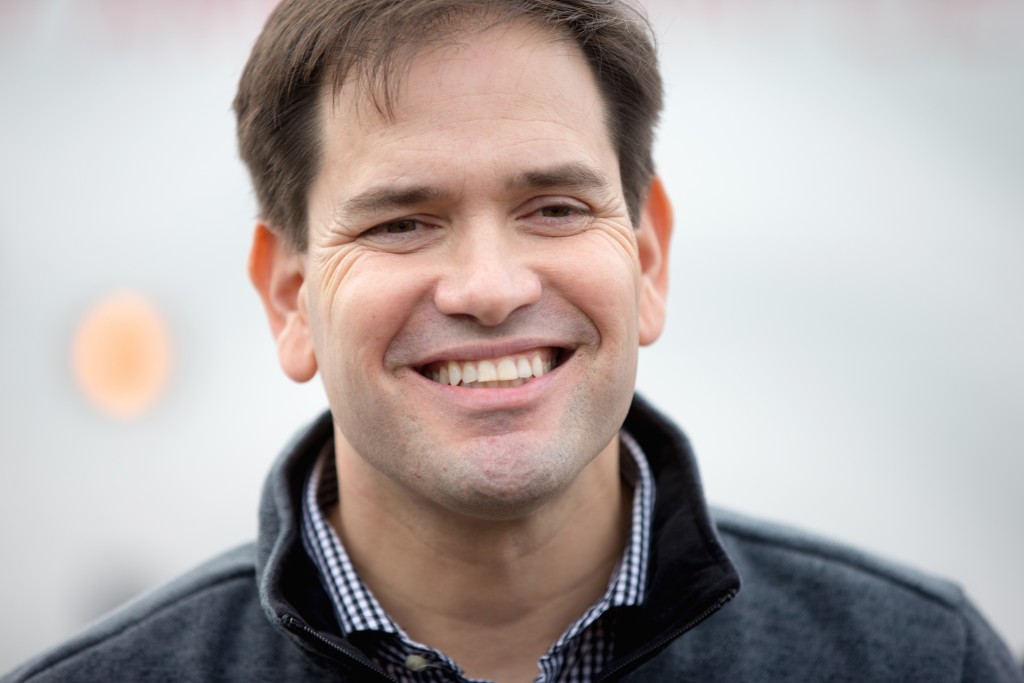
Amid new criticisms about his Senate attendance record, Marco Rubio says some of his rival candidates are getting “a little desperate and a little nasty.” The Florida senator kicked off an Iowa tour Tuesday, as a super political action committee backing Jeb Bush announced a new ad in the state accusing Rubio of missing a Senate meeting after the November terrorist attacks in Paris. New Jersey Gov. Chris Christie also piled on during an Iowa stop, questioning Rubio’s Senate attendance. After a town hall meeting in the leadoff caucus state, Rubio said the ad from Right to Rise “isn’t accurate,” adding that as a member of the Senate Intelligence Committee he attended a different briefing on the Paris attacks. Asked about Christie’s comments, he said the governor had been away from New Jersey “half the time.” “Candidates I think as we get down the stretch here some of them get a little desperate and a little nasty in their attacks,” Rubio said. Rivals have tried to make an issue of Rubio’s attendance in the Senate. In 2015, he has missed about 35 percent of roll call votes, according to GovTrack.us. That’s more than any of the other senators running for president. But several Iowans at the event said they weren’t troubled by Rubio’s Senate record. “He’s out here trying to get the popular vote of the people,” said Mary Reed, 65, of Bellevue, Iowa, who is considering supporting Rubio “Missing a few votes does not bother me. Before over 125 people in Clinton, Iowa, Rubio — who was joined by his family and Rep. Trey Gowdy, of South Carolina — kept his remarks focused on President Barack Obama and Democratic front-runner Hillary Clinton, rather than his Republican counterparts. “I have lived many of the things that people face,” Rubio said. “I want to know how Hillary Clinton is going to lecture me about people living paycheck to paycheck. I grew up paycheck to paycheck.” Rubio stressed his support for securing the borders, investing in the military and repealing the Affordable Care Act. He also said he would back a convention of the states to amend the U.S. Constitution, to pass amendments dealing with term limits and a balanced budget. Conservative groups have been pushing for such an event, which has never happened since the original convention in 1787. Rubio said he supported a convention limited to those two topics. Rubio is wrapping up his year in Iowa, where the Feb. 1 caucuses will kick off presidential voting, but has tried to avoid prioritizing any one of the early voting states, by running a nationally focused campaign that leans on strong debate performances and television advertising. Unlike Texas Sen. Ted Cruz, who has set his sights on Iowa, or former Florida Gov. Jeb Bush, who is pushing hard in New Hampshire, Rubio continues to spread his time and money across the early states, showing no indication he will choose just one to make his mark. While supporters say Rubio just needs to stay in the top cluster in the first few states, some see his approach as risky. But Rubio spokesman Alex Conant said the campaign has no plans to “give up on states we can win.” In Iowa, recent polls have found Cruz and Donald Trump battling for first place, with Rubio usually a distant third. He’s seen as competing most directly with others considered part of the GOP establishment: Bush, New Jersey Gov. Chris Christie and Ohio Gov. John Kasich. Most agree he doesn’t actually need to win the caucuses, but must emerge as the establishment’s leader. A good organization is important in Iowa because caucuses take more effort than a primary, requiring voters to show up at a fixed time on a winter night. The Republican caucuses drew about 120,000 voters in 2008 and 2012 , about 20 percent of registered Republicans. Rubio has fewer paid staff than some competitors and his state director hails from Arkansas. He draws large, enthusiastic crowds and has done at least 49 public events in the state this year — more than Bush or Christie, but significantly fewer than Cruz, who has done at least 80. Questions about Rubio’s organization efforts are echoed in other early voting states, including New Hampshire and South Carolina. Republished with permission of the Associated Press.
Benghazi takes center-stage with Hillary Clinton testimony
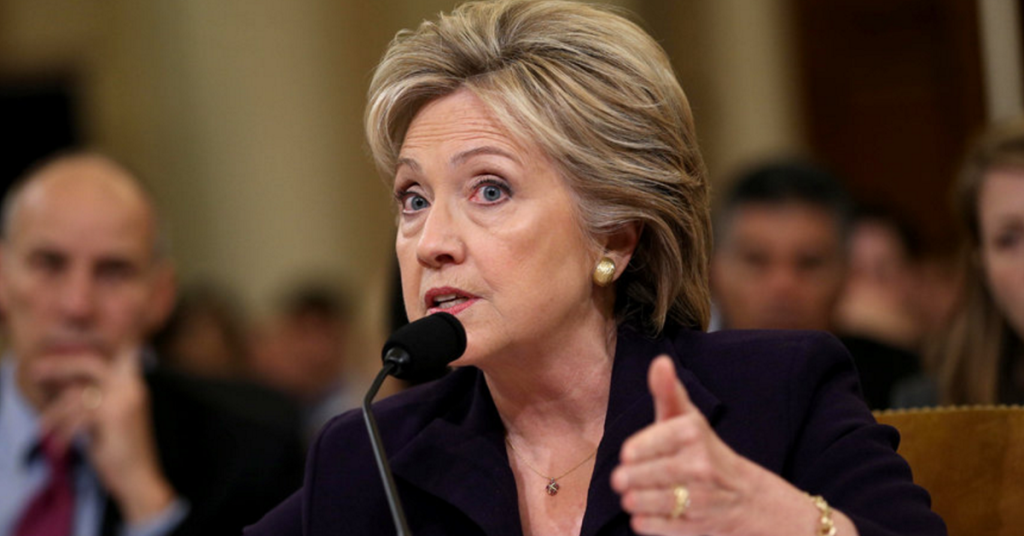
To congressional Republicans, “Benghazi” is shorthand for incompetence and cover-up. Democrats hear it as the hollow sound of pointless investigations targeting presidential front-runner Hillary Rodham Clinton. It is, in fact, a Mediterranean port city in Libya that was the site of two attacks within hours of each other on a U.S. compound on the 11th anniversary of 9/11 and into the next day. The attacks killed Chris Stevens, the U.S. ambassador to Libya, and three other Americans. That’s nearly all that U.S. politicians can agree on about Benghazi. It’s been a political rallying cry since just weeks before President Barack Obama‘s re-election in November 2012. With the House investigation likely to continue into next year, Benghazi will remain a buzz word for the 2016 presidential race. Clinton’s testimony at a widely anticipated public hearing on Thursday could make or break the credibility of the inquiry led by Rep. Trey Gowdy, R-S.C. A guide to the controversy: — SETTING THE SCENE The 2011 revolt that deposed and killed Libyan dictator Moammar Gadhafi, with the help of NATO warships and planes, began in Benghazi. A year later, the city of 1 million remained chaotic, in the grip of heavily armed militias and Islamist militants, some with links to al-Qaida. The temporary U.S. diplomatic mission, created to build ties and encourage stability and democracy, was struck by homemade bombs twice in the spring of 2012. British diplomats, the Red Cross and other Westerners were targeted that spring and summer. Stevens, based in the capital city of Tripoli, chose to visit Benghazi on the anniversary of the Sept. 11, 2001, terrorist attacks on New York and Washington, when U.S. embassies around the world were on alert for terrorism. In Egypt that day, a different sort of trouble struck. Protesters angry about an anti-Muslim video made in America stormed the U.S. Embassy in Cairo, clambering over the walls and setting flags on fire. Hours later, the assault in Benghazi began. — A FIERY ASSAULT AND FOUR DEATHS The Benghazi attacks came in three waves, spread over eight hours at two locations. According to accounts from congressional investigators and the State Department’s Accountability Review Board: Around 9:40 p.m. local time, a few attackers scaled the wall of the diplomatic post and opened the front gate, allowing dozens of armed men in. Local Libyan security guards fled. A U.S. security officer shepherded Stevens and Sean Smith, a State Department communications specialist, into a fortified “safe room” in the main building. Attackers set the building and its furniture on fire. Stevens and Smith were overcome by blinding, choking smoke that prevented security officers from reaching them. Libyan civilians found Stevens in the wreckage hours later and took him to a hospital, where he, like Smith, died of smoke inhalation. Stevens was the first U.S. ambassador to be killed in the line of duty in more than 30 years. A security team from the CIA annex about a mile away arrived to help about 25 minutes into the attack, armed only with rifles and handguns. The U.S. personnel fled with Smith’s body back to the annex in armored vehicles. Hours after the first attack ended, the annex was twice targeted by early morning mortar fire. The second round killed Tyrone Woods and Glen Doherty, two CIA security contractors who were defending the annex from the rooftop. A team of six security officials summoned from Tripoli and a Libyan military unit helped evacuate the remaining U.S. personnel on the site to the airport and out of Benghazi. — THE FALLOUT BACK HOME Word hit Washington in the final weeks of the presidential race. Over the next several days, the Benghazi news blended with images of angry anti-American demonstrations and flag-burnings spreading across the Middle East over the offensive video. Political reaction to the Benghazi attack quickly formed along partisan lines that hold fast to this day. GOP presidential nominee Mitt Romney and other Republicans said Obama had emboldened Islamic extremists by being weak against terrorism. But the public still credited Obama with the successful strike against al-Qaida leader Osama bin Laden a few months earlier in Pakistan. The accusation that took hold was a Republican charge that the White House intentionally misled voters by portraying the Benghazi assault as one of the many protests over the video, instead of a calculated terrorist attack under his watch. Obama accused the Republicans of politicizing a national tragedy. He insists that the narrative about the video protests was the best information available at the time. After at least seven investigations, more than a dozen public hearings and the release of more than 50,000 pages of documents over the past three years, the arguments remain the same. — WHY WAS DIPLOMATIC POST SO VULNERABLE? Republican and Democratic lawmakers agreed: The State Department under Clinton kept open the Benghazi mission, which employed a few State employees and more than two dozen CIA workers, with little protection in the midst of well-known dangers. The attack probably could have been prevented if officials had heeded intelligence warnings about the deteriorating situation in eastern Libya, a bipartisan report by the Senate Intelligence Committee said. Britain closed its Benghazi mission in June 2012, after an attack on the British ambassador’s convoy. Stevens’ requests for more security, made clear in cables to State Department headquarters during July and August, went unheeded, according to the Senate report, as did those made by his predecessor earlier that year. But Stevens also twice declined the U.S. military’s offer of a special operations team to bolster security and otherwise help his staff. The month after the fatal assault, Clinton declared she had been responsible for the safety of those serving in Benghazi, without acknowledging any specific mistakes on her part. Obama said the blame ultimately rested on his shoulders as president. The administration continued to distance both of them, however, saying neither Clinton nor Obama was aware of the requests for better protection because security decisions were handled at lower levels. Four senior
Hillary Clinton slams Benghazi committee in TV interview, ad
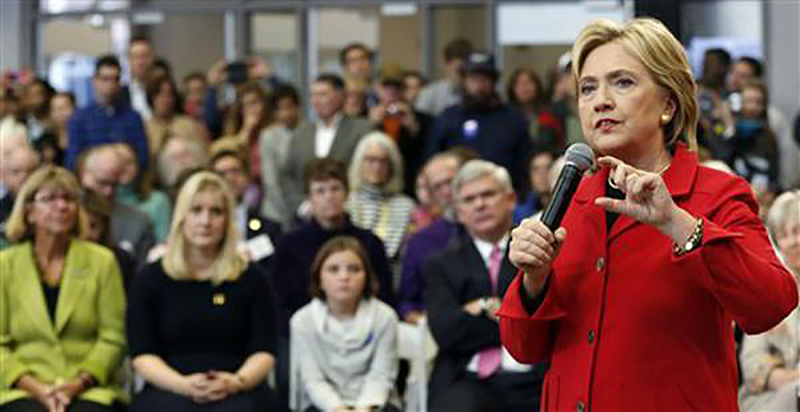
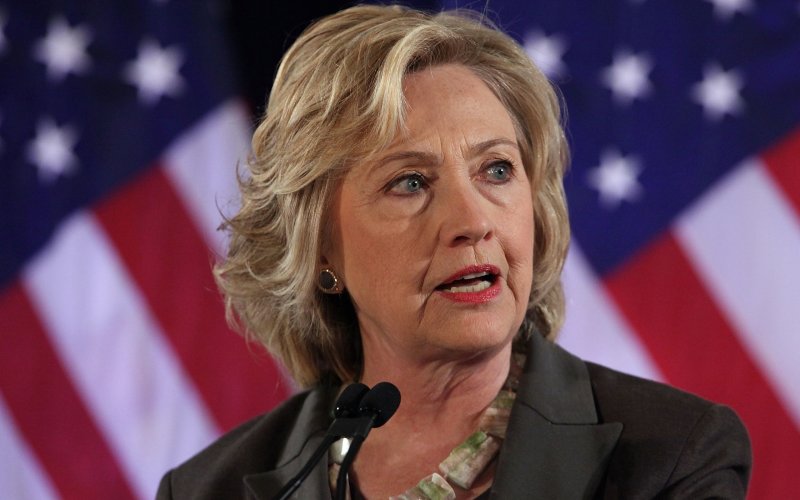
Hillary Rodham Clinton on Monday lashed out at the special House committee investigating the deadly attacks in Benghazi, Libya, calling it a partisan political exercise designed to “exploit” the deaths of four Americans. House Majority Leader Kevin McCarthy‘s recent comments that the Benghazi panel can take credit for her diminished public standing prove Republicans are going after her for political reasons, Clinton said in a televised interview. The Democratic presidential front-runner told NBC’s “Today” show that if she were president, she would have “done everything” in her power to shut down such a partisan investigation. “Look at the situation they chose to exploit, to go after me for political reasons: the death of four Americans in Benghazi,” Clinton said in an interview before a town hall appearance in New Hampshire. “This committee was set up, as they have admitted, for the purpose of making a partisan, political issue out of the deaths of four Americans.” Clinton was secretary of state during the 2012 attacks. She stopped short of calling for the Benghazi panel to be disbanded, as some Democrats have urged. “That’s up to the Congress,” she said, adding that she was looking forward to testifying before the Benghazi panel on Oct. 22 “to explain everything we’ve done, everything that I asked to happen.” Laying the groundwork for the testimony, Clinton’s campaign released a new 30-second ad that says the Republicans “finally admit it” and points to McCarthy’s remarks. “The Republicans have spent millions attacking Hillary because she’s fighting for everything they oppose,” the ad says. Emily Schillinger, a spokeswoman for House Speaker John Boehner, called the ad “a classic Clinton attempt to distract from her record of putting classified information at risk and jeopardizing our national security.” Clinton’s comments came as Democrats on the Benghazi panel released a partial transcript of a closed-door interview with Clinton’s former chief of staff, Cheryl Mills, in response to what they called selective and inaccurate Republican leaks. Release of the transcript is “the only way to adequately correct the public record,” the Democrats said in a letter to the panel’s chairman, Rep. Trey Gowdy, R-S.C. They said they would release the full transcript in five days, in order to give Gowdy time to identify any specific information in the transcript he believes should be withheld from the American people. A spokesman for Gowdy said the committee has not released transcripts from witness interviews in order to “gather all facts” and avoid tainting the recollections of future witnesses. “By selectively leaking” parts of the transcript from Mills’ daylong interview last month, “Democrats have shown their nakedly political motivation, willingness to violate the letter and spirit of House rules and their desire to defend Secretary Clinton without regard for the integrity of the investigation,” Gowdy’s spokesman, Jamal Ware, said. House Democrats said Mills refuted several GOP allegations about the Benghazi attacks, which killed U.S. ambassador Chris Stevens and three other Americans. Democrats released comments by Mills in which she rejected a claim that Clinton issued a “stand-down” order blocking U.S. troops from rescuing those trapped at the U.S. consulate in Benghazi. The supposed stand-down order has been widely debunked. Clinton “said we need to be taking whatever steps we can, to do whatever we can to secure our people,” Mills said, according to a partial transcript released by Democrats. Clinton was “very concerned” on the night of the attacks and “worried about our team on the ground in Benghazi” and State Department personnel throughout Libya, Mills said. McCarthy, R-Calif., who is considered likely to become House speaker following Boehner’s surprise resignation, said last week: “Everybody thought Hillary Clinton was unbeatable, right? But we put together a Benghazi special committee. What are her numbers today? Her numbers are dropping.” McCarthy called Clinton “untrustable” and said, “No one would have known any of that had happened had we not fought and made that happen.” McCarthy later retracted the comment and said he regrets it. Rep. Elijah Cummings of Maryland, the senior Democrat on the Benghazi panel, called it “shameful” that Republicans have “used the tragedy … for political gain.” Republished with permission of the Associated Press.
Marco Rubio to hold major fundraiser Sept. 22 in affluent Dallas suburb
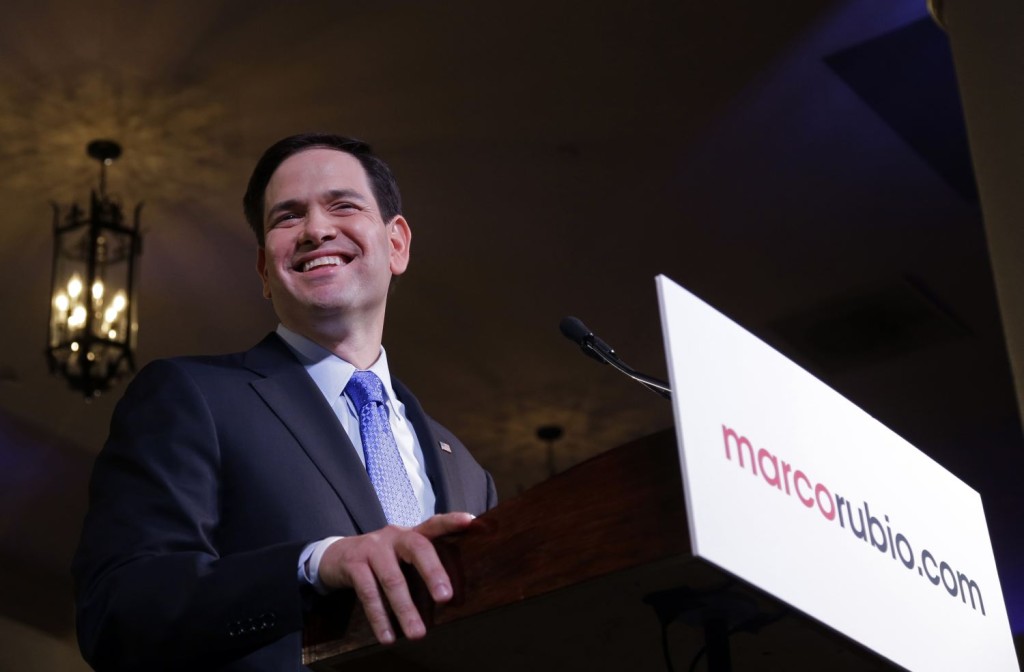
Marco Rubio brings his vision of a “New American Century” to Texas next week with a high-profile fundraiser reception in the exclusive Dallas suburb of Highland Park. Real-estate investor Harlan Crow and his wife Kathy will present the $2,000-per-couple event, scheduled for Tuesday, September 22. Host reception begins at 6:30 p.m.; general reception is at 7 p.m. The host committee, still in formation, includes former Republican U.S. Senator Phil Graham, Dallas-based investors George Bayoud and George Seay – a former top moneyman for Texas Gov. Rick Perry’s 2012 presidential run — and Florida lobbyist Nick Iarossi. South Carolina Congressman Trey Gowdy, the outspoken conservative who serves on the House Select Committee on Benghazi, is the special guest. For an event chair spot, supporters need to raise $10,800; to host is $5,400 per couple. Chair level donors get two tickets to an October retreat, two tickets to the VIP Reception and a photo opportunity with Rubio. Location of the event is at the Crow’s historic home in Highland Park, an affluent area that some observers consider one of the nation’s most enthusiastically Republican districts. Near Dallas’ financial center, Highland Park enjoys some of the lowest property tax rates in Texas — a state without income tax – as well as having one of America’s best school systems. Attendees will have a chance to meet with Rubio, the 44-year-old senator who characterizes his presidential candidacy as a path to the “New American Century,” with both wisdom and experience to lead the country through challenging economic times.
Martha Roby: The Clinton emails: Why they matter
By now you’ve heard the news that the U.S. Department of Justice is taking possession of the personal, secret server former Secretary of State Hilary Clinton used to conduct official email correspondence. Clinton’s decision to finally surrender the server to authorities comes in the wake of revelations that classified, “Top Secret” materials were indeed contained in emails on her private account, counter to her previous claims. But, what makes this development so significant? Why does it matter to the FBI whether Clinton used her own private system to conduct email correspondence? First of all, federal law prohibits storing classified information in unauthorized places, with penalties ranging from a fine to one year in prison. We have stringent security protocols for those who deal with sensitive, classified information because that information could be used to threaten our national security and put those in military or clandestine service at risk. And, in a world with growing cyber security threats, the risk is even greater for digitally stored information. For example, NBC News recently reported that Chinese hackers had penetrated the private email accounts of many top Executive Branch officials since 2010. The officials’ government accounts were not penetrated, though, because they have a much higher level of security. It is unclear whether Secretary Clinton was among those top officials to have their private emails hacked though an in-house email system like hers is believed to be particularly vulnerable to hackers. The bottom line is Secretary Clinton deliberately flouted our nation’s protocols with her personal email arrangement and, in doing so, threatened the security of classified, Top Secret information. Her apparent obsession with retaining absolute control of her email came at the expense of national security, and that should concern all Americans. Secretary Clinton says she already deleted more than 30,000 emails and “wiped” the server housing them, so it’s unclear just how much can be gleaned from what was turned over. But I am hopeful the FBI, Inspectors General and the Select Committee on Benghazi can get to the bottom of it. It’s worth noting that none of this would have been brought to light without the formation of the Select Committee, the determination of our Chairman, Trey Gowdy, or the diligent work of our investigators. My colleagues and I are preparing for Secretary Clinton’s appearance before the Select Committee in October. Given these revelations and her previous statements, she will certainly have some explaining to do. Martha Roby represents Alabama’s 2nd Congressional District. She is currently serving her third term.
House panel continues partisan probe into Benghazi
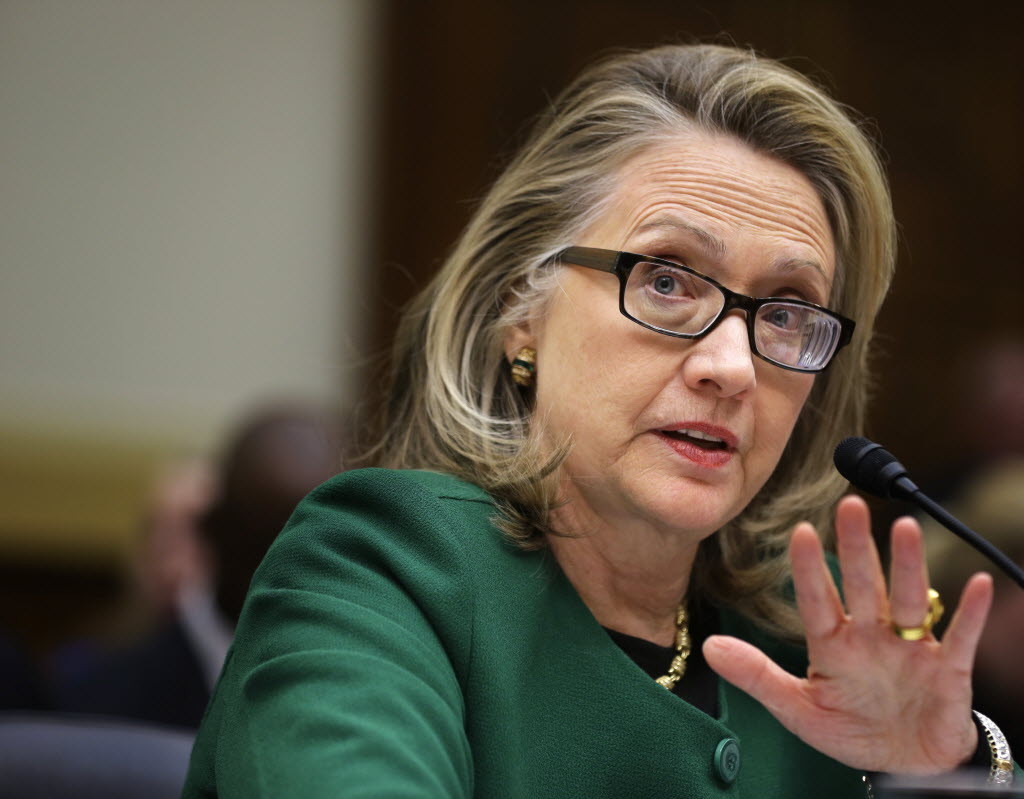
A special House committee on the 2012 Benghazi attacks has devolved from an investigation into the deaths of four Americans in Libya into a political fight over Hillary Rodham Clinton‘s emails and private computer server – a battle that is likely to stretch into the 2016 presidential election year. Republicans say Clinton has only herself and the department she once ran to blame for the shift in focus amid her campaign for the Democratic presidential nomination. Clinton, who served as secretary of state in 2012 when militants attacked the U.S. mission in Benghazi, chose to use a private email server, rather than a government server – and later deleted thousands of emails she said were not related to her work. The State Department, meanwhile, has struggled to produce a trove of emails involving Clinton and some of her key staffers. The resulting impasse has prolonged the committee’s work, said Rep. Trey Gowdy, R-S.C., the chairman of the Benghazi panel. “The reason we are having a conversation about her email arrangement is because of her unusual email arrangement with herself, and not because of anything we’ve done on the Benghazi committee,” Gowdy, a former prosecutor, said in an interview. Rep. Elijah Cummings of Maryland, the committee’s ranking Democrat, said the panel has assumed a new purpose: “Derail Hillary Clinton’s presidential efforts by any means necessary.” “Anybody can now see that’s what it’s all about,” Cummings said in an interview. He’d like to see Clinton testify before the committee as soon as possible. There’s no such session scheduled, even though Clinton is expected on Capitol Hill Tuesday to meet with congressional Democrats. Her campaign, meanwhile, has posted a 3,600-word fact sheet on the candidate’s use of a private email server during her time at the State Department. The statement said Clinton’s use of a private email account was widely known at the State Department and that department policy during her tenure permitted her to use a non-government email for work. What’s undisputed is that the select committee’s work will continue into 2016, guaranteeing that Benghazi – and the deaths of four Americans, including U.S. ambassador Chris Stevens – will shadow Clinton during her second White House bid. Clinton herself may have provided a glimpse of that future when she declared during a CNN interview last week that she “never had a subpoena” compelling the production of emails sent while she was secretary of state. Gowdy pounced, releasing a subpoena he issued to Clinton in March to “correct the inaccuracy” of her claim. In fact, he had publicly announced delivery of the document at the time. He didn’t tell Clinton to go on TV, Gowdy said, “and I certainly didn’t tell her what to say. Had she not said what she said to the CNN reporter, you would not have seen my homely self on TV.” Cummings rose to Clinton’s defense, calling her statement “an honest mistake” and denouncing the GOP’s release of the subpoena as a “stunt” in an ongoing “taxpayer-funded attack” on the Democratic front-runner. Cummings and other Democrats voted against creating the panel last year, saying that at least eight previous investigations had disproved a variety of conspiracy theories about the attacks nearly three years ago. Notions that U.S. forces were ordered to “stand down” during the attacks or that Clinton played a direct role in security decisions are false, congressional investigators say. Gowdy maintains that the committee is not concerned about conspiracies, but intent on learning the full truth about the attacks. The focus on Clinton is because, “No. 1, she was secretary of state at all relevant times. That’s a pretty big fact,” he said. House Speaker John Boehner, R-Ohio, said the American people deserve to know what happened. “We still don’t have the answers because the (Obama) administration and Secretary Clinton refuse to turn over the relevant documents for the American people to see,” Boehner said Sunday on CBS’ “Face the Nation.” “We are not going to walk away from this,” Boehner said. “The State Department is rolling these emails that they do have over to us at a rate of about 4,000 a month. This is going to go on throughout the rest of this year.” Despite her claims to the contrary, Clinton has not been fully forthcoming about her emails and other important documents, Gowdy and other Republicans said. For instance, while Clinton has said she turned over “the entire public record” of her emails, “we know that is not accurate,” Gowdy said, citing at least 15 work-related emails from Clinton’s private server that the State Department says it cannot find. Republicans also are frustrated that the State Department has been slow to release emails sent by key Clinton staffers, including top aides such as Cheryl Mills, Jake Sullivan and Huma Abedin. While Democrats accuse Gowdy of stalling a planned interview with Clinton to ensure it happens closer to the 2016 election, Gowdy said any delay is the fault of the State Department, which has failed to produce emails the committee is seeking. Rep. Adam Schiff, D-Calif., a member of the Benghazi committee, said the panel has become exactly what he and other Democrats feared it would be when it was created in May 2014: an ongoing, taxpayer-funded effort to diminish Clinton’s presidential campaign. “To whatever degree this was ever about Benghazi, those days are gone,” Schiff said, predicting that Republicans will spend the next six months or more “going after” Clinton. While that is to be expected from the Republican National Committee, Schiff said, “it’s not OK for a taxpayer-funded committee that is supposed to be finding the truth.” Republished with permission of the Associated Press.
Alabama congressional delegation largely supportive of Benghazi Select Committee
In the wake of recent news that former Secretary of State Hillary Clinton has agreed to testify before a U.S. House Select Committee investigating the 2012 attacks on an American compound in Benghazi, some Republican members of Congress are licking their chops at the prospect of getting a good crack at the 2016 Democratic presidential frontrunner over an issue that remains on the front burner for conservatives. Among them is U.S. Rep. Martha Roby of Alabama’s Wiregrass and Montgomery-based 2nd Congressional District. Roby is one of seven Republican members chosen for the committee. “It doesn’t surprise me that the Clinton lawyers want to limit her testimony,” Roby told Alabama Today on Tuesday, responding to corollary news that Clinton has refused to testify twice as requested by the committee, conceding to only one hotly anticipated appearance. “But, remember, it was her decision, not ours, to set up a secret email system in a calculated attempt to flout government transparency requirements. And there are many legitimate questions that remain unanswered.” She expressed her enthusiasm that South Carolina U.S. Rep. Trey Gowdy — who has been vocal in his criticisms of Clinton over Benghazi — may get to oversee a panel devoted to extracting answers from the former New York senator in light of her use of a private email address while serving on President Barack Obama‘s Cabinet. “I know that Chairman Gowdy is taking this offer into consideration and we will see what happens going forward. Chairman Gowdy has been a deliberate, effective leader of this Select Committee and we are behind him 100 percent,” Roby said. U.S. Reps. Bradley Byrne, Mike Rogers, Robert Aderholt and Mo Brooks — Republicans all — each voted “yea” and co-sponsored the federal legislation that created the committee. Democrat Terri Sewell, for her part, voted against it. Rep. Gary Palmer wasn’t yet elected when the House created the Select Committee. He did tell Birmingham talk radio host Matt Murphy in March he thinks “we should subpoena the server and see what’s on it.” Palmer also told the Birmingham Morning News, “I have zero confidence that this Justice Department will do anything under Obama [concerning Clinton’s emails].”
Hillary Clinton agrees to testify on Benghazi, emails this month
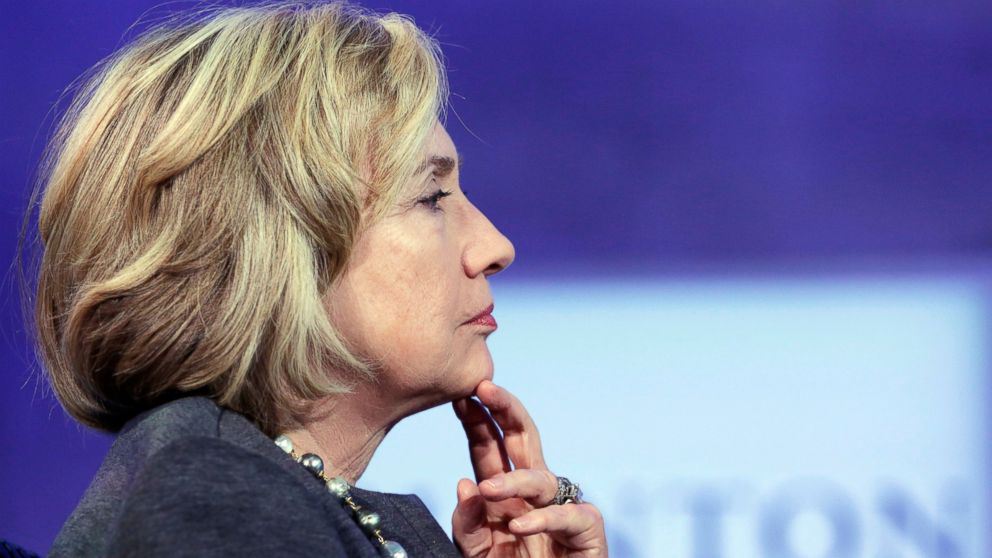
Hillary Rodham Clinton is willing to testify once on Capitol Hill this month about the attacks in Benghazi, Libya, and her email practices during her tenure as secretary of state, her attorney told lawmakers in a letter Monday. Lawyer David Kendall said the Democratic presidential candidate will appear for only one session the week of May 18 or later, not twice as requested by Rep. Trey Gowdy, a South Carolina Republican and chairman of the special panel investigating the September 2012 attacks that killed four Americans, including Ambassador Chris Stevens, at the U.S. outpost in Libya. Gowdy had requested one hearing to focus on Clinton’s use of private emails, and a separate session on Benghazi. Kendall said Clinton would answer all lawmakers’ questions during one session and it would not be necessary for her to appear twice. “Respectfully, there is no basis, logic or precedent for such an unusual request,” Kendall wrote. “The secretary is fully prepared to stay for the duration of the committee’s questions on the day she appears.” Rep. Elijah Cummings of Maryland, the top Democrat on the panel, released Kendall’s letter along with a statement saying the lawyer’s offer should more than satisfy the GOP’s demands. “Chairman Gowdy should take ‘yes’ for an answer and finally schedule the hearing,” Cummings wrote. “Dragging out this process further into the presidential election season sacrifices any chance that the American people will see it as serious or legitimate.” Spokesman Jamal Ware said Gowdy will consider her response and issue a statement later “regarding the path forward” for Clinton’s testimony. Clinton previously testified on Capitol Hill over the attacks in January 2013, when she was still secretary of state. She told lawmakers then that she takes responsibility for missteps by the State Department in the months leading up to the assault. But Clinton insisted that requests for more security at the diplomatic mission in Benghazi didn’t reach her desk, and reminded lawmakers that they have a responsibility to fund security-related budget requests. Republicans say they have more questions, especially in light of recent revelations that she used a private email account while secretary of state and decided which emails to retain and turn over to the government. Gowdy’s letter last month seeking two appearances included more than 100 questions he and other lawmakers may pose to Clinton about her email use, including why she considered using a private server and what was done to vet the companies or individuals who set up the server. Republished with permission of The Associated Press.
