
Troy City Council President Marcus Paramore announces candidacy for Alabama House District 89
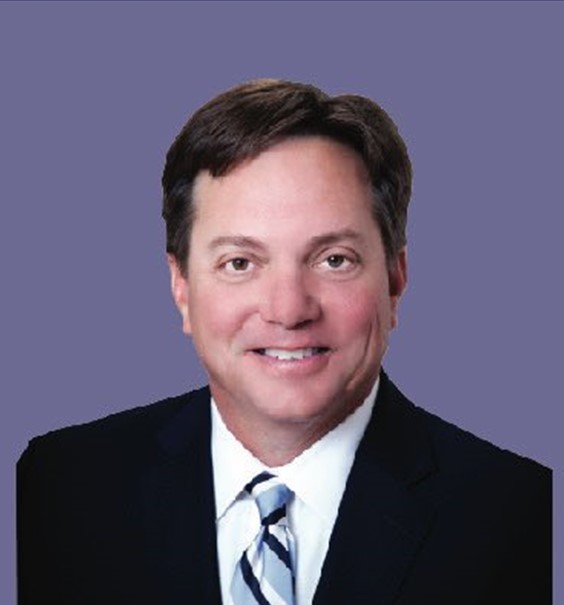
Troy City Council President Marcus Paramore announced his candidacy today to seek the Republican nomination for the District 89 seat in the Alabama legislature, according to a recent press release. Surrounded by a crowd of approximately 70 supporters outside of Troy’s City Hall, Paramore announced he intended to run with a “focus on economic development and the protection of traditional conservative values in Pike and Dale counties.” Promising to run on a campaign centered around family, faith, and hard work, Paramore explained, “I want to work every day to make District 89 a great place to live and to raise children and grandchildren. I am so proud to live here and to have raised my family here. I know that we have so much to offer and that we can continue to grow while keeping our conservative values.” Paramore’s tenure on Troy’s City Council resulted in heavy involvement in various recruiting industries such as Kimber and Rex Lumber and a number of national retailers. Passionate about fostering the expanding labor market in District 89, Paramore is also a staunch advocate against awarding able-bodied employees incentives to not work. Currently, the District 89 seat in the Alabama legislature is held by Rep. Wes Allen (R-Troy). Allen has announced that he will not run for re-election but instead will run for the Office of Alabama Secretary of State. The Republican Primary election will be held on May 24, 2022.
Kimber to open Alabama firearms manufacturing facility with 366 jobs

American firearms manufacturer Kimber Manufacturing, said Tuesday that it’s opening a new manufacturing plant in Troy, Ala., where it expects to employ 366 workers. The company said it will invest $38 million in the production facility over the next five years. “Due to an unprecedented year-over-year growth in demand, every time the company has embarked upon a planned expansion, the newly created capacity is exhausted before the expansion is complete,” said James Cox, Kimber’s chief financial officer. “As we continue to move into uncharted waters in regards to Kimber product demand, it was important to us to build a facility that will allow us to secure a significant new plateau of capacity.” Alabama Gov. Kay Ivey says Kimber’s investment in Troy will create a significant number of high-paying design engineering and manufacturing jobs. “With talented Alabamians already manufacturing a wide range of high-quality products that are in demand around the globe, the state can offer Kimber an ideal business environment and a skilled workforce for its expansion project,” Ivey said. “Kimber’s investment in Troy will create a significant number of high-paying design engineering and manufacturing jobs, and we are committed to helping the company find long-lasting success in Alabama.” Once a small manufacturing company based in Yonkers, N.Y, Kimber has grown rapidly over the past 21 years. The new manufacturing facility in Troy will be Kimber’s sixth U.S. location. “We are pleased with the impressive track record that Alabama has with attracting and retaining world-class manufacturing companies,” said Leslie Edelman, Kimber’s president and chief executive officer. “Growing our company intelligently depends significantly on being in the right manufacturing environment, and in Troy, we have a community dedicated to our long-term success. Working with the Alabama Department of Commerce as well as Mayor Jason Reeves and his team has been a pleasurable and rewarding experience.” Greg Grogan, Kimber’s chief operating officer, said the company will build a large, automated, state-of-the-art design engineering and manufacturing facility in Troy to support Kimber’s strategic growth plans. It should be operational by early 2019. “We will be building a large, automated, state-of-the-art design engineering and manufacturing facility in Troy to support Kimber’s growth plan and strategy,” said Grogan. “Troy offers us expansion with a passionate workforce, affordable utility costs, a pro-business environment, experienced local training support, and long-term incentives from the State of Alabama and the City of Troy alike. This expansion, in conjunction with our existing manufacturing facilities, talented and experienced employees, and best-in-class products provides for exciting times here at Kimber.” “This is a dream come true for the City of Troy and for me personally; a firearms manufacturing company with such a stellar brand as Kimber, creating jobs and capital investment for the community,” City of Troy Mayor Jason Reeves added. “Troy has a strong manufacturing base and Kimber will certainly, positively add to that.”
Daniel Sutter: Walter Williams comes to Troy

One of America’s best known economists, Dr. Walter Williams of George Mason University, will visit Troy next week. Dr. Williams is a nationally syndicated columnist, a frequent guest on Fox News, and a past guest host for Rush Limbaugh. Dr. Williams grew up in Philadelphia and earned his Ph.D. in economics from UCLA. Although less known as a center of free market economics than George Mason today or Chicago in decades past, UCLA was home to some great free market economists, including Arnold Harberger, Jack Hirshleifer, Armen Alchian, and Harold Demsetz. Dr. Williams learned economics from some superstars. In addition to his syndicated column, Dr. Williams has authored ten books and dozens of academic papers. One of his early contributions was a study on minority unemployment for Congress’ Joint Economic Committee. The Democrats controlled Congress in the 1970s, and so I can imagine the report on minority unemployment they expected an African American economist to produce. They refused to publish Dr. Williams’ report as written, and the original, unedited study became legendary. In the 1980s Dr. Williams wrote two important books on race and discrimination, The State Against Blacks and South Africa’s War Against Capitalism. Some people think that government will address discrimination simply because this is the right thing to do. But history shows otherwise. Consider the minimum wage, hailed today as benefitting the poor and minorities despite its actual harm. Early proponents viewed a minimum wage as a means to discriminate against African Americans. Occupational licensing excluded minorities from many professions for years. We can all hopefully agree that prejudice and racism is wrong, but Dr. Williams’ book illuminated for me the complexity in limiting the harm from prejudice. Government will not automatically do the right thing. Prejudice can lead to government discrimination against minorities, which can inflict worse harm than individuals’ discrimination. South Africa’s Apartheid regime of race-based segregation symbolized racism in the 1980s. Many college students were lobbying American companies to stop doing business in South Africa, or lobbying universities to stop investing in companies doing business there. Campus liberals always blamed Apartheid on capitalism. South Africa’s War Against Capitalism was another eye-opener for me, explaining how Apartheid emerged in part to compel businesses to discriminate against black South Africans. Markets, by contrast, typically advance color-blindness. Competition, for instance, leads consumers to focus on who provides the best product at the best price, not the producer’s race. Entrepreneurs have freedom to not discriminate if they choose. Widespread prejudice can result in government policies forcibly compelling all to discriminate. The freedom of the market is sometimes crucial to preserve any opportunities for minorities to work and trade. Dr. Williams has been an ardent and consistent defender of personal freedom, the market economy, and limited government. He has done so with a style all his own, which includes his blunt lambasting of the foolish notions of liberal politicians and liberal professors. He maintains his popular following even though he frequently quotes intellectuals like H. L. Mencken, Frederic Bastiat, Jonathan Swift, and America’s founding fathers. In addition to these achievements as an economist, Dr. Williams also played an integral role in building the economics program at George Mason University. Dr. Williams arrived in the 1970s and was part of the core faculty group (along with the Johnson Center’s Manuel Johnson) who lured the Center for the Study of Market Processes and the Center for the Study of Public Choice to GMU. Dr. Williams oversaw a major expansion during his term as department chair in the 1990s. The Johnson Center is very proud to bring such an illustrious and entertaining intellectual to Troy. Dr. Williams will be speaking at 10am Wednesday, April 20 at the Claudia Crosby Theater on the Troy University campus. His talk is free and open to the public. • • • Daniel Sutter is the Charles G. Koch Professor of Economics with the Manuel H. Johnson Center for Political Economy at Troy University and host of Econversations on TrojanVision.
