
Darryl Paulson: Donald Trump goes a-courting

On May 18, 2016, Republican presidential nominee Donald Trump released a list of 11 judges that he would “most likely” use to select his appointees to the Supreme Court. The list of 11 names included 11 whites and eight males. Six of the 11 were appointees of George W. Bush, and the other five are currently serving on their states’ supreme court. The average age of the potential nominees is 50, compared to the average age of 68.75 on the current court. The youngest nominee is David Stras of the Minnesota Supreme Court. Stras, if nominated, would be the youngest candidate put forward for the court since the FDR administration. The response to Trump’s list of potential nominees was as expected. On the political left, Nan Aron of the Alliance for Justice Action Campaign, said the nominees “reflect a radical-right ideology that threatens fundamental rights.” Ilyse Hogue, president of NARAL Pro-Choice America, called the list “a woman’s nightmare,” and said the judges would overturn Roe vs. Wade. Conservative attorney John Woo praised Trump for starting to unify the party. “Everyone on the list,” noted Woo, “is an outstanding legal scholar.” Woo called the selections a Federal Society all-star list of conservative jurisprudence.” Carrie Severino of the Judicial Crisis Network, said the nominees have “a record of putting the law and Constitution ahead of their political preferences.” The Trump campaign said the list was “compiled, first and foremost, based on constitutional principles, with input from highly respected conservatives and Republican Party leadership.” The following is a quick summary of Trump’s potential nominees to the Supreme Court: Stephen Colloton: Member of the Court of Appeals 8th Circuit since 2003. Clerked for Chief Justice William Rehnquist. Allison Eid: Colorado Supreme Court justice since her 2006 appointment by Republican Governor Bill Owens. Clerked for Clarence Thomas. Raymond Gruender: Appointed to Court of Appeals for 8th Circuit by George W. Bush in 2004. On the Heritage Foundation list of possible conservative appointees to the Supreme Court. Thomas Hardiman: On the Court of Appeals for 3rd Circuit since 2007. Appointed by George W. Bush and unanimously confirmed. Clerked for Antonin Scalia. Raymond Kethledge: On the Court of Appeals for 6th Circuit since appointed by George W. Bush in 2008. Clerked for Justice Anthony Kennedy. Joan Larson: Appointed to Michigan Supreme Court in 2015 by Republican Governor Rick Snyder. Clerked for Scalia. Thomas Lee: Associate Justice on Utah Supreme Court since 2010. Brother of Utah U.S. Sen. Mike Lee, a Trump critic, and backer of Ted Cruz. William Pryor: On Circuit Court of Appeals for 11th Circuit since 2004. On Heritage Foundation list of conservative appointees to the Supreme Court. David Stras: On the Minnesota Supreme Court since 2010. Appointed by Republican Governor Tim Pawlenty. Clerked for Clarence Thomas. Diane Sykes: On Circuit Court of Appeals for 7th Circuit since 2004. Previously on the Wisconsin Supreme Court. Ex-wife of conservative radio host Charlie Sykes, who was an outspoken critic of Trump during the campaign. Don Willett: Appointed to Texas Supreme Court by Republican Governor Rick Perry in 2005. Willett was a frequent Twitter critic of Trump during the campaign. Among his Tweets: Can’t wait till Trump rips his face Mission Impossible-style & reveals a laughing Ruth Bader Ginsburg (Aug. 27, 2015). Low-energy Trump University has never made it to #MarchMadness. Or even the #NIT. Sad! (March 15, 2016). We’ll rebuild the Death Star. It’ll be amazing, believe me. And the rebels will pay for it (April 8, 2016). Whenever lists are announced, there is an interest in both who is on the list and who has been left off. Missing from Trump’s list of possible court nominees are Judge Brett Kavanaugh of the DC Circuit Court and former Bush Administration Solicitor General Paul Clement. Both Kavanaugh and Clement appear on most lists of conservative court nominees. It is unusual to put out such a list before assuming office. Why would Trump put out such a lengthy list at this time? First, it is an attempt to solidify support among the Republican base, in particular among those who are skeptical of Trump’s conservative credentials. Second, Trump may be trying to show he is open-minded by selecting several individuals who clearly were not Trump supporters during the campaign. Finally, several of Trump’s nominees come from battleground states such as Colorado, Minnesota, Michigan and Texas that Trump needs to win if he hopes to get elected. Although many conservatives and Republicans were pleasantly surprised by the names on Trump’s list, some are still skeptical. Conservative writer Charles Krauthammer noted that Trump said that nominations “would most likely be from the list.” “Most likely” leaves too much wiggle room for many of Trump’s critics, who note he has flip-flopped on many issues during the campaign and, sometimes, on the same day. ___ Darryl Paulson is professor emeritus of government at USF St. Petersburg.
Donald Trump says his business flourishing since presidential run
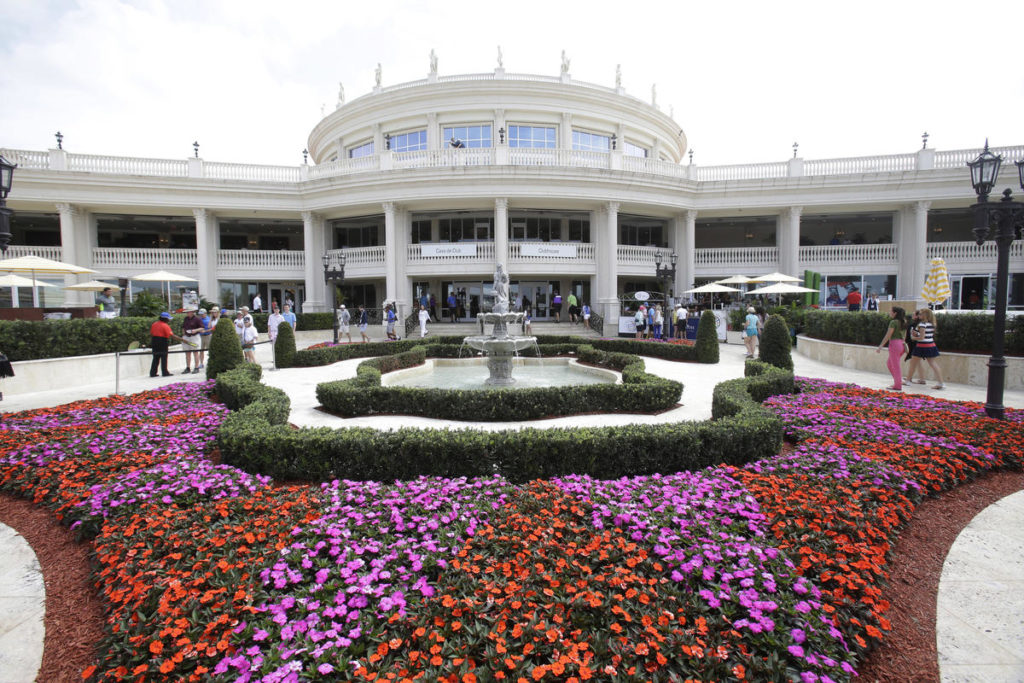
Donald Trump has told the government that his myriad businesses have flourished with rising revenues since his improbable political success, according to financial documents released Wednesday. The presumptive Republican presidential nominee said revenue at his businesses grew by $190 million over the past 17 months, and he had $557 million in earned income. The Federal Election Commission released the personal financial documents that Trump filed with the agency. They provide an overview of the billionaire’s assets and revenues and his roles with hundreds of corporate shell companies. Trump has so far declined to release his tax returns, making it difficult to confirm financial details. The 104-page filing provided little evidence that Trump’s combative campaign hurt his business prospects, despite regular talk of boycotts early in his campaign. Though the disclosure overlaps with one he filed last year — making straight comparisons difficult — revenues from his golf resort businesses are up, with Trump reporting $306 million in revenues from his courses around the world. About $132 million of that came from Trump’s course in Doral, Florida, up from $49 million in revenue the year before. The Mar-a-Lago club, a Trump vacation property and private club that has been a regular backdrop for campaign events, also saw a big jump. It reported $29 million in revenues, far more than the $16 million reported in Trump’s filing last year. The Miss Universe Pageant, which Trump sold after his comments on Mexican immigrants led to a dispute with television networks, went for $49 million. That was far more than the $5 million to $25 million the pageant was listed as worth on his financial disclosures from last year. Trump said late Tuesday that the filing was “the largest in the history of the FEC” and he praised the timely submission. Despite promising at various points during the campaign that he would release his tax returns, Trump has not yet done so. He has said audits by the IRS prevent him from doing so, and speculated that he was being singled out because of his strong Christian beliefs. IRS officials have not said whether they were auditing Trump. They have said Trump could publicly release his filings even if such an audit was occurring. Trump’s personal financial disclosure provides little hint that Trump is winding down his business ventures amid his presidential run. Trump reported new licensing and management companies with international names, including ones that appear to be set up to do business in Kolkata, India, Buenos Aires, Argentina, and Jeddah, Saudi Arabia. He also resigned from about one dozen companies since last year, most of which do not appear to have been active. Among them: companies tied to a failed Trump-branded condo project south of Tijuana, Mexico; a company tied to the Trump SoHo high-rise hotel in Manhattan; a licensing company associated with an Israeli vodka company; and a branding company set up to do business in Dubai, United Arab Emirates. Trump has said he would turn over the reins of his business to his children should he become president. Smaller but notable details of Trump’s business efforts include sales of “Crippled America,” his campaign book published last year. Trump reported that the book generated between $1 million and $5 million in income. The skin care line run by his wife, Melania, generated little or no revenue. The Trump Entrepreneur Initiative, the rebranded name of Trump University, a real estate seminar firm that has drawn multiple class action lawsuits and a suit by New York’s attorney general, reported $13,000 in income. Republished with permission of The Associated Press.
Trump University plaintiff seeks to withdraw from lawsuit
Tarla Makaeff has had enough of Donald Trump after spending six years fighting him in court. The Southern California yoga instructor wants to withdraw from a federal class-action lawsuit that says Trump University fleeced students with an empty promise to teach them real estate. Her lawyers said the Republican presidential front-runner and his team have put her “through the wringer” and made the prospect of a trial unbearable. A judge will consider the request Friday, four days before Florida and Ohio hold their primaries. Trump’s attorneys say the lawsuit should be dismissed if Makaeff is allowed to withdraw, arguing that their trial strategy centers on her. They deposed her four times and identify her as “the critical witness” in a court filing. Makaeff’s attorneys say Trump’s argument that their client is indispensable to the billionaire’s defense “is illogical to the point of being nearly incomprehensible.” They note the judge allowed two plaintiffs to withdraw last year; three others would remain. The tussle in one of three lawsuits against Trump University comes as the case nears trial, possibly this summer. A trial date has not been set, but a final pretrial conference is scheduled for May 6 and Trump appears on a list of defense witnesses who may testify at trial. The lawsuit has figured prominently in the presidential campaign, fueled by legal filings and Trump’s statements. In depositions that took place in December and January and were released last week, Trump acknowledged that he never met instructors whom his marketing described as hand-picked, and that some unqualified candidates had “slipped through the cracks.” The Better Business Bureau said Tuesday that it rated Trump University a D- in 2010, which improved to A+ by January 2015 as the business appeared to wind down and older complaints automatically rolled off its books. Makaeff attended a three-day “Fast Track to Foreclosure” workshop for $1,495 in 2008 and later enrolled in the “Trump Gold Elite” program for $34,995, spending a total of about $60,000 on seminars in a year, her attorneys say. In April 2010, she sued in San Diego federal court. Trump sued for defamation, seeking $1 million. Makaeff prevailed on appeal, and a judge last year ordered Trump to pay $798,779 in her legal fees. Trump and his attorneys are trying to frame much of their case around Makaeff, saying she gave instructors high marks in surveys after the courses. “The reason they want her out of the case is she is a horrible, horrible witness. She’s got in writing that she loves it. And I could have settled it and when I saw her documentation … Why would I give her money? Probably should have settled it, but I just can’t do that. Mentally I can’t do it. I’d rather spend a lot more money and fight it,” Trump said at a rally in Arkansas last month, according to a transcript. In last week’s Republican debate, Trump said Makaeff wants to withdraw “because it’s so bad for her.” “She simply did not put in the time, work, and perseverance necessary to achieve success,” Trump’s lawyers wrote the judge last month. Makaeff’s attorneys say the yoga instructor was unaware of Trump’s “false advertising” when she filled out the surveys and didn’t want to risk alienating anyone who might advance her career. Makaeff didn’t imagine she would be subjected to criticism under the glare of a presidential campaign, her attorneys say. She has been deposed for a total of nearly 16 hours and suffered anxiety about finances while Trump sued her for defamation. “Understandably, Makaeff wants her life back without living in fear of being disparaged by Trump on national television,” they wrote in a court filing last week. Makaeff declined to comment through an attorney. In a statement to the court, she said she was grieving her mother’s death. “I am very concerned about the toll that the trial would take on my emotional and physical health and well-being,” she wrote. Trump has also addressed criticism of the lawsuit by pointing to the judge’s ethnic background. Asked on “Fox News Sunday” last month what U.S. District Judge Gonzalo Curiel‘s ethnicity has to do with the case, Trump replied: “I think it has to do perhaps with the fact that I’m very, very strong on the border, very, very strong at the border, and he has been extremely hostile to me.” Curiel, who was nominated by President Barack Obama and joined the bench in 2012, declined to comment on Trump’s remarks. Republished with permission of the Associated Press.
Viewer’s Guide: GOP debate about Donald Trump vs. everyone else

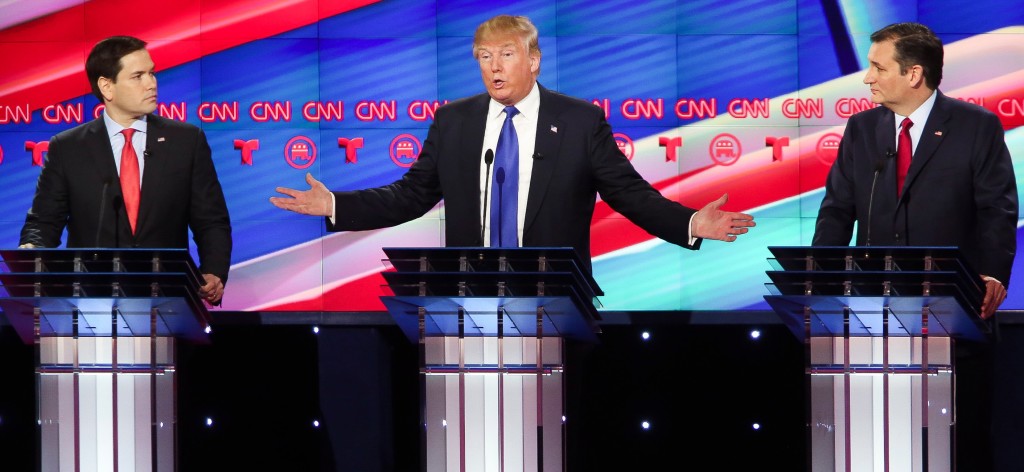
And then there were four. Ben Carson‘s departure from the GOP presidential race means the quartet of remaining Republicans on the debate stage Thursday night get more time for attacks as Donald Trump treads a path to the GOP nomination and his three rivals try to trip him up. Cheered on by many Republican leaders, Ted Cruz, Marco Rubio and John Kasich are racing the primary clock to March 15, likely their last chance to stop Trump in a series of winner-take-all contests. Some things to watch Thursday night as the candidates meet at 9 p.m. EST for the Fox News Channel debate in Detroit: HE WHO WAS NOT NAMED Love him or loathe him, Trump has taught the poohbahs of the Republican Party what a power grab really is — and he’s done it by winning over large swaths of the GOP’s own core supporters far from Washington. His wobbling over whether to disavow the support of former Ku Klux Klan leader David Duke finally gave the Republican leaders of Congress a way to go after the billionaire publicly — without uttering Trump’s name. Trump responded by saying House Speaker Paul Ryan would have to get along with a President Trump or pay some sort of “big price.” On the eve of the debate, Ryan’s office confirmed that Trump’s campaign had contacted the speaker’s staff in a first sign of outreach. Notably, Trump has started talking about unifying the GOP. Look for Trump to be asked about the existential rift in the party and how he expects to govern. ___ RUBIO, RUDE? TRUMP, TOO? The Florida senator who once insisted on staying above the scuffling has leapt right into it, emulating Trump’s schoolyard-taunting style. At campaign events in the past week, Rubio made sometimes crude jokes about everything from Trump’s tan to the size of his hands — he even suggested that the billionaire wet his pants at the last debate. Look for whether a newly confident Rubio, emboldened by his first primary win in Minnesota Tuesday, keeps it up or takes a more statesmanlike approach. And what to expect from Trump? “I can’t act overly presidential because I’m going to have people attacking from every side. A very good man, Ben Carson’s not there anymore, so now we’re going to have more time for the fighting,” he said. “When people are hitting you from different angles, from all different angles, unfortunately you have to hit back. I would have a very, very presidential demeanor when I win, but until such time, you have to hit back,” he told NBC on Thursday. ___ CRUZ’S STAND Thanks to Rubio’s win Tuesday, Cruz can no longer say he’s the only Republican who has shown he can beat Trump. But he won three states on Super Tuesday — Alaska, Oklahoma and his home state of Texas. And the delegate math shows that Cruz is emerging as the candidate who might stop Trump. Look for some confidence from Cruz, because on Super Tuesday alone he came close to Trump. For the night, Trump won at least 237 delegates and Cruz won at least 209. Rubio was a distant third with at least 94. Even Sen. Lindsey Graham, who a week earlier joked at a dinner about killing Cruz, acknowledged on CBS that the Texas senator might be the party’s best hope to beat Trump. ___ KASICH, STILL The debate setting is likely most helpful to Ohio Gov. John Kasich, who is looking for a strong showing in Michigan in the state’s March 8 contest, to survive. __ FOX AND TRUMP, FRENEMIES Trump has uttered barely a peep about the fact that Fox News Channel is hosting the debate, and that his sometime-nemesis Megyn Kelly, is one of the moderators. This is a marked change from the upheaval that led to Trump boycotting Fox’s debate just before the leadoff Iowa caucuses. Trump had demanded that Kelly be removed; Fox refused and Trump headed a few miles away to host his own event. He later said that could have been one of the reasons he lost Iowa to Cruz. Trump has not tweeted about Kelly in weeks. In an interview with the Associated Press this week, Kelly said she thinks Trump has more confidence now. “He knows he can handle me. He can handle any interviewer,” she said. ___ TRUMP UNIVERSITY How good is a degree from Trump University? “Worthless” — as are his promises — according to former GOP presidential nominee Mitt Romney. Romney will brand the billionaire businessman as “a phony, a fraud” in a Salt Lake City speech on Thursday, as party of a push by GOP establishment figures to paint the billionaire as unfit to represent the party. Trump should have a few things to say about it. He already started slugging on Thursday morning, saying that Romney “begged” him for his endorsement four years ago, and called him a “failed candidate.” ___ REMEMBER BEN CARSON? Kelly said he wouldn’t have gotten much attention even if he had stuck around for the debate. Fox will concentrate its questions on Trump, Cruz and Marco Rubio — making for potentially awkward moments for Kasich. Republished with permission of the Associated Press.
