
Daniel Sutter: Populism and economic freedom
Brexit and Donald Trump’s election highlighted a global surge in populism. The Economic Freedom of North America Network, of which the Johnson Center is a member, has discussed conservative populists’ growing hostility to markets. Populists should, I hope, embrace free markets and limited government. We first need a definition of populism. Prior to 2016, left-wing groups opposed to the corporate world order were populists. Political scientists focus on hostility toward elites, which I will accept. New research in the 2023 Economic Freedom of the World report finds that populism, identified via a new measure based on this definition, correlates with lower economic freedom internationally. Free market economists have long opposed elites and experts. Thomas Sowell titled a book on elitist intellectuals, The Vision of the Anointed. Austrian economics argued that socialism would not work because experts could not know enough to run an economy well. Even Adam Smith railed against paternalistic elites. Tucker Carlson has been described as the voice of contemporary American populism. I would offer that a CliffsNotes version of his Ship of Fools is that America’s stupid elites never face consequences for their disastrous decisions. Free markets are inherently populist: they involve decentralized decision-making and direction of economic activity by millions of consumers. In markets, people make choices for themselves, and people get the things they purchase. Permission is not needed from anyone, including elites, for businesses to provide people what they want. The rich get more “votes” in markets, creating an impression that markets favor a wealthy elite. But of greater importance, our votes count regardless of whether we are in the majority and businesses can make lots of money serving average folks; Walmart made the Walton family billionaires. The cultural elite do not favor country music, NASCAR, or Walmart, yet these persist and make money. Markets have always faced criticism but today face an assault from multiple directions with the main antagonism no longer economic class. Environmentalists, for example, want to create a sustainable economy within planetary boundaries. Critical race theory sees capitalism as an element of systemic racism to be deconstructed. And socialists still dream. Thomas Sowell warns against intellectuals trying to impose their vision of utopia on us. Elitist intellectuals must reorganize our economy to create levers of control before exercising control. The various attacks on markets come from different elites seeking to restructure the economy to enable control. Partnerships with major corporations are seemingly the preferred means of restructuring today. The World Economic Forum and the United Nations Global Compact extol public-private partnerships. Restructuring may occur through Environmental, Social, and Governance control over finance, a central bank digital currency, or new powers claimed under a climate emergency. Proponents of partnerships claim to care about all stakeholders across the globe. But in a nation of 330 million or a planet of 8 billion people, only a very limited elite will participate in decisions. American consumers never voted for Ralph Nader to represent them, and those speaking on your behalf will not listen much to you. Populists rejecting elite control should favor economic freedom and decentralized markets. What about specific elements of populist hostility to markets? Populists fear that the global economy primarily benefits elites. Economic nationalism seeks to retain national sovereignty, which I strongly support; the American experiment with freedom and self-government could never have occurred on a global scale. Proponents of economic freedom should engage populists for two reasons. First, our criticism may push populists to support worse economic policies. For example, many economic nationalists support government-directed investments. But the limits of expertise imply that a new industrial policy is likely to fail. Second, policy success in a large democratic nation requires broad support and compromise. Economic freedom purists will never sustain good policies alone. A coalition for economic freedom is far more likely to include populists than democratic socialists. Restructuring markets to enable elite control will massively degrade economic freedom. Markets let the voices (dollars, actually) of all Americans be heard. Markets are inherently populist, so I hope populists will be a force for economic freedom. Daniel Sutter is the Charles G. Koch Professor of Economics with the Manuel H. Johnson Center for Political Economy at Troy University and host of Econversations on TrojanVision. The opinions expressed in this column are the author’s and do not necessarily reflect the views of Troy University.
Republicans hold first presidential debate – minus Donald Trump
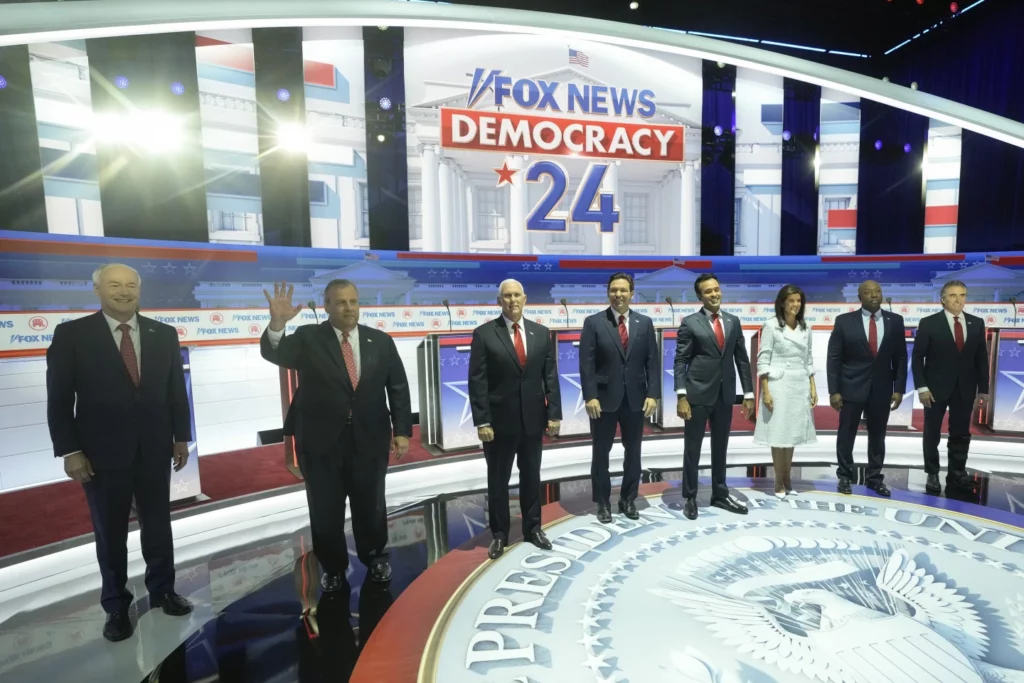
The Republican Presidential Debate was held on Wednesday in Milwaukee, Wisconsin. The debate revealed some major policy differences between the candidates. Over 80 members of the combined Shelby County, St. Clair County, and Greater Birmingham Young Republicans were present at Hoover Tactical Firearms to watch the event and eat barbecue. Former President Donald Trump was conspicuous by his absence. Former Vice President Mike Pence said that Trump asked him to violate his oath to the Constitution by invalidating the Electoral College results on January 6, 2021. Pence said that he will always follow the Constitution. Trump claimed then, and still does, that the election was “stolen.” His efforts to overturn the 2020 election results have resulted in his being indicted. The other candidates said that Pence did the right thing that day. Both former Arkansas Governor Asa Hutchison and former New Jersey Governor Chris Christie said President Trump violated his oath of office and likely cannot run again. Hutchison cited the 14th Amendment, which prevents anyone who has led an insurgency against the United States from serving. Christie said that Trump has been indicted 99 times and that lawlessness cannot be allowed. Businessman Vivek Ramaswamy said that Trump was the greatest president of the twenty-first century. Florida Governor Ron DeSantis said Republicans should move on from this issue as it only benefits Democrats. U.S. Senator Tim Scott (R-South Carolina) said that he was raised in poverty by a single mother and that his success shows that the American dream is alive and well. The candidates all seemed to agree that President Joe Biden’s economic policies have led to inflation, homelessness, and a significant reduction in the quality of life of most Americans. They blamed government spending. They also agreed that Biden is in mental decline. Ramaswamy, who is 38, said that America needs a new generation of leadership to lead a new American Revolution. Pence disagreed, saying that he has been in the halls of power as a member of Congress, Governor of Indiana, and Vice President, making him the most qualified to serve as President. The United States has spent $77 billion in aid for Ukraine, and President Biden has asked for $24 billion more as it appears that Ukraine’s summer offensive has stalled. Ramaswamy objected to giving any money to Ukraine, saying he wanted to move those resources to the U.S.’s southern border. “Ukraine is not a priority for the U.S.” “We can do both at the same time,” Pence said, objecting to Ramaswamy’s isolationist foreign policy. Former South Carolina Governor Nikki Haley slammed Ramaswamy, saying, “You have no foreign policy experience, and it shows.” Haley said that Ramaswamy’s policies would lead to a world war. Pence agreed, saying that if Russian President Vladimir Putin is allowed to win in Ukraine, eventually, he will cross a NATO border, and the U.S. will have to send American troops to stop him. Haley said that Republicans need to tell Americans the truth and acknowledge that the GOP does not have the 60 votes required for the U.S. Senate to pass a nationwide abortion ban. Pence strongly disagreed and advocated for the passage of a nationwide abortion ban, saying that he would be a staunch defender of life as President. North Dakota Governor Doug Burgum said that he represents a very pro-Life state but agreed with Haley that abortion policy should be left to the states and there should be no nationwide ban. Christie condemned the lawlessness on the U.S. southern border. Since Biden has been president, six million migrants have entered this country. Ramaswamy wanted to put troops and military forces on the border. DeSantis said that the U.S. should use deadly force and kill migrants crossing the border illegally. Pence said in his (and Trump’s) administration, illegal border crossing decreased by 90% (and they didn’t gun anyone down). Hutchison said that his tenure as the head of the Drug Enforcement Agency (DEA) taught him how to interdict dangerous drugs like fentanyl. Hutchison noted that there also needs to be an education component to combat fentanyl. DeSantis said that the COVID lockdowns “should never have happened.” Ramaswamy said that if he had been President during the COVID-19 pandemic, he would have fired Dr. Anthony Fauci. Scott said his mother taught him to work hard, have faith, and “if God made you a man, you compete in sports against men.” Ramaswamy called the concept of manmade global warming a “hoax” and called on the U.S. to mine for coal, drill for oil and natural gas, and adopt nuclear energy. Haley said that climate change “is real” but noted that the U.S. should be focused on getting India and China to reduce their carbon emissions rather than mandating that Americans buy electric cars where half the batteries are made in China, While the other contenders for the Presidency were on Fox News debating, Trump gave a lengthy interview to Tucker Carlson. Trump will surrender to Georgia authorities on Thursday. The Alabama presidential primary will be held on Tuesday, March 5. To connect with the author of this story or to comment, email brandonmreporter@gmail.com.
Donald Trump confirms he will skip Republican debate
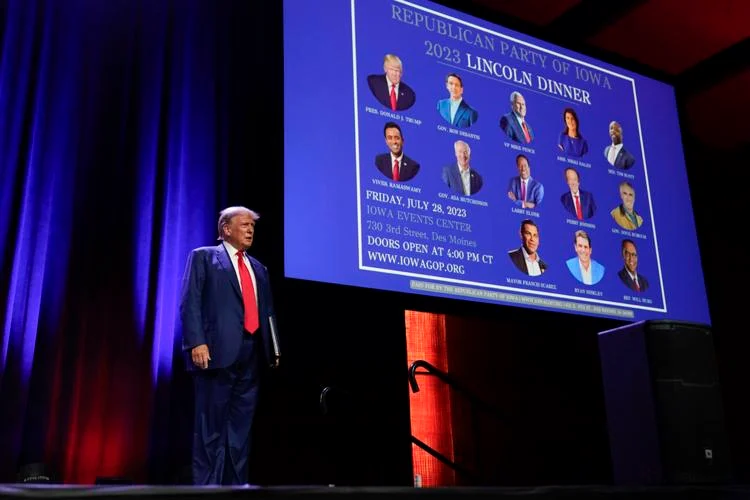
Former President Donald Trump confirmed Sunday that he will skip the Republican presidential primary debate this week. In a post on TruthSocial, Trump’s social media site, he touted a recent CBS poll showing a 46-point lead on Florida Gov. Ron DeSantis. Trump announced he will “not be doing the debates,” saying he is already well-known enough. “New CBS POLL, just out, has me leading the field by ‘legendary’ numbers. TRUMP 62%, 46 Points above DeSanctimonious (who is crashing like an ailing bird!), Ramaswamy 7%, Pence 5%, Scott 3%, Haley 2%, Sloppy Chris Christie 2%, “Aida” Hutchinson 1%,” Trump wrote. “The public knows who I am & what a successful Presidency I had, with Energy Independence, Strong Borders & Military, Biggest EVER Tax & Regulation Cuts, No Inflation, Strongest Economy in History, & much more. I WILL THEREFORE NOT BE DOING THE DEBATES!” The CBS poll of 2,061 adults was conducted Wednesday through Friday and has a ±3% margin of error. It began two days after Trump’s fourth indictment, this time from a grand jury in Fulton County, Georgia. The Center Square Voters’ Voice Poll of 2,500 registered voters, was conducted July 31-Aug. 3, in conjunction with Noble Predictive Insights, found that in a potential general election matchup, Biden and Trump are nearly tied. That survey found Trump has 41% support compared to Joe Biden’s 44% support, while 15% remain unsure. The poll also found DeSantis doing a tick better than Trump against Biden. DeSantis also had 41% support, but Biden against him was 43%, with 16% unsure. The first Republican debate hosted by the Republican National Committee and the Fox News Channel is Wednesday in Milwaukee, Wisconsin, site of next July’s national party convention. The only other debate thus far on the schedule is Sept. 27 at the Ronald Reagan Presidential Foundation and Institute in Simi Valley, California. The New York Times was first on Friday to report Trump would skip the debate and instead do an interview with Tucker Carlson, the former show host fired by Fox in April. Carlson does interviews now on X, the social media site formerly known as Twitter and considered something of a rival to Trump’s TruthSocial. The platform to broadcast the interview has not been announced. The Washington Post, citing the Times, reported Saturday the interview would be released about the same time as the debate and that it already had been recorded. Republished with the permission of The Center Square.
Fox, Dominion reach $787M settlement over election claims
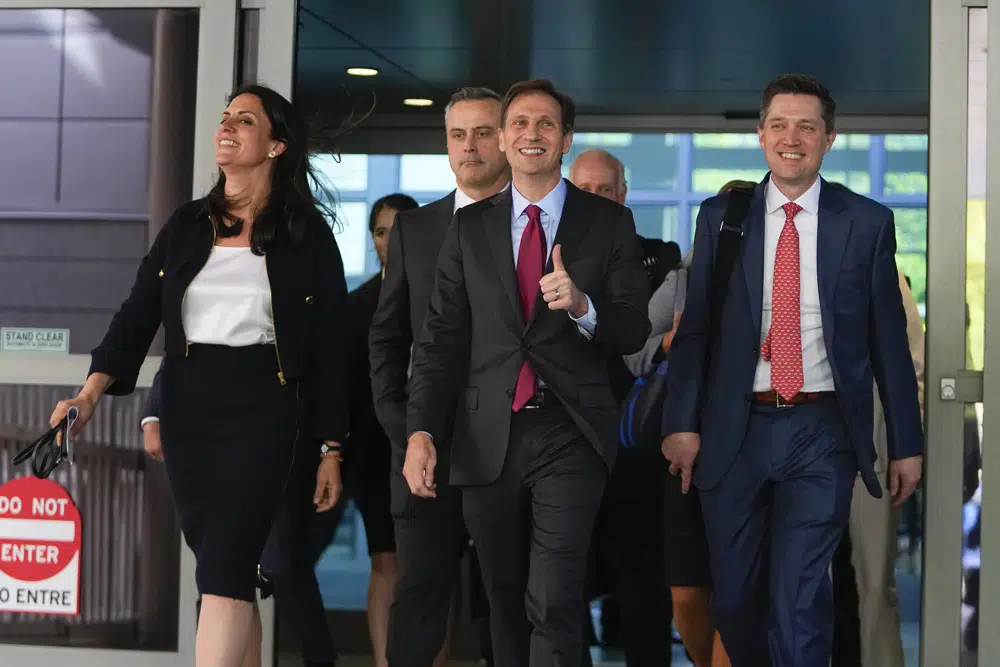
Fox and Dominion Voting Systems reached a $787 million settlement Tuesday in the voting machine company’s defamation lawsuit, averting a trial in a case that exposed how the top-rated network chased viewers by promoting lies about the 2020 presidential election. “The truth matters. Lies have consequences,” Dominion lawyer Justin Nelson said in a news conference outside the courthouse after a judge announced the deal. Dominion had asked for $1.6 billion in arguing that Fox had damaged its reputation by helping peddle phony conspiracy theories about its equipment switching votes from former President Donald Trump to Democrat Joe Biden. Fox said the amount greatly overstated the value of the Colorado-based company. The resolution in Delaware Superior Court follows a recent ruling by Judge Eric Davis in which he allowed the case to go to trial while emphasizing it was “CRYSTAL clear” that none of the allegations about Dominion aired on Fox by Trump allies were true. In a statement issued shortly after the announcement, Fox News said the network acknowledged “the court’s rulings finding certain claims about Dominion to be false.” It did not respond to an inquiry asking for elaboration. Inquiries to Dominion and Fox Corp. were not immediately returned. Records released as part of the lawsuit showed how Fox hosts and executives did not believe the claims by Trump’s allies but aired them anyway, in part to win back viewers who were fleeing the network after it correctly called hotly contested Arizona for Democrat Joe Biden on election night. The settlement, if formally accepted by the judge, will end a case that has proven a major embarrassment for Fox News. If the case had gone to trial, it also would have presented one of the sternest tests to a libel standard that has protected media organizations for more than half a century. Several First Amendment experts had said Dominion’s case was among the strongest they had ever seen. Still, there was real doubt about whether Dominion would be able to prove to a jury that people in a decision-making capacity at Fox could be held responsible for the network’s airing of the falsehoods. Dominion accused Fox of defaming it by repeatedly airing, in the weeks after the 2020 presidential election, false allegations by Trump allies that its machines and the software they used had flipped votes to Biden — even as many at the network doubted the claims and disparaged those who were making them. The company sued both Fox News and its parent, Fox Corp., and said its business had been significantly damaged. During a deposition, Fox Corp. Chairman Rupert Murdoch, who founded the network, testified that he believed the 2020 election was fair and had not been stolen from Trump. “Fox knew the truth,” Dominion argued in court papers. “It knew the allegations against Dominion were ‘outlandish’ and ‘crazy’ and ‘ludicrous’ and ‘nuts.’ Yet it used the power and influence of its platform to promote that false story.” In his March 31 summary judgment ruling, Davis pointedly called out the news organization for airing falsehoods while noting how the bogus election claims persist, 2 1/2 years after Trump lost his bid for reelection. “The statements at issue were dramatically different than the truth,” Davis said in that ruling. “In fact, although it cannot be attributed directly to Fox’s statements, it is noteworthy that some Americans still believe the election was rigged.” In its defense, Fox said it was obligated to report on the most newsworthy of stories — a president claiming that he had been cheated out of reelection. “We never reported those to be true,” Fox lawyer Erin Murphy said. “All we ever did was provide viewers the true fact that these were allegations that were being made.” Fox said Dominion had argued that the network was obligated to suppress the allegations or denounce them as false. “Freedom of speech and of the press would be illusory if the prevailing side in a public controversy could sue the press for giving a forum to the losing side,” Fox said in court papers. In a 1964 case involving The New York Times, the U.S. Supreme Court limited the ability of public figures to sue for defamation. The court ruled that plaintiffs needed to prove that news outlets published or aired false material with “actual malice” — knowing such material was false or acting with a “reckless disregard” for whether or not it was true. That has provided news organizations with stout protection against libel judgments. Yet the nearly six-decade legal standard has come under attack by some conservatives in recent years, including Trump and Republican Gov. Ron DeSantis of Florida, who have argued for making it easier to win a libel case. Two Republican-nominated Supreme Court justices, Clarence Thomas and Neil Gorsuch, have publicly expressed interest in revisiting the protection. Dominion’s lawyers argued that Fox made a deliberate decision to repeatedly air the false claims to appeal to viewers. They allowed guests to falsely claim that the company had rigged the election, flipped large numbers of votes to Biden through a secret algorithm, was owned by a company founded in Venezuela to rig elections for Hugo Chavez, the late president, and bribed government officials. “What they did to get viewers back was start this new narrative that the election had been stolen and that Dominion was the thief,” Dominion lawyer Rodney Smolla said during a March hearing. A mountain of evidence — released in the form of deposition transcripts, internal memos, and emails from the time — was damaging to Fox, even if some of it was only tangentially related to the libel argument. Dominion has pointed to text and email messages in which Fox insiders discounted and sometimes overtly mocked the vote manipulation claims. One Fox Corp. vice president called them “MIND BLOWINGLY NUTS.” Much of the material showed a network effectively terrified of its audience after its election night declaration that Biden had won Arizona. The race call infuriated Trump and many viewers who
GOP’s lackluster fundraising spurs post-election infighting

Trailing badly in his Arizona Senate race as votes poured in, Republican Blake Masters went on Tucker Carlson’s Fox News program and assigned blame to one person: Senate Minority Leader Mitch McConnell. “You know what else is incompetent, Tucker? The establishment. The people who control the purse strings,” Masters said before accusing the long-serving GOP leader and the super PAC aligned with him of not spending enough on TV advertising. “Had he chosen to spend money in Arizona, this race would be over. We’d be celebrating a Senate majority right now.” Masters not only lost his race against Democratic Sen. Mark Kelly, but he also trailed every other Republican running for statewide office in Arizona. There’s another problem Masters didn’t acknowledge: He failed to raise significant money on his own. He was hardly alone. As both parties sift through the results of Democrats’ stronger-than-expected showing in the midterm elections, Republicans are engaged in a round of finger-pointing, including a failed attempt by Florida Sen. Rick Scott, who led the Senate GOP’s campaign arm, to challenge McConnell for his leadership post. But the recriminations obscure a much deeper dilemma for the party. Many of their nominees — a significant number of whom were first-time candidates who adopted far-right positions — failed to raise the money needed to mount competitive campaigns. That forced party leaders, particularly in the Senate, to make hard choices and triage resources to races where they thought they had the best chance at winning, often paying exorbitant rates to TV stations that, by law, would have been required to sell the same advertising time to candidates for far less. The lackluster fundraising allowed Democrats to get their message out to voters early and unchallenged, while GOP contenders lacked the resources to do the same. “This has become an existential and systemic problem for our party, and it’s something that needs to get addressed if we hope to be competitive,” said Steven Law, a former McConnell chief of staff who now leads Senate Leadership Fund, a super PAC that spent at least $232 million on advertising to elect Republicans to the Senate this year. “Our (donors) have grown increasingly alarmed that they are being put in the position of subsidizing weak fundraising performances by candidates in critical races. And something has got to give. It’s just not sustainable,” Law said. In key Senate and House battlegrounds, Democratic candidates outraised their Republican counterparts by a factor of nearly 2-to-1, according to an Associated Press analysis of campaign finance data. Consider the handful of races that helped Democrats retain their Senate majority. In Arizona, Masters was outraised nearly 8-to-1 by Kelly, who poured at least $32 million into TV advertising from August until Election Day, records show. Masters spent a little over $3 million on advertising during the same period after Senate Leadership Fund pulled out of the race. Meanwhile, in Nevada, Democratic Sen. Catherine Cortez Masto raised $52.8 million compared to Republican Adam Laxalt’s $15.5 million. And in Pennsylvania, Democratic Sen.-elect John Fetterman took in $16 million more than his GOP opponent, Dr. Mehmet Oz. That’s despite the celebrity TV doctor lending $22 million to his campaign, records show. Similar disparities emerged in crucial House races, including in Nevada, Pennsylvania, and Virginia, helping limit House Republicans to a surprisingly narrow majority. When it came to purchasing TV ad time, Democrats’ fundraising advantage yielded considerable upside. Ad sellers are required by law to offer candidates the cheapest rate. That same advantage doesn’t apply to super PACs, which Republican candidates relied on to close their fundraising gap — often at a premium. In Las Vegas, for example, a candidate could buy a unit of TV advertising for $598, according to advertising figures provided to the AP. That same segment cost a super PAC $4,500. In North Carolina’s Raleigh-Durham media market, a $342 spot cost a super PAC $1,270. And a $580 candidate segment in the Philadelphia area cost a super PAC nearly $2,000, the advertising figures show. Republicans also found themselves playing defense in states that weren’t ultimately competitive. JD Vance, who won his Ohio Senate race by more than 6 percentage points, was outraised nearly 4-to-1 by Democratic Rep. Tim Ryan. To shore him up, Senate Leadership Fund poured $28 million into the state. The group’s advertising ultimately accounted for about 70% of all Republican media spending from August until Election Day. A similar situation played out in North Carolina, where the McConnell-aligned super PAC was responsible for 82% of the Republican advertising spending during the same period. GOP Rep. Ted Budd won his Senate race by over 3% of the vote. But money woes weren’t the only complicating factor. Donald Trump elevated a series of untested, first-time candidates. They included Masters, Vance, and former NFL star Herschel Walker, whose complicated backstory includes threats of violence against his ex-wife, false claims of business success, and allegations that he pressured two girlfriends to get abortions, which Walker denies. Then there was Oz, who moved to Pennsylvania to seek the seat and also secured Trump’s endorsement but was pilloried by Democrats as an out-of-touch carpetbagger. The former president gave them his endorsement, but he was parsimonious when it came to sharing some of the more than $100 million he’s amassed in a committee designed to help other candidates. He ended up spending about $15 million on ads across five Senate races, records show. Meanwhile, the National Republican Senatorial Committee, led by Scott, often worked at cross-purposes with McConnell’s political operation. Early on, Scott ruled out getting involved in primaries, which he saw as inappropriate meddling. McConnell’s allies, meanwhile, moved to fend off candidates they saw as poor general-election contenders, like Don Bolduc, a far-right conservative who lost his New Hampshire Senate race by nearly 10 percentage points. McConnell forces also defended Alaska Sen. Lisa Murkowski, a GOP moderate, against a conservative challenger. “Senate races are just different,” McConnell said in August. “Candidate quality has a lot to do with the outcome.” In response, Scott took a shot at McConnell without mentioning him by name, suggesting in an opinion article published in the Washington Examiner that any “trash-talking”
Mounting losses show limits of Donald Trump’s power

Donald Trump opened May by lifting a trailing Senate candidate in Ohio to the Republican nomination, seemingly cementing the former president’s kingmaker status before another possible White House run. He’s ending the month, however, stinging from a string of defeats that suggests a diminishing stature. Trump faced a series of setbacks in Tuesday’s primary elections as voters rejected his efforts to unseat two top targets for retribution: Georgia’s Republican governor and secretary of state, both of whom had rebuffed Trump’s extraordinary pressure to overturn the results of the 2020 presidential election. But the magnitude of defeat in the governor’s race — more than 50 percentage points — was especially stunning and raised questions about whether Republican voters are beginning to move on from Trump. Nearly six years after the one-time reality television star launched what seemed to be an improbable campaign for the White House, the “Make America Great Again” movement Trump helmed isn’t going anywhere. But voters are increasingly vocal in saying that the party’s future is about more than Trump. “I like Trump a lot, but Trump is in the past,” said David Butler of Woodstock, Georgia, who voted for Gov. Brian Kemp on Tuesday and said Trump’s endorsements had “no” impact “whatsoever” on his thinking. It was the same for Will Parbhoo, a 22-year-old dental assistant who also voted for Kemp. “I’m not really a Trumper,” he said after voting. “I didn’t like him to begin with. With all the election stuff, I was like, ‘Dude, move on.’” One thing Parbhoo liked about the current governor? “Kemp is focused on Georgia,” he said. Trump sought to play down the losses by his favored candidates, saying on his social media platform Wednesday that he had a “very big and successful evening of political Endorsements” and insisting some races “were not possible to win.” Still, the pattern of high-profile defeats is hard to ignore. After JD Vance vaulted from third to first place following Trump’s late-stage endorsement in the Ohio Senate primary, the dynamics took a turn. Trump’s pick in Nebraska’s primary for governor, Charles Herbster, lost his race after allegations surfaced that he had groped women. In Idaho a week later, the governor beat a Trump-backed challenger. In North Carolina, voters rebuffed Trump’s plea to give a scandal-plagued congressman a second chance. And in Pennsylvania, a marquee Senate primary featuring Trump-endorsed celebrity heart surgeon Mehmet Oz remains too close to call. But his biggest upset was in Georgia, a crucial swing state, where former Sen. David Perdue, whom Trump had lobbied to run and helped clear the field for, lost to Kemp. The governor was among Trump’s top targets after he refused to overturn the results of the 2020 White House election in his state. Georgia Secretary of State Brad Raffensperger, who defied Trump’s call to “find” the votes to change the outcome two years ago — a call that is now under investigation — also won his party’s nomination. Attorney General Chris Carr and Insurance Commissioner John King — all opposed by Trump — were also successful in their primaires. In Alabama, Rep. Mo Brooks, whose Senate endorsement Trump rescinded as he struggled to gain traction, made it to a runoff, having gained support after Trump dropped him. Trump has endorsed in nearly 200 races, from governor to county commissioner, often inserting himself into contests that aren’t particularly competitive and helping bolster his compilation of wins. Some of his work, even in races with multiple candidates, has paid off. His early support helped football great Herschel Walker and Rep. Ted Budd sail to their respective Senate primary nominations in Georgia and North Carolina. Sarah Huckabee Sanders, Trump’s former press secretary, easily won the GOP nomination for governor in Arkansas. And even in Georgia, all of the candidates Trump endorsed in open races won or will head to runoffs. Some allies say Trump’s endorsement tally is a poor measure of his influence, even if Trump constantly promotes that record. They argue that voters may support the former president and be eager for him to run again but may not be persuaded by his selections, especially in races with governors such as Kemp, who have long histories with voters. And even without Trump on the ballot, the party has been transformed in Trump’s image, with candidates adopting his “America First” platform, mimicking his tactics, and parroting his lies about a stolen election. But with Trump out of office and relegated to posting on his own social media platform, other voices are beginning to fill the void. Fox News host Tucker Carlson, the most-watched personality on cable television, has become a driving ideological force in the party. Republicans such as the conspiracy-embracing Rep. Marjorie Taylor Greene, who won her party’s nomination for reelection Tuesday, have taken up his mantle in Washington. Meanwhile, potential presidential rivals to Trump are waiting in the wings for 2024. Former Vice President Mike Pence, who has been distancing himself from Trump, rallied with Kemp in suburban Atlanta on Monday evening and told the crowd that “elections are about the future” — an implicit knock on his former boss. Trump has also spawned a new generation of candidates who have channeled his “MAGA” brand but who have done so independent of his support and see themselves as its next iteration. “MAGA doesn’t belong to him,” Kathy Barnette, the Pennsylvania Senate candidate whose late-stage surge stunned party insiders, said in an interview. “Trump coined the word. He does not own it.” While the left, she said, may see the “MAGA movement” as a “cult of Trump voters,” she said it goes far beyond one man. She argued that Trump had succeeded in 2016 because he aligned himself with voters’ concerns and said out loud what people were already thinking, particularly on immigration. She said she tried in her race to do the same. “I do believe Trump has an important voice still,” she added, but “he needs to get better advisers, and in addition to that, he needs to do better himself in remembering why we aligned with him. And it wasn’t because we were aligning with his
Poll: 1 in 3 fears immigrants influence U.S. elections
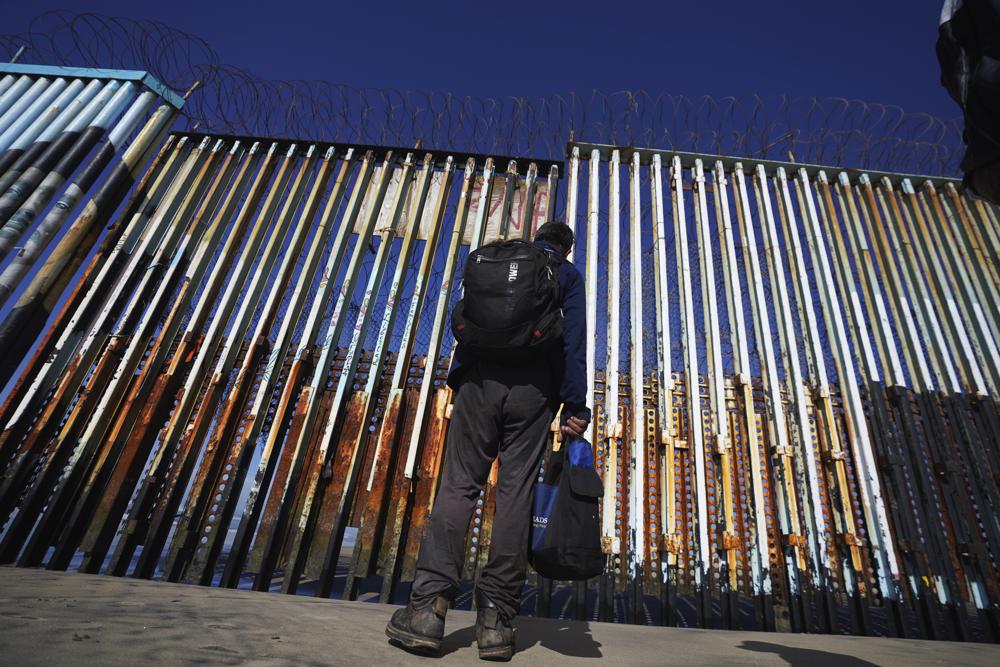
With anti-immigrant rhetoric bubbling over in the leadup to this year’s critical midterm elections, about 1 in 3 U.S. adults believes an effort is underway to replace U.S.-born Americans with immigrants for electoral gains. About 3 in 10 also worry that more immigration is causing U.S.-born Americans to lose their economic, political and cultural influence, according to a poll by The Associated Press-NORC Center for Public Affairs Research. Republicans are more likely than Democrats to fear a loss of influence because of immigration, 36% to 27%. Those views mirror swelling anti-immigrant sentiment espoused on social media and cable TV, with conservative commentators like Tucker Carlson exploiting fears that new arrivals could undermine the native-born population. In their most extreme manifestation, those increasingly public views in the U.S. and Europe tap into a decades-old conspiracy theory known as the “great replacement,” a false claim that native-born populations are being overrun by non-white immigrants who are eroding, and eventually will erase, their culture and values. The once-taboo term became the mantra of one losing conservative candidate in the recent French presidential election. “I very much believe that the Democrats — from Joe Biden and Nancy Pelosi, all the way down — want to get the illegal immigrants in here and give them voting rights immediately,” said Sally Gansz, 80. Actually, only U.S. citizens can vote in state and federal elections, and attaining citizenship typically takes years. A white Republican, Gansz has lived her whole life in Trinidad, Colorado, where about half of the population of 8,300 identifies as Hispanic, most with roots going back centuries to the region’s Spanish settlers. “Isn’t it obvious that I watch Fox?” quipped Gansz, who said she watches the conservative channel almost daily, including the top-rated Fox News Channel program “Tucker Carlson Tonight,” a major proponent of those ideas. “Demographic change is the key to the Democratic Party’s political ambitions,” Carlson said on the show last year. “In order to win and maintain power, Democrats plan to change the population of the country.” Those views aren’t held by a majority of Americans — in fact, two-thirds feel the country’s diverse population makes the U.S. stronger, and far more favor than oppose a path to legal status for immigrants brought into the U.S. illegally as children. But the deep anxieties expressed by some Americans help explain how the issue energizes those opposed to immigration. “I don’t feel like immigration really affects me or that it undermines American values,” said Daniel Valdes, 43, a registered Democrat who works in finance for an aeronautical firm on Florida’s Space Coast. “I’m pretty indifferent about it all.” Valdes’ maternal grandparents came to the U.S. from Mexico, and he said he has “tons” of relatives in the border city of El Paso, Texas. He has Puerto Rican roots on his father’s side. While Republicans worry more than Democrats about immigration, the most intense anxiety was among people with the greatest tendency for conspiratorial thinking. That’s defined as those most likely to agree with a series of statements, like much of people’s lives is “being controlled by plots hatched in secret places” and “big events like wars, recessions, and the outcomes of elections are controlled by small groups of people who are working in secret against the rest of us.” In all, 17% in the poll believe both that native-born Americans are losing influence because of the growing population of immigrants and that a group of people in the country is trying to replace native-born Americans with immigrants who agree with their political views. That number rises to 42% among the quarter of Americans most likely to embrace other conspiracy theories. Alex Hoxeng, 37, a white Republican from Midland, Texas, said he found those most extreme versions of the immigration conspiracies “a bit far-fetched” but does believe immigration could lessen the influence of U.S.-born Americans. “I feel like if we are flooded with immigrants coming illegally, it can dilute our culture,” Hoxeng said. Teresa Covarrubias, 62, rejects the idea that immigrants are undermining the values or culture of U.S.-born Americans or that they are being brought in to shore up the Democratic voter base. She is registered to vote but is not aligned with any party. “Most of the immigrants I have seen have a good work ethic, they pay taxes and have a strong sense of family,” said Covarrubias, a second-grade teacher in Los Angeles whose four grandparents came to the U.S. from Mexico. “They help our country.” Republican leaders, including border governors Doug Ducey of Arizona and Greg Abbott of Texas — who is running for reelection this year — have increasingly decried what they call an “invasion,” with conservative politicians traveling to the U.S.-Mexico border to pose for photos alongside former President Donald Trump’s border wall. Vulnerable Democratic senators up for election this year in Arizona, Georgia, New Hampshire, and Nevada have joined many Republicans in calling on the Biden administration to wait on lifting the coronavirus-era public health rule known as Title 42 that denies migrants a chance to seek asylum. They fear it could draw more immigrants to the border than officials can handle. U.S. authorities stopped migrants more than 221,000 times at the Mexican border in March, a 22-year high, creating a fraught political landscape for Democrats as the Biden administration prepares to lift Title 42 authority May 23. The pandemic powers have been used to expel migrants more than 1.8 million times since it was invoked in March 2020 on the grounds of preventing the spread of COVID-19. Newly arrived immigrants are barred from voting in federal elections because they aren’t citizens, and gaining citizenship is an arduous process that can take a decade or more — if they are successful. In most cases, they must first obtain permanent residency, then wait five more years before they can apply for citizenship. Investigations have failed to turn up evidence of widespread voting by people who aren’t eligible, including by non-citizens. For example, a Georgia audit of its voter rolls completed this year found fewer than 2,000 instances of
Americans divided over armed civilians who flock to protests
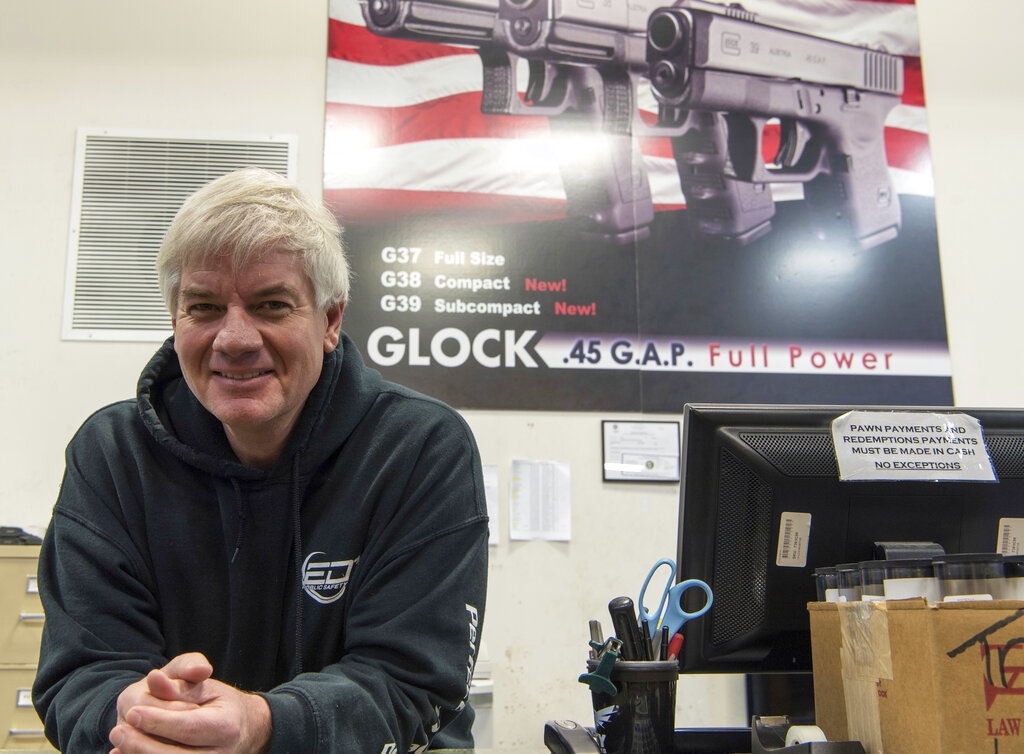
Americans are turning out more often and more visibly with guns, a sign of the tension engulfing the country.
Roger Stone judge calls back jurors to address misconduct claims
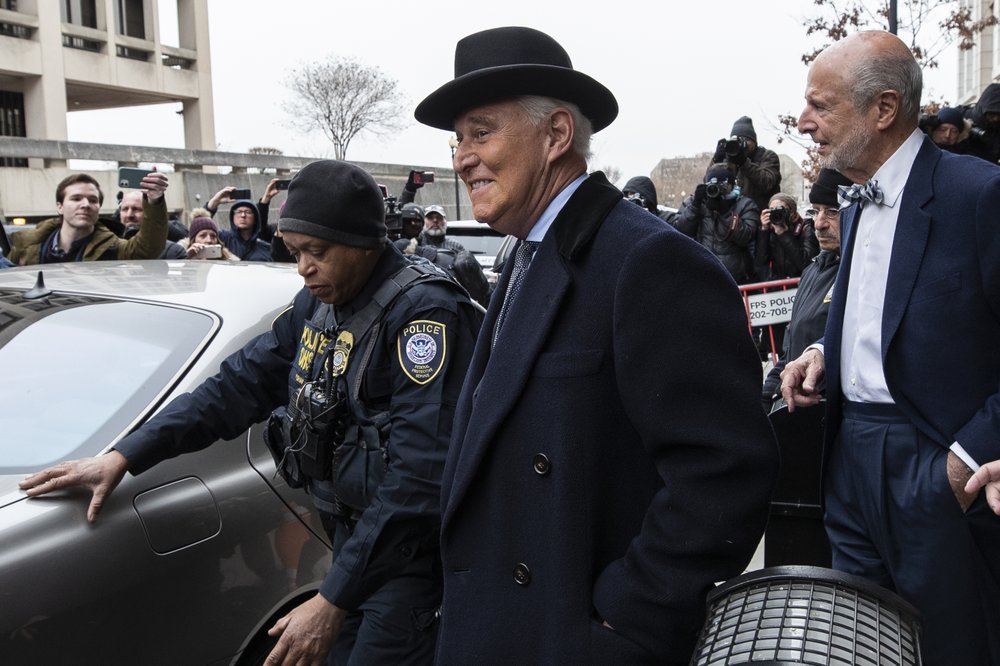
The revelation by U.S. District Court Judge Amy Berman Jackson was another highly unusual twist in the Stone saga.
Iowa a carnival of democracy for media — until it went sour

Unlike in past election cycles, Iowa seemed to sneak up on television viewers, despite nearly a year’s worth of debates and campaigning.
Man: Slashing ‘Baby Donald Trump’ was matter of good versus evil

An Alabama man charged with criminal mischief in the slashing of a towering “Baby Trump” balloon has defended his actions, saying it was a matter of good versus evil. Al.com reports Hoyt Deau Hutchinson called the syndicated radio show “Rick & Bubba Show” on Monday to describe what happened. Hutchinson said he was shaking in anger when he drove past the balloon and its handlers Saturday during President Donald Trump’s visit to see Louisiana State play against the University of Alabama. He yelled at the protesters, but then realized they might have seen him, so he bought a University of Alabama shirt to better blend into the crowd and get close to the balloon, he said. Pretending he wanted a picture with the balloon, Hutchinson said he used a material cutter with a sharp razor to slice the symbol open. The orange, diaper-clad caricature of the president is often floated at Trump appearances to protest and mock the president, which the balloon shows clutching a cellphone. The balloon measures over 20 feet (6.1 meters) tall and was left with an 8-foot-long (2.4-meter-long) gash in its backside. “I get so mad about people not taking a stand,” he said. “The left wants to use religion against you like you shouldn’t act like this and stuff but I’ll tell you this — the Devil knows the Bible as good as we do.” Asked if the slashing was Hutchinson’s attempt to echo the Biblical story of Jesus turning over the temple tables of money changers, he said yes. “It comes a point when you gotta take a stand. We don’t have two parties anymore. We have good versus evil. When you got one party that says it’s OK to kill babies and by the way, this is the first time I’m ever seen a liberal get mad about chopping up a baby.” He said he yelled “Trump 2020” as he was being arrested. He later posted bail and was released. When asked about his motivations, the 32-year-old Hutchinson told the radio station he keeps up with politics by watching Fox News and his two favorite anchors, Tucker Carlson and Sean Hannity. “I’m not young but I’m not old. I’m sort of middle aged. I feel like a lot of people my age don’t keep up with the news and politics the way they should,” he said. Information from: The Birmingham News, https://www.al.com/birminghamnews. Republished with the permission of the Associated Press.
