
Twinkle Cavanaugh campaigning for fourth term
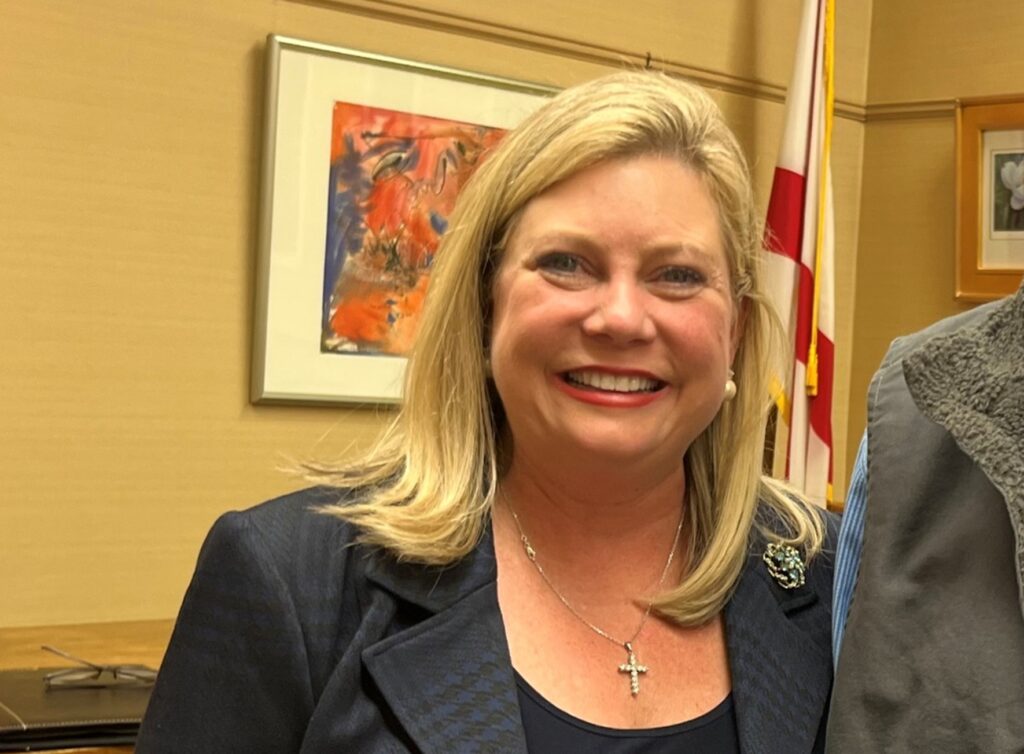
Alabama Public Service Commission (PSC) President Twinkle Andress Cavanaugh (R) is canvassing the state to convince voters to give her a fourth term in office. President Cavanaugh has made several recent campaign appearances in her quest for re-election. “Thank you for the incredible support we’ve received on the campaign trail! From the state’s northern mountains to the Gulf Coasts’ beaches, I’m on a journey to connect with YOU, my fellow Alabamians. I look forward to meeting each of you!” Cavanaugh said recently on X. Cavanaugh recently spoke to both the Escambia County and Fayette County Republican Party. “Thank you, John Killian, for the invitation to meet with the Fayette County Republican Party and fellow elected Republicans!” Cavanaugh said on X. Prior to these recent appearances, the Cavanaugh campaign visited rural Southwest Alabama. Cavanaugh is a wife, a mother, and a small business owner. Cavanaugh said on her website that she believes a sound energy policy is the foundation for providing maximum opportunity to American workers. Cavanaugh says she has established a model ethics policy, cut government waste to save taxpayers millions of dollars annually, and assured the return of hundreds of millions of dollars to Alabama consumers. Cavanaugh has been a vocal critic of the Biden Administration’s energy policies, which she claims have adversely impacted ordinary American families and businesses with higher energy prices. Twinkle was the first female elected as chairman of the Alabama Republican Party. She is a graduate of Auburn University. She is married to Jeff Cavanaugh, a veterinarian, and they have three children and two grandchildren. They are active members of First Baptist Church in Montgomery and are involved in numerous community initiatives. Cavanaugh was first elected to the PSC in 2010 as a commissioner before being elected PSC President in 2012. Cavanaugh is being challenged for the Republican nomination for PSC President by Dadeville businessman Robert McCollum. McCollum ran previously for the PSC in 2022 – ultimately losing to incumbent Commissioner Chip Beeker in the Republican primary runoff. The Republican primary on March 5 will likely be winner-take-all all as no Democrat qualified for the office. Republicans have a three to zero majority presently on the PSC. To connect with the author of this story or to comment, email brandonmreporter@gmail.com.
Robert Lane McCollum is running for PSC President
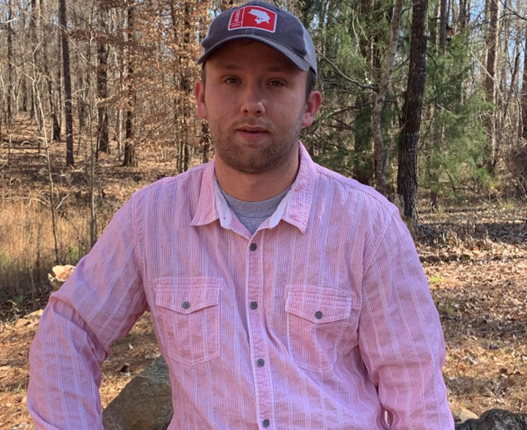
Conservative businessman Robert Lane McCollum has announced he will run for President of the Alabama Public Service Commission (PSC) in the March 5 Republican primary. McCollum will be challenging incumbent PSC President Twinkle Andress Cavanaugh. McCollum had previously announced that he would run for Tallapoosa County Probate Judge. He announced on Monday that he will not be seeking that office. Earlier this year, he explored possibly running for Congress against incumbent Mike Rogers (R-AL03). McCollum previously ran for PSC Commissioner in 2022, ultimately losing in the Republican primary runoff to incumbent Commissioner Chip Beeker. “I have decided to leave the race for Tallapoosa County Probate Judge, and instead challenge Twinkle Cavanaugh for President of the Alabama PSC,” McCollum said. “A conservative state like Alabama cannot stand four more years of swamp creatures like Twinkle raising their utility bills year after year. Alabamians want a PSC President that looks out for them and not the special interests. Twinkle isn’t that person.” McCollum is a private business owner in Dadeville, Alabama. “I learned in 2022 that people getting rich on the backs of hard-working Alabamians will stop at nothing to keep a conservative political outsider off of the PSC, “McCollum said. “Twinkle never saw a light bill she didn’t want to raise, and that stops now. Tallapoosa County will be in excellent hands with Judge Talmadge East, but Alabama can’t take anymore.” The upcoming Alabama Republican Primary will be held on March 5, 2024. Republican candidate qualifying opens on October 16. Candidate qualifying for the Alabama Democratic Party is expected to open on September 29. To connect with the author of this story or to comment, email brandonmreporter@gmail.com.
Alabama Power will not build controversial Chandler Mountain project
A controversial Alabama Power Company (APC) proposal to build a 15,000-acre pumped storage facility between St. Clair and Etowah Counties has been nixed by the company after landowners, the community, and an increasing number of elected officials came out against the Chandler Mountain Pumped Storage Project. The company said in a statement: “After careful consideration, Alabama Power has decided to withdraw its Notice of Intent to seek a license from the Federal Energy Regulatory Commission (FERC) to operate a Pumped Storage Hydro facility at Chandler Mountain.” The controversial proposal would have involved the construction of five reservoirs on Little Canoe Creek north of Steele. The power company’s plan was to force water from one reservoir to another and back again to the first to start the process over again to produce hydroelectric power. Alabama Power already owns a number of manmade lakes on the Coosa River System, but this one would have had rapidly fluctuating water levels and a return that could have made the system self-perpetuating in periods of low rainfall and slow water flow. The communities along both sides of the Coosa River were staunchly opposed to the plan. The Company had requested a license from the Federal Energy Regulatory Commission (FERC). The first public comment period on this proposal ended just a week ago, and the comments were overwhelmingly negative. Family farms would have been taken for the project, and numerous families would have been forced to relocate forever altering the lives of people in the community. There were also concerns that the project would adversely affect the wildlife in the river system, including reportedly an endangered species of freshwater mussel that lives in Canoe Creek. as well as concern that an initial drawdown of Neely Henry Lake to start the system would adversely affect lake residents. It appeared that Alabama Power Company had hopelessly lost the debate on this project when Public Service Commission President Twinkle Andress Cavanaugh expressed her public opposition to the project. “Alabama families and Alabama industries and businesses demand innovative solutions to fuel our future,” said PSC President Cavanaugh said on Twitter. “By the time this cost-prohibitive project could come online, our evolving technologies will make it antiquated.” This was followed by PSC Commissioner Chip Beeker’s announcement of his opposition to the project. State Representative Craig Lipscomb, who represents the affected communities, had already vowed to oppose the project. U.S. Senator Tommy Tuberville’s staff recently told a group of concerned St. Clair County farmers opposed to the project that they were closely monitoring the project. Beeker and Cavanaugh blamed the Biden Administration’s energy policies which are forcing utilities to close affordable coal and natural gas-burning power plants in favor of less reliable carbon dioxide-free power sources like wind, solar, and in this case – hydroelectric. “First of all, we have now forfeited our sovereignty as a nation,” Cavanaugh told Yellowhammer News. “We’re letting all these European countries dictate our energy policy. They no more care about the environment than they do our high school football scores. Since they can’t beat our economy and our natural resources, they simply want to drag us down to their level.” Critics claimed that the Chandler Mountain Pumped Storage Project if built, would produce less electricity than a medium size coal plant would. Construction on this project would not have begun until 2031 – and that construction could not begin until FERC permitted the project. The regulatory process for such an ambitious project would have taken years – and given the public response, there was little confidence that FERC approval would have been forthcoming. The Alabama Power Company and other electric utilities are in a difficult situation due to the Environmental Protection Agency’s (EPA) proposed new rule that the cut carbon emissions by 90% by 2030, while electricity demand sources due to high levels of immigration and the coming transition from internal combustion vehicles to electric vehicles (EVs) that have to be charged from the grid in order to function. These new rules will force electric companies to close coal, oil, and natural gas-powered power plants – the plants that produce most of the electricity used by this country. Nuclear power is another option, but nuclear power plants are very expensive to build, and the regulatory process is even more difficult than building a hydroelectric project. “Our guiding purpose is to provide clean, safe, reliable, and affordable power to the 1.5 million people and businesses that depend on us,” APC said. “As we look to the future, we recognize that alternative resources, as well as energy storage options, will be key in meeting the ever-changing needs of our customers.” Alabama Power acknowledged that public opposition played a role in the decision to abandon the project. “Alabama Power will continue to explore all available technologies with due diligence, striving to power a better Alabama in ways that align with the evolving needs and expectations of our customers,” APC said. “We appreciate the feedback received by all parties involved with the exploration of the Chandler Mountain project.” To connect with the author of this story or to comment, email brandonmreporter@gmail.com.
Alabama Power customers to get $62 million in rebates
On Tuesday, the Alabama Public Service Commission (PSC) voted to give $62 million back to Alabama Power Company customers. After reviewing Alabama Power’s financials, the PSC determined that the utility had overestimated fuel costs this winter. The vote to rebate the funds was a 3 to 0 vote at the PSC’s most recent meeting. The PSC regulates state-licensed monopolies. Alabama Power Company is guaranteed by the PSC to make a profit, but it cannot price gouge its customers. Alabama Power Customers are expected to get a credit on their August bills of about $20. “I think a direct refund is the best way to proceed here, but I also believe the refund would be more impactful if it is made during the summer when residential usage and, therefore, their bills are higher and would equate to a larger return for those consumers,” said Public Service Commission President Twinkle Andress Cavanaugh during the meeting. The purpose of the Alabama Public Service Commission is to provide a balance between regulated companies and consumers to provide consumers with safe, adequate, and reliable services at affordable rates. The PSC approved three rate increases for Alabama Power during 2022 due to rising fuel costs. The entities regulated by the APSC include privately owned corporations providing electric, gas, and water service to the public and select providers of telecommunication and wastewater services. Additionally, railroads, buses, trucking companies, and taxis operating outside police jurisdictions on a for-hire basis remain under the oversight of the APSC. Effective July 1, 2018, Transportation Network Companies were placed under the jurisdiction of the APSC pursuant to Alabama Legislative Act 2018-127. The APSC has a staff of 66. The PSC is governed by a president and two associate commissioners who are elected on a statewide basis. Each commissioner is elected to serve a four-year term, with the president’s term staggered by two years from the associate commissioners’ terms. The other two commissioners, Jeremy Oden and Chip Beeker, were just reelected in 2022. Cavanaugh faces voters in the 2024 presidential election. The State of Alabama has two primary electric power generators – the Alabama Power Company (a division of the Southern Company) and the Tennessee Valley Authority (TVA). Because TVA is an entity of the federal government and the U.S. Constitution gives federal law supremacy over state law, the APSC does not have regulatory authority over TVA. Alabama Power has 1.5 million customers. Twenty-five percent of the company’s power is generated by burning oil and natural gas, 43 percent is produced by burning coal, 24 percent is nuclear, and 8 percent is produced through hydroelectric dams. 24.34% of Alabama Power’s costs are spent on fuel and purchased power. The company has total revenues of $5,678,066,345. To connect with the author of this story or to comment, email brandonmreporter@gmail.com.
Steve Flowers: Election year observations
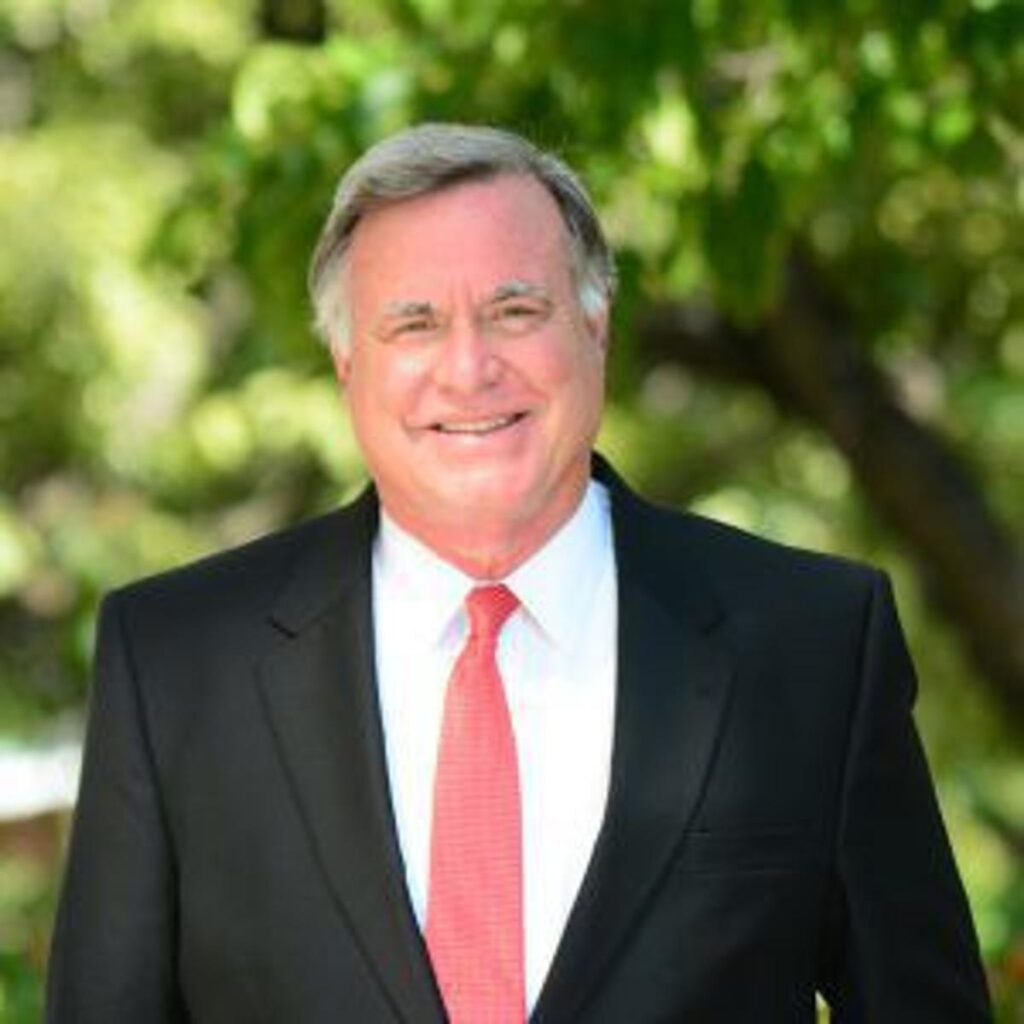
This 2022 Election Year in Alabama has been monumental and memorable. Any gubernatorial year is big in the state. It is the brass ring of Alabama politics to be governor. However, the race to succeed our Senior Senator Richard Shelby has been the marquee contest. This year will be the last hurrah for our two leading political figures in the state. Senator Richard Shelby is retiring after 36 years in the U.S. Senate at age 88. Governor Kay Ivey will be elected to her final term as Governor at 78. An observation that occurred to me during the year that many of you may not know or realize is the power that Jimmy Rane, the legendary successful businessman from Abbeville, possesses. He is known to many Alabamians as the famous friendly giant sitting atop a horse as the Yella Fella on the ads of yesteryear promoting his Great Southern Wood Company. In my years of observing Alabama politics, I do not believe there has been an individual that has been the closest confidant and friend to the two most powerful political people in the state. Senator Shelby and Governor Ivey are unquestionably the two most powerful political people in the state, but they are arguably two of the most important political figures in modern Alabama political history. If you sat both Ivey and Shelby down and asked them to tell you their best friend and confidant, they both would probably say Jimmy Rane. Governor Ivey and Rane have been friends and allies since their college days at Auburn University 60 years ago. Shelby and Rane have been bonded for at least 36 years. As busy as Senator Shelby has been as one of the most important leaders in Washington and world affairs in the last ten years, a week does not go by that Shelby and Rane do not talk. Rane knows when Shelby has a cold before his wife Annette knows. Rane has been Ivey’s and Shelby’s benefactor and ally for not what they can do for him. He does not get anything out of his relationship with Shelby and Ivey. He is just their friend. He is also loyal to his hometown of Abbeville and Henry County. The Great Southern Wood is the main thing in Abbeville and a mainstay for the entire Wiregrass. His benevolence to his hometown is unparalleled. Another development I have watched this year is some good old-fashioned hardnosed hard work on the campaign trail by some of the 2022 candidates. It is understandable that those running for office on this year’s ballot would be on the campaign trail. However, one Twinkle Andress Cavanaugh, the President of the Public Service Commission, has canvassed the rural counties of Alabama more extensively than most of the successful candidates running statewide this year. And, folks, her name was not even on the ballot this year. She will run for reelection to the PSC Presidency in 2024. To say that she will be unbeatable for reelection to her post as head of the PSC would be an understatement. Twinkle Cavanaugh is probably the best-known political figure in the state going forward in the post-Richard Shelby/Kay Ivey era. She has run statewide numerous times and has been successful in most of those races. When you run that many times, you build a grassroots organization. Then you add that she has been Chairman of the Republican Party and a loyal supporter of popular past Republican presidents. She has not let any grass grow under her feet this year. She has watered that grassroots organization during this off-year with one-on-one visits, especially to the remote rural counties of the state. Her diligence will pay off in future years. She is still young and a good bet to be governor or U.S. Senator one day. Folks in Montgomery and throughout the state are glad to see State Senator Billy Beasley run again, successfully, for another term. He is one of the most well-liked and respected members of the upper chamber in the State Capitol. Billy is the only white Democrat in the Alabama Senate. Do not bet on his not running again in 2026. He is the youngest looking 82-year-old I have ever seen, and his brother Jere is the youngest 85-year-old I have ever seen. They must have pretty good genes. See you next week. Steve Flowers is Alabama’s leading political columnist. His weekly column appears in over 60 Alabama newspapers. He served 16 years in the state legislature. Steve may be reached at: www.steveflowers.us.
Record response to Zeta as Alabama Power restores 600,000 customers
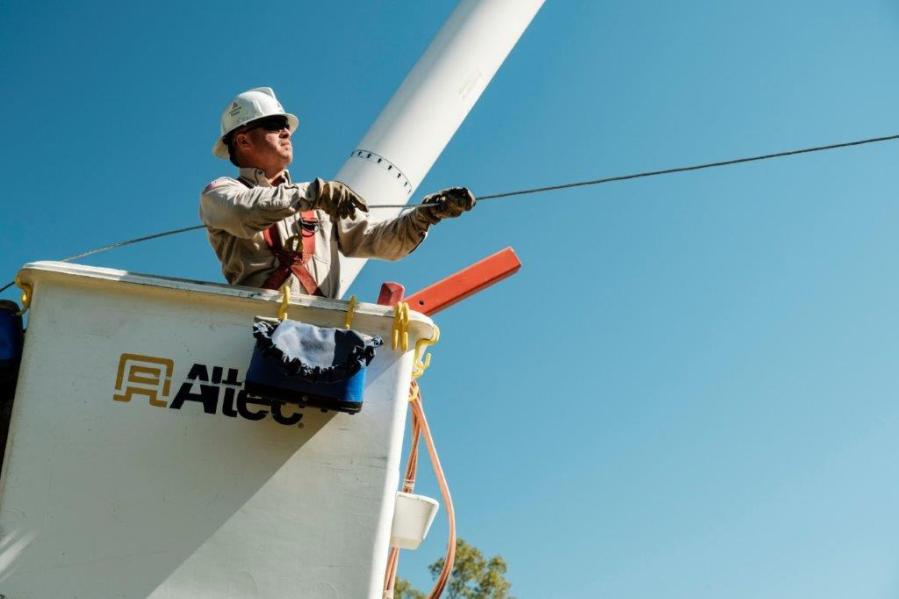
In the few days since Hurricane Zeta smashed through the state, Alabama Power crews and support teams have been working day and night to get the lights back on as quickly and as safely as possible. By Wednesday, with more than 6,000 personnel from two dozen states and Canada lending their support, the company had restored power to 99% of customers statewide. “Our crews faced multiple challenges during this difficult restoration, but we know it also wasn’t easy for many of our customers,” said Scott Moore, Alabama Power senior vice president of Power Delivery. “We appreciate our customers’ patience throughout this multiday restoration effort.” Instead of weakening as it reached the Gulf Coast, Zeta gathered and maintained strength as it tore through Alabama. It will be remembered as one of the worst storms in the state’s history. More than 600,000 Alabama Power customers lost service at some point because of Zeta, with its impact rivaling Hurricane Katrina and the deadly April 2011 tornadoes. Zeta’s high winds – which barely eased as they roared through – brought down trees and power lines and damaged substations from Dauphin Island to northeast Alabama. The storm also caused significant damage in Louisiana, Mississippi, Georgia and all the way to Virginia. Alabama Power wraps up restoration from Hurricane Zeta from Alabama NewsCenter on Vimeo. Within a day of Zeta making landfall, Alabama Power teams had restored service to more than half the customers affected by the Category 2 hurricane. But the dramatic damage identified by company assessment teams across a broad swath of the state made it clear the ongoing restoration operation would be extensive and daunting. Eastern and southern Alabama suffered the most damage, with tree-blocked roads hampering crews in many places. Particularly hard-hit were areas in Calhoun, Chilton, Clarke, Clay, Dallas, Randolph, and Talladega counties. Those locations posed extra challenges because of severely damaged infrastructure and difficult terrain in some spots. But the work to restore service never stopped. Crews worked through the weekend and by Tuesday night had replaced more than 1,100 poles, more than 1,000 transformers, and 1,950 spans of wire. In some cases, crews made temporary fixes to get the lights on as quickly as possible and will have to return to make permanent repairs. “I have lived through hurricanes since Camille in 1969 – Ivan in 2004 and Zeta are the only two that have scared me,” said James “Big Daddy” Lawler, a lifelong resident of Camden and longtime host of the Gettin’ Outdoors with BDL radio show and podcast. “The aftermath destruction in the rural areas was unbelievable. I don’t know how they have gotten as much service back as quick as they have, given the terrain and remote locations. Those guys are remarkable.” Alabama Power crews take a “hub and spoke” approach to restoration following major storms. After focusing immediately on restoring critical infrastructure, such as hospitals, police and fire stations, the company concentrates on making the fixes that will get the greatest number of customers on as fast as possible. Often that means special teams taking on the damage to the large transmission lines that bring power from the generating facilities to cities and communities. At the same time, distribution crews are attacking the downed wires and poles that run from substations through neighborhoods. Meanwhile, the work is 24/7 at the Alabama Control Center and the company’s distribution control centers (DCCs) across the state, where experts work with cutting-edge technology to oversee the grid and the shift the flow of power. At the company’s regional DCCs, teams supported each other, from Mobile to Birmingham, Tuscaloosa to Anniston, and coordinated with field crews to re-energize neighborhood lines as soon as possible. Amid the height of the storm recovery, they also worked with first responders and 911 centers to protect emergency workers when crises, such as reports of downed lines or overnight house fires, required quick action to reroute service or turn off power temporarily for safety. “We really worked to help each other, across the state, with a one-team philosophy,” said Ben Ayer, DCC supervisor in Birmingham. With Tuesday’s elections looming, storm teams focused on ensuring polling places had power well before the doors opened. The company’s community relations managers kept in close contact with elections officials, as well as state and county emergency management agencies and public officials (before, during, and after the storm) so they could keep their constituents and stakeholders apprised of restoration progress. Members of the Alabama Public Service Commission, meeting in Montgomery on Tuesday, praised the company’s restoration efforts amid clearly difficult conditions. “Thank you to the real heroes of this storm: the linemen,” Commission President Twinkle Andress Cavanaugh said during the panel’s monthly meeting. Customers, too, expressed appreciation for the hard work of getting the lights on, although the company acknowledges that the storm and its aftermath has been frustrating for many who spent time without service. At the company’s business office in Centreville, in Bibb County, a customer slipped a note into the overnight drop box Monday evening. It read: “God bless all the Ala Power employees who worked so hard to restore power to Bibb. It is appreciated!!” Republished with the permission of Alabama NewsCenter.
Senate race between Jones, Tuberville tops Alabama ballot
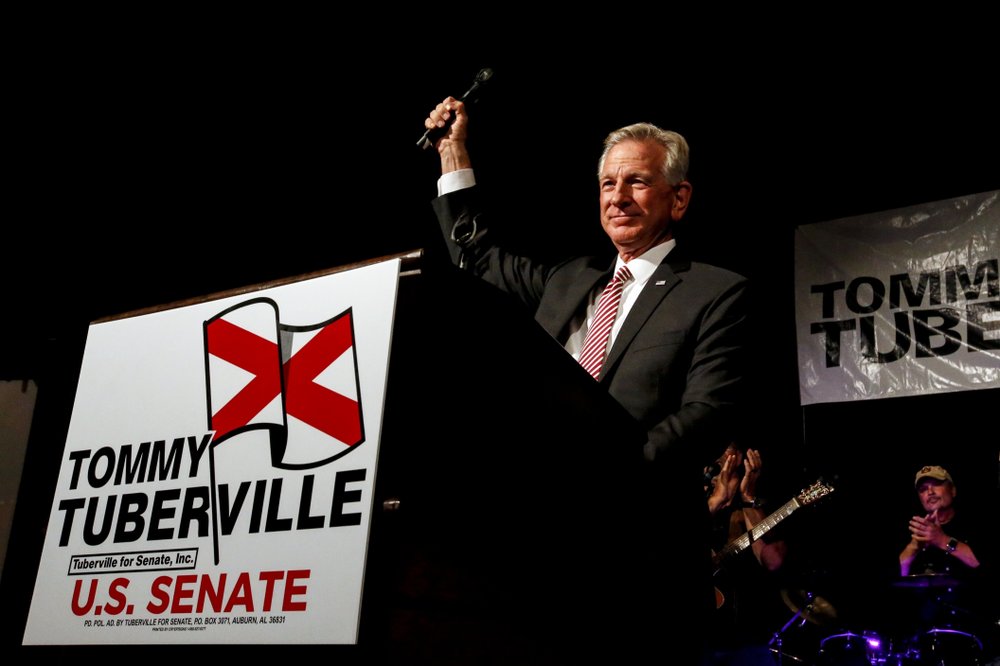
In addition to voting for president, Alabama voters will also decide a U.S. Senate race and multiple other offices and issues on Tuesday. Here is a look at Election Day in Alabama: PRESIDENT Very popular among the conservatives who dominate Alabama politics, Republicans are hopeful President Donald Trump will carry the state against Democrat Joe Biden. Trump carried 62% of the roughly 2.1 million votes cast in Alabama in his race against Hillary Clinton in 2016, and there’s little indication Trump’s popularity has waned in the deep-red state despite problems including impeachment and the coronavirus pandemic. But while some GOP candidates in Alabama have staked their campaigns on aggressively supporting Trump for a second term, increased Democratic turnout could narrow the president’s margin against Biden. While Alabama Democrats are more energized and organized than they were four years ago, the number of yard signs and roadside shops selling Trump paraphernalia across Alabama are visible proof of Biden’s uphill battle in reclaiming a state that a Democratic last carried in a presidential election in 1976, when Jimmy Carter from neighboring Georgia was on the ballot. U.S. SENATE Republicans trying to maintain control of the U.S. Senate are staking their hopes on former college football coach Tommy Tuberville defeating first-term Democratic Sen. Doug Jones, who won the seat in a special election in 2017. Tuberville, who has never held public office and last coached four years ago, is among the candidates who’ve aligned themselves most closely with Trump, even declaring in the primary campaign: “God sent us Donald Trump.” Viewed as an underdog in a Republican-controlled state, Jones mocked Tuberville as “Coach Clueless” and chided him for his refusal to debate. Jones won the seat previously held by Trump’s first attorney general, Jeff Sessions, after GOP Senate candidate Roy Moore was publicly accused of sexual misconduct involving young women decades ago. With GOP incumbents in danger elsewhere, Republicans hope Tuberville can knock off Jones. U.S. HOUSE The state will have at least two new members of Congress after voters pick winners in races for two open U.S. House seats in south Alabama. The Republican chairman of the Mobile County Commission, Jerry Carl, is trying to keep GOP control in the southwest Alabama seat now held by Rep. Bradley Byrne. Carl is facing Democrat James Averhart, a retired Marine who runs a nonprofit group and directs the Mobile-area office of the NAACP. In southeast Alabama’s 2nd District, Republican Barry Moore of Enterprise and Democrat Phyllis Harvey-Hall are vying for the job of GOP Rep. Martha Roby, who didn’t seek reelection. Moore is a former state representative and business owner, while Harvey-Hall is an educator from Montgomery. Two Republican House members are also hoping to win reelection. Rep. Mike Rogers of Saks is seeking a 10th term in east Alabama’s 3rd District against Democrat Adia Winfrey, while Rep. Robert Aderholt of Haleyville is seeking a 13th term in office against Democrat Rick Neighbors in the 4th District, which includes much of north Alabama. Reps. Mo Brooks of Huntsville; Gary Palmer of Hoover; and Terri Sewell of Selma were unopposed in the general election. CONSTITUTIONAL AMENDMENTS Six statewide constitutional amendments are on the ballot, including one that would remove racist language from the state’s 1901 constitution, which was passed to ensure white supremacy in Alabama. Sponsored by Rep. Merika Coleman of Birmingham, Amendment 4 would allow a recompilation of the state constitution to remove wording that prohibited mixed-race marriage and mandated racially segregated schools. While no longer in effect, supporters of the amendment say the prohibitions are an embarrassment and should be removed. Recommended changes to the constitution would be submitted to lawmakers in 2022 for approval, and voters would again be asked to approve the stripped-down document. Voters defeated similar measures twice before, most recently in 2012. Amendment 1 is a mostly symbolic measure pushed by Republicans that says only U.S. citizens have the right to vote, which already is the law nationally. The Alabama Constitution currently states that every male citizen can vote, although the 19th Amendment provided women’s suffrage in 1920. Amendment 2 would allow the full Alabama Supreme Court to appoint the director of the state’s court system, a task now performed solely by the chief justice, and make other changes to the judicial system. Amendment 3 would extend the amount of time that appointed district and circuit judges can serve. Amendments 5 and 6 would protect anyone who kills someone in self-defense in a church in Franklin and Lauderdale counties. Alabama’s “stand your ground” law already applies inside churches, the attorney general’s office has said, but backers support more specific provisions. PSC PRESIDENT Republican Twinkle Andress Cavanaugh is seeking reelection as president of the utility-regulating Alabama Public Service Commission against Democrat Laura Casey. Cavanaugh, seeking her third term, was the first woman to serve as chair of the Alabama Republican Party and has closely aligned herself with President Trump while espousing conservative orthodoxy. She says keeping power rates low helps families and business development. Casey contends the three-member PSC, all Republicans, is more interested in protecting the state’s largest electrical utility, Alabama Power Co., than consumers. She recently lost an appeal to the Alabama Supreme Court, which rejected her right to videotape a hearing held before the PSC about solar energy fees. STATE SCHOOL BOARD The ballot on Tuesday includes three contested seats on the Alabama State Board of Education. In the District 1 race in southwest Alabama, Republican board vice president Jackie Zeigler, a retired principal, is opposed by Democratic nominee Tom Holmes, a retired state employee who also led a disabilities advocacy program. Republican Stephanie Bell is touting her experience supporting programs, including the Alabama Reading Initiative, as she seeks an eighth term representing the 3rd District of central Alabama. She is opposed by Jarralynne Agee, provost and vice president of academic affairs at Miles College in Birmingham. In the 5th District, which includes much of Alabama’s Black Belt region, Democrat Tonya Smith Chestnut and Republican Lesa
Inside the Statehouse: March 3rd primary analysis
Steve Flowers reviews last week’s primary results and the implications on the upcoming runoff.
Inside the Statehouse: Primaries next week
Steve Flowers discusses next week’s primary elections.
Alliance for a Pro-Life Alabama names Cavanaugh, Lathan, McClurkin co-chairs
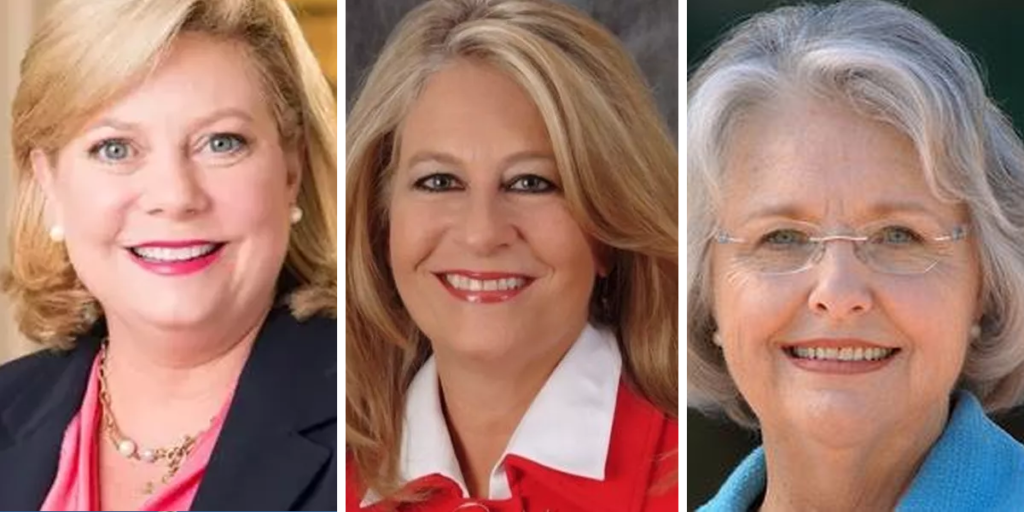
The Alliance for a Pro-Life Alabama — a group dedicated to fighting for the rights of the unborn and educating the public about Amendment Two — announced on Thursday that Public Service Commission President Twinkle Andress Cavanaugh, Alabama Republican Party Chair Terry Lathan, and former State Representative Mary Sue McClurkin have agreed to serve as co-chairs of the group and will help lead its efforts to pass Amendment Two on the November general election ballot. Cavanaugh was elected president of the Public Service Commission in 2012 and previously served as state chair of the Alabama Republican Party. “Alabama has the chance to lead the nation in protecting unborn life with successful passage of Amendment Two on November 6,” Cavanaugh said. “Amendment Two declares Alabama as a pro-life state and positions us to take action in the event that Roe v. Wade is overturned, which seems an increasing possibility with the confirmation of Justice Brett Kavanaugh.” Lathan, a former public-school teacher in Mobile, has served as chair of the Alabama Republican Party since being elected to the post in February of 2015. She and her husband, Jerry, were selected as the “Alabama Republicans of the Year” prior to her service as state party chair. “Planned Parenthood, the ACLU, the Feminist Majority Foundation, and other ultra-liberal groups are working to defeat Amendment Two and block Alabama’s opportunity to defend the unborn,” Lathan explained. “According to Secretary of State finance reports, out-of-state leftist groups have donated almost $1 million to the political action committee working against Amendment Two in order to preserve the abortion mill industry.” McClurkin served as a state representative from 1998 – 2014 and successfully passed several pro-life measures into law during her four terms in office. The Yellowhammer News political blog named her “one of the most ardently pro-life members of the Alabama legislature.” “The same liberal groups that attacked Justice Brett Kavanaugh and attempted to destroy his life have now turned their full attention toward Alabama and Amendment Two,” McClurkin added. “The choice is clear. Alabamians can side with unborn life and support Amendment Two, or they can side with Planned Parenthood, the ACLU and the abortion industry by voting against it. I’m standing strong for unborn babies.” Amendment 2 The Alabama Fair Ballot Commission explains the constitutional amendment, which was sponsored and passed by Montevallo-Republican, State Rep. Matt Fridy , with the following description: “Amendment 2 provides that it would be the public policy of the state to recognize and support the importance of unborn life and the rights of unborn children, including the right to life; and to protect the rights of unborn children. Additionally, the amendment would make clear that the state constitution does not include a right to abortion or require the funding of an abortion using public funds.”
2018 runoff election ad round-up: July 13 edition

The July 17 runoff election is only four days away and Alabama’s candidates have taken to the internet and the airwaves with campaign ads in hopes of swaying Yellowhammer State voters to their side. This week Republican Lieutenant Governor candidates Twinkle Andress Cavanaugh and Will Ainsworth are back at it again with the negative ads. Meanwhile Incumbent Attorney General Steve Marshall has been fighting his own battle with Troy King this week, calling him out in his new ad. While some campaigns have turned negative, Judge Michelle Thomason, Christy Edwards, and Martha Roby have chosen to focus their ads on their own merits. Lieutenant Governor Twinkle Andress Cavanaugh: Title: Ainsworth’s Real Record Published: July 6, 2018 Tone: Malicious Will Ainsworth: Title: Believe Published: July 10, 2018 Tone: Thoughtful Attorney General Steve Marshall: Title: Fake News Published: July 9, 2018 Tone: Frustrated Civil Appeals Court: Place 1 Michelle Thomason: Title: Judge Michelle Thomason Published: July 12, 2018 Tone: Laudatory Michelle Thomason: Title: Judge Michelle Thomason Published: July 12, 2018 Tone: Nostalgic Christy Edwards: Title: Christy Edwards Runoff Published: July 9, 2018 Tone: Sincere U.S. Congressional District 2 Martha Roby: Title: Numbers Published: June 9, 2018 Tone: Frank
Five days until runoff election, final day for absentee ballot: get voting information here
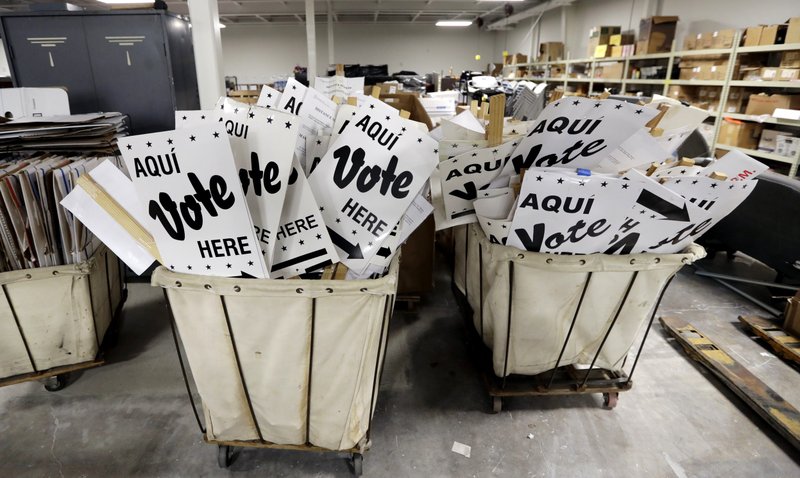
With the Alabama runoff election only five days away voters in the Yellowhammer State need to know where to vote, and who’s on their ballot. Absentee ballots are available for those who cannot be physically present to vote, but today, July 12 is the last day to complete an application. According to the Secretary of State’s office here’s how to apply for an absentee ballot: To obtain an absentee ballot, write or visit the local Absentee Election Manager (usually the Circuit Clerk), request an absentee ballot, and provide the following: name and residential address (or other such information in order to verify voter registration) election for which the ballot is requested reason for absence from polls on election day party choice, if the election is a party primary. (It is not necessary to give a party choice for a general election; however, in a party primary a voter may participate in only one political party’s primary; thus a choice must be designated so that the appropriate ballot can be provided. If the voter declines or fails to designate a choice for a primary or primary runoff ballot, the absentee election manager may send only the ballot for constitutional amendments.) address to which the ballot should be mailed voter signature (If a mark is made in place of a signature, it must be witnessed) The absentee ballot application must be returned to the Absentee Election Manager by the voter in person (or by the voter’s designee in the case of medical emergency voting) or by U.S. Mail. No absentee ballot application may be mailed in the same envelope as another voter’s absentee ballot application. Here are the links to the statewide runoff candidate’s campaign websites: Lieutenant Governor’s race: Will Ainsworth Twinkle Andress Cavanaugh Attorney General’s race: Troy King Steve Marshall Commission of Agriculture and Industries race: Gerald Dial Rick Pate Supreme Court place 1 race: Brad Mendheim Sarah Stewart Civil Appeals Court, place 1 race: Christy Edwards Michelle Thomason Criminal Appeals Court, place 2 race: Rich Anderson Chris McCool Sample Ballots: Jefferson County – Republican: Jefferson County – Democratic: Madison County – Republican: Madison County – Democratic: Mobile County – Republican: Montgomery County – Republican: Montgomery County – Democratic:
