
Twitter: 17 million-plus tweets sent about the debate, most ever
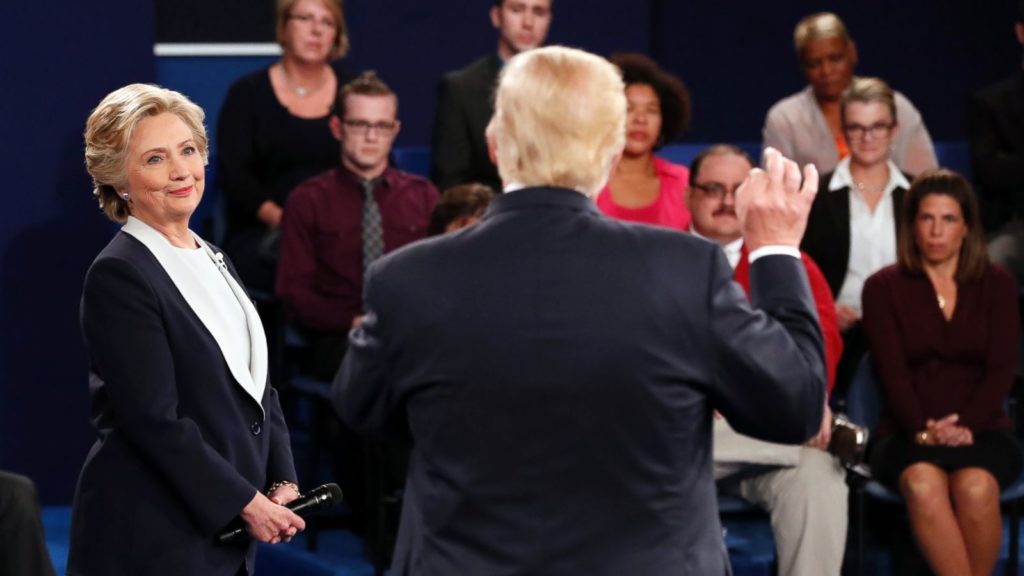
Twitter says Sunday’s presidential debate was the most tweeted ever, with more than 17 million tweets related to the forum sent. The social media platform says the question of Republican nominee Donald Trump‘s treatment of women dominated the online conversation. Trump’s disagreement with running mate Mike Pence over Syria was the top tweeted moment. That’s followed by Trump saying he was a gentleman and his threatening to jail Democratic nominee Hillary Clinton if he’s elected president. Clinton walked away from the debate with 25,000 new Twitter followers. Trump gained 16,000. As has become the norm, the debate has spawned some trending hashtags. Trump’s answers to questions are being mocked under #MuslimsReportStuff and #LockerRoomTalkIn5Words. Google says the top fact-check question for Clinton revolves around Benghazi. For Trump, users want to know more about his comments on women. Republished with permission of the Associated Press.
Steven Kurlander: Debating debatable debates
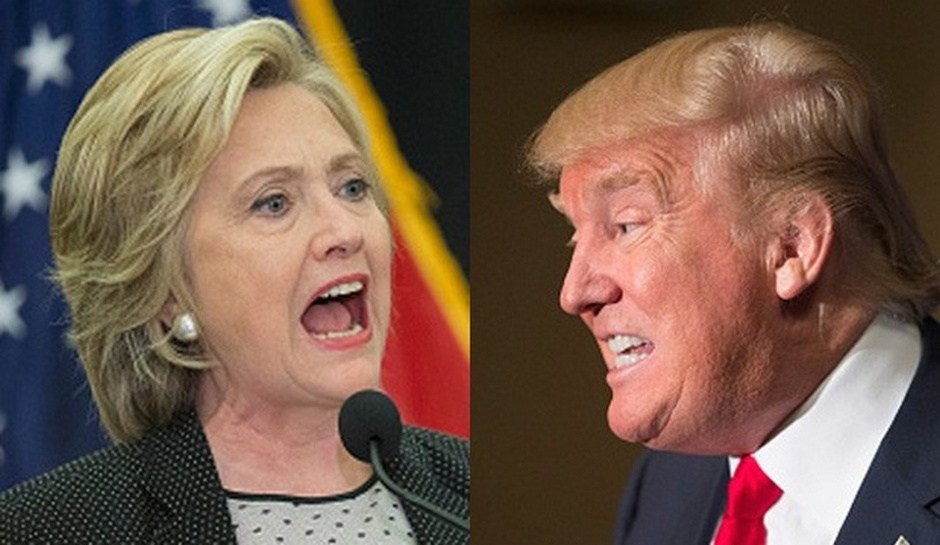
In 21st century American politics, it’s a given that if you are running for office, you should expect to debate your opponent(s) during the campaign — no matter whether you are running for school board or president. Debating your opponent is part of proving your mettle for the job you are running for. Normally, it’s not a good move for a candidate not to show up to debate your opponent. Bob Greene wrote in 2012 “Today debates between the candidates — even when one of them is the incumbent — are all but mandatory. A candidate would be seen as chicken for not agreeing to debate. “ It appears that Donald Trump may think otherwise. He set off a controversial debate about the presidential debates themselves when first tweeted he was debating skipping the three upcoming presidential debates, which are set up by the “nonpartisan, nonprofit” Commission on Presidential Debates. CNN’s Rachel Sklar wrote: “Donald Trump is complaining. Of course, that’s nothing new — the notoriously thin-skinned Republican nominee is an inveterate pouter, openly sulking about perceived injustices like lawsuits presided over by “Mexican” judges, accurate press coverage and Megyn Kelly being mean to him. At 70, he may be the grumpiest old man on Twitter.” A visit to any American retirement community would confirm that grumpy, thin-skinned old men don’t like to debate anything, let alone the political issues of the day. But in this day and age of social media, a 24-hour news cycle, and an American electorate already inundated with instantaneous presidential election news, Trump may be right to question the antiquated formats of these debates and particularly the moderators who nowadays show no semblance of neutrality at these events. In 2016, if you ask Americans whether they rather tune into a presidential debate between Hillary and Donald or an NFL game being broadcast at the same time, it’s easy to predict that they’d rather eat their Doritos and wings watching football. Political debates used to carry the aura of significance in terms of having great impact on elections and how voters decide who to vote for. Students of history were taught of the impact on American history of the infamous seven Lincoln-Douglas debates in 1858 Illinois Senate campaign and the Nixon-Kennedy debates of the 1960s. But since the Nixon-Kennedy debates, presidential debates have devolved in terms of their quality of political discourse, their fairness in how they are conducted and their true impact on voters. The true question is not whether Trump should debate or not, but whether the upcoming presidential debates carry any significance at all. At this point, most Americans are voting against, not for, either Clinton or Trump. They both carry big negatives among American voters. The debates, no matter what is said, won’t matter in this regard. Americans also have been already subjected to 13 GOP presidential primary debates and 10 Democratic presidential primary debates, and most of those debates, particularly the Republican ones, already proved trivial in dialogue and insignificant in terms of affecting how voters cast their ballots in the primaries. Given all this, aside from being called a chicken by the mainstream press that despises him anyway, Trump has nothing to lose by refusing to debate Hillary Clinton. There’s only one way the upcoming three presidential debates can change voters’ minds, and that’s if third party candidates can participate in them. The Commission on Presidential Debates right now doesn’t allow third party candidates to participate in the debates unless they reach a 15 percent polling threshold in five polls among voters. If Gary Johnson of the Libertarian Party or Jill Stein of the Green Party were allowed to take the stage with Clinton and Trump, then there’s no debating that these debates would suddenly become very significant in the 2016 race. Allowing Johnson and Stein on the debate platform on three occasions would guarantee that Americans would hear some serious political discussion (that they crave at this point) — and that a third-party candidate could have a serious impact on the race, or even win the White House. This is not debatable: If Johnson and/or Stein take the stage, a serious Donald Trump would definitely show up and the presidential debates for the first time in decades would be a truly historical event. ___ Steven Kurlander blogs at Kurly’s Kommentary. He is a communications strategist and an attorney in Monticello, New York, writes for Florida Politics and is a former columnist for the South Florida Sun-Sentinel. He can be emailed at kurly@stevenkurlander.com.
Sweet Meteor of Death campaign rolling on empty promises

The Sweet Meteor of Death is not going to upstage this election season. That’s according to the NASA Near Earth Object Program that tracks roughly 15,000 asteroids, comets and gigantic pieces of space rock that pose any kind of threat to the Earth. That may be bad news for 13 percent of American registered voters, who told Public Policy Polling last month that given a choice of Donald Trump, Hillary Clinton or “A giant meteor hitting the Earth,” they’ll take the space rock. In what might be one of the most dark-humor social media movements this election season, the “Sweet Meteor of Death 2016,” as an alternative to Trump or Clinton has caught fire and keeps blazing. Sweet Meteor has several Facebook accounts, the biggest with 85,000 friends, while the Sweet Meteor O’ Death 2106 Twitter account (@smod2016) has 22,000 followers. That doesn’t include countless tweets assigning the #SMOD16 hashtag. There are coffee mugs and T-shirts for sale, and videos and memes galore. There are unconfirmed reports on blogs that Clinton even bought some Sweet Meteor tees. “The Meteor is particularly appealing to independent voters, functionally in a three-way tie at 27 percent, to 35 percent for Clinton and 31 percent for Trump,” PPP reported in its national poll taken June 27-28 of 853 registered voters. Various blogs and accounts indicate some promises of SMOD, including wiping out ISIS, being tough on Putin and Iran, ending world hunger, changing Washington politics. That makes it attractive to several constituencies. NASA is not commenting on Sweet Meteor’s candidacy. In fact, it’s safe to say the space agency is taking a “not with a 10-foot pole” position about talking about it. Fortunately, NASA’s Near Earth Object Program, at NASA’s Jet Propulsion Laboratory in Pasadena, California, looks skyward, through a massive, coordinated coalition of government, university, private and amateur satellites and all-sorts-of-technology telescopes, and sees nothing coming our way anytime soon, according to its website. Among the 15,000 objects zipping around the solar system in the program’s sights are 586 “Potentially Hazardous Asteroids,” or PHAs, which are at least 500 feet in diameter and have orbits that would bring them within about 4.6 million miles of Earth. None are due anytime soon. And none ever has been named SMOD16. As recently as March 22, the last PHA, a comet dubbed P/2016 BA14, about 3,000-feet in diameter, whizzed through the neighborhood, about 2.2 million miles from Earth. That may seem a long way away (about nine times as far away as the moon,) but the NEO Program reported it was the third-closest comet flyby in recorded history. There’s nothing else close to that size on the horizon, but there’s always something out there. Monday, according to the NEO Program, an asteroid about the size of a car is expected to pass inside the moon’s orbit, coming within 164,000 miles of our Big Green and Blue. On Wednesday an asteroid about the size of a jetliner will pass within 2.6 million miles of Earth. And Monday, an asteroid about the scale of a 25-story building will fly within about 4 million miles of Earth-sweet-home. That doesn’t mean there aren’t smaller objects crashing down all the time. The NEO Program reported in 2014 that, in the previous 20-year period, 586 very small asteroids plummeted through the Earth’s atmosphere and burned up in fireballs or explosions, the most notorious being the 2012 Chelyabinsk meteor, a 65-foot wide chunk of space rock that rattled the region of Russia. But that was hardly a Sweet Meteor of Death. In other words, Gary Johnson has a better chance of beating Trump and Clinton.
Inside the origins of Donald Trump’s high-octane Twitter account
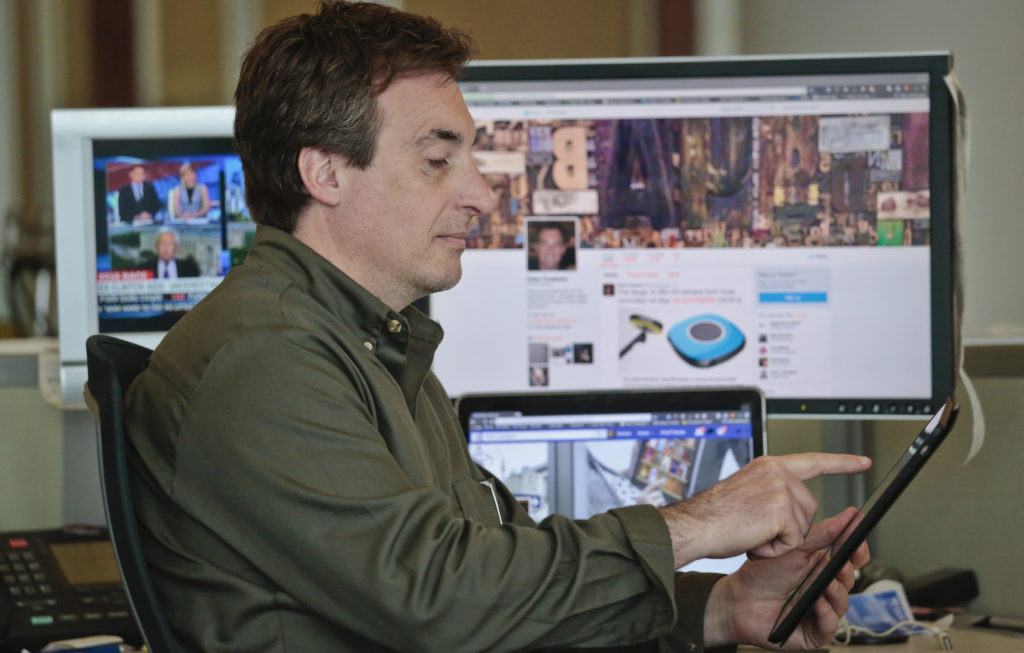
Peter Costanzo is the man who helped turn Donald Trump into @RealDonaldTrump. That, of course, is Trump’s Twitter account — a high-octane portal for the presumptive Republican presidential nominee to pump out insults, political attacks and self-promotion to more than 8 million followers. But the billionaire’s foray into the world of social media began with a much simpler purpose, yet one that’s still distinctively Trump: making money. Costanzo crossed paths with Trump in 2009 when he was working as online marketing director for the publishing company putting out the businessman’s book, “Think Like a Champion.” Twitter was still in its infancy at the time. But Costanzo saw the 140-character-per-message platform as a new tool that the real estate mogul could use to boost sales and reach a broader audience. He was given seven minutes to make his pitch to Trump — “Not five minutes, not 10,” Constanzo said — in a boardroom at Trump Tower in Manhattan that appeared to be the same one used on Trump’s reality television show. Trump liked what he heard. “I said, ‘Let’s call you @RealDonaldTrump — you’re the real Donald Trump,’” Costanzo said. “He thought about it for a minute and said, ‘I like it. Let’s do it.’” Costanzo would spend the next several months helping coordinate Trump’s Twitter account, as well as his official Facebook page, often sending out messages for his famous client. He credited Trump with being an early adopter of the service and says he believes Trump understood its potential. “He seemed very excited about the idea of being able to reach people so directly,” Costanzo said. “I think he immediately got it.” Trump’s office confirmed the outlines of Costanzo’s account. Costanzo — a 51-year-old who goes by @PeterCostanzo on Twitter — now works as digital and archival publishing manager for The Associated Press, a position that is separate from the news department. While Costanzo’s moniker for Trump on Twitter may have survived, the early days of the businessman’s account bear little resemblance to the current iteration, which frequently drives news in the White House race. During the roughly eight months when Costanzo was in charge of the burgeoning Trump Twitter account, each missive was carefully crafted by the publishing company or the businessman’s office. Trump got final approval before Costanzo pressed “Tweet.” Most of the messages were quotations from the book, a collection of Trump lessons on life and business. “My persona will never be that of a wallflower — I’d rather build walls than cling to them,” read one early tweet. Sometimes Trump would send word through an associate that he wanted to offer a holiday greeting. His retweets were rare then. Now, Trump starts firing off messages early in the morning and often continues past midnight. He’ll shout out tweets for aides to type during the day and take over himself at night. Spelling and grammar are sometimes amiss, and exclamation points are plentiful. Trump frequently retweets messages from other people’s accounts, something he’s admitted “gets me in trouble.” He faced particular criticism for retweeting an unflattering photo of former rival Ted Cruz’s wife and has since said he wished he hadn’t done that. Costanzo, who no longer has any role with Trump’s Twitter account or books, says he’s marveled at the following his most famous client has built on social media. Asked whether he had any Twitter advice for Trump now, Costanzo said, “He seems to be doing just fine without me.” Republished with permission of The Associated Press.
Donald Trump repeats dubious posts, says ‘it was just a retweet’
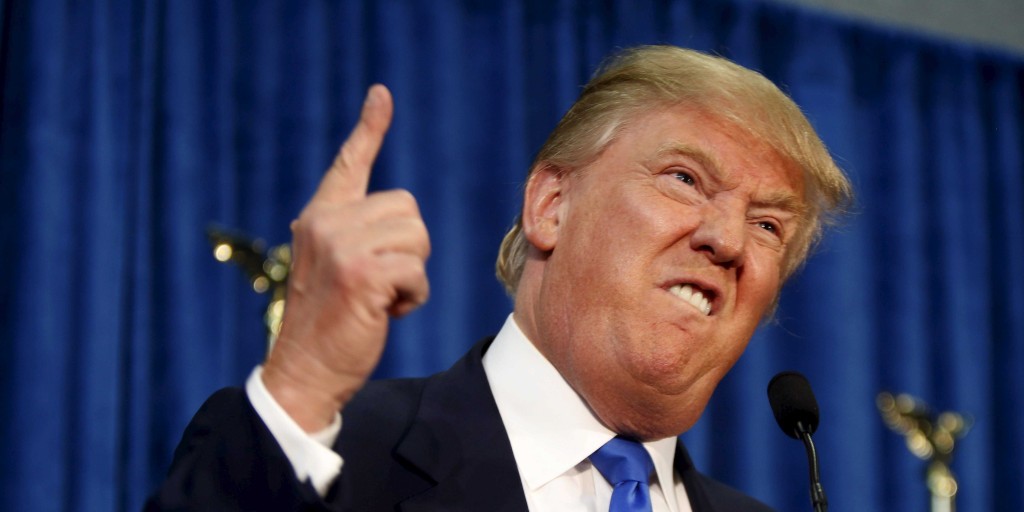
Donald Trump has repeated inaccurate and racially charged crime statistics, reposted pledges of support from white supremacists and retweeted dubious questions about the citizenship of his presidential rivals to an online following of more than 6 million people on Twitter alone. His response when challenged? To dismiss it all as nothing more than harmless “retweets.” Unlike any presidential candidate before him, Trump has fueled his campaign for the Republican nomination with a seemingly endless series of eyebrow-raising statements. It’s a strategy unavailable to a conventional politician but seemingly tailor-made for the billionaire businessman, TV celebrity and master marketer. “We’ve gone from a 24-hour news cycle to a 24-second news cycle,” said GOP consultant Kevin Madden. “So right when you think Trump is about to endure a concentrated level of scrutiny for a false statement or the latest outrage, he is on to the next controversy.” Yet Trump’s pattern of repeating things that are false, or just unseemly, and then refusing to take responsibility, would undoubtedly pose a challenge should he move into the White House – where a president’s casual utterance or late-night tweet could move financial markets or spark a diplomatic incident. Trump’s latest example came on Saturday, hours before he won the South Carolina GOP primary to cement his status as the Republican presidential front-runner. He quoted a supporter on Twitter who was questioning rival Marco Rubio‘s eligibility to run for president, even though the Florida senator was born in the U.S. “It’s a SLAM DUNK CASE!! Check it!” read the tweet, which linked to a video on a conservative website featuring an unidentified woman arguing that only people who with American parents qualify as “natural born.” Rubio’s parents were immigrants from Cuba who didn’t become naturalized citizens until a few years after his birth. Asked about the retweet in an interview on ABC’s “This Week” the next day, Trump said he hadn’t given the issue much thought. “Honestly, I’ve never looked at it,” he said. “Somebody said he’s not. And I retweeted it. I have 14 million people between Twitter and Facebook and Instagram, and I retweet things and we start dialogue and it’s very interesting.” Unabashed, Trump said, “Maybe that’s why I have 14 million people” following him and others “have 200 people.” He used the same explanation earlier this month after he retweeted, then promptly deleted, a message from the account of a neo-Nazi, and in November, when he retweeted false crime statistics that dramatically overstated the number of whites killed by blacks. “Bill, am I gonna check every statistic?” he told Fox News host Bill O’Reilly. “All it was is a retweet. It wasn’t from me.” Trump has even taken to using the explanation for comments he makes in person. Asked about his decision to repeat the shouts of a supporter who called Texas Sen. Ted Cruz a “pussy” at a Trump rally the night before New Hampshire’s primary, Trump replied: “It was like a retweet. I would never say a word like that.” His rivals aren’t impressed. “This is a game he plays. He says something that’s edgy and outrageous, and then the media flocks and covers that and then no one else can get any coverage on anything else,” Rubio said this past Sunday on ABC’s “This Week.” Trump’s brand, built on the premise that he’s the tell-it-like-it-is candidate, appears to have inoculated him from the consequences another candidate might face. “You’re talking about conventional wisdom and you’re talking about conventional campaign tactics in an unconventional campaign cycle,” said Hogan Gidley, who served as a top aide to Mike Huckabee‘s recently suspended campaign. “Those things just don’t matter. They’re so small in the big scheme of things that I don’t think anything like that is going to catch up to Donald Trump.” But what if Trump wins the White House? While President Barack Obama is typically careful with his language, some of his more candid moments have underscored the power of a president’s every word. In the closing moments of a 2009 news conference, Obama was asked about the arrest of a black Harvard professor at the professor’s home. The president inflamed the debate by saying the police acted “stupidly” – one of Trump’s favorite words. The issue consumed the White House for days, overshadowing Obama’s planned agenda and leading the president to host a “beer summit” for the professor and arresting officer. In 2012, it was a moment of private candor that caused the White House heartburn. During a meeting with then-Russian President Dmitry Medvedev, an open microphone caught Obama saying he would have more “flexibility” on the issue of missile defense after his re-election. The comment led Republicans to raise questions about what other promises Obama was making for the time when he no longer had to worry about facing voters. For his part, Trump has repeatedly said he would act differently as president than as a candidate – including on social media. “If you become president, it has to be toned down a lot. I fully understand that,” he said in South Carolina last week. “I’m an intelligent person. I’ll tone it down a lot.” Republished with permission of the Associated Press.
Linda Cunningham: Martin Shkreli’s mom ought be snatching him bald
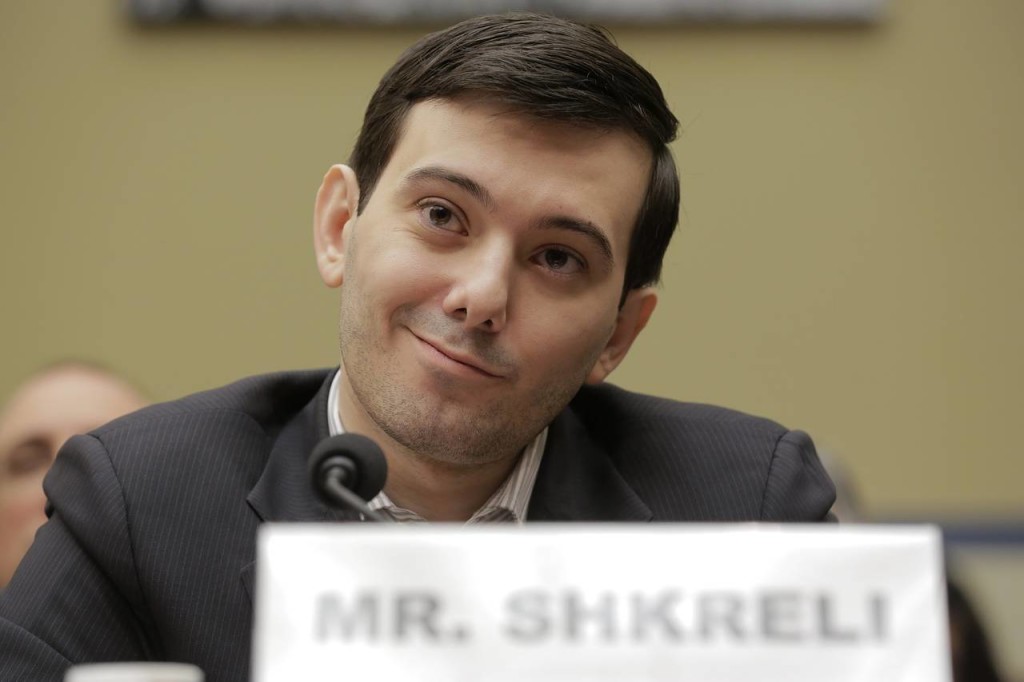
Pity Martin Shkreli’s mother. Don’t you know she just wants to snatch that boy bald? You know Shkreli, right? The 33-year-old brat-turned-hedge-fund-fraudster who bought a cheap generic drug and raised its price to the stratosphere and then rolled his eyes at a congressional committee this past week? Yeah, that one. And, if you’ve somehow missed him and the hand-washing compulsion that follows, Matthew Herper at Forbes has a bang-up profile from back in September. Or you can watch the arrogant smirking and eye-rolling here. Oh, heck, just Google or Twitter him yourself. There’s plenty out there. Back to mom. There must be a mom (and dad) around somewhere because, well, because there’s a Martin born on April 1, 1983. So, unless Martin is one giant April Fool’s joke, there are parental units somewhere, though I could find no references to them in an hour of online searching. Martin’s mom has to be beside herself right now. We mothers are supposed to love our kids, be there for them and generally be the ones who say things like “he was such a sweet boy. I can’t imagine his being so rude.” Uh, yeah, rude. That would be the word. Martin Shkreli is rude, crude and socially unacceptable, as my dear old dad used to say about some of my college neighbors. And I’m betting it’s all mom’s fault because, of course, it always is. A Facebook friend — also a mother of two about Shkreli’s age — posted this Friday morning: “O.K. I’ve had it with bad behavior and want to form a ‘Mom Squad’ to perform attitude adjustments for those who obviously weren’t raised properly. “First on my list: Pharma Bro. Had I been at yesterday’s Congressional hearing, I would have leaned behind Martin Shkreli and wiped that smirk off his face and made him apologize for his snarky behavior. Go ahead and plead the Fifth, Martin. Just do it with some dignity and respect. Who’s in on this crusade? Who needs a visit from the ‘Mom Squad’?” Seconds, and I mean, seconds, later a dozen moms (and one dad) shouted, “I’m in.” Moms know that smarmy, self-centered, eye-rolling smirk and we have to sit on our hands to keep from slapping it off. Bless his little heart, that Martin needs a mom to be all over him, slapping like white on rice, because he’s gotten way too big for his britches. He sure has way more money than sense, doncha think? Yeah, I think. And, I’m also thinking, wherever she is, it’s not mom’s fault. Or, at least, she’s going to get a pass from me, poor thing. Martin Shkreli’s one more in a lineup of self-made, arrogant, me-first pseudo-celebrities with more money than brains and more media addiction than compassion. These are men (and the occasional woman) with holes in their souls. There’s a bunch of them out there; at least half a dozen are running for U.S. president. And every one of them — except Jeb Bush, whose mama really would snatch him bald if he did such things — needs a visit from the Mom Squad. • • • Linda Grist Cunningham is editor and proprietor of KeyWestWatch Media LLC, a digital management solutions company, specializing in small businesses. She’s got a son around Shkreli’s age and he’d not dare roll his eyes in a congressional hearing.
Ala. Secretary of State John Merrill campaigns for Mike Huckabee in Iowa
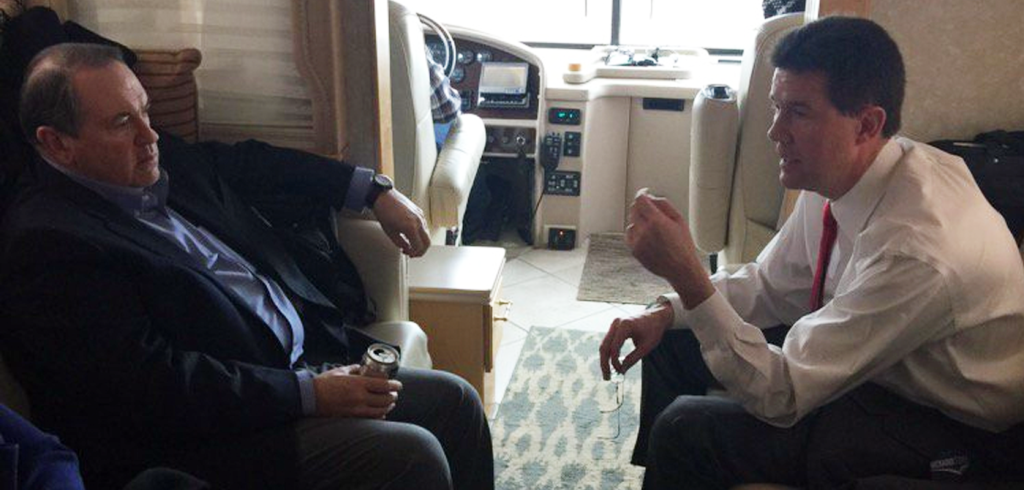
Alabama Secretary of State John Merrill has been on the campaign trail in Iowa with Republican presidential candidate Mike Huckabee, where he has been giving a play-by-play via his Twitter feed. Merrill arrived in Iowa on Sunday and has since spoken at eight of Huckabee’s 10 campaign stops across the state as all of the Republican candidates are making their last pitch before the Iowa caucuses. Merrill will be in attendance at tomorrow night’s Republican debate before making the trip home Friday evening. “The crowds have been good but, more importantly, they’ve been energized,” Merrill said. “That’s what we need right now. I wouldn’t come out here if it wasn’t for someone I believe in.” On the road in the great state of Iowa w/ @GovMikeHuckabee as we travel the nation’s heartland working toward Monday pic.twitter.com/cRbgLefJOT — John Merrill (@JohnHMerrill) January 27, 2016
PolitiFact will begin fact-checking posts, and publish rulings, on Medium

Political spin may become a thing of the past on Medium, the blogging platform popular with candidates. PolitiFact, the fact-checking arm of the Tampa Bay Times, will soon start sifting through posts by politicians — and publishing rulings — on Medium, as a way to “bring voters the truth.” Medium, launched in August 2012 by Twitter co-founder Evan Williams, has become increasingly favored in political circles as a place to share content and promote analysis longer than 140 characters. Many White House contenders, including Jeb Bush, Hillary Clinton and Marco Rubio, have started using Medium to deliver messages directly to voters during the 2016 presidential election cycle. Users can customize a Medium news feed with featured tags or by specific keywords, as well as top curated stories. Articles can be bookmarked, shared on Twitter and Facebook, or embedded on a personal blog or website. “Medium seemed to be a machine for generating the kind of passaroundable content that does so well on Twitter,” wrote Alexis Madrigal in The Atlantic magazine in 2013. “You want a smart “second-day” take on the news? Oh, here’s this post on Medium.” With a $140,000 investment from the John S. and James L. Knight Foundation, PolitiFact will begin truth-sorting content and analyzing claims on the platform, and post findings on both the PolitiFact website and Medium.com. “Typically, a candidate says something that ends up broadcast on TV or radio, or published in a print or online publication,” PolitiFact Executive Director Aaron Sharockman said in a prepared statement. “Fact-checkers then analyze that claim and post their findings in a separate print or online space. With Medium, we can do one better.” Sharockman added that the process provides PolitiFact a “new and unique opportunity,” fact-checking politicians and posting a response on the same platform where they make claims. Since the 2008 presidential campaign, PolitiFact has published more than 11,500 fact checks from politicians and newsmakers, in addition to examining television, news and radio pundits through its sister website PunditFact. PolitiFact has also branched off into separate sites operating in 14 states, as well as key primary states of Florida, New Hampshire, Iowa, Wisconsin and Colorado.
Top 7 Twitter memes from Birmingham’s #BrawlAtCityHall
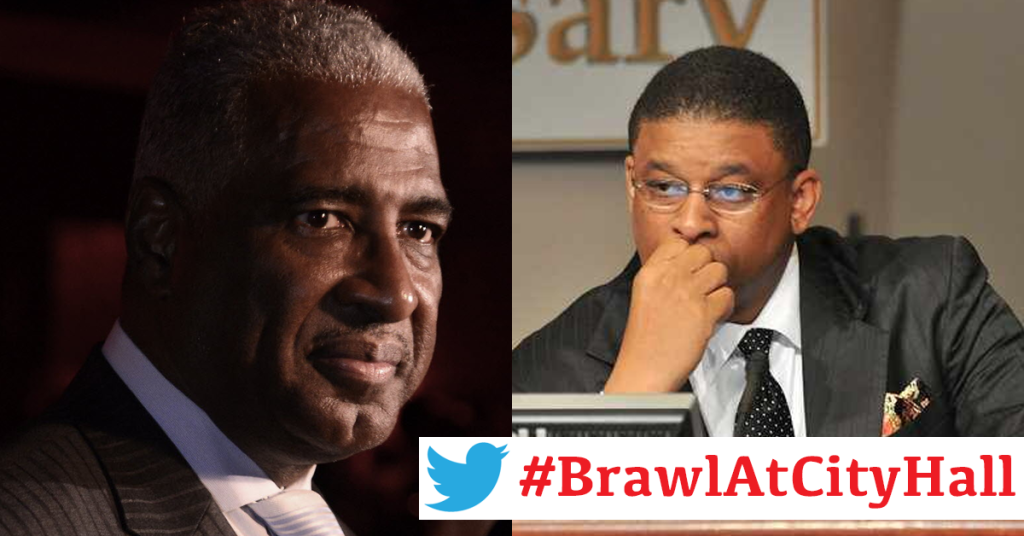
Things got a little physical Tuesday during a Birmingham City Council meeting between Mayor William Bell and Councilman Marcus Lundy. A fight over a consultant landed them both in the hospital and has garnered the Magic City unwanted much national attention. Being dubbed #BrawlAtCityHall, the hashtag referencing the fight has been used 561 times across the country, on Twitter alone, since the the fight broke out, according to data from Twitter analytics firm Keyhole. For the past 24 hours, Alabama Today has watched the Twitter reactions and we’ve seen some pretty epic 140-character Tweets. Here’s our top 7: 7. Tonight on RAW! The Mayor, William Bell vs Councilman, Marcus Lundy #BrawlatCityHall – https://t.co/nIQlBdSmdP pic.twitter.com/qSABGQFsCZ — Michael Tunnell (@MichaelTunnell) December 16, 2015 6. #BrawlAtCityHall Mayor Bell was in there like pic.twitter.com/PrNu9tVWZE — Aaron H (@alafishinwizard) December 16, 2015 5. #BrawlAtCityHall #Alabama #BirminghamPolitics #Birmingham pic.twitter.com/B3UK0qG1yI — René (@Naybug82) December 15, 2015 4. I’m gonna need a beer.. #BrawlAtCityHall pic.twitter.com/kmEiETVBQZ — Vulcan’s Beard (@VulcanB) December 15, 2015 3. This is what your face looks like when your bosses start fighting #BrawlAtCityHall pic.twitter.com/Om8Ywh9D6s — Madison Underwood (@MadisonU) December 15, 2015 2. #BrawlAtCityHall ????????? ?????? ? ? — Drew (@scog) December 15, 2015 1. #BrawlAtCityHall pic.twitter.com/iCdLQxABct — Matthew Churnock (@mattchurnock) December 16, 2015 This list has been updated.
Bob Sparks: Praying for victims and for solutions going forward

On Nov.13, Islamic radical terrorists killed 130 innocent people in Paris. The world mourned with the French and offered thoughts and prayers. Some of us added the French flag overlay to our social media pages. The perpetrators were bent on killing as many “infidels” (or Muslims if they happened to be in the vicinity) as possible. France, as a country, huddled together and shared their collective grief. Nearly all of America came together to mourn with America’s oldest friend. On Dec. 2, Tashfeen Malik and her husband, Syed Farook, slaughtered 14 government workers in San Bernardino, California. When the reality of the carnage became known, this country reacted far differently than our friends in Paris. It is safe to say that most Americans who believe in God may have looked upward and asked, “Why?” Others then offered thoughts and prayers to the victims and their loved ones. It was both incredible and sickening to see such a normal human reaction openly mocked and demeaned by callous liberals and atheists. Their rebuke to those seeking and offering comfort was on the front page. The New York Daily News, in true tabloid fashion, screamed “God Isn’t Fixing This” in letters large enough to consume most of the front page. That editorial on the news pages was in reaction to the public comments by prominent Republicans offering “thoughts and prayers.” Democratic U.S. Sen. Chris Murphy of Connecticut took to Twitter to respond: “Your ‘thoughts’ should be about steps to take to stop this carnage. Your ‘prayers’ should be for forgiveness if you do nothing – again.” Murphy is just one example of a full-throated verbal assault on the National Rifle Association, blaming the organization, and CEO Wayne LaPierre in particular, for the attacks. Again, the New York Daily News is speaking for those of that mindset. “He’s a terrorist,” blared the headline surrounding a picture of Farook. Further down, the words “But so are these guys” hover above photos of recent domestic terrorists, whose names must not be remembered. Then, to the lower right, the paper posts a photo of LaPierre below the words “(AND this guy)” What the Daily News and thoughtful people have in common is the outrage that mass shootings keep happening in this country. We agree that aggressive steps are necessary to prevent a wave of future attacks. Those who think the guns are the sole problem also talk about “common-sense” gun regulation. What does that mean? I am not here to defend the NRA (I am not a member), but look at Paris. France has some of the strictest gun laws in the world. Let that sink in for a moment and then ask what good did that do to prevent the terrorist attack? The polls say a large majority of Americans support tighter gun laws. That’s perfectly understandable. Americans are looking for ways to make such killings stop. Why didn’t gun control work in France? Because it’s easy to buy the weapons on the black market, then bring them across the open borders throughout Europe. Let us say we pass French-style gun laws: How does that solve the problem? The ability of terrorists to bring themselves and illegal weapons across our borders is almost as easy as it is in France. Fully securing our borders would be one way to prevent future terrorist attacks such as the one carried out in San Bernardino. It would actually keep bad guys and guns from entering our communities. Why does that never get beyond the talking stage? “Common-sense” reforms should be open for discussion. For instance, is the “gun show loophole” resulting in guns getting into the wrong hands and used for criminal purposes? If it is a genuine problem, let’s talk. We are now at an advanced stage on the danger meter. ISIS is attracting more followers in this country. Another way to protect our citizens would be to do what it takes to defeat ISIS. It is tough to attract recruits to a losing cause. That will take commitment and leadership. It is a sorry state of affairs when a terrorist attack causes liberals to forget who did the killing. Wayne LaPierre and those praying for the dead are not responsible for it. That belongs to Farook and Malik, and those who support them. I will run the risk of earning the wrath of unhinged liberals and atheists by quoting from a piece by Emma Green, managing editor of the The Atlantic’s online site. Commenting on the obscene backlash against prayers for the victims, she wrote: “The most powerful evidence against this backlash toward prayer comes not from the Twitterverse, but from San Bernardino. ‘Pray for us,’ a woman texted her father from inside the Inland Regional Center, while she and her colleagues hid from the gunfire. Outside the building, evacuated workers bowed their heads and held hands. They prayed.” Amen. Bob Sparks is a business and political consultant based in Tallahassee. For more state and national commentary visit Context Florida.
The Twitter follow lists of the 2016 candidates
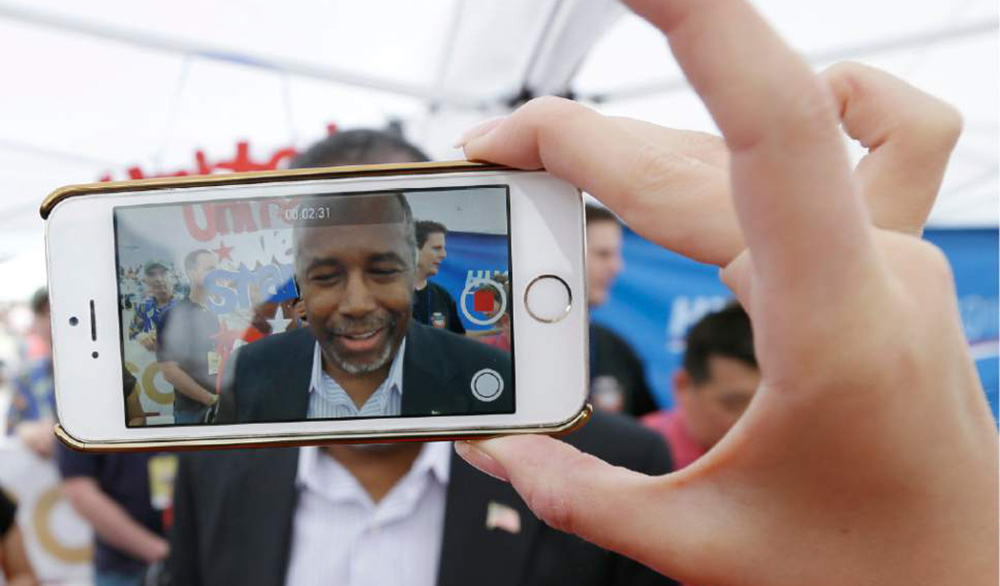
Jeb Bush follows Donald Trump on Twitter but that’s a one-way street: Trump mainly follows people with a connection to himself. Ted Cruz‘s follow list is a big tea party, though he keeps an eye on President Barack Obama, too. Marco Rubio seems open to following everyone under the sun — Democrats, fellow Republicans, insiders of every type and an odd assortment of outliers who offer advice on body-piercing, playing craps and getting out of debt. Using Twitter to get a message out is now a must-do for presidential candidates, but looking at the accounts they follow can be instructive, too. Their follow list can reflect not only their personality and interests, but sometimes their strategy. In Rubio’s case, it seems to reflect a bit of a problem with spam, too. Overall, their choices reflect an interest in people who think like they do. Few Republicans or Democrats want to follow what people on the other side say. And most — Democrats Hillary Rodham Clinton and Bernie Sanders among them — don’t follow most or any of their party rivals. Some candidates rely on hired help to tend their social media affairs, especially those with lots of money and staff, so it’s not always clear who’s doing the tweeting or the following. Trump, though, is known to spend the wee hours lobbing rhetorical bombs on Twitter. Cruz, said spokesman Rick Tyler, “does follow Twitter virtually all day long between events.” John Kasich has orderly lists of Ohio political and media groups, like a clothes closet organized by style and color. A flood of first-person tweets from others, too, suggests a personal interest in the platform; Jeb Bush, for example, has been tweeting about policy and family since long before his campaign. A recent snapshot of whom the leading presidential candidates are following on Twitter, listed in order of who has the most Twitter followers: ___ Hillary Rodham Clinton (@HillaryClinton) Followers: 4.38 million Following: 290 Last account followed: Singer Marc Anthony (@MarcAnthony). Whom she follows: Until a few weeks ago, Clinton almost exclusively followed campaign-related accounts and staff. Since then, she’s expanded her follow list and added several new celebrities. Whom she doesn’t follow: Her Democratic rivals, reporters or media accounts. Notable: Actor Tom Hanks (@tomhanks), singer Katy Perry (@katyperrry), singer Mariah Carey (@MariahCary), comedian Amy Schumer (@amyschumer) ___ Donald Trump (@realDonaldTrump) Followers: 4.35million Following: 44 Last account followed: Katrina Campins (@KatrinaCampins), who appeared on the first season of “The Apprentice” with Donald Trump. Whom he follows: Nearly half are accounts linked to Trump properties and companies. Many of the rest are national news figures or celebrities. Whom he doesn’t follow: His opponents in the presidential campaign, Fox newswoman Megyn Kelly. Notables: Aerosmith singer Steven Tyler (@IamStevenT), NBA Hall of Famer Magic Johnson (@MagicJohnson), World Golf Hall of Famer Gary Player (@garyplayer) ___ Marco Rubio (@marcorubio) Followers: 886,000 Following: 2,554 Last account followed: Ethan Demme (@EthanDemme), CEO of a company that provides material for homeschool parents. Whom he follows: Just about anybody and anything. Democrats, Republicans, Libertarians, tea partyers, business leaders, Florida capital insiders, and a how-to-quit-smoking account. Whom he doesn’t follow: Jeb Bush, his political mentor and 2016 rival. Notables: Philadelphia Eagles cornerback Nolan Carroll (@CarrollCity), Miami Dolphins running back Jonas Gray (@jgray_ND25) ___ Rand Paul (@RandPaul) Followers: 693,000 Following: 393 Last account followed: Elizabeth Landers (@ElizLanders), a CNN producer. Whom he follows: Republican politicians and strategists, very heavy list of news organizations and national reporters. Unlike most of the GOP candidates, he follows President Barack Obama. Whom he doesn’t follow: Jeb Bush. Notables: Actors James Woods (@RealJamesWoods), Kevin Spacey (@KevinSpacy) and John Cusack (@JohnCusack). ___ Ben Carson (@RealBenCarson) Followers: 700,000 Following: 48 Last account followed: Budding Nihilist (@JGreenDC), Independent Journal editor. Whom he follows: A mix of conservative news and political accounts and veterans and Christian accounts. Whom he doesn’t follow: Republican presidential rivals, other than Ted Cruz and Rand Paul. Notables: Former NFL coach Tony Dungy (@TonyDungy), boxer Evander Holyfield (@holyfield), Chip Gaines (@chippergaines) of HGTV’s “Fixer Upper.” ___ Ted Cruz (@tedcruz) Followers: 518,000 Following: 13,840 Last account followed: Lauren Beieler (@laurenbeeliner), whose profile reads, “I heart Jesus. Plain and simple. and i like cheese. A lot.” Whom he follows: Lots and lots of people who have one or more of the following as a profile or background photo: an American flag, a Confederate flag, a Don’t Tread on Me Flag or a bald eagle. Whom he doesn’t follow: Nonconservatives, except President Barack Obama — a rare exception. Notables: Old Southern Moonshine Revival (@OSMRmusic), Classic Rock Lyrics (@RockWsdm) ___ Carly Fiorina (@CarlyFiorina) Followers: 579,000 Following: 689 Last account followed: American Airlines (@AmericanAir) Whom she follows: A lot of Iowa Republican groups, politician and media. California tech industry. Whom she doesn’t follow: Republican presidential candidates. Notables: Los Angeles Lakers (@Lakers), Maria Shriver (@MariaShriver) BOTeleprompter (@BOTeleprompter), a parody account that pretends to be President Barack Obama’s Teleprompter ___ Bernie Sanders (@BernieSanders) Followers: 616,000 Following: 1,281 Last account followed: Lauren Dezenski (@LaurenDezenski), reporter. Whom he follows: News media, celebrities, labor unions. Whom he doesn’t follow: Democratic rival Hillary Rodham Clinton and politicians in general. Notables: Movie director Spike Lee (@SpikeLee), actress Rashida Jones (@iamrashidajones), Go-Go’s lead singer Belinda Carlisle (@belindaofficial) ___ Mike Huckabee (@GovMikeHuckabee) Followers: 411,000 Following: 495 Last account followed: Katie Couric (@katiecouric) Whom he follows: Christians, flat tax supporters, 2016 rivals Marco Rubio, Rand Paul, John Kasich, Bobby Jindal Whom he doesn’t follow: 2016 rivals Jeb Bush, Donald Trump, Rick Perry, Carly Fiorina, Ted Cruz, Chris Christie, Ben Carson, Rick Santorum Notables: Arnold Schwarzenegger (@Schwarzenegger), Bill Clinton (@billclinton), Actor and veterans advocate Gary Sinise (@GarySinise) ___ Jeb Bush (@JebBush) Followers: 325,000 Following: 193 Last account followed: South Carolina Attorney General Alan Wilson (@AGAlanWilson). Whom he follows: Florida and national Republican politicians, many of his opponents for president. Many of the Bush clan, including his father. Whom he doesn’t follow: Democrats. Notables: Rapper Pitbull (@pitbull), Pope Francis (@Pontifex), golfer Greg Norman (@SharkGregNorman) ___ John Kasich (@JohnKasich) Followers: 111,000 Following:
Twitter offers new cash stream for presidential candidates
Think of it as tweeting for dollars. The social media service Twitter on Tuesday introduced a feature that enables political candidates and advocacy groups to raise money directly via its mobile application, making it quicker and easier to harvest small donations from followers. Campaigns already aggressively use Twitter to spread their message, particularly during live political events such as Wednesday night’s Republican presidential debate. The company says that tweets about the August 6 debates on Fox News were viewed more than 1 billion times on Twitter and across the web. And in a race likely to cost more than the $2 billion spent in 2012, why not look for cash in every corner? At least a dozen presidential candidates will begin using the new fundraising technique right away, said Jenna Golden, Twitter’s director of political ad sales. While the White House seekers are early adopters, Golden said the fundraising service is also available to local and state-level candidates. “We think about donating to a campaign as an old-fashioned, traditional process, a cumbersome process,” she said. “This was an incredible opportunity for us to simplify and streamline.” Political candidates have been able to raise money through Twitter by linking to the web-based online donation forms. But for people on mobile devices — and that’s 80 percent of Twitter’s audience — it can be clunky to click through different applications and web pages. Kentucky Sen. Rand Paul, among the savviest digital fundraisers in the GOP presidential field, has tweeted links to campaign swag, including a red T-shirt that says, “The NSA knows I bought this Rand Paul t-shirt.” His campaign and the Democratic National Committee are among the groups that say they’ll make use of Twitter’s new in-message fundraising. Twitter is working with Square Inc., a financial services company, to collect the money and the information that the Federal Election Commission requires from political donors. Would-be givers fill in their identifying information and link to a debit card. A couple of clicks later, the Twitter user’s contribution is headed straight for the candidate of their choice, and they can “share” news of their financial support to their own Twitter followers. The candidates also can pay Twitter to promote their fundraising-linked tweets. “Twitter has been a successful avenue of fundraising for campaigns in the past, and this will make it even more attractive to campaigns as they look at how to allocate precious dollars,” said Vincent Harris, a digital strategist for the Paul campaign. Republished with permission of the Associated Press.
