
With teachers in short supply, states ease job requirements
As schools across the South grapple with teacher shortages, many are turning to candidates without teaching certificates or formal training. Alabama administrators increasingly have hired educators with emergency certifications, often in low-income and majority-Black neighborhoods. Texas, meanwhile, allowed about one in five new teachers to sidestep certification last school year. In Oklahoma, an “adjunct” program allows schools to hire applicants without teacher training if they meet a local board’s qualifications. And in Florida, military veterans without a bachelor’s degree can teach for up to five years using temporary certificates. Decisions to put a teacher without traditional training in charge of a classroom involve weighing tradeoffs: Is it better to hire uncertified candidates, even if they aren’t fully prepared, or instruct children in classes that are crowded or led by substitutes? “I’ve seen what happens when you don’t have teachers in the classroom. I’ve seen the struggle,” Dallas schools trustee Maxie Johnson said just before the school board approved expanding that district’s reliance on uncertified teachers. He added, “I’d rather have someone that my principal has vetted, that my principal believes in, that can get the job done.” A Southern Regional Education Board analysis of 2019-20 data in 11 states found roughly 4% of teachers were uncertified or teaching with an emergency certification. In addition, 10% were teaching out of field, which means, for example, they may be certified to teach high school English but assigned to a middle school math class. By 2030, as many as 16 million K-12 students in the region may be taught by an unprepared or inexperienced teacher, the group projects. “The shortages are getting worse, and morale is continuing to fall for teachers,” said the nonprofit’s Megan Boren. In Texas, reliance on uncertified new hires ballooned over the last decade. In the 2011-12 school year, fewer than 7% of the state’s new teachers — roughly 1,600 — didn’t have a certification. By last year, about 8,400 of the state’s nearly 43,000 new hires were uncertified. The trustees in Dallas leaned into a state program that allows districts to bypass certification requirements, often to hire industry professionals for career-related classes. The school system has hired 335 teachers through the exemption as of mid-September. In Alabama, nearly 2,000 of the state’s 47,500 teachers didn’t hold a full certificate in 2020-21, the most recent year for which data is available. That’s double the amount from five years earlier. And almost 7% of Alabama teachers were in classrooms outside of their certification fields, with the highest percentages in rural areas with high rates of poverty. Many states have loosened requirements since the COVID-19 pandemic hit, but relying on uncertified teachers isn’t new. Nearly all states have emergency or provisional licenses that allow a person who has not met requirements for certification to teach. Such hires only delay the inevitable as the teachers don’t tend to stay as long as others, said Shannon Holston, policy chief for the nonprofit National Council on Teacher Quality. In a 2016 study, the U.S. Department of Education reported that 1.7% of all teachers did not have full certification. It went up to roughly 3% in schools that served many students of color or children learning English, as well as schools in urban and high-poverty areas. The use of such educators can be concentrated in certain fields and content areas. One example: Alabama’s middle schools. Rural Bullock County, for example, had no certified math teachers last year in its middle school. Nearly 80% of students are Black, 20% are Hispanic, and seven in 10 of all students are in poverty. Christopher Blair, the county’s former schools superintendent, long struggled to recruit teachers. Poorer counties can’t compete with higher salaries in neighboring districts. Blair, who resigned from his post last spring, had launched a program to help certify the county’s math and science teachers. “But that’s slowly changing as the teacher pool for all content areas diminishes,” he said. Birmingham and Montgomery each had three middle schools where more than 20% of teachers had emergency certification. Birmingham schools spokesperson Sherrel Stewart said officials seek good candidates for emergency certifications and then give them the support needed through robust mentoring. “We have to think outside of the box,” she said. “Because realistically, you know, that pool of candidates in education schools has drastically reduced, but the demand for high-quality educators is still there.” The number of teachers holding emergency certificates has increased dramatically in rural, urban, and low-income schools across Alabama since 2019 when lawmakers eased restrictions on the certificates. The highest percentage of such teachers in Alabama during the 2020-21 school year was in rural Lowndes County in an elementary school where seven of 16 teachers had an emergency certificate, up from three the previous year. Most of the school’s 200 students are from low-income families. Only 1% of students tested reached proficiency in math that year. For Dallas schools, “it’s about the passion, not about the paper,” said Robert Abel, the district’s human capital management chief. Dallas’ uncertified hires — who must have a college degree — participate in training on classroom management and effective teaching practices. Abel said the district is getting positive reports on the new teachers. Some teacher groups worry about inconsistent expectations for teacher candidates. A great teacher needs sensitivity and empathy to understand how a child is motivated and what could interfere with learning, said Lee Vartanian, a dean at Athens State University. A certification helps set professional standards to ensure teachers have content expertise as well as the ability to engage students, said Vartanian, who oversees the Alabama university’s College of Education. Uncertified teachers may have some of that knowledge, he said, but not the full range. “They’re just less prepared systematically,” he said, “and so chances are they’re not going to have the background and understanding where kids are developmentally and emotionally.” ___ AL.com’s Rebecca Griesbach contributed to this report. Republished with the permission of The Associated Press.
Women of Influence: Department of Early Childhood Education Secretary Jeana Ross
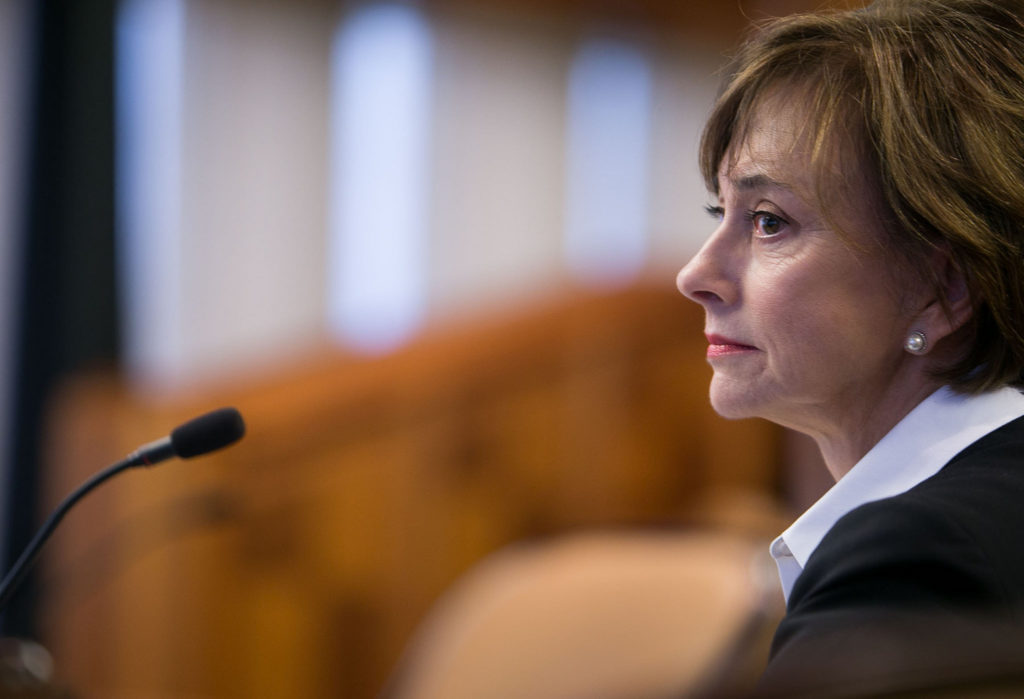
Few women in education have worked as long, and as hard to advance the education of young children in Alabama as Jeana Ross. A Guntersville native, Ross earned her Bachelors degree in Early Childhood Education from the University of Alabama in Birmingham, and her Master’s in educational leadership from the University of Alabama. She began her career in the Jackson County school system in 1975, teaching second and third grades. From there, she taught in the Guntersville education system, continuing her work with children in kindergarten through the third grade, and became one of the first kindergarten teachers in Alabama Public Schools, a full-day program. “My love for children’s curiosity and delight of discovery created a strong desire to always participate in and facilitate the pure joy of learning,” Ross told the U.S. Department of Education in an interview. When she started her own family, Ross chose to take a break from her career, and focussed on raising her two sons. In 1997 she jumped back in to the workforce, full speed ahead. Starting back as a preschool teacher, Ross was given the opportunity to write school readiness standards for the Marshall County school district. With her focus now turned on developing other children throughout the state; she quickly advanced to a leadership position, coaching pre-k teachers, and building pre-k programs in school systems across the state. In 2008 she became the Director for Educational Services in the Boaz City School Systems, implementing and evaluating Early childhood education programs. From 2010-2011 she served as the Assistant Principal at Madison City Schools, until she was appointed by then Governor Robert Bentley to lead the Alabama Department of Early Childhood Education. Through Ross’s leadership, the department has made leaps and bounds. Turning the state’s fragmented early childhood education programs into award winning, nationally recognized curriculums. Under her watchful eye, the program has experienced the most growth in its history; growing from 211 classrooms to more than 900 classrooms located in all 67 counties in the state. Her department has also been responsible for writing and receiving over $100 million in federal grant awards for education. The program has also received national recognition, with Alabama being one of only four states in the nation to be recognized by the National Institute for Early Education Research (NIEER) for meeting all 10 of the NIEER quality benchmarks. As a member of Governor Kay Ivey‘s cabinet, she is also a leader of the Children’s Policy Council, the Children First Trust Fund, and the Head Start Collaboration Office, and a founding member of the Office of School Readiness Advisory Board and Evaluation Task Force. Ross has always held a special interest, and love for children from low-income and has secured over $7.5 million in grant funds over the course of her career to offer quality services to low income and at-risk children and families. Through her efforts, the Alabama Department of Early Childhood Education has experienced tremendous growth, in numbers, and in the quality of the programs offered. Ross is an expert leader and educator, spending over two decades advancing the Alabama education system, and improving the lives of the children she encountered along the way. In spite of her busy schedule, Ross was kind enough to take some time, and answer some of Alabama Today’s questions on her life, work, and influences. How have other women influenced your success? I have been greatly influenced by the effort of devoted educators, many of whom are women, who work regardless of pay or recognition every day to teach children and champion their right to reach their greatest potential. These women are examples of selflessness and responsiveness that provides children powerful opportunities to find purpose and experience success that impacts their entire life through an excellent education. An incredible mother and two dear grandmothers, true examples of graciousness, humility, love and determination continue to inspire me. What shaped your desire to work in education, and then in government? A love for a child’s curiosity and delight of discovery created a strong desire to always participate in this pure joy of learning and to protect it as much as possible. What has been your favorite area of service, and what is your favorite thing about that position? My opportunity for service from the first was centered around early learning and has remained my favorite area of concentration. The first five years are the most important in a child’s development. It is during these years that a foundation is established that shapes a child’s future health, skills and abilities. A position at the state level that enables me to be part of an amazing team of experts that with great energy and enthusiasm effect change and creates a system of support for the early years is a much-appreciated responsibility. Have you read any books that have shaped your perspective on life? The Bible is the book that has most shaped my perspective on life. It has given me understanding of purpose, knowledge of truth and acceptance of my limitations. It provides guidance and strength to continually improve and persevere in serving others. What advice would you give to young women who want to pursue careers as educators, or serve in state government? Surround yourself with positive and innovative people that value authentic collaboration and strategic risk-taking. Never under estimate the power of communication and honesty. How do you spend your (rare) free time? During rare free time, I enjoy entertaining, gardening and reading and most of all being with family.
State Dept. of Education seeks testing waivers to aid students with cognitive disabilities

The Alabama State Department of Education (ALSDE) will be seeking waivers from the Secretary of the U.S. Department of Education to allow students with cognitive disabilities to take the Alabama Alternate Assessment (AAA). The test — a performance task assessment administered as an alternate to the general education state assessment. It is administered to students with significant cognitive disabilities working on the Alabama Extended Standards, and is a paper-based multiple choice assessment administered in the areas of reading and mathematics in Grades 3-8 and 10 and science in Grades 5,7, and 10 — is part of the Every Student Succeeds Act (ESSA), signed into law in 2015 by then President Barack Obama. The program was intended to replace the No Child Left Behind Act; and ensures that students in the U.S. with a significant cognitive disability, are not excluded from learning beside their peers. Former-Gov. Robert Bentley then created an implementation task force in 2016 to assure the law’s success. The ESSA, “shifts the power of education from the federal government and returns power and control to the states.” Under ESSA, states are able to decide for themselves what is best for their students in regard to the “implementation of academic standards, testing, accountability, school improvement and teacher quality,” but also requires states to ensure that the number of students assessed using an alternate assessment does not exceed one percent of the students in the state who are assessed using Alabama statewide assessments. State is seeking a waiver as the ESSA places a 1 percent cap on the participation rate for each subject on the AAA. If a state anticipates it will exceed the 1 percent cap, it must seek a waiver. During the 2016-2017 school year, Alabama’s participation rate on the AAA was: 1.21 percent for reading, 1.21 percent for math, and 1.23 percent for science. Since Alabama exceeded the 1 percent cap for the 2016-2017 school year, it is anticipating exceeding the 1 percent cap for 2017-2018 school year. Thus, the ALSDE will be requesting a waiver for reading, math, and science from the Secretary of the U.S. Department of Education. The ALSDE is seeking public comment as part of this process. According to the ALDSE: You may send written comments on the request for a waiver to: Student Assessment, Alabama State Department of Education, P.O. Box 302101, Montgomery, AL 36130-2101. Mrs. Nannette Pence or Mrs. Maggie Hicks may be reached by phone at 334-242-8038, by fax at 334-242-7341, or through email at studentassessment@alsde.edu. Written comments will be accepted until June 15, 2018.
ITT Technical Institute to cease operations Friday, what’s next for Alabama students
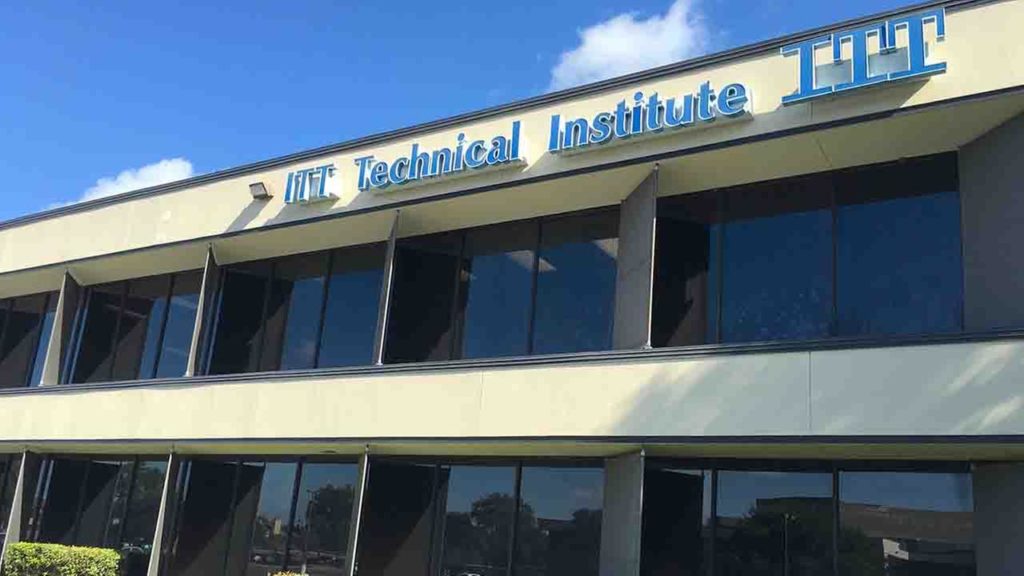
The for-profit college ITT Technical Institute announced its plans to stop operating Friday, Sept. 16. ITT has branches in Madison, Bessemer, and Mobile, reportedly serving approximately 1,600 students across Alabama. Alabama Attorney General Luther Strange is offering information about resources available to assist Alabama students of ITT, which suddenly announced its closure in the face of regulatory actions by the U.S. Department of Education. According to the U.S. Department of Education, students have two general options: to apply for closed school loan forgiveness, or to seek to transfer credits to another educational institution. Students may apply for discharge of their federal loans if the school closed while they were enrolled, or if they had been enrolled within 120 days prior to closing. They are urged not to pay for loan consolidation or forgiveness that the Department of Education provides for free. If a student subsequently completes a comparable program at another school through benefit from one’s training at ITT, the loan may be repayable. Details of eligibility and the process for application are available online from the U.S. Department of Education. In some instances, students may be able to transfer credits to a new institution, but that depends upon whether the new school decides to accept ITT coursework. The U.S. Department of Education is working with postsecondary programs across the country to process records so that future eligibility for financial aid may be determined, and to facilitate information for students about other available programs for their consideration. In Alabama, students should contact the Alabama Commission on Higher Education at 334-242-1998, toll-free at 1-800-960-7773, or through its website at ache.state.al.us. For those with further questions and concerns, a series of webinars with detailed information is being offered by the U.S. Department of Education throughout September. Registration is available at the department website.
AG Luther Strange announces nationwide injunction blocking White House transgender bathrooom policy
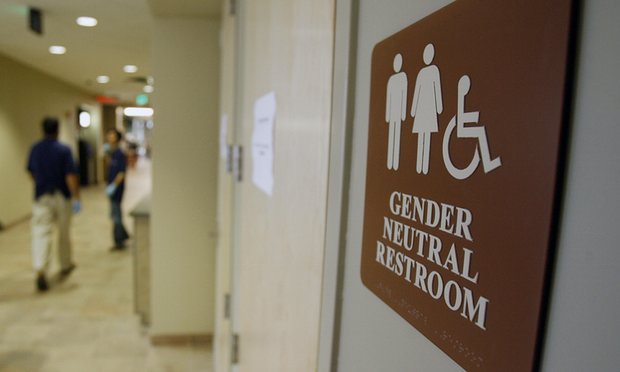
Monday morning Alabama Attorney General Luther Strange announced a U.S. judge has blocked the Obama administration guidance that transgender public school students must be allowed to use bathrooms of their gender “identity” — rather than their sex, or risk losing federal funding — granting a nationwide injunction sought by a group of 13 states, including Alabama. U.S. District Judge Reed O’Connor has granted a preliminary, nationwide injunction in response to a lawsuit filed by Texas and a number of other states. In a decision late Sunday, O’Connor explained the Obama administration failed to follow proper procedures for notice and comment in issuing the guidelines. He also said the federal guidelines had the effect of law and contradict existing legislative and regulatory texts. “The court decision is a victory for parents and children all across Alabama,” said Attorney General Strange. “I joined the multi-state lawsuit against the Obama administration in May to prevent Alabama schools from being forced to surrender their restroom access policies to social experimenters in Washington. I am pleased the federal court has agreed to our request to stay the controversial order while our lawsuit challenging the legality of the transgender order continues.” On May 13, 2016, the U.S. Department of Education and U.S. Department of Justice jointly announced schools must allow students access to restrooms and locker rooms of their gender “identity” rather than their sex, or lose federal funding. On May 27, Strange advised the Alabama Board of Education, which governs K-12 public schools, that it did not have to follow the federal edict until the multi-state lawsuit is addressed in federal court. The 13 states that filed the lawsuit requesting the stay include Alabama, Arizona, Georgia, Kentucky, Louisiana, Maine, Mississippi, Oklahoma, Tennessee, Texas, Utah, West Virginia, and Wisconsin. Status of Transgender “Bathroom Bill” Legislation | InsideGov You can read a copy of the entire stay here.
Martha Roby: Changing behavior requires oversight

Oftentimes, truly changing public policy for the better requires not only improving the law but also careful oversight in order to ensure proper implementation of that law. You may remember that late last year we scored a significant legislative victory by getting the strong “state authority” provisions I championed for almost three years included in the long-overdue replacement to the “No Child Left Behind” education law. That law and the behavior it allowed has served to frustrate school administrators, hamstring teachers, and erode parents’ trust in public schools. As Congress worked to overhaul the law through the Every Student Succeeds Act (ESSA), one of my top priorities has been to return decision-making in education back to states and local communities where it belongs. The provisions I advocated for strictly prohibit the U.S. Department of Education from using funding grants or special rule waivers to coerce states into adopting its preferred policies. In fact, the Wall Street Journal called the nation’s new education law “the largest devolution of federal control to the states in a quarter century.” With ESSA now the law of the land, my focus has turned toward making sure officials are adhering to the new law. At an Appropriations Committee hearing in March, I questioned U.S. Secretary of Education John King about his commitment to making sure the U.S. Department of Education adheres to the “state authority” provisions. While Secretary King committed to me that he would implement and enforce ESSA as written, I assured him I would be watching to make sure that happened. This past week I met with local school superintendents from throughout Alabama who gave me more reason to be concerned about ESSA implementation living up to the intent of Congress. That’s why I reached out to each member of the Alabama ESSA Implementation Committee in a letter asking for feedback on whether or not federal authorities are following Congress’ clear direction. “As someone who has been involved in crafting this law,” I wrote, “I am here to answer any questions you might have regarding the clear intent Congress had toward ensuring flexibility at the state and local level. I also ask that you please keep me apprised of any attempt on behalf of the U.S. Department of Education to disregard the intent of this new law and continue its coercive practices. “Should federal partners you work with in the implementation process fail to adhere to this clear directive from Congress, I want to know about it.” I have already heard back from several members of the committee and I look forward to working with them in our shared goal of ensuring the return of education decisions back to the states. Their feedback will help me hold the U.S. Secretary of Education and his staff accountable for the proper implementation of the nation’s new education law. ••• Martha Roby represents Alabama’s 2nd Congressional District. She lives in Montgomery, Alabama with her husband, Riley and their two children.
Alabama AG Luther Strange wants court to stop Obama transgender bathroom order before school begins
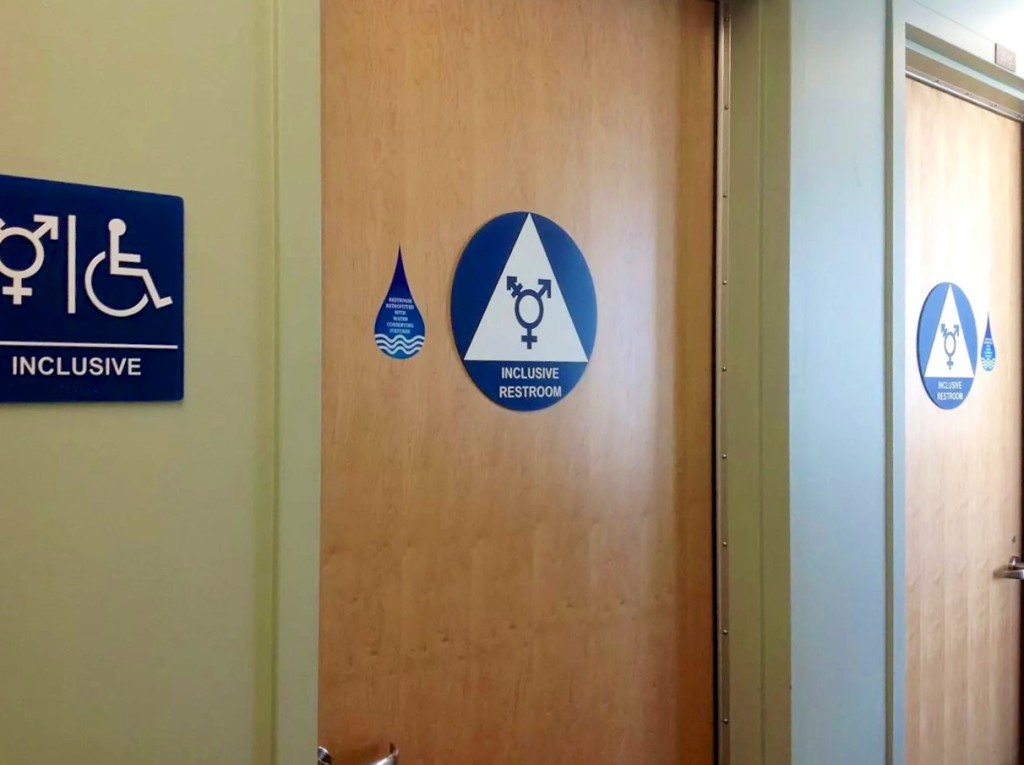
Alabama and a dozen other states are seeking an immediate stop to the Barack Obama Administration’s recent transgender bathrooms directive — that schools must allow students access to restrooms and locker rooms of their gender “identity,” rather than their sex, or lose federal funding — asking a federal judge to stall its implementation before the school year begins next month. Alabama Attorney General Luther Strange announced Tuesday Alabama joined in filing a preliminary injunction in U.S. District Court against the U.S. Department of Education, U.S. Justice Department, the U.S. Department of Labor and the U.S. Equal Employment Opportunity Commission, for promoting a federal directive that local schools must allow transgender access to campus restrooms or face a loss of federal funds. In May, the Obama Administration issued the formal guidance in the form an eight-page joint U.S. Justice Department–U.S Department of Education directive telling every public school in the nation they must allow students to use bathrooms and locker rooms corresponding to their gender identity and not their biological sex. The directive read: “A school may provide separate facilities on the basis of sex, but must allow transgender students access to such facilities consistent with their gender identity. A school may not require transgender students to use facilities inconsistent with their gender identity or to use individual-user facilities when other students are not required to do so.” “On May 25, I joined a legal challenge to the Obama administration’s restroom mandate,” said AG Strange. “With schools nearing the beginning of a new year, time is short and school administrators need clarity about the impact of this controversial new order on their school systems. Alabama and the other states are asking the federal court to grant a preliminary injunction of the transgender restroom edict until the court has reached a decision on its legality.” Tuesday’s request, if approved, would affect not only Alabama and the 12 other states who filed, but all public schools across the country. Strange continued, “I believe Alabama and the other states will ultimately prevail in federal court against the new restroom order because federal law allows schools to have separate facilities based on the ‘sex’ of the individual, not their gender preference.” Alabama joined Texas, Arizona, Georgia, Kentucky Louisiana, Maine, Mississippi, Oklahoma, Tennessee, Utah, West Virginia and Wisconsin in filing the motion for a preliminary injunction Tuesday.
Alabama politicians react to Obama administration’s new bathroom guidelines
President Barack Obama‘s Administration is telling every public school in the nation that they must allow students to use bathrooms and locker rooms corresponding to their gender identity rather than their biological sex. The formal guidance comes in the form an eight-page joint directive. Released Friday afternoon by the U.S. Justice Department and the U.S Department of Education instructing school administrators that, when it comes to bathrooms and locker rooms, “A school may provide separate facilities on the basis of sex, but must allow transgender students access to such facilities consistent with their gender identity. A school may not require transgender students to use facilities inconsistent with their gender identity or to use individual-user facilities when other students are not required to do so.” Here’s how Alabama politicians are reacting to the guidelines: Alabama Attorney General Luther Strange: The Obama Administration’s new guidance document is just one more example of the kind of federal overreach that we have come to expect from this White House. School bathroom use is an issue that should be decided by parents, teachers, and principals—not federal bureaucrats. The DOJ guidance document is also wrong on the law. Title IX allows schools to have separate facilities for separate sexes. The law says ‘sex,’ not gender identity. If the Obama Administration tries to enforce this absurd edict, I will work with other Attorneys General to challenge it. U.S. Rep. Bradley Byrne (AL-01): I’ve been watching some of the reports on the Obama Administration’s new “bathroom guidance,” and I am pretty frustrated. Schools in Alabama or anywhere around the United States don’t need the federal government to dictate “bathroom policy” to them. Let’s get real here for a minute – this entire debate is executive overreach at its worst. Washington doesn’t always know best, and it has no business getting involved in a debate about where people go to the bathroom. U.S. Rep. Martha Roby (AL-02): They have lost their minds. This is a great example of an issue in which we need a lot less government and a lot more common sense. These are children. Eighth grade boys don’t need government-guaranteed access to the sixth grade girls’ bathroom, or vice versa. Schools can figure out how to accommodate students’ unique needs on an individual basis without federal bureaucrats’ tortuous redefinition of sex. Moreover, threatening to sue schools or withhold funding if they don’t conform to this backward application of law is an abuse of power that won’t stand. I look forward to hearings that will expose how ridiculous and unworkable such a policy is. U.S. Rep. Robert Aderholt (AL-04): The U.S. Department of Education’s transgender directives just released reveal a new desperation by this administration to impose their liberal agenda on their way out the door. The Administration should not jeopardize the safety of our children in their efforts to force Americans to accept their LGBT political agenda. Threatening to cut off funding to public schools, which are diligently working to educate our children, is nothing short of blackmail. We must continue to push back against this Administration’s almost constant attempt to circumnavigate Congress and the Constitution. To that end, I will be joining several of my Congressional colleagues in signing a letter to the President, expressing great concern over these guidelines and reminding Mr. Obama that he cannot infringe upon the constitutional right of Congress to appropriate funds. U.S. Rep. Gary Palmer (AL-06): This is yet another example of overreach by the Obama Administration. The guidance purports to create an environment that is “supportive” and “safe”. It will do neither. In fact, it will create an environment with much more potential for sexual misconduct and harm. No reasonable person could conclude that forcing school children, particularly adolescents, to share bathrooms and showers with individuals of the opposite sex, no matter how they might self-identify, is a smart idea. The safety implications for sexual predation have been well documented, but this Administration apparently has no concern about the sexual predators. This guidance does not have the force of law and schools all over America should reject it. Alabama schools should reject it. The Obama Administration is engaging in an ideological war against our nation that not only is ripping our moral foundations apart, but now threatens our children’s safety and privacy. This action should cause all people of strong faith and moral convictions to come together across racial, religious and political lines to stop it. Members of Congress regardless of political affiliation who have the moral courage and conviction to do so, should stand to together and use every viable tool, including the power of the purse to stop the Administration from bullying states and local schools into adopting practices that the vast majority of Americans reject. This action should be seen for what it is, an act intended to force Americans to conform to the will of an increasingly extremist and provocative Administration. State Rep. Will Ainsworth Like many of you, I am outraged and disgusted by the Obama administration’s threat to withdraw federal funding from states that do not allow so-called “transgender” students to use the bathroom, locker room, and shower facilities of their choosing. Alabama will not succumb to Obama’s extremist extortion. Gender is not a choice. It is a fact that is determined by biology and by God, not by how masculine or feminine you feel when you wake up in the morning. Dressing like a pirate doesn’t make you a pirate, dressing like an astronaut doesn’t make you an astronaut, and dressing like the opposite sex doesn’t make you a man or a woman. In the next legislative session, I will be introducing a law to block Barack Obama’s insane demand from being implemented in Alabama and in the interim call upon the State School Board to immediately promulgate a policy clearly requiring public school students to use the facilities that comply with their biological gender. Our nation’s morals, our state’s values, and our children’s future are at stake, so we must take action now.
Martha Roby: Education secretary must enforce new law

Newly confirmed Secretary of Education John King came to Capitol Hill this week to testify in our Appropriations budget hearing. As a member of the Appropriations Committee, and specifically the subcommittee with jurisdiction over the U.S. Department of Education budget, this hearing provided me a good opportunity to press the secretary to make sure he and his staff adhere to the new education law that forbids federal coercion on state education policy. You may remember that late last year Congress passed and the president signed a new education law to finally replace the problematic “No Child Left Behind.” The nation’s new education law returns the decision-making back to state and local governments where it belongs. The Wall Street Journal calls the new law “the largest devolution of federal control to the states in a quarter-century.” I’m proud to say the nation’s new education law also contains a provision I introduced and championed that strictly prohibits the Secretary of Education or his agents from using funding grants or special regulation waivers to influence state education policy. For too long, the U.S. Department of Education has exercised undue influence over education policy decisions that are made at the state and local level. The department developed the bad habit of making valuable funding grants or coveted regulation waivers contingent on whether or not a state adopted its “pet” policies. Not only did this behavior flout the appropriate role of the federal government, it also worked to corrode trust in public education at the state and local level. Count me among those who believe states should set high standards and adopt a rigorous curriculum designed to help students build the skills they need to succeed. While collaboration can add value in policymaking, heavy-handed coercion from the federal government in the process is unwelcome and inherently dubious. Parents, teachers and administrators are rightfully wary about having state education policy dictated by bureaucrats in Washington, D.C., who have never set foot in an Alabama classroom. Now that kind of federal coercion is against the law, and at this week’s Appropriations hearing, I wanted to make sure Secretary King is committed to following that law. Old habits die hard, I told him. It isn’t hard to imagine federal bureaucrats ignoring the new law and continuing with business as usual. I was pleased to hear Secretary King say and reiterate that he and his staff will do “exactly” what the law requires. Knowing that policymakers often must determine the “intent of Congress,” I made clear to Secretary King that, as the Member of Congress who introduced and championed this provision of law, the intention is to stop once and for all the inappropriate federal coercion in state education decisions. I appreciate Secretary King appearing before our committee and committing to enforcing the new law. It is important that he and others at the Department of Education know that Congress is watching and that we are serious about returning education control back to states and local governments. • • • Martha Roby represents Alabama’s 2nd Congressional District. She lives in Montgomery, Alabama with her husband, Riley, and their two children.
Daniel Sutter: Will public universities privatize?
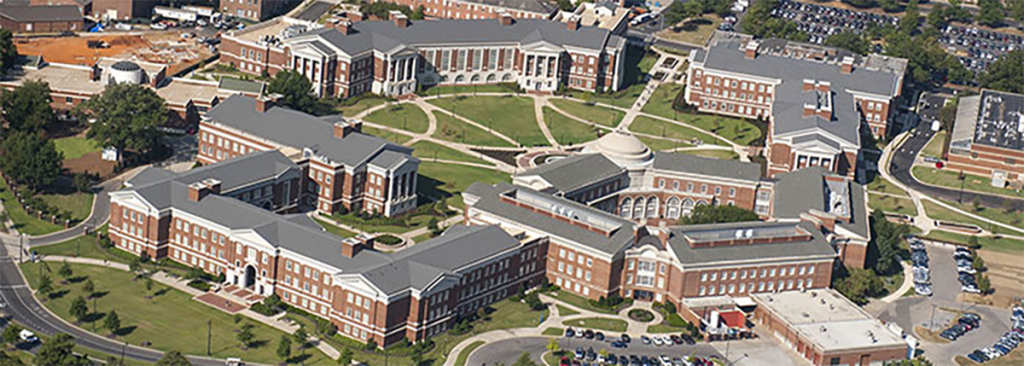
Many government services have been privatized over the past forty years, from whole enterprises like British Airways to simply contracting with private businesses for services like trash collection and operating cafeterias. My corner of the world, public universities, has witnessed only service privatization, but this may change. And in contrast with cases where conservative politicians have driven privatization, I suspect that a public university will decide to go private. Declining state appropriations for higher education represents the driving factor here. Speculation by higher education observers centers on three leading state universities, Michigan, Virginia, and Colorado, which currently receive 10% or less of their operating budgets from state appropriations. (To be clear, none of these universities have privatization plans today.) A university receiving 10% of its budget from the state would only have to cut costs by 5% and increase other revenues by 5% one time to take state funding to zero. I suspect that administrators can imagine how they might make such cuts and revenue increases. State appropriations to higher education have been falling as a share of government spending and university budgets for 50 years. For instance, the University of Michigan received 80% of its budget from the state in the 1950s. State appropriations fell from 46% to 36% of public university budgets nationally between 1977 and 1996. Appropriations have declined another 16% nationally since 2008 (25% here in Alabama), according to data from Illinois State University. State appropriations now provide less than 20% of the budgets of Troy University and the University of Alabama. Universities remain under state control despite diminishing financial support. For example, Governor Scott Walker and state legislators cut appropriations to the University of Wisconsin by $250 million this year, but also froze university tuition and revoked state law protection for faculty tenure. Eventually administrators and faculty at some state university will decide that state funding is not worth the control, and elected officials will jump at the chance to cut the remaining spending. Reduced state support has coincided with a rapid increase in tuition. Net tuition (posted tuition minus university scholarships and financial aid) at public universities has increased 54% faster than inflation over the past twenty years. State appropriations cannot be blamed for all of this, since net tuition has increased 29% faster than inflation at private universities. The relative quality of flagship state universities has also declined. Fifty years ago, Michigan, Virginia and Wisconsin, along with the Universities of California at Berkeley, Minnesota, Illinois, and North Carolina were among the nation’s top twenty universities. Only one public university made the U. S. News and World Report top twenty in 2014. Federal student aid and Medicaid have dramatically shaped state budgeting since 1965. Medicaid operates under a matching grant formula, under which states receive between $1 and $3 from the Federal government for every $1 they spend on Medicaid. But if states reduce spending on higher education and let tuition rise, many students will receive more Federal aid for students. Lawmakers can bring more federal dollars to their states by shifting appropriations from higher education to Medicaid. Over the last fifty years, Washington has asserted increasing control over state universities. Eligibility for Federal student aid requires compliance with U.S. Department of Education regulations and maintenance of regional accreditation. Any new tax dollars for higher education seem likely to come from Washington as well. President Obama’s free community college plan would rely on Federal dollars. Federal control, I think, is bad for higher education. Competition is the greatest force for ensuring performance, and state-run universities will naturally compete. North Dakota has increased higher education appropriations by 26% since 2008, using oil revenues to gain a competitive edge for the state’s universities. State control allows for experimentation and diversity, which is particularly valuable in scholarly fields. Our state universities have provided millions of people access to a quality education at an affordable price. But state lawmakers providing less funding while insisting on as much control as ever seems unsustainable. Our public universities appear destined to become “state” in name only. Daniel Sutter is the Charles G. Koch Professor of Economics with the Manuel H. Johnson Center for Political Economy at Troy University and host of Econversations on TrojanVision.
Opt-Out movement accelerates amid Common Core testing
Thousands of students are opting out of new standardized tests aligned to the Common Core standards, defying the latest attempt by states to improve academic performance. This “opt-out” movement remains scattered but is growing fast in some parts of the country. Some superintendents in New York are reporting that 60 percent or even 70 percent of their students are refusing to sit for the exams. Some lawmakers, sensing a tipping point, are backing the parents and teachers who complain about standardized testing. Resistance could be costly: If fewer than 95 percent of a district’s students participate in tests aligned with Common Core standards, federal money could be withheld, although the U.S. Department of Education said that hasn’t happened. “It is a theoretical club administrators have used to coerce participation, but a club that is increasingly seen as a hollow threat,” said Bob Schaeffer with the National Center for Fair & Open Testing, which seeks to limit standardized testing. And so the movement grows: This past week in New York, tens of thousands of students sat out the first day of tests, with some districts reporting more than half of students opting out of the English test. Preliminary reports suggest an overall increase in opt-outs compared with last year, when about 49,000 students did not take English tests and about 67,000 skipped math tests, compared to about 1.1 million students who did take the tests in New York. Considerable resistance also has been reported in Maine, New Mexico, Oregon and Pennsylvania, and more is likely as many states administer the tests in public schools for the first time this spring. The defiance dismays people who think holding schools accountable for all their students’ continuing improvement is key to solving education problems. Assessing every student each year “gives educators and parents an idea of how the student is doing and ensures that schools are paying attention to traditionally underserved populations,” U.S. Department of Education spokeswoman Dorie Nolt said in an emailed statement. Opposition runs across the political spectrum. Some Republicans and Tea Party activists focus on the Common Core standards themselves, calling them a federal intrusion by President Barack Obama, even though they were developed by the National Governors Association and each state’s education leaders in the wake of President George W. Bush‘s No Child Left Behind program. The Obama administration has encouraged states to adopt Common Core standards through the federal grant program known as Race to the Top, and most have, but each state is free to develop its own tests. In California, home to the nation’s largest public school system and Democratic political leaders who strongly endorse Common Core standards, there have been no reports of widespread protests to the exams — perhaps because state officials have decided not to hold schools accountable for the first year’s results. But in deep-blue New York, resistance has been encouraged by the unions in response to Democratic Gov. Andrew Cuomo‘s efforts to make the test results count more in teacher evaluations. In Rockville Centre on Long Island, Superintendent William H. Johnson said 60 percent of his district’s third-through-eighth graders opted out. In the Buffalo suburb of West Seneca, nearly 70 percent didn’t take the state exam, Superintendent Mark Crawford said. “That tells me parents are deeply concerned about the use of the standardized tests their children are taking,” Crawford said. “If the opt-outs are great enough, at what point does somebody say this is absurd?” Nearly 15 percent of high school juniors in New Jersey opted out this year, while fewer than 5 percent of students in grades three through eight refused the tests, state education officials said. One reason: Juniors may be focusing instead on the SAT and AP tests that could determine their college futures. Much of the criticism focuses on the sheer number of tests now being applied in public schools: From pre-kindergarten through grade 12, students take an average of 113 standardized tests, according to a survey by the Council of the Great City Schools, which represents large urban districts. Of these, only 17 are mandated by the federal government, but the backlash that began when No Child Left Behind started to hold teachers, schools and districts strictly accountable for their students’ progress has only grown stronger since “Common Core” gave the criticism a common rallying cry. “There is a widespread sentiment among parents, students, teachers, administrators and local elected officials that enough is enough, that government mandated testing has taken over our schools,” Schaeffer said. Teachers now devote 30 percent of their work time on testing-related tasks, including preparing students, proctoring, and reviewing the results of standardized tests, the National Education Association says. The pressure to improve results year after year can be demoralizing and even criminalizing, say critics who point to the Atlanta test-cheating scandal, which led to the convictions 35 educators charged with altering exams to boost scores. “It seems like overkill,” said Meredith Barber, a psychologist from the Philadelphia suburb of Penn Valley who excused her daughter from this year’s tests. Close to 200 of her schoolmates also opted out in the Lower Merion School District, up from a dozen last year. “I’m sure we can figure out a way to assess schools rather than stressing out children and teachers and really making it unpleasant for teachers to teach,” said Barber, whose 10-year-old daughter, Gabrielle, will be in the cafeteria researching Edwardian history and the TV show Downton Abbey during the two weeks schools have set aside for the tests. Utah and California allow parents to refuse testing for any reason, while Arkansas and Texas prohibit opting out, according to a report by the Education Commission of the States. Most states are like Georgia, where no specific law clarifies the question, and lawmakers in some of these states want protect the right to opt out. Florida has another solution: Gov. Rick Scott signed a bill strictly limiting testing to 45 hours each school year. In Congress, meanwhile, lawmakers appear ready to give states
