
East Alabama’s controversial Sabal Trail pipeline on target for June operation
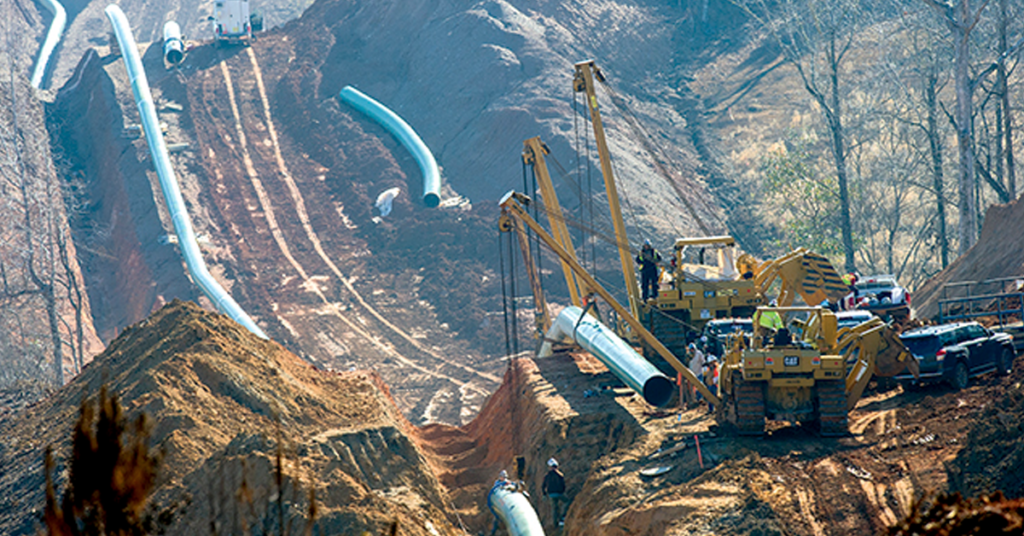
A 515-mile-long natural gas pipeline, which includes 86.4-miles in east Alabama, is on target to begin operation in June. The Sabal Trail Transmission pipeline is a joint project by three energy companies —Spectra Energy Corp., NextEra Energy Inc. and Duke Energy — and will transport natural gas from the Transco pipeline north of Alexander City, Ala., extend through the southwest corner of Georgia and end in central Florida near Orlando. The three-state pipeline is currently “about 85 percent complete with overall construction,” Andrea Grover, Director or Stakeholder Outreach for the Sabal Trail Transmission told Alabama Today. With construction underway in Tallapoosa, Chambers, Lee and Russell Counties, the pipeline is roughly 70% complete in Alabama, Grover added. Expected to provide a significant economic benefit to the Yellowhammer State, the pipeline creates both short-term and long-term jobs and adds capital investment and tax base to the state’s economy. During the current construction phase, the economic benefits include: 1,112 construction jobs available $37,240,486 funds from jobs being created $49,685,416 additional funds contributed by non-directly related construction activity $140,412,196 amount generated for the state after construction is completed In addition, the permanent economic impact and operations in Alabama will include: 94 permanent jobs after construction is completed $2,953,302 funds from jobs being created $4,907,082 additional funds contributed by non-directly related construction activity $10,757,812 amount generated for the state after construction is completed Despite the anticipated economic gains, environmental groups oppose the trail’s construction, saying it could threaten people’s health and access to clean water. On its face, this pipeline should be rejected for the threat it poses not only to our climate, but to the public health of communities it would affect,” said Lena Moffitt, Director of Sierra Club’s Beyond Dirty Fuels campaign. “Rather than doubling down on outdated, dirty fuels, we should complete our transition to 100 percent clean, renewable energy.” However, the Transmission contends they’ve taken comprehensive steps to address environmental groups’ concerns. “Regarding potential impacts on water supplies: Natural gas is lighter than air, meaning in the unlikely event it escapes from the pipeline, the gas can only travel up through the soil into the atmosphere and dissipate,” Grover explained in a column last month. “It cannot travel down through soils to water supplies. No toxins are released that would affect water quality.” She continued, “The project has been evaluated publicly over the past three years to ensure environmental permitting agencies, all levels of local, state and federal government, communities and landowners’ questions were addressed and impacts along the pipeline route were minimized. Sabal Trail hosted more than 50 open houses and public meetings and underwent a well-documented, comprehensive review by the Federal Energy Regulatory Commission (FERC).”
Donald Trump’s vow to bring back coal gives hope to weary regions
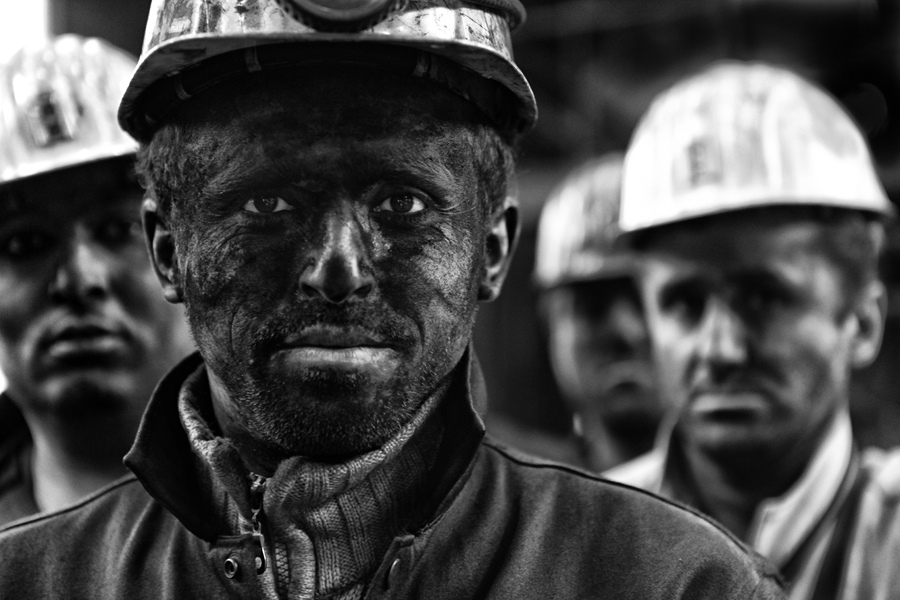
The hard-eyed view along the Tug Fork River in West Virginia coal country is that President-elect Donald Trump has something to prove: that he’ll help bring back Appalachian mining, as he promised time and again on the campaign trail. Nobody thinks he can revive it entirely – not economists, not ex-miners, not even those recently called back to work. But for the first time in years, coal towns are seeing a commodity that had grown scarcer than the coal trains that used to rumble through around the clock: hope. Around here that hope is measured. Still, most voters saw Trump as the only choice for president. He vowed to undo looming federal rules and said President Barack Obama had been “ridiculous” to the industry. Trump told miners in Charleston: “We’re going to take care of years of horrible abuse. I guarantee it.” West Virginians went all in, backing Trump and electing a coal mine-owning billionaire, Democrat Jim Justice, as governor. But a lot of people had gone under already. “Lost my home, vehicle, everything,” said Roger Prater. Wearing the miner’s telltale blue pants with reflective strips on the legs, Prater would be heading underground that night. He’d been laid off for 20 months but now benefits from a small hiring surge that started before the election. At 31, Prater said he can get everything back, but he’s uncertain for how long. “In Trump’s term, I feel we’ll do good, but after that who’s to say?” he said. That skepticism is supported by industry analysts, who say any recovery won’t be centered in the eastern coalfields of Kentucky and West Virginia and will never bring U.S. coal back to what it once was. Last year, the nation had about 66,000 coal mining jobs – the lowest since the U.S. Energy Information Administration began counting in 1978. That’s down 20,000 since a high point in 2008, and preliminary data show 10,000 more lost this year. Mines out west stand to gain the most under Trump because of the huge reserves beneath public lands in Wyoming, Montana, Colorado and Utah. At the Wolf Mountain Coal company near Decker, Montana, superintendent Dave Bettcher said he’s been praying Trump can do just that. Wolf Mountain gets coal from the nearby Spring Creek strip mine, where operator Cloud Peak Energy has cut workforce and production. Wolf Mountain’s 20 workers still have jobs, but Bettcher said eight years of anti-coal leadership in Washington have left the industry in peril. “I believe in the guy,” Bettcher said of Trump as a conveyor belt dumped coal into a truck bound for North Dakota. “If he can hold up his end, he’s going to help a lot of people.” In January, the Obama administration – prompted in part by concerns about climate change – imposed a moratorium on new lease sales pending a three-year review of the federal coal program. Trump has vowed to rescind the moratorium, which could open huge coal reserves. Burning them would unleash an estimated 3.4 billion tons of carbon dioxide – equivalent to a year’s worth of emissions from 700 million cars, according to Environmental Protection Agency calculations. But Trump has promised, too, to roll back Obama’s Clean Power Plan, emissions restrictions that would make it more expensive for utilities to use the fuel. Such proposals would “level the playing field for coal,” allowing it to better compete with natural gas and renewable energies, said coal analyst Andy Roberts with the firm Wood Mackenzie. Yet industry executives expect that pressure to reduce carbon dioxide emissions will continue. “It can’t just be, ‘We’re going to get rid of these regulations, and you guys can party until the next administration comes,’” Cloud Peak Energy Vice President Richard Reavey said. “There are serious global concerns about climate emissions. We have to recognize that’s a political reality and work within that framework.” Owners of more than 200 coal plants, almost half the nation’s total, plan to retire the facilities by 2025, said Mary Ann Hitt, director of the Sierra Club’s anti-coal campaign. That trend is unlikely to be reversed, she said, with wind and solar power becoming more cost effective and natural gas offering a cheap alternative. But Hitt said environmentalists would be naive to think they’ve won. “The coal industry is going to have friends in high places,” she said. In West Virginia, Justice reopened four of his mines this month, saying they’ll provide 375 jobs, before being elected governor. They produce metallurgical coal for making steel; its price has risen sharply with lower Chinese production. Justice acknowledged during campaigning that the coal business is tough – mining jobs in the state fell to about 15,000 last year, with 7,000 gone since 2008 – but said he believes it will help power the U.S. economy and West Virginia’s future. “You’re going to see more miners go back to work in West Virginia to some level,” he said. On Saturday, Justice said he and Trump talked for 15 minutes about efforts to put miners back to work. He didn’t disclose specifics. For now, Williamson resembles the small Rust Belt cities of the North after factories closed, leaving empty storefronts and sidewalks. On a recent afternoon, a young man stood on the city bridge over the Tug Fork, which mostly separates southern West Virginia from Kentucky, holding a sign asking for help. Greg Blankenship from Pike County, Kentucky, across the river, lost his $50,000-a-year mining job in 2009 and got a lower-paying county job months later. His father made a good living as a miner and raised three kids. At 44, Blankenship hopes Trump’s election means he’ll be able to go back but says he knows “the president can’t do everything.” He’s right: Trump won’t control the economics of low natural gas prices or slow global growth, two big factors hurting coal demand, said John Deskins, director of the West Virginia University Bureau of Business and Economic Research. Trump will have some control over environmental regulation, but it’s not
