
Ron DeSantis blasts FDA for halting drugs ineffective on omicron

Florida Gov. Ron DeSantis pushed Tuesday for coronavirus patients to continue receiving antibody treatments deemed ineffective against the omicron variant, vowing to fight White House health regulators in his latest feud with President Joe Biden. The Republican governor’s comments came a day after the U.S. Food and Drug Administration pulled its emergency authorization for the antibody drugs from Regeneron and Eli Lilly. DeSantis, who made the drugs a centerpiece of his virus response while resisting vaccine mandates and other safety measures, did not outline how he would fight the FDA decision and it is legally unclear how he would do so. His office did not immediately return an email seeking further clarification. The FDA has sole authority over drug regulation in the U.S. The FDA announcement was expected, as both drugmakers have said for weeks that the treatments are less able to target omicron because of its mutations. In updated drug labeling released Monday, the FDA said omicron appears 1,000-fold less vulnerable to Regeneron’s drug and nearly 3,000-fold less vulnerable to Lilly’s drug. DeSantis has risen to prominence within the Republican Party through his constant criticism of Biden and White House virus policy. The governor, who is running for reelection and considered to be eyeing a 2024 presidential run, has heavily promoted the monoclonal antibody treatments. At a news conference Tuesday, DeSantis referenced anecdotal cases in which people were helped by the monoclonal antibody treatments and said it was “reckless” to block the drugs. “People have a right to access these treatments, and to revoke it on this basis is just fundamentally wrong and we’re going to fight back,” DeSantis said at a news conference. Asked about DeSantis’ opposition to the FDA decision, White House press secretary Jen Psaki said, “Let’s just take a step back here to realize how crazy this is.” “They are still advocating for treatments that don’t work,” she said of DeSantis. A spokeswoman for the U.S. Department of Health and Human Services confirmed Tuesday that the U.S. government has halted shipments of the two antibodies. She added that the federal government continues to distribute a GlaxoSmithKline antibody and two antiviral pills that are effective against omicron. However, supplies of those drugs are limited. “The Administration is focused on making sure that, if an American gets sick with COVID-19, they get a treatment that actually works,” HHS’ Kirsten Allen said in a statement. Hours after the FDA announced its decision Monday, the Florida Department of Health said it would shutter all monoclonal antibody state sites until further notice. DeSantis, in a statement Monday night, warned of the repercussions to “Biden’s medical authoritarianism.” Federal officials said the FDA decision was supported by several independent studies, including a peer-reviewed paper published in the journal Nature last month. In that study, a consortium of European researchers tested the ability of several antibody drugs to neutralize a live sample of the virus, concluding that Lilly and Regeneron’s antibodies “were inactive against omicron.” The American Medical Association, the nation’s largest physician group, said it agreed with the FDA decision, issuing a statement that read: “Limiting the use of these treatments will help ensure patients receive the best available therapy.” The federal government in late December temporarily stopped distributing the drugs to states as omicron began to become the dominant coronavirus strain but resumed shipments after complaints from Republican governors, including DeSantis. The U.S. government has shipped enough doses of the two antibodies to treat more than 300,000 patients since early January. The DeSantis administration last week announced it was opening five new monoclonal antibody treatment sites, to “facilitate the distribution of life-saving therapeutics.” The FDA says omicron is responsible for more than 99% of U.S. infections, making it “highly unlikely” that the antibodies would be effective for people seeking treatment. The drugs are not a substitute for vaccination and are generally reserved for people who are the most vulnerable, including seniors, transplant recipients, and those with conditions like heart disease and diabetes. Republished with the permission of the Associated Press.
Next on FDA’s agenda: Booster shots of Moderna, J&J vaccines
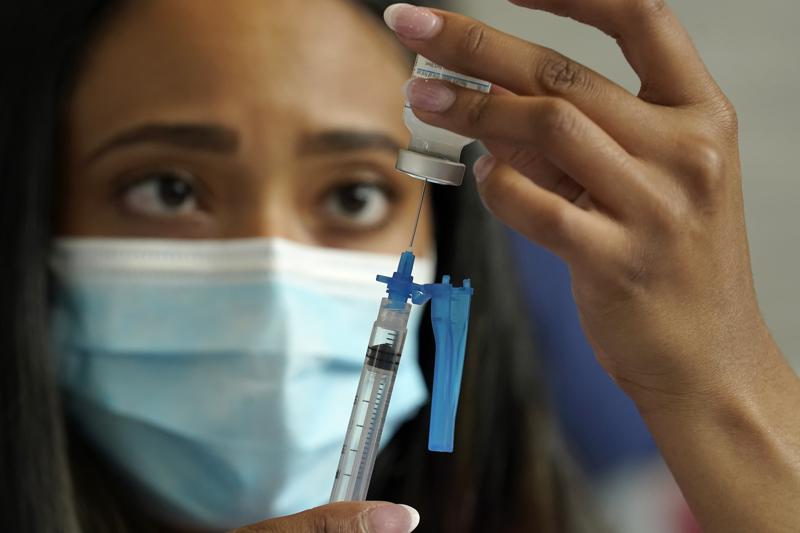
With many Americans who got Pfizer vaccinations already rolling up their sleeves for a booster shot, millions of others who received the Moderna or Johnson & Johnson vaccine wait anxiously to learn when it’s their turn. Federal regulators began tackling that question this week. On Thursday and Friday, the Food and Drug Administration convenes its independent advisers for the first stage in the process of deciding whether extra doses of the two vaccines should be dispensed and, if so, who should get them and when. The final go-ahead is not expected for at least another week. After the FDA advisers give their recommendation, the agency itself will make a decision on whether to authorize boosters. Then next week, a panel convened by the Centers for Disease Control and Prevention will offer more specifics on who should get them. Its decision is subject to approval by the CDC director. The process is meant to bolster public confidence in the vaccines. But it has already led to conflicts among experts and agencies — and documents the FDA released Tuesday suggest this week’s decisions will be equally difficult. In one earlier vaccine dispute, the CDC’s advisory panel last month backed Pfizer boosters at the six-month point for older Americans, nursing home residents, and people with underlying health problems. But CDC Director Dr. Rochelle Walensky overruled her advisers and decided boosters should also be offered to those with high-risk jobs such as teachers and health care workers, adding tens of millions more Americans to the list. Some health experts fear the back-and-forth deliberations are muddling the public effort to persuade the unvaccinated to get their first shots. They worry that the talk of boosters will lead people to wrongly doubt the effectiveness of the vaccines in the first place. When the FDA’s panel meets to review the Moderna and J&J vaccines, experts will discuss whether a third Moderna shot should contain just half the original dose and what’s the best timing for a second shot of the single-dose J&J vaccine. The panel will also look into the safety and effectiveness of mixing and matching different brands of vaccine, something regulators have not endorsed so far. An estimated 103 million Americans are fully vaccinated with Pfizer’s formula, 69 million with Moderna’s, and 15 million with J&J’s, according to the CDC. Regulators took up the question of Pfizer boosters first because the company submitted its data ahead of the other vaccine makers. Tim Anderson, a U.S. history teacher at a high school outside Louisville, Kentucky, already had his two Moderna shots months before he came down with COVID-19 in August. While his symptoms hit him “like a sledgehammer,” he is convinced that the inoculation saved him and his girlfriend from the more severe effects of the disease. The two are now awaiting clearance of a Moderna booster shot. “Until we can build up enough immunity within our own self and, you know, as a group of humans, I’m willing to do what I need to do,” Anderson, 58, said. The FDA meetings come as U.S. vaccinations have climbed back above 1 million per day on average, an increase of more than 50% over the past two weeks. The rise has been driven mainly by Pfizer boosters and employer vaccine mandates. While the FDA and CDC so far have endorsed Pfizer boosters for specific groups only, Biden administration officials, including Dr. Anthony Fauci, have suggested that extra shots will eventually be recommended for most Americans. In a new review of Moderna’s data, the FDA did not indicate Tuesday if it was leaning toward clearing the company’s booster. It said vaccines used in the U.S. still provide protection, and it raised questions about some of Moderna’s data. The two initial Moderna shots contain 100 micrograms of vaccine each. But the drugmaker says 50 micrograms ought to be enough for a booster for healthy people. A company study of 344 people gave them a 50-microgram shot six months after their second dose, and levels of virus-fighting antibodies jumped. Moderna said the booster even triggered a 42-fold rise in antibodies able to target the extra-contagious delta variant. Side effects were similar to the fevers and aches that Moderna recipients commonly experience after their second regular shot, the company said. As for people who got the J&J vaccine, the company submitted data to the FDA for different options: a booster shot at two months or at six months. The company said in its FDA submission that a six-month booster is recommended but that a second dose could be given at two months in some situations. J&J released data in September showing that a booster given at two months provided 94% protection against moderate-to-severe COVID-19 infection. The company has not disclosed patient data on a six-month booster, but early measures of virus-fighting antibodies suggest it provides even higher protection. Even without a booster, J&J says, its vaccine remains about 80% effective at preventing COVID-19 hospitalizations in the U.S. Scientists emphasize that all three vaccines used in the U.S. still offer strong protection against severe disease and death from COVID-19. The issue is how quickly and how much protection against milder infection may wane. In one recent study, researchers compared about 14,000 people who had gotten their first Moderna dose a year ago with 11,000 vaccinated eight months ago. As the delta variant surged in July and August, the more recently vaccinated group had a 36% lower rate of “breakthrough” infections compared with those vaccinated longer ago. Republished with the permission of the Associated Press.
U.S. regulators give full approval to Pfizer COVID-19 vaccine

The U.S. gave full approval to Pfizer’s COVID-19 vaccine Monday, potentially boosting public confidence in the shots and instantly opening the way for more universities, companies, and local governments to make vaccinations mandatory. The Pentagon promptly announced it will press ahead with plans to force members of the military to get vaccinated amid the battle against the extra-contagious delta variant. The University of Minnesota likewise said it will require its students to get the shot, as did Louisiana’s major public universities, including LSU, though state law there allows broad exemptions. More than 200 million Pfizer doses have been administered in the U.S. under emergency provisions — and hundreds of millions more worldwide — since December. In going a step further and granting full approval, the Food and Drug Administration cited months of real-world evidence that serious side effects are extremely rare. President Joe Biden said that for those who hesitated to get the vaccine until it received what he dubbed the “gold standard” of FDA approval, “the moment you’ve been waiting for is here.” “Please get vaccinated today,” he said. Pfizer CEO Albert Bourla called the FDA’s action “an important milestone that I think will unlock some of the more skeptical minds.” Pfizer said the U.S. is the first country to grant full approval of its vaccine, in a process that required a 360,000-page application and rigorous inspections. Never before has the FDA has so much evidence to judge a shot’s safety. The formula, jointly developed with Germany’s BioNTech, will be marketed under the brand name Comirnaty. Moderna has also applied to the FDA for full approval of its vaccine. Johnson & Johnson, maker of the third option in the U.S., said it hopes to do so later this year. Just over half of the U.S. population is fully vaccinated. Vaccinations in this country bottomed out in July at an average of about a half-million shots per day, down from a peak of 3.4 million a day in mid-April. As the delta variant fills hospital beds, shots are on the rise again, with a million a day given Thursday, Friday, and Saturday. Full approval of Pfizer’s COVID-19 vaccine means it meets the same “very high standards required of all the approved vaccines we rely on every day,” said Dr. Jesse Goodman of Georgetown University, a former FDA vaccine chief. That should help “anyone who still has concerns gain confidence” in the shots. Earlier this month, Defense Secretary Lloyd Austin said he would seek the president’s OK to make the vaccine mandatory by mid-September or once the FDA grants final approval, whichever comes first. On Monday, after the FDA acted, the Pentagon said guidance on vaccinations will be worked out, and a timeline will be provided in the coming days. The approval also opened the way for swift action by colleges to require vaccines and solidified the legal ground for hundreds of universities that have already issued mandates for students and staff. The public university systems in Louisiana and Minnesota had been waiting for FDA action before making vaccinations mandatory. Louisiana has become a COVID-19 hot spot, repeatedly breaking records for the number of people hospitalized with the virus. But certain other states forbid universities to require shots, including Texas and Florida. “Mandating becomes much easier when you have full approval,” said Dr. Carlos del Rio of Emory University. “I think a lot of businesses have been waiting for it.” On the same day the FDA decision came down, New York City announced that all public school teachers and other staffers will have to get vaccinated. The delta variant has sent cases, deaths, and hospitalizations soaring in recent weeks in the U.S., erasing months of progress. Deaths are running at about 1,000 a day on average for the first time since mid-March, and new cases are averaging 147,000 a day, a level last seen at the end of January. Elizabeth Nichols, 18, of Akron, Ohio, said she felt “a rush of relief” after hearing the news of the FDA’s approval. She already was on her way to get her first vaccine shot Monday morning after months of hesitation. “I had an internal battle of whether I should get the shot or not,” Nichols said in an email. “It can be scary subjecting yourself to something that is unapproved.” But she added: “The authorization proves how safe it is.” The FDA, like regulators in Europe and much of the rest of the world, initially allowed emergency use of Pfizer’s vaccine based on a study that tracked 44,000 people 16 and older for at least two months — the time period when serious side effects typically arise. That’s shorter than the six months of safety data normally required for full approval. So Pfizer kept that study going, and the FDA also examined real-world safety evidence. Pfizer’s shot will continue to be dispensed to 12- to 15-year-olds under an emergency use authorization until the company files its application for full approval. Normally, doctors can prescribe FDA-approved products for other reasons than their original use. But FDA’s acting Commissioner Dr. Janet Woodcock strongly warned that the Pfizer vaccine should not be used “off-label” for children under 12 — a warning echoed by the American Academy of Pediatrics. Both Pfizer and Moderna have vaccine studies underway in youngsters, and they are using lower doses than those available for people 12 and older. Pfizer’s Bourla said he expects study results from 5- to 11-year-olds by the end of September, but data for those younger than 5 will take a couple of months. Also, Woodcock said health providers are offering COVID-19 vaccines under agreements with the government that should preclude using Monday’s approval as a pretext for offering booster shots to the general population. Currently, the FDA has authorized third doses of either Pfizer’s or Moderna’s vaccine only for certain people with severely weakened immune systems, such as organ transplant recipients. For everyone else, the Biden administration is planning for boosters starting in the fall. But the
Carly’s Law study at UAB finds medical marijuana oil helps epilepsy patients
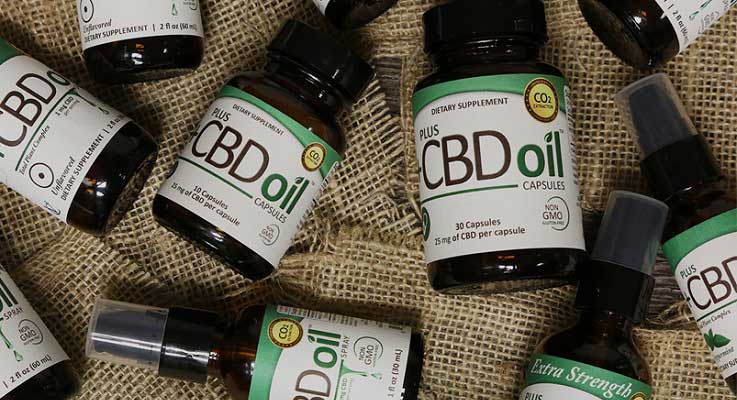
It’s official: cannabidiol, or CBD oil, oil derived from marijuana plants, helps reduce the number of seizures in patients with treatment-resistant epilepsy. That’s according to findings by the University of Alabama at Birmingham (UAB) released earlier this month. CBD oil, which contains little of the “high-inducing” chemical THC, came into the Alabama lexicon with the passage of “Carly’s Law,” in 2014 after piece of legislation provided the UAB Epilepsy Center and Children’s of Alabama the ability to conduct clinical trials of cannabidiol, a component of cannabis. Starting in 2015, UAB launched the landmark study, which focused on 132 patients, 72 children and 60 adults, with intractable epilepsy who did not respond to traditional therapies. “The study analyzed data from the 132 patients at baseline and at visits at 12, 24 and 48 weeks. Seizure frequency decreased from a mean of 144 seizures every two weeks at baseline to 52 seizures over two weeks at 12 weeks into the study. The reduction remained stable through the 48-week study period,” wrote Bob Shepard at UAB. “This is a highly significant reduction in the number of seizures that the majority of patients experienced, nearly a two-thirds reduction across the entire study population,” said Martina Bebin, M.D., professor in the Department of Neurology in the School of Medicine and principal investigator of the pediatric arm of the study. “Some patients experienced an even greater reduction of seizure frequency.” The investigators also noted parallel decreases in both seizure severity and seizure frequency, indicating that, for many patients, use of CBD oil led to both fewer and less intense seizures. UAB research makes national impact Thanks in part to the research coming out of UAB, on June 25, the U.S. Food and Drug Administration (FDA) approved Epidiolex® for seizures associated with two rare and severe forms of epilepsy, Lennox-Gastaut syndrome and Dravet syndrome, marking the first FDA approval of a purified drug derived from cannabis. “This approval serves as a reminder that advancing sound development programs that properly evaluate active ingredients contained in marijuana can lead to important medical therapies. And, the FDA is committed to this kind of careful scientific research and drug development,” said FDA Commissioner Scott Gottlieb, M.D. “Controlled clinical trials testing the safety and efficacy of a drug, along with careful review through the FDA’s drug approval process, is the most appropriate way to bring marijuana-derived treatments to patients. Because of the adequate and well-controlled clinical studies that supported this approval, prescribers can have confidence in the drug’s uniform strength and consistent delivery that support appropriate dosing needed for treating patients with these complex and serious epilepsy syndromes.”
Alabama Department of Public Health urges vaccination against HPV
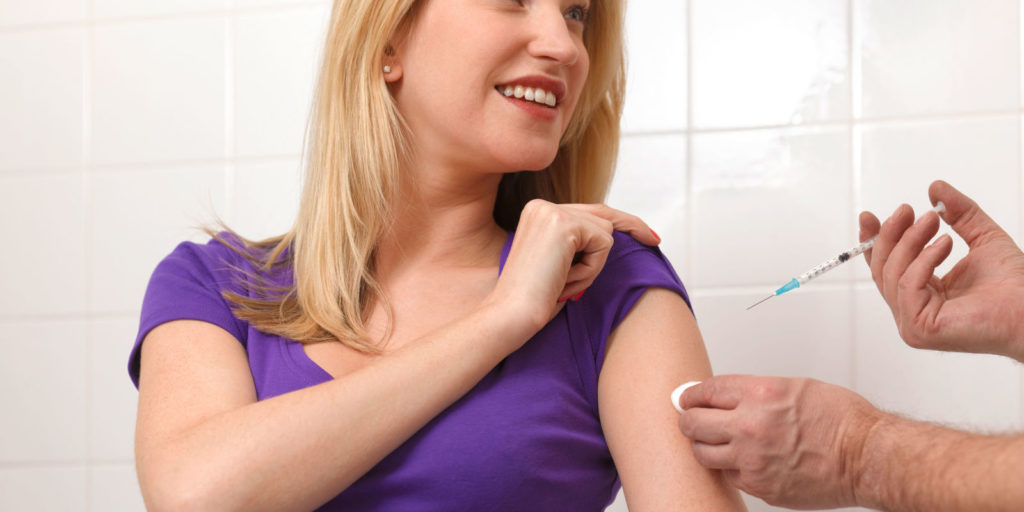
The human papillomavirus – or HPV – is the most common sexually transmitted infection in the world. With more than 170 types of HPV, roughly a dozen strands are linked to cancer. And according to the Centers for Disease Control and Prevention (CDC), more than half of all sexually active people will contract one of the viruses during their lifetime. Which is why the Alabama Department of Public Health (ADPH), Immunization Division, wants to increase awareness about a cancer-prevention vaccine, human papillomavirus (HPV) vaccine. “HPV is such a common virus, and nearly all men and women contract it at some point in their lives. The danger of HPV is the nine different types of strains of infection it causes, seven of which are cancer causing,” said Dr. Karen Landers, District Medical Officer. The HPV vaccine has been approved by the U.S. Food and Drug Administration (FDA) and is recommended by the CDC for both males and females to protect young children from cancer. The vaccine is routinely given at 11 or 12 years of age, but it may be given beginning at age 9 years through age 26 years. Since its introduction in 2006, HPV vaccine has consistently demonstrated effectiveness by decreasing the number of infections and HPV precancers in young people. The vaccine underwent years of extensive safety testing before being licensed by the FDA. According to the National Cancer Institute, the HPV vaccine is highly effective in preventing infection when given before initial exposure to the virus. Video contest to increase awareness In an effort to increase awareness of the HPV vaccine and its benefits, ADPH is conducting a video contest in partnership with the Alabama Chapter of the American Academy of Pediatrics (AAP) that will be open to teenagers who reside in Alabama, ages 15-19. Videos should focus on the occupations or activities they would like to have in the future without the threat of cancers caused by HPV. A panel of judges comprised of ADPH Immunization staff, Cancer Prevention staff, and the AAP will review the video submissions and select the winning video. Submissions are due by Dec. 15, 2017, and the winning video will be announced on Dec. 29, 2017. “Our goal is to educate both young children and parents about the importance of getting vaccinated,” said Dr. Landers. “This is a vaccine that can save lives and allow young Alabamians to have a healthier future.” The winner of the contest will receive a $250 gift card from Target, as well as be promoted on the ADPH website.
