
Congress passes bill to shore up Postal Service, delivery
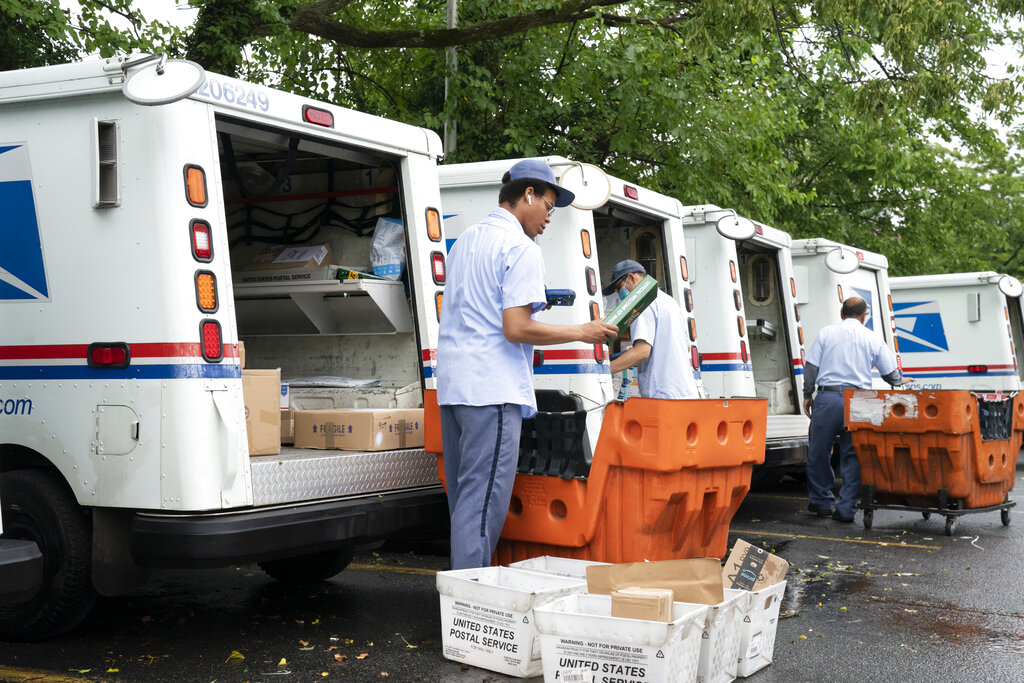
Congress on Tuesday passed legislation that would shore up the U.S. Postal Service and ensure six-day-a-week mail delivery, sending the bill to President Joe Biden to sign into law. The long-fought postal overhaul has been years in the making and comes amid widespread complaints about mail service slowdowns. Many Americans became dependent on the Postal Service during the COVID-19 crisis, but officials have repeatedly warned that without congressional action, it would run out of cash by 2024. “The post office usually delivers for us, but today we’re going to deliver for them,” said Senate Majority Leader Chuck Schumer, D-N.Y. Congress mustered rare bipartisan support for the Postal Service package, dropping some of the more controversial proposals to settle on core ways to save the service and ensure its future operations. Last month, the House approved the bill, 342-92, with all Democrats and most Republicans voting for it. On Tuesday, the Senate sent it to Biden’s desk on a 79-19 vote. Republican Sen. Jerry Moran said the Postal Service has been in a “death spiral” that is particularly hard on rural Americans, including in his state of Kansas, as post offices shuttered and services were cut. “Smart reforms were needed,” he said. The Postal Service Reform Act would lift unusual budget requirements that have contributed to the Postal Service’s red ink and would set in law the requirement that the mail is delivered six days a week, except in the case of federal holidays, natural disasters, and a few other situations. Postage sales and other services were supposed to sustain the Postal Service, but it has suffered 14 straight years of losses. Growing workers’ compensation and benefit costs, plus steady declines in mail volume, have contributed to the red ink, even as the Postal Service delivers to 1 million additional locations every year. The bill would end a requirement that the Postal Service finance workers’ health care benefits ahead of time for the next 75 years, an obligation that private companies and federal agencies do not face. Instead, the Postal Service would require future retirees to enroll in Medicare and would pay current retirees’ actual health care costs that aren’t covered by the federal health insurance program for older people. Gone for now are ideas for cutting back on mail delivery, which had become politically toxic. Also set aside, for now, are other proposals that have been floated over the years to change postal operations, including those to privatize some services. Sen. Gary Peters, D-Mich., the chairman of the Homeland Security and Governmental Affairs Committee, helmed the legislation and said that since the nation’s founding, the Postal Service has become “a vital part of the fabric of our nation.” Peters said the legislation would ensure the Postal Service can continue its nearly “250-year tradition of delivering service to the American people.” Beyond cards and letters, people rely on the post office to deliver government checks, prescription drugs, and many goods purchased online but ultimately delivered to doorsteps and mailboxes by the Postal Service. “We need to save our Postal Service,” said Sen. Rob Portman, R-Ohio, another architect of the bill. Portman said the bill is not a bailout, and no new funding is going to the agency. Criticism of the Postal Service peaked in 2020, ahead of the presidential election, as cutbacks delayed service at a time when millions of Americans were relying on mail-in ballots during the first year of the COVID-19 crisis. At the time, President Donald Trump acknowledged he was trying to starve the Postal Service of money to make it harder to process an expected surge of mail-in ballots, which he worried could cost him the election. Dominated by Trump appointees, the agency’s board of governors had tapped Louis DeJoy, a major GOP donor, as the new postmaster general. He proposed a 10-year plan to stabilize the service’s finances with steps like additional mail slowdowns, cutting some offices’ hours, and perhaps higher rates. To measure the Postal Service’s progress at improving its service, the bill would also require it to set up an online “dashboard” that would be searchable by ZIP code to show how long it takes to deliver letters and packages. The legislation approved by Congress is supported by Biden, the Postal Service, postal worker unions, and others. Mark Dimondstein, the president of the American Postal Workers Union, called passage of the legislation a “turning point in the fight to protect and strengthen the people’s public postal service, a national treasure.” Republished with the permission of the Associated Press.
2nd election for Amazon workers in Alabama will be by mail

A federal labor board said that Amazon workers in Bessemer, Alabama, will vote by mail next month in a re-run election to decide whether or not to unionize. The National Labor Relations Board said Tuesday that the ballots will be mailed out on February 4 and must be returned before the counting starts on March 28. The move comes roughly a month and a half after the board ordered a new union election for Amazon workers based on objections by the Retail, Wholesale and Department Store Union to the first vote that took place in April. The move was a blow to Amazon.com Inc., which spent about a year aggressively campaigning for warehouse workers in Bessemer to reject the union, which they ultimately did by a wide margin. In a 20-page decision, the regional director for the NLRB, Lisa Henderson, focused much attention on Amazon’s installation of a U.S. Postal Service mailbox at the main employee entrance, which may have created the false impression that the company was the one conducting the election process. Henderson also rejected Amazon’s argument that it was making voting easier and was trying to encourage as high a turnout as possible. “Our employees have always had the choice of whether or not to join a union, and they overwhelmingly chose not to join the RWDSU last year,” said Amazon spokeswoman Barbara Agrait in an emailed statement Tuesday, adding that she looks forward to having its team in Bessemer “having their voices heard again.” Meanwhile, the RWDSU took issue with NLRB’s decision to hold an election by mail. “We are deeply concerned that the decision fails to adequately prevent Amazon from continuing its objectionable behavior in a new election,” said the union in a statement. The union is pushing for in-person elections, which it feels could make the process fairer to workers. RWDSU faces an uphill battle to unionize workers given such high quit rates, but Amazon did reach a settlement with the NLRB last month to allow its employees to freely organize — and without retaliation. According to the settlement, the online behemoth said it would reach out to its warehouse workers — former and current — via email who were on the job anytime from March 22 of last year to notify them of their organizing rights. The settlement outlined that Amazon workers, which number 750,000 in the U.S., have more room to organize within the buildings. For example, Amazon pledged it will not threaten workers with discipline or call the police when they are engaging in union activity in exterior non-work areas during non-work time. Republished with the permission of the Associated Press.
Amid outcry, postmaster general to testify before House
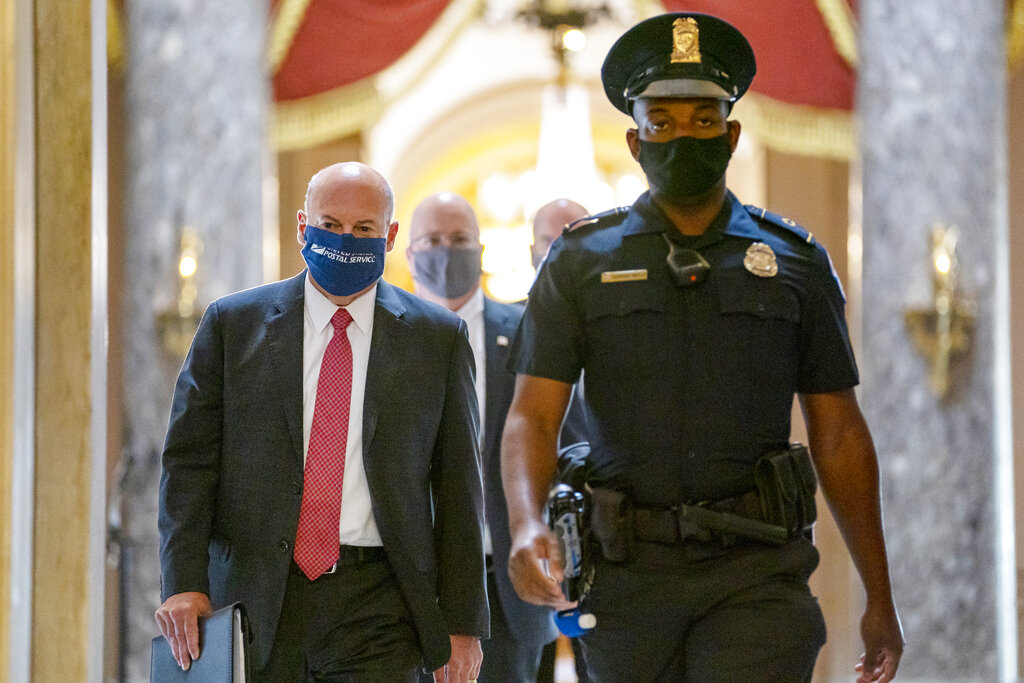
Facing a public backlash over mail disruptions, the Trump administration scrambled to respond Monday as the House prepared an emergency vote to halt delivery delays and service changes that Democrats warned could imperil the November election. The Postal Service said it has stopped removing mailboxes and mail-sorting machines amid an outcry from lawmakers. President Donald Trump flatly denied he was asking for the mail to be delayed even as he leveled fresh criticism on universal ballots and mail-in voting. “Wouldn’t do that,” Trump told reporters Monday at the White House. “I have encouraged everybody: Speed up the mail, not slow the mail.” Embattled Postmaster General Louis DeJoy will testify next Monday before Congress, along with the chairman of the Postal Service board of governors. Democrats and some Republicans say actions by the new postmaster general, a Trump ally and a major Republican donor, have endangered millions of Americans who rely on the post office to obtain prescription drugs and other needs, including an expected surge in mail-in voting this fall. Speaker Nancy Pelosi is calling the House back into session over the crisis at the Postal Service, setting up a political showdown amid growing concerns that the Trump White House is trying to undermine the agency ahead of the election. Pelosi cut short lawmakers’ summer recess with a vote expected Saturday on legislation that would prohibit changes at the agency. The package will also include $25 billion to shore up the Postal Service, which faces continued financial losses. The Postal Service is among the nation’s oldest and more popular institutions, strained in recent years by declines first-class and business mail, but now hit with new challenges during the coronavirus pandemic. Trump routinely criticizes its business model, but the financial outlook is far more complex, and includes an unusual requirement to pre-fund retiree health benefits that advocates in Congress want to undo. Ahead of the election, DeJoy, a former supply-chain CEO who took over the Postal Service in June, has sparked a nationwide outcry over delays, new prices, and cutbacks just as millions of Americans will be trying to vote by mail and polling places during the COVID-19 crisis. Trump on Monday defended DeJoy, but also criticized postal operations and claimed that universal mail-in ballots would be “a disaster.” “I want to make the post office great again,” Trump said on “Fox & Friends.” Later at the White House, Trump told reporters he wants “to have a post office that runs without losing billions and billions of dollars a year.” The decision to recall the House carries a political punch. Voting in the House will highlight the issue after the weeklong Democratic National Convention nominating Joe Biden as the party’s presidential pick and pressure the Republican-held Senate to respond. Senate Majority Leader Mitch McConnell sent senators home for a summer recess. “In a time of a pandemic, the Postal Service is Election Central,” Pelosi wrote Sunday in a letter to colleagues, who had been expected to be out of session until September. “Lives, livelihoods and the life of our American Democracy are under threat from the president.” At an event in his home-state Monday, McConnell distanced himself from Trump’s complaints about mail operations. But the Republican leader also declined to recall senators to Washington, vowing the Postal Service “is going to be just fine.” “We’re going to make sure that the ability to function going into the election is not adversely affected,” McConnell said in Horse Cave, Ky. “And I don’t share the president’s concerns.” Two Democratic lawmakers called on the FBI to investigate actions by DeJoy and the board of governors to slow the mail. “It is not unreasonable to conclude that Postmaster General DeJoy and the Board of Governors may be executing Donald Trump’s desire to affect mail-in balloting,” Reps. Ted Lieu of California and Hakeem Jeffries of New York wrote in a letter to FBI Director Christopher Wray. Senate Democratic leader Chuck Schumer and other Democrats, meanwhile, urged the postal board to use authority under a 1970 law to reverse operational changes put in place last month by DeJoy. If he declines to cooperate, “you have the authority, under the Postal Reorganization Act, to remove the postmaster general,” the senators said in a letter to board members. Outside a post office in Baltimore, Rep. Kweisi Mfume, D-Md., called on DeJoy to resign. “Don’t tell me or others that you’re just trying to make the post office make money. The U.S. post office is not a business. It is a service. And it is a service to Americans that we must always protect,” Mfume said Monday. Congress is at a standoff over postal operations. House Democrats approved $25 billion in a COVID-19 relief package but Trump and Senate Republicans have balked at additional funds for election security. McConnell held a conference call Monday with Treasury Secretary Steven Mnuchin and GOP senators on the broader virus aid package. The Postal Service said Sunday it would stop removing its distinctive blue mailboxes through mid-November following complaints from customers and members of Congress that the collection boxes were being taken away. And White House chief of staff Mark Meadows pledged that that “no sorting machines are going offline between now and the election.” The legislation set for Saturday’s vote, the “Delivering for America Act,” would prohibit the Postal Service from implementing any changes to operations or level of service it had in place on Jan. 1. The package would include the $25 billion in earlier funds that are stalled in the Senate. DeJoy, the first postmaster general in nearly two decades who was not a career postal employee, has pledged to modernize the money-losing agency to make it more efficient. He eliminated most overtime for postal workers, imposed restrictions on transportation, and reduced the quantity and use of mail-processing equipment. Trump said last week that he was blocking emergency aid to the Postal Service, as well as a Democratic proposal to provide $3.6 billion in additional election money to the states to help process an expected surge
The costly secrets the rallying postal unions don’t want you to know
Monday postal service workers in Birmingham and in four other cities in Alabama joined others in cities all across the nation to protest privatizing the U.S. Postal Service (USPS). The rallies were coordinated through the American Postal Workers Union (APWU), a branch of the AFL-CIO. This idea of privatization is not new, nor is the debts and woes of the postal service. President George W. Bush set up a commission which issued a report in July 2003 that essentially said the future looked quite bleak and without major changes (most of which haven’t happened) it was unsustainable in a digital world. Here’s the issue: the union workers will tout their revenue which in 2017 was $69 7 billion but what they won’t tell you is that the total expenses were $72 4 billion, resulting in a net loss of $2.7 billion. Yes, that’s $2.7 billion with a B. The fact is that the USPS has run deficits for the last eleven years. Think things might just turn around? Well think again, a report by the Federal News Network points out that the USPS “posted a $1.3 billion loss in the second quarter of fiscal 2018 — more than double the loss from the same period last year.” According to the same story, “USPS has more than $100 billion in unfunded liabilities, and owes another $15 billion to the Treasury Department’s Federal Financing Bank.” While currently the USPS does not take taxpayer funding (at the moment) their retirement debt alone is not sustainable given the continued losses that they face. For every dollar that will eventually have to be subsidize could go to something else: education, health care, I don’t know, how about the novel idea of just letting taxpayers have more of their own money to keep rather than subsidizing failed programs. From a 2017 Government Accountability Office report: Large unfunded liabilities for postal retiree health and pension benefits— which were $73.4 billion at the end of fiscal year 2016—may ultimately place taxpayers, USPS employees, retirees and their beneficiaries, and USPS itself at risk. As we have previously reported, funded benefits protect the future viability of an enterprise such as USPS by not saddling it with bills after employees have retired.22 Further, since USPS retirees participate in the same health and pension benefit programs as other federal retirees, if USPS ultimately does not adequately fund these benefits and if Congress wants these benefits to be maintained at current levels, funding from the U.S. Treasury, and hence the taxpayer, would be needed to continue the benefit levels. According to USPS’s testimony last year, “absent fundamental legislative reform, we face the prospect of having to continue to default on these prefunding payments [for retiree health benefits] in order to continue paying our employees and suppliers and to provide postal services to the American public. This increases the risk that taxpayers may ultimately be called on to fund these benefits.”23Alternatively, unfunded benefits could lead to pressure for reductions in benefits or in pay. Thus, the timely funding of benefits protects USPS employees, retirees and their beneficiaries, taxpayers, and the USPS enterprise. Where we have private mail delivery services like Fed-Ex and UPS that both cost taxpayers nothing the USPS is a federal program that in its current form and size time may have passed. It is past time for the government to get out of the business of losing money by running a failed business experiment — the private sector has proven it can do the same thing much more successfully. It’s time for people to look for and understand there are opportunities to save taxpayers money, and to reinvest more wisely where we do spend our dollars. This is one of them. Here’s a summary of the US Postal Service costs:
Daniel Sutter: Postage stamps and hidden taxes

Postage stamps effectively tax millions of Americans each day. People are often unaware of the kind of taxes hidden in stamps. The economic landscape looks very different when one can see these taxes, which economists refer to as taxation through regulation or cross-subsidization. The U.S. Postal Service (USPS) is an independent agency of the Federal government and receives modest funding annually from Congress. But this is not the tax hidden in the price of stamps. The tax involves charging the same $0.49 first class postage for letters sent across town or across country. In a market, competition ensures that prices reflect costs. If mail were delivered by a competitive market, the lower cost of cross-town letters would yield a lower price. Let’s say that the market prices of cross-town and cross-country postage would be $0.30 and $0.70. Then the USPS charging $0.49 for all letters is economically equivalent to taxing cross-town letters and subsidizing long-distance letters. Professor Richard Posner of the University of Chicago first spelled out how prices can be used to tax one group of consumers to subsidize another. Cross-subsidization requires government control over prices, either directly, as with the USPS, or indirectly via regulation, as with insurance and banking, or trucking, railroads and airlines until the late 1970s. Cross-subsidization must overcome two challenges. First, the high prices cannot get undercut. The USPS could not continue to charge $0.49 for cross-town mail delivery if rivals could undercut the USPS’s price, steal customers away, and still make a profit due to the low cost. The USPS’s monopoly on first class mail delivery protects the high price against competition. In trucking and airline regulation, government regulators decided which carriers could serve each route. Second, consumers must purchase the over-priced service. The availability of competitively priced alternatives threatens cross-subsidization. The Interstate Commerce Commission, for example, started regulating railroads, but had to extend this regulation when trucks began hauling over-priced freight. Government can also require purchase of over-priced products, as with auto insurance, and health insurance under the Affordable Care Act. For politicians, cross-subsidization is wonderful. Consumers are often totally unaware of the taxes hidden in prices. And politicians can deny that they are taxing or subsidizing anyone, since no money goes through the public treasury. Artificially high prices allow the regulated firm to make up losses incurred serving some customers at less than cost. Thus regulated firms do not need government funds and may not oppose the system. Postage stamps also illustrate the most common form of cross-subsidization, namely having low cost customers subsidize high cost of service customers. Equalizing prices for different customers, as with first class mail, often seems fair to people. Low cost customers may not realize that they are paying too much, and high cost customers can be reminded of their good deal. Insurance regulation frequently cross-subsidizes high cost customers. The Affordable Care Act makes healthy young people buy over-priced coverage to lower premiums for persons with preexisting medical conditions. Property insurance in hurricane-prone states typically subsidizes high risk coastal properties. Coastal properties do pay higher premiums, but the rates are lower than justified based on the likelihood of loss. Defined benefit public employee pension plans also typically involve cross-subsidization. Here short-term employees subsidize employees who eventually retire through the system. Unfavorable rules for refunds of contributions for employees who leave before retiring help pay for generous benefits for retirees. Short-term employees would be better off under portable defined contribution plans. Benefitting lifelong state residents and employees at the expense of short-term state residents proves to be a popular policy for politicians. Tax day is approaching, and this annual ritual of filing a return raises awareness of and helps generate political pressure against raising income taxes. By contrast, government manipulation of prices effectively and secretly taxes some and subsidizes others. But if you look carefully, you can see the taxes hidden in postage stamps and other prices. • • • Daniel Sutter is the Charles G. Koch Professor of Economics with the Manuel H. Johnson Center for Political Economy at Troy University and host of Econversations on TrojanVision.
