
Yeas and Nays – How the Alabama delegation voted this week: 10/30/15
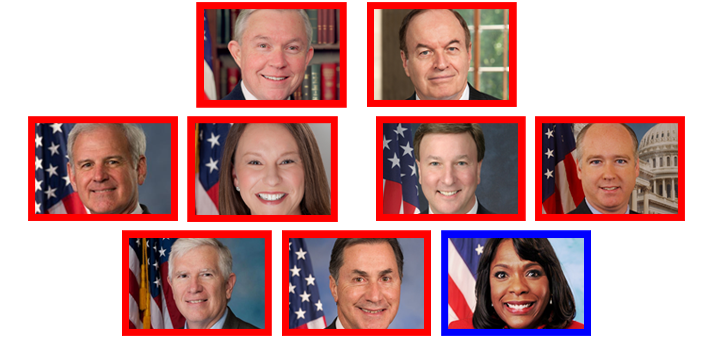
Here’s a look at how the Alabama delegation voted on major issues this week in the U.S. House of Representatives and the U.S. Senate: House votes H.R. 597: the Export-Import Bank Reform and Reauthorization Act. The bill reauthorizes the official export credit agency of the United States for four years; sets new, lower, lending caps; aims to increase accountability and transparency at the bank; and directs the president to initiate negotiations to reduce and eventually eliminate government export subsidies worldwide. Passed the House 313 – 118 Yea: Rep. Bradley Byrne (AL-01); Rep. Martha Roby (AL-02); Rep. Mike Rogers (AL-03); Rep. Robert Aderholt (AL-04); Rep. Mo Brooks (AL-05); Rep. Terri Sewell (AL-07) Nay: Rep. Gary Palmer (AL-06) H.R. 1090: the Retail Investor Protection Act. The bill prohibits the Labor Department from implementing a final rule on fiduciary standards for retirement investment advisers until after the Securities and Exchange Commission (SEC) conducts a study and issues a final rule setting standards of conduct for broker-dealers. Passed the House 245 – 186 Yea: Rep. Bradley Byrne (AL-01); Rep. Martha Roby (AL-02); Rep. Mike Rogers (AL-03); Rep. Robert Aderholt (AL-04); Rep. Mo Brooks (AL-05); Rep. Gary Palmer (AL-06) Nay: Rep. Terri Sewell (AL-07) H.R. 1314: Bipartisan Budget Act of 2015: The bill would raise the $18.1 trillion debt limit by $1.5 trillion until March 15, 2017. Would also raise sequester spending caps by $50 billion in fiscal 2016 and $30 billion in 2017 and would make changes to the Social Security disability program. Passed the House 266 -167 Yea: Rep. Mike Rogers (AL-03); Rep. Terri Sewell (AL-07) Nay: Rep. Bradley Byrne (AL-01); Rep. Martha Roby (AL-02); Rep. Robert Aderholt (AL-04); Rep. Mo Brooks (AL-05); Rep. Gary Palmer (AL-06) H.R. 3762: the Restoring Americans’ Healthcare Freedom Reconciliation Act of 2015. Pertaining to the Affordable Care Act (Obamacare), this bill repeals the individual mandate, the employer mandate, the Cadillac tax, the medical device tax, ends auto-enrollment, and ends the public health slush fund. Passed the House 240 – 189 Yea: Rep. Bradley Byrne (AL-01); Rep. Martha Roby (AL-02); Rep. Mike Rogers (AL-03); Rep. Robert Aderholt (AL-04); Rep. Mo Brooks (AL-05); Rep. Gary Palmer (AL-06) Nay: Rep. Terri Sewell (AL-07) Election of Paul Ryan. The House elected Rep. Paul Ryan (WI-1), a Wisconsin Republican, as its speaker, replacing Ohio Republican Rep. John Boehner (OH-8), who resigned from Congress. Elected with 236 votes For: Rep. Bradley Byrne (AL-01); Rep. Martha Roby (AL-02); Rep. Mike Rogers (AL-03); Rep. Robert Aderholt (AL-04); Rep. Mo Brooks (AL-05); Rep. Gary Palmer (AL-06) Against: Rep. Terri Sewell (AL-07) who instead voted for Rep. Nancy Pelosi Senate votes Bipartisan Budget Act of 2015: The bill would raise the $18.1 trillion debt limit by $1.5 trillion until March 15, 2017. Would also raise sequester spending caps by $50 billion in fiscal 2016 and $30 billion in 2017 and would make changes to the Social Security disability program. Passed the Senate 64 -35 Yea: N/A Nay: Sen. Jeff Sessions; Sen. Richard Shelby Confirmation of U.S. District Judge. This vote confirms the nomination of Lawrence Joseph Vilardo to serve as U.S. District Judge for the Western District of New York. Passed the Senate 88 – 0 Yea: Sen. Jeff Sessions; Sen. Richard Shelby Nay: N/A
GOP-led Congress moves to block Barack Obama’s Clean Power Plan
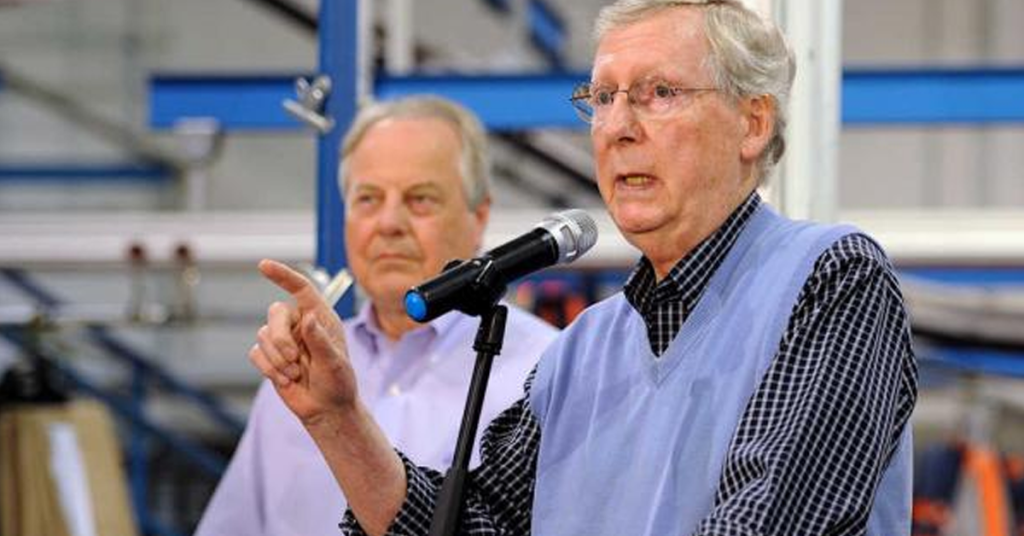
Congressional Republicans are moving to block President Barack Obama‘s plan to force steep cuts in greenhouse gas emissions from U.S. power plants. Senate Majority Leader Mitch McConnell and Rep. Ed Whitfield say they will file resolutions early this week opposing Obama’s plan to impose new regulations on new and existing coal-fired plants. The two Kentucky Republicans were expected to file the challenges filed under the little-used Congressional Review Act, which allows Congress to block executive actions with simply majority votes. The maneuver is subject to a presidential veto and has rarely been successful in overturning executive branch rules. Still, it allows opponents to set up votes calculated to embarrass the Obama administration ahead of international climate talks in Paris this fall. Republican senators are expected to tout the congressional challenge in a series of floor speeches starting Tuesday. One notable exception is New Hampshire Sen. Kelly Ayotte, who became the first GOP senator to support Obama’s sweeping regulation that mandates carbon emissions cuts from the nation’s power plants. Ayotte, who is locked in a difficult re-election fight, said Sunday that the Clean Power Plan would “address climate change through clean-energy solutions that will protect our environment.” New Hampshire is already well on its way to meet the plans’ goals, Ayotte said, adding that she would monitor the plan to ensure it does not have an adverse impact on state energy costs. McConnell said in a statement that the regulations being imposed under the Clean Power Plan “make it clearer than ever that the president and his administration have gone too far – and that Congress should act to stop this regulatory assault.” The administration’s “crusade for ideological purity” threatens the livelihoods of coal miners and their families in Kentucky and other states, McConnell said. “These are Kentuckians who just want to work, provide for their families and deliver the type of low-cost energy that attracts more jobs to Kentucky. And coal is what allows so many of them do all that,” he said. The congressional resolutions follow court challenges filed Friday by industry groups and states dependent on fossil fuels. The challenges from all but two of the 25 states were filed by Republicans. They deride the plan as an “unlawful power grab by Washington bureaucrats” that will kill coal mining jobs and drive up electricity costs. The Obama administration and environmental groups counter that the rules are needed to cut carbon emissions while curbing the worst impacts of climate change and sea-level rise. They also say the plan will spur new clean-energy jobs. The new rules require states to cut carbon emissions by 32 percent by 2030, based on emissions in 2005. Each state has a customized target and is responsible for drawing up an effective plan to meet its goal. The EPA says it has authority to enact the plan under the Clean Air Act. Republished with permission of The Associated Press.
Jeff Sessions comes out against prison sentencing reform proposals
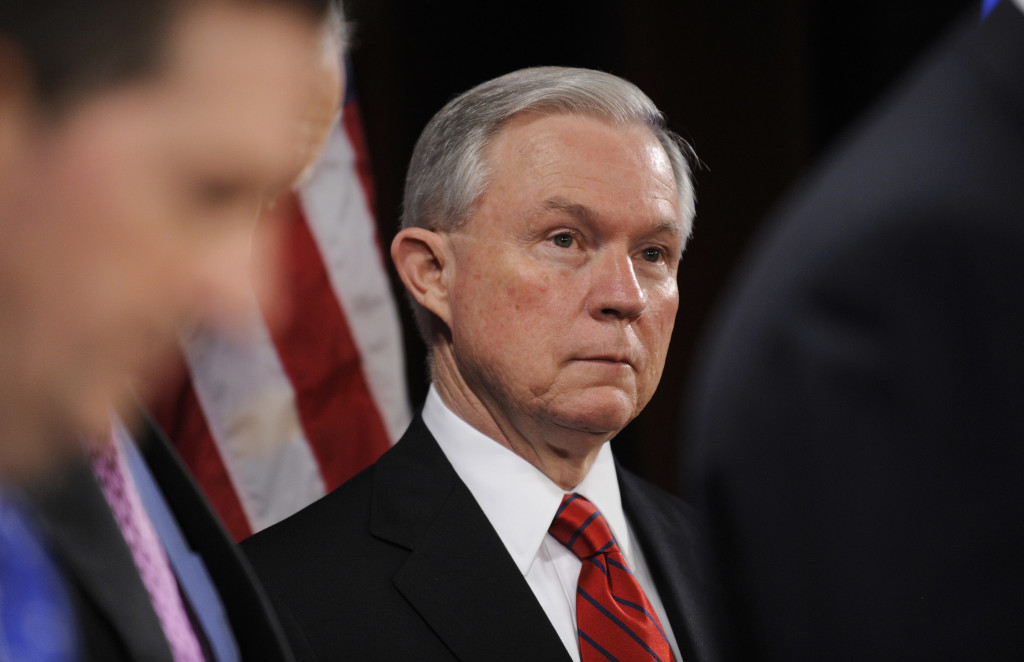
In the midst of a national movement among several high-profile liberals and moderates around the cause of reducing sentences for non-violent drug offenders, Sen. Jeff Sessions took to the floor of the U.S. Senate this week, declaring you can count him out. In a speech he called “Don’t Weaken Criminal Law in the Middle of a Crime Wave,” Alabama’s senior senator said with crime rates on the rise, now is no time to reduce criminal sentences. “It’s just tragic to me that we’re making the same mistakes we made in the ’60s and ’70s,” Sessions said. “Crime was increasing at double digits per year in the ’60s and ’70s. A nationwide crime wave ensued. It was a revolving door …” Sessions cited statistics that indicated crime – and not just the U.S. prison population – was increasing. “Crime is already rising at an alarming rate. So much so that it prompted an emergency meeting of the Major Cities Chiefs of Police Association in August,” said Sessions. “The New York Times recently reported that murders have increased sharply in many cities across the country since last year, including: Atlanta, up 32%; Baltimore, up 56%; Chicago, up 20%; Houston, up 44%; Los Angeles, up 11%; New York, up 9%; Milwaukee, up 76%; Minneapolis, up 50%; New Orleans, up 22%; Philadelphia, up 4%; Dallas, up 17%; and Washington, D.C, up 47%.” He also cited the testimony of a recent witness who came before the Senate Judiciary Committee, professor Matt DeLisi. DeLisi, a criminologist at Iowa State University, testified that “releasing 1 percent of the current [federal prison] population would result in approximately 32,850 additional murders, rapes, robberies, aggravated assaults, burglaries, thefts, auto thefts, and incidents of arson,” according to Sessions. The move comes as crime rates are reportedly up over 2013, according to recent statistics released by the the Federal Bureau of Investigations. “Before we rush to judgment about undoing federal sentencing laws, we must consider the results of history, and the reduction in crime we’ve accomplished in the past,” Sessions said. “We have a responsibility to the public to examine every aspect of the legislation that may be coming forward which could greatly impact the everyday lives of Americans for years to come. We need to study what experts have told us, what history tells us about crime.”
No shutdown: Congress approves bill to keep government open
Just hours before a midnight deadline, a bitterly divided Congress approved a stopgap spending bill Wednesday to keep the federal government open – but with no assurance there won’t be yet another shutdown showdown in December. Democrats helped beleaguered House Republican leaders pass the measure by 277-151 – a lopsided vote shrouding deep disagreements within the GOP – after the Senate approved it by a 78-20 tally earlier in the day. President Barack Obama signed the bill Wednesday evening, but not without White House carping. “The American people deserve far better than last-minute, short-term legislating,” said spokesman Josh Earnest in pressing for a broader, longer-lasting budget deal. Approval of such stopgap measures used to be routine, but debate this year exposed acrimonious divisions between pragmatic Republicans such as House Speaker John Boehner and more junior lawmakers in the party’s tea party wing who are less inclined to compromise. The tea partyers had demanded that the must-pass measure be used to punish Planned Parenthood, stripping it of federal money because of its practice of supplying tissue from aborted fetuses for scientific research. House Republicans opposed the measure by a clear margin, but Democratic support was unanimous. The legislation finances the government through Dec. 11, providing 10 weeks to negotiate a more wide-ranging budget deal that would carry past the 2016 presidential election. But the talks promise to be difficult, and success is not assured. Boehner is resigning from Congress at the end of October, a decision he announced last week after informing Republicans he would not risk a government shutdown over Planned Parenthood. A similar fight over implementing Obama’s health care law sparked a 16-day shutdown two years ago that Boehner, Senate Majority Leader Mitch McConnell of Kentucky and other top Republicans did not want to repeat in election season. McConnell is seeking to protect embattled incumbents in Democratic-leaning states such as Wisconsin and Pennsylvania, while some GOP conservatives are more apt to use the battle to appeal to the party’s core voters on the right. “Today was a win for the Washington cartel, and another setback for the American people,” said Sen. Ted Cruz, R-Texas, who is using combat with Washington GOP leaders to help define his presidential campaign. “Republican leadership chose to abandon its constitutional power of the purse and to fund 100 percent of President Obama’s failed agenda.” Support from Democrats also helped power the measure through the Senate, all of the opposition coming from conservative Republicans. Longtime lawmakers bemoaned the chronic dysfunction on Capitol Hill and the collapse of the annual appropriations process that is supposed to be wrapped up by now. Democrats demanding a new budget deal have blocked work in the Senate, while a fight over the Confederate flag halted work in the House with only six of the 12 annual spending bills having passed. “It is to my great dismay that we are at this point again, requiring a temporary Band-Aid to buy us time to do our duty,” said Rep. Hal Rogers, R-Ky., chairman of the Appropriations Committee, during House debate. Tea party anger directed at Boehner over the Planned Parenthood issue helped prod the Ohio Republican’s announcement to step down. His decision – and other House leadership races – have highlighted divisions between more pragmatic Republicans and hardline conservative wing that is increasingly prominent in Congress, especially in the rough-and-tumble House. McConnell said Tuesday that he and Boehner spoke with Obama recently and that he expects budget negotiations to get underway soon. The turmoil in the House, where many conservatives want to block spending increases, is certain to complicate the talks, which are likely to focus on swapping near-term budget increases for the Pentagon and domestic programs for longer-term saving elsewhere in the budget. Majority Leader Kevin McCarthy, R-Calif., the likely new House speaker, hasn’t said whether he supports a deal. The Pentagon and domestic agencies all are still operating under automatic curbs that would effectively freeze their spending at current levels. Republicans are leading the drive to boost defense while Obama is demanding equal relief for domestic programs. The conversation among McConnell, Boehner and Obama took place in mid-September – before Boehner announced he was stepping down. Many of the conservative GOP lawmakers who helped bring Boehner down want to preserve stringent “caps” on the spending bills Congress passes every year. But Senate Republicans are generally more eager to rework the 2011 Budget Control Act that put them in place. “We have to stop devastating sequester cuts from hitting our military and middle class, even the Republican leader agrees,” said top Senate Democrat Harry Reid of Nevada. “Because a week or 10 days ago he said `We are inevitably going to end up in negotiations that that will crack the Budget Control Act once again. I say `hallelujah.’” Eight of the 20 Republican senators who opposed Wednesday’s bill are up for re-election in states carried by Mitt Romney in 2012. Presidential aspirants Lindsey Graham of South Carolina and Marco Rubio of Florida skipped the vote. Republicans have long targeted Planned Parenthood, and the group’s top official defended it in congressional testimony on Tuesday. Republicans say that videos made by abortion foes show Planned Parenthood has broken federal laws including a ban on for-profit fetal tissue sales. The organization says it has acted legally and the videos were deceptively edited. Republished with permission of The Associated Press.
Richard Shelby, GOP senators blast Planned Parenthood in wake of video
Sen. Richard Shelby co-wrote an open letter to Health & Human Services Secretary Sylvia Burwell castigating the reproductive rights group Planned Parenthood after the release of a video that purports to show representatives discussing the illicit sale of fetal tissue or “baby parts,” as many are calling it. The letter co-signed by Alabama’s senior U.S. senator raised pointed questions about whether Planned Parenthood, the nation’s largest single provider of abortion procedures, is violating federal laws prohibiting so-called “partial birth” or late-term pregnancy terminations and the “harvesting” of fetal organs. Shelby, joined by 49 of his Republican Senate colleagues, went further than that. “We believe the footage prompts important policy questions surrounding the issue of abortions permitted so late in pregnancy — sometimes later than 5 months — that an unborn baby’s organs can be identified and harvested,” the group wrote. The coterie of senators called on the federal health care bureaucracy to aid them in future investigations planned by the Republican-controlled Senate, striking the ominous tone of an upcoming legal showdown. “Congress is taking action to address these questions and we expect the Department of Health to fully cooperate with ensuing investigations — including future requests for information and hearing participation” they wrote. “To that end, we further expect the immediate preservation of any and all Department electronic and paper records that could have any relevance to any ongoing or upcoming lawful investigation.” Shelby and his co-signers also called on the DOH to conduct their internal probe on the basis that Planned Parenthood receives grants from the department. See the full text of the letter here.
Email Insights: Jeff Sessions says Obama climate agenda is ‘driving up the cost of Americans’ whole existence
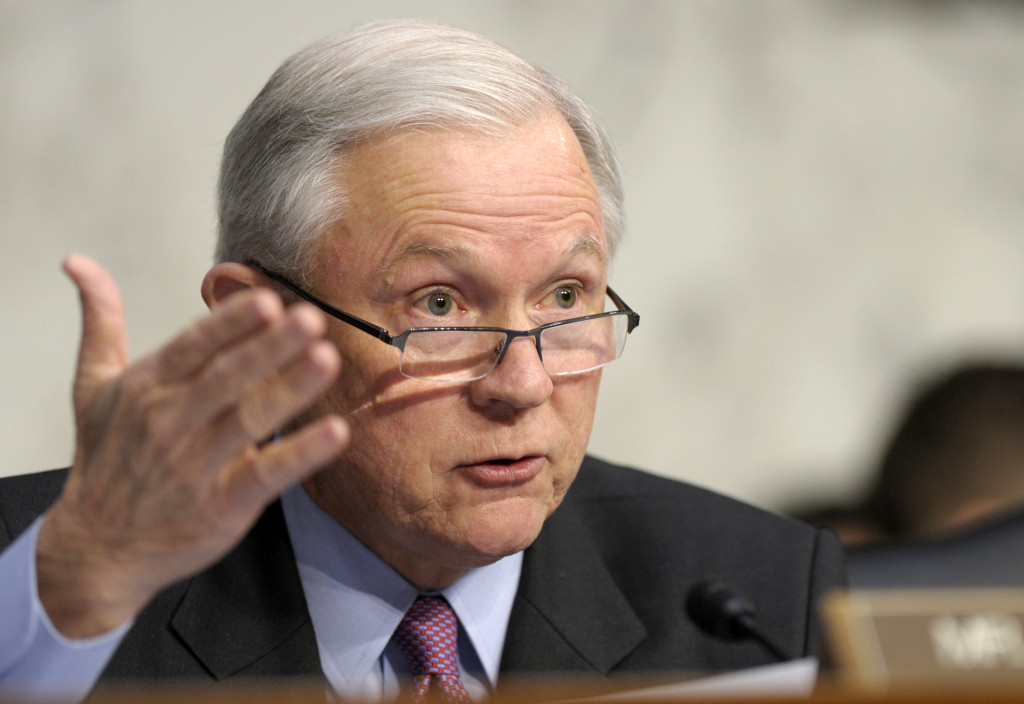
U.S. Sen. Jeff Sessions continues to take a stand for the American people. This time, he’s questioning Obama’s climate agenda and how it’s taking a toll on the American people. In an email Wednesday afternoon, Sessions released the following video from a Senate Environment and Public Works Committee hearing where he questioned Prof. Jeremy Rabkin, professor of law at George Mason University School of Law. “The American people are getting frustrated that we have individuals executing policies that affect their everyday life, driving up the cost of their whole existence, based on legal theories that are so tenuous as to be almost breathtaking in its thinness… So here we are, [with] a group of elitists in this country through the thinnest of legal arguments, imposing huge costs on the American economy, and I’m worried about it.”
Marco Rubio’s “Obama problem,” Jeb Bush “dynasty” could be issues in primary, insiders say

Lack of national experience could be a factor in the GOP presidential primary for Marco Rubio, particularly in light of seven years of President Barack Obama, a first-term senator when he began his campaign for the White House. So says the POLITICO Caucus, a weekly bipartisan analysis by a panel of political operatives and activists in the early primary states of Iowa and New Hampshire. The comparison between Florida’s junior U.S. senator and Obama doesn’t end there: Both men have superior speaking skills and a captivating personal narrative. Each has a similar experience; moving from the state House to the U.S. Senate, and mounting a presidential campaign before completing his first term. National experience might develop as an issue in 2016: A poll found 61 percent of Republicans, as well as 63 percent of Democrats, saying experience – or the lack of it – could be a problem. In Iowa, the topic is slightly more significant: 63 percent of Iowa Republican voters surveyed say it is an issue, as does 57 percent of New Hampshire Republicans. “He’ll have to offer more than one really great speech because voters are looking for more than inspiration,” one anonymous Iowa Republican told pollsters. “We’ve had plenty of that with Obama. Voters are looking for accomplishment and experience as well.” POLITICO reports another unidentified New Hampshire Republican said, “Every election selects the candidate that corrects the perceived deficiencies of the current occupant of the White House. After seven years of an eloquent, one-term senator, the GOP is going to look for something different.” “Without a doubt, when push comes to shove later this year, Rubio will be faced with being too young without enough experience,” said another. The experience critique can also be leveled against fellow candidates Ted Cruz and Rand Paul, but insiders say Rubio is the bigger threat to presumptive frontrunners Jeb Bush and Hillary Clinton. In the 2008 election cycle, Republicans — and Clinton — regularly pointed out the “experience” argument against Obama. That led a New Hampshire GOP voter to wonder why an entirely “valid critique” of Obama does not apply in these cases. “We can’t out-Obama Obama,” another Iowa Republican said, according to the POLITICO Caucus. “There is only one shot for a flash-in-the-pan candidate like that. And, by the way, it hasn’t turned out so well.” Experience may be an obstacle, insiders said, but not insurmountable. Rubio is a former Florida House speaker with foreign policy experience through his seat on the Senate Foreign Relations Committee. “Rubio’s relative lack of federal experience is fair game for his rivals, but he had significantly more state legislative experience than Obama,” one Iowa voter said. “The only way the experience question hurts him is if he comes across as inexperienced. So far, that hasn’t been an issue.” On the other hand, a fresh face, even without a wealth of experience, could be an asset for many primary voters. Although Bush and Clinton made visits to early primary states this week, much of the attention was on the “dynasty” talk inherent in a Bush-Clinton race. But for POLITICO Caucus insiders, the challenge is bigger for Bush than Clinton: That was the overwhelming view of Republicans (97 percent) and Democrats (92 percent). “Passing a presidency from father to son, like an inheritance is not the same as a wife building her own career and running based on her own accomplishments,” a Democratic insider from New Hampshire said. “It’s actually insulting to compare the two scenarios. Hillary has faced more challenges from being married to Bill Clinton and from being a wife. “Lots of sexism at play. On the other hand, the Bushes have a tradition of entitlement in their family.” Gender differences aside, respondents also expressed concern over having three presidents from the same family. According to one New Hampshire Republican, if it came down to families of Bill Clinton and George W. Bush, Clinton would win. “It’s on Jeb’s team to not allow that to happen,” the insider added. “President Bush 43’s numbers have bounced back since he left office in 2009, but they’re still not at President Clinton’s level.” But the issue is a challenge for both, even though it may hurt Bush a little more. “It’s very bad for both of them,” one Democrat said. “Many people really want another choice. But in Bush’s case, there really are alternatives.” More insights from the POLITICO Caucus, as well as a list of participants, is available here.
Jeff Sessions continues to press conservative agenda on immigration
In a letter taking to task Obama administration officials over the release from state custody of more than 100 deportable immigrants who later went on to commit violent crimes, U.S. Sen. Jeff Sessions continued to work with Republican allies to advance a conservative immigration policy in the Senate. Sessions and U.S. Sen. Chuck Grassley — chairman of the Senate Judiciary Committee where Session has taken an active role lately — sent a letter addressed to Secretary of State John Kerry, Homeland Security Secretary Jeh Johnson, and Attorney General Loretta Lynch. Their letter railed against poor execution of deportation protocols by the federal Immigration and Customs Enforcement, formally requesting detailed answers to a list of more than 25 specific inquiries about why 121 suspected killers were allowed to pass through the federal immigration enforcement system and remain in the country. According to information provided by ICE, up to 121 homicides in the U.S. could have been avoided between Fiscal Year 2010 and 2014 had the aliens with criminal convictions been deported instead of released, Grassley and Sessions wrote. “This disturbing fact follows ICE’s admission that, of the 36,007 criminal aliens it released from ICE custody in FY 2013, 1,000 have been re-convicted of additional crimes in the short time since their release.” The senators pointedly asked the Cabinet members, appointed by President Barack Obama, whether their agencies are “fully leveraging existing tools and resources to prevent these dangerous outcomes.” “In the ongoing talks between the U.S. and Cuba, does the administration plan to make repatriation of all of those 30,000+ Cuban nationals, and not just some subset of that group, a condition precedent of granting diplomatic recognition to Cuba?” reads one question. “If not, why not?” The letter is in keeping with a long-term push on immigration on the part of Alabama’s junior senator. Last week, Sessions was vindicated in the conservative press after U.S. Rep. Paul Ryan expressed skepticism about Sessions’ claims that the Trans Pacific Partnership contains loopholes that could lead to a “flood” of new immigration. Ryan had called the language within the proposed TPP that would relax restrictions on the “Movement of Persons,” including professionals operating independently, an “urban legend.” Recent revelations about the trade deal, however, indicate that provisions to forbid mandatory interviews and economic means testing for visa-seekers are indeed part of the proposal, something that Sessions — dubbed by POLITICO as “the Senate’s anti-immigration warrior” — had spoken against. Senate Republican Whip John Cornyn of Texas called Sessions “perhaps the most vocal member of our conference” on immigration after he led the charge in confronting his own caucus in opposition of new H-1B visas for skilled foreign workers, saying it negatively affects domestic job-seekers. “We’ve got to ask — which hasn’t been asked — what does all this do to the ability of a college graduate who’s living at home with his parents because he can’t find a job?” said Sessions, chairman of the Subcommittee on Immigration & the National Interest. That’s a familiar note in his protectionist quest against labor pool distortions because of foreign labor. His approach to the issue evidently has struck a chord in his home state: Sessions was the only incumbent senator who ran unopposed in both primary and general elections in 2014. Sessions and Grassley gave the administration officials addressed in their inquiry a July 6 deadline to respond.
AL congressional delegation disagrees with new EPA Clean Water Rule

The U.S. Environmental Protection Agency rolled out a new plan Wednesday to expand the Clean Water Act to include more bodies of water. According to EPA, the 297-page “Waters of the United Sates” (WOTUS) rule ensures that waters protected under the existing Clean Water Act are “more precisely defined, more predictably determined, and easier for businesses and industry to understand,” as two Supreme Court rulings in 2001 and 2006 have left the current scope of the law uncertain. “Today’s rule marks the beginning of a new era in the history of the Clean Water Act,” Assistant Secretary for the Army Jo-Ellen Darcy said. “This rule responds to the public’s demand for greater clarity, consistency, and predictability when making jurisdictional determinations.” However, that’s not the way the Alabama delegation and critics across the country see it, calling it a massive federal government power grab. “For decades, water quality regulation has been primarily the responsibility of state governments, but this rule would significantly shift that responsibility to the federal government,” U.S. Rep. Bradley Byrne told Alabama Today. “This rule would have an especially harmful impact on our farmers and foresters, who could face new compliance requirements and costs.” U.S. Rep. Gary Palmer also expressed his disdain for the rule. “This expansive rule would allow the EPA to place onerous regulations on almost any body of water. While the EPA claimed to listen to the extensive public outcry over this proposal by making cosmetic changes, the rule is still well beyond EPA’s rightful authority,” Palmer said in a statement issued Wednesday evening. U.S. Rep. Mike Rogers joins in the disapproval. According to the congressman’s press secretary, “Congressman Rogers was extremely disappointed the overreaching EPA chose to go forward with the ‘Definition of “Waters of the United States” Under the Clean Water Act,’ despite House passage of H.R. 1732, which Congressman Rogers strongly supported. This rule includes EPA control of puddles and ditches and could hurt family farms and landowners.” H.R. 1732, the Regulatory Integrity Protection Act designed to block the implementation of the new EPA rule, was voted on in the U.S. House of Representatives this month with support of all of Alabama’s representatives excluding Rep. Terri Sewell who did not vote. It passed the House on May 11 by a vote of 261-155. The bill was received in the Senate on May 13, but has yet to be considered. But there’s hope for the legislation, as Alabama’s House members aren’t the only ones concerned with the new EPA Clean Water rule. U.S. Sen. Richard Shelby told Alabama Today that he thinks the EPA is overreaching. “The EPA’s final rule redefining ‘waters of the United States’ is yet another example of the Obama Administration’s overreach. The rule will place thousands of streams, creeks, wetlands, ponds, and ditches throughout the country under the control of Washington bureaucrats instead of private property owners. I have supported legislation in the Senate to prohibit this harmful rule, and I will continue to fight against it as well as other burdensome rules and regulations from the EPA.” U.S. Sen. Jeff Sessions joined seven of his Republican colleagues on the Environment and Public Works (EPW) Committee last April sent a letter to President Barack Obama regarding the then proposed WOTUS rule. “The scope of CWA jurisdiction is one of the most important regulatory issues facing landowners, businesses, and municipalities today,” the senators wrote. “The proposed ‘Waters of the U.S.’ rule will exponentially impede economic recovery and is a significant step in the wrong direction. Mr. President, the decision to move forward would be a clear breach of your promise to cut through red tape.”
GOP candidates divided over renewing USA Patriot Act
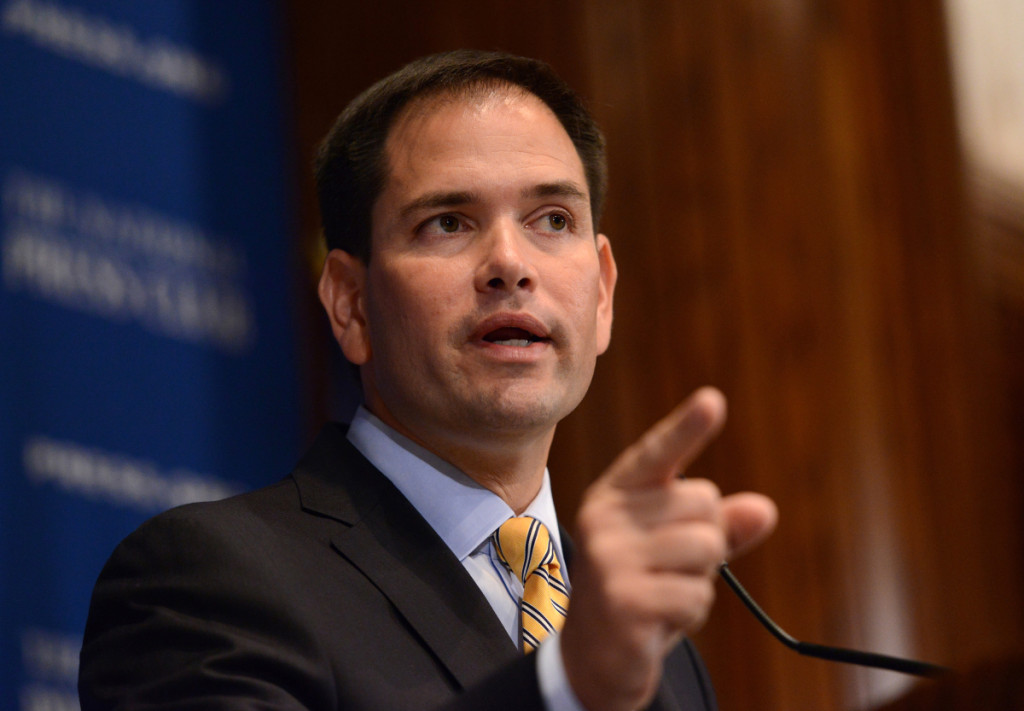
Republican senators eyeing the presidency split over the renewal of the USA Patriot Act surveillance law, with civil libertarians at odds with traditional defense hawks who back tough spying powers in the fight against terrorism. The political divide will be on stark display this month as Congress debates reauthorization of the post-Sept. 11 law ahead of a June 1 deadline. The broader question of privacy rights has gained attention since a former National Security Agency systems administrator, Edward Snowden, disclosed in 2013 that the NSA had been collecting and storing data on nearly every American’s phone calls for years. On one side, Sens. Marco Rubio of Florida and Lindsey Graham of South Carolina want Congress to permanently reauthorize parts of the law, giving the NSA much of its surveillance authority. If there were another attack, “the first question out of everyone’s mouth is going to be, `why didn’t we know about it?’” Rubio said this week in a speech on the Senate floor. “And the answer better not be, `because this Congress failed to authorize a program that might have helped us know about it.’” The rise of Islamic State militants, the continued threat from al-Qaida and the ongoing civil war in Syria have pushed national security to the forefront in the 2016 race for the GOP nomination, with some candidates determined to show their toughness. On NSA surveillance, however, Americans are wary of government intrusion. Sens. Ted Cruz of Texas and Rand Paul of Kentucky say the law infringes on citizens’ privacy. “They want nothing more than to keep the national security spy state growing until it tracks, traces and catalogues virtually every detail about every aspect of our lives,” Paul said in a campaign email to his supporters. “Once government bureaucrats know every aspect of our lives – what we watch, what we buy, what we eat, where we worship – it won’t be long until they try to run them `for our own good.’” Under the law, the NSA collects information on the number called and the date and time of the call, then stores it in a database that it queries using phone numbers associated with terrorists overseas. Officials say they don’t use the information for any other purpose, and that the legal powers that enable the program are essential to the hunt for terrorists. Opponents say the seizure and search of telephone company records violates Americans’ expectations of privacy under the Fourth Amendment. Adding a wrinkle to the debate was Thursday’s federal appeals court ruling that the bulk collection of Americans’ phone records is illegal. The court all but pleaded for Congress to sharpen the boundaries between security and privacy rights. The House is slated to vote next week on a bill to reauthorize the law while also ending the government’s dragnet collection of records, and Cruz has endorsed the measure, saying it “strikes the right balance between privacy rights and national security interests.” But Senate leaders, including Majority Leader Mitch McConnell, R-Ky., and Sen. Richard Burr, R-N.C., the chairman of the Intelligence Committee, have spoken forcefully for a competing measure to reauthorize the law as-is. Across Congress, the political divisions cut along complex lines. Libertarian-leaning Republicans like Cruz and Paul are aligned with many liberal Democrats, insisting that a secret intelligence agency should not be storing the records of every American phone call. But other Democrats and Republicans say the program is needed now more than ever given the Islamic State group’s determination to inspire terrorist attacks on American soil. Graham, the only one of the four who has not formally announced his candidacy, is siding with Rubio in favor of the NSA’s spy powers but competing with him for support among defense hawks. “I’m open-minded to doing reforms,” Graham told reporters Thursday. “I just don’t want to diminish the capacity of the program to prevent another 9/11. I believe if the program were in operation before 9/11, we probably would have prevented 9/11.” Sen. John McCain, the GOP’s 2008 presidential nominee, previewed one likely argument. He cited the incident in Texas last Sunday in which two gunmen were shot dead while trying to attack a provocative event that featured cartoon images of the Prophet Muhammad. In the aftermath, authorities described an alarming trend involving potential homegrown extremists with access to social media and possible exposure to Islamic State group propaganda. “We must do everything in our power to stop these attacks before they happen,” McCain, the Senate Armed Services Committee chairman, said. FBI Director James Comey said Thursday that although the bureau had opened a new investigation into one of the gunmen, Elton Simpson, agents had no reason to believe he was going to attack the event. Republished with permission of the Associated Press.
