
Launch of Alabama Space Roundtable highlights future of space careers
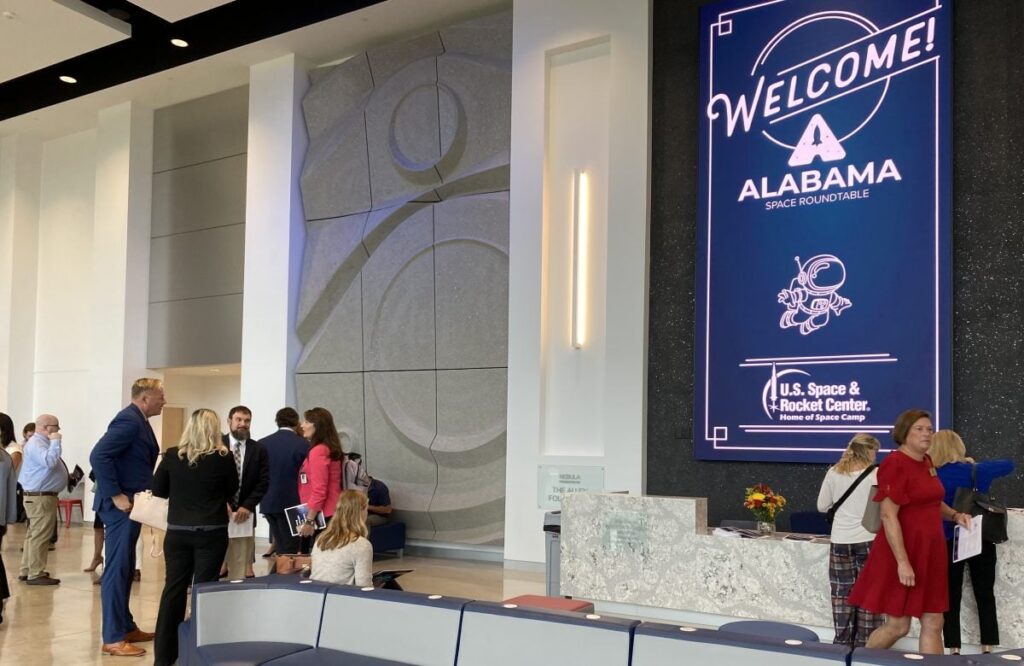
A new initiative aimed at making Alabama a national nexus for space career exploration, training, and employment launched this week at a gathering in Huntsville. The Alabama Space Roundtable held its inaugural meeting at the U.S. Space and Rocket Center’s Space Camp Operations Center. The meeting was hosted by North AlabamaWorks, part of the statewide workforce services provider AlabamaWorks. Responding to industry needs and the National Space Council’s call for a skilled workforce, the Alabama Space Roundtable is charged with ensuring a strong workforce pipeline for the space industry. The mission of the Roundtable is to drive the future of space talent, inspiring, training, and employing students and workers to address the shortage of science, technology, engineering, and mathematics (STEM) skills needed to ensure the industry’s growth, said Stephanie McCullough, executive director of North AlabamaWorks. “The first meeting of the Alabama Space Roundtable formalizes current space workforce efforts in the region,” McCullough said. “It directly responds to the space talent crisis by developing new models to better grow and recruit the STEM space talent needed to power our space industry. “Alabama has the opportunity to be the first state to demonstrate an integrated space talent pipeline.” McCullough said. Representatives of the National Space Council attended Monday’s meeting, along with local and national space industry leaders, talent pipeline experts, workforce development and education organizations, and nonprofits. Housed in the Executive Office of the President, the National Space Council is charged with providing objective advice on the formulation and implementation of the nation’s space policy and strategy. Huntsville has been a center for American space exploration for decades, and its contributions continue to be essential to NASA’s success. Its Marshall Space Flight Center is responsible for developing many of the technologies that make space exploration possible, including rockets, propulsion systems, and life support systems. That made Huntsville a natural choice for the inaugural meeting of the Alabama Space Roundtable, said Melinda Weaver, community relations manager for Alabama Power and board chair of North AlabamaWorks. “Being home to the largest space museum in the world and having a rich history of contributions to space exploration, Huntsville is the ideal place to host the Alabama Space Roundtable,” said Weaver. “We are honored to have this area of the state chosen to host such an important program. I feel strongly that this region will step up to the plate and address the industry needs for a skilled workforce in Space STEM.” Republished with the permission of The Alabama NewsCenter.
Women of Influence: U.S. Space and Rocket Center CEO Dr. Deborah Barnhart
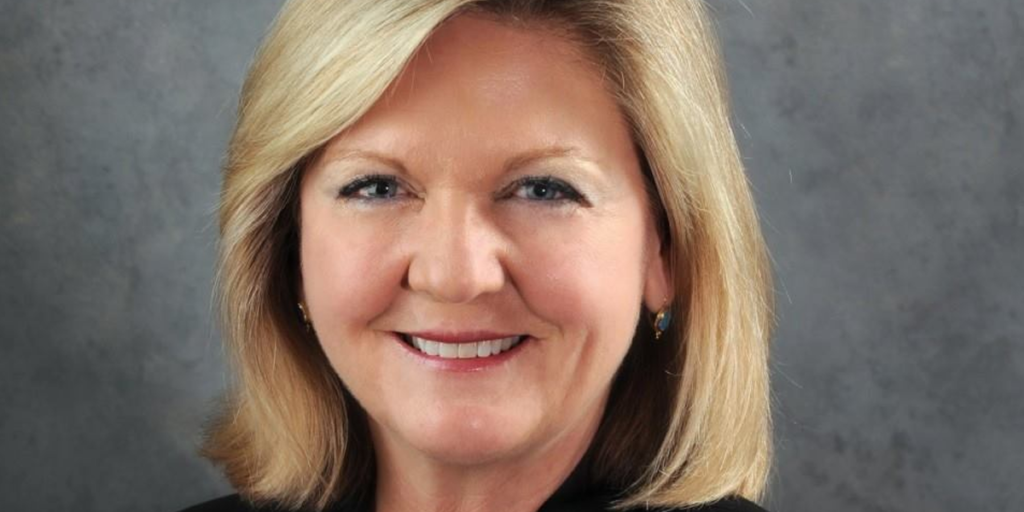
Huntsville, Ala. native Dr. Deborah Barnhart has been working on and off with the U.S. Space and Rocket Center in Huntsville for over 40 years. Her career has taken many different twists and turns, but she finally “landed” at her home base in January of 2011. Barnhart graduated from the University of Alabama in Huntsville in 1973; while she was finishing her senior year she worked in the public affairs and marketing offices at the U.S. Space & Rocket Center. A few years after graduation she came back on staff at the space center managing publicity for the museum’s newest addition — the Space Shuttle. At the age of 27, Barnhart decided to switch gears and joined the U.S. Navy, hoping to work with satellites. However, the Navy had other plans for her. She attended Officers Candidate Schoo (OCS)l, and after graduating at the top of a class of 500 people, was given the opportunity to become one of the first ten women ever to serve on a Navy sea vessel. And she took it. “I was the seventh woman to be certified to fight on and drive Navy vessels,” she told Kari Hawkins in an interview. “I drove ships on the west coast and the east coast. I loved the Navy, and the ability to see the world as a finite place. I’ve heard it said that everyone joins the military to get away from something, to ‘get out of Dodge.’ And maybe I did want to get out of Dodge, but I also joined the military to go toward something, to pursue an interest and an opportunity.” Barnhart commanded five units, experienced submarines, Navy air and space aspects, and missile defense systems throughout her 26 year military career. When she went into the Navy Reserves, she found her way back to the U.S. Space & Rocket Center for the third time in her career, this time serving as the director of Space Camp and the Space Academy. During this time she had two children and obtained a M.B.A. from the University of Maryland College Park. In 1990 Barnhart left the Space Center for the third time to pursue work in the private sector. That same year she received a doctorate degree in education from Vanderbilt University. After leaving the space center, she became vice president of Hamilton Sundstrand Space, Sea Systems International, and Honeywell Space and Defense, and reached a lifelong goal: working with satellites. She also acquired another M.B.A., this one from the Massachusetts Institute of Technology where she was a Sloan Fellow in 1998. She had retired from her long accomplished career when the Space Center contacted her in 2010, convincing her to return to the center for the fourth time, but this time to the helm of the “ship,” as Executive Director and CEO, a position she has held since January of 2011. The first year she served as CEO, Barnhart reduced the Space Center’s debt by $1 million, and brought attendance up by 13 percent after 10 years of decline. In 2017, the center had it’s all-time record attendance, with an 11 percent increase in revenue. “In everything that we do, we want to inspire that next generation of explorers,” Barnhart told Hawkins in an interview. Barnhart has received a lot of honors during her lengthy career. She is a recipient of NASA’s Distinguished Public Service Medal, the highest form of recognition awarded by NASA to a non‐government individual. A member of the Board of Managers of the Air Force Museum Foundation and a Trustee on the Board of the University of Alabama in Huntsville Foundation. She also served as Governor Robert Bentley’s appointee to the Alabama Space Authority Task Force. In October of 2017 Barnhart was inducted into the Alabama Academy of Honor alongside Governor Kay Ivey, and two other women, making her part of the first class of all female inductees. For over 20 years of service to our Nation through the Navy, her service to the state of Alabama through the U.S. Space and Rocket Center, and for setting the level of excellence the nation has come to expect from Alabama Women, Dr. Deborah Barnhart is absolutely and Alabama woman of Influence.
Alabama cyber security programs ramp up amid rising threats

Protecting the nation’s infrastructure, industries and sensitive information in the digital age is the focus of advanced research taking place across Alabama. Universities are boosting their research efforts in the field of cyber security, along with programs that produce highly skilled graduates. Gov. Kay Ivey, second from left, stands with officials from the U.S. Space & Rocket Center in Huntsville, after she presented a $10 million check to expand its Cyber Camp program. The expansion will increase the number of students in cyber-security fields of study and increase awareness of workforce opportunities in Alabama. (Jamie Martin / Governor’s Office) Gov. Kay Ivey also recently announced the formation of a new high school focusing on cyber technology and engineering, which will be based in Huntsville. The school will prepare Alabama’s top students for jobs in these in-demand fields. In addition, she gave a $10 million economic development grant to the U.S. Space & Rocket Center to expand the activities of its Cyber Camp, where selected students receive training in technology. At Auburn University, the new director of the Auburn Cyber Research Center said his goal is to establish a greater focus on economic impact in Alabama. To accomplish this, the center’s research is focused on improving cyber security in industries that are major economic drivers in the state, such as health care, manufacturing, agriculture, chemicals and more, said David Umphress, an Auburn engineering professor with nearly 40 years of experience in software and systems engineering in academic, military and industrial settings. “What we’re trying to do is research that is directly in line with improving cyber security within those economic drivers,” he said. Cyber security center Manufacturing is a key economic driver in Alabama, and a growing segment is additive manufacturing, or 3-D printing. The practice involves fabricating parts layer-by-layer from metals, plastics or other materials based on a 3-D computer-aided design model. “There’s an entire digital information exchange on how people build things, and if you change just a little bit of that, you could change the entire product,” Umphress said. “If you were a bad guy, you’d want to get in there and change it just a little so that product doesn’t perform as it should.” Umphress said he wants Alabama to become the go-to source for companies across these industries when they want to know the best ways to protect their products, processes and other information. David Umphress serves as director of Auburn University’s Cyber Research Center. (Auburn University) “We’re trying to put Alabama in the forefront of all of those areas,” he said. The Auburn Cyber Research Center supports the overall mission of Auburn’s McCrary Institute for Critical Infrastructure Protection and Cyber Systems by conducting research in the field of cyber security. The mission of the McCrary Institute, named for former Alabama Power Co. CEO Charles McCrary, is to study protection of the nation’s infrastructure, including power grids, transportation systems and supplies of natural resources. In addition, Auburn was recently awarded a five-year, $4.7 million National Science Foundation CyberCorps grant to help address the shortage of public sector cyber security professionals. The shortage of skilled cyber security professionals has dramatically come to light amid high-profile consumer data breaches and increasing concern about public infrastructure’s heavy reliance on computers. “Even up until 10 years ago, we didn’t pay a lot of attention to it. It wasn’t until we reached this global economy, with information driving so many things and so many mobile devices and homes and cars filled with computers,” Umphress said. “With all that global connectivity, the demand for cyber security surged so quickly, and that’s also driven up the criminal element to try to exploit the weaknesses.” Expanding emphasis Elsewhere in Alabama, there are similar efforts to expand cyber security education and research. The University of Alabama in Huntsville is also participating in the NSF CyberCorps “Scholarships for Service” (SFS) program. The university, which received a $4.2 million grant, recently awarded 10 students full cyber security scholarships. The scholarships include full tuition and fees, and an annual stipend of $22,500 for undergraduates and $34,000 for graduate students, among other benefits. The staff of the University of Alabama Cyber Institute includes, from left, Reg Hyde, Dr. Winnie Callahan, John Callahan and Dr. David Mayhew. (University of Alabama) “UAH has a large number of students across four majors pursuing computing degrees, making it easy to find a cohort of top-notch students for SFS,” said Dr. Tommy Morris, an associate professor of electrical and computer engineering and director of UAH’s Center for Cybersecurity Research and Education. “This year we have scholarship recipients from the fields of computer engineering, computer science and information systems, as well as from UAH’s interdisciplinary master’s program in cybersecurity.” At the University of Alabama Cyber Institute, there have been new additions to the staff, as well as a refocusing of research and academic priorities. Several researchers have joined the team, allowing the Cyber Institute to branch into the areas of supply chain risk management and secure architecture. The moves also are improving teaching in the area of cyber security. “We are concentrating on areas where there is tremendous interest or demand among the private sector or government, but where there is little work being done, particularly by universities,” said Reg Hyde, the institute’s executive director. For example, the Cyber Institute’s effort to study supply chain risk management is headed by Dr. Darryl Williams, a leading expert in the field with more than 20 years of experience in both government and the private sector. His Supply Chain Risk Management and Analysis Laboratory is focused on the integrity of systems and components that are a part of national security and defense. These programs can be compromised if inferior or doctored components get into the supply chains, and UA is the only university in the nation tackling the full scope of this threat. The new research efforts have prompted interest in collaborating with UA from the U.S. Department of Defense, Fortune 500 companies and the intelligence community, Hyde said. This story originally appeared on the Alabama Department of Commerce’s Made in Alabama website. Republished with permission from the Alabama
