
Joe Biden visits Lockheed plant as weapons stockpile strained
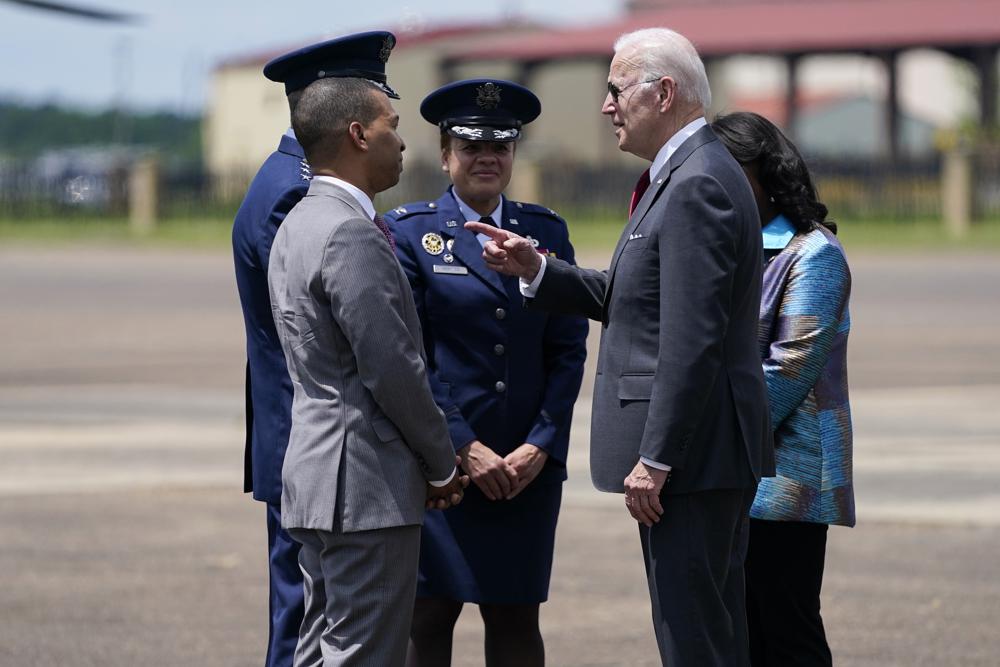
President Joe Biden on Tuesday visited a Lockheed Martin plant that manufactures an antitank weapons system, aiming to herald the U.S.-made arms as a gamechanger for Ukraine’s stiff resistance to Russia’s invasion. But Biden’s visit to the Alabama factory line is also drawing attention to a growing concern as the war drags on: Can the U.S. sustain the cadence in shipping vast amounts of arms to Ukraine while maintaining a healthy stockpile it may need if conflict erupts with North Korea, Iran or elsewhere? The U.S. has provided at least 7,000 Javelins, including some transferred during the Trump administration, or about one-third of its stockpile, to Ukraine in recent years, according to an analysis by Mark Cancian, a senior adviser with the Center for Strategic and International Studies international security program. The Biden administration says it has committed to sending 5,500 Javelins to Ukraine since the February 24 invasion. Analysts also estimate that the United States has sent about one-quarter of its stockpile of shoulder-fired Stinger missiles to Ukraine. Raytheon Technologies CEO Greg Hayes told investors last week during a quarterly call that his company, which makes the weapons system, wouldn’t be able to ramp up production until next year due to parts shortages. “Could this be a problem? The short answer is, ‘Probably, yes,’” said Cancian, a retired Marine colonel and former Office of Management and Budget specialist on Pentagon budget strategy, war funding, and procurement programs. He added that Stingers and Javelins were where “we’re seeing the most significant inventory issues,” and that production of both weapons systems has been limited in recent years. The Russian invasion offers the U.S. and European defense industry a big opportunity to bolster profits as lawmakers from Washington to Warsaw are primed to increase defense spending in response to Russian aggression. Defense contractors, however, face the same supply chain and labor shortage challenges that other manufacturers are facing, along with some others that are specific to the industry. Military spending by the U.S. and around the world was rising even before Russia’s Feb. 24 invasion. Biden’s proposed 2023 budget sought $773 billion for the Pentagon, an annual increase of about 4%. Globally, total military spending rose 0.7% to more than $2 trillion for the first time in 2021, according to an April report from the Stockholm International Peace Research Institute. The war will mean increased sales for some defense contractors, including Raytheon, which makes the Stinger missiles Ukrainian troops have used to knock out Russian aircraft. The company is also part of a joint venture with Lockheed Martin that makes the Javelins. Biden will visit Lockheed Martin’s facility in Troy, Alabama, which has the capacity to manufacture about 2,100 Javelins per year. The trip comes as he presses Congress to quickly approve his request for an additional $33 billion in security and economic assistance for Kyiv. Senate Majority Leader Chuck Schumer, D-N.Y., said Monday he hoped quick bipartisan agreement on the security package could be reached so the Senate could begin considering it “as early as next week.” A White House official, who was not authorized to comment publicly and insisted on anonymity, said the Pentagon is working with defense contractors “to evaluate the health of weapons systems’ production lines and examine bottlenecks” in the manufacturing process. The administration is also considering a range of options, if needed, to boost production of Javelins and Stingers, the official said. Pentagon press secretary John Kirby said Monday that America’s military readiness is not dependent on one system. He said that every time the Pentagon develops a package of weapons and systems to send to Ukraine, the chairman of the Joint Chiefs of Staff and the department do an assessment on what the impact will be on readiness. “It’s not about counting, say, Javelins and being able to say that when you reach a certain level, then all your readiness is gone,” Kirby said. “The Javelin is an anti-armor capability, so we judge it all as a conglomerate of what’s our ability to meet this particular mission set, realizing that a Javelin isn’t the only capability you have against armor.” The lightweight but lethal Javelin has helped the Ukrainians inflict major damage on Russia’s larger and better-equipped military. As a result, the weapon has gained almost mythic regard, celebrated with a Javelin song and images of Mary Magdalene carrying a Javelin becoming a meme in Ukraine. Lockheed Martin CEO James Taiclet said in a recent CNBC interview that demand for the Javelin and other weapon systems would increase broadly over time because of the Russian invasion. He said the company was working “to get our supply chain ramped up.” “We have the ability to meet current production demands, are investing in increased capacity, and are exploring ways to further increase production as needed,” Lockheed Martin, which is based in Bethesda, Maryland, said in a statement. Republished with the permission of the Associated Press.
Joe Biden to visit Alabama weapons plant
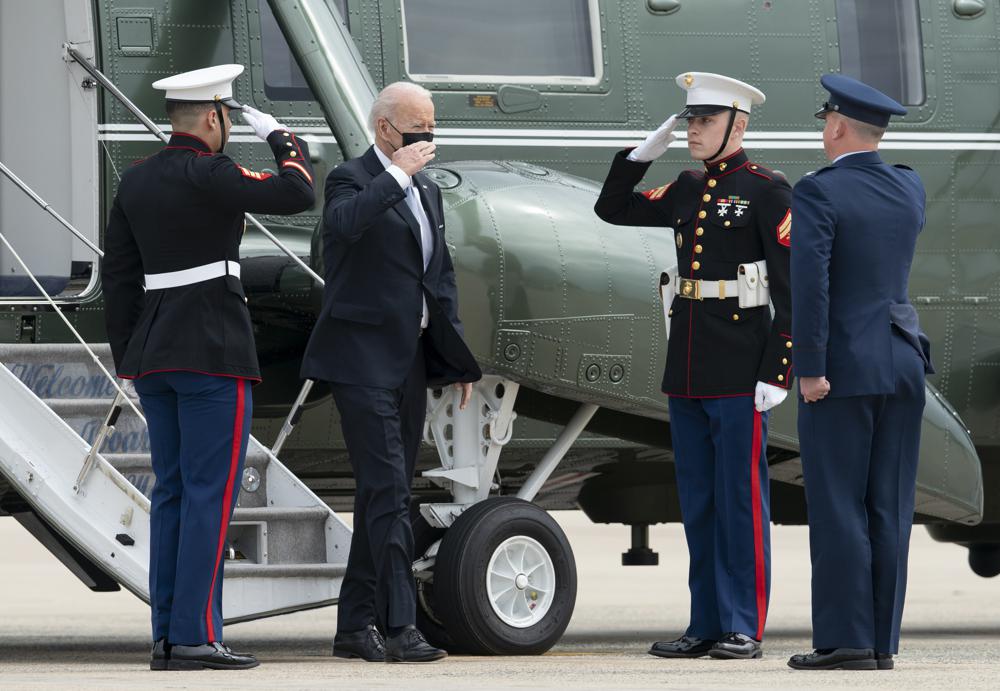
President Joe Biden will tour a Lockheed Martin facility in Alabama that makes weapons systems such as Javelin anti-tank missiles, which the administration is providing to Ukraine to defend itself against Russia’s 2-month-old invasion, the White House said Wednesday. Biden plans to visit the facility at Troy, located south of Montgomery, on Tuesday. The factory has about 600 employees working on a number of different weapons programs, according to the company’s website. A Javelin is a long-range guided anti-tank missile that can be carried by one person. The United States says it has provided several thousand of the systems to Ukraine. Republished with the permission of the Associated Press.
Tearful goodbyes at Kyiv train station as women and children leave for safety

A woman crouches down in the doorway of a blue and yellow train at a station in Kyiv, Ukraine’s embattled capital city. Her husband stands on the platform below and cranes his neck up for a kiss that both hope will not be their last. As the train door closes, the woman holds up their 2-year-old son and he smiles and presses his tiny hand against the smudged window to wave goodbye to his father, who is staying behind to fight the Russian invaders. Nearby, a grandmother reaches out to bid farewell to her daughter and grandson, who are on the train headed toward the border with Poland. She backs toward a wall of the train station and is soon overcome with emotion. She places her hands over her mouth, squeezes her eyes shut tight and lets the tears fall. Natalia, 57, says goodbye to her daughter and grandson on a train to Lviv at the Kyiv station, Ukraine, Thursday, March 3. 2022. (AP Photo/Emilio Morenatti) Natalia, 57, cries as she says goodbye to her daughter and grandson on a train to Lviv at the Kyiv station, Ukraine, Thursday, March 3. 2022. (AP Photo/Emilio Morenatti) These are the goodbyes that have been repeated across Ukraine in the week since Russia invaded and began pounding the country’s cities with bombs. The UN says the fighting has sent more than 1 million people fleeing the country, a number that is already the swiftest exodus of refugees this century and one that could soon skyrocket even further. Those leaving are overwhelmingly women and children. Ukrainian men have been ordered to stay and fight in the war. At the train station in Kyiv crowds of people carrying luggage stand in the cold as they wait for their chance to board a train. Mothers hold children bundled in winter jackets and stocking caps, some clutching onto stuffed animals. Men help the elderly get to the train, even using a luggage cart to carry one woman with crutches. Up and down the platform there are tearful embraces. Once on the train, many of those leaving press their faces against the windows for a last glimpse at those staying behind. One woman reaches her hand out the door for a fleeting brush of a loved one’s cheek. A woman looks toward relatives and presses her palms against a window of a Lviv bound train, on the platform in Kyiv, Ukraine, Thursday, March 3, 2022. (AP Photo/Vadim Ghirda) Women and children try to get onto a train bound for Lviv, at the Kyiv station in Ukraine, Thursday, March 3. 2022. (AP Photo/Emilio Morenatti) Tanya, 38, cries with her son Bogdan, 10, before getting a train to Lviv at the Kyiv station, Ukraine, Thursday, March 3, 2022. (AP Photo/Emilio Morenatti) Stanislav, 40, kisses his wife Anna, 35, on a train to Lviv as they say goodbye at the Kyiv station, Ukraine, Thursday, March 3. 2022. Stanislav is staying to fight while his family is leaving the country to seek refuge in a neighboring country. (AP Photo/Emilio Morenatti) A girl and her brother sit on a train bound for Lviv at the Kyiv station, Ukraine, Thursday, March 3, 2022. (AP Photo/Emilio Morenatti) Women and children try to get onto a train bound for Lviv, at the Kyiv station in Ukraine, Thursday, March 3. 2022. (AP Photo/Emilio Morenatti) A family runs over the tracks trying to board a Lviv bound train, in Kyiv, Ukraine, Thursday, March 3, 2022. (AP Photo/Vadim Ghirda) Children look out the window of an unheated Lviv bound train, in Kyiv, Ukraine, Thursday, March 3, 2022. (AP Photo/Vadim Ghirda) Women and children crowd a train bound for Lviv at the Kyiv station, Ukraine, Thursday, March 3. 2022. (AP Photo/Emilio Morenatti) Stanislav, 40, says goodbye to his son David, 2, and his wife Anna, 35, on a train to Lviv at the Kyiv station, Ukraine, Thursday, March 3. 2022. Stanislav is staying to fight while his family is leaving the country to seek refuge in a neighbouring country. (AP Photo/Emilio Morenatti) A woman with her son look at a train leaving as they try to flee at the Kyiv station, Ukraine, Thursday, March 3. 2022. (AP Photo/Emilio Morenatti) Women and children try to get onto a train bound for Lviv, at the Kyiv station in Ukraine, Thursday, March 3. 2022. (AP Photo/Emilio Morenatti) Men push a luggage trolley carrying an elderly lady before boarding a Lviv bound train, in Kyiv, Ukraine, Thursday, March 3, 2022. (AP Photo/Vadim Ghirda) Bogdan, 41, says goodbye to his wife Lena, 35, on a train to Lviv at the Kyiv station, Ukraine, Thursday, March 3. 2022. Bogdan is staying to fight while his family is leaving the country to seek refuge in a neighboring country. (AP Photo/Emilio Morenatti) A woman gets help after falling on the tracks trying to reach a Lviv bound train, in Kyiv, Ukraine, Thursday, March 3, 2022. (AP Photo/Vadim Ghirda) A child plays with a teddy bear while waiting to board a Lviv bound train, in Kyiv, Ukraine, Thursday, March 3, 2022. (AP Photo/Vadim Ghirda) A woman bids a man goodbye after boarding a Lviv bound train, in Kyiv, Ukraine, Thursday, March 3, 2022. (AP Photo/Vadim Ghirda) Republished with the permission of the Associated Press.
House panel to vote on Ukraine report as Donald Trump mulls defense
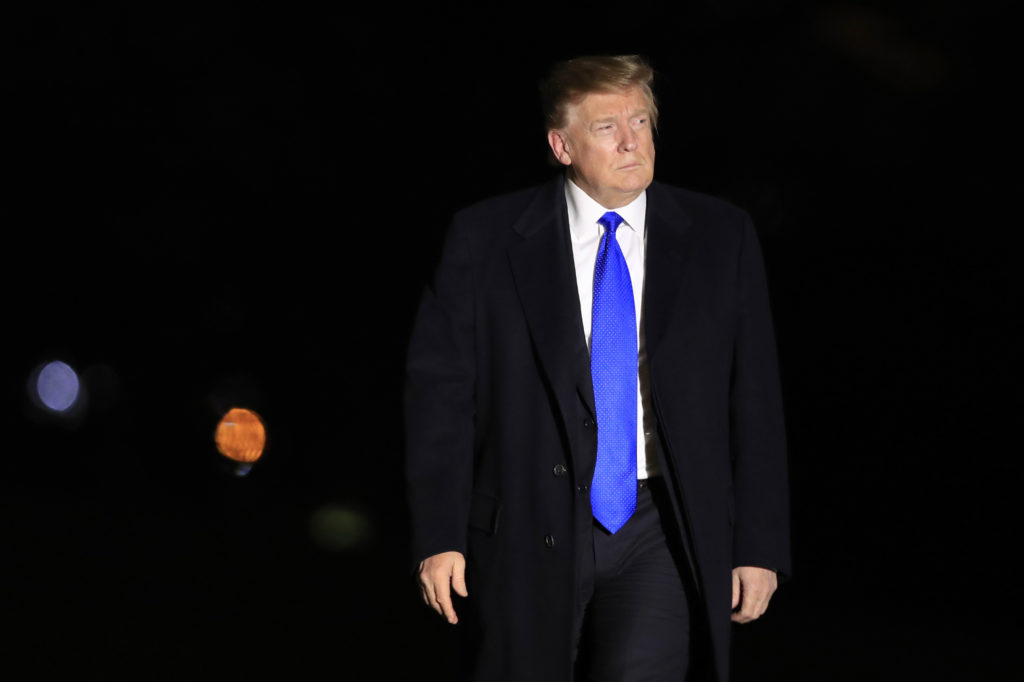
The House impeachment inquiry enters a pivotal stage this week, with investigators planning a vote Tuesday to approve their report making the case for President Donald Trump’s removal from office as he decides whether to mount a defense before a likely Senate trial. A draft report will be available for members of the House Intelligence Committee to view in a secure location before their planned vote on Tuesday, which would send their findings to the House Judiciary Committee to consider actual charges. Majority Democrats say the report will speak for itself in laying out possible charges of bribery or “high crimes and misdemeanors,” the constitutional standard for impeachment. Republicans want Democratic Rep. Adam Schiff, chairman of the Intelligence Committee, to testify, though they have no power to compel him to do so, as they try to cast the Democratic-led inquiry as skewed against the Republican president. “If he chooses not to (testify), then I really question his veracity in what he’s putting in his report,” said Rep. Doug Collins, the top Republican on the Judiciary Committee. “It’s easy to hide behind a report,” Collins added. “But it’s going to be another thing to actually get up and have to answer questions.” Schiff has said “there’s nothing for me to testify about,” that he isn’t a “fact” witness and that Republicans are only trying to “mollify the president, and that’s not a good reason to try to call a member of Congress as a witness.” Coming after two weeks of public testimony, the findings of the House Intelligence Committee report are not yet publicly known. But the report is expected to mostly focus on whether Trump abused his office by withholding military aid approved by Congress as he pressed Ukrainian President Volodymyr Zelenskiy to launch investigations into Trump’s political rivals. Democrats also are expected to include an article on obstruction of Congress that outlines Trump’s instructions to officials in his administration to defy subpoenas for documents or testimony. Democrats are aiming for a final House vote by Christmas, which would set the stage for a likely Senate trial in January. “I do believe that all evidence certainly will be included in that report so the Judiciary Committee can make the necessary decisions that they need to,” said Rep. Val Demings, Democrat – Florida, a member of both the Intelligence and Judiciary committees. She said Democrats had not yet finalized witnesses for the upcoming Judiciary hearings and were waiting to hear back from Trump on his plans to present a defense. “If he has not done anything wrong, we’re certainly anxious to hear his explanation of that,” Demings said. The Judiciary Committee’s first hearing is Wednesday. It’s expected to feature four legal experts who will examine questions of constitutional grounds as the committee decides whether to write articles of impeachment against Trump, and if so, what those articles will be. After weeks of deriding the process as a sham, Trump has yet to say whether he or his attorneys will participate in the Judiciary hearings. He’s previously suggested that he might be willing to offer written testimony under certain conditions. “The Democrats are holding the most ridiculous Impeachment hearings in history. Read the Transcripts, NOTHING was done or said wrong!” Trump tweeted Saturday, before falling silent on Twitter for much of Sunday. It’s unlikely that the president himself would attend on Wednesday, as Trump is scheduled to be at a summit with NATO allies outside London. The Judiciary Committee gave the White House until Sunday evening to decide whether Trump or his attorneys would attend. Trump must then decide by Friday whether he would take advantage of due process protections afforded to him under House rules adopted in October for follow-up hearings, including the right to request witness testimony and to cross-examine the witnesses called by the House. “Why would they want to participate in just another rerun?” asked Collins, noting that the Judiciary Committee previously heard from constitutional scholars on impeachable offenses during special counsel Robert Mueller’s Russia investigation. “This is a complete American waste of time of here,” Collins said, who is calling on the committee chairman, Rep. Jerrold Nadler, Democrat – New York, to expand the witness list to include those sought by Republicans. “This is why this is a problematic exercise and simply a made-for-TV event coming on Wednesday.” Still, Republican Rep. Tom McClintock of California, a Judiciary Committee member, said he believes Trump would benefit if he presents his own defense. “I think it would be to the president’s advantage to have his attorneys there. That’s his right,” he said. McClintock said he doesn’t believe Trump did anything wrong in the July 25 call with Zelenskiy that is at the heart of the investigation. “He didn’t use the delicate language of diplomacy in that conversation, that’s true. He also doesn’t use the smarmy talk of politicians,” McClintock said. To McClintock, Trump was using “the blunt talk of a Manhattan businessman” and “was entirely within his constitutional authority” in his dealings with Ukraine’s leader. Collins appeared on “Fox News Sunday” and Demings and McClintock were on ABC’s “This Week.” By Hope Yen Associated Press. Republished with the Permission of the Associated Press.
Impeachment Probe to be Considered by Judiciary Committee
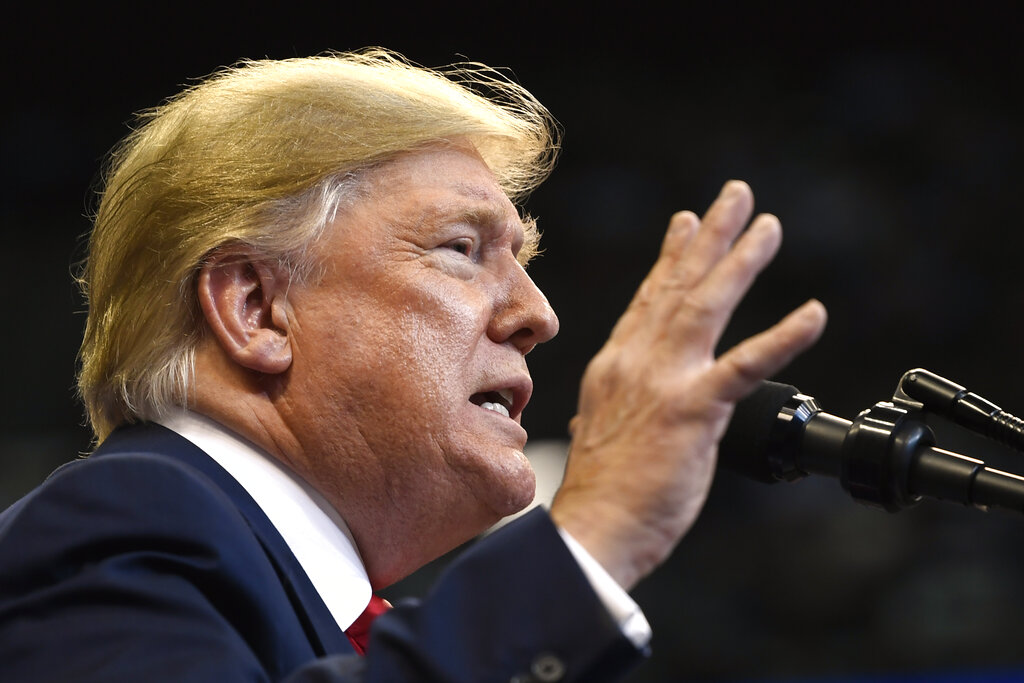
The exact grounds of a possible impeachment have not yet been determined.
White House officials to kick off big Donald Trump impeachment week
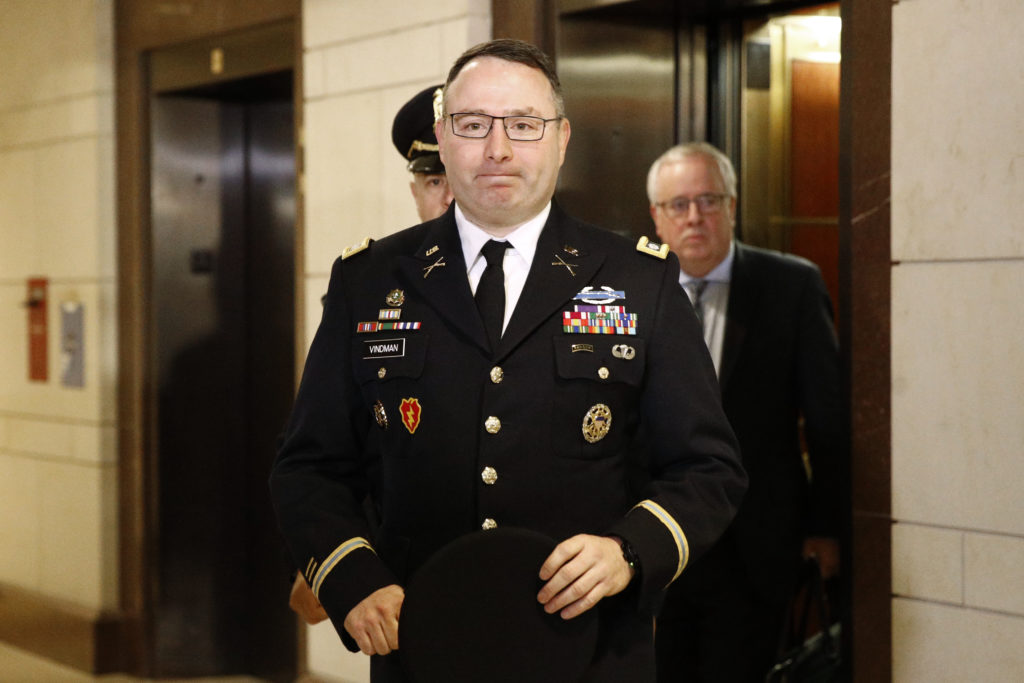
Two top national security aides who listened to President Donald Trump’s July call with Ukraine’s president are preparing to testify Tuesday at House impeachment hearings as the inquiry reaches deeper into the White House. Lt. Col. Alexander Vindman, an Army officer at the National Security Council, and Jennifer Williams, his counterpart at Vice President Mike Pence’s office, say they had concerns as Trump spoke on July 25 with the newly elected Ukraine president about political investigations into Joe Biden. After they appear Tuesday morning, the House will hear in the afternoon from former NSC official Timothy Morrison and Kurt Volker, the former Ukraine special envoy. In all, nine current and former U.S. officials are testifying as the House’s impeachment inquiry accelerates. Democrats say Trump’s pressure on Ukraine to investigate his Democratic rivals as he withheld U.S. military aid Ukraine needed to resist Russian aggression may be grounds for removing the 45th president. Trump says he did no such thing and the Democrats just want him gone. Vindman and the other witnesses have testified in earlier, closed-door sessions. Their depositions have been publicly released, and they’ll face direction questions from lawmakers on Tuesday. “I did not think it was proper to demand that a foreign government investigate a U.S. citizen,” said Vindman, a decorated Iraq War veteran. He said there was “no doubt” what Trump wanted from Ukrainian President Volodymyr Zelenskiy. It wasn’t the first time Vindman, a 20-year military officer, was alarmed over the administration’s push to have Ukraine investigate Democrats, he testified. Earlier, during an unsettling July 10 meeting at the White House, Ambassador Gordon Sondland told visiting Ukraine officials that they would need to “deliver” before next steps, which was a meeting Zelenskiy wanted with Trump, the officer testified. “He was talking about the 2016 elections and an investigation into the Bidens and Burisma,” Vindman testified, referring to the gas company in Ukraine where Hunter Biden served on the board. “The Ukrainians would have to deliver an investigation into the Bidens,” he said. “There was no ambiguity.” On both occasions, Vindman said, he took his concerns about the shifting Ukraine policy to the lead counsel at the NSC, John Eisenberg. Williams, a longtime State Department official who is detailed to Pence’s national security team, said she too had concerns during the phone call, which the aides monitored as is standard practice. When the White House produced a rough transcript later that day, she put it in the vice president’s briefing materials. “I just don’t know if he read it,” Williams testified in a closed-door House interview. Pence’s role throughout the impeachment inquiry has been unclear, and the vice president’s aide is sure to be questioned by lawmakers looking for answers. Trump has already attacked Williams, associating her with “Never Trumpers,” even though there is no indication the career State Department official has shown any partisanship. The president wants to see a robust defense by his GOP allies on Capitol Hill, but so far so far Republicans have offered a changing strategy as the fast-moving probe spills into public view. They’re expected to mount a more aggressive attack on the witnesses as they try to protect Trump. In particular, Republicans are expected to try to undercut Vindman, suggesting he reported his concerns outside his chain of command, which would have been Morrison, not the NSC lawyer. Under earlier questioning, Republicans wanted Vindman to disclose who else he may have spoken to about his concerns, as the GOP inch closer to publicly naming the still anonymous whistleblower whose report sparked the inquiry. GOP Sen. Ron Johnson, who was deeply involved in other White House meetings about Ukraine, offered a sneak preview of this strategy late Monday when he compared Vindman, a Purple Heart veteran, to the “bureaucrats” who “never accepted Trump as legitimate.” “They react by leaking to the press and participating in the ongoing effort to sabotage his policies and, if possible, remove him from office.” It is entirely possible that Vindman fits this profile, said Johnson, Republican-Wisconsin. The White House has instructed officials not to appear, and most have received congressional subpoenas to compel their testimony. The witnesses are testifying under penalty of perjury, and Sondland already has had to amend his earlier account amid contradicting testimony from other current and former U.S. officials. Sondland, the wealthy donor whose routine boasting about his proximity to Trump has brought the investigation to the president’s doorstep, is set to testify Wednesday. Others have testified that he was part of a shadow diplomatic effort with the president’s personal lawyer, Rudy Giuliani, outside of official channels that raised alarms. Morrison has referred to Burisma as a “bucket of issues” — the Bidens, Democrats, investigations — he had tried to “stay away” from. Sondland met with a Zelenskiy aide on the sidelines of a Sept. 1 gathering in Warsaw, and Morrison, who was watching the encounter from across the room, testified that the ambassador told him moments later he pushed the Ukrainian for the Burisma investigation as a way for Ukraine to gain access to the military funds. Volker provided investigators with a package of text messages with Sondland and another diplomat, William Taylor, the charge d’affaires in Ukraine, who grew alarmed at the linkage of the investigations to the aid. Taylor, who testified publicly last week, called that “crazy.” A wealthy hotelier who donated $1 million to Trump’s inauguration, Sondland is the only person interviewed to date who had direct conversations with the president about the Ukraine situation. Morrison said Sondland and Trump had spoken about five times between July 15 and Sept. 11 — the weeks that $391 million in U.S. assistance was withheld from Ukraine before it was released. Trump has said he barely knows Sondland. The committee will also hear on Wednesday from Laura Cooper, a deputy assistant secretary of defense, and David Hale, a State Department official. On Thursday, David Holmes, a State Department official in Kyiv, and Fiona Hill, a former top NSC staff member for Europe and Russia, will
Bradley Byrne: The facts about Ukraine
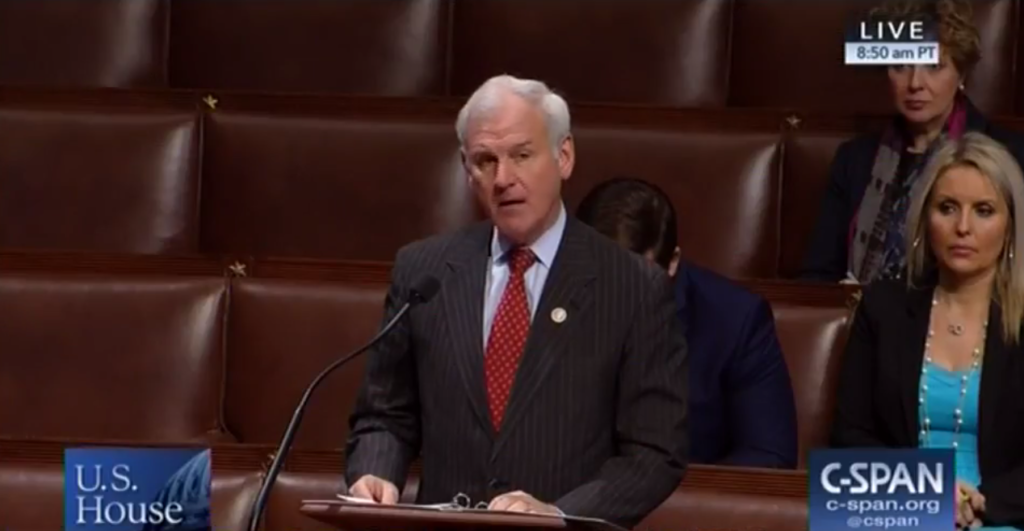
With all the allegations being made against President Donald Trump, it’s important to examine some background and facts. First, let’s talk about what has been going on in Ukraine since the fall of the Soviet Union. Ukraine is one of the most corrupt countries on earth. Like many former Soviet countries, oligarchs control almost all the political power. Corruption is so rampant that many American business people refuse to operate there. For nearly 30 years, Republican and Democrat Presidents have pressured Ukraine to reform without much success. Part of that outreach was aimed at preventing Russia from gaining influence there. But five years ago, Russia invaded Ukraine, and the two countries have been at war ever since. After the invasion, President Barack Obama rightly began providing them non-lethal aide. But to maintain goodwill with the Russians, he would not sell them weapons. Now let’s move to 2016. During the 2016 campaign, President Trump ran on a deep skepticism of foreign aid. Partly as a result, senior members of the Ukrainian government took Secretary Hillary Clinton’s side. After his victory, Ukrainian officials scrambled to make amends with President Trump. Despite President Trump’s understandable skepticism towards Ukraine, he pursued policies towards Ukraine that began leading to progress. He began selling real weapons to Ukraine to help them fight the Russians, with enormous positive effects. However, a few individuals in the Administration tried to convince President Trump he should forget Ukraine’s past and immediately embrace its new President. They began, in their own words, working to change President Trump’s mind. It was office gossip among a handful of these individuals that led to the impeachment investigation. The drama started with the “whistleblower” (who lacked firsthand knowledge of what he reportedly blew the whistle on) alleging that President Trump made “demands” on President Zelensky on a phone call. He alleged President Trump threatened to withhold security assistance to Ukraine for political favors. But despite this allegation, President Zelensky has publicly, clearly, and repeatedly denied any demands were ever made on him. And the Justice Department reviewed this allegation and declined to pursue a criminal investigation. Further, President Trump released the transcript, and it showed that neither person said one word about the hold on that call! You would think that if President Trump were trying to use the aid for extortion, he would have at least mentioned it. President Zelensky did not mention the funds either because he did not know they were on hold and, as the transcript confirms, President Trump never told him! If that is the case, this would be a very strange quid pro quo indeed. Let’s use common sense here. With President Trump’s clear skepticism of foreign aid and Ukraine’s reputation for corruption, is it surprising his Administration would want to review millions in aid to a new Ukrainian President and parliament? In contradiction to the bureaucratic gossip fueling this latest Democrat impeachment fantasy, not one person has testified that they had any direct knowledge that President Trump ordered aid held in exchange for a political favor. Witnesses have speculated about the reason for the hold, but when pressed, they’ve all said some version of “I don’t know.” Despite this sham process, we have no evidence that President Trump ordered any kind of quid pro quo. The Ukrainians got the aid money, within days of even finding out it was on hold, and they got the meetings with President Trump and the Vice President that they wanted. There is no impeachable offense here, but most Democrats know that. This is all about defeating President Trump in the 2020 election, but I think their efforts will backfire as the American people learn the truth. Armed with the facts, I won’t quit fighting against this sham impeachment scheme.
The Latest: Representative Devin Nunes reads White House memo at start of hearing
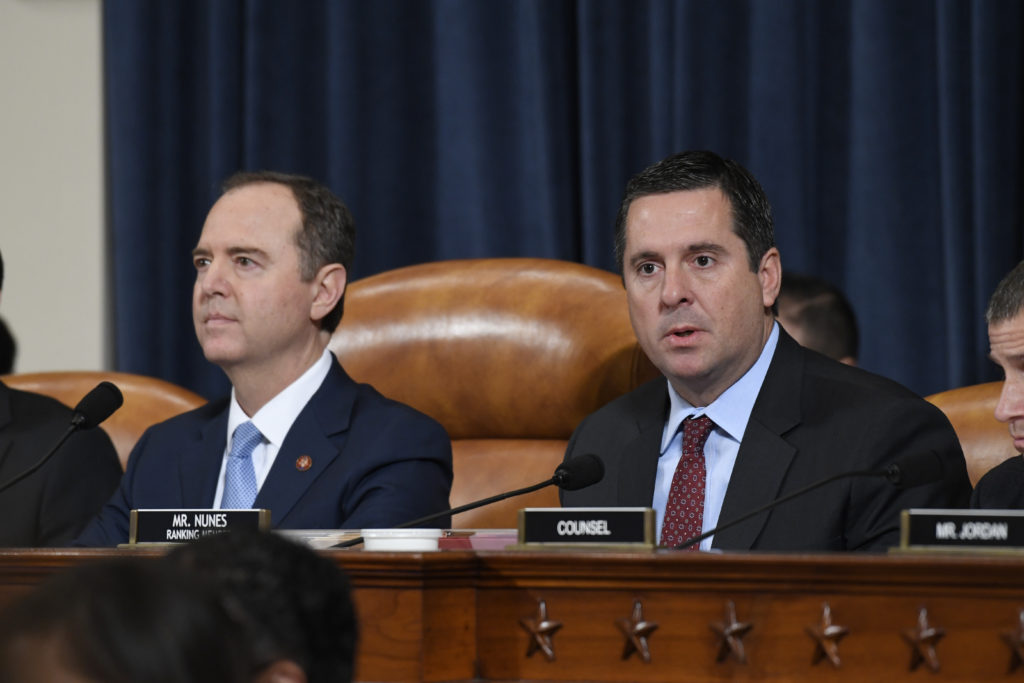
The Latest on President Donald Trump and House impeachment hearings (all times local): 9:35 a.m. The top Republican on the House Intelligence Committee has read aloud a memo circulated by the White House that summarizes the first conversation between President Donald Trump and his newly elected Ukrainian counterpart. The first conversation took place in April after the election of Volodymyr Zelenskiy. It consists largely of pleasantries and words of congratulations. The White House made a record of the conversation public at the start of the House impeachment hearing on Friday. Rep. Devin Nunes, the top Republican on the House Intelligence Committee, read the document aloud to suggest that there was nothing untoward in the conversation. Rep. Adam Schiff, the committee chairman, said Trump should also “release the thousands of other records that he has instructed the State Department not to release.” ___ 9:30 a.m. House Intelligence Committee Chairman Adam Schiff says former Ambassador to Ukraine Marie Yovanovitch was “smeared and cast aside” by President Donald Trump because she was considered an obstacle to his personal and political agenda. Opening the second public House impeachment hearing, Schiff said the question isn’t whether Trump could recall Yovanovitch but “why would he want to?” Yovanovitch testified behind closed doors last month that she was told to “watch her back” before she was ousted in May as Trump lawyer Rudy Giuliani led a shadow foreign policy. Schiff said pushback at the State Department failed when it became clear that Trump wanted her gone. Republican Rep. Devin Nunes said the hearings were “spectacles” for Democrats to “advance their operation to topple a duly elected president.” ___ 9 a.m. The House has opened a second day of Trump impeachment hearings with Marie Yovanovitch, the former U.S. ambassador to Ukraine who was suddenly recalled back to the U.S. by President Donald Trump. Yovanovitch is expected to testify about her ouster, which another diplomat has called a “smear” campaign against her by Trump allies. The live public hearings by the House Intelligence Committee are being held to determine whether Trump should be removed from office over his actions toward Ukraine. The investigation centers on Trump’s July 25 phone call when he asked the new Ukraine president for a favor — to investigate Democrats and potential 2020 rival Joe Biden — as the White House was withholding military aid to the Eastern European nation. Yovanovitch and others have described Rudy Giuliani, Trump’s personal lawyer, as leading what one called an “irregular channel” outside the diplomatic mainstream of U.S.-Ukraine relations. __ 8:35 a.m. The former U.S. Ambassador to Ukraine has arrived on Capitol Hill to testify in the Trump impeachment inquiry. Marie Yovanovitch is the witness for the second day of public hearings. She’s expected to tell lawmakers about her sudden ouster as President Donald Trump recalled the career ambassador back to the United States. Other diplomats testifying in the investigation have defended Yovanovitch, saying she was the target of “smear” campaign by the president’s allies. She has served both Democratic and Republican presidents. The rare impeachment inquiry is focused on Trump’s actions toward Ukraine. Democrats say it amounts to bribery, as the president withheld military aid to Ukraine while he pushed the country to investigate rival Democrats, including Joe Biden. Trump calls the probe a hoax and says he did nothing wrong. __ 12:15 a.m. The House will hear from a singular witness Friday in the Trump impeachment hearings: Marie Yovanovitch, the former U.S. ambassador to Ukraine who was targeted by the president’s allies in a “smear” campaign now central to the probe. The career diplomat, who served both Republican and Democratic presidents, is expected to relay her striking story of being suddenly recalled by Donald Trump and told to “watch my back.” It was all part of a swiftly developing series of events that sounded alarms about the White House’s shadow foreign policy. Friday is the second day of public hearings to consider removing America’s 45th president. Democrats and Republicans are hardening their messages to voters as they try to sway voter opinion amid a deeply polarized public. The House will hear from a singular witness Friday in the Trump impeachment hearings: Marie Yovanovitch, the former U.S. ambassador to Ukraine who was targeted by the president’s allies in a “smear” campaign now central to the inquiry. Republished with the permission of the Associated Press.
Democrats prep for open hearings, seek John Bolton testimony
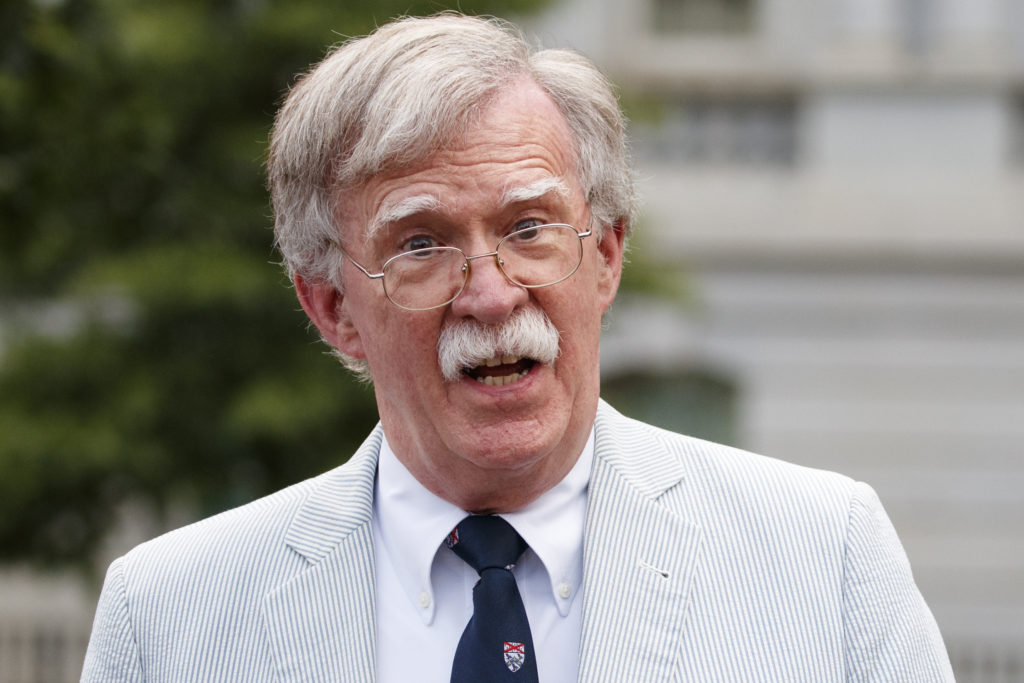
For only the fourth time in U.S. history, the House of Representatives has started a presidential impeachment inquiry. House committees are trying to determine whether President Donald Trump violated his oath of office by asking Ukraine to investigate political rival Joe Biden and his family, and to investigate the country’s involvement in the 2016 U.S. presidential election. A quick summary of the latest news and what’s to come: MOVING INTO PUBLIC VIEW The chairman of the House Intelligence Committee, Rep. Adam Schiff, told The Associated Press on Friday that the three committees leading the impeachment investigation plan to begin releasing transcripts of closed-door interviews as soon as early this week. The committees have interviewed current and former officials from the State Department and White House who have expressed concerns about Trump’s efforts to urge Ukraine to investigate Biden and his family. California Rep. Jackie Speier, a Democratic member of the Intelligence Committee, told CBS’ “Face the Nation” on Sunday that she expects one more week of closed-door interviews before committees move into open hearings. It’s so far unclear who will be asked to testify or how many hearings will be held. Leaders of the investigation say the hearings will be crucial to explain their inquiry to the American people. Schiff, Democrat-California said he hopes the testimony will eventually show “what the president did, why his misconduct is so serious” and how the “machinery of government” was pressed to help Trump influence the 2020 election. THE WHISTLEBLOWER A lawyer for the whistleblower who raised alarms about Trump’s dealings with Ukraine says his client has offered to answer written questions submitted by House Republicans.The surprise offer was made to Rep. Devin Nunes, the top Republican on the House Intelligence Committee. It would allow Republicans to ask questions of the whistleblower, who spurred the Democratic-led impeachment inquiry, without having to go through Schiff.Attorney Mark Zaid tweeted Sunday that the whistleblower would answer questions directly from Republican members “in writing, under oath & penalty of perjury,” part of a bid to stem escalating efforts by Trump and his GOP allies to unmask the person’s identity. Only queries seeking the person’s identity won’t be answered, he said. Nunes hasn’t commented on the proposal. Rep. Jim Jordan, an Ohio Republican and member of the House Judiciary Committee who has been highly critical of the impeachment process, said in a statement that written answers wouldn’t be sufficient to probe and cross-examine the whistleblower. The whistleblower raised concerns about Trump’s July 25 call with Ukrainian President Volodymyr Zelenskiy, in which he pressed Zelenskiy to investigate Trump’s political rivals. MORE BEHIND CLOSED DOORS As they prepare to go public, impeachment investigators are continuing to schedule private depositions. Democrats have called in 11 witnesses this week, including Energy Secretary Rick Perry and former national security adviser John Bolton. It’s unclear whether any of them will come to Capitol Hill. Perry is the first member of Trump’s Cabinet asked to appear before the House. His testimony is scheduled for Wednesday, according to an official working on the impeachment inquiry who spoke wasn’t authorized to publicly discuss the planning and spoke on condition of anonymity. Energy Department spokeswoman Shaylyn Hynes indicated Friday that Perry would not appear for the closed-door hearing but would consider testifying in a public session.On Bolton, Schiff said he “has very important information about the president’s misconduct that the American people should hear.” Other witnesses in the inquiry have described Bolton’s concerns as Trump urged the Ukrainian investigations. The committees have invited Bolton to appear Thursday but not issued a subpoena for his testimony. Trump says he’s not going to insist that Bolton not testify. Bolton’s lawyer has said he will not appear without a subpoena. “It’s up to him and it’s up to the lawyers,” Trump told reporters. The committees also have scheduled and subpoenaed other witnesses from the White House and State Department. They include David Hale, an undersecretary at the State Department who has been mentioned in previous testimony. Key witnesses last week included Alexander Vindman and Tim Morrison of the National Security Council. Morrison, who stepped down the day before his testimony, confirmed that military aid to Ukraine was held up by Trump’s demands for the investigations. But Morrison testified that there was nothing illegal, in his view, about the quid pro quo at the center of the impeachment inquiry. Vindman testified that he had raised concerns about Trump’s pleas. COURT BATTLES Democrats are also fighting impeachment battles in court, though they have indicated that they don’t want to delay the investigation as those cases proceed. One witness called by Democrats, former National Security Council deputy Charles Kupperman, has asked a judge to decide whether he must appear before Congress. Trump has said his administration will not cooperate, and Kupperman has said he is caught between the two. Kupperman’s lawyer, Charles Cooper, is also Bolton’s lawyer. He said Bolton could be added to the case. Republished with the permission of the Associated Press.
Ex-Donald Trump adviser arrives to testify in impeachment inquiry
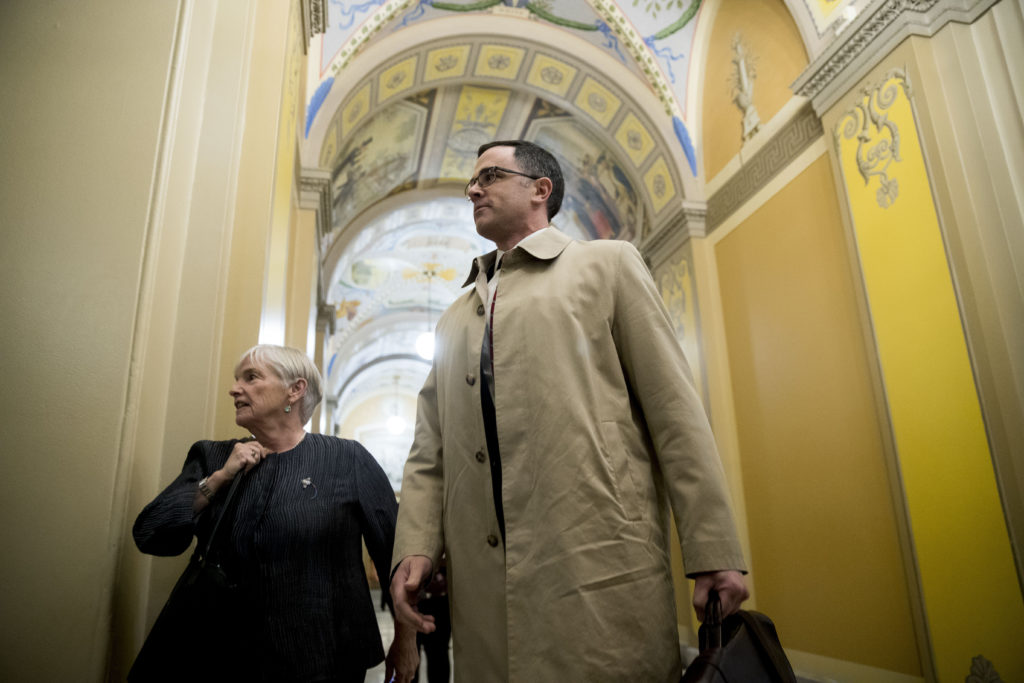
President Donald Trump’s former top adviser for Russian and European affairs arrived on Capitol Hill Thursday to testify to House impeachment investigators, a day after leaving his job at the White House. Tim Morrison, the first White House political appointee to testify, didn’t respond to reporters’ questions about his testimony, which takes place behind closed doors, but his information might be central to a push to remove the president from office. Morrison, who served on the National Security Council, stepped down from that post Wednesday, and a senior administration official said he “decided to pursue other opportunities.” The official, who was not authorized to discuss Morrison’s job and spoke only on the condition of anonymity, said Morrison has been considering leaving the administration for “some time.” He has been in the spotlight since August when a government whistleblower said multiple U.S. officials had said Trump was “using the power of his office to solicit interference from a foreign country in the 2020 U.S. election.” Morrison will be asked to explain that “sinking feeling” he got when Trump demanded that Ukraine’s president investigate former Vice President Joe Biden and meddling in the 2016 election. Morrison was brought on board by then-national security adviser John Bolton to address arms control matters and later shifted into his current role as a top Russia and Europe adviser. It was there that he stepped into the thick of an in-house squabble about the activities of Trump’s personal attorney Rudy Giuliani, who had been conversing with Ukrainian leaders outside of traditional U.S. diplomatic circles. Known as a “hawk” in national security circles, Morrison is the first political appointee from the White House to testify before impeachment investigators. The probe has been denounced by the Republican president, who has directed his staff not to testify. Regardless of what he says, GOP lawmakers will be hard-pressed to dismiss Morrison, formerly a longtime Republican staffer at the House Armed Services Committee. He’s been bouncing around Washington in Republican positions for two decades, having worked for Rep. Mark Kennedy, Republican-Minnesota, Sen. Jon Kyl, Republican-Arizona, and as a GOP senior staffer on the House Armed Services Committee, including nearly four years when it was chaired by Rep. Mac Thornberry, Republican-Texas. Morrison’s name appeared more than a dozen times in earlier testimony by William Taylor, the acting U.S. ambassador in Ukraine, who told impeachment investigators that Trump was withholding military aid unless the new Ukrainian president, Volodymyr Zelenskiy, went public with a promise to investigate Trump’s political rival Joe Biden and his son Hunter. Taylor’s testimony contradicts Trump’s repeated denials that there was any quid pro quo. Taylor said Morrison recounted a conversation that Gordon Sondland, America’s ambassador to the European Union, had with a top aide to Zelenskiy named Andriy Yermak. Taylor said Morrison told him security assistance would not materialize until Zelenskiy committed to investigate Burisma, a Ukrainian gas company that once employed Biden’s son. A White House meeting for Zelenskiy also was in play. “I was alarmed by what Mr. Morrison told me about the Sondland-Yermak conversation,” Taylor testified. “This was the first time I had heard that the security assistance — not just the White House meeting — was conditioned on the investigations.” Taylor testified that Morrison told him he had a “sinking feeling” after learning about a Sept. 7 conversation Sondland had with Trump. “According to Mr. Morrison, President Trump told Ambassador Sondland that he was not asking for a quid pro quo,” Taylor testified. “But President Trump did insist that President Zelenskiy go to a microphone and say he is opening investigations of Biden and 2016 election interference, and that President Zelenskiy should want to do this himself. Mr. Morrison said that he told Ambassador Bolton and the NSC lawyers of this phone call between President Trump and Ambassador Sondland.” Morrison told people after Bolton was forced out of his job that the national security adviser had tried to stop Giuliani’s diplomatic dealings with Ukraine and that Morrison agreed, according to a U.S. official, who was not authorized to discuss Morrison’s role in the impeachment inquiry and spoke only on condition of anonymity. The official said Morrison told people that with the appointment of Robert O’Brien as Bolton’s successor, his own future work at the NSC was in a “holding pattern.” Bolton had brought Morrison into the NSC in July 2018 as senior director for weapons of mass destruction and biodefence. He’s known as an arms control expert or an arms treaty saboteur, depending on who you ask. Morrison, who earned a bachelor’s degree from the University of Minnesota and a law degree from George Washington University, keeps nuclear strategist Herman Kahn’s seminal volume on thermonuclear warfare on a table in his office. Daryl Kimball, executive director of the Arms Control Association, said Bolton and Morrison are likeminded. Kimball said both have been known for calling up GOP congressional offices warning them against saying anything about arms control that didn’t align with their views. “Just as John Bolton reportedly did, I would be shocked if Morrison did not regard Giuliani’s activities as being out of bounds,” said Kimball, who has been on opposite sides of arms control debates with Morrison for more than a decade. By Deb Riechmann Associated Press Associated Press writers Zeke Miller and Matthew Lee contributed to this report. Republished with the permission of the Associated Press.
Army officer says he raised concerns about Donald Trump and Ukraine
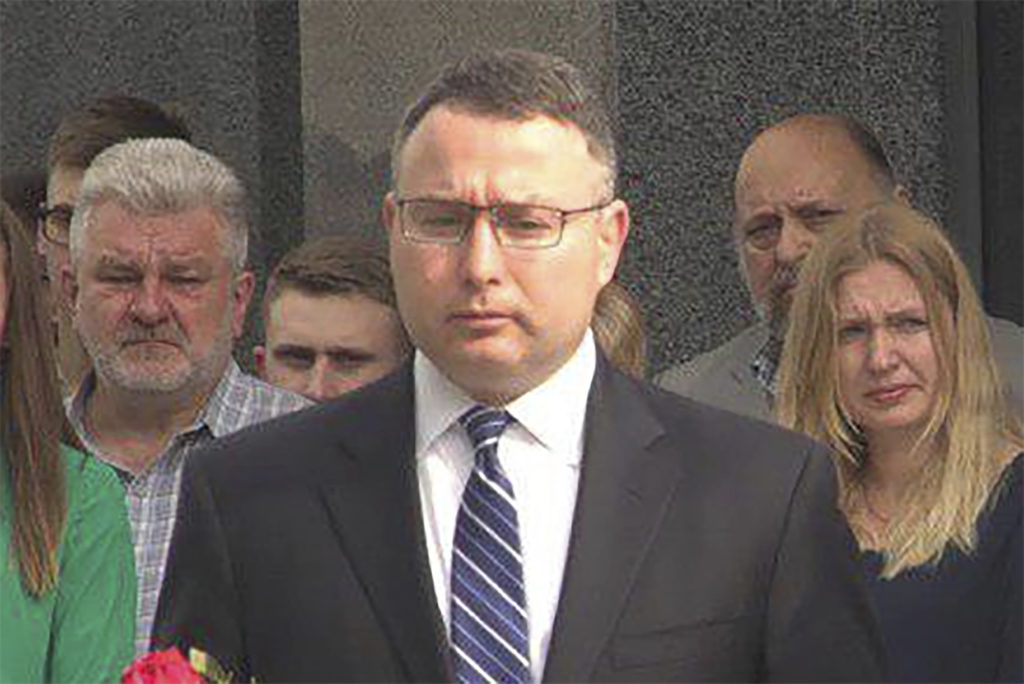
A military officer at the National Security Council twice raised concerns over the Trump administration’s push to have Ukraine investigate Democrats and Joe Biden, according to testimony the official is to deliver Tuesday in the House impeachment inquiry. Alexander Vindman, an Army lieutenant colonel who served in Iraq and, later, as a diplomat, is prepared to tell House investigators that he listened to President Donald Trump’s July 25 call with new Ukraine President Volodymyr Zelenskiy and reported his concerns to the NSC’s lead counsel. “I was concerned by the call,” Vindman will say, according to prepared testimony obtained Monday night by The Associated Press. “I did not think it was proper to demand that a foreign government investigate a U.S. citizen, and I was worried about the implications for the U.S. government’s support of Ukraine.” Vindman is the first official who listened in on that call to testify as the impeachment inquiry reaches deeper into the Trump administration and Democrats prepare for the next, public phase of the probe. He’s also the first current White House official to appear before the impeachment panels. The inquiry is looking into Trump’s call, in which he asked Zelenskiy for a “favor” — to investigate Democrats — that Democrats say was a quid pro quo that could be an impeachable offense. Trump took to Twitter Tuesday to denounce the probe as a “sham,” adding: “Why are people that I never even heard of testifying about the call. Just READ THE CALL TRANSCRIPT AND THE IMPEACHMENT HOAX IS OVER!” Vindman, a 20-year military officer and decorated veteran, testify that he first reported his concerns after an earlier meeting July 10 in which U.S. Ambassador to the European Union Gordon Sondland stressed the importance of having Ukraine investigate the 2016 election as well as Burisma, a company linked to the family of Biden, a 2020 Democratic presidential candidate. Vindman says he told Sondland that “his statements were inappropriate, that the request to investigate Biden and his son had nothing to do with national security, and that such investigations were not something the NSC was going to get involved in or push.” That account differs from Sondland’s, a wealthy businessman who donated $1 million to Trump inauguration and testified before the impeachment investigators that no one from the NSC “ever expressed any concerns.” He also testified that he did not realize any connection between Biden and Burisma. For the call between Trump and Zelenskiy, Vindman said he listened in the Situation Room with colleagues from the NSC and Vice President Mike Pence’s office and was concerned. He said he again reported his concerns to the NSC’s lead counsel. He wrote, “I realized that if Ukraine pursued an investigation into the Bidens and Burisma, it would likely be interpreted as a partisan play which would undoubtedly result in Ukraine losing the bipartisan support it has thus far maintained. This would all undermine U.S. national security.” Vindman, who arrived in the United States as a 3-year-old from the former Soviet Union, served in various military and diplomatic posts before joining the NSC. He was the director for European affairs and a Ukraine expert under Fiona Hill, a former official who testified earlier in the impeachment probe. Hill worked for former national security adviser John Bolton. At least one Trump ally sought to discredit Vindman ahead of his testimony by appearing to question his loyalty to the U.S. Former GOP Rep. Sean Duffy told CNN that the Purple Heart recipient has an “affinity” for Ukraine. “It seems very clear that he is incredibly concerned about Ukrainian defense,” he said. “I don’t know that he’s concerned about American policy, but his main mission was to make sure that the Ukraine got those weapons.” Vindman will be a key witness. He attended Zelenskiy’s inauguration with a delegation led by Energy Secretary Rick Perry, and he and Hill were both part of a Ukraine briefing with Sondland that others have testified irritated Bolton at the White House. Vindman will testify that he is not the whistleblower, the still unnamed government official who filed the initial complaint over Trump’s conversation with the Ukraine president that sparked the House impeachment inquiry. He will say he does not know who the whistleblower is. “I am a patriot, and it is my sacred duty and honor to advance and defend OUR country, irrespective of party or politics,” wrote Vindman, who was wounded in Iraq and awarded a Purple Heart. “For over twenty years as an active duty United States military officer and diplomat, I have served this country in a nonpartisan manner, and have done so with the utmost respect and professionalism for both Republican and Democratic administrations,” he wrote. The testimony comes a day after Speaker Nancy Pelosi announced the House will vote on a resolution to affirm the impeachment investigation, set rules for public hearings and outline the potential process for writing articles of impeachment against Trump. The vote is expected Thursday. It would be the first formal House vote on the impeachment inquiry and aims to nullify complaints from Trump and his allies that the process is illegitimate, unfair and lacking due process. Democrats insisted they weren’t yielding to Republican pressure. Pelosi dismissed the Republican argument that impeachment can’t begin without formal approval from the House and brushed off their complaints about the closed-door process. “I do not care. I do not care. This is a false thing with them,” Pelosi said. “Understand, it has nothing to do with them. It has to do with how we proceed.” Pelosi’s announcement Monday came just hours after a former White House national security official defied a House subpoena for closed-door testimony, escalating the standoff between Congress and the White House over who will testify. Charles Kupperman, who was a deputy to Bolton, failed to show up for the scheduled closed-door deposition after filing a lawsuit asking a federal court in Washington to rule on whether he was legally required to appear. By Lisa Mascaro, Mary
Florida men tied to Rudy Giuliani, Ukraine probe arrested
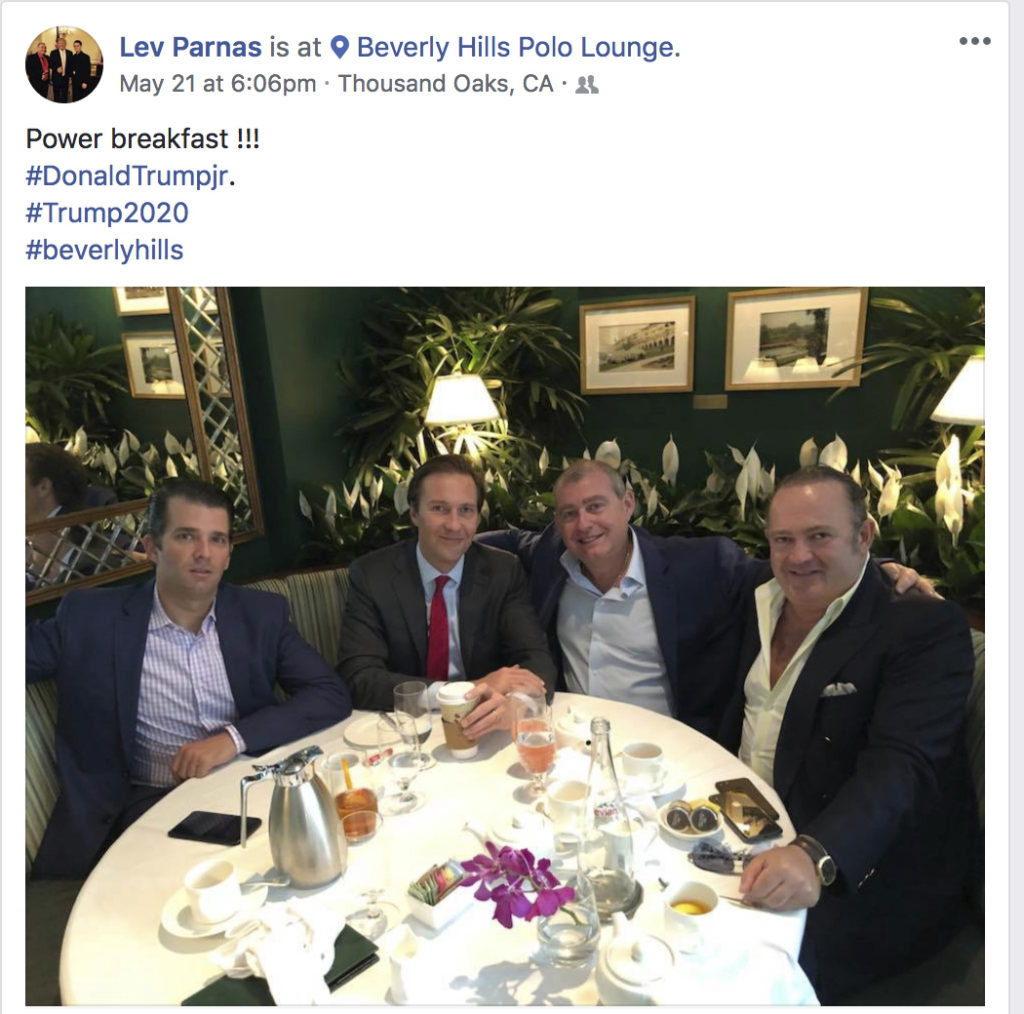
Two Florida businessmen tied to President Donald Trump’s lawyer and the Ukraine impeachment investigation were charged with federal campaign finance violations.The charges Thursday relate to a $325,000 donation to a group supporting Trump’s reelection. Lev Parnas and Igor Fruman, associates of Rudy Giuliani, were arrested Wednesday trying to board an international flight with one-way tickets at Dulles International Airport in Virginia, according to Geoffrey Berman, the U.S. attorney in Manhattan. Parnas and Fruman were arrested on a four-count indictment that includes charges of conspiracy, making false statements to the Federal Election Commission and falsification of records. The men had key roles in Giuliani’s efforts to launch a Ukrainian corruption investigation against Democratic presidential contender Joe Biden and his son Hunter. The indictments mark the first criminal charges related to the Ukraine controversy. While they do not suggest wrongdoing by the Republican president, they raise additional questions about how those close to Trump and Giuliani sought to use their influence. Trump has dismissed the impeachment inquiry as baseless and politically motivated. As he was leaving the White House for a political rally in Minneapolis, Trump said he didn’t know Parnas or Fruman and hadn’t spoken with Giuliani about them. “We have nothing to do with it,” Trump said. Giuliani said he couldn’t comment and that he didn’t represent the men in campaign finance matters. Records show that Parnas and Fruman used wire transfers from a corporate entity to make the $325,000 donation to the America First Action committee in May 2018. But wire transfer records that became public through a lawsuit show that the corporate entity reported as making the transaction was not the source of the money. The big donation to the Trump-allied PAC was part of a flurry of political spending tied to Parnas and Fruman, with at least $478,000 in donations flowing to GOP campaigns and PACs in little more than two months. The money enabled the relatively unknown entrepreneurs to quickly gain access to the highest levels of the Republican Party, including meetings with Trump at the White House and Mar-a-Lago in Florida. Prosecutors allege that Parnas urged a congressman to seek the ouster of the U.S. ambassador to Ukraine, at the behest of Ukrainian government officials. That happened about the same time that Parnas and Fruman committed to raising more than $20,000 for the politician. The congressman wasn’t identified in court papers, but the donations match campaign finance reports for former Rep. Pete Sessions, a Texas Republican who lost his reelection bid in November. In May 2018, Parnas posted a photo of himself and his business partner David Correia with Sessions in his Capitol Hill office, with the caption “Hard at work!!” Parnas and Fruman appeared in court Thursday and were ordered to remain jailed as a bail package was worked out. They are due in court in New York next week. Kevin Downing, the lawyer who represented former Trump campaign chairman Paul Manafort on charges that he hid millions of dollars that he earned in Ukraine advising politicians there, was representing the men for their initial appearance and declined to comment. Correia and Andrey Kukushkin, a Ukrainian-born U.S. citizen, were also charged in the case. A federal judge in San Francisco ordered Kukushkin held on Thursday pending a bail hearing to determine whether he is considered a flight risk. Parnas and Fruman were arrested as they attempted to get on a flight to Frankfurt, Germany, according to a person familiar with the investigation. U.S. authorities are looking at whether that was a first stop en route to Ukraine, said the person, who wasn’t authorized to discuss the probe and spoke on condition of anonymity. Attorney General William Barr had been briefed on the investigation soon after he was confirmed in February, was updated in recent weeks and was made aware Wednesday night that the men were being arrested, a person familiar with the matter told The Associated Press. The person spoke on condition of anonymity to discuss an ongoing investigation. The indictment says Parnas and Fruman “sought to advance their personal financial interests and the political interests of at least one Ukrainian government official with whom they were working” and took steps to conceal it from third parties, including creditors. They created a limited liability corporation, Global Energy Producers, and “intentionally caused certain large contributions to be reported in the name of GEP instead of in their own names.” Prosecutors charge that the two men falsely claimed the contributions came from GEP, which was described as a liquefied natural gas business. At that point, the company had no income or significant assets, the indictment said. Prosecutors allege that Parnas and Fruman conspired to make illegal contributions to try to skirt the limit on federal campaign contributions. The men are also accused of making contributions to candidates for state and federal office, joint fundraising committees and independent expenditure committees in the names of other people. The commitment to raise more than $20,000 for the congressman was made in May and June 2018. The lawmaker had also received about $3 million in independent expenditures from a super political action committee that Parnas and Fruman had been funding. As a result of the donations, Parnas and Fruman had meetings with the congressman and Parnas lobbied him to advocate for removing the ambassador to Ukraine, Berman said. Trump referred to Ambassador Marie Yovanovitch, who was indeed recalled to the U.S., as “bad news” in his July phone call with Ukrainian President Volodymyr Zelenskiy. Sessions said in a statement tweeted by a spokesman that he “could not have had any knowledge of the scheme described in the indictment.” Sessions wasn’t asked to take any action during the meetings with Parnas and Fruman and wrote a letter to the secretary of state about Yovanovitch after colleagues in Congress said she was “disparaging” the president, he said. The indictment also charges that Kukushkin conspired with the three other defendants to make political contributions, funded by a foreign national, to politicians seeking
