
Will Davis: AMEXIT — It’s time to ditch the U.N.
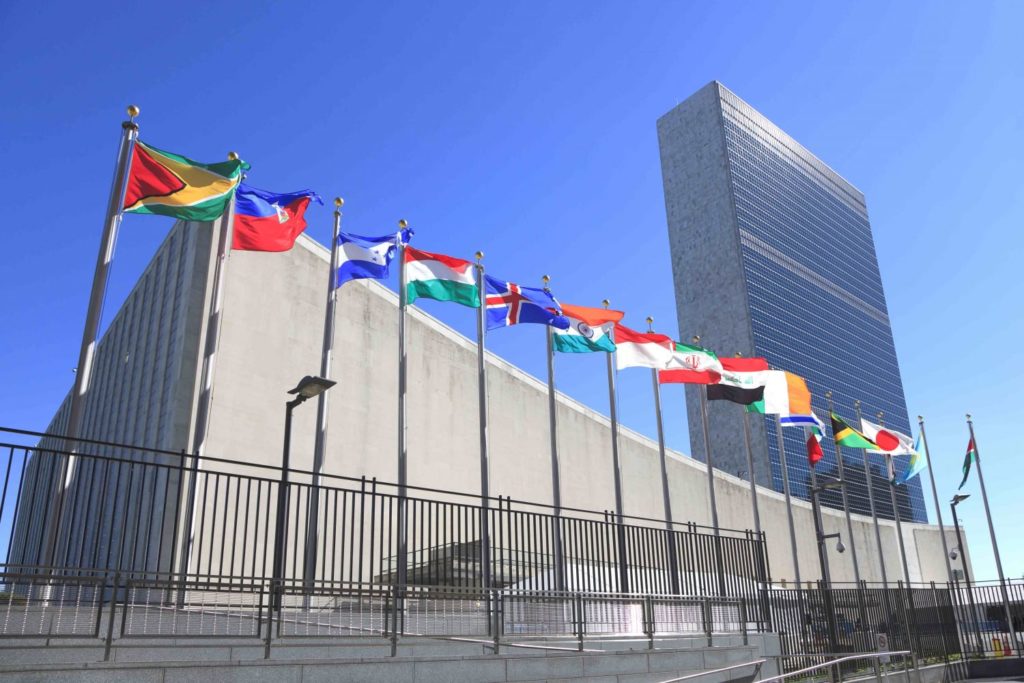
“A forum for anti-semitism & anti-americanism.” Florida Senator Marco Rubio, a former presidential candidate, and one of the country’s leading voices on foreign policy had these harsh words for the United Nations in a Tweet back in February. Rubio also questioned the continued funding for an organization that treats America and her allies with such hostility. This followed a general assembly vote 128-9 to condemn the U.S. decision to recognize Jerusalem as the capital of Israel. Now it’s time for Rubio and his GOP colleagues to put their money where there mouth is and cease funds to this wretched organization. Make no mistake, I am not an advocate of isolationism, and alliances with countries that we can count on are of the upmost important. But, it is now clear that the United Nations has outlived it’s purpose. Today, the institution that was created to prevent war has done more to inspire it. The institution that was created to promote freedom and democracy now promotes tyranny and authoritarianism. Nearly half of the security council’s recent condemnations have focused on Israel, while ripping the U.S’s relationship with them. Since Israel was officially recognized as a state in 1948, the security council has issued 225 resolutions against the democratic state, while by comparison, ignoring the theocratic, terror-supporting states that surround them. This is the exact opposite of what the U.N. was created to do. It is time for the U.S. to ditch this failed institution and form coalitions with countries that we can count on. Countries that share our values. The communist, socialist, and radical islamic states that dominate the discourse at the U.N. can find a forum elsewhere, but there is no reason that forum should be on our soil. Last year, the people of Great Britain stood up for their sovereignty and against unaccountable Bureaucracy, leaving the corrupt European Union. This year, it’s time for the United States to do the same. It’s time for our own Brexit. Our Amexit. ••• William Davis is a sophomore at the University of Alabama. There he is involved in various conservative groups and organizations.
‘Not a friend of democracy’: Donald Trump’s past UN criticism
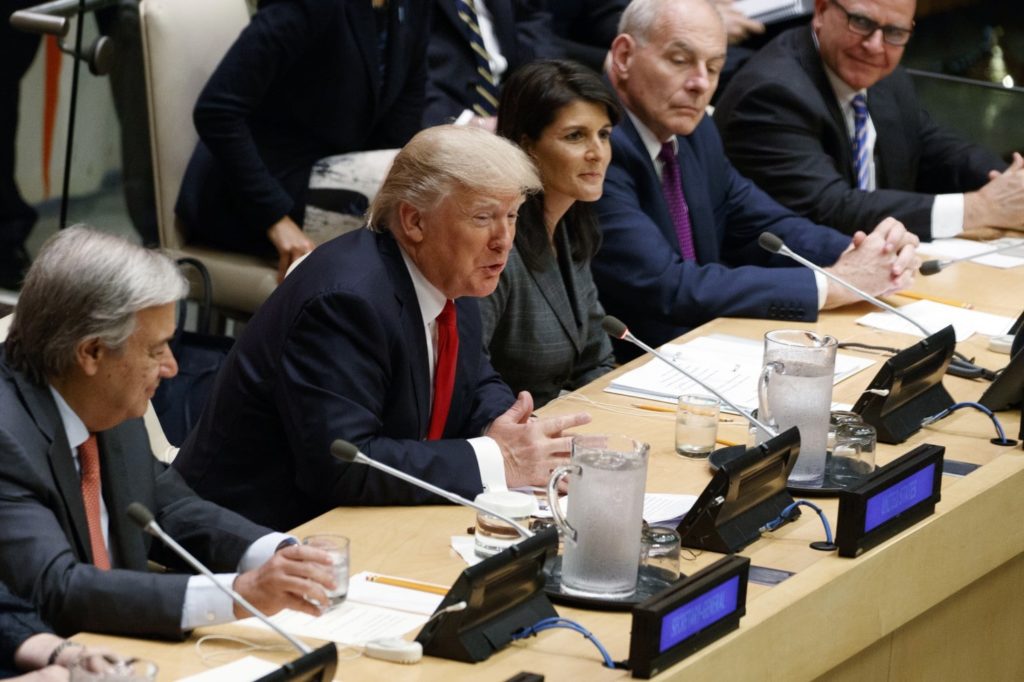
“Utter weakness and incompetence.” ”Not a friend of democracy.” ”Just a club for people to get together, talk and have a good time.” As President Donald Trump visits the United Nations, a look at some of his past tough comments about the world body: – “Why is the UN condemning @Israel and doing nothing about Syria? What a disgrace,” he tweeted in October 2011, one of a series of tweets about the organization that year. Trump said that September he was “increasingly concerned” with what he called “the UN’s ploy against @Israel this coming week.” “We must stand firm against the UN’s ploy to sabotage Israel — -if the UN grants the PA statehood then we must immediately defund it,” he wrote. – “The cheap 12 inch sq. marble tiles behind speaker at UN always bothered me. I will replace with beautiful large marble slabs if they ask me,” he tweeted in October 2012. – In a speech at the AIPAC Policy Conference in Washington in March 2016, Trump took on what he described as “the utter weakness and incompetence of the United Nations.” “The United Nations is not a friend of democracy, it’s not a friend to freedom, it’s not a friend even to the United States of America; whereas you know it has its home and it surely is not a friend to Israel,” he said. -Angry at the Obama administration for not vetoing a U.N. resolution that criticized Israel for its settlement activity, the soon-to-be-president said in a Dec. 23, 2016 tweet that: “As to the U.N., things will be different after Jan. 20th.” -“The United Nations has such great potential but right now it is just a club for people to get together, talk and have a good time. So sad!” Trump tweeted on Dec. 26, 2016, shortly before his move to Washington. – “The U.N. has such tremendous potential, not living up to its potential,” he told reporters at his Mar-a-Lago resort in Florida in December 2016. “When do you see the United Nations solving problems? They don’t. They cause problems. So, if it lives up to the potential, it’s a great thing. And if it doesn’t, it’s a waste of time and money.” -“I have long felt the United Nations is an underperformer but has tremendous potential,” Trump told ambassadors and their spouses who visited the White House for lunch in April. “I think that the United Nations has tremendous potential – tremendous potential – far greater than what I would say any other candidate in the last 30 years would have even thought to say. I don’t think it’s lived up – I know it hasn’t lived up to the potential.” He added: “You just don’t see the United Nations, like, solving conflicts. I think that’s going to start happening now. I can see it. And the United Nations will get together and solve conflicts. It won’t be two countries, it will be the United Nations mediating or arbitrating with those countries. So I see fantastic potential.” Republished with permission from the Associated Press.
Donald Trump, in U.N. debut, urges the world body to reform
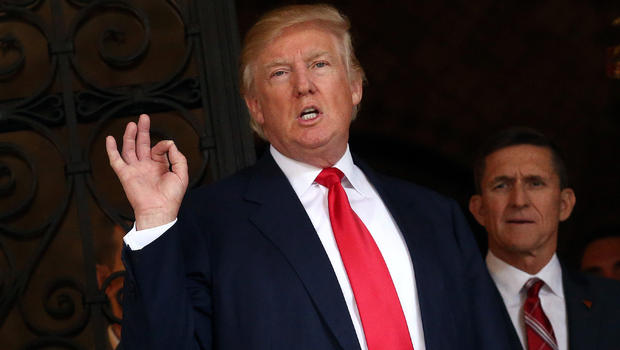
President Donald Trump made his debut at the United Nations on Monday, using his first moments at the world body to urge the 193-nation organization to reduce bureaucracy and costs while more clearly defining its mission around the world. But while Trump chastised the United Nations – an organization he sharply criticized as a candidate for president for its spiraling costs – he said the United States would “pledge to be partners in your work” in order to make the U.N. “a more effective force” for peace across the globe. “In recent years, the United Nations has not reached its full potential due to bureaucracy and mismanagement,” said Trump, who rebuked the United Nations for a ballooning budget. “We are not seeing the results in line with this investment.” The president pushed the U.N. to focus “more on people and less on bureaucracy” and to change “business as usual and not be beholden to ways of the past which were not working.” He also suggested that the U.S. was paying more than its fair share to keep the New York-based world body operational. But he also complimented steps the United Nations had taken in the early stages of the reform process and made no threats to withdraw his nation’s support. His measured tone stood in stark contrast to his last maiden appearance at a global body, when he stood at NATO’s new Brussels headquarters in May and scolded member nations for not paying enough and refusing to explicitly back its mutual defense pact. While running for office, Trump labeled the U.N. as weak and incompetent, and not a friend of either the United States or Israel. But he has softened his tone since taking office, telling ambassadors from U.N. Security Council member countries at a White House meeting that the U.N. has “tremendous potential.” Trump more recently has praised a pair of unanimous council votes to tighten sanctions on North Korea over its continued nuclear weapons and ballistic missile tests. Trump’s big moment comes Tuesday, when he delivers his first address to a session of the U.N. General Assembly. The annual gathering of world leaders will open amid serious concerns about Trump’s priorities, including his policy of “America First,” his support for the U.N. and a series of global crises. It will be the first time world leaders will be in the same room and able to take the measure of Trump. The president on Monday praised U.N. Secretary-General Antonio Guterres, who also spoke at the reform meeting and said he shared Trump’s vision for a less wasteful U.N. to “live up to its full potential.” The U.S. has asked member nations to sign a declaration on U.N. reforms, and more than 120 have done so. The president also kicked off his maiden speech at the world body by referring to the Trump-branded apartment tower across First Avenue from the U.N. Nikki Haley, the U.S. ambassador to the U.N., said Trump’s criticisms were accurate at the time, but that it is now a “new day” at the U.N. An organization that “talked a lot but didn’t have a lot of action” has given way to a “United Nations that’s action-oriented,” she said, noting the Security Council votes on North Korea this month. Guterres has proposed a massive package of changes, and Haley said the U.N. is “totally moving toward reform.” Trump riffed on his campaign slogan when asked about his main message for the General Assembly. “I think the main message is ‘make the United Nations great.’ Not again, ‘make the United Nations great,’” Trump said as he left the U.N. building. “Such tremendous potential, and I think we’ll be able to do this.” Trump also planned separate talks Monday with Israeli Prime Minister Benjamin Netanyahu and French President Emmanuel Macron. U.S. national security adviser H.R. McMaster said “Iran’s destabilizing behavior” would be a major focus of those discussions. He also was having dinner with Latin American leaders. The United States is the largest contributor to the U.N. budget, reflecting its position as the world’s largest economy. It pays 25 percent of the U.N.’s regular operating budget and over 28 percent of the separate peacekeeping budget – a level of spending that Trump has complained is unfair. The Trump administration is conducting a review of the U.N.’s 16 far-flung peacekeeping operations, which cost nearly $8 billion a year. Cutting their costs and making them more effective is a top priority for Haley. Republished with permission from the Associated Press.
Pushing back on Israel, John Kerry defends Obama Admin’s UN vote
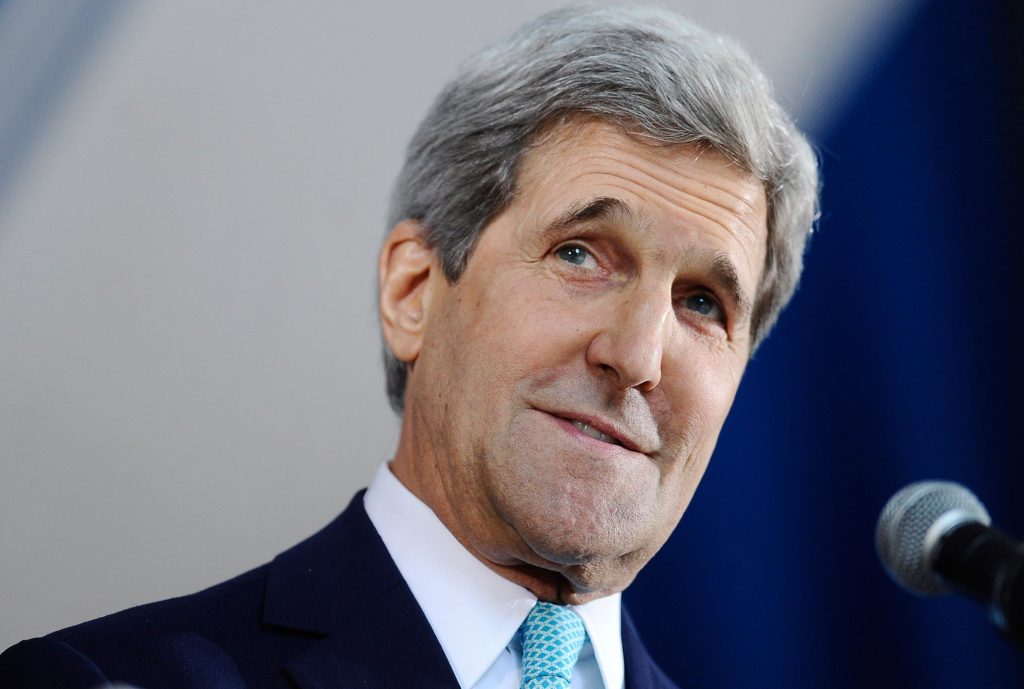
Stepping into a raging diplomatic argument, Secretary of State John Kerry on Wednesday staunchly defended the Obama administration’s decision to allow the U.N. Security Council to declare Israeli settlements illegal and warned that Israel’s very future as a democracy is at stake. Kerry, pushing back on Israel’s fury at the U.S. abstention of the United Nations vote, questioned Prime Minister Benjamin Netanyahu‘s true commitment to Palestinian statehood, which has formed the basis for all serious peace talks for years. Though Netanyahu says he believes in the two-state solution, Kerry said, he’s at the helm of the most right-wing (government) in Israel’s history. “If the choice is one state, Israel can either be Jewish or democratic, it cannot be both, and it won’t ever really be at peace,” Kerry said. Kerry’s speech marked the latest escalation in a vicious, drama-filled row between the U.S. and Israel that has erupted in the last days of Obama’s administration. The extraordinary display of discord between allies – with U.S. and Israeli officials openly disparaging each other – has also pitted President Barack Obama against President-elect Donald Trump, who has firmly taken Netanyahu’s side. Israel’s government was enraged after the U.S. abstained from voting on the U.N. Security Council resolution last week that called Israeli settlements in the West Bank and east Jerusalem a violation of international law. Netanyahu accused the U.S. of colluding with the Palestinians and helping draft the resolution, charges the U.S. has denied. “The United States did in fact vote in accordance with our values, just as previous administrations have done,” Kerry said in a farewell speech at the State Department. “The vote in the United Nations was about preserving the two-state solution. That’s what we were standing up for.” Kerry reiterated that the Obama administration’s commitment to Israel was as strong as that of previous presidents, but he also noted that previous U.S. administrations had also abstained on certain resolutions critical of Israel. He emphasized the record levels of military assistance the U.S. has provided Israel under Obama, codified by a 10-year aid deal recently struck worth $38 billion. “No American administration has done more for Israel’s security than Barack Obama’s,” Kerry said. Obama, who is vacationing with his family in Hawaii, hasn’t commented publicly on the resolution or the resulting spat. Seeking to show he wasn’t focusing exclusively on Israel’s failings, Kerry in the same sentence bemoaned Israel’s “seemingly endless occupation” of Palestinian land and Palestinian leaders’ “incitement” of violence. He invoked the widespread concern that the growing Arab population will eventually make Jews a minority in Israel, creating a democratic crisis for Israel unless there’s a separate Palestinian state. Israeli leaders have made no secret that they are counting on Trump to change U.S. policy, and Trump assured them hours before Kerry’s speech that they just needed to “hang on” til Jan. 20, when he would be sworn in as president. While Trump has not outlined a vision, he has signaled a much more sympathetic approach toward Israel, appointing an ambassador with strong ties to the West Bank settler movement and promising to move the U.S. Embassy from Tel Aviv to Jerusalem over Palestinian and others’ objections. “President-elect Trump, thank you for your warm friendship and your clear-cut support for Israel,” Netanyahu said on Twitter before Kerry’s speech. A senior Israeli Cabinet minister, Gilad Erdan, on Wednesday called Kerry’s speech a “pathetic step,” before Kerry even began speaking. The international community overwhelmingly opposes Israeli settlement construction in the West Bank and east Jerusalem, territories captured by Israel in 1967 and claimed by the Palestinians for an independent state. The Palestinians, and most of the world, see settlements, now home to 600,000 Israelis, as an obstacle to peace. Republished with permission of the Associated Press.
Israeli Cabinet minister calls John Kerry speech a ‘pathetic’
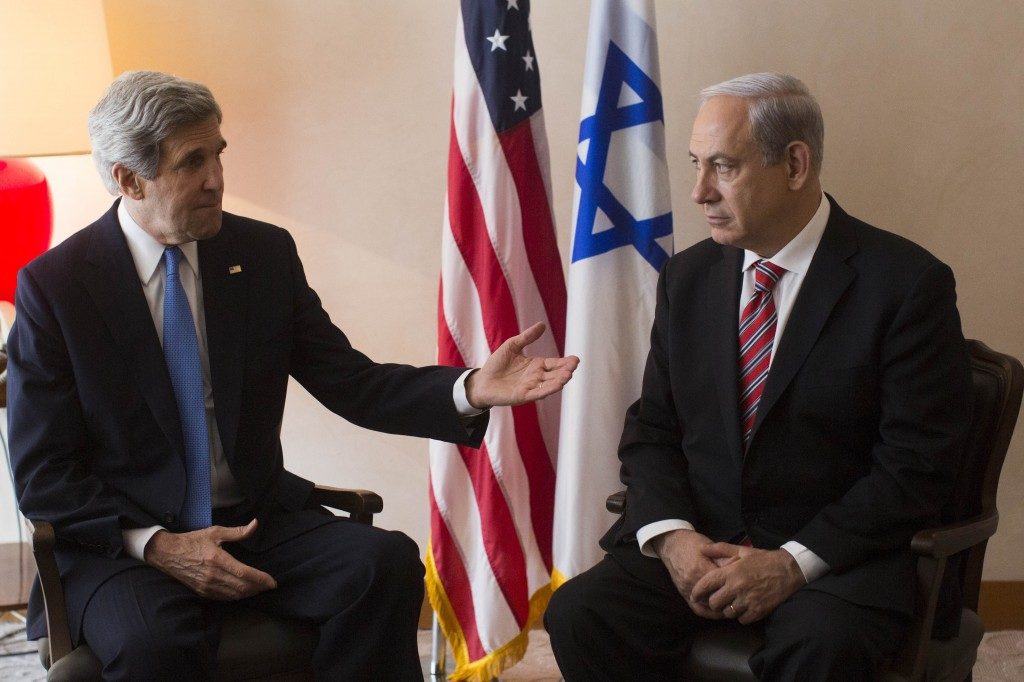
A senior Israeli Cabinet minister on Wednesday called U.S. Secretary of State John Kerry‘s planned Mideast policy speech a “pathetic step,” further heightening tensions between the two close allies as the Obama administration prepares to leave office. The comments by Public Security Minister Gilad Erdan were the latest salvo in a toxic exchange following the U.S.’s refusal to veto a U.N. Security Council resolution last week that called Israeli settlements in the West Bank and east Jerusalem a violation of international law. Israeli Prime Minister Benjamin Netanyahu has slammed the resolution, and accused the U.S. of colluding with the Palestinians in drawing it up. Following up on the U.N. resolution, Kerry was scheduled to deliver a farewell speech in Washington on Wednesday to outline his proposals for a peace settlement between Israel and the Palestinians. Next month, France is set to host an international conference where 70 countries, over Israeli objections, hope to endorse an international framework for Mideast peace. Israeli officials fear that the conference’s recommendations may then be approved in another U.N. Security Council resolution just before Obama leaves office on Jan. 20. In a radio interview, Erdan said Kerry’s speech was part of a broader effort to hinder the incoming administration of Donald Trump, who has signaled he will have much warmer relations with Israel. “This step is a pathetic step. It is an anti-democratic step because it’s clear that the administration and Kerry’s intention is to chain President-elect Trump,” Erdan told Israel Army Radio. Erdan, a member of Netanyahu’s Likud Party and inner Security Cabinet, said Obama administration officials are “pro-Palestinian” and “don’t understand what’s happening in the Middle East.” Kerry mediated a nine-month round of peace talks that broke down in early 2014 with little progress. Israeli leaders have made no secret that they are counting on Trump to change U.S. policy. While Trump has not outlined a vision, he has signaled a much more sympathetic approach toward Israel, appointing an ambassador with strong ties to the West Bank settler movement and promising to move the U.S. Embassy from Tel Aviv to Jerusalem, over Palestinian objections. The international community overwhelmingly opposes Israeli settlement construction in the West Bank and east Jerusalem, territories captured by Israel in 1967 and claimed by the Palestinians for an independent state. The Palestinians, and most of the world, see settlements, now home to 600,000 Israelis, as an obstacle to peace. Netanyahu says the conflict with the Palestinians, including the fate of the settlements, must be resolved through direct negotiations and says that international dictates undermine the negotiating process. Despite the Israeli anger, Netanyahu ordered a Jerusalem planning committee to delay a vote on approving construction of some 500 new homes in Jewish developments of east Jerusalem, a city councilman said. Council member Hanan Rubin told The Associated Press that Netanyahu asked to delay Wednesday’s vote so as not to antagonize relations with the U.S. Meanwhile, a senior leader of the West Bank settlement movement called Kerry a “stain on American foreign policy” and “ignorant of the issues.” Oded Revivi, chief foreign envoy of the Yesha Council, said Kerry is “the worst secretary of state in history,” who “chose to stab his closest ally in the back” and knows little about the realities of Israeli settlements in the West Bank. Republished with permission of the Associated Press.
A look at the last 4 US ambassadors to the United Nations
President-elect Donald Trump choice for United Nations ambassador, South Carolina Gov. Nikki Haley, has limited foreign policy experience. That’s in contrast to other U.N. ambassadors who had deep roots in international affairs at the time of their nominations. A look at the backgrounds of the four most recent U.S. ambassadors to the United Nations: Samantha Power (2013-present): A Pulitzer Prize-winning journalist for her examination of America’s historical responses to genocide, Power was born in Ireland and came to the United States as a child. She worked for then-Sen. Barack Obama and then for his presidential campaign as a foreign policy adviser. During Obama’s first term, she served in his National Security Council. There, she joined an influential group of advisers who pushed for the U.S.-led bombing campaign in Libya. Susan Rice (2009-2013): A Rhodes scholar who studied international relations at Oxford, Rice was a foreign policy wonk from a young age. She served as an adviser to Democratic presidential candidate Michael Dukakis during the 1988 campaign and to Bill Clinton four years later. Under Clinton, she worked in the National Security Council and then as assistant secretary of state for African affairs. After advising Obama’s 2008 campaign, she joined his Cabinet after the newly inaugurated president elevated the position of U.N. ambassador. Zalmay Khalilzad (2007-2009): A native of Afghanistan, Khalilzad was educated at the American University in Beirut and the University of Chicago. A speaker of four languages, he served in senior national security positions during the presidencies of Ronald Reagan and George H.W. Bush. President George W. Bush tapped him to be his Afghanistan envoy after the Sept. 11, 2001, terrorist attacks. He then served as ambassador to Afghanistan during its critical, post-Taliban period of drafting a constitution and setting up a new government, and worked closely with then-Afghan President Hamid Karzai. Bush then sent him as ambassador to Iraq during the height of sectarian violence following the U.S. invasion. John Bolton (2005-2006): Bolton was probably the most divisive foreign policy expert ever to serve as U.N. ambassador. Born in Baltimore, he graduated summa cum laude from Yale before serving at three federal agencies under Presidents Ronald Reagan and George H.W. Bush. When George W. Bush became president, Bolton served as the State Department’s point-man on arms control, where he battled other governments on nuclear weapons tests, land mines, biological weapons, balllistic missile limits and the International Criminal Court. An unabashed proponent of American power and a strong supporter of the Iraq war, Bolton was unable to win Senate confirmation after his nomination to the U.N. post turned off many Democrats and even some Republicans. He resigned after serving 17 months as a Bush “recess appointment,” which allowed him to hold the job on a temporary basis without Senate confirmation. Republished with permission of the Associated Press.
United States says it will abstain on UN vote on Cuba embargo

The United States announced Tuesday that it will abstain for the first time in 25 years on a U.N. resolution condemning America’s economic embargo against Cuba, a resolution it had always vehemently opposed. The announcement by U.S. Ambassador Samantha Power ahead of a vote on the resolution was greeted with applause in the 193-member General Assembly. Power said the U.S. was abstaining because of President Barack Obama‘s new approach to Cuba, but she made clear that the United States “categorically” rejects statements in the resolution suggesting the embargo violated international law. She also stressed that abstaining “does not mean that the United States agrees with all of the policies and practices of the Cuban government.” “We do not,” Power said. “We are profoundly concerned by the serious human rights violations that the Cuban government continues to commit.” Republished with permission of the Associated Press.
