
Union president Chuck Jones challenges Donald Trump on Carrier
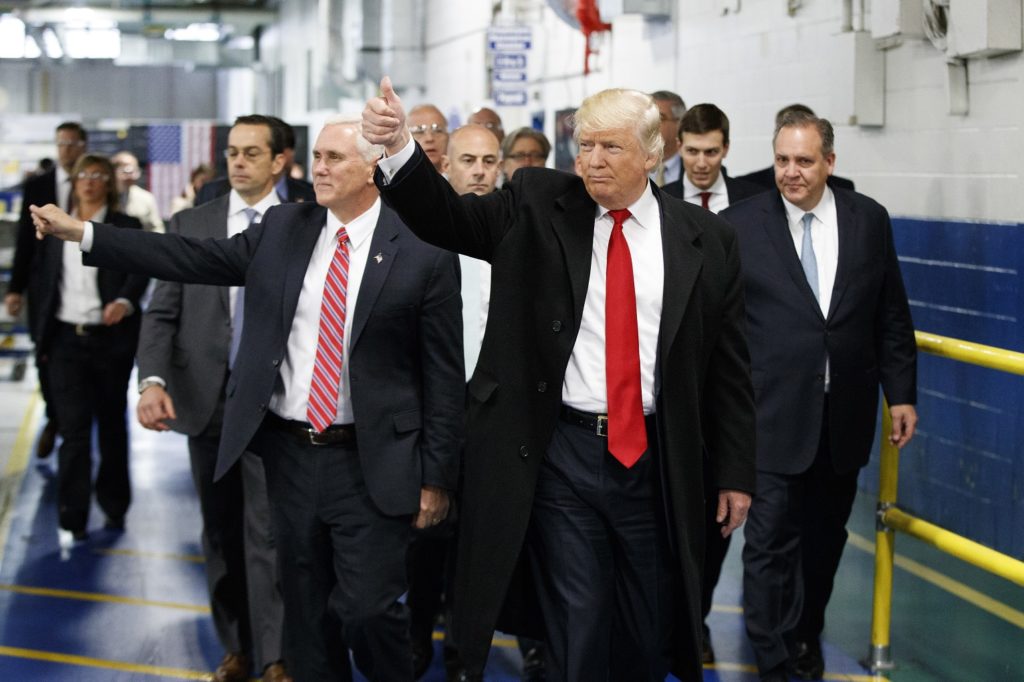
The union president slammed by Donald Trump on Twitter challenged the president-elect Thursday to back up his claim that a deal to discourage Carrier Corp. from closing an Indiana factory would save 1,100 American jobs. “He overreacted, President-elect Trump did,” United Steelworkers 1999 President Chuck Jones told CNN. “He should have come out and tried to justify his numbers.” Trump and Vice President-elect Mike Pence – governor of Indiana – visited Carrier’s Indianapolis factory Dec. 1 to celebrate the deal. Trump suggested then that the number of jobs saved could top 1,100. Jones says the total is much less because more than 400 jobs will still be lost from the Indianapolis plant. “A lot of the people thought at that time thought that they were going to have a job” who might not, Jones said Thursday. Late Wednesday, Trump tweeted: “Chuck Jones, who is President of United Steelworkers 1999, has done a terrible job representing workers.” That local union branch represents workers at Carrier’s Indianapolis plant. In a second tweet, Trump suggested Jones should “Spend more time working – less time talking” and the union should “Reduce dues.” About 30 minutes after Trump tweeted about Jones, the union leader started getting harassing phone calls, he told MSNBC. He said one caller asked: “What kind of car do you drive?” Another said: “We’re coming for you.” He told the cable news outlet he wasn’t sure how the callers found his number. “Nothing that says they’re going to kill me, but, you know, you better keep your eye on your kids,” Jones told MSNBC. “I’ve been doing this job for 30 years, and I’ve heard everything from people who want to burn my house down or shoot me … I can deal with people that make stupid statements and move on.” Republished with permission of The Associated Press.
Federal appeals court upholds Alabama law banning public payroll deductions for political activity
A federal appeals court upheld an Alabama law that makes it difficult for public employee unions to raise funds for political activities by automatic payroll deductions. In an announcement Wednesday, Attorney General Luther Strange praised a decision by the 11th U.S. Circuit Court of Appeals on Alabama Education Association v. Robert Bentley, which upheld the law banning payroll deductions from public employees to groups using the money for political activity. The 2010 law was one of the “paycheck protection” proposals passed in several states since the 1990s. According to the Economic Policy Institute, supporters of the movement believe the bills will fight corruption and “save taxpayers money [by removing] the government from the role of collecting money used for political purposes, and will increase workers’ control over how their wages are spent.” Opponents believe the movement was designed to make it difficult for unions to raise money; saying it represents a violation of First Amendment rights of free speech. “For the second time in two days, the federal appeals court has upheld the constitutionality of Alabama’s political corruption laws and delivered a significant victory for the people of Alabama in their ongoing fight against political corruption,” Strange said. “This law, in particular, will stop special interest groups from exploiting state resources to further their own, private political agendas.” On Sept. 28, the 11th Circuit Court ruled the law did not violate the First Amendment rights of politically active groups looking to finance activities with automatic payroll donations from public employees. The decision was the final step in a five-year legal battle, which produced five separate appellate opinions. “Today’s ruling also marks the end of major litigation seeking to reverse a series of laws passed by the Legislature during its 2010 Special Session. These laws shared a common theme: to enhance ethics and integrity in our state government,” Strange said. “Challenges to a majority of those laws have been brought and pursued at length. But every one of these challenges to reach final resolution has failed.” In his statement, Strange also commended his Constitutional Defense Section, notably Deputy Attorney General Jim Davis and Assistant Attorney General Will Parker, for its work in this case.
