
Alabama judge refuses dismissal in Confederate chair theft

An Alabama judge has refused to dismiss an indictment against a New Orleans tattoo artist accused in a bizarre theft in which a chair-shaped Confederate monument was taken from a cemetery and held for ransom. Dallas County Circuit Judge Collins Pettaway Jr. refused to dismiss charges of theft and receiving stolen property against Jason Warnick, 33, in a brief decision released Thursday. The judge rejected defense claims that there were problems with the indictment charging Warnick in the disappearance last year of a chair-shaped monument to Confederate President Jefferson Davis from 200-year-old Live Oak Cemetery in Selma. Warnick also claimed there wasn’t enough evidence to arrest him, but the judge refused to dismiss the charge. Warnick was set to go on trial on Monday, but Pettaway delayed the case and scheduled a hearing for June 16. Placed at the cemetery in 1893 by the United Daughters of the Confederacy, the chair vanished from its base last year in Selma, which was a Confederate arsenal during the Civil War and also is widely known as the site of voting rights demonstrations by Black activists in the 1960s. An email claiming to be from a group called White Lies Matter claimed responsibility and said the chair would be returned only if the United Daughters of the Confederacy agreed to display a banner at its Virginia headquarters bearing a quote from a Black Liberation Army activist. The email also included images of a fake chair with a hole cut in the seat like a toilet and a man dressed in Confederate garb. Authorities who arrested Warnick said the real chair was spotted at his tattoo parlor in New Orleans, where he was charged with receiving stolen property before the case was dismissed. Warnick is innocent and had never been to Selma before he went to the city to surrender on the theft charge, the defense argues. The chair, which the United Daughters of the Confederacy valued at $500,000, was returned to the cemetery and glued to its base. Republished with the permission of the Associated Press.
Alabama trial delayed for New Orleans man in monument theft
A judge has delayed the trial of a New Orleans man charged with stealing a chair-shaped Confederate monument from an Alabama cemetery in a bizarre ransom scheme. Jason Warnick had been scheduled to stand trial next month in Selma on charges of theft and receiving stolen property, but Dallas County Circuit Judge Collins Pettaway Jr. recently rescheduled the case until May 9 at the request of the defense, court documents show. One of Warnick’s attorneys underwent surgery after being injured in a motorcycle crash and would have a difficult time traveling for the trial, the defense said in its request. Warnick, 33, was charged last year following the theft of a chair-shaped memorial that was taken from a cemetery in Selma. Warnick is innocent, his attorney has said. The case began last spring when news outlets began receiving emails with an unusual ransom demand involving a chair-shaped monument honoring Confederate President Jefferson Davis. The memorial was placed in the cemetery by the United Daughters of the Confederacy about 130 years ago. A message claiming to be from a group called White Lies Matter said the chair would be returned only if the heritage group agreed to display a banner at its Virginia headquarters bearing a quote from a Black Liberation Army activist. The email also included images of a fake chair with a hole cut in the seat like a toilet and a man dressed as a Confederate soldier. New Orleans police said they found the real chair undamaged and arrested Warnick, who has a tattoo shop in New Orleans, and two others. Louisiana prosecutors dropped a charge of possession of stolen property against Warnick and the others, but Alabama prosecutors are moving ahead with the case against Warnick. The chair has since been returned to Live Oak Cemetery in Selma, where it was secured to its base with glue. Republished with the permission of the Associated Press.
Hearing set on bid to dismiss suit over Confederate memorial
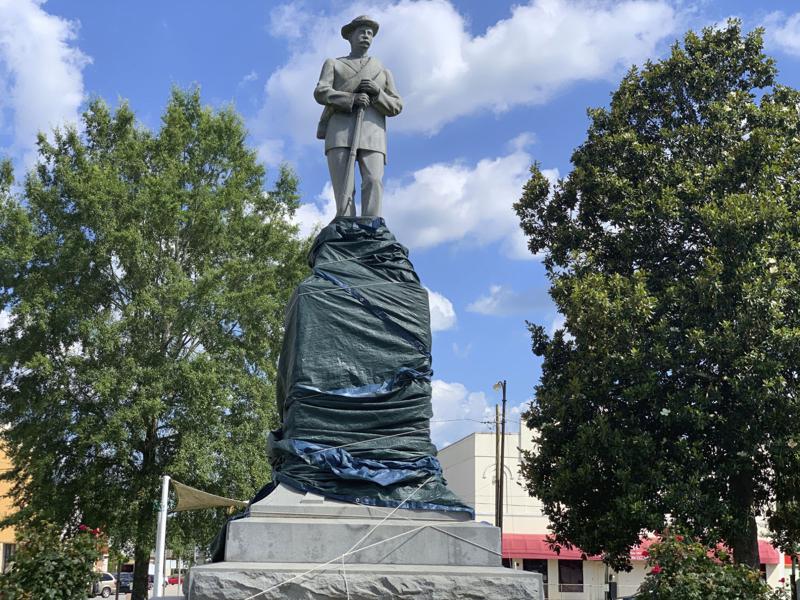
A hearing is set for early next year on a bid by a Confederate heritage group to dismiss a lawsuit over the land where a rebel monument stands in the middle of mostly black Tuskegee, Alabama. Court records show Macon County Circuit Judge Steven Perryman has scheduled a session for Feb. 3 on the dispute. The Tuskegee chapter of the United Daughters of the Confederacy is opposing a lawsuit filed earlier this year that could lead to the removal of a Confederate monument that’s stood in the heart of Tuskegee for 115 years. A lawsuit filed by the county and Tuskegee residents argues the county wrongfully gave land to the Confederate group for the statue in 1906. A decision in favor of the county could lead to removal of the monument, which has been the subject of on-and-off opposition for decades. But the United Daughters of the Confederacy says it owns the square legally, and an attorney for the group says members want the monument to remain. An order from the judge said he will consider the group’s request to throw out the lawsuit during the hearing in February. The monument was erected in Tuskegee at a time when groups all over the South were erecting Civil War memorials to honor rebel troops and portray the cause of the slave-holding Confederacy as noble. Hundreds of rebel monuments have been taken down in recent years as they came to be seen as symbols of racial oppression against Black people. Former Mayor Johnny Ford, now a Tuskegee City Council member, used a saw to damage the statue in July in hopes it would topple over, but it didn’t, and the county subsequently filed suit. The United Daughters of the Confederacy has since spent several thousand dollars on repairs, its lawyer said. Republished with the permission of the Associated Press.
Confederate group opposing suit over Tuskegee monument site
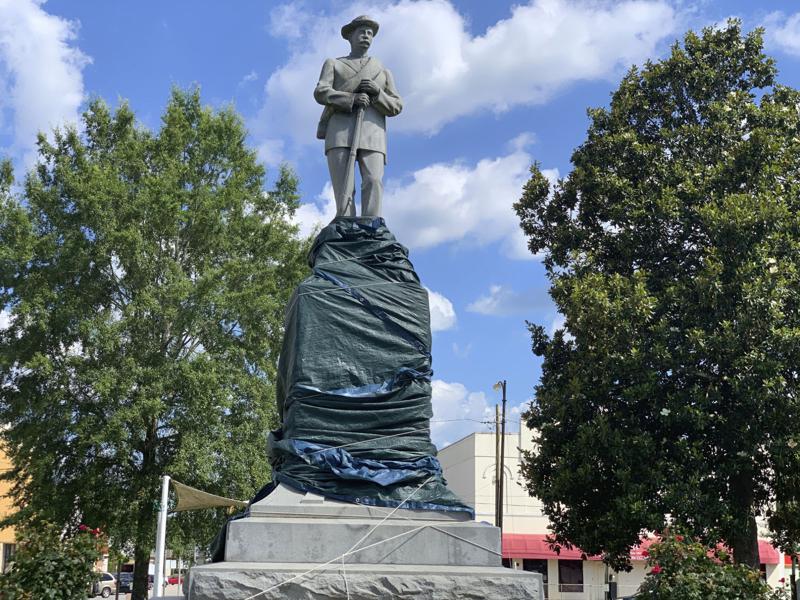
A Confederate heritage group will fight an Alabama county’s lawsuit that could lead to the removal of a rebel monument in the heart of nearly all-Black Tuskegee, the group’s lawyer said Tuesday. While Macon County has asked a court to give it the deed to a downtown square where the memorial has stood for 115 years — potentially a key first step toward taking down the statue — the United Daughters of the Confederacy owns the square legally and wants the monument to remain, said Jay Hinton, an attorney for the group, in its first public response to the court fight. “All of those members have ancestors who are honored by that monument,” he said. The monument, located in front of the county courthouse in a city of 9,400 that is 97% Black, has been the subject of on-and-off protests and attempts to remove it for decades. The monument went up at a time when groups all over the South were erecting Civil War memorials to honor rebel troops and portray the cause of the slave-holding Confederacy as noble. Hundreds have been taken down in recent years as they came to be seen as symbols of racial oppression against Black people. Controlled by whites at the time despite having a majority black population, Macon County in 1906 gave a plot at the center of Tuskegee to the Confederate group for use as the site of a rebel monument and as a “park for white people,” records show. The county now contends the land transfer was unconstitutional, partly because of the racial clause. The United Daughters of the Confederacy, which has about a dozen members in Tuskegee, never attempted to exclude anyone from the park because of race and considers the racial restriction offensive, Hinton said, but the wording doesn’t mean that the county should get the land back. “We believe we have owned and still own the square,” he said. While the group has worked with the county and city to come to an agreement, “the only proposal that continued to be offered was simply for the chapter to pay to take down its monument, move it and give the county back the land,” he said. The group refused. A Tuskegee City Council member used a saw to damage the statue earlier this year in hopes it would topple over, but it didn’t, and the county subsequently filed suit in September. The United Daughters of the Confederacy has since spent several thousand dollars on repairs, Hinton said. Located about 40 miles (64 kilometers) east of the state capital of Montgomery, Tuskegee is the home of Tuskegee University. The town airfield was where the nation’s first Black military pilots, the Tuskegee Airmen, trained during World War II. Republished with the permission of the Associated Press.
