
Bradley Byrne: Signs continue to show Obamacare’s fatal flaws
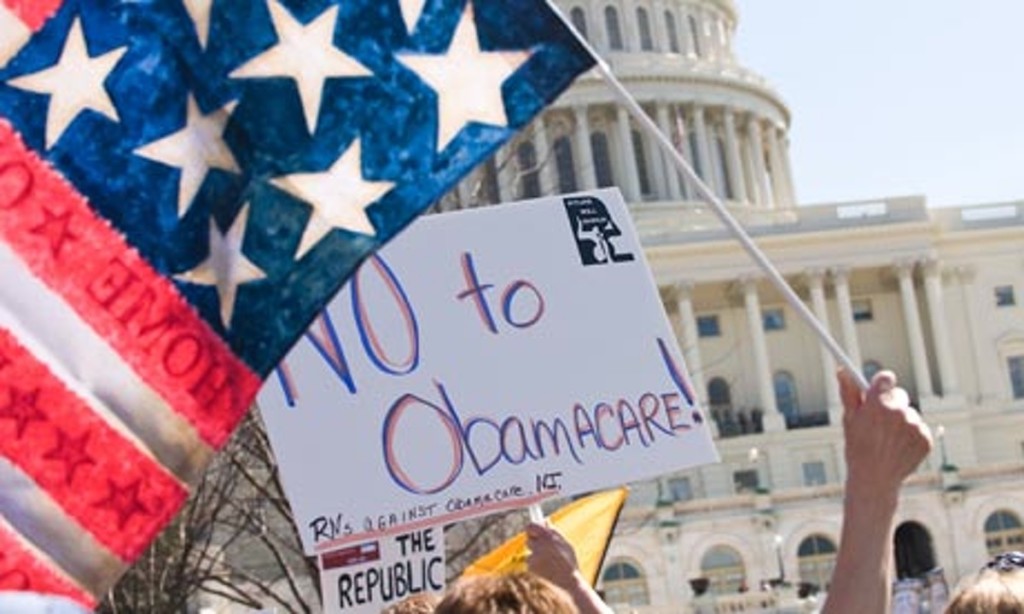
Last week, UnitedHealthcare, our nation’s largest health insurance provider, announced it would be pulling out of the federal Obamacare insurance marketplace and also backing out of most state health care exchanges. The UnitedHealthcare news is significant. In addition to being the largest health insurance provider in the country, they also offered some of Obamacare’s most affordable plans. An analysis by the Kaiser Family Foundation found that over 1 million enrollees will now be left with only one option. An additional 1.8 million enrollees will only have two insurance options to pick between. UnitedHealthcare is backing out because of major losses. In January, the company announced that it had accrued over $1 billion in losses during the past two years. In fact, the CEO of the company said even entering the Obamacare market was “a bad decision.” Unfortunately, most other major insurers are facing the same problems. Millions of people are gaming the Obamacare system, signing up for coverage only to cancel after receiving expensive treatments. Additionally, while the sick are signing up, many healthy people are choosing to pay the fine rather than obtain coverage. With UnitedHealthcare out of the market, basic economics tells us what will possibly happen next. Fewer choices for consumers mean less competition in the marketplace. Less competition means higher prices for consumers. Just as bad, a law that was supposed to help create more health care choices for the American people seems to be doing just the opposite. UnitedHealthcare’s decision was shocking, but sadly, not surprising. Since Obamacare was first passed in 2010, many people, including myself, have warned that the law was fatally flawed. UnitedHealth is the first to drop out, but they may not be the last. Although insurance companies can drop out of Obamacare’s exchanges, millions of Americans don’t have that option. Too many families in Southwest Alabama and all around the country have already seen Obamacare’s many flaws. They had their health care plan cancelled. They saw their deductibles rise. Many found it harder to see the doctor they wanted. Last year, I led the charge in the House of Representatives to repeal Obamacare in its entirety. I was pleased to see my bill pass the House on February 3, 2015 by a vote of 239 to 186. Sadly, the Senate has so far failed to act on my legislation. The reality remains that our best chance to repeal Obamacare and move forward with true, patient-centered health care reform will have to come from a new president. The Obama Administration has shown little willingness to even try and fix their broken law, much less actually move forward with a full repeal. Despite President Obama’s resistance, the House has already begun work on an alternative to the failed law. Speaker Paul Ryan has created a task force to focus on drafting our own health care law that puts patients first, gets government out of the way, and actually lowers health care costs for hardworking Americans. If we are going to move forward with a full repeal, we must have a clear alternative. Ultimately, Obamacare is fatally flawed and may continue to fall apart on its own. Regardless of what happens, we must continue to focus on real health care solutions that benefit each and every American family. • • • Bradley Byrne is a member of U.S. Congress representing Alabama’s 1st Congressional District.
United Healthcare may leave Alabama Obamacare exchange

United Healthcare, Alabama’s second largest health insurance provider, and the nation’s largest, says it may exit health exchanges in several states, including Alabama as the cost of participating has exceeded the potential profit making opportunities of more enrollees. United’s CEO, Stephen J. Hemsley made the announcement during the company’s first-quarter earnings conference call Tuesday, saying “smaller overall market size and shorter-term, higher-risk profile within this market segment continue to suggest we cannot broadly serve it on an effective and sustained basis.” The company expects to lose $650 million on exchange business nationwide in 2016. As of mid-2015, there were 141,361 people with private coverage through the federally-run Alabama exchange, but if United does pull out of the marketplace, that number could drop as customers either lose their coverage or are pushed to look for another insurer. According to health policy researchers with the Kaiser Family Foundation, United’s exit and the resulting decreases in competition could mean higher insurance prices for other Alabamians in the exchange. Congressman Bradley Byrne (R-AL01) says United leaving the Alabama exchange is evidence of weaknesses Obamacare. “When you have a major insurer like this one that just pulls out altogether, that’s a huge warning sign; that’s not going to crash the program, but it’s indicative of a problem that’s not being addressed in the program,” said Byrne. “Now, what happens when you have fewer people offering insurance? It’s like any other thing the fewer people that off the product or the service, the more the price goes up.” But while opponents of the Affordable Care Act, which established the exchanges, are holding the exit as proof the law doesn’t work, the Obama administration is downplaying the gravity of the situation. “As with any new market, we expect changes and adjustments in the early years with issuers both entering and exiting states,” said Department of Health and Human Services spokesman Ben Wakana in a statement Monday. “The marketplace is a reliable source of coverage for millions of Americans with a robust number of plan choices. We have full confidence, based on data, that the marketplaces will continue to thrive for years ahead. The number of issuers per state has grown year-over-year.”
