Donald Trump stands by ‘culture’ criticism of European immigration
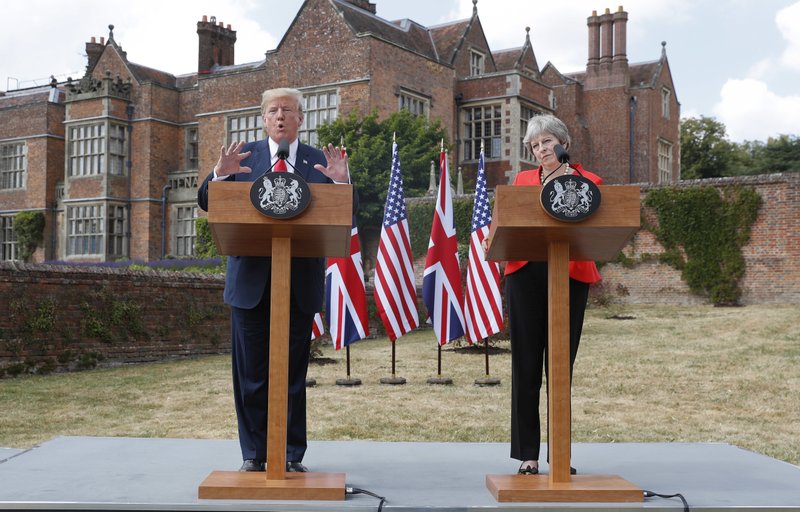
President Donald Trump pressed ahead Friday with his complaints that European immigration policies are changing the “fabric of Europe” and destroying European culture. During a news conference with British Prime Minster Theresa May, Trump backtracked on the criticism of May that he made in an explosive interview released as he began his visit to the country. But he reiterated his belief that Europe’s decision to accept migrants from Middle Eastern and African countries is “a very negative thing for Europe.” Standing next to May at Chequers, the prime minister’s official country estate, Trump acknowledged that his remarks were “politically not necessarily correct.” But he said European countries need to “watch themselves.” “You are changing culture, you are changing a lot of things,” he said, adding, “You see the same terror attacks that I do.” Trump was reiterating a position he articulated in an interview released Thursday by The Sun, in which he also criticized May’s handling of Brexit negotiations and said “I think allowing millions and millions of people to come into Europe is very, very sad.” May quickly rebutted Trump during their joint appearance, saying the U.K. has a “proud history of welcoming people who are fleeing persecution to our country.” “Over the years, overall immigration has been good for the U.K.,” she added. “It’s brought people with different backgrounds, different outlooks here to the U.K. and we’ve seen them contributing to our society and our economy.” Critics have faulted the president for using language that echoes white supremacist laments about the loss of white power. Rep. Adriano Espaillat, D-N.Y., born in the Dominican Republic, said Trump was “trying to throw gasoline on fire and begin a culture war, and it’s unfortunate that he’s divisive in the United States and he’s divisive in Europe as well.” “We all tout our nation as being a nation of immigrants,” Espaillat said. “For him to characterize that as something negative that we should avoid is sort of going against the most important and fundamental tenets of our country.” Rep. Ted Lieu, D-Calif., born in Taipei, Taiwan, said American culture is constantly changing through immigration. “That’s what makes our country amazing and great,” Lieu said. “It is a continual renewal of our American ideals set forth in our Constitution and Declaration of Independence with every new successive generation.” Trump said he believes that the U.K.’s Brexit vote in 2016 was in part a response to lax European immigration laws, and he has frequently tried to use Europe as a cautionary tale for the U.S., where he is seeking to implement more hawkish migration policies. Trump has used tough rhetoric on immigration to motivate his political base at home, at times using racial or ethnic undertones. During the 2016 presidential campaign, he drew global condemnation for a call to ban Muslim immigration to the U.S. Since entering the White House, he has enacted travel restrictions for citizens from some Muslim-majority countries, curtailed refugee admissions to the U.S. and called for “extreme vetting” of those entering the U.S. He drew fire from Democrats earlier this year for describing MS-13 gang members, many of them immigrants to the U.S., as “animals.” Republished with the permission of the Associated Press.
Donald Trump’s Mar-a-Lago loses State Department promotion posting
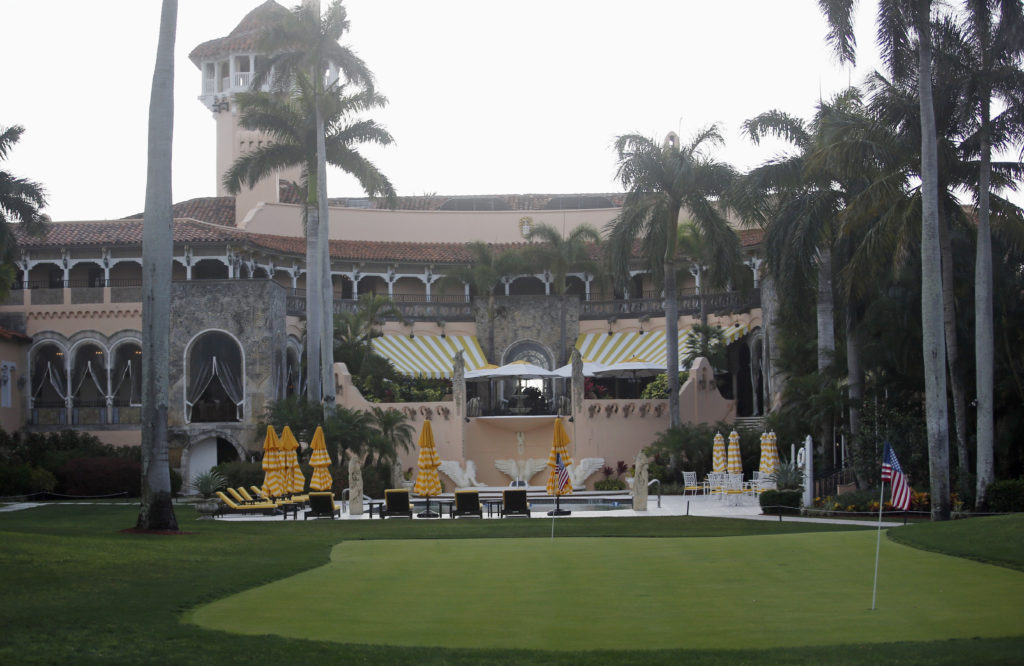
The State Department has removed its promotional posting about President Donald Trump‘s Florida resort, after a storm of ethics criticism. In an April 4 blog post that was republished by several U.S. embassies abroad, Mar-a-Lago was described as “Trump’s Florida estate,” where he has hosted foreign leaders. “By visiting this ‘winter White House,’ Trump is belatedly fulfilling the dream of Mar-a-Lago’s original owner and designer,” the post said. Left unsaid: Mar-a-Lago is part of Trump’s business empire. After his election, the resort doubled its membership fee to $200,000. As president, Trump has visited the property seven times, and its restaurant fills up when he’s in town. The State Department said late Monday that its intention was “to inform the public about where the president has been hosting world leaders” and that it regrets “any misperception.” That statement now appears in place of the original blog post. The White House did not respond to questions about whether it had any involvement in the original posting or the decision to take it down. The post originated on “Share America,” a State Department project. Its website describes its mission as “sharing compelling stories and images that spark discussion and debate on important topics like democracy, freedom of expression, innovation, entrepreneurship, education, and the role of civil society.” Other topics on the Share America page include a new U.S. coin honoring Frederick Douglass, debate over the Confederate flag and news about first lady Melania Trump‘s participation in the State Department’s International Women of Courage award ceremony. The Mar-a-Lago post was nearly three weeks old but gained traction Monday when several people noticed the U.S. embassy to the United Kingdom was featuring it. Sen. Ron Wyden, an Oregon Democrat, asked on Twitter why taxpayers are “promoting the president’s private country club” and referred to the incident as “kleptocratic.” Norman Eisen, who was President Barack Obama‘s chief ethics attorney, said the promotion is “exploitation.” Eisen compared it to White House counselor Kellyanne Conway‘s promotion of Ivanka Trump‘s clothing business, for which she was “counseled” but not otherwise reprimanded by the White House. “This idea of using government for private gain is metastasizing,” Eisen said. “It must be stopped.” On Twitter, Richard Painter, who served in an ethics role for President George W. Bush, called the State Department post “Use of public office for private gain pure and simple.” Eisen, Painter and other attorneys have sued Trump, alleging violation of the “emoluments clause” of the U.S. Constitution. That provision says the president may not accept foreign gifts or payments without the consent of Congress. The Trump Organization argues that this prohibition wasn’t intended to cover fair-market exchanges. Republished with permission of The Associated Press.
Alabama exports surging in unexpected corners of the world
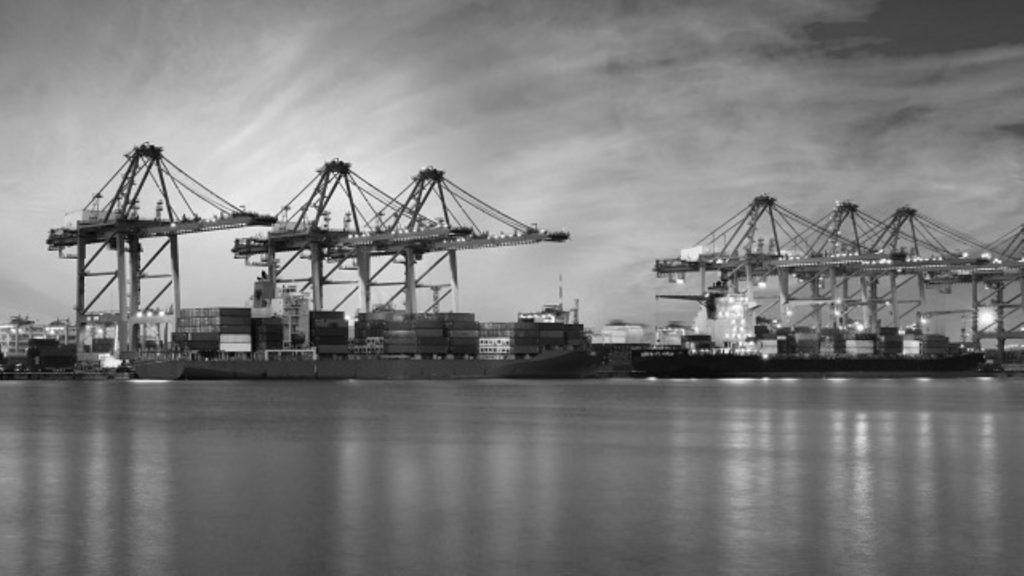
It’s clear that 2016 was a stellar year for Alabama exports, with rising shipments in a number of markets worldwide, signaling even more optimism for the future. The top five destinations for state goods and services – Canada, China, Germany, Mexico and the United Kingdom – remained relatively unchanged from 2015 and most showed year-over-year growth. Overall, Alabama-made goods were shipped to 189 countries. A number of them, while not among the top five, showed significant growth in 2016, including Kuwait, Russia, Taiwan and the United Arab Emirates. The Alabama Department of Commerce is always studying trade trends among state businesses and manufacturers, using the information to plan seminars and trips aimed at helping companies boost their export business, said Hilda Lockhart, director of Commerce’s Office of International Trade. Economic engine With Alabama’s 2016 exports reaching a record $20.55 billion, increasing 6.4 percent from the previous year, officials are looking to build on that momentum, Lockhart said. “We know rising exports for Alabama companies in overseas markets means greater potential for new jobs and investment back home,” Lockhart said. “International trade is truly a local economic engine, and Alabama workers and communities benefit from the growth.” U.S. Commerce Department figures show the state’s exports have risen 15 percent since 2011 and 48 percent since 2006. Vehicles are the state’s top export, by a large margin. Other key categories include chemicals, primary metals, paper products and non-electrical machinery, a category that includes combustion engines, agricultural machinery, metalworking machine tools and much more. Lockhart offered a closer look at some of the fastest-growing markets for Alabama exports, and what’s driving them: KUWAIT: Alabama’s exports to the Persian Gulf country increased to $104.9 million in 2016, a 285 percent spike from the previous year. The largest increases were in fabricated metal products, chemicals and paper. “This year Alabama was Kuwait’s No. 1 trading partner in the nation for fabricated metal products, perhaps due to the country’s recent expenditures on various hydrocarbon and petrochemical refineries, such as the $10 billion Olefins 3 plant,” Lockhart said. Currently in the pre-execution phase, the Olefins 3 plant will produce 1.4 million tons of ethylene a year when it is completed. The petrochemical is commonly used in the manufacturing process. RUSSIA: Shipments of state exports to Russia rebounded in 2016 to $102.1 million, after a poor showing the previous year, with major increases in the export of non-electrical machinery, chemicals and paper. Alabama was Russia’s No. 5 trading partner among U.S. states for non-electrical machinery products.Russia’s demand for machinery is “driven by the government’s strategy to modernize Russian industry across several sectors, including power generation, transportation, defense, automotive and aerospace,” according to the U.S. Foreign Commercial Service. Lockhart said the drop in exports in 2015 likely occurred because of the contraction in the price of oil that year, which caused a recession in Russia and other oil-producing countries. TAIWAN: Exports from Alabama to Taiwan nearly doubled in 2016, increasing to approximately $200 million. The largest gains were in chemicals, computer and electronic products, and paper. “Chemical exports alone accounted for more than half of the 2016 total, showing a two-year increase from $19.6 million in 2014 to $102.7 million in 2016,” Lockhart said. The state was Taiwan’s No. 6 trading partner in the nation for chemicals, predominantly in the category of basic chemicals, which include industrial gases used in the semiconductor production process. Lockhart said the semiconductor industry, including manufacturing, design and packaging, is a cornerstone of the Taiwanese IT economy, so it is likely that the increased exports are feeding into this sector. UAE: Alabama firms shipped $467.8 million in exports to the United Arab Emirates in 2016, an increase of more than 100 percent compared to exports just two years earlier. Much of the growth took place in the categories of transportation equipment, non-electrical machinery and chemicals. The state was the UAE’s No. 5 trading partner in the U.S. for transportation equipment, with this category alone accounting for $396.2 million of the export total for the year. “Aerospace products make up the bulk of these transportation equipment exports as the UAE develops its burgeoning satellite and Mars mission programs, expands its military and increases investment in the commercial airline industry,” Lockhart said. Meanwhile, other up and coming markets have shown significant growth over the past five years, and they could be potential targets of new, increased efforts to fuel trade, Lockhart said. The countries include Vietnam, Oman, the Bahamas, Denmark, Finland, Kenya, Liberia, Hungary and Bosnia-Herzegovina. This story originally appeared on the Alabama Department of Commerce’s Made in Alabama website. Republished with permission of Alabama NewsCenter.
Business promotion and politics par for Donald Trump’s golf tour
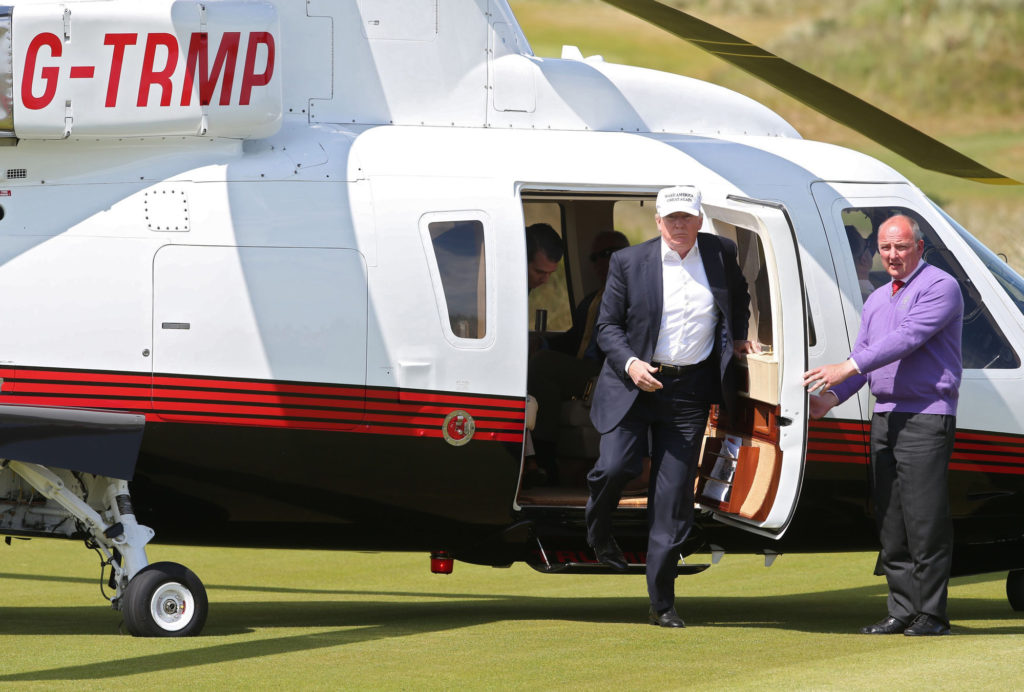
Donald Trump moved from hole to hole on his wind-swept Scotland golf course Saturday, not a club in hand but promotion on his mind, extolling North Sea views that are among “the great sights of the world.” He squeezed in commentary about the United Kingdom’s vote to leave the European Union and Hillary Clinton‘s tax policies. And when the abbreviated tour of Trump International Golf Links ended at the clubhouse, Trump ditched the pack of reporters trampling on his fairways, hopped into the driver’s seat of a golf cart and gave media mogul Rupert Murdoch and wife Jerry Hall a ride around the property. Business, with a wedge of politics, was par for the day. A Trump scorecard by hole: —On the 10th fairway, he said Texas wouldn’t take a cue from the U.K. and try to secede. “Texas will never do that because Texas loves me.” —On the 13th green, he said fixing the United States would be like repairing a golf course. “It’s not so different, it’s just bigger.” —On the 14th green, he boasted about overcoming some local opposition to building the course. “I am good at getting things zoned.” —On the 18th tee, he warned scrambling reporters: “Don’t fall! I don’t want to be sued.” Trump’s appearance at the course outside Aberdeen was the final event of his two-day tour of his golf resorts in Scotland. While the timing of the trip was not linked to Thursday’s referendum, the U.K.’s surprising vote dominated the questioning of the presumptive Republican nominee for U.S. president. Trump has cheered the outcome and tried to play down American fears about it. The U.S. stock market and global markets plunged Friday after the “leave” side won. “Americans are very much different. This shouldn’t even affect them. I mean frankly, if it’s done properly, if we had proper leadership,” Trump said moments after emerging from his helicopter on the 10th fairway. When pressed about the stock market drop that has caused Americans to fret about retirement plans and savings, Trump suggested that Wall Street was actually worried about President Barack Obama‘s economic policies and the U.S. debt. Trump has linked the nationalist fervor behind the “leave” vote to the forces driving his own campaign. He shrugged off the criticism he received for saying that if the value of the British pound falls, more people would spend money at his courses. “I don’t want to have a plummeting pound,” Trump said. “But if it does plummet, I do well. And if it does well, I do well. I do well in any case.” Trump also muddied the waters about his call for a temporary ban on foreign Muslims from entering the United States. Trump, in a speech this month, added a new element, saying he favors suspending immigration from parts of the world where there is proven history of terrorism against the U.S. and its allies. On Saturday, he said it “wouldn’t bother me” if a Muslim from Scotland tried to enter the U.S. Then, he suggested to reporters that “strong vetting,” and not a ban, would be an essential part of his immigration policy. Spokeswoman Hope Hicks later clarified that Trump’s position has not changed since the speech. The scene outside Aberdeen, a day after Trump reopened a course on Scotland’s opposite coast, again highlighted the unprecedented co-mingling between the candidate’s business and campaign, as well as his ability to create a made-for-TV spectacle. Aides originally said Trump would not talk to reporters. Then they said he would only discuss the golf course. Trump had other ideas. He ended up holding court at four separate holes. Reporters piled into golf carts and ran along fairways to keep up. The roving news conferences doubled as an advertisement for the course, which despite its stark beauty, has failed to live up to Trump’s lofty promises. Trump has claimed to Scottish authorities that he lost money on the course, and it has yet to host a major tournament. He has fought local authorities over a proposed wind farm and the preservation of the dunes that line the course. Though Trump boasted he won his zoning battles with the town, the owners of two houses that line the course remain unbowed. As a protest of Trump’s immigration proposals, which include building a wall along the U.S.-Mexican border, each flew a Mexican flag that could be easily spotted from the course’s clubhouse. Republished with permission of The Associated Press.
Bob Driver: Adolf Hitler and Donald Trump (a comparison)

Donald Trump, who may very well become our next president, is being accused of Hitlerism. By the time this column appears, the charges may have been dismissed. Or confirmed. Whichever way it goes, it behooves all of us to think about Hitler and Trump, and how they compare. For younger readers and those who may have heard vague reports about World War II and other related events, a little history: Adolf Hitler was a German soldier and political activist who climbed to power in Germany in the 1920s and 1930s. His National Socialist (Nazi) Party took full control in 1933. In September 1939, Germany invaded Poland, which triggered the beginning of World War II. Not long afterward, Hitler invaded the Soviet Union. Bad move. Within a few years the USA, United Kingdom, Russia and other Allied nations reduced Germany to a bombed-out starving wasteland. Enough history. Let’s see how, or whether, Donald Trump and Adolf Hitler resemble each other: WEALTH. Trump was born with a platinum spoon in his mouth. Initially, Hitler was poor as a church rat but later enjoyed many creature comforts. At his death, he owned an extensive underground bunker in Berlin. SPEAKING STYLE. Hitler was a dynamic orator. His high-pitched voice and passionate utterances excited his followers and drove them to the edge of madness, especially when he revealed that most of Germany’s (and the universe’s) woes could be blamed on the Jewish people. He was a student of government and politics, and easily listed dozens of twisted reasons why he should lead Germany. Donald Trump also speaks in a penetrating, passionate manner to his overflow crowds, most of whom would cheer themselves hoarse even if Trump uttered nothing more than “Fish for sale!” Rather than referring to specific facts to support his beliefs, he relies on repetition of a few mostly inflammatory thoughts. He also uses various insults to thwart anyone who disagrees with him. This sets him far above Hitler, who dealt with opponents by having them shot. PHYSICAL ATTRIBUTES. Hitler was not much to look at. He was fairly short, and seldom smiled. It was rumored that he was born with only one testicle. If true, this did not keep him from scaring the tar out of thousands of more fully equipped males in Germany and elsewhere. Trump’s most notable physical deficiency is a paucity of hair on the forward half of his scalp. He also has a habit of pursing his lips and defiantly tilting his chin upward, much like the Italian fascist dictator Benito Mussolini did in his Roman balcony harangues. ROMANCE AND MARRIAGE. Hitler didn’t have much luck with the ladies. He is believed to have connected with several young women, but the hookups did not endure, partially because a number of the women committed suicide. Hitler’s longest romance was with blond Eva Braun. They did not marry until late April 1945 when Russian troops were turning Berlin into a morgue. Two days after the wedding ceremony, Adolf and Eva killed themselves. Their bodies were burned. Donald Trump’s personal life has been somewhat cheerier. He has married three attractive women (although not all at the same time). They have given him five children, all of whom reportedly think highly of their father. RELIGIOUS BELIEFS. The Donald (as Trump’s many friends sometimes call him) is a (non-devout) Presbyterian, reflecting his Scottish roots. He has maintained good relations with other religious adherents, until recently when he uttered some unkind words about militant Muslims. Hitler’s thoughts about religion were vague, except for his lifelong anti-Semitic fervor. He liked to think of a heaven where everyone resembled Norse gods and goddesses and was enraptured by the music of Richard Wagner. Hitler did not believe in an eternal hell. Instead, he created it on earth, to the tune of 29 million victims of Nazi ambitions. IMMIGRATION POLICIES. Hitler did not welcome newcomers to Germany unless they were Aryan, enjoyed book-burning and wept copiously as they sang “Deutschland Uber Alles” while smashing the windows of Jewish shopkeepers. Hitler’s final solution to the presence of unwanted citizens was to emigrate them to concentration camps. As I write these words on Dec. 9, Donald Trump is saying various things about U.S. immigration and anti-terrorism policies. They can be summed up as “Send the illegal bad guys back to where they came from, and don’t let Muslims inside our land until they are officially purified.” CONCLUSION. All aspects considered, I’d much rather have Donald Trump in the White House than Adolf Hitler. However, this should not be considered my endorsement of Trump, except to say I hope he stays in the race until the very end. Rightly or wrongly, Trump is the personification of the First Amendment – freedom of speech – at a time when many in our land want to bend it, cripple it or shut it down. Bob Driver writes for Tampa Bay Newspapers. He is a former editorial page editor for the Clearwater (Florida) Sun. For more state and national commentary visit Context Florida.