
Public school reputation weighs on Air Force base in Alabama
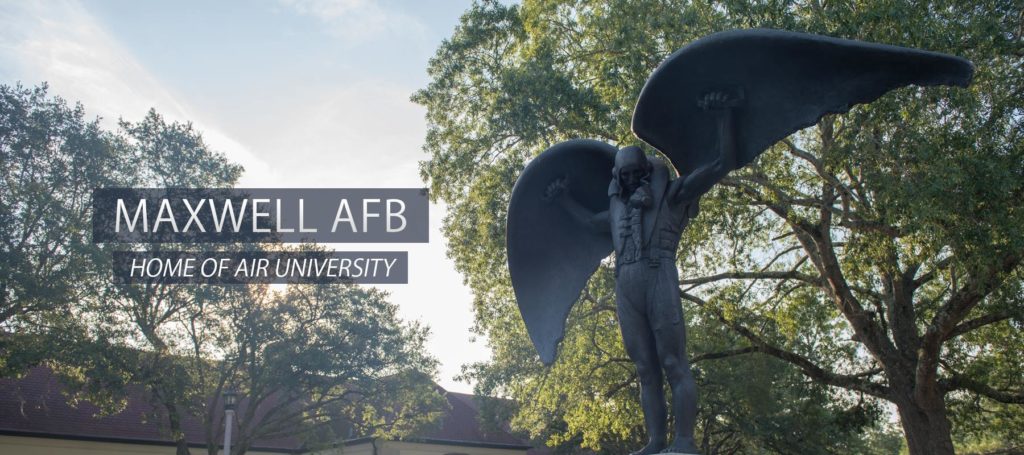
The poor reputation of schools in Alabama’s capital city is creating friction with the city’s Air Force base. Lt. Gen. Anthony Cotton, commander of Air University and Staff College at Maxwell Air Force Base, says the state of schools in Montgomery is putting a strain on his job, with airmen arriving on base alone and faculty members reluctant to accept positions at the base. More than 56 percent of airmen in last year’s Air War College came to Montgomery without families, Cotton tells the Montgomery Advertiser, with schools being the top reason cited for separation. “The reality is, ‘If my kids aren’t happy, I’m not happy,” Cotton said of airmen. “If I have to try to spend so much time trying to understand how to get them ready and prepared for secondary education, then I’m not doing my mission as far as taking care of you, and making sure that I protect our country.’” Rachel Scott said she started a side business to raise tuition to send her oldest child to a private high school, but would rather save the money for college. She said her family is looking at buying a house outside Montgomery by summer to seek better schools. Until now, they’ve relied on Maxwell’s on-base school, but it ends after eighth grade. “We moved on base primarily for the school because my husband did research before we moved here and found out that the school systems were rated really low,” Scott said. “Their ratings are so low, I feel like my kids would fall behind.” In the 2016-2017 school year, 34 percent of Montgomery County seniors were deemed to have graduated without being college or career ready. The district’s five regular high schools had a combined average ACT score of 16, failing to meet the minimum score of 21 for enrollment at the University of Alabama. On the state’s report card, 66 percent of the Montgomery public schools received grades of D or F. Montgomery County Superintendent Ann Roy Moore wrote in an email that more than 600 students in the system are identified as military dependents. She said the system understands such students “unique needs.” “We are meeting with Maxwell representatives and the Military Child Transition Coalition team to identify ways we can show military families we care about their needs, and that we are working daily to improve academic achievement in our school system,” Moore wrote. The impact is a double-edged, with Montgomery failing to accommodate the men and women that serve this country, and failing to accommodate its biggest economic impact, with the base contributing $1.2 billion annually to the city. Montgomery, Scott said, is losing money because people are forced to live outside the city. Opening the base’s school to military families living off base, however, is not an option the Air Force has. Cotton declined to comment when asked to discuss potential solutions the Air Force is exploring to assist military members who are struggling because of the state of the school system. Republished with permission from the Associated Press.
Tuskegee mayor: T-100 manufacturing facility will lift region

Sitting in the back seat of an F-16 jet on a flight over Tuskegee, Mayor Tony Haygood looked down at Moton Field and envisioned the historic airfield’s future as the production site of the U.S. Air Force’s next jet training aircraft. “From that height, it is amazing how you can see the whole layout of things at Moton Field and where the runway expansion would be,” Haygood said. “There’s plenty of space for it, and we’ll be doing some other improvements.” Earlier this year, global aerospace company Leonardo selected Moton Field as the manufacturing site for its T-100 advanced trainer jet if the Air Force chooses the aircraft as its next-generation trainer. The project would bring 750 jobs to the airfield where the pilots of the Tuskegee Airmen received their training. Haygood, who is traveling to Italy with an Alabama delegation to tour a Leonardo aircraft factory this week, said an in-depth look at the company’s manufacturing operation will assist Macon County’s preparations for the Tuskegee facility. “This is like advance preparation that gives us an opportunity to see, hear and understand how we need to get ready,” he said. Made In Alabama caught up with Haygood in Tuskegee before the Alabama team departed so he could share his insights on the Leonardo T-100 jet trainer project planned for Moton Field. Here’s what he said. Q: What would the Leonardo T-100 manufacturing facility mean for Tuskegee and the region? A: It would be a tremendous boost to this community. For Tuskegee, it would be the largest project we’ve had in our history. It would be a big boost for the entire economy of south central Alabama and would impact the entire state as well. For us, it would mean high-quality jobs, and it would trigger a revitalization of our entire economy. Q: How have Tuskegee and Macon County been preparing for a project of this magnitude? A: We have been working within the region, with Auburn, Montgomery and other cities, to position ourselves as a viable site for economic development. Having the runway at Moton Field, and the space around it, allows us to pursue this project. We’re capable of expanding the runway to 8,000 feet. We have water service at the site. We have a major interstate – I-85 — right there and CSX railway there. So we have the basic ingredients in terms of transportation and location. Q: Can the area provide the workforce for the Leonardo T-100 facility? A: We can provide a quality workforce, and we will have assistance from the state. Go back to the Tuskegee Airmen. People didn’t think they could fly advanced aircraft, but given the opportunity and the training, they not only flew, they excelled. It’s really the same story today. Give people the opportunity, give them the support, and we can develop the workforce and the expertise that is needed. Click here to read more. Republished with permission from the Alabama NewsCenter.
