
Military career fulfilled childhood dreams for Phenix City’s Denise Richardson
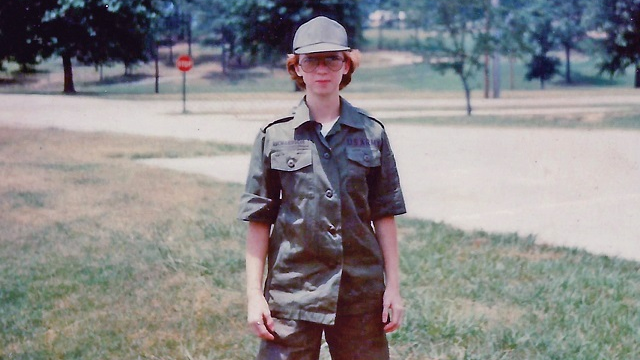
Many little girls dream of being a ballerina, a princess or perhaps a high-fashion model. Not Denise Richardson. At the tender age of 4, Richardson wanted to grow up and become a soldier. For a young girl whose family was immersed in a world “of all things Army,” her aspirations weren’t unusual. Her father and grandfather were U.S. Army veterans, and her brother was in the U.S. Marine Corps. “I was always a patriot,” said Richardson, a customer service representative in Alabama Power’s Phenix City Office. “My parents instilled it in me. Even as far back as a toddler, I wanted to be a soldier like my daddy. I am a firm believer it’s God’s calling to go into the service. “It’s a duty to serve, and it’s a privilege to serve,” said Richardson, who served 31 years in the Army National Guard and three years active U.S. Army. As a teen, Richardson was in ROTC (Reserve Officers’ Training Corps) until her 1976 graduation from Central High School in Phenix City. “I went straight from high school into the military,” Richardson said. “I graduated from high school on a Friday night and was on a bus on Sunday to start basic training.” Richardson spent 12 weeks at Fort McClellan in Anniston, where she took advanced intense training to work as a clerk for the Army Standard Installation and Division Personnel Reporting System. During Richardson’s active duty, she married and had her first child. With an infant, Richardson said that continuing in active duty would have been impossible: At her rank, she wouldn’t have been allowed to take her child overseas. So Richardson stayed in Alabama to embark on her next dream: earning a college diploma. “I was happy to serve in the Army, but I’d always wanted to graduate from college,” she said. “I was determined to go to college.” Richardson took advantage of the GI Bill. In pursuit of a business degree, she began attending Chattahoochee Valley Community College in Phenix City. She relished her first taste of higher learning, but the yearning to serve tugged at her heart. “I loved the military,” Richardson said. In 1983, Richardson signed on for the National Guard. She drilled one weekend monthly and for two weeks of the year. From clerk to heavy mechanic Richardson found that no clerk positions were open and, instead, took a job many women would find daunting: She became a wheeled vehicle mechanic. “I worked on Jeeps, Hummers and trucks,” Richardson said. “I did that pretty well.” After several years, she attended another military school to learn logistics, helping to track and manage the military supply chain. For a short time, she returned as a clerk. Later, Richardson went into heavy mechanics, becoming a tank turret repairman, which required three phases of training. “I enjoyed seeing how tanks and other large weapons systems were put together,” she said. Richardson had been promoted to staff sergeant, rank E-6 – just above sergeant and below sergeant first class – and was a noncommissioned officer. Promotion was becoming more difficult in the mechanical field. At 45, she decided to become a warrant officer. “I was accepted and attended warrant officer school at Fort Rucker. It was really rough,” Richardson said of the 30-day training. “But I made it.” As a warrant officer, she served in human resources for the National Guard. International tours of duty From 1990 to 1991, Richardson served in the Gulf War, the military operation to expel occupying Iraqi forces from Kuwait, which Iraq had invaded and annexed. “That was the first time I’d had shots fired over my head,” Richardson said. “It was the first time I was in the desert, my first experience in combat. “I was in areas where the enemy was shelling, in northern Saudi Arabia,” she said. “I wasn’t in the tanks – at that point, there were still some restrictions on women serving. But we were affected by rockets and not knowing who the enemy was. When the Iraqis retreated from Kuwait, some went into Saudi Arabia.” Richardson began working at Alabama Power in 1992. She continued to study at Faulkner University and theUniversity of Phoenix. From 2007 to 2008, Richardson served in Kuwait. After 20 years of college and the military, she earned her bachelor’s degree. “It took me a while, but I got it,” Richardson said, with a big smile. From 2009 to 2010, Richardson led the National Guard’s Yellow Ribbon Reintegration Program in Alabama, preparing soldiers who were being deployed and supporting family members while their soldier was away. “Deployment is a seven-day-a-week job,” she said. “It’s difficult going, and it’s difficult coming home. You’re on a high tempo; then you get home, and the bottom falls out. Click here to read more. Republished with permission from the Alabama NewsCenter.
Luther Strange tours Anniston’s BAE Systems Forge Facility
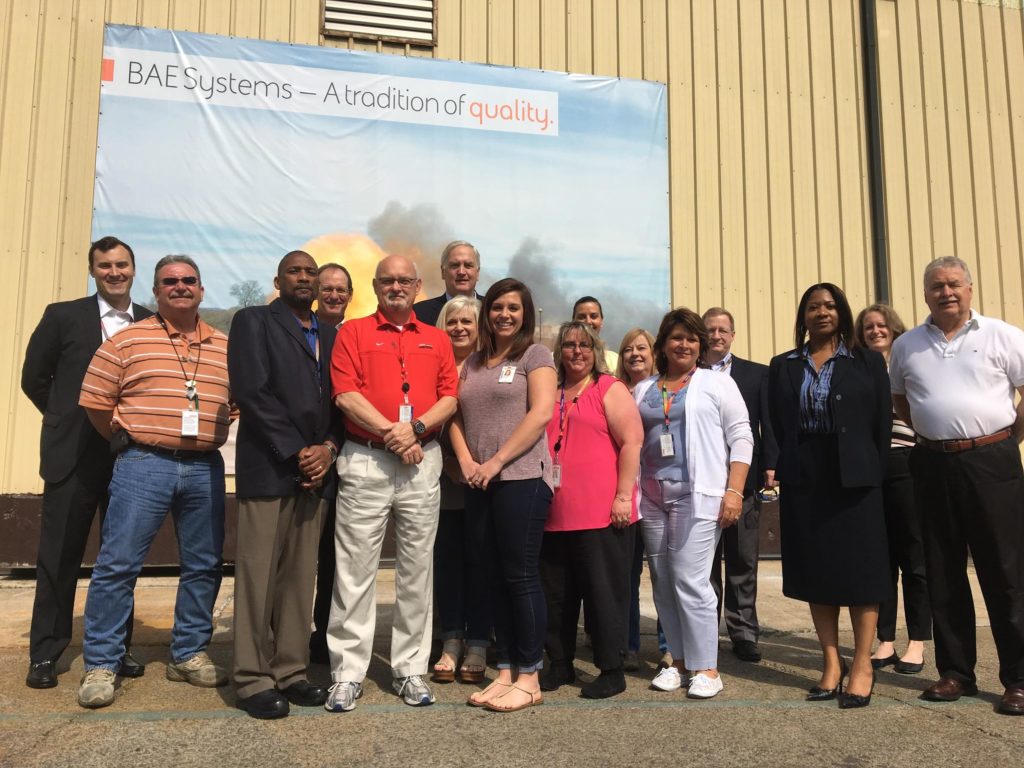
U.S. Sen. Luther Strange made a stop in Anniston last week to tour the BAE Systems Forge Facility to learn more about the operation and how it contributes to national security, as well as to the local economy and job market. “Almost everywhere you go in Alabama, you can find Alabamians working hard to keep our nation secure, either by serving in our military, or helping to provide the resources our armed forces need to do their job,” said Strange, a member of the Senate Armed Services Committee. “The BAE Systems Forge Facility is impressive to say the least, as it their dedication to their employees and local community.” BAE Systems employs over 260 people across three locations in Anniston and is the U.S. industrial base for combat systems track, producing the majority of the forged track components for the U.S. inventory of tracked vehicles. “We were excited to host Senator Strange at the BAE Systems Forge Facility and look forward to working with him in support for the nation and our employees in Anniston,” said Max Dodd, BAE Systems Operations Manager. “During the visit we were able to show the Senator how his position as a Member of the Senate Armed Services Committee positively impacts Anniston combat vehicle programs, such as the Armored Multi-Purpose Vehicle.” The Anniston facility also manufactures torsion bars and other suspension components for combat vehicles and for the mining and transportation industry. It has designed and/or developed every major track systems fielded by the U.S. Army in the past 35 years and over 16 million track shoes manufactured at the location.
First transgender soldiers seek formal Army recognition
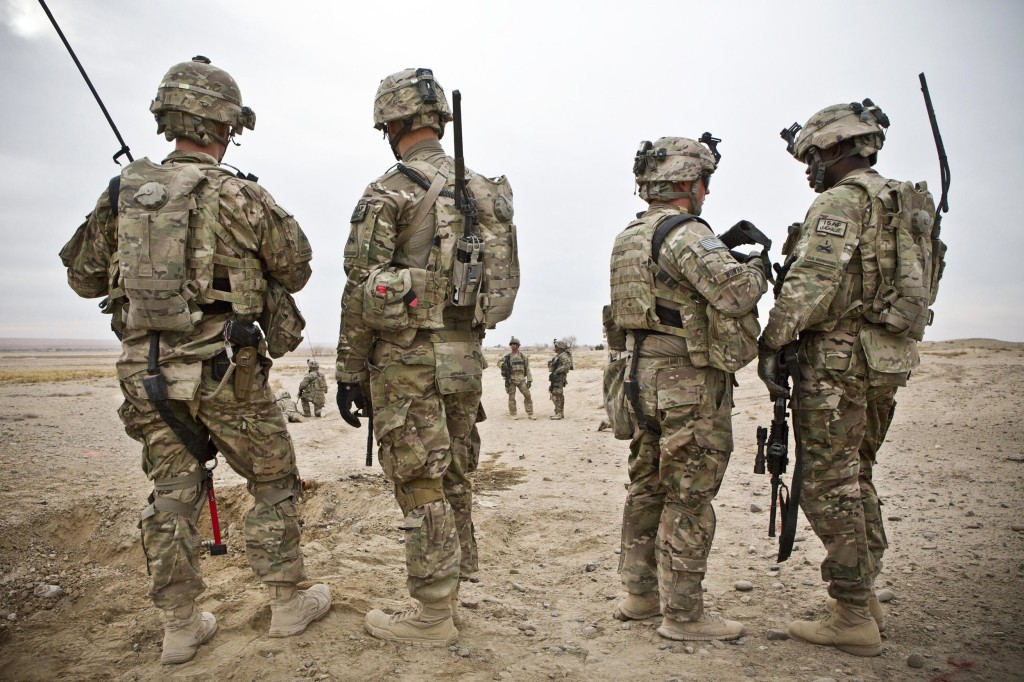
Within weeks of the Pentagon allowing transgender service members to serve openly, Army officials said 10 soldiers have formally asked to be recognized as their new, preferred gender. The small number represents only those who have publicly said they are transgender, and doesn’t include soldiers who may be considering or beginning gender transition or those who don’t yet want to make an official paperwork change. Gen. Mark Milley, chief of staff of the Army, said the key now is to educate the force, particularly commanders who will have to make decisions about soldiers in their units who request a gender change. “Is the army ready? Well, we are educating ourselves, and we are trying to get ready,” Milley said in an interview with The Associated Press. “We’re well-past the issue of debating and arguing about transgender. We are now into execution, to make sure the program is carried out with diligence, dignity, respect.” The Pentagon policy took effect Oct. 1, and Army Secretary Eric Fanning approved the service’s new transgender guidelines earlier this month. Defense Secretary Ash Carter announced in June that he was ending the ban on transgender individuals serving openly in the military. Transgender troops are now able to receive medical care and begin changing their gender identifications in the Pentagon’s personnel system. Next year, the military services will begin allowing transgender individuals to enlist, as long as they meet required standards and have been stable in their identified gender for 18 months. “We’re monitoring implementation closely, and everything we’ve seen so far points to a military organization fully committed to treating everyone equally and providing medically necessary care to all troops, not just some,” said Aaron Belkin, director of the California-based Palm Center, an independent research institute. “My conclusion, so far, is that implementation has proceeded smoothly and successfully.” Milley and other military leaders expressed concerns that the department was moving too fast. “The issue to do it or not to do it, to me is not an issue – the answer is yes,” Milley said. “The question of how to do it so that it is deliberate, well thought out, executed with professionalism – that’s a horse of a different color. Frankly I asked for more time.” Milley said he did a lot of “self-education,” meeting with transgender individuals, both military and civilian, as well as other groups. Now, he said, the Army is getting education programs out to the force to make sure troops and commanders know the new rules, process, medical criteria and who has the authority to make decisions on a service member’s gender change. Under the new Army guidelines, training must be developed by Nov. 1, and it must be completed throughout the force by next July. “It’s going to take a little bit of time, but there are some things I don’t think you need to necessarily be trained on,” Milley said. “Rule One is treat your soldiers, your subordinates, your peers and your superiors as you want to be treated. Treat everybody with dignity and respect. Period. Flat out. Full stop.” Transgender troops currently serving can request that their gender be officially changed, and they can submit required documentation, including medical approval saying the person has been stable in his or her preferred gender for 18 months and a driver’s license showing the preferred gender. Commanders will have 30 days to respond for active duty troops and 60 days for soldiers in the National Guard and Reserve. The transgender service members will be able to use the bathrooms, housing, uniforms and fitness standards of their preferred gender only after they have legally transitioned to that identity and it’s documented in their military personnel records. The new policy, however, gives military commanders some flexibility, noting that not all gender transition cases are the same. Commanders will have the discretion to make decisions on a case-by-case basis, including on job placement, deployments, training delays and other accommodations, based on the needs of the military mission and whether the service members can perform their duties. According to the Army guidelines, commanders can allow “reasonable accommodations” including changes to housing, bathroom and shower use to respect the modesty or privacy interests of soldiers and maintain moral, order and discipline. But, it prohibits creating transgender-only areas and says that any privacy accommodations that are made must be open for use by all soldiers, not just transgender individuals. And commanders can’t force a soldier to use a bathroom or shower of the person’s preferred gender before their legal transition. According to Carter, a RAND study found that there are between 2,500 and 7,000 transgender service members in the active duty military, and another 1,500 to 4,000 in the reserves. Milley said the Army numbers so far are low, but the service doesn’t track the number of soldiers who may be starting the gender transition process. “We may not know the full scope yet,” said Milley. “Others that may consider themselves as transgender but haven’t self-identified publicly may be holding back because they want to see how things progress.” Republished with permission of the Associated Press.
CAE USA to open key Army aviation training center in Alabama
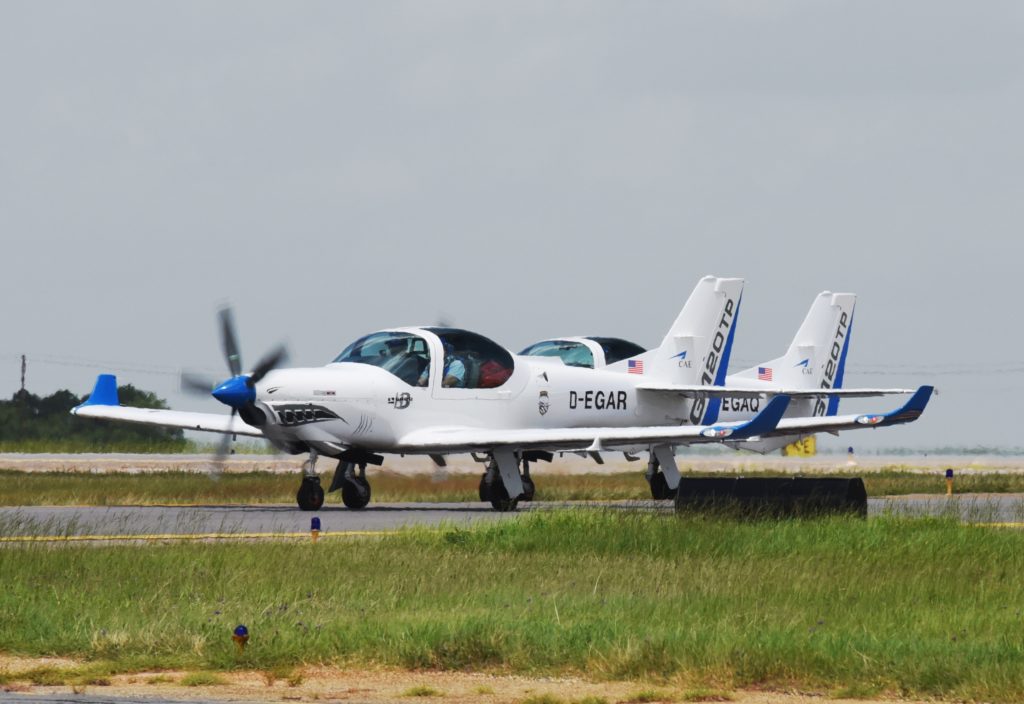
A Tampa-based aviation training company plans to begin offering flight training to U.S. Army aviators at a training facility opening in Dothan. CAE USA plans to open the facility in 2017 as part of the company’s $75 million investment in the state, a little more than 20 miles from Fort Rucker and the U.S. Army’s Aviation Center of Excellence, the headquarters of Army Aviation and primary location for Army helicopter flight training for more than five decades. “Alabama has more 100 years in aerospace history, and I am proud to see CAE make progress on the construction of the new Dothan Training Center located at the Dothan Regional Airport,” Governor Robert Bentley said Thursday morning. “This world-class training facility will train Army and Air Force pilots to keep our nation safe.” With the project progressing, the company has taken delivery of the first aircraft that will be used in the U.S. Army Fixed-Wing Flight Training program at the Alabama center. CAE has also begun preparing its initial cadre of instructor pilots for the program. “Our new Dothan Training Center will provide the Army with a modern, flexible and cost-effective training solution specifically designed for the Army’s fixed-wing aviators,” said Ray Duquette, president and general manager of CAE USA. “The state of Alabama, Department of Commerce and all the local government organizations in the Wiregrass area have been incredibly supportive and instrumental in the creation of what will be a truly world-class training facility,” he added. Beginning next spring, the company’s new 79,000-square-foot center will provide comprehensive training for more than 450 U.S. Army fixed-wing aviators each year, as well as Air Force crews flying C-12 twin turboprop aircraft. “We are extremely excited to see a world-wide leader in aviation training locate in the Wiregrass region,” Dothan Mayor Mike Schmitz said. “Through the team led by Governor Robert Bentley including our local, state, and federal officials and partners, this project was made possible to bring new technology, innovation, and high-paying jobs to the area.”
