
Jeff Sessions addresses group representing baker who refused to serve gay couple

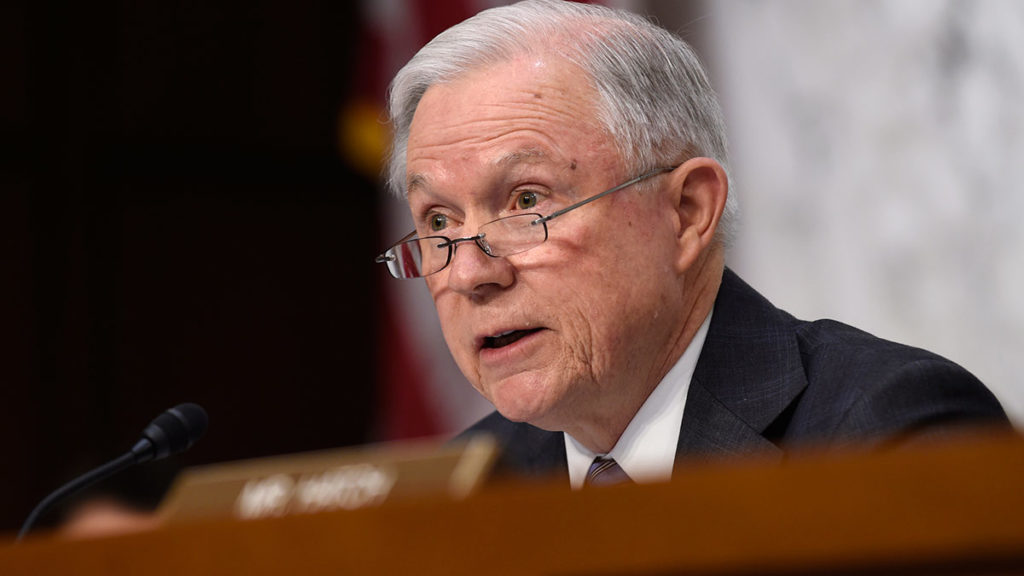
Attorney General Jeff Sessions on Tuesday delivered a speech to the religious freedom group that is representing a Colorado baker who refused to bake a wedding cake for a gay couple in 2012. Sessions’ attendance at the closed-press Alliance Defending Freedom‘s (ADF) Summit on Religious Liberty in Orange County, Calif. is drawing criticism as advocacy groups and Democrats across the country are questioning why the leader of the U.S. Department of Justice (DOJ) agreed to speak at the ADF group at all. Founded by Dr. Bill Bright, ADF is best known for supporting socially conservative causes and advocating on behalf of religious freedom. Recently, the Supreme Court agreed to hear a case in which ADF is representing Colorado baker Jim Phillips. Phillips made national headlines in 2012 when he refused to create a wedding cake for a gay couple. He is now challenging Colorado’s nondiscrimination law, saying he should be allowed to refuse service to same-sex couples due to his religious beliefs. A spokesman for the Democratic National Committee (DNC) criticized Sessions’ decision to speak to the group. “You can judge a person by the company they keep and tonight – Attorney General Jeff Sessions is choosing to spend his time speaking in front of one of the country’s leading anti-LGBTQ hate groups,” Joel Kasnetz said. “Sessions’ appearance at this event, as the top law enforcement official in the country, brings into question whether the attorney general intends to protect all Americans.” “ADF has been extremely active in pushing for so-called ‘religious liberty’ laws around the country that allow Christians to discriminate against LGBT people,” said the Southern Poverty Law Center who in 2016 designated the ADF as a hate-group, on their website. “The nation’s top lawyer rallying with an anti-LGBTQ hate group? Outrageous,” the Human Rights Campaign (HRC), a civil rights group promoting LGBTQ equality, said in a blog post Wednesday. HRC was also troubled by the DOJ’s decision to keep Sessions’ remarks private. “The attorney general has every right to speak to a group like Alliance Defending Freedom,” commented David Stacy, Government Affairs Director of HRC. “What troubles us is that his remarks are being kept hidden from the public at the same time he has been tasked by the President with issuing religious discrimination policies that ADF has long promoted.” The DOJ did not respond to questions about whether the speech was in support for Phillips’ case.
Jeff Sessions, in his own words, on controversial topics
President-elect Donald Trump‘s pick for U.S. Attorney General is by far the most controversial of his cabinet nominees as he previously failed to pass a Senate confirmation process once before in his career. Sen. Jeff Sessions, a former federal prosecutor and state attorney general in Alabama, was previously rejected for federal judgeship over allegations of racism back in 1986. Now, the 70-year-old staunch conservative will face the Senate once again, where his views on a wide array of issues are likely to come under scrutiny during two days of questioning. Here’s what Sessions has had to say on several controversial topics in the past: Immigration “We need immigration reform, all right, but reform that serves the interests of the American people – not international corporations, not anti-enforcement zealots, not the open-borders lobby.” Mandatory Minimum Sentences Sessions believes tough mandatory sentences will help reduce crime. How many people do you know that are likely to take a gun and would murder somebody? The more of those that are in jail serving time, the less people are going to get murdered. It’s mathematics. [Senate speech, Oct. 13, 2015] Legalizing Marijuana “This drug is dangerous. You cannot play with it. It’s not funny. It’s not something to laugh about — and trying to send that message with clarity that good people don’t smoke marijuana.” [Senate drug caucus, April 5, 2016] Women’s Issues Sessions was one of 22 Republican senators who voted against the Violence Against Women Reauthorization Act (VAWA) in 2013, as he voted for a stronger version of the bill compared to the one that ultimately passed. “I support the core functions of VAWA and have my entire time in the Senate. I voted for a stronger version of the bill, that increased criminal penalties, than the one that ultimately passed. As a former federal prosecutor who put people in prison for violent acts, I understand the importance of serious penalties for these serious crimes. I have recently passed into law two measures that help federal authorities track down sex offenders. Amazingly, the Majority chose to advance a bill that included unconstitutional provisions that subject American citizens to trial in a sovereign tribal court, the personnel of which have no democratic accountability to the American public. They steadfastly rejected attempts to alter this unacceptable provision.” [February 12, 2013] War “The United States has the burden to lead for peace. And not just peace – we need peace with justice, a much harder goal.” [Floor statement on the Nuclear Test-Ban Treaty, Oct. 8, 1999] Race Relations “In my opinion, there is probably no more sensitive area than race relations. I feel like I am one of the good guys. I feel like that I am being caricatured in a way that is not true.” [May 1986] Marriage “Marriage has been defined by every legislature that has ever sat in the United States from every State, now 50 States, the same way, but now we have unelected judges altering and changing that fundamental institution.” [2004] Law enforcement Sessions said police officers have faced unfair criticism for their use of force. “It’s clear that police officers all over America are concerned about the Department of Justice.” [Senate Judiciary Committee hearing, Nov. 17, 2015] Judicial Activism Sessions disapproves of judicial activism. “Judges were praised if they advanced the law. … What that really means is you change it. If you advance it, it means the legislature hadn’t passed something that you would like, or the Constitution doesn’t advance an idea that you like, then you figure out a way to reinterpret the meaning of the words so it says what you would like it to say and what you wished the legislature had passed. … Judges need to know they are given independence and a lifetime appointment because we trust them to serve under the Constitution and not above it.” [Senate speech eulogizing Antonin Scalia, March 10, 2016]
Faith leaders to Senate: Jeff Sessions’ confirmation would be “a mockery” of Justice Dept

Ahead of Tuesday and Wednesday’s confirmation hearings for Alabama Senator Jeff Sessions, faith-based groups on Monday reasserted their criticisms of the attorney general nominee citing what they consider Sessions’ record of discrimination, saying should he be confirmed it would be a mockery of the very institution created to address injustice. “Our sacred texts call us to love our neighbor as we love ourselves,” said Denise Collazo, chief of staff for PICO (People Improving Communities through Organizing) National Network, the nation’s largest network of faith-based groups. “Time and again, as a U.S. Attorney, Attorney General of Alabama and U.S. Senator — Senator Jeff Sessions has chosen not to show love to his neighbors. The Justice Department is an American institution designed to make sure that we treat one another as we should. The senate should not disregard concerns about Senator Sessions. It is their responsibility to make sure the Justice Department focuses on liberty and justice for all.” Pastors within the PICO network echoed Collazo’s sentiments. “It would be a travesty to the progress that the Rev. Dr. Martin Luther King Jr. and other civil rights leaders made for African Americans and people of color to have Jeff Sessions confirmed as the United States Attorney General,” said the Rev. Dr. Wayne M. Weathers, pastor of the Vision of Hope Baptist Church in Philadelphia. “Historically the Attorney General — regardless of the party in office — has been the defender of marginalized communities,” added Cean James, pastor of the Grace Christian Fellowship United Church of Christ in Philadelphia. “ With Sessions at the helm, it would be difficult for many communities to see the Justice Department as the place to go to for fair protection.” Sessions was nominated to be the next Attorney General by President-elect Donald Trump in November shortly following his unexpected Election Day victory. A member of the Senate Judiciary Committee, Sessions was an early supporter and endorser of Trump,but his nomination has proved very controversial. In 1986 Sessions was nominated for a federal judgeship but was ultimately rejected due to allegations of racist comments.
Donald Trump’s pick for Justice Dept could influence immigration
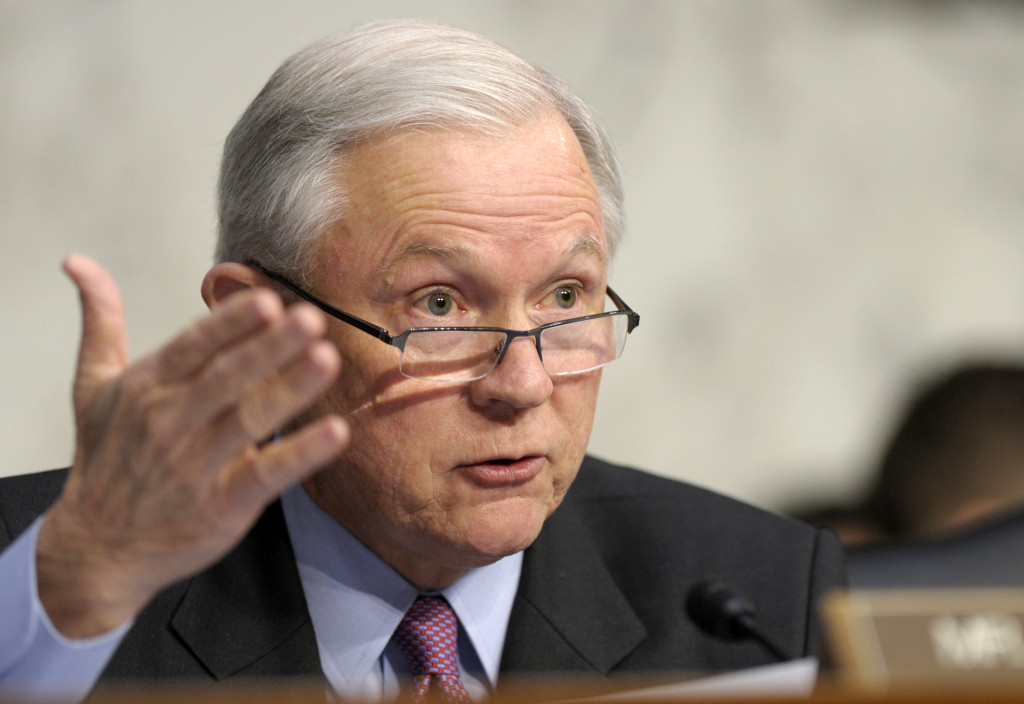
As a senator, Jeff Sessions became Congress’ leading advocate not only for a cracking down on illegal immigration, but also for slowing all immigration, increasing mass deportations and scrutinizing more strictly those entering the U.S. As attorney general, he’d be well positioned to turn those ideas into reality. Immigration laws are enforced by other agencies, but the Justice Department plays a crucial role in setting the policies and legal underpinnings that shape the system. And if Donald Trump sticks with his campaign promises, immigration will be a top priority for his administration. As the nation’s top law enforcement official, Sessions could execute maneuvers to limit which nationalities the U.S. would accept as refugees and to reverse a federal policy that protects young people from deportation. “The president has the clear power to suspend immigration to protect America,” Sessions said during the Republican convention when he was discussing the threat of terrorism and the need to scrutinize refugees more closely. The fourth-term Republican from Alabama was the first senator to support Trump’s candidacy, and he helped shape Trump’s positions on immigration. Sessions favors limiting the number of refugees coming into the U.S. and turning away children who arrive at the border alone who are attempting to reunite with families living in the U.S. The attorney general can direct federal prosecutors to boost the number of criminal cases brought against immigrants caught crossing the border; guide legal opinions to defend executive actions; prioritize hiring more judges for federal immigration courts; overturn key decisions made by a federal immigration appeals panel and challenge the legality of state immigration policies. “The attorney general has a lot of power when it comes to immigration,” said Stephen Yale-Loehr, a professor at Cornell law school. “He has a seat at the table when important decisions are being made.” One of the most important legal opinions on immigration that came out of the Justice Department in the past eight years defended the Obama administration’s policy of formally shielding immigrants who arrive in the U.S. as children from being deported. This policy also gives those immigrants permission to work in the U.S. Sessions and other GOP lawmakers have called this “backdoor amnesty.” The Trump White House can rescind the policy that protects these young immigrants, and as attorney general, Sessions could provide legal guidance to defend Trump’s actions, which would put more than 700,000 people at risk of being deported. “Tweaks of the pen over there can have large implications across the country,” said Victor Cerda, a former Justice Department immigration attorney who led the Immigration and Naturalization Service after the 9/11 attacks. The agency has since become part of the newly created Homeland Security Department. The Justice Department’s Office of Immigration Litigation, housed in the civil division, is the force behind fighting state immigration actions like Arizona’s landmark immigration crackdown that required immigrants to carry identification and invited discrimination against Latinos. The Justice Department sued the state, along with immigration advocacy groups, and won. Given Sessions’ and Trump’s positions on immigration, it’s unlikely they’d use the department to fight such state laws. “The courts have always paid much greater attention when the United States is a party,” said Bill Hing, a professor at the University of San Francisco law school and director of its immigration and deportation defense clinic. Immigration advocates are preparing to go it alone. “Private organizations are going to have to rely on their own resources to pursue these kinds of cases,” said Thomas Saenz, president and general counsel for the Mexican American Legal Defense and Educational Fund. The Justice Department also houses the immigration court system, which for years has been woefully understaffed and amassed a backlog of more than 500,000 pending cases. The parties in the case can wait years for a final ruling. The attorney general could ask Congress for a significant increase in funds to staff the courts and blast through the backlog. The Board of Immigration Appeals, which is the last stop in the immigration court system to challenge a judge’s ruling, is part of the Justice Department as well. The attorney general is responsible for appointing that 17-member board and can overturn a decision, which can then be challenged in federal court. The board’s decisions have widespread ramifications and are applied by judges across the country, Cerda said. And the attorney general can influence the grants the department issues annually for a range of state and local law enforcement programs. Sessions has criticized the government for not cutting funds to cities and jurisdictions that have refused to cooperate on enforcing immigration laws. As attorney general, Sessions could push such cuts. “For 40 years, no president and no attorney general has given a high priority to enforcing our immigration laws,” Sessions said in 2007. If confirmed by his peers in the Senate, he could change that. Republished with permission of the Associated Press.
Donald Trump could reshape Justice Department’s civil rights focus

A Donald Trump administration could radically reshape the Justice Department, particularly civil rights efforts that became one of its most pressing and high-profile priorities over the past eight years. The department, under the Obama administration and the country’s first two black attorneys general, has investigated about two dozen police agencies for civil rights violations and reached court-enforceable consent decrees with many of them. It refused to defend a federal law that banned the recognition of gay marriage. It sued North Carolina over a bathroom bill that it said discriminated against transgender people. And it implemented new racial profiling limits on federal law-enforcement agencies. But Trump’s election has stirred concern from civil rights advocates that some of that work could be undone, set aside or at least minimized under a Trump administration. “The Civil Rights Division was just building a head of steam over the last two, three years, and it raises really serious concerns about whether we now lose traction on these issues,” Anthony Romero, executive director of the American Civil Liberties Union, said of a section that former Attorney General Eric Holder called the “crown jewel” of the department. One overt change could come in the department’s approach toward policing and relationships between law enforcement and the communities they serve, an issue that’s moved to the public forefront in the last two years. Trump’s talk of a “law and order” approach to crime fighting and his praise for stop-and-frisk police tactics are out of step with a Justice Department that has advocated community policing and decried strategies it considers unconstitutional or discriminatory. “He talked about things like the war on police, that we need more stop and frisk, that the Black Lives Matter movement has placed police officers at risk in ways that are really concerning,” said Jonathan Smith, a former Justice Department civil rights official who oversaw the investigation into discriminatory practices by the Ferguson, Missouri, police force. “The last law-and-order president was Richard Nixon,” Smith said. The rhetoric resembles that of Rudy Giuliani, the former New York mayor who’s expected to be considered for the position of attorney general. Under the Obama administration the Justice Department has opened wide-ranging investigations of 23 police departments, including those in Baltimore, Chicago and Ferguson. It’s enforcing 19 agreements, including 14 court-enforceable consent decrees. While those agreements are unlikely to be reversed, new attorneys could be lax in enforcing them or in requiring meaningful change when additional police departments come under scrutiny, Smith said. And different leadership may see less value in some of the community meetings and round-table discussions promoted by Justice Department officials as a way to seek reconciliation between police and minorities. Also subject to change is the department’s overall approach to the thousands of drug prosecutions it brings each year, embodied in a 2013 policy initiative known that discouraged prosecutors from seeking harsh prison sentences for nonviolent offenders. A new administration might also seek changes on the national security front, including how terrorism cases are prosecuted and broader surveillance powers – particularly of Muslims. Attorney General Loretta Lynch acknowledged the prospect for change Thursday, saying in a speech that while “some policies and priorities may shift over the span of time or the turn of the electoral wheel.” Career attorneys throughout the Justice Department, including at the Civil Rights Division, are intended as a stabilizing and apolitical force across different administrations, but there hasn’t always been a clear line. A 2008 inspector general report identified instances in the Bush administration when the Civil Rights Division considered political and ideological affiliations in hiring career attorneys or assigning cases. But it’s the department’s political appointees, who routinely change with presidential administrations, that “set the tone and the direction and determine the vigor of civil rights enforcement,” Romero said. At the Civil Rights Division, that includes its leader, Vanita Gupta, a former ACLU attorney who earlier in her career led an effort to overturn wrongful convictions of drug defendants in Texas. Under her watch, the federal government has routinely become involved in state and local matters that officials believe brush up against constitutional protections. That includes a directive to schools that they permit students to use the bathrooms that match their gender identity, and a policy document discouraging municipal courts from jailing citizens for nonpayment of fines and fees. In an Idaho case, the department also argued that local police can’t arrest the homeless for sleeping in public, and worked in Tennessee to get juvenile suspects access to attorneys. New department leadership could well take different stances on issues like those, or steer clear of federal intervention altogether. And while federal civil rights statutes will surely remain on the books for enforcement, advocates are concerned that their causes won’t have the same commitment they’ve had under President Barack Obama. “We intend to fight, we intend to ensure that we do not go backwards,” Sherrilyn Ifill, president of the NAACP Legal Defense Fund, told reporters Thursday. “We believe that we have the Constitution and the laws of our nation on our side.” Republished with permission of the Associated Press.
Dept. of Justice opens investigation into conditions of Alabama’s male prisons
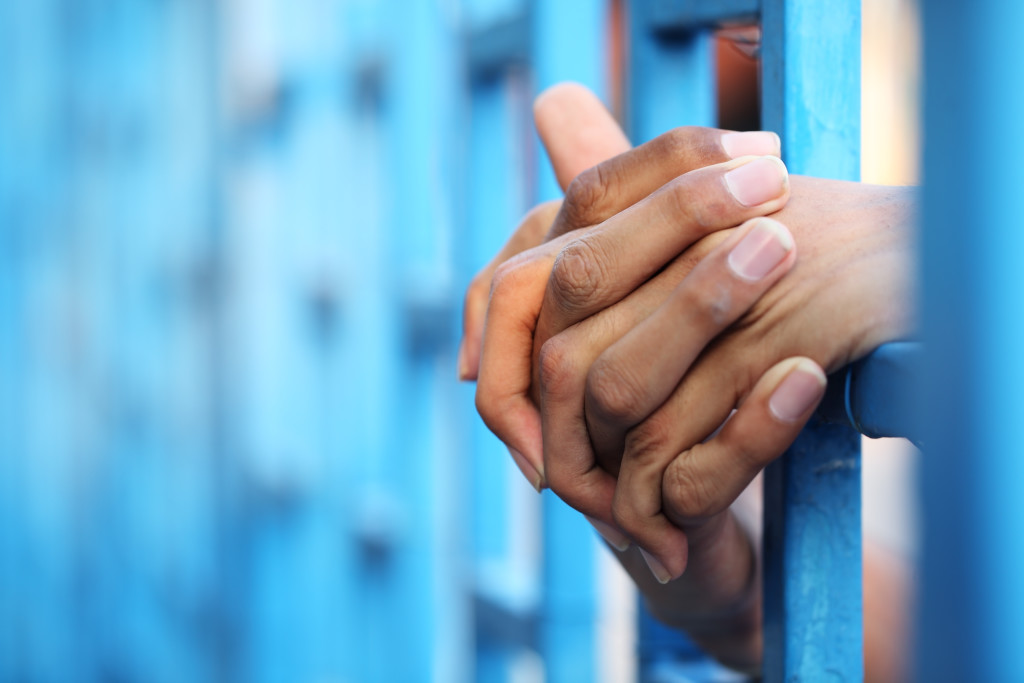
The U.S. Justice Department announced Thursday it has opened a statewide investigation into violence, rape, overcrowding, among other problems and conditions in Alabama’s prisons for men. Specifically, the investigation will focus on whether prisoners are adequately protected from physical harm and sexual abuse at the hands of other prisoners; whether prisoners are adequately protected from use of excessive force and staff sexual abuse by correctional officers; and whether the prisons provide sanitary, secure and safe living conditions. “The Constitution requires that prisons provide humane conditions of confinement,” Principal Deputy Assistant Attorney General Vanita Gupta, head of the Justice Department’s Civil Rights Division stated in the announcement. “We hope to work cooperatively with the state of Alabama in conducting our inquiry and ensuring that the state’s facilities keep prisoners safe from harm.” The DOJ Civil Rights Division’s Special Litigation Section and the three U.S. Attorney’s Offices — the Northern, Middle and Southern Districts in Alabama — will conduct the investigation. “Our obligation is to protect the civil rights of all citizens, including those who are incarcerated,” said U.S. Attorney Joyce White Vance of the Northern District of Alabama. “This investigation provides us with an opportunity to work collaboratively with the state of Alabama to assess current conditions and ensure constitutionally sufficient conditions exist for all prisoners.” Prison overcrowding has exacerbated the problems within the prisons. State prisons in January housed 25,102 inmates in facilities designed to hold 13,318, putting the system at 188 percent capacity. The crowding level has contributed to risky conditions for those on both sides of the prison bars. Over the past year, the state’s two largest men’s prisons have been commonplace to riots and violence. “The vulnerability of a prisoner makes it even more important that basic hygiene and safe accommodations are afforded the inmates,” said U.S. Attorney George L. Beck Jr. of the Middle District of Alabama. The Justice Department has yet to reach any conclusions regarding the allegations in this matter. The investigation will be conducted under the Civil Rights of Institutionalized Persons Act (CRIPA). Under CRIPA, the department has the authority to investigate violations of prisoners’ constitutional rights that result from a “pattern or practice of resistance to the full enjoyment of such rights.” “All citizens, even those who are incarcerated, should expect sanitary conditions of habitation that are free of physical harm and sexual abuse,” added U.S. Attorney Kenyen R. Brown of the Southern District of Alabama. Individuals with relevant information are encouraged to contact the department via phone at (205) 244-2001 or by email at usaaln.civilrights@usdoj.gov.
