
Hill leaders to attend White House briefing on border
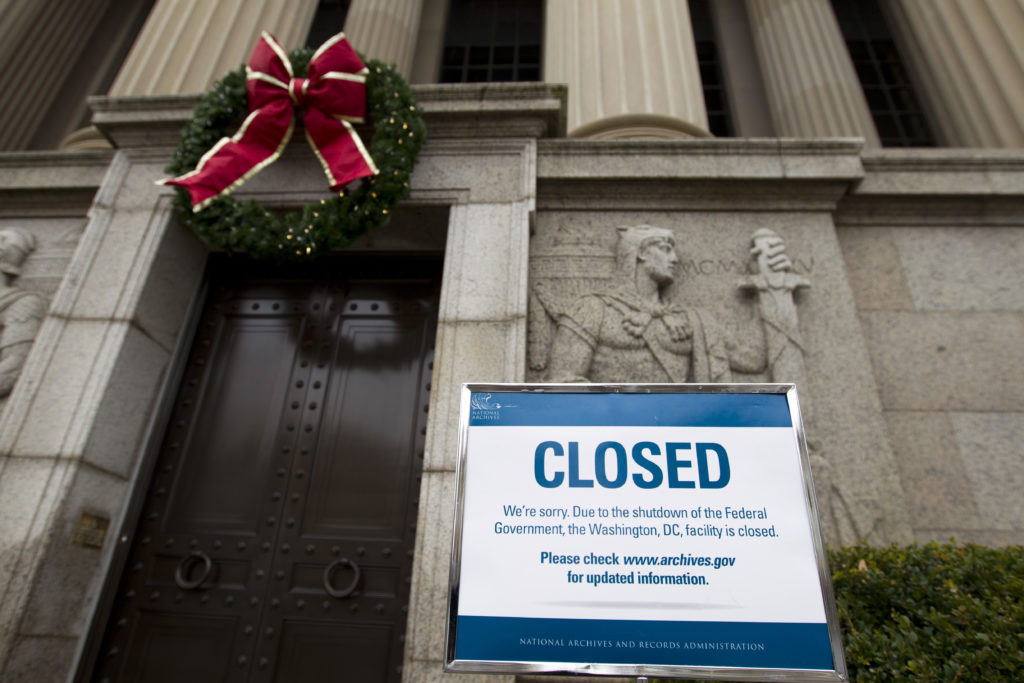
Democratic and Republican congressional leaders are expected to attend a briefing on border security at the White House as the government remains partially shut down and President Donald Trump asks in a tweet, “Let’s make a deal?” The partial government shutdown began on Dec. 22. Funding for Trump’s pet project, a wall along the U.S.-Mexico border, has been the sticking point in passing budgets for several government departments. The briefing is scheduled for Wednesday afternoon, the day before Democrats are to assume control of the House and end the Republican monopoly on government. The exact agenda, however, was not immediately clear, according to a person with knowledge of the briefing who was not authorized to speak publicly about the issue and spoke to The Associated Press on condition of anonymity. Senate Majority Leader Mitch McConnell and the top incoming House Republicans — Kevin McCarthy of California and Steve Scalise of Louisiana — planned to attend, according to aides. The departing House speaker, Paul Ryan, was not expected. House Democratic leader Nancy Pelosi, who is expected to become speaker on Thursday, and Senate Minority Leader Chuck Schumer planned to attend. Pelosi said Tuesday that Democrats would take action to “end the Trump Shutdown” by passing legislation Thursday to reopen government. “We are giving the Republicans the opportunity to take yes for an answer,” she wrote in a letter to colleagues. “Senate Republicans have already supported this legislation, and if they reject it now, they will be fully complicit in chaos and destruction of the President’s third shutdown of his term.” The White House invitation came Tuesday after House Democrats released their plan to re-open the government without approving money for a border wall — unveiling two bills to fund shuttered government agencies and put hundreds of thousands of federal workers back on the job. They planned to pass them as soon as the new Congress convenes Thursday. Responding to the Democratic plan, White House press secretary Sarah Huckabee Sanders late Tuesday night called it a “non-starter” and said it won’t re-open the government “because it fails to secure the border and puts the needs of other countries above the needs of our own citizens.” Trump spent the weekend saying Democrats should return to Washington to negotiate, firing off Twitter taunts. After aides suggested there would not necessarily be a traditional wall as Trump had described since his presidential campaign, Trump stated that he really still wanted to build a border wall. On Tuesday morning, after tweeting a New Year’s message to “EVERYONE INCLUDING THE HATERS AND THE FAKE NEWS MEDIA,” Trump tweeted: “The Democrats, much as I suspected, have allocated no money for a new Wall. So imaginative! The problem is, without a Wall there can be no real Border Security.” But he seemed to shift tactics later in the day, appealing to Pelosi. “Border Security and the Wall ‘thing’ and Shutdown is not where Nancy Pelosi wanted to start her tenure as Speaker! Let’s make a deal?” he tweeted. Whether the Republican-led Senate would consider the Democratic bills — or if Trump would sign either into law — was unclear. McConnell spokesman Donald Stewart said Senate Republicans would not take action without Trump’s backing. “It’s simple: The Senate is not going to send something to the president that he won’t sign,” Stewart said. Even if only symbolic, the passage of the bills in the House would put fresh pressure on the president. At the same time, administration officials said Trump was in no rush for a resolution to the impasse. Trump believes he has public opinion on his side and, at very least, his base of supporters behind him, the officials said, speaking on the condition of anonymity because they were not authorized to speak publicly. The Democratic package to end the shutdown would include one bill to temporarily fund the Department of Homeland Security at current levels — with $1.3 billion for border security, far less than the $5 billion Trump has said he wants for the wall — through Feb. 8 as talks continued. It would also include another measure to fund the departments of Agriculture, Interior, Housing and Urban Development and others closed by the partial shutdown. It would provide money through the remainder of the fiscal year, to Sept. 30. Republished with permission from the Associated Press.
Pentagon sending 5,200 troops to Southwest border week before midterms
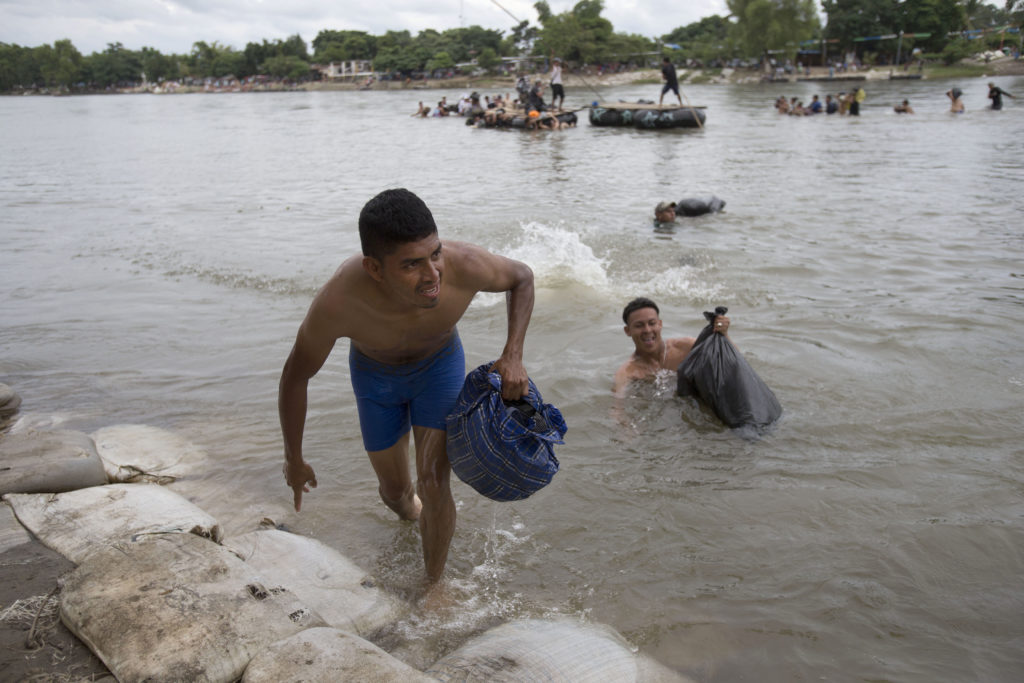
The Pentagon said Monday it is sending 5,200 troops to the Southwest border in an extraordinary military operation ordered up just a week before midterm elections in which President Donald Trump has put a sharp focus on Central American migrants moving north in slow-moving caravans that are still hundreds of miles from the U.S. The number of troops being deployed is more than double the 2,000 who are in Syria fighting the Islamic State group. Trump, eager to keep voters focused on illegal immigration in the lead-up to the elections, stepped up his dire warnings about the caravans, tweeting, “This is an invasion of our Country and our Military is waiting for you!” But any migrants who complete the long trek to the southern U.S. border already face major hurdles — both physical and bureaucratic — to being allowed into the United States. In an interview Monday, Trump said the U.S. would build “tent cities” for asylum seekers. “We’re going to put tents up all over the place,” told Fox News Channel’s Laura Ingraham. “They’re going to be very nice and they’re going to wait and if they don’t get asylum, they get out.” Under current protocol, migrants who clear an initial screening are often released until their cases are decided in immigration court, which can take several years. Trump denied his focus on the caravan is intended to help Republicans in next week’s midterms, saying, “This has nothing to do with elections.” The Pentagon’s “Operation Faithful Patriot” was described by the commander of U.S. Northern Command as an effort to help Customs and Border Protection “harden the southern border” by stiffening defenses at and near legal entry points. Advanced helicopters will allow border protection agents to swoop down on migrants trying to cross illegally, said Air Force Gen. Terrence O’Shaughnessy. Troops planned to bring heavy concertina wiring to unspool across open spaces between ports. “We will not allow a large group to enter the U.S. in an unlawful and unsafe manner,” said Kevin McAleenan, commissioner of Customs and Border Protection. Eight hundred troops already are on their way to southern Texas, O’Shaughnessy said, and their numbers will top 5,200 by week’s end. Some of the troops will be armed. He said troops would focus first on Texas, followed by Arizona and then California. The troops will join the more than 2,000 National Guardsmen that Trump has already deployed to the border. It remained unclear Monday why the administration was choosing to send active-duty troops given that they will be limited to performing the same support functions the Guard already is doing. The number of people in the first migrant caravan headed toward the U.S. has dwindled to about 4,000 from about 7,000 last week, though a second one was gaining steam and marked by violence. About 600 migrants in the second group tried to cross a bridge from Guatemala to Mexico en masse Monday. The riverbank standoff with Mexico police followed a more violent confrontation Sunday when the migrants used sticks and rocks against officers. One migrant was killed Sunday night by a head wound, but the cause was unclear. The first group passed through the spot via the river — wading or on rafts — and was advancing through southern Mexico. That group appeared to begin as a collection of about 160 who decided to band together in Honduras for protection against the gangs who prey on migrants traveling alone and snowballed as the group moved north. They are mostly from Honduras, where it started, as well as El Salvador and Guatemala. Another, smaller caravan earlier this year dwindled greatly as it passed through Mexico, with only about 200 making it to the California border. Migrants are entitled under both U.S. and international law to apply for asylum. But there already is a bottleneck of would-be asylum seekers waiting at some U.S. border crossings to make their claims, some waiting as long as five weeks. McAleenan said the aim of the operation was to deter migrants from crossing illegally, but he conceded his officers were overwhelmed by a surge of asylum seekers at border crossings. He also said Mexico was prepared to offer asylum to members of the caravan. “If you’re already seeking asylum, you’ve been given a generous offer,” he said of Mexico. “We want to work with Mexico to manage that flow.” The White House is also weighing additional border security measures, including blocking those traveling in the caravan from seeking legal asylum and preventing them from entering the U.S. The military operation drew quick criticism. “Sending active military forces to our southern border is not only a huge waste of taxpayer money, but an unnecessary course of action that will further terrorize and militarize our border communities,” said Shaw Drake of the American Civil Liberties Union’s border rights center at El Paso, Texas. Military personnel are legally prohibited from engaging in immigration enforcement. The troops will include military police, combat engineers and others helping on the border. The escalating rhetoric over the migrants and expected deployments come as the president has been trying to turn the caravans into a key election issue just days before elections that will determine whether Republicans maintain control of Congress. “This will be the election of the caravans, the Kavanaughs, law and order, tax cuts, and you know what else? It’s going to be the election of common sense,” Trump said at a rally in Illinois on Saturday night. On Monday, he tweeted without providing evidence, “Many Gang Members and some very bad people are mixed into the Caravan heading to our Southern Border.” “Please go back,” he urged them, “you will not be admitted into the United States unless you go through the legal process. This is an invasion of our Country and our Military is waiting for you!” It’s possible there are criminals mixed in, but Trump has not substantiated his claim that members of the MS-13 gang, in particular, are among them. The troops are expected
Donald Trump’s bright idea: a solar wall at the US-Mexico border
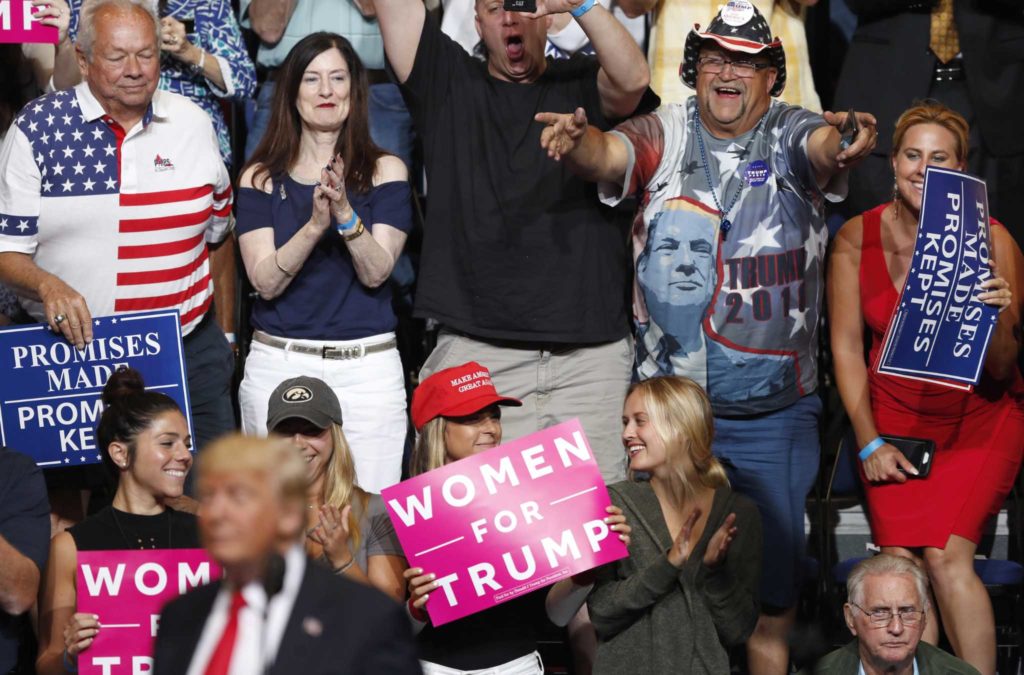
President Donald Trump wants to add solar panels to his long-promised southern border wall – a plan he says would help pay for the wall’s construction and add to its aesthetic appeal. “We’re thinking about building the wall as a solar wall so it creates energy and pays for itself,” Trump said at a rally Wednesday night in Cedar Rapids, Iowa. “And this way, Mexico will have to pay much less money. And that’s good, right?” Trump had previously floated the solar panel idea during a closed-door meeting with Republican members of Congress earlier this month, but this was the first time he’d discussed the idea publicly. “Pretty good imagination, right?” Trump said at the rally, framing the plan as “my idea.” Not quite. The notion of adding solar panels to the border wall was explored in a Wall Street Journal op-ed in March. Vasilis Fthenakis, director of the Center for Life Cycle Analysis at Columbia University, and Ken Zweibel, former director of the Solar Institute at George Washington University, concluded it was “not only technically and economically feasible, it might even be more practical than a traditional wall.” They said a 2,000-mile solar wall could cost less than $1 billion, instead of tens of billions for a traditional border wall, and possibly become “wildly profitable.” The writers were studying a concept laid out by Homero Aridjis and James Ramey in the online World Post in December. The idea also was proposed by one of the companies that submitted a design to the government as a border wall prototype. The bid by Las Vegas-based Gleason Partners LLC proposed covering some sections of the wall with solar panels to provide electricity for lighting, sensors and patrol stations along the wall. Gleason said sales of electricity to utilities could cover the cost of construction in 20 years or less, and suggested that power could also be sold to Mexico. Managing partner Thomas Gleason said he wasn’t sure whether his company was still in the running for the contract, but added, “We accomplished what we wanted to accomplish, and that’s to make the president realize there was such a possibility.” Department of Homeland Security spokesman David Lapan said nobody from the department had shared the submitted proposals with the White House, though several have been made public by the bidding companies. But Trump’s comments could raise questions about whether he was attempting to interfere with what is intended to be a regimented contracting process. The government has selected the finalists for contracts to build wall prototypes in San Diego and is expected to announce the winners soon. During his campaign, the president vowed to build an impenetrable wall along the length of the U.S.-Mexican border out of concrete and steel. But since his inauguration, he has faced resistance, with Congress unwilling to finance the plan. Trump has long maintained that Mexico will pay for his wall, even though Mexico has flatly refused. Trump insists that even if U.S. taxpayers have to cover the costs upfront, Mexico will eventually be forced to reimburse the U.S. in some way. On Thursday, Trump tweeted: “Mexico was just ranked the second deadliest country in the world, after only Syria. Drug trade is largely the cause. We will BUILD THE WALL!” Trump was apparently referring to a report released in May by the International Institute for Strategic Studies, a London-based think tank. However, the U.N. Office on Drugs and Crime, whose latest figures are from 2015, indicates there are at least nine countries with higher homicide rates than Mexico. And that does not include rates for conflict-torn countries like Afghanistan and, Syria and others, for which the UNODC had no figures. Trump repeatedly described solar power during the campaign as “very, very expensive” and “not working so good.” But he told his audience Wednesday that the U.S.-Mexico border is one of the rare places that “solar really does work” because of the sun and heat. “I think we could make it look beautiful, too,” he added. “That would be nice.” Gleason said he has no problem with Trump claiming credit for the idea. “He can have full credit for it as long as they do a solar wall,” he said. Republished with permission of The Associated Press.
Jeff Sessions to tour Arizona-Mexico border Tuesday
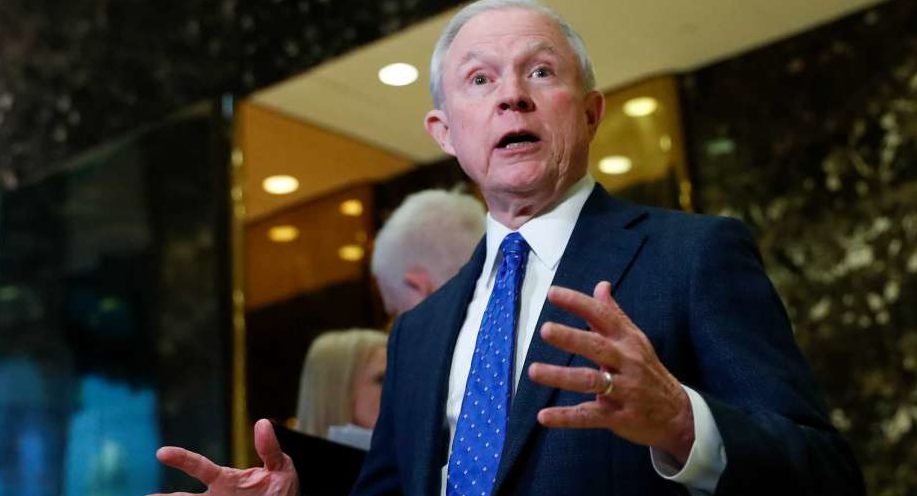
U.S. Attorney General Jeff Sessions on Tuesday will take a tour of the U.S.-Mexico border during a visit to Arizona. Sessions will tour what is mostly rough terrain along the international border in Nogales, Arizona, about roughly 70 miles (113 kilometers) south of Tucson. Sessions has made immigration enforcement a key Justice Department priority, saying he will speed up deportations of immigrants in the country illegally who were convicted of federal crimes. Sessions has also defended federal immigration authorities who make arrests at courthouses, a practice advocates and the California Supreme Court chief justice say impedes on people’s access to justice and deters immigrants from reporting crimes and going to court. The Tucson Sector, which comprises most of Arizona, was once the busiest area for illegal border crossings and drug smuggling, but movement has shifted in the past few years to the Rio Grande Valley in Texas. The Arizona area saw about 65,000 arrests last fiscal year, roughly half the number agents made in 2012, according to Border Patrol data. Marijuana seizures have also dropped by about 28 percent from 1 million pounds in 2012 to 728,000 last year. In March, Sessions said that the Justice Department will expand an existing program aimed at holding deportation hearings for immigrants while they are still in federal prison known as the Institutional Hearing Program. Holding the hearings before the inmates’ sentences are finished would allow the government to deport them immediately when they’re released, as opposed to waiting until they go through an immigration court. Sessions’ proposal would set up 14 federal prisons and six contract facilities for immigration removal proceedings. Following the border tour, Sessions will deliver a keynote speech at an International Association of Chiefs of Police conference in Litchfield Park, Arizona. He’ll also speak with service members at Luke Air Force Base near Phoenix. Republished with permission of The Associated Press.
House Speaker Paul Ryan gets firsthand look at US-Mexico border
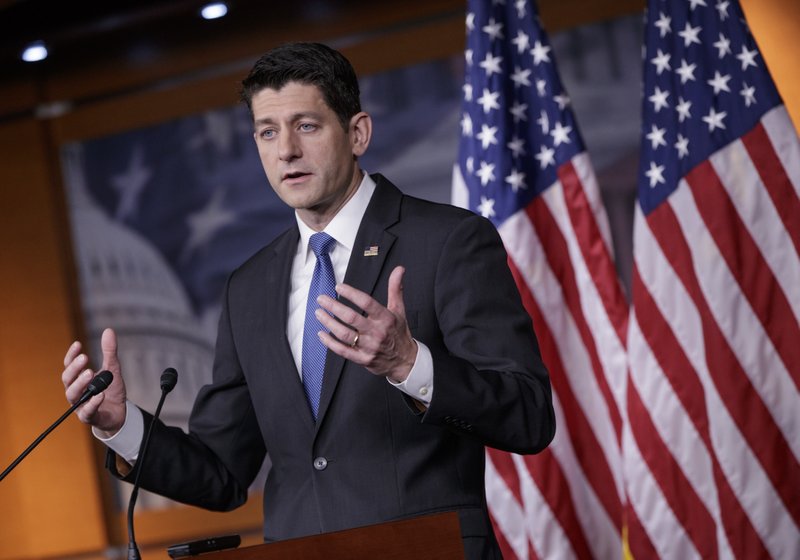
U.S. House Speaker Paul Ryan visited the Rio Grande valley on Wednesday for a firsthand look at the U.S.-Mexico border as the Trump administration steps up immigration enforcement and prepares to ask Congress to pay for a border wall. It was the first time the Wisconsin Republican had visited the border, and protesters gathered to meet his arrival in McAllen, Texas, with hand-painted signs protesting Trump policies. Ryan led a small group of fellow Republicans on the trip, including Rep. Michael McCaul of Texas, who chairs the Homeland Security Committee in the House. In McAllen, Ryan came face to face with some of the challenges that arise in building a wall along the entire 2,000-mile border, which includes much remote and inhospitable terrain as well as the Rio Grande, the river between Texas and Mexico. He met with local officials and toured the area by boat and helicopter, and even briefly rode on a horse. “When you see with your own eyes the many challenges facing our law enforcement professionals along the border, it gives you even greater respect for the work that they do day-in and day-out. But more tools and more support are needed for them to do their jobs effectively,” Ryan said in a statement after the visit. “Congress is committed to securing the border and enforcing our laws, and together with the Trump administration, we will get this done.” President Donald Trump has not yet formalized his request to Congress to pay for the wall he promised during his campaign. It’s expected to cost $15 billion or more, making it uncertain whether Congress would go along. Trump has promised Mexico will pay, but Mexico says it won’t, and Trump has never spelled out how that would happen, anyway. The administration is rolling out new policies to fight illegal immigration and subjecting millions of people who are in this country to deportation, even for minor infractions. A group called La Union del Pueblo Entero announced it was protesting Ryan’s visit “in order to show the opposition of border residents to the current presidential administration’s immigration and border policies.” According to The Monitor newspaper, protesters were asking to meet with Ryan, but he did not meet with them. Republished with permission of The Associated Press.
