
With Democratic support, Senate eyes rollback of banking law
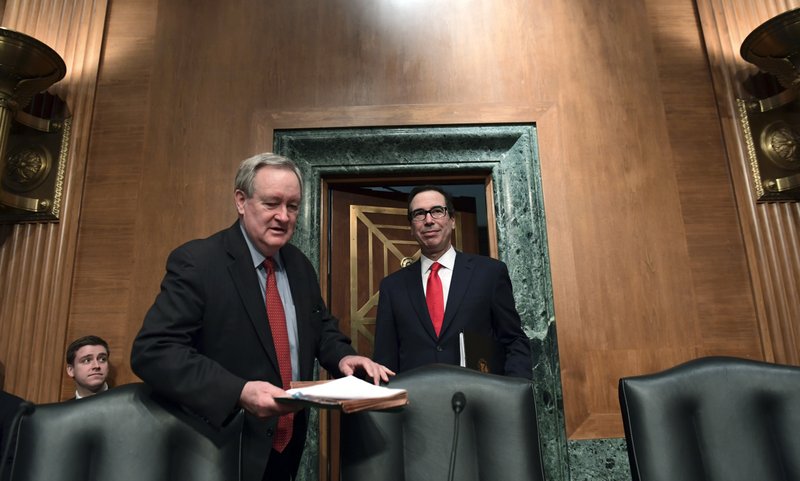
Ten years after a financial crisis rocked the nation’s economy, the Senate is poised to pass legislation that would roll back some of the safeguards Congress put into place to prevent a relapse. The move to alter some key aspects of the Dodd-Frank law has overwhelming Republican support and enough Democratic backing that it’s expected to gain the 60 votes necessary to clear the Senate. Several Democratic lawmakers facing tough re-election races this year have broken ranks with Minority Leader Chuck Schumer, D-N.Y. and Sen. Elizabeth Warren, D-Mass. The legislation would increase the threshold at which banks are considered too big to fail. Such banks are subject to stricter capital and planning requirements, and lawmakers are intent on providing them relief in hopes that it will boost lending and the economy. Banks have long complained about the cost of complying with the many requirements of Dodd-Frank. Under the Senate bill, some of the nation’s biggest banks would no longer have to undergo an annual stress test conducted by the Federal Reserve. The test assesses whether a bank has enough capital to survive an economic shock and continue lending. Dozens of banks would also be exempted from making plans called “living wills” that spell out how the bank will sell off assets or be liquidated in a way that won’t create chaos in the financial system. The House version of the bill is a “recalibration” of Dodd-Frank to help community banks and credit unions increase their capitalization, the Financial Services Committee chairman said Tuesday. “A community bank that’s 0.002 percent the size of J.P. Morgan shouldn’t be laboring under a similar set of regulatory burdens,” Texas Republican Rep. Jeb Hensarling said. The Senate legislation increases from $50 billion to $250 billion the threshold at which banks are considered critical to the system. The change would ease regulations on more than two dozen financial companies, including BB&T Corp., Sun Trust Banks Inc. and American Express. Opponents of the bill argue that the same banks getting regulatory relief through the Senate bill also got about $50 billion in taxpayer-funded bailouts during the financial crisis. They note Countrywide Financial, which was at the center of the mortgage crisis, was smaller than some of the banks targeted for relief now. “There is no reason at all to roll back the rules on these big banks so they can pad their pockets even more – and cut them loose to take on wild risks again,” wrote Warren, who before joining the Senate led a congressional oversight panel for the bailout programs. The Senate bill emerged from lengthy negotiations between Sen. Mike Crapo, the Republican chairman of the Senate Committee on Banking, Housing and Urban Affairs, and Democratic members on the committee. The ranking Democrat, Sen. Sherrod Brown of Ohio, said the changes go too far and he walked away. But many Democrats stayed on board, and the bill has 13 Republican and 13 Democratic or independent co-sponsors, a rare level of bipartisanship for substantive legislation in the current Congress. By contrast, the House effort to roll back Dodd-Frank didn’t generate a single Democratic vote in support. Commercial banks are major players on Capitol Hill, spending $66 million on lobbying Congress last year and $44 million on federal election campaigns in the previous election cycle, according to the Center for Responsive Politics, which tracks campaign spending. About two-thirds of the money went to Republican campaigns and about a third to Democratic campaigns. This cycle, commercial banks have targeted their campaign donations to major players on committees with jurisdiction over banking issues, including the incumbent senators in competitive races: Among the top 10 recipients of commercial bank donations are Democratic Sens. Heidi Heitkamp of North Dakota, Joe Donnelly of Indiana, Jon Tester of Montana and Republican Sen. Dean Heller of Nevada. All four are co-sponsors of Crapo’s bill. Crapo said the Federal Reserve will have the authority to tailor tougher capital and liquidity requirements for individual banks when it believes it’s necessary. For the others, compliance costs should drop. “It’s going to free up a phenomenal amount of capital in this country that right now for no good reason, no safety or soundness reason, is being held back,” Crapo said. The Federal Reserve conducts annual stress tests of banks with $50 billion or more in assets. Under the Senate bill, banks with under $100 billion in assets won’t have to undergo the Fed’s yearly test. Banks with between $100 billion and $250 billion in assets will be exempted from the yearly stress test after 18 months. The Federal Reserve will have authority to accelerate the exemption or extend it. Federal Reserve Chairman Jay Powell seemingly endorsed that approach when he appeared before the Senate’s banking committee last week. “I think it gives us the tools that we need to continue to protect financial stability,” Powell said of the bill. The largest dozen or so banks in the country will still have to undergo the yearly test. The bill also exempts banks with less than $10 billion in assets from what is referred to as the Volcker Rule, which limits banks from using their own capital to trade the markets. Republished with permission from the Associated Press.
Steve Flowers: History will record Richard Shelby as Alabama’s greatest senator
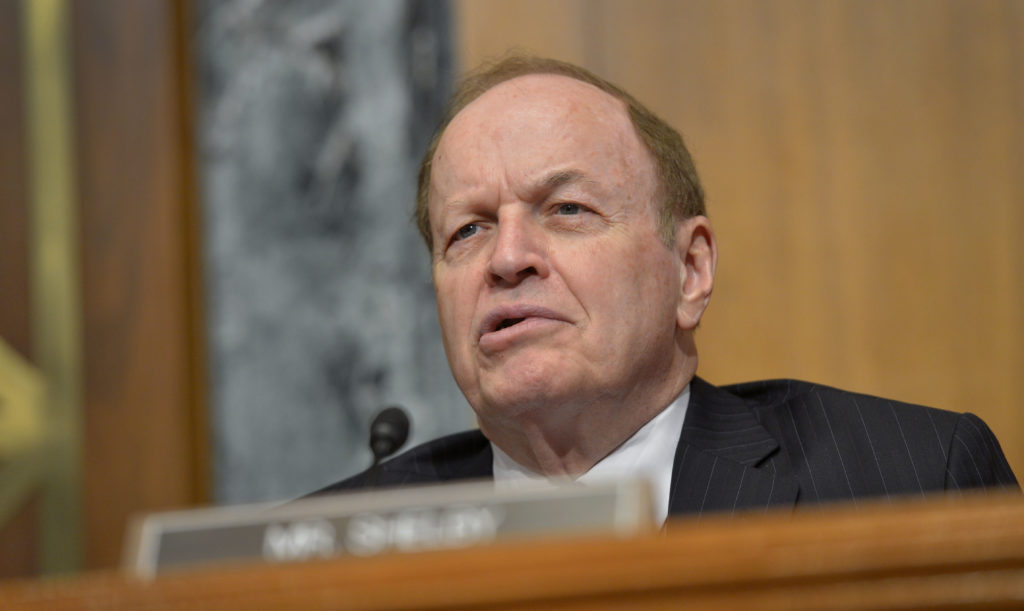
A few months back the Jefferson County Republican Party honored our Senior U.S. Senator, Richard Shelby. It was held at The Club in Birmingham. The view from atop Red Mountain from this elegant club is spectacular, especially at night from the ballroom. The glass enclosure allows you to see the grandeur of the Birmingham skyline. As you glimpse at the scene you can see many of the buildings that are the heart of the University of Alabama/Birmingham. As the tribute to Shelby began, I looked out over the night sky and caught a glimpse of the $70 million Shelby Biomedical Research building. I thought how appropriate that they were honoring a living legend in Alabama political history. Senator Shelby has been an integral part of the growth and expansion of UAB. The UAB Medical Complex and Research Center is now Jefferson County’s premier economic engine and employer. In fact, UAB and the Redstone Arsenal in Huntsville are Alabama’s crown jewels now and for the future. It could be said that UAB and the Redstone Arsenal have flourished because of Richard Shelby and his prowess at bringing home the bacon to Alabama over the past 30 years. In my book, “Six Decades of Colorful Alabama Political Stories,” which was published several years ago, I have a chapter devoted to and entitled “Alabama’s Three Greatest Senators.” Two of those Senators served as a tandem in Washington during the 1940’s, 50’s and 60’s. Lister Hill and John Sparkman were powerful and revered statesmen. Hill, a Montgomerian, served in the U.S. Senate for 30 years from 1938 to 1968. He was a congressman from the second district for 12 years prior to going to the U.S. Senate during the FDR New Deal. Prior to becoming a U.S. Senator, John Sparkman was a congressman for eight years from his native Tennessee Valley. When he retired in 1970, he had been in the Senate for 32 years – the record for an Alabama U.S. Senator. Sparkman is the father of the Redstone Arsenal in Huntsville. In fact they ought to name Huntsville Sparkmanville. Lister Hill whose legacy was in health care was the Father of UAB. Senator Shelby has sustained these two giant legacies. He has used his power and influence to fuel the continued growth of these two pivotal cogs in Alabama’s economic engine. They are both reliant on Federal dollars which Shelby has supplied. Hill and Sparkman were both University of Alabama graduates. Law school and undergraduate. They both were Student Government Presidents. Shelby was also a product of the University of Alabama. He was a Tuscaloosa lawyer prior to going to Congress in 1978. He had served eight years in the State Senate prior to his departure for Washington. He served eight years in Congress prior to being elected to the U.S. Senate in 1986. He was reelected to his sixth six-year term last year. This time next year, he will surpass John Sparkman’s 32 years in the Senate and will have the record for longevity in the U.S. Senate from Alabama. I would contend that Richard Shelby has eclipsed Hill and Sparkman in Alabama political history when it comes to power and influence in Washington. Many times it is difficult to ascertain or recognize greatness when it is current. However, history will record that Richard Shelby would arguably be considered Alabama’s greatest U. S. Senator. John Sparkman chaired banking and had a legacy with housing Americans. Lister Hill authored the Hill-Burton Act which built hospitals all over America. Richard Shelby has been Chairman of the Senate Banking Committee. He has been Chairman of the Senate Intelligence Committee. He is currently Chairman of the Senate Rules Committee. Folks, what that means is that nothing becomes law in the United States or no budget or U.S. appropriation is approved without the consent of our Senior U.S. Senator. Richard Shelby has reached a pinnacle of power never before seen in Alabama political history. It really does not matter who is our Junior Senator. As long as we have Richard Shelby we do not need a second U.S. Senator. See you next week. ••• Steve Flowers is Alabama’s leading political columnist. His weekly column appears in over 60 Alabama newspapers. He served 16 years in the state legislature. Steve may be reached at www.steveflowers.us.
Senate swears-in Doug Jones, GOP majority shrinks
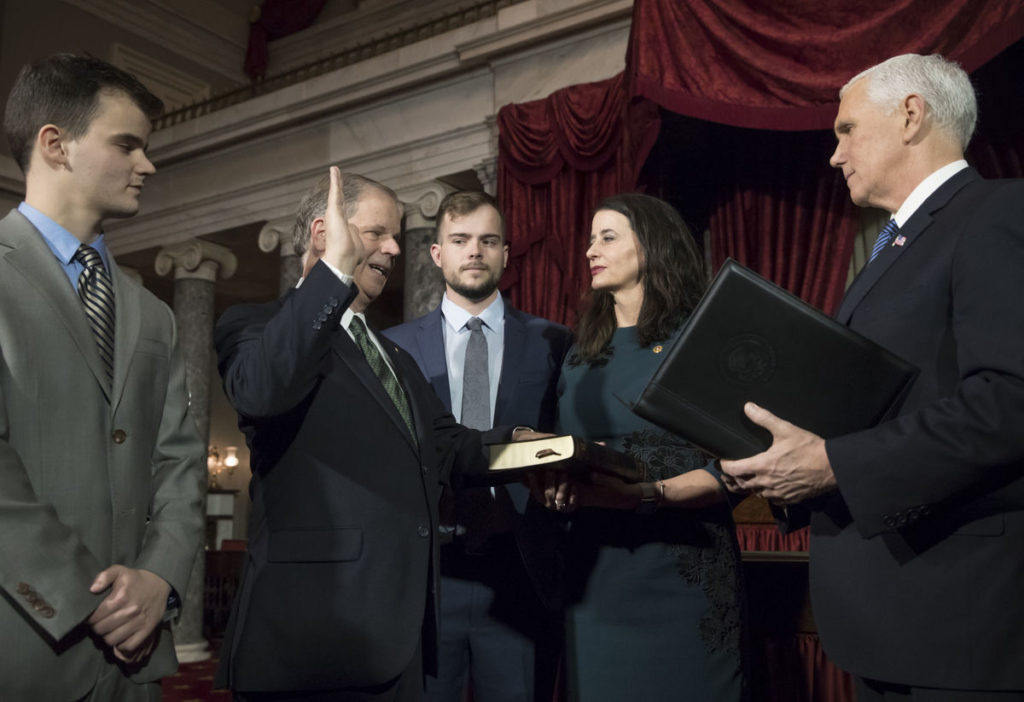
Alabama Democrat Sen. Doug Jones was sworn in to the United States Senate Wednesday, narrowing the Republican majority 51-49 in the upper chamber. Jones arrived at the ceremony with former vice president Joe Biden as his escort, where current Vice President Mike Pence administered the oath of office. Jones, 63, is the first Alabama Democrat to be elected to the Senate in a quarter century. He defeated Republican Roy Moore last month in a special election to fill the remainder of Jeff Sessions term after he resigned to be attorney general. “I will be an independent voice and work to find common ground with my colleagues on both sides of the aisle to get Washington back on track and fight to make our country a better place for all,” Jones said after defeating Moore. Alabama’s sole Democrat in the House, 7th District U.S. Rep. Terri Sewell went to Jones’ swearing-in ceremony and welcomed him to 115th Congress. “Sen. Doug Jones’ swearing in today was a historic landmark for Alabama voters,” said Sewell. “I am thrilled to have a new partner in the Senate who is ready to tackle the challenges facing our state. As a former U.S. attorney, Sen. Jones brings to Congress his experience fighting for the most vulnerable among us. On issues ranging from healthcare to job creation to tax reform, I am confident that Sen. Jones will put the people of Alabama first.”
US Senate passes historic tax reform legislation

The U.S. Senate passed the most historic rewrite of the nation’s tax laws in more than three decades Tuesday night by a 51-48 vote. The product of years of discussion, weeks of committee consideration and hours of floor debate, H.R. 1, the Tax Cuts and Jobs Act, will lower individual, small business, and corporate tax rates, double the standard deduction, repeal the Obamacare individual mandate, simplify the tax code, and dramatically increase the child tax credit. The Senate-passed report will receive a final vote in the House Wednesday morning before being sent to the White House for President Donald Trump’s signature. Alabama’s senior U.S. Sen. Richard Shelby voted in favor of the legislation, saying its passage will help put money back in the pockets of the middle-class Americans who have earned it. “The Senate today passed historic legislation to deliver pro-growth, middle-class tax relief to the American people. This bill not only lowers individual and corporate tax rates, lightening the burden on small businesses, but it works to revitalize our economy – impacting current and future generations to come. Across the nation, this legislation will help create jobs, increase paychecks, and make the tax code simpler and fairer,” said Shelby. “I am proud that we are able to work together to fulfill our commitment to deliver real tax reform and put money back in the pockets of the middle-class Americans who have earned it. This is a once-in-a-generation opportunity to change Americans’ lives for the better.” Alabama’s outgoing U.S. Sen. Luther Strange also voted in favor of the bill. “Tax relief is not pie in the sky. Today, it becomes reality for the American families working hard to make ends meet,” said Strange. “It becomes reality for the small businesses that serve as cornerstones of our communities. It becomes reality for job creators who know the power of American industry. Getting tax relief accomplished is the reason I came to Washington, and on behalf of Alabama, I was proud to cast my vote tonight.”
Senate confirms Alabama-native Paul Compton as HUD’s General Counsel

Monday night, by a vote of 62 to 34, the U.S. Senate confirmed Alabama-native Paul Compton, Jr. to be the next General Counsel of the Department of Housing and Urban Development (HUD). HUD Secretary Ben Carson welcomed the Senate’s action and said it comes at a critical time as the Department prepares to support the long-term recovery efforts following Hurricanes Harvey, Irma and Maria and other natural disasters that have affected the country. “Paul’s extensive background in real estate and housing finance will be a tremendous asset to this Department as we continue to support our nation’s housing markets and our state and local partners recovering from recent disasters,” said Carson. “I look forward to adding Paul’s expertise to our highly experienced senior team.” A former partner of the Birmingham-based law firm of Bradley Arant Boult Cummings, LLP, Compton is listed by Chambers USA as one of America’s leading business lawyers on issues related to banking, finance and regulatory matters. He has vast legal expertise in the areas of multifamily affordable housing finance, tax credit transactions and residential mortgage securitization and has also served as a legal advisor to the Alabama Affordable Housing Association (AAHA), a trade organization for developers, property managers, lenders, investors and service providers for affordable housing.
Alabama Senate election results: Roy Moore vs Doug Jones
Democrat Doug Jones has bested Republican Roy Moore in a nail-biter of an Election night in race to fill the U.S. Senate seat previously held by Attorney General Jeff Sessions. As of 9:38 p.m. CT Jones has 0.8 percentage points over Moore with 93 percent of precincts fully reporting. The Associated Press called the race in favor of Jones with 89 percent of precincts reporting. Alabama is a deeply conservative, red state. But Moore has found himself under fire since The Washington Post published an explosive report on Nov. 9 with the accounts of four women who claim he sexually pursued them when he was in his 30s and they were in their teens. Since that time, a total of nine women have levied accusations against Moore. While Moore has vehemently denied the allegations, his campaign has remained mired in controversy, creating an opening for a possible upset by Jones. Polls closed at 7 p.m. CT. Updated at 9:38 p.m. CT.
Luther Strange delivers Senate farewell address, calls for bipartisanship

Alabama Senator Luther Strange delivered a farewell address to his colleagues on the Senate floor on Thursday after serving 10 months in the chamber. Titled, “A return to the Marble Room,” Strange urged more bipartisanship and to work across party lines. During his speech, he called attention to the empty Marble Room, once a bipartisan retreat for senators off the Senate floor. “What was once an incubator for collegiality and bipartisanship has become a glaring reminder of the divisions that we have allowed to distract us from the business of the American people… This emptiness symbolizes something that worries me about today’s politics,” Strange said from the Senate floor. “It’s likely both a symptom and a cause of the partisan gridlock that often dominates this chamber.” “Strange continued, When we have each left this great body, I know we would like to be remembered as men and women in the arena, as people who spent themselves in worthy causes. I’m convinced the worthiest cause we can join today is the return to the collegiality, the pragmatism and yes, dare I say, the compromise of the Marble Room.” Strange called on his Senate colleagues to find a “shared cause, shared purpose in the quiet corners,” urging them to “return to the collegiality, the pragmatism, and yes, the compromise, of the Marble Room.” Strange was appointed in February by former Gov. Robert Bentley to fill the seat vacant by Jeff Sessions when he left the U.S. Senate to become President Donald Trump‘s attorney general. In September, Strange lost the Republican primary run-off to Alabama former Chief Justice Roy Moore. Moore now faces Democratic Doug Jones on Dec. 12 in a special election to fill Session’s seat. Kentucky-Republican and Senate Majority Leader Mitch McConnell, said Strange would be missed greatly. “I know all of our colleagues share the view that the senator from Alabama has made an extraordinary commitment, made an extraordinary difference for Alabama and for the nation during his time here,” said McConnell. “We will miss him greatly.” Excerpts from Strange’s prepared address: “The idea that the chaos and upheaval that we see today are somehow unique falls flat in the face of monumental history. Pundits and politicians are too quick to speak in superlatives, but chaos and change are nothing new. The Senate was designed to endure, and rooms of marble are built to last.” … “Our generation of leaders will be judged by history on whether we strove to heal the divisions of this body and our nation. … And yet, compromise has become a dirty word in American politics, and it’s a serious threat to our hopes of advancing meaningful policy.” … “It is easy for those outside this chamber to insist that they know what should be done. As long as we remain so deeply divided, these outside voices will always win. … “I am convinced – the worthiest cause we can join today is a return to the collegiality, the pragmatism, and yes, the compromise, of the Marble Room.” Watch Strange’s farewell address below:
Luther Strange, Richard Shelby vote in favor of FY18 budget
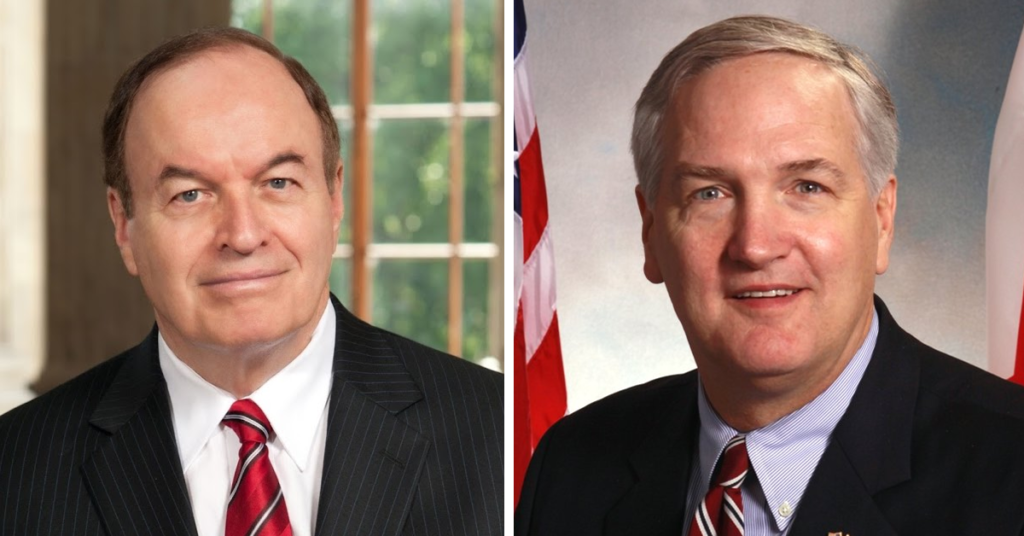
With the support of Alabama U.S. Sens. Luther Strange and Richard Shelby, the U.S. Senate approved the FY18 budget Thursday night, 51-49. The passage of the budget will allow work to begin, in earnest, on tax relief through the use of a procedural maneuver to pass tax reform legislation through the Senate with 50 or more votes, removing the need for support from Democratic senators. The budget allows for the possibility of expanding the federal deficit by $1.5 trillion over 10 years via President Donald Trump’s proposed tax cuts. “Passing a budget resolution is in our job description as Senators – it is not the finish line,”said Strange. “We owe the American people concrete action on several major issues, the first being the outdated tax code that stands in the way of their hard-earned take-home pay.” Strange also joined ten Republican colleagues in sending a letter to Senate Majority Leader Mitch McConnell pledging to “be available for voting day and night” to help accomplish Trump’s fall legislative agenda. “As I joined my colleagues in writing to Leader McConnell, I am ready to make good on our promises, starting with comprehensive tax relief, this year,” added Strange.
Steve Bannon on GOP insurgency: ‘Nobody can run and hide’
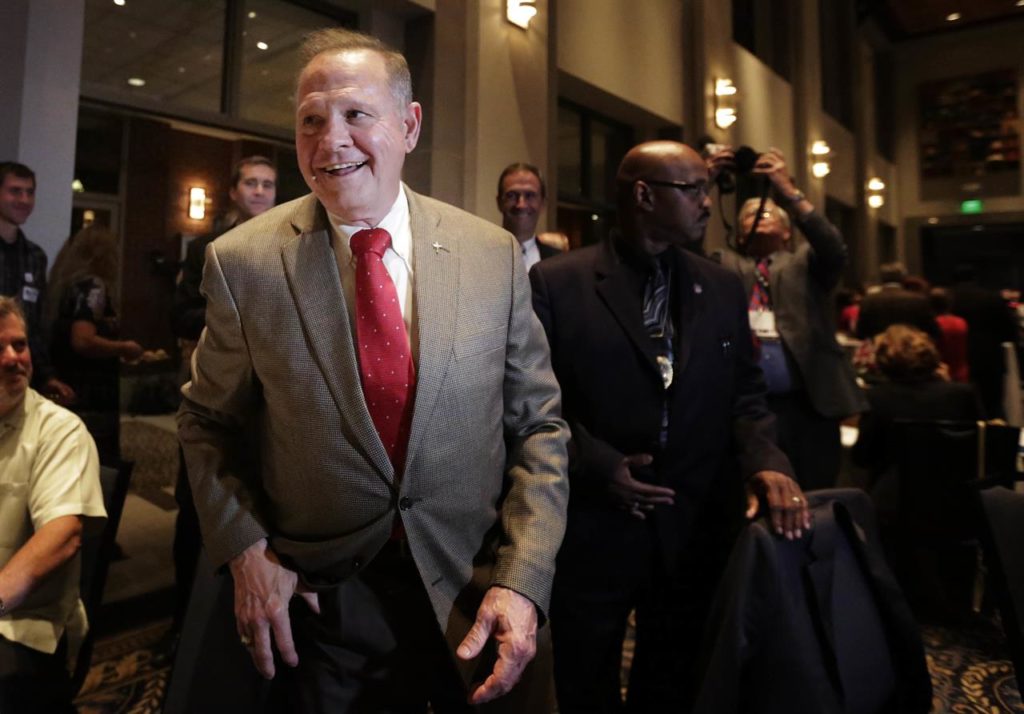
Steve Bannon has a stark message to Republican incumbents he considers part of the establishment: “Nobody can run and hide.” President Donald Trump‘s former chief strategist is promoting a field of potential primary challengers to take on disfavored Republicans in Congress and step up for open seats. Among the outsiders: a convicted felon, a perennial candidate linked to an environmental conspiracy theory and a Southern lawmaker known for provocative ethnic and racial comments. It’s an insurgency that could imperil Republican majorities in the House and Senate. Bannon called it a “populist nationalist conservative revolt” in a speech to religious conservatives in Washington on Saturday. The emerging Bannon class of rabble-rousers shares limited ideological ties but a common intent to upend Washington and knock out Senate Majority Leader Mitch McConnell, R-Ky., standard-bearer of the establishment. So intent is Bannon on bringing down McConnell that he laid down this marker Saturday to some of the incumbents at risk of a challenge from his flank of the party: disavow McConnell, satisfy other conditions and possibly escape the wrath. “Until that time,” he said, the message to the elite is: “They’re coming for you.” The crop of outsider candidates unnerves a GOP that lost seats – and a shot at the Senate majority – in 2010 and 2012 with political novices and controversial nominees and fears a stinging repeat in 2018. “The main thing that binds them together is a rejection of the Republican Party establishment, a rejection of the political elites, the financial elites and the media elites,” said Andy Surabian, a former Bannon aide and senior adviser to the pro-Trump PAC Great America Alliance. Bannon told the religious conservatives that economic nationalism and anti-globalism, the same forces he said elected Trump, can overpower Republican elites. “This is our war,” he said. “The establishment started it. … You all are gonna finish it.” To escape it, he suggested, Senate incumbents can oppose McConnell, eliminate the filibuster that he says is impeding Trump’s agenda and denounce Tennessee Sen. Bob Corker, a Republican who gave a scorching appraisal of Trump as an untethered leader who could lead the U.S. into another world war. Bannon singled out John Barrasso of Wyoming, Deb Fischer of Nebraska and Dean Heller of Nevada as senators who “vote the right way” but did not step up to condemn Corker. There’s still time for a “mea culpa,” he said, implying such senators could be spared his insurgency if they toed his line. Senate Republicans had been upbeat about adding to their 52-48 majority, especially with Democrats defending more seats next year, 10 in states Trump won in last year’s presidential election. But the Bannon challenge could cost them, leaving incumbents on the losing end in primaries or GOP candidates roughed up for the general election. Bannon helped elevate twice-suspended Judge Roy Moore, who won an Alabama runoff over McConnell’s pick, Sen. Luther Strange. Moore was removed from office for refusing to remove a Ten Commandments monument from Alabama’s judicial building, then suspended for insisting probate judges refuse same-sex couples marriage licenses. He faces Democrat Doug Jones in a December election where polls find a single-digit lead for the Republican, a remarkable development in Attorney General Jeff Sessions‘ heavily GOP state. In West Virginia, the grassroots conservative group Tea Party Express endorsed Patrick Morrissey, also a Great America Alliance choice, over establishment favorite Rep. Evan Jenkins in a competitive race to unseat Democratic Sen. Joe Manchin. Consider Mississippi, where state Sen. Chris McDaniel lost to veteran Sen. Thad Cochran in 2014, but is weighing a bid next year against Roger Wicker, the state’s other senator in the national legislature. McDaniel misdefined “mamacita,” the Spanish word for mommy as “hot mama,” and said he would withhold his tax payments if the government paid reparations for slavery. He also was forced to denounce a supporter who photographed and posted an image of Cochran’s bed-ridden wife. He argued in court that his 2014 loss was due in part to African-Americans fraudulently voting in the primary. He’s back again and speaking in Bannon terms. “They will do anything, they will say anything, to just maintain a hold on power,” McDaniel said in an Associated Press interview about McConnell and his allies. In Arizona, former state Sen. Kelli Ward, who is challenging Trump antagonist Sen. Jeff Flake, remains known for entertaining the debunked theory that jet aircraft are used to affect the weather or poison people intentionally. Former New York Rep. Michael Grimm, who spent eight months in prison for federal tax evasion, is challenging two-term Rep. Dan Donovan – with the encouragement of Bannon. In announcing his candidacy, Grimm was apologetic for his conviction. Still out there are viral videos of him telling a television reporter during an on-camera interview at the U.S. Capitol after a question he didn’t like: “You ever do that to me again, I’ll throw you off this (expletive) balcony.” House Speaker Paul Ryan, R-Wis., is sticking with the incumbent: “I support Dan Donovan, plain and simple,” Ryan said this past week. But he stopped short of suggesting Bannon stand down. “It’s a free country,” he said. In Nevada, Bannon is encouraging Republican Danny Tarkanian in his challenge to Heller. Tarkanian, son of famed basketball coach Jerry Tarkanian, is 0-5 in state and federal elections. These outsiders share strong opposition to increasing the nation’s debt even if it means an economy-rattling default. They also share unsparing criticism of congressional Republicans, especially McConnell, for failing to dismantle the Obama-era health care law, an unfulfilled seven-year-old promise. In Wyoming, Erik Prince, founder of security contractor Blackwater, is considering a Republican primary challenge to Barrasso, a senior member of the Senate GOP leadership team. Bannon has urged Prince, brother of Education Secretary Betsy DeVos, to run. Bannon has given at least one Senate incumbent – Texas Sen. Ted Cruz – a pass, but not others. Republished with permission from the Associated Press.
Republicans blame Senate GOP for stalled Washington agenda
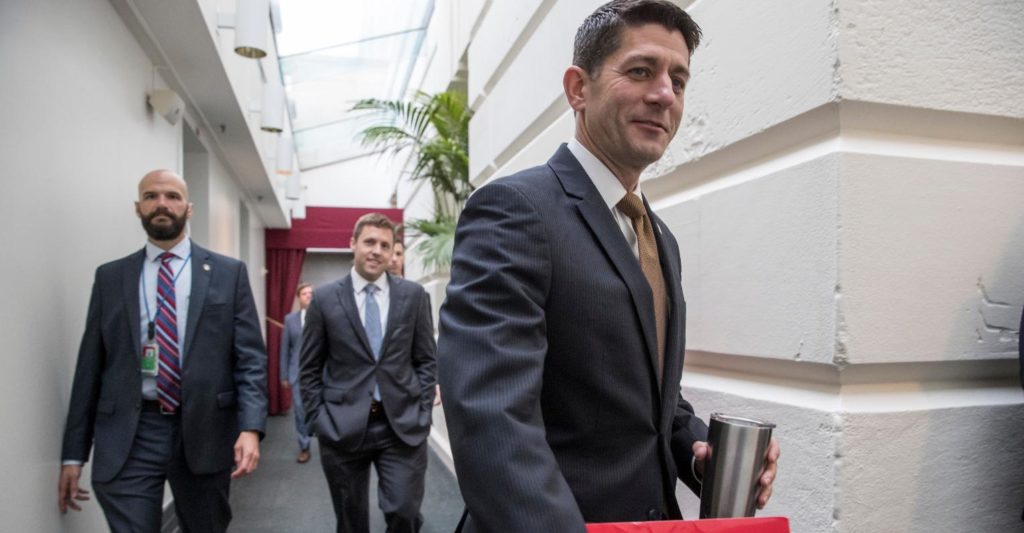
Republicans know who to blame for inaction in Washington – Senate Republicans. The White House, hard-right conservatives and House GOP lawmakers all directed their ire at the Senate GOP this week amid the escalating feud between President Donald Trump and Republican Sen. Bob Corker. The conservatives, in a blistering letter on Wednesday, called on Majority Leader Mitch McConnell and his entire leadership team to step aside in frustration over a stalled agenda. A veteran House Republican warned that if the Senate fumbles tax reform after the failure on health care, the GOP could lose its House majority. The criticism comes with the Senate gone for a weeklong break – and even that recess drew complaints. “They’re on another vacation right now. I think that we would all be a lot better off if the Senate would stop taking vacations, and start staying here until we actually get some real things accomplished,” White House spokeswoman Sarah Huckabee Sanders said Tuesday. The Senate returns next week with the intention of passing a budget that would clear the way for Congress to tackle a revamp of the tax code. The Republicans’ internecine strife was on full display as conservatives are still angry about the collapse of health care and GOP lawmakers fear failure on taxes will cost them politically in next year’s midterm elections. Adding to Republican woes is former White House adviser Steve Bannon‘s declaration of war on the GOP establishment and promise of a primary challenge to every incumbent facing re-election next year with the exception of Texas Sen. Ted Cruz. The Great America Alliance, a pro-Trump organization linked to Bannon, announced three Senate endorsements on Wednesday, backing Matt Rosendale in Montana, Patrick Morrisey in West Virginia and Rep. Marsha Blackburn in Tennessee. The group had backed Roy Moore over McConnell’s preferred candidate, Sen. Luther Strange, in last month’s Alabama runoff. Moore won and faces Democrat Doug Jones in a December election. The Trump-Corker fighting, with the senator suggesting the president would lead the U.S. to World War III and Trump belittling the lawmaker, left House Speaker Paul Ryan asking for detente. “I think it’s just talk it out among yourselves,” Ryan told reporters on Wednesday. “I think my advice is for these two gentlemen to sit down and just talk through their issues. I think that’s the best way to get things done.” The conservatives would have none of it. In their letter, they slammed McConnell for Congress’ inability to repeal and replace Barack Obama‘s Affordable Care Act after promising for seven years that it would, the lack of progress in building a wall on the southern border, the delay on tax reform and the inability of Congress to stop federal funds for Planned Parenthood. “Republicans were given full control of the federal government. They – you – have done nothing. Worse, it is painfully clear that you intend to do nothing because, as is most apparent, you had no intention of honoring your solemn commitments to the American people. You were not going to ‘drain the swamp.’ You are the swamp,” wrote conservatives, including Jenny Beth Martin of the Tea Party Patriots and Ken Cuccunelli II, president of the Senate Conservatives Fund. McConnell’s office had no immediate comment on the letter. Separately, in a blog post, 11-term Rep. Steve Chabot of Ohio lit into the Senate. “If the Republican Senate blows it again, like they did with health care, the House is more likely to feel the pain. That’s because only a third of the Senate is up for re-election next year, and 10 of those Senate seats up for grabs are Senate Democrats who are in states that Donald Trump won. So Senate Republicans should do pretty well next year, despite their lousy record,” Chabot wrote. Republished with permission from the Associated Press.
Roy Moore meets some GOP lawmakers, but not top 2 in Senate
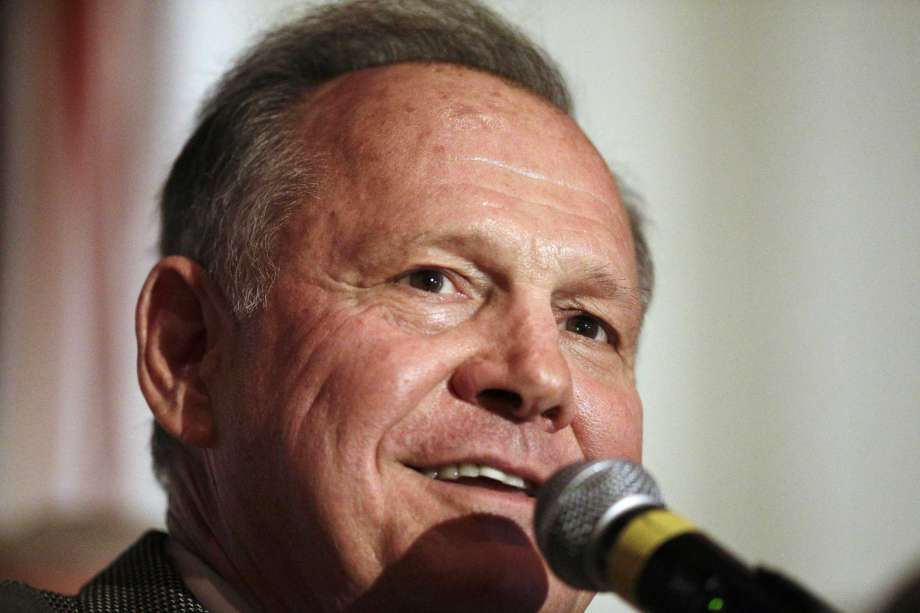
Hard-right Republican Roy Moore is visiting Washington this week, meeting with fellow conservatives and at least one GOP lawmaker who tried unsuccessfully to defeat him in last month’s Alabama Senate primary runoff election. Not on the former state chief justice’s itinerary are stop-ins with the Senate’s two top GOP leaders. But there are signs the party establishment that he bitterly attacked during his campaign is warming to him, or at least making a pragmatic decision to back him in December’s special election against underdog Democrat Doug Jones. “He’s a Republican. I’m going to help him with what I can, if he wants me to,” Alabama GOP Sen. Richard Shelby said in an interview Thursday. Shelby backed defeated incumbent Sen. Luther Strange in the race and said he’s not spoken to Moore since his victory. Moore met late Wednesday with the head of the Senate GOP’s campaign committee, Sen. Cory Gardner, R-Colo. That organization backed Strange in the September GOP runoff primary, as did President Donald Trump. After Moore’s victory, Gardner said, “We support him in keeping this seat in Republican hands.” Until now, Moore has been best known for displaying the Ten Commandments in his courtroom and ordering judges to deny marriage licenses to gay couples. He was twice removed from his post as Alabama chief justice. By late Thursday, Moore hadn’t met with Senate Majority Leader Mitch McConnell, R-Ky., or No. 2 Senate GOP leader John Cornyn of Texas. He has spoken to both leaders by phone since winning the GOP Senate nomination, Republicans say. A political committee aligned with McConnell spent heavily for Strange during the campaign, and Moore regularly savaged McConnell for being ineffective and promised to oust him from his post. Many Republicans view Moore as a major headache for party leaders. “I told him I look forward to meeting him and supporting him in his election,” Cornyn said Thursday about his conversation with Moore. On Wednesday, Moore met with his state’s GOP House members. “He’s very passionate about his issues,” said Rep. Robert Aderholt, R-Ala. “But I don’t think he sets out to be disruptive” to GOP leaders. Aderholt said Moore told the group he’d recently spoken to McConnell by phone. Moore has also used his trip to Washington to meet with Steve Bannon, Aderholt said, Trump’s former White House strategist, who backed Moore in the primary. GOP lawmakers he’s seen include GOP Sens. Rand Paul of Kentucky and Utah’s Mike Lee. Moore also planned to meet with other GOP lawmakers and leading conservatives, including Jim DeMint, former head of the Heritage Foundation, and David McIntosh, president of the Club for Growth. Republished with permission from the Associated Press.
Election Day for Republican nominee for U.S. Senate is here as are many predictions
Alabama voters will decide on today, Tuesday Sept. 26, 2017, who will be the Republican nominee for the U.S. Senate vacated by Jeff Sessions when he assumed the U.S. Attorney General position in February. It’s been a brutal run-off election between former Ala. Chief Justice Roy Moore and appointed Sen. Luther Strange. My prediction: Judge Moore wins 58 to 42. Why: The Senate Leadership fund and outside supporters of Strange went too far in their attacks of Moore and his wife. You can say a lot of things about Moore, but to compare him to Nancy Pelosi was a stretch. That wasn’t helping Strange. What could have helped Strange is if those supporting him had talked about his long conservative record, supporting Second Amendment rights, fighting the EPA, fighting for consumers. Voters could have used something to lessen the blow of the Bentley appointment that hovered over Strange’s incumbency like the dirt cloud that followed Pig Pen in Charlie Brown. Only hours left until the polls close at 7:00 p.m. and in the hours that follow, we’ll know who’s predictions were right and who’s dollars and endorsements mattered most to voters.
