
Personnel update: USA Health names Marie Katz executive director for Office of Marketing and Communications
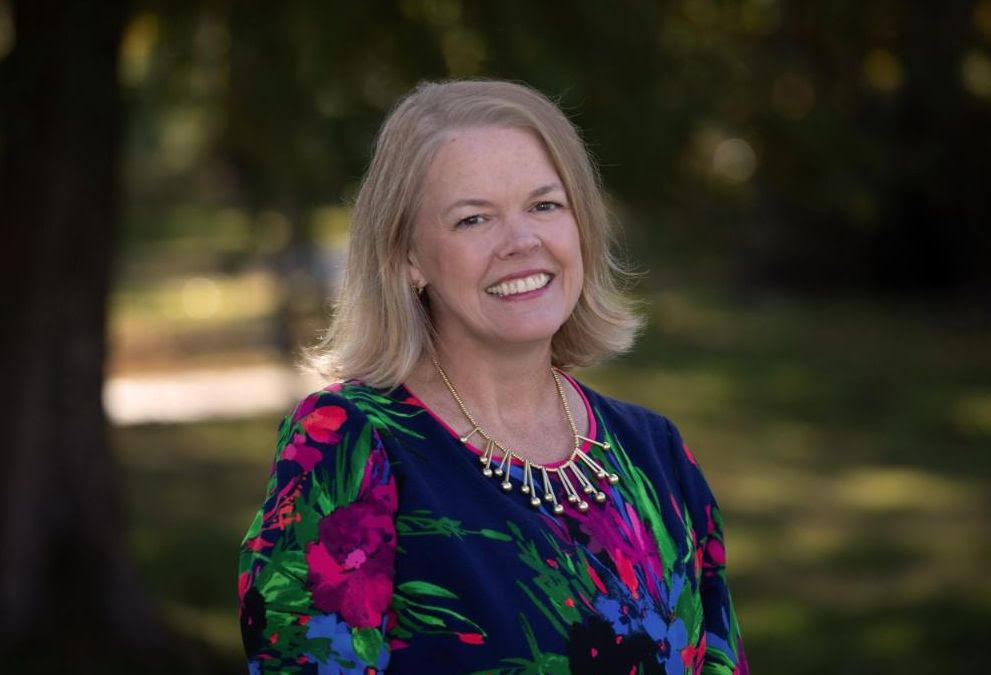
USA Health has named Marie Katz as executive director for the Office of Marketing and Communications for the 7,000-employee academic health system. “As USA Health continues to expand along the upper Gulf Coast, we are delighted to have someone with Marie’s talent and experience leading our marketing and communication efforts,” said Owen Bailey, MSHA, FACHE, chief executive officer for USA Health and senior associate vice president for medical affairs. “I’m excited to see what the future holds as we continue to share the stories of the people and specialized healthcare services we bring to the region.” Katz joined the University of South Alabama’s health system in 2019 as creative services director, then transitioned to interim associate vice president in September 2022. During that time, the health system grew from fewer than 12 locations in two counties to more than 40 sites in two states, which includes the acquisition of Providence Hospital. In the new role, Katz will oversee all marketing and communications efforts for USA Health, which includes University Hospital, Children’s & Women’s Hospital, Providence Hospital, the Mitchell Cancer Institute, the Physician Enterprise, and the Whiddon College of Medicine. Her duties include leading strategic campaign development and media planning, creating communications and marketing strategies, and overseeing internal communications to complement and align with the goals of the health system and Whiddon College of Medicine. “Even before the pandemic dramatically changed some of the ways we reach patients and colleagues, Marie was working with our healthcare teams to establish innovative strategies that continuously demonstrate the unique role academic medicine plays in our community,” said John V. Marymont, M.D., MBA, vice president for medical affairs and dean of the Whiddon College of Medicine. “Along with her other talents, she has the ability to build and maintain relationships that are vital to our success.” Before joining USA Health, Katz was assistant director of creative services for the Office of Marketing and Communications at the University of South Alabama. For more than a decade, she owned The Paper Menu, growing it to a national wholesale business with more than 200 accounts. Previously, she served as art director for PMT Publishing’s Business Alabama and at Sullivan-St. Clair Advertising before it became Red Square. “I am honored to work alongside so many people who have a heart for serving others and who practice compassionate healthcare every day,” Katz said. “It’s also incredibly rewarding to lead a talented team of communications professionals who are eager to share our stories in such meaningful and compelling ways.” A graduate of the University of Alabama, Katz has earned regional and national recognition from The Telly Awards, Communication Arts, CASE, the American Advertising Awards (Addy’s), Lagniappe’s Nappies, and from the National Stationery Show. Her work has been featured in Oprah Magazine, Harper’s Bazaar, and Town & Country Magazine. USA Health is the only academic health system along the upper Gulf Coast. With more than 40 care delivery locations, including USA Health University Hospital, USA Health Children’s & Women’s Hospital, USA Health Providence, the USA Health Mitchell Cancer Institute, and physician practice sites throughout the area, the health system melds clinical care, research, and healthcare education into the most advanced medical care in the region.
USA Health announces new mother/baby postpartum unit

USA Health recently announced that they will soon open a new Mother/Baby Unit designed to promote comfort and bonding for families and their newborns. The 20-suite postpartum unit is located on the fifth floor of the women’s tower at Children’s & Women’s Hospital, the area’s leader in births. Deborah Browning. M.S.N., R.N., C.E.N.P, is the interim administrator for the hospital. “This beautiful new unit is another example of how Children’s & Women’s Hospital focuses on providing high-quality care that is patient-centered,” said Administrator Browning. The new unit is designed to facilitate what the industry calls – ‘couplet care.’ That is defined as a family-centered approach in which mother and baby are cared for in the same room by the same nurse from the time a baby is born until both are ready to go home. The latest research has shown that couplet care creates a stronger bond between parents and their newborns, builds a baby’s immunity, and increases success rates for breastfeeding. Vicki Curtis, M.S.N., R.N., the director of women’s services at USA Health, stated, “We want to provide care for both mom and baby at the bedside. The unit will have the amenities in the rooms that allow the babies to stay comfortable with mom.” Economic developer Dr. Nicole Jones told Alabama Today, “The new health unit is functional and aesthetically pleasing and aims to enhance bonding between mother and child. It is a wonderful example of the quality of care offered for patients in south Alabama.” The new facility was unveiled to the public Wednesday, February 15, during a community open house. The new unit is designed with soft lighting and soothing colors of deep grays, golds, and blues, while stylish birds-in-flight wallpaper adorns the foyer ceiling, and beach images are incorporated into the signage and wall art. Each of the 20 suites features a spacious bedroom, a recliner, a couch, and private bath with luxury amenities such as bidets. Each suite also incorporates a baby bath and scale and a height-adjustable bassinet for the newborn so that assessments and other procedures can be completed at the bedside. A new lactation space will be located within the unit, staffed by an expanded team of lactation consultants. Two private rooms for breast pumping will be available for patients, visitors, and staff to use. Tenesha Edwards, R.N., is the nurse manager of the new unit. “We want our approach to be family-centered,” said Edwards. “This is a life-changing experience for families, and we only have them for a few days, so we want to make sure that their experience during those few days is great.” Healthcare has become an increasingly important issue for the state as the population grows, and the number of doctors in the state has failed to keep up with the pace. There are fewer hospitals, and fewer of those hospitals deliver babies. Improving infant mortality and the survival rate of mothers in the year after having their child is a major concern to healthcare leaders and public officials alike. The unit is expected to begin accepting patients next month. To connect with the author of this story or to comment, email brandonmreporter@gmail.com.
USA Health and Synergy Laboratories partnership to offer surveillance COVID testing for employer groups
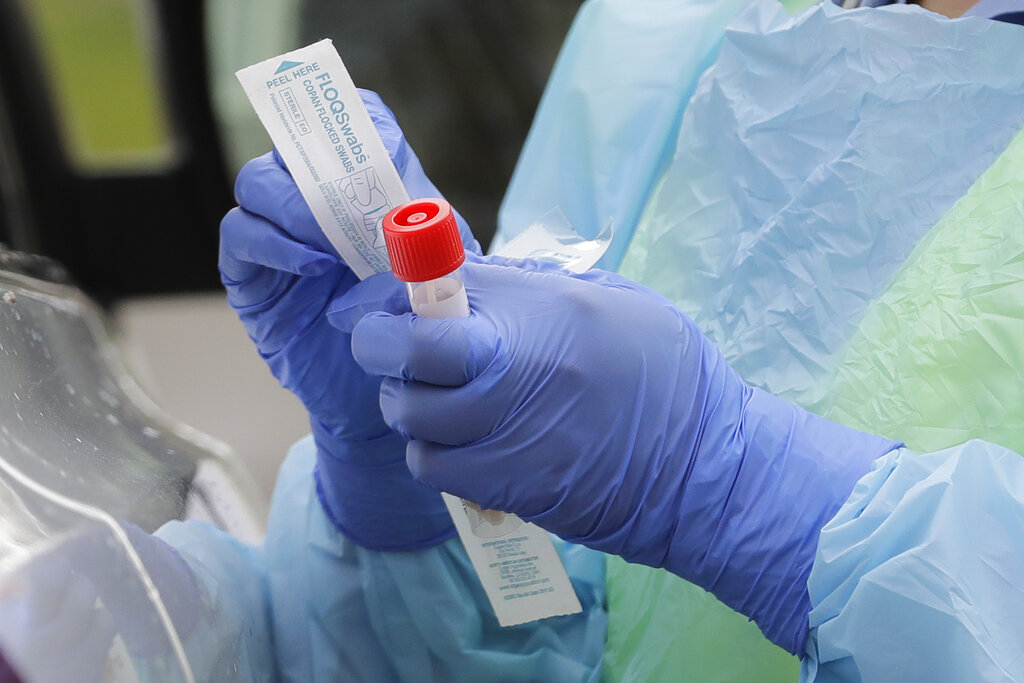
The University of South Alabama (USA) Health and Synergy Laboratories announced they have expanded their partnership to offer COVID testing surveillance to employer groups. The recent spike in Covid cases has hit Alabama hard, and it has strained the healthcare infrastructure. Surveillance testing can employers stop the spread of the Delta variant. Since the pandemic began, USA Health and Synergy have already administered 600,000 COVID tests for residents of Coastal Alabama. “Surveillance testing has already been utilized in several different arenas,” explained Brad Pitts of Synergy. “As we have seen local and regional numbers spike from the Delta variant, we anticipate more employer groups wanting to protect employees and quite simply keep their doors open by testing.” “We are excited to expand our ability to offer testing for all local employers through aligning our resources at USA with Synergy Labs,” said Dr. Robert Ross of USA Industrial Medicine. “There are many testing options available in the market we reviewed, but the multiple platforms provided by our partners at Synergy will allow for timely results and keep Mobile working. Pooling options at Synergy will be a cost-effective option for employers, and it is important we offer dependable FDA-approved platforms while not breaking the bank.” One effective strategy for testing large asymptomatic groups is pooling samples. This is a process of combining multiple patients into one test. Brandon Biles, COO of Synergy, explained that this process has already worked in places like athletic groups. “We have been able to pool test for various entities such as athletic programs, which allow for targeted testing within subsets or groups of people within a workout group or position group. I feel this same theory could be used in the workplace as often we are segmented by departments similar to an athletic team,” said Biles. Emily Powers, Molecular Supervisor, said this approach has been practiced for some time and eliminates hours of work with faster turnaround times. Powers stated, “Pooling samples for SARs-Cov-2 testing involves mixing several samples in a “batch” or pooled sample, then testing the pooled sample with a diagnostic test. This approach increases the number of individuals that are tested using the same number of resources. For example, five samples may be tested together, using only the necessary resources for a single test. This method of pooling samples works well when there is a low prevalence of cases, mainly meaning negative results are expected with few positive results.”
Alabama hospital sending COVID-19 vaccination team to Peru

A south Alabama hospital that vaccinated thousands of people against COVID-19 plans to send a team to do immunizations in Peru, which has been hit hard by the pandemic. USA Health said more than 20 volunteers will travel to the country’s Cusco region. CerviCusco, a nongovernmental agency in Peru, sought the assistance, the health system said in a statement. “Our plan is to travel to Peru in mid-August, establish processes and protocols for safe and efficient vaccine distribution in the region with a goal of providing 5,000 doses to the people of Peru,” said Natalie Fox, assistant administrator, and chief nursing officer for USA Health Physicians Group. USA Health has provided more than 75,000 doses of COVID-19 vaccines on the Gulf Coast, including at mass clinics where more than 2,200 people received injections daily. To raise money for expenses, Mobile-based Synergy Laboratories is matching up to $10,000 in donations to the USA Health outreach campaign. Republished with the permission of the Associated Press.
J. Pepper Bryars: Alabama should wait and watch before considering Medicaid

If only Alabama’s leaders had a magical Medicaid “Choose Your Own Adventure” book, so they could flip ahead and see the different outcomes we could expect by expanding the government insurance program that was originally designed for the poor and disabled. Would it end in a stronger economy, more jobs and a vibrant system of rural hospitals? “Medicaid expansion remains an economic development opportunity without equal,” said David Becker, an economics professor at UAB, in an Al.com article. Or would it bankrupt our already cash-strapped state budget and further sink our country into unsustainable levels of national debt? “When you expand Medicaid, the administrative costs and the cost of expansion will eventually swamp the state,” warned U.S. Rep. Gary Palmer, Republican-Hoover, during an interview on the Matt & Aunie Show on Talk 99.5 FM in Birmingham. “It has in other states. Illinois is about to go bankrupt.” Each side makes a strong case, but the truth seems hidden behind a fog of experts, statistics and forecasts that confuse more than clarify. The Economic Impact A UAB study conducted by Becker and paid for by the Alabama Hospital Association found that even when Alabama starts paying 10 percent of the expansion’s costs, the move would create thousands of new jobs and generate $2.7 billion a year in economic activity. Becker wrote that the expense would be “almost entirely offset” by new tax revenue and state spending reductions on current Medicaid enrollees and other health programs. And another study funded by the same association concluded that “state savings and other economic gains from expansion could be reinvested in the health care system in Alabama, including to support expansion and other state priorities.” But critics say those predictions are extremely unrealistic and point to how widely off the mark such estimates have been elsewhere. States that expanded Medicaid have signed up more than twice as many “able-bodied adults” than expected and per-person costs have exceeded original estimates by a whopping 76 percent, according to a 2018 report by the Foundation for Government Accountability. This led to cost overruns of 157 percent, the report showed, with Medicaid now accounting for one of every three state budget dollars. Many expect the same overruns in Alabama, which would exacerbate our already challenging budget. “We will have to find $250 million more in the state general fund every year, even when revenues decline in recessions,” said Daniel Sutter, an economics professor and director of the Manuel H. Johnson Center for Political Economy at Troy University, in an email. “Alabama’s perennial budget crisis is due largely to having to pay for Medicaid every year. Medicaid expansion makes this pressure worse.” Hospital Closures Supporters of Medicaid expansion most often mention that 12 Alabama hospitals have closed this decade, with many being in rural areas possibly leaving residents without critical care nearby. Expanding the program, they contend, may have saved those hospitals, and could still save many that are at risk. “Those are critical dollars for us as our hospitals currently spend more than $500 million each year in care for which they receive no reimbursement,” said Owen Bailey, chairman of the board of the Alabama Hospital Association and CEO of USA Health, in a press release. “Providing insurance through Medicaid expansion is vital to maintain access to care for everyone.” While an influx of Medicaid cash would help these hospitals in the short term, it’s unclear if it solves the underlying problems that created their instability in the first place. Hospitals are losing money and closing for a variety of reasons, according to The New York Times — shrinking rural populations, hospital mergers, consolidated services, regulatory burdens, low reimbursement rates, and a decrease in hospital care due to outpatient services and speedier care that requires less hospital time. Officials at one Kansas hospital that closed in 2015 told The Times that additional Medicaid funds would have been significant but probably would not have helped them survive in the long run. Meanwhile, help could come from elsewhere. The federal agency that oversees Medicare recently announced that its “tweaking” the formula used to reimburse hospitals in Alabama, a move that AL.com noted could increase payments to rural hospitals. A way forward When economists are arguing vastly different forecasts and outcomes, it’s often helpful to fall back to a few simple yet immutable conservative principles. Chief among them is the principle of prudence, which basically says we shouldn’t rush big decisions – decisions that have long-term consequences and that cannot easily be reversed, if at all. Medicaid expansion is clearly one of those decisions. And even without that magical Medicaid “Choose Your Own Adventure” book, there have already been unexpected plot twists, and clear deathtraps, for other states who decided to expand the program. Alabama should wait and watch to see if the promises, or the fears, are realized. We should also patiently observe states taking alternate storylines through Medicaid waivers, partial Medicaid expansion requests, and block grant plans. Otherwise, if Alabama takes the bait and expands Medicaid, we might turn the final page only to see that ominous yet sadly predictable word. Bankrupt. J. Pepper Bryars is a senior fellow at the Alabama Policy Institute. Follow him on Twitter at @jpepperbryars.
