
Nick Saban: Alabama will be “very cautious” in COVID-19 protocols
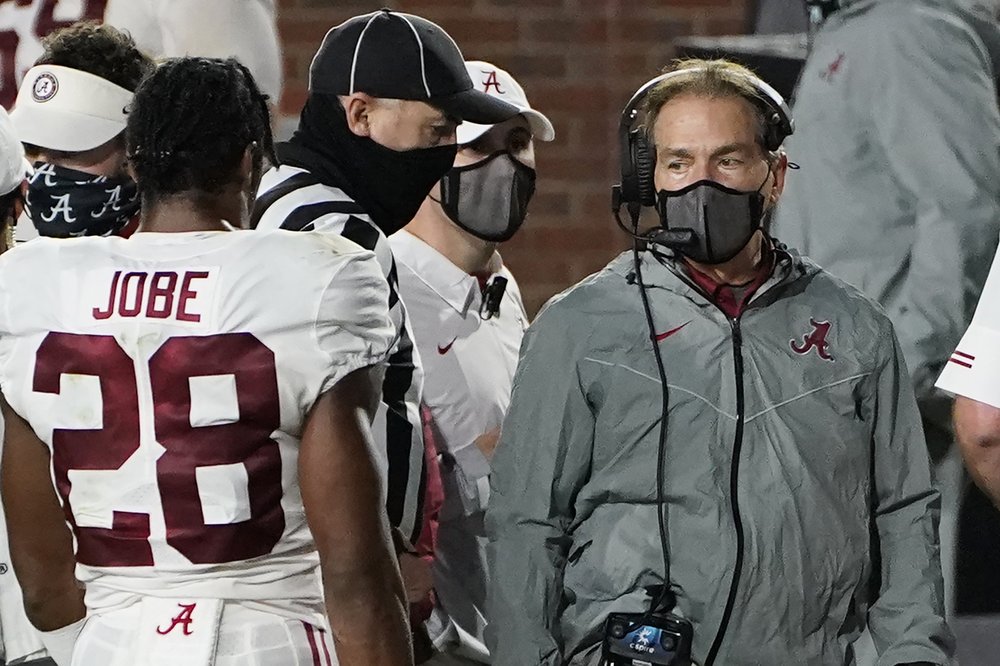
Alabama coach Nick Saban isn’t taking any chances with COVID-19 with the season approaching. Saban says the team will use the 2020 safety protocols for “the next six weeks or so” even though the vast majority of his players are fully vaccinated. “We’re still going to be very cautious indoors and in meetings and so forth on trying not to have an issue with the COVID,” Saban said Thursday ahead of the defending national champions’ first preseason practice. “We’re hopeful that we’ll be able to have full capacity in the stadium. I’m hopeful that more and more people will get vaccinated so they’ll have the opportunity to do that. But that’s everybody’s personal choice.” Saban spoke to reporters at a ceremony where the city renamed a street after his charity, Nick’s Kids. Alabama opens the season on Septempber 4 against Miami in Atlanta. Saban said at Southeastern Conference media days last month that some 90% of his players are fully vaccinated. Alabama, meanwhile, remains the least vaccinated state in the nation with some 35% of Alabamians fully vaccinated, according to the CDC. Republished with the permission of the Associated Press.
White House offers new tax credit to help spur vaccinations
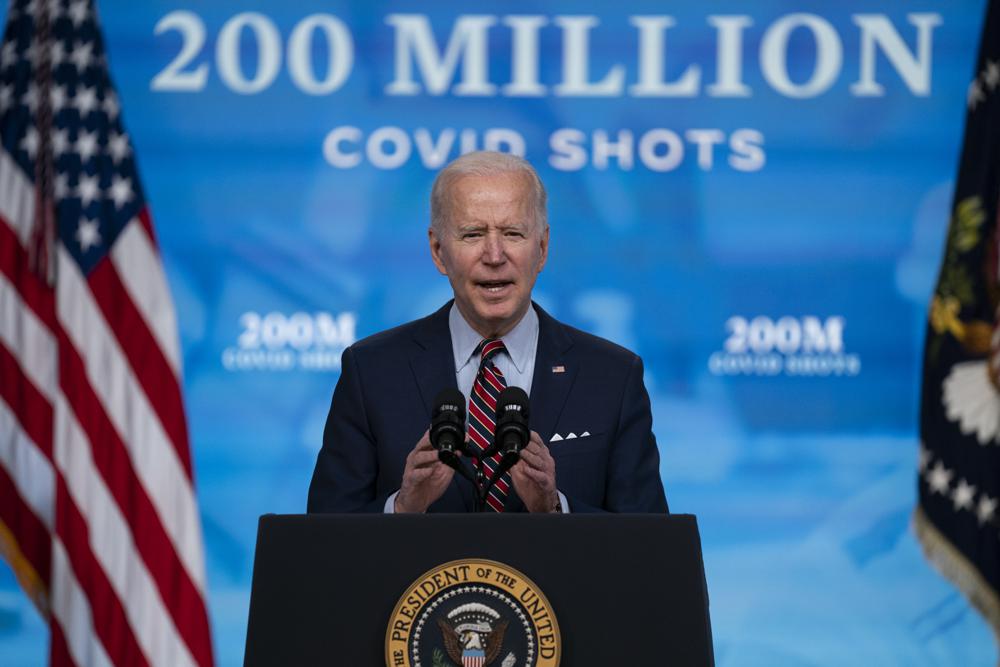
President Joe Biden on Wednesday announced new employer tax credits and other steps to encourage people reluctant to be inoculated to get the COVID-19 vaccine as his administration tries to overcome diminishing demand for the shots. The moves came as Biden celebrated reaching his latest goal of administering 200 million coronavirus doses in his first 100 days in office. With more than 50% of adults at least partially vaccinated and roughly 28 million vaccine doses being delivered each week, demand has eclipsed supply as the constraining factor to vaccinations in much of the country. In a White House speech on Wednesday, Biden acknowledged entering a “new phase” in the federal vaccination effort that relies on increased outreach to Americans to get their shots, both to protect them and their communities. “Vaccines can save your own life, but they can also save your grandmother’s life, your co-worker’s life, the grocery store clerk, or the delivery person helping you and your neighbors get through the crisis,” Biden said. “That’s why you should get vaccinated.” Over the past week, the pace of inoculation in the U.S. has slowed slightly. That is partly a reflection of disruptions from the “pause” in the administration of the Johnson & Johnson shot for a safety review, but also of softening interest for vaccines in many places even as eligibility has been opened to all those older than 16. As the vaccination program progresses, the administration believes it will only get more difficult to sustain the current pace of about 3 million shots per day. Roughly 130 million Americans have yet to receive one dose. Surveys have shown that vaccine hesitancy has declined since the rollout of the shots, but administration officials believe they have to make getting vaccinated easier and more appealing, particularly for younger Americans who are less at risk from the virus and do not feel the same urgency to get a shot. That means providing incentives and encouragement to get vaccinated, as well as reducing the friction surrounding the vaccination process. Biden announced a tax credit for small businesses to provide paid leave for those getting vaccinated or potentially needing to take time off to recover from side effects. Paid for through the $1.9 trillion virus relief package passed last month, the tax change would provide a credit of up to $511 per day per employee for businesses with fewer than 500 workers to ensure that those workers or businesses don’t suffer a penalty by getting vaccinated. The White House is urging larger employers, which have more resources, to provide the same benefits to their workers, and educate them about the shots and encourage them to get vaccinated. “We’re calling on every employer, large and small, in every state, give employees the time off they need with pay to get vaccinated,” Biden said. According to the White House, just 43% of working adults have received at least one shot. As Biden celebrated the vaccine milestone, there is a different reality in the states. In Iowa, nearly half of the counties are not accepting new doses of the COVID-19 vaccine from the state’s allotment because demand has fallen off. In Florida, Palm Beach County plans to close mass vaccination clinics at the end of May with thousands of available vaccine slots unclaimed. In rural West Virginia, a vaccine clinic at a casino/race track parking garage is opening shots to out-of-state residents to address lagging demand. The hope is that people from Washington, D.C., make the hour’s drive to get vaccinated. In Arizona, a plan collapsed that would have opened a federally run vaccine site in Tucson; demand is slipping, and county officials preferred more targeted, mobile locations. Asked about the dip in vaccinations, Health and Human Services Secretary Xavier Becerra said “fluctuation is not uncommon” and that “what we want to do is continue to encourage Americans to continue to get vaccinated.” “The pace of vaccination isn’t linear,” Becerra said, adding that “we are on a pretty good pace.” Through its partnership with more than 40,000 retail pharmacies, the White House says more than 90% of Americans now live within 5 miles of a vaccination site. The administration is encouraging state and local efforts to bring vaccines directly to people, whether through initiatives reaching the homebound or clinics at large employment sites. Many states have also begun to open up vaccination sites to walk-in appointments, reducing reliance on often-cumbersome reservation systems. Maximizing the number of Americans vaccinated in the coming months is critical for the White House, which is aiming to restore a semblance of normalcy around the July Fourth holiday and even more so by the beginning of the next school year. Administration officials have been careful to avoid predicting when the country will have vaccinated enough people to reach herd immunity — when enough people become immune to a disease to make its spread unlikely. The U.S. is on track to have enough vaccine supply for every adult by the end of May and for every American by July, but administering the shots will be another matter. With its stockpile secure and demand dropping at home, the president spoke again of sharing excess doses with allies. Biden said he talked with Canadian Prime Minister Justin Trudeau for about 30 minutes on Wednesday. “We helped a little bit there, we’re going to try to help some more,” Biden said, referring to his decision last month to share about 1.5 million doses of the AstraZeneca vaccine with Canada. “But there’s other countries as well that I’m confident we can help, including in Central America. But it’s in process.” He added. “We don’t have enough to be confident to send it abroad now. But I expect we’re going to be able to do that.” Biden set his goal of 200 million shots last month after meeting his 100 million-in-100 days goal just over a month ago. That original benchmark was announced Dec. 8, days before the U.S. had even one authorized vaccine, let alone the three that
Kay Ivey encourages mask wearing after mandate expires April 9
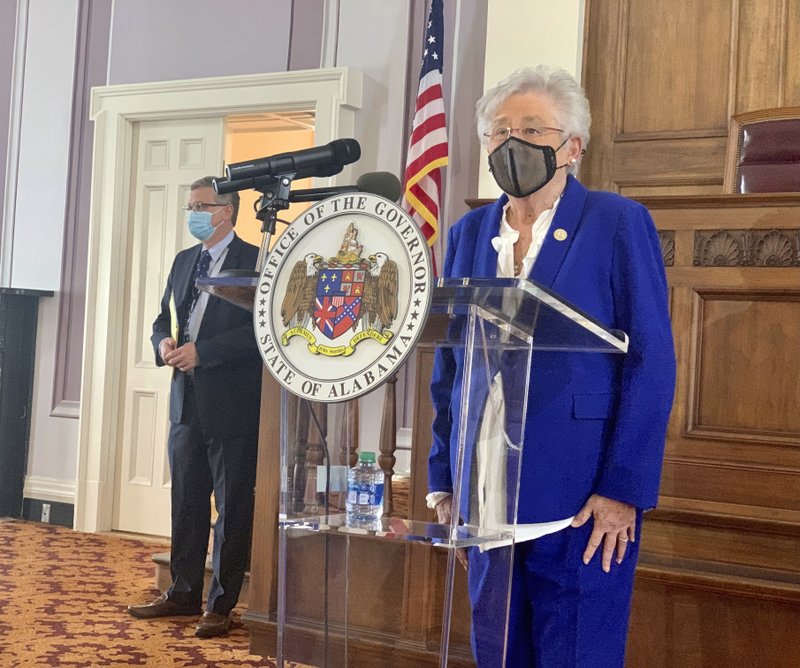
Alabama Gov. Kay Ivey this week urged people to wear masks in public after the statewide mask mandate expires next month. Ivey has been adamant that she will not extend the mask mandate past April 9. On Monday, her office released designs for signs for businesses to use to request patrons to wear masks. The designs range from “Mask Preferred” to “Mask Required For Service.” “After April 9, masks will no longer be a mandate, but they remain one of the most successful tools we have to keep folks safe from COVID-19,” Ivey said in a statement. “Masks are soon to be a memory but until then, let’s wear them out.” Alabama this week expanded eligibility for COVID-19 vaccinations. The expansion, which started Monday, will add more than 2 million people to the groups who can get a COVID-19 vaccination in Alabama, roughly doubling the number of people now eligible. The new eligible groups include more frontline workers; people 55 and older; those with intellectual and developmental disabilities; and residents age 16 to 64 with certain high-risk medical conditions. The qualifying medical conditions include cancer, chronic kidney disease, diabetes, smoking, obesity, sickle cell disease, and heart conditions. State Health Officer Dr. Scott Harris on Friday said most adults will now be eligible for shots and urged people to be patient as they seek vaccination appointments. “Probably between half and two-thirds of all the adults in the state are going to be covered,” Harris said. “So that will be a significant increase in demand.” The Alabama National Guard on Tuesday began a series of COVID-19 vaccine clinics around the state as health officials try to bring the shots to rural areas that may have fewer providers. The Alabama National Guard is providing first-dose COVID-19 vaccination clinics in 24 counties for the next three weeks. There will be a round of second-dose clinics April 13-30. Ivey activated guard units to set up the mobile sites to bring COVID-19 vaccinations to underserved and rural communities. A list of vaccinations clinics can be found at the Alabama Department of Public Health website. The vaccine will be administered at the clinics located in: Barbour, Bullock, Butler, Choctaw, Clarke, Coffee, Conecuh, Covington, Crenshaw, Dale, Dallas, Greene, Hale, Henry, Lowndes, Macon, Marengo, Monroe, Perry, Pike, Russell, Sumter, Washington, and Wilcox counties. There continues to be positive signs in the state. The number of COVID-19 patients in Alabama hospitals has dipped to below 400. It had been as high as 3,000 at the start of the year. Republished with the permission of the Associated Press.
Jim Carnes: Underfunding of public health has devastated Alabama in our time of need

This is what happens when state budgets continually shortchange essential services. The rocky start to Alabama’s COVID-19 vaccination rollout has many causes that officials and observers alike have identified. They include lack of federal coordination, uncertain vaccine supply, complex technical requirements for early vaccines, and the need to keep second doses in reserve. These factors are beyond the state’s control. But a crucial cause that has garnered less attention falls squarely on state lawmakers: Alabama has failed to create and maintain a disaster-ready public health infrastructure. In better times than these, a well-staffed health department network might look like a luxury to budget writers. It might seem tempting to reduce payrolls and eliminate “feel-good” services. But it’s a penny-wise and pound-foolish choice. Two basic truths weigh against such a shortsighted approach. The first is that Alabama consistently ranks at or near the bottom among states on a wide range of health measures, including maternal and infant mortality. The second is that ongoing emergency preparedness and response is a fundamental part of public health’s mission. COVID-19’s heavy toll on Alabamians of color is teaching us that these two truths are intertwined. Chronic health problems resulting from unequal access to care can make a health crisis even worse. The Alabama Department of Public Health (ADPH) is facing its biggest challenge in memory – after years of budget cuts have steadily reduced its capacity. In 2019, the district and county health departments administered by the state were operating at only 65% of the professional capacity they had in 2010. Today, 35 county health departments have either one nurse or none at all on staff. Coosa County’s health department closed entirely in 2016. (Health departments in Jefferson and Mobile counties are locally controlled.) Another disturbing consequence of shortchanging public health is the sparsity of our COVID-19 vaccination data. Alabama needs more infrastructure and personnel to gather and report daily county-level vaccine distribution and demographic impact by race and age. Mississippi is providing those numbers, and our state should, too. The data needs don’t end there. Alabama and Idaho are the only two states without a statewide database requiring all hospitals to report real-time data on multiple health conditions, services, and outcomes. As a result, we lack the capacity that neighboring states have to analyze access to care, quality of care, patient safety, and other factors that could help us make Alabama healthier. Such a database also would allow Alabama to make longer-term assessments of racial health disparities, medical treatment effectiveness, health care inflation, and use of health services by special populations. Despite its underfunding, ADPH did a commendable job in vaccination planning. The priority groups it identified reflect a science-based assessment of risk of exposure and risk of death. Phase 1a targets health care workers, who are at highest risk of exposure, and nursing home residents, who statistically are at highest risk of death. The remaining priority groups follow a gradient of those same risks. We know from grim statistics that COVID-19 risks do not fall evenly across racial, ethnic, and socioeconomic groups. People of color make up a disproportionate share of the front-line workers who keep our communities going, often at low pay. Black and Hispanic Alabamians, on average, also face more barriers to health care than white residents and thus have higher rates of chronic conditions that increase the risk of COVID-19 complications. By quickly vaccinating people in ADPH’s prescribed order, Alabama can reduce COVID-19’s death toll and ensure more equitable protections and outcomes. But if officials abandon the priority system, our state likely will see more virus deaths and an even harsher burden on marginalized Alabamians. Fulfilling Alabama’s vaccination target goals will require levels of personnel, data management, communications, and community engagement that ADPH alone simply does not have. For now, it’s up to elected officials, along with private and nonprofit partners, to bridge those gaps as best they can. For the future, it’s up to all of us to demand more responsible upkeep of the common good. Jim Carnes is policy director of Alabama Arise, a nonprofit, nonpartisan coalition of congregations, organizations, and individuals promoting public policies to improve the lives of Alabamians with low incomes. Email: jim@alarise.org.
Paul DeMarco: Alabama Vaccine Allocation Should Reprioritize to Protect All Seniors and Those Most Vulnerable

Now that there have been two vaccines approved for emergency use in the United States to protect against the coronavirus by the Federal Drug Administration, all eyes will be on the states as to how they will distribute the drugs. While the Centers for Disease Control and Prevention (CDC) has provided guidelines, it is up to each state. The Alabama Department of Public Health has issued the order of priority of those who will receive the injections. Frontline health care workers and those who live in nursing homes and long-term care care facilities have been the first phase of allocation. The next phase will include seniors above age 75 and those essential workers who are at the highest risk, but after that is when questions have arisen about who would go next. The allocation next in Alabama does include first responders, educators and critical workers, but also includes those in jail and prisons because they live in congregated facilities. Thus, this would put felons in line before students who live together in dorm rooms, and the general public, including many older adults between the ages of 65 and 75 who are at an increased risk because of their age of dying from the virus. Prioritization of vaccines has been a source of controversy around the country where the governor of Colorado said in his state that he would not put prisoners above the public in priority for getting the vaccines, which raises the question what will happen in Alabama? Other states are also putting more priority on their seniors and other vulnerable citizens. In Louisiana, seniors starting at age 70 as well as those patients that receive home health care or have “end-stage renal diseases” are eligible for the vaccine earlier. In Georgia and Florida, the states’ governors have expanded the earlier vaccine allocation to those age 65 and older, a full decade sooner than those in Alabama. According to the Alabama Department of Public Health, 78.2 percent of the deaths in Alabama from COVID-19 are those the age of 65 and above. People in this age range are the most vulnerable to the virus, thus, they are the citizens of our state that should receive higher priority to get these vaccines. Governor Kay Ivey and the state health department should prioritize the allocation of vaccines to those that are the most vulnerable to COVID-19. Paul DeMarco is a former member of the Alabama House of Representatives.
VA home residents to receive COVID-19 vaccinations
Residents at Alabama’s four state veterans’ homes will receive COVID-19 vaccinations beginning Tuesday. The arrival of the vaccine is a bright spot amid a record-setting surge in COVID-19 cases. Alabama ranked sixth in the United States for the most new cases per capita in the past 14 days Alabama’s vaccine plan has prioritized frontline medical workers and residents and employees of long-term care facilities for the first allotments of the vaccine. Health care workers began receiving vaccinations last week. State Health Officer Scott Harris said last week that vaccinations were to begin at long-term care facilities this week under a partnership with pharmacies. A record 2,800 people were in state hospitals Monday with COVID-19, roughly 1,200 more than were hospitalized in mid-summer. The Alabama Department of Veterans Affairs said in a news release that the first immunizations of the Pfizer vaccine will be administered to residents and staff at the Bill Nichols State Veterans Home in Alexander City on Tuesday. Vaccinations will continue over the next two-weeks at the other three homes. “For several weeks our health care team has worked with the Alabama Department of Public Health … in scheduling the vaccinations for our veteran-residents and staff,” said Kent Davis, state commissioner of veterans affairs. Residents and staff of long-term care facilities in Alabama are vaccinated through the Federal Pharmacy Program in cooperation with CVS and Walgreens pharmacies. The health care provider for the state veterans homes, Health Management Resources of Alabama, INC., has partnered with Walgreens to administer the two-dose Pfizer vaccine. More than 347,000 people in Alabama have tested positive for the coronavirus since the pandemic began and more than 4,700 people have died. The virus causes only mild or moderate in most people, but it can be deadly for older people and those with underlying health problems. Republished with the permission of the Associated Press.
Daniel Sutter: Vaccines, reason, and freedom. Should vaccinations be mandated?

The current measles outbreak has brought new criticism of parents who refuse to vaccinate their children over vaccine safety concerns. Measles was declared to be eradicated in the U.S. in 2000, and yet this year 550 cases have occurred through the second week of April. Anti-vaccination attitudes, I think, reflect a decline in trust in government. The research “anti-vaxxers” cite linking vaccines to autism, multiple sclerosis, and other ailments, has been called “junk science.” The Centers for Disease Control and the Food and Drug Administration have pronounced vaccines safe. Physicians promoting the “danger” have faced professional censure. Despite this, I do not see the safety of vaccines as allowing us to dismiss the anti-vaccination position. In a free nation, the government serves the people, not the other way around. Freedom means making decisions for ourselves based on our values, beliefs, and assessment of risks. We do not have to justify our decisions to others, even experts. If so, then why should those of us who believe that vaccines are safe force our assessment on others? Parental rights differ from personal rights, as parents make decisions for their children. We recognize that parents who neglect or abuse their children should lose (at least temporarily) their parental rights. Parents should be afforded freedom to raise and protect their children as they see fit unless they abuse these rights. Hard cases arise when parents choose faith healing and prayer over effective medical treatments. The dilemma stems from a conflict between personal and parental rights: the child hypothetically could wish to receive medical treatment. Respecting the child’s rights might require restricting parental choice. Can we justify mandatory vaccination similarly? Several required vaccinations are for generally non-life-threatening illnesses like chickenpox, mumps, and even measles. People feared and dreaded polio before Dr. Salk’s vaccine; chickenpox was a two week vacation from school. Preventing a brief absence from school is not grounds for trumping parental rights. Immunization, of course, protects others besides the vaccinated. Economists call this a spillover or external benefit, which people may well ignore in vaccination decisions. An important spillover here is protecting persons with compromised immune systems who cannot be safely vaccinated. Many economists believe that external benefits justify government mandates. I disagree, because the person immunized still benefits the most. If the person getting immunized (or the parent) believes that the cost exceeds the benefit, a small spillover benefit is unlikely to alter the balance. Nobel prize-winning economist James Buchanan offered a better way to think about such cases. Politics, Buchanan contended, is an exchange constraints on ourselves: I agree to vaccinate my son in exchange for other parents vaccinating their children. A similar argument applies to taxes – I agree to pay taxes because you will be made to pay. We will never all agree on any decision of significance. Government though involves the exchange of numerous constraints, and we may benefit from the package as a whole. For instance, all states require vaccination against eight viruses for school children. We might disagree with one or two of the requirements and still abide by the mandate. Whether government constraints benefit us depends on whether we trust that politicians act in our best interest. Differences in state vaccination requirements highlight this tension. All states require vaccination against eight illnesses, typically through four shots. Beyond this, forty three and thirteen states require immunization for Hepatitis B and Hepatitis A respectively. Connecticut requires nine shots; Alabama requires only four. If immunizations reflect a clear public health consensus, why do state requirements differ? Politics and not just public health influences requirements. Debate over the relatively new HPV vaccine, which can prevent cervical cancer, reveals this. Two states and the District of Columbia require the vaccine, which costs over $200, and makers Merck and GlaxoSmithKline have lobbied lawmakers in other states for mandates. Political considerations and campaign contributions shape vaccine mandates. Can we really trust that our politicians impose mandates on us based exclusively on our interests and sentiments? Unfortunately not. One consequence of this lack of trust is anti-vaccination skepticism. Daniel Sutter is the Charles G. Koch Professor of Economics with the Manuel H. Johnson Center for Political Economy at Troy University and host of Econversations on TrojanVision. The opinions expressed in this column are the author’s and do not necessarily reflect the views of Troy University.
Bill Miller: The critical ingredient to the success of vaccination programs

Only a few weeks into a new administration and with it comes unwelcome medical news. The age-old debate about the safety and appropriateness of vaccination has been renewed and a vocal stage has been delivered to a small group of anti-vaccination zealots. Reports have circulated that Robert F. Kennedy, Jr, a highly visible critic of vaccination, has been invited to chair a commission on vaccination safety by the new administration. If it comes to pass, one result can be accurately predicted. It will become a confused platform of ideological rhetoric that will diminish trust in those scientific bodies charged with making sound judgments for the public welfare. This inevitable outcome is particularly unfortunate since there has never been any advance in medical history that has had a more positive impact on our lives than vaccination. Humanity has been in eternal conflict with infectious disease throughout history. Perhaps no disease better illustrates the vast range of impacts of epidemic disease than smallpox.In 18th Century Europe, at least 400,000 people died annually from smallpox. One-third of the survivors went blind. Mortality rates were as high as 60% in some communities. Infant mortality was even more frightening, approaching 80%. The ultimate success of smallpox vaccination is credited to Sir Edward Jenner in England. In 1796, he successfully introduced the technique of cowpox vaccination demonstrating its subsequent protective effect against smallpox. Today, due to the effectiveness of worldwide smallpox vaccination programs, that disease has been effectively eradicated from the planet. However, this is not the case for other consequential infectious diseases. Two years ago, a whooping cough epidemic swept through California where vaccination rates are steadily lagging. Contrary to any ordinary expectation, it is often the most affluent parents who are shunning immunization. Some of these anti-vaccine proponents are highly educated people being misled by social media. The trend appears to have originated with a fraudulent report in a British medical journal linking vaccination with autism. This report was subsequently revealed to have been based on fraudulent research and was retracted by that scientific journal. Similar rumors that vaccine stabilizers, such as thimerosol, contribute to autism have also been refuted. Nonetheless, damage has been done by ill-informed repetition. There is no doubt that those parents that refuse to vaccinate their children are well meaning. However, their actions are ill advised on two levels. The first is that refusing to appropriately vaccinate themselves or their child exposes both of them to the risks of deadly infections that can be entirely avoided. Yet, although vaccination is safe and highly effective it does have its limits. This links to the other critical factor that makes universal vaccination so crucial. No vaccination ever devised provides 100% protection and some individuals in any population cannot be vaccinated. This includes very young infants whose immune systems are not yet mature enough for vaccination and members of our community that are immunosuppressed due to diseases that weaken their immune system from a variety of illnesses including cancer. Their protection is through our actions. When there are high levels of vaccination within any community, the infectious agent is unable to find enough hosts to reproduce and sustain itself within that population. This level of community-wide protection is termed herd immunity. It is our joint responsibility, all of us together, to be part of the process of achieving this level of immunity both in our own interests and for the protection of the other members of our community. The next outbreak of a preventable infectious disease with its incumbent tragedies is always lurking. A political committee to examine the evidence based on ideological biases is not needed. Instead, our policies should rely on the expertise of already existing scientific organizations such as the Global Advisory Committee on Vaccine Safety (GACVS), an independent expert clinical and scientific advisory body, as well as our own Centers for Disease Control and the National Institutes of Health. The critical ingredient to the success of vaccination programs is education. Therefore, there needs to be a concerted program to recover our eroded memories of the consequences of now distant epidemic diseases that have been conquered or reduced through vaccination. The success of vaccination programs depends on being familiar with the bitter lessons of our continuous struggle with epidemic disease. Such an educational process must be ever ongoing. ••• Dr. Bill Miller has been a physician in academic and private practice for over 30 years. He is the author of The Microcosm Within: Evolution and Extinction in the Hologenome. He currently serves as a scientific advisor to OmniBiome Therapeutics, a pioneering company in discovering and developing solutions to problems in human fertility and health through management of the human microbiome. For more information, www.themicrocosmwithin.com.
