
Donald Trump answers call of crisis with familiar bluster, spontaneity and norm-breaking risk that defined his political rise
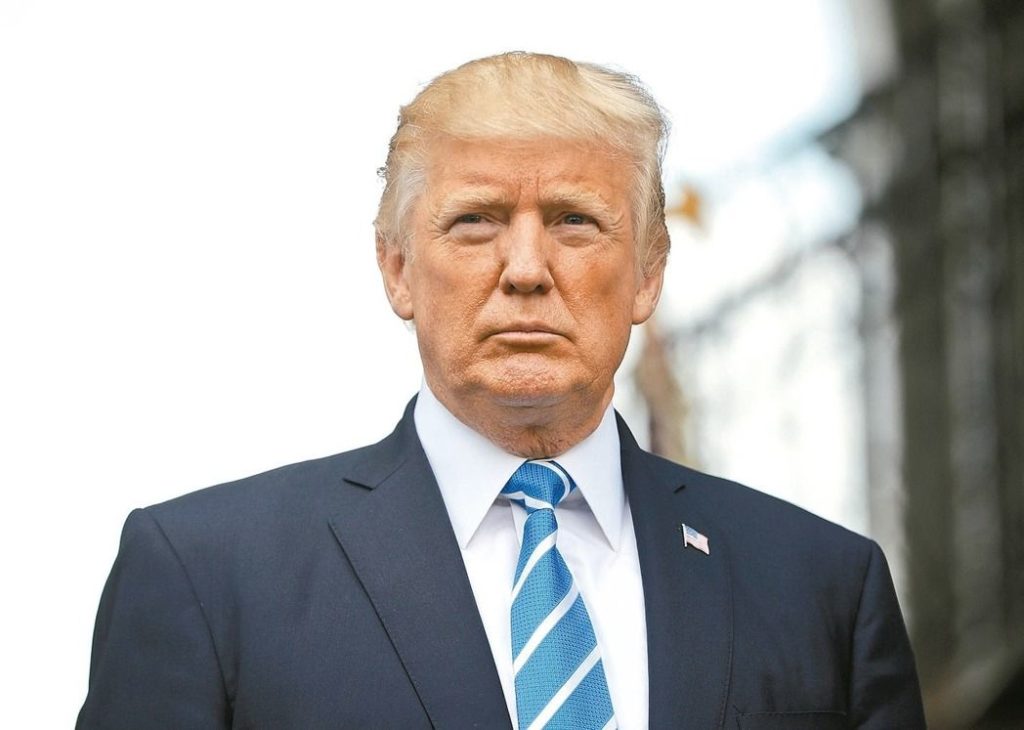
A nuclear showdown. The world’s most unpredictable foe. A world on edge. What will the new president do? Be Trump. Faced with perhaps his gravest international crisis yet, President Donald Trump this week responded precisely as his some of supporters hoped and his critics long feared. The mix of plain-spoken bluster, spontaneity and norm-breaking risk that defined his political rise defined his approach to a round of fresh threats from nuclear North Korea. When Pyongyang punched, Trump counterpunched harder — much as he did on a debate stage flanked by political opponents. But this was not a Florida debate stage or a low-stakes celebrity Twitter war of the sort Trump perfected before entering politics. It was a standoff over North Korea’s rapidly developing nuclear program, complete with trading threats of war and the safety of millions in the balance. Over the course of the week, Trump unleashed provocative rhetoric and dismissed the careful or precise diplomatic language favored by his predecessors. “They should be very nervous,” Trump said of North Korea. “Because things will happen to them like they never thought possible, OK? Still, Trump’s strategy was familiar. He tweeted regularly. He took it personally. He spoke off the cuff. He talked — a lot — holding a two-day blitz of press conferences, each yielding moments that immediately sparked chatter, confusion, criticism and attention. On Friday, after striking a slightly toned-down message to North Korea, Trump offered that he would consider military action in Venezuela, where the president has consolidated power and sparked widespread international condemnation. In the course of a 12-minute exchange with journalists, the remark raised the prospect of the use of military force against two countries in two different hemispheres. Trump’s pugnacious public talk is matched by his private conversations with aides and allies. Trump has told associates that North Korean leader Kim Jong Un has disrespected him and the United States and that he believes the rogue nation will only respond to toughness and the threat of force, according to two people who, like others interviewed, requested anonymity because they were not authorized to discuss private conversations. Some aides were surprised when Trump declared Tuesday, soon after word spread that North Korea had made a nuclear breakthrough, that the isolated nation would face “fire and fury” if the threat continued. The president had not used those words in a conference call with advisers beforehand when discussing the matter. He also told aides, including new chief of staff John Kelly, that he had no intention of softening his tone, according to two White House officials, who also demanded anonymity to discuss the conversations. The president has gone out of his way to discuss the threat posed by North Korea, tweeting frequently and engaging reporters at length four times over two days in his golf club. On Thursday, as he fielded questions from a small group of reporters, he ignored press secretary Sarah Huckabee Sanders, who repeatedly held up a hand-written sign that urged him to take just one final question. Instead, he frequently made eye contact with individual reporters to seek out their inquiries. He ended up talking for 30 minutes, much of it in ominous language about North Korea. His plain-spoken tough talk, which is easily distilled into tweets and the ticker headlines that crawl across cable television, has frequently thrilled supporters. “Trump is simply trying to communicate in vivid, clear language to a dictator not used to listening to anybody that they are facing the potential end of their regime,” said frequent Trump adviser Newt Gingrich. “I think that what he’s trying to do in the short run is to communicate with great intensity that we are serious.” For others, Trump’s rhetoric only appeared to be escalating the crisis. “Presidents have used tough language about adversaries,” said Julian Zelizer, history professor at Princeton University. “The difference is how unscripted this is … this is ad hoc and improvised, which most presidents have understood to be dangerous when nuclear weapons are involved.” Trump dismissed such criticism on Friday evening, as he answered more questions from reporters, and issued more threats. “My critics are only saying that because it’s me,” Trump said. “We have tens of millions of people in this country that are so happy with what I’m saying because they’re saying finally we have a president that’s sticking up for our nation and frankly sticking up for our friends and our allies.” Republished with permission of The Associated Press.
Donald Trump emboldens friendly foreign leaders, leaves foes wary
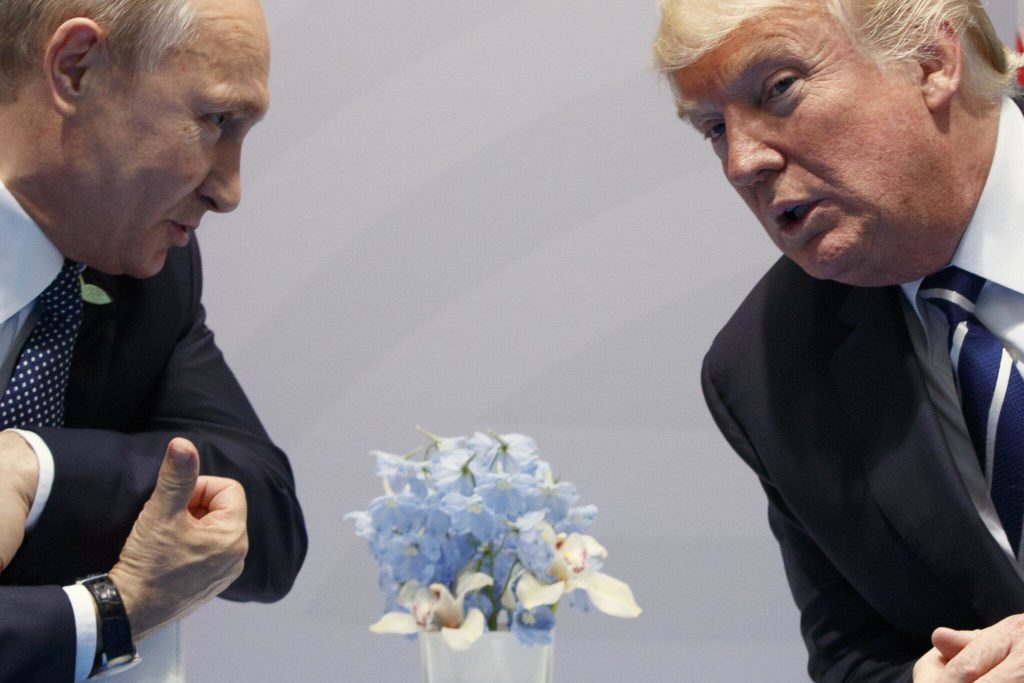
Are you a friend or foe? That seems to be uppermost in President Donald Trump‘s approach to foreign policy in the first six months of office. The probe at home into Russian interference in the 2016 U.S. election continues to be a thorn in his side, bedeviling Trump’s apparent desire to have warm relations with Russia’s Vladimir Putin, and the initial “bromance” with China’s Xi Jinping also buckled under geopolitical and economic disagreements. But there are others who have been lavished with the president’s favor. Who is in the friend camp is clear from the president’s foreign travels, actions and statements. To varying degrees, his support has emboldened favored countries to carry out contentious regional or domestic policies. Some traditional U.S foes, though, could find themselves in a more precarious position than they did under President Barack Obama, who generally avoided direct confrontation and even pursued diplomatic openings with Iran and Cuba. Below, AP journalists assess the friend-or-foe dynamic as seen from key nations: — SAUDI ARABIA In Trump Saudi Arabia trusts. The ultraconservative Sunni kingdom played host to Trump’s first overseas trip when it brought him and officials from other Muslim nations for an anti-terrorism conference in May. Their embrace comes as no surprise as Trump long criticized the Iran nuclear deal, part of the reason for cold relations between the kingdom and President Barack Obama. Trump also has been willing to overlook human rights concerns in his embrace of Mideast leaders, including Saudi King Salman and Egyptian President Abdel-Fattah el-Sissi. Trump sent U.S. special operations forces into Yemen to back the Saudi-led campaign in a January raid that killed some 30 people, including women, children and a Navy SEAL. Trump also has written tweets against Qatar and openly criticized the U.S. ally, host of a major American military base, amid a Saudi-led effort to isolate the country. That’s even as members of his administration try to mediate an end to the rift. King Salman’s 31-year-old son, the recently appointed Crown Prince Mohammed bin Salman, was one of the first foreign officials to rush to America to see Trump. He has met several times with Trump’s son-in-law Jared Kushner. Now next in line to the throne, the crown prince likely hopes to trade on those ties in further cementing his interests in weaning the oil-rich kingdom from its crude-dependent economy as global energy prices remain low. –Jon Gambrell in Dubai, United Arab Emirates — ISRAEL To Trump, Israel definitely falls into the most-trusted-friend category. From early in his campaign, Trump cast himself as an unconditional supporter of Israel who would have a far warmer relationship with Prime Minister Benjamin Netanyahu than Obama did. After repeated clashes with Obama, Israel’s nationalist right had high expectations for Trump. His ambassador to Israel is David Friedman, a bankruptcy lawyer who has raised millions of dollars for the Beit El settlement. That community north of Jerusalem is in the heart of the occupied territory Palestinians want for an independent state. A foundation run by the family of Trump’s son-in-law Jared Kushner – the president’s czar for Middle East peace efforts – also supported Beit El. Tax records show Trump himself donated money to a Jewish seminary in the settlement through his foundation. Trump indicated his affinity by including Israel in his first overseas trip as president, where he was fawned over by his hosts. He speaks warmly about Netanyahu and has reportedly sided with him in spats with the Palestinians. He also encouraged Israelis by taking a tough stand on Iran. At the same time, Trump has not made good on his campaign promise to move the American Embassy to Jerusalem and has spoken of pushing for the “ultimate deal,” raising fears in Israel that it could be pressured into making unwanted concessions. Meanwhile, the Palestinians have made efforts to get in Trump’s good graces, with Palestinian President Mahmoud Abbas traveling to Washington to meet him and praise his leadership. But a new wave of violence over a disputed Jerusalem shrine, sacred to Muslims and Jews, is Trump’s first experience of the decades-long conflict’s realities. How his administration navigates it will be telling. –Aron Heller in Jerusalem — POLAND Trump lavished praise on Poland during a visit this month, hailing its struggles for freedom against past oppression and depicting the country – which strongly opposes taking any Muslim refugees – as a defender of Western civilization. He made no mention of rule of law or human rights, even though the country’s populist ruling party has spent the past 20 months consolidating power in ways that have weakened checks and balances. Within days of the visit, the Law and Justice party moved to pass legislation aimed at giving the government vast new powers over the courts. One bill called for the immediate dismissal of all Supreme Court judges, giving the justice minister power to replace them. Among other things, the change would have given the ruling party direct control over confirming election results, one of the Supreme Court’s functions. This week the country’s president responded to days of mass nationwide protests by vetoing two of three bills on the judiciary, including the one on the Supreme Court. However, he left in place a third bill that gives the justice minister the power to name the heads of all the country’s lower courts, which critics also see as unconstitutional. “Trump’s silence about the Polish government’s problems with democracy and the rule of law encouraged Warsaw to pursue further measures, effectively ending judicial independence and separation of powers soon after the presidential visit,” said Marcin Zaborowski, a political analyst affiliated with Visegrad Insight, a journal about politics in Central Europe. –Vanessa Gera in Warsaw, Poland — IRAN Trump hasn’t yet torn up the Iran nuclear deal, which took the U.S. and other world powers years to negotiate and ended with Tehran accepting curbs on its contested nuclear program in exchange for sanctions relief. Whether that remains the case is an open question. Days into the
