
Watchdog report: Failed VA leadership put patients at risk
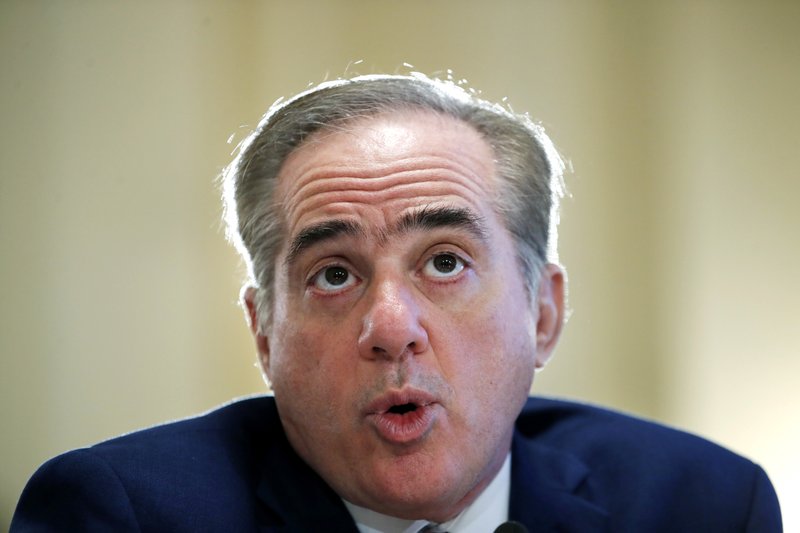
As a top Veterans Administration official in the Obama administration, current Secretary David Shulkin took no action to fix longstanding problems of dirty syringes and equipment shortages that put patients at risk at a major veterans hospital, according to an investigation released Wednesday that finds “failed leadership” and “climate of complacency” at agency. The 150-page report by the VA internal watchdog offers new details to its preliminary finding last April of patient safety issues at the Washington, D.C., medical center. Painting a grim picture of communications breakdowns, chaos and spending waste at the government’s second largest department, the report found that at least three VA program offices directly under Shulkin’s watch knew of “serious, persistent deficiencies” when he was VA undersecretary of health under former President Barack Obama from 2015 to 2016. Shulkin, who was elevated to VA secretary last year by President Donald Trump, told government investigators that he did “not recall” ever being notified of problems. The findings are the latest in a series of problems coming to the light at the VA under Shulkin, who has been struggling to keep a grip on his job since a blistering report by the inspector general last month concluded that he had violated ethics rules by improperly accepting Wimbledon tennis tickets and that his then chief of staff had doctored emails to justify his wife traveling to Europe with him at taxpayer expense. He also faces a rebellion among some VA staff and has issued a sharp warning to them: Get back in line or get out. “I suspect that people are right now making decisions on whether they want to be a part of this team or not,” he said last month. The latest IG investigation found poor accounting procedures leading to taxpayer waste, citing at least $92 million in overpriced medical supplies, along with a threat of data breaches as reams of patients’ sensitive health information sat in 1,300 unsecured boxes. No patient died as a result of the patient safety issues at the Washington facility dating back to at least 2013, which resulted in costly hospitalizations, “prolonged or unnecessary anesthesia” while medical staff scrambled to find needed equipment at the last minute as well as delays and cancellations of medical procedures. The report also noted improvements made at the Washington facility since the IG’s first report in April, when Shulkin replaced the medical center’s director and pledged broader improvements. Still, VA inspector general Michael Missal cautioned of potential problems without stronger oversight across the VA network of more than 1,700 facilities. “Failed leadership at multiple levels within VA put patients and assets at the DC VA Medical Center at unnecessary risk and resulted in a breakdown of core services,” Missal said. “It created a climate of complacency … That there was no finding of patient harm was largely due to the efforts of many dedicated health care providers that overcame service deficiencies to ensure patients received needed care.” In the report, Shulkin responded that he had expected issues involving patient harm or operational deficiencies to be raised through the “usual” communication process, originating from the local level and regional office to VA headquarters in Washington — and that it apparently didn’t happen. While the IG did not make specific conclusions on whether Shulkin actually was warned by direct subordinates, it broadly faulted an “unwillingness or inability of leaders to take responsibility for the effectiveness of their programs and operations,” and cited a “sense of futility” at multiple levels in bringing about improvements. In its written response to Wednesday’s report, the department generally agreed to implement recommendations for improved health procedures at the Washington facility and pledged a “reliable pathway” for local VA and regional officials to report high-priority concerns to senior leadership at VA headquarters. “It was difficult to pinpoint precisely how the conditions described in this report could have persisted at the medical center for so many years,” Missal wrote. “Senior leaders at all levels had a responsibility to ensure that patients were not placed at risk,” he said. Shulkin has maintained White House support despite the travel controversy. He has acknowledged some mistakes in the handling of the trip and said he relied too much on the judgment of his staff to ensure full compliance with travel policies. He has since said he reimbursed the $4,000 plane ticket for his wife. His chief of staff, Vivieca Wright Simpson, has left the agency. Several major veterans organizations are standing behind him as the best guardian of the VA amid a planned overhaul of the Veterans Choice program, a Trump campaign priority aimed at expanding private care outside the VA system. Major veterans groups are wary of an aggressive Choice expansion as a potential threat to the viability of VA medical centers, which it sees as best-suited to treat battlefield injury such as post-traumatic stress disorder. Republished with permission from the Associated Press.
David Shulkin stresses ‘lot of work to do’ to fix beleaguered VA
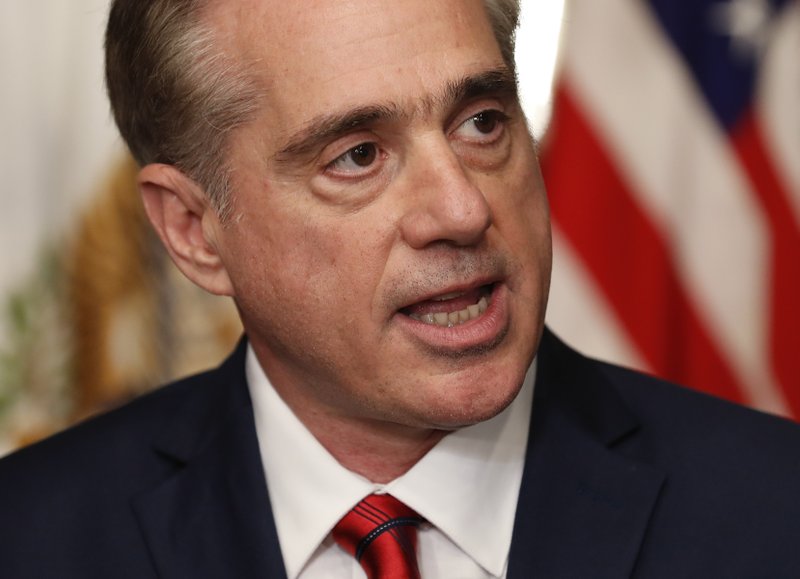
Veterans Affairs Secretary David Shulkin warned Wednesday that the VA is “still in critical condition” despite efforts that predate his tenure to reduce wait times for medical appointments and expand opportunities to seek care in the private sector. In a “State of the VA” report, Shulkin, a physician, issued a blunt diagnosis: “There is a lot of work to do.” Veterans can get “same-day” services at medical centers but are still waiting too long – more than 60 days – for new appointments at about 30 locations nationwide. Many primary care centers are understaffed or running out of space. Appeals of disability claims remain backed up with years of wait. Inventory systems at several VA facilities are woefully out of date, and employee accountability is “clearly broken.” Shulkin said the department had about 1,500 disciplinary actions against employees on hold, citing legal requirements that it must wait at least a month before taking action for misconduct. That means people are being paid “for violating our core values,” he said in a 17-page report. “Our veterans and their families have benefited from our early success, but have suffered due to the failures of the past to effect real change,” Shulkin said. Shulkin provided his “top to bottom review” at a critical time. His biggest proposals for revamping the VA – and fulfilling the campaign promises of President Donald Trump – will need to be acted on soon by an increasingly polarized Congress if measures are to be passed by this fall. The wish list includes an accountability bill to make it easier to fire VA employees, expanding the Veterans Choice program of private-sector care and stemming veterans’ suicide. About 20 veterans take their lives each day. “That should be unacceptable to all of us,” Shulkin said at a White House briefing. Other efforts include an overhaul of information technology systems, plans to reduce 400 vacant buildings and 735 underutilized facilities, consolidation at VA headquarters in Washington and partnerships with local governments and the private sector. Shulkin announced that a promised White House hotline for veterans’ complaints should be fully operational by Aug. 15. Testing begins Thursday. The telephone number is (855) 948-2311. During the campaign, Trump promised a 24-hour hotline so veterans’ complaints will not “fall through the cracks.” Shulkin, who served in the Obama administration and was promoted by Trump, described the president as being “deeply engaged” on veteran issues, a subject Trump highlighted during the campaign. He pledged to make the department and its health care system work better for veterans. “His commitment to being involved in veteran issues is one of his top domestic priorities,” Shulkin said at the briefing. “Anything that we need, the White House has been extremely responsive and they are impatient and anxious for us to get on with this.” Trump’s budget plan calls for a 3.7 percent increase in total VA funding, mostly to pay for rising costs of medical care. It specifically calls for $29 billion over the next decade for Choice, which allows veterans to seek outside medical care from private doctors. To cover rising costs, the VA would cap the amount of educational benefits veterans could receive under the GI bill and halt “individual unemployability” benefit payments to out-of-work disabled veterans once they reach age 62. Major veterans’ organizations oppose such cuts, with the American Legion describing the trade-offs as “stealth privatization.” Veterans’ groups worry the Trump administration is seeking to expand Choice to the detriment of core VA programs. Besides Choice, Shulkin said he was seeking to implement another campaign priority: a VA accountability office, established by executive order last month, Shulkin said he still needed the Senate to pass accountability legislation that would give him broader authority, such as lowering the evidentiary standard to fire employees. The Senate is scheduled to vote on the bill June 6. The Associated Press reported this week that federal authorities were investigating dozens of new cases of possible opioid and other drug theft by employees at VA hospitals, a sign the problem isn’t going away after the VA announced “zero tolerance” in February. Since 2009, in only about 3 percent of the reported cases of drug loss or theft have doctors, nurses or pharmacy employees been disciplined. Republished with permission of The Associated Press.
