
Ukraine invasion leads U.S. lobbyists to ditch Russian clients
A half-dozen U.S. lobbying firms severed ties with Russian-linked businesses over the past week, a dramatic pullback for an industry that often has few qualms about representing controversial interests. The rush offers a measure of the potency of the Biden administration’s new sanctions, which were levied after Russian President Vladimir Putin ordered the invasion of Ukraine last week. They make it difficult, if not outright illegal, for U.S. companies to do business with Russia-based ones. Firms including McLarty Associates, BGR Group, and Venable LLP abruptly canceled arrangements that have collectively yielded millions of dollars in lobbying fees in recent years, records show. Among their former clients are investors and operators for the now-canceled Nord Stream 2 gas pipeline, which was supposed to deliver Russian gas to Germany, as well as Russian state-controlled banks and others. Thus far, it’s reversed the normal order of business when war breaks out, which often spurs foreign governments to enlist Washington-based firms to lobby the U.S. government, a review of lobbying records shows. “These lobbying firms and lobbyists were pulling in huge amounts of money,” said Craig Holman, a registered lobbyist for the good government group Public Citizen, who closely tracks the industry. “I really have a hard time believing that they suddenly became altruistic once Russia invaded Ukraine.” Holman said a more likely scenario was that the firms were “lobbying on behalf of the sectors, industries and projects” that were covered by the sanctions and thus required to cease their work. It’s difficult to assess just how many Russian companies or Russian-linked companies are still being represented by U.S. lobbyists. But the recent exodus suggests that the Ukraine invasion may have made representing the country’s interests too toxic even for an industry that has in the past welcomed payment from defense companies, despots, and rebel groups. In 2019, for example, a Libyan general seeking to consolidate his power in the North African country spent $2 million hiring a Texas-based firm to forge closer relations with the U.S. Many of the Russian-linked companies that were dropped were involved in the Nord Stream 2 project, a completed undersea pipeline that would bypass Ukraine to send Russian gas supplies to Europe via Germany. The opening of the pipeline, which would have given Russia tremendous leverage by making it an even larger energy supplier to Europe, was suspended by Germany after last week’s invasion, leading the U.S. to issue sanctions against the company operating it. McLarty quickly dropped five European energy companies that were investors in the project, which have paid the firm at least $3.4 million in fees since 2017, records show. For months, Republicans in the Senate have railed against the pipeline and sought sanctions on businesses involved in the project. But the effort, including legislation sponsored by Sen. Ted Cruz, R-Tex., went nowhere because it was opposed by President Joe Biden as well as Senate Democrats, who hold the majority. Lobbying records indicate McLarty lobbied Congress and the executive branch to “protect and further the company’s interest in the debate over natural gas as an element of European energy security.” “We felt the honorable thing to do in the aftermath of the Russian invasion was to support U.S. policy and withdraw from the pipeline project,” Richard Burt, who leads a wing of McLarty focused on foreign interests, wrote in an email. Burt had donated $14,000 to Biden’s 2020 election efforts, record show. The firms BGR Group and Roberti Global also dropped the pipeline project’s construction and operating company, Nord Stream 2 AG. The company is controlled by a subsidiary of the Russian state-owned company Gazprom, whose fuel sales support the Russian government budget. A representative of Roberti Global, which has collected at least $9.8 million in lobbying fees from Nord Stream 2 AG, did not respond to a request for comment. BGR President Jeffrey H. Birnbaum said in an email that his firm, which has collected at least $1.5 million in lobbying fees from Nord Stream 2 AG, ended its relationship to be in “compliance with economic and trade sanctions announced by the U.S. government.” Firms representing Russian banks also dropped clients. That includes Sberbank and VTB, Russia’s two largest state-run banks, which were targeted last week by sanctions aimed at limiting their businesses internationally. Venable LLP last week dropped an affiliate of Sberbank. The firm has collected at least $800,000 in lobbying fees and closely tracked legislation in Congress of interest to Russia, including economic “sanctions issues” and a bill called the “Defending Ukraine Sovereignty Act.” The two lobbyists who worked on the account, Gregory M. Gill and D. Edward Wilson, did not respond to requests for comment. The firm Sidley Austin also ended its roughly seven-year relationship as a registered “foreign agent” for VTB last Friday. The firm, which has represented the bank since 2015, was on a $40,000 a month retainer and typically collected about $360,000 or more a year in fees from the company. The firm provided “government strategies counsel” and ”lobbying directed toward the U.S. Congress” as well as the White House “regarding the imposition of sanctions by the U.S. government on Russian-affiliated banks,” according to Justice Department filings. A representative of Sidley Austin did not respond to a request for comment. Mercury Public Affairs, LLC similarly dumped clients. Late last week, the firm filed paperwork with the Justice Department to end its status as a “foreign agent” working on behalf of Sovcombank PJSC, as well as the metal and energy producer EN+ Group, which collectively paid the firm $100,000 a month on retainer. A Mercury representative did not respond to a request for comment. Filings state the firm provided “strategic consulting” and “government relations services, including outreach to U.S. Government officials.” Republished with the permission of the Associated Press.
State of the Union: Joe Biden vows to halt Russia, hit inflation

Addressing a concerned nation and anxious world, President Joe Biden vowed in his first State of the Union address Tuesday night to check Russian aggression in Ukraine, tame soaring U.S. inflation and deal with the fading but still dangerous coronavirus. Biden declared that he and all members of Congress, whatever their political differences, are joined “with an unwavering resolve that freedom will always triumph over tyranny.” He asked lawmakers crowding the House chamber to stand and salute the Ukrainians as he began his speech. They stood and cheered. It was a notable show of unity after a long year of bitter acrimony between Biden’s Democratic coalition and the Republican opposition. Biden’s 62-minute speech, which was split between attention to war abroad and worries at home — reflected the same balancing act he now faces in his presidency. He must marshal allied resolve against Russia’s aggression while tending to inflation, COVID-19 fatigue, and sagging approval ratings heading into the midterm elections. Aiming to build on momentum from the speech, Biden will head to Wisconsin on Wednesday in an effort to show Americans that his domestic agenda is working. His vice president and Cabinet members will fan out around the country to amplify the message. Biden heads again to an old bridge set to be repaired — increasingly a symbol for his administration, tangible evidence of the nation that he’s working to update. This time, it’s a wrought-iron bridge that connects Duluth, Minnesota, and Superior, Wisconsin, across the St. Louis Bay. The bridge will be replaced using funds from the massive infrastructure plan signed into law last year, a signature piece of bipartisan legislation and proof — Biden says — that the GOP and Democrats can still work together. In Tuesday’s speech, Biden highlighted the bravery of Ukrainian defenders and a newly reinvigorated Western alliance that has worked to rearm the Ukrainian military and cripple Russia’s economy through sanctions. He acknowledged costs to the American economy, as well, but warned ominously that without consequences, Russian President Vladimir Putin’s aggression wouldn’t be contained to Ukraine. “Throughout our history, we’ve learned this lesson – when dictators do not pay a price for their aggression, they cause more chaos,” Biden said. “They keep moving. And, the costs and threats to America and the world keep rising.” As Biden spoke, Russian forces were escalating their attacks in Ukraine, having bombarded the central square of the country’s second-biggest city and Kyiv’s main TV tower, killing at least five people. The Babi Yar Holocaust memorial was also damaged. Biden announced that the U.S. is following Canada and the European Union in banning Russian planes from its airspace in retaliation for the invasion of Ukraine. He also said the Justice Department was launching a task force to go after Russian oligarchs, whom he called “corrupt leaders who have bilked billions of dollars off this violent regime.” “We are coming for your ill-begotten gains,” he said, pledging that the U.S. and European allies were after their yachts, luxury apartments, and private jets. Biden pivoted in his speech from the troubles abroad to those at home. Even before the Russian invasion sent energy costs skyrocketing, prices for American families had been rising, and the COVID-19 pandemic continues to hurt families and the country’s economy. Biden outlined plans to address inflation by reinvesting in American manufacturing capacity, speeding supply chains, and reducing the burden of childcare and eldercare on workers. “Too many families are struggling to keep up with the bills,” Biden said. “Inflation is robbing them of the gains they might otherwise feel. I get it. That’s why my top priority is getting prices under control.” In one sign of national progress on the pandemic, Biden entered the House chamber without a mask, as coronavirus cases decline and new federal guidance tries to nudge the public back to pre-pandemic activities. But there was evidence of ongoing tension as well: The Capitol was newly fenced due to security concerns after last year’s insurrection. Set against disquiet at home and danger abroad, the White House had conceived Tuesday night’s speech as an opportunity to highlight the improving coronavirus outlook, rebrand Biden’s domestic policy priorities, and show a path to lower costs for families grappling with soaring inflation. But events took a turn toward world affairs with last week’s Russian invasion of Ukraine and nuclear saber-rattling by Putin. As is customary, one Cabinet secretary, in this case, Commerce Secretary Gina Raimondo, was kept in a secure location during the address, ready to take over the government in the event of a catastrophe. The State of the Union is typically an address targeted to a national audience, but this year’s had the world watching. In an interview with CNN and Reuters, Ukrainian President Volodymyr Zelenskyy urged Biden to deliver a strong and “useful” message about Russia’s invasion. In a show of unity, Ukrainian Ambassador to the U.S. Oksana Markarova joined first lady Jill Biden in the House gallery for the speech. In a rare discordant moment, Rep. Lauren Boebert of Colorado yelled out that Biden was to blame for the 13 service members who were killed during last August’s chaotic U.S. withdrawal from Afghanistan. “You put them in. Thirteen of them,” Boebert yelled as Biden mentioned his late son Beau, a veteran who died from brain cancer and served near toxic military burn pits, used extensively in Iraq and Afghanistan. Biden is pursuing legislation to help veterans suffering exposure and other injuries. While the crisis in Eastern Europe may have helped to cool partisan tensions in Washington, it didn’t erase the political and cultural discord that is casting doubt on Biden’s ability to deliver. A February AP-NORC poll found that more people disapproved than approved of how Biden is handling his job, 55% to 44%. That’s down from a 60% favorable rating last July. Biden used his remarks to highlight the progress from a year ago — with the majority of the U.S. population now vaccinated and millions more people at work — but also acknowledged that the job is
Joe Biden banning Russia from U.S. airspace because of Ukraine
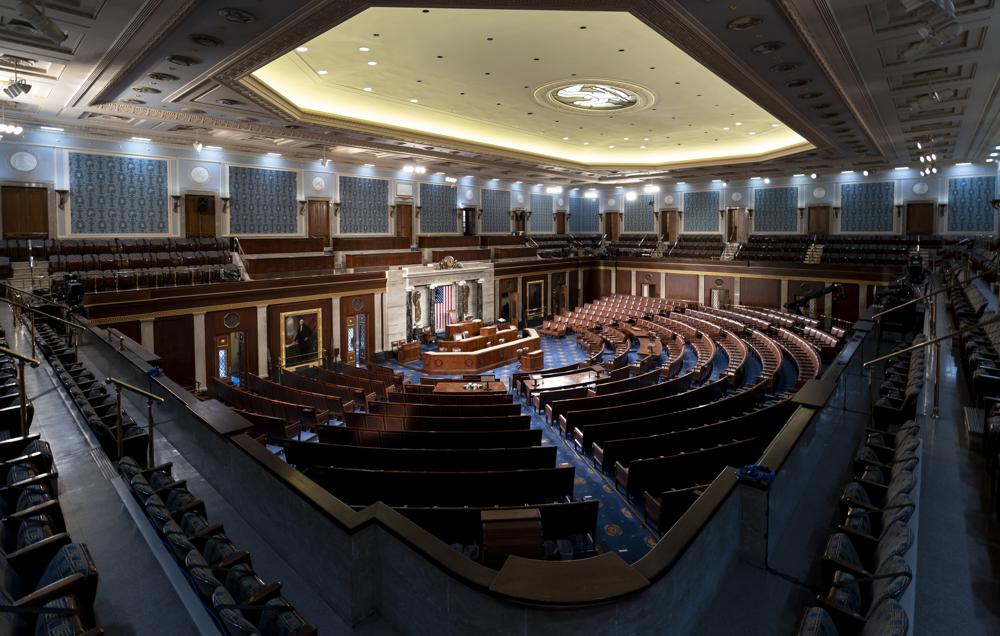
President Joe Biden will vow to make Vladimir Putin “pay a price” for Russia’s invasion of Ukraine in his first State of the Union address, rallying allies abroad while also outlining his plans at home to fight inflation and the fading but still dangerous coronavirus. In addition to recounting U.S. and allied economic sanctions against Russia, Biden planned to announce that the U.S. is following Canada and the European Union in banning Russian planes from its airspace in retaliation for the invasion of Ukraine, according to two people familiar with his remarks’ They spoke only on the condition of anonymity before the speech. Biden planned in his Tuesday night remarks to highlight the bravery of Ukrainian defenders and the resolve of a newly reinvigorated Western alliance that has worked to rearm the Ukrainian military and cripple Russia’s economy through sanctions. He was set to deliver an ominous warning that without consequences, Russian President Putin’s aggression wouldn’t be contained to Ukraine. “Throughout our history, we’ve learned this lesson – when dictators do not pay a price for their aggression, they cause more chaos,” Biden was to say, according to advance excerpts released by the White House. “They keep moving. And, the costs and threats to America and the world keep rising.” Even before the Russian invasion sent energy costs skyrocketing, prices for American families had been rising, and the COVID-19 pandemic continues to hurt families and the country’s economy. Biden planned to outline plans to address inflation by reinvesting in American manufacturing capacity, speeding supply chains, and reducing the burden of childcare and eldercare on workers. “We have a choice,” Biden was to say. “One way to fight inflation is to drive down wages and make Americans poorer. I have a better plan to fight inflation. Lower your costs, not your wages.” Set against disquiet at home and danger abroad, the White House had conceived Tuesday night’s speech as an opportunity to highlight the improving coronavirus outlook, rebrand Biden’s domestic policy priorities, and show a path to lower costs for families grappling with soaring inflation. But it has taken on new significance with last week’s Russian invasion of Ukraine and nuclear saber-rattling by Putin. In an interview with CNN and Reuters, Zelenskyy said he urged Biden to deliver a strong and “useful” message about Russia’s invasion. Ahead of the speech, the White House announced that Ukrainian Ambassador to the U.S. Oksana Markarova would join first lady Jill Biden in the galleries to watch Biden’s address. Biden will address a mask-optional crowd in the House chamber, one sign of the easing coronavirus threat. But he’ll also speak from within a newly fenced Capitol due to renewed security concerns after last year’s insurrection. Rising energy prices as a result of Russia’s war in Ukraine risk exacerbating inflation in the U.S., which is already at the highest level in 40 years, eating into people’s earnings and threatening the economic recovery from the pandemic. And while the geopolitical crisis in Eastern Europe may have helped to cool partisan tensions in Washington, it can’t erase the political and cultural discord that is casting doubt on Biden’s ability to deliver on his pledge to promote national unity. Biden is speaking to an American public that is frustrated with his performance. A February AP-NORC poll found that more people disapproved than approved of how Biden is handling his job, 55% to 44%. That’s down from a 60% favorable rating last July. White House officials acknowledge the mood of the country is “sour,” citing the lingering pandemic and inflation. Biden, in his speech, will highlight progress from a year ago — with the majority of the U.S. population now vaccinated and millions more people at work — but also acknowledge that the job is not yet done, a recognition of American discontent. Biden aides say they believe the national psyche is a “trailing indicator” that will improve with time. But time is running short for the president, who needs to salvage his first-term agenda to revive the political fortunes of his party before November’s midterm elections. House Republicans say the word “crisis” describes the state of the union under Biden and Democrats — from an energy policy that lets Russia sell oil abroad to challenges at home over jobs and immigration. “We’re going to push the president to do the right thing,” said House Majority Leader Kevin McCarthy. At least a half dozen lawmakers, including Reps. Jamie Raskin and Pete Aguilar, both members of the committee investigating last year’s Capitol riot, and Sen. Alex Padilla, D-Calif., had tested positive for COVID-19 and were not expected at the Capitol for the speech. Where his speech to Congress last year saw the rollout of a massive social spending package, Biden plans this year to repackage past proposals in search of achievable measures he hopes can win bipartisan support in a bitterly divided Congress before the elections. The president was to highlight investments in everything from internet broadband access to bridge construction from November’s $1.2 trillion bipartisan infrastructure law as an example of government reaching consensus and delivering change for the nation. He also planned to appeal to lawmakers to compromise on rival competitiveness bills that have passed the House and Senate; both meant to revitalize high-tech American manufacturing and supply chains in the face of growing geopolitical threats from China. The speech comes as progress on many of Biden’s other legislative priorities remains stalled on Capitol Hill after Democratic Sen. Joe Manchin scuttled the sweeping “Build Back Better” spending bill that Biden championed last fall. As part of his pitch to voters, Biden was to resurrect components of the legislation, but with a new emphasis on how proposals like extending the child tax credit and bringing down child care costs could bring relief to families as prices rise. He was also to outline how his climate change proposals would cut costs for lower- and middle-income families and create new jobs. Jen Psaki said Biden “will absolutely use the word inflation” in the speech but emphasized that he was
Jerry Carl cosponsors bill to counter Russian energy

U.S. Representative Jerry Carl has cosponsored a bill aimed at flipping the switch on U.S. energy production in order to counter Russian energy imports to the U.S. The American Energy Independence from Russia Act would require President Joe Biden to submit an energy security plan to Congress to evaluate U.S. oil and natural gas imports, identifying importing countries that pose an energy security risk to America, and encourage domestic production of oil and natural gas to offset imports from Russa. The bill would also immediately approve the Keystone XL pipeline and unleash U.S. liquid natural gas exports to boost U.S. natural gas production and displace Russian gas in the European market. It would require the Secretary of Energy to develop a plan to increase oil and gas production on federal lands, require federal leasing and permitting of energy and minerals development on federal lands and waters, and protect domestic oil and gas, mining, and critical minerals production from further attacks by the Biden administration. “Vladimir Putin’s dominance of energy production and exports directly funds his military aggression in Europe. America’s strongest weapon against Putin is our ability to dominate global energy supply chains, and this legislation does exactly that by restarting the Keystone XL pipeline, unleashing American natural gas exports, restarting oil and gas leasing on federal lands, and protecting American energy and mineral developments from further attacks by the Biden administration,” stated Carl in a press release. “America can and should shut down Putin’s cash flow and end our reliance on foreign oil, which will prevent further violence in Ukraine.” On Twitter, Carl commented, “I’m proud to be a cosponsor of this legislation to cut off Putin’s cash flow and end our reliance on foreign oil. Let’s unleash American energy!” Washington state Rep. Cathy McMorris Rodgers stated, “Putin and Russia’s economy are dependent upon dominating energy production and exporting to other nations. He gains power by doing so, and it’s what funds his military and aggressive behavior. To counter Putin, our bill flips the switch to promote American energy jobs, production, and exports. America must shut down Putin’s war chest and stop bloodshed in Ukraine, and this legislation is a vital step in achieving those goals.”
States adding to financial pressure on Russia over war
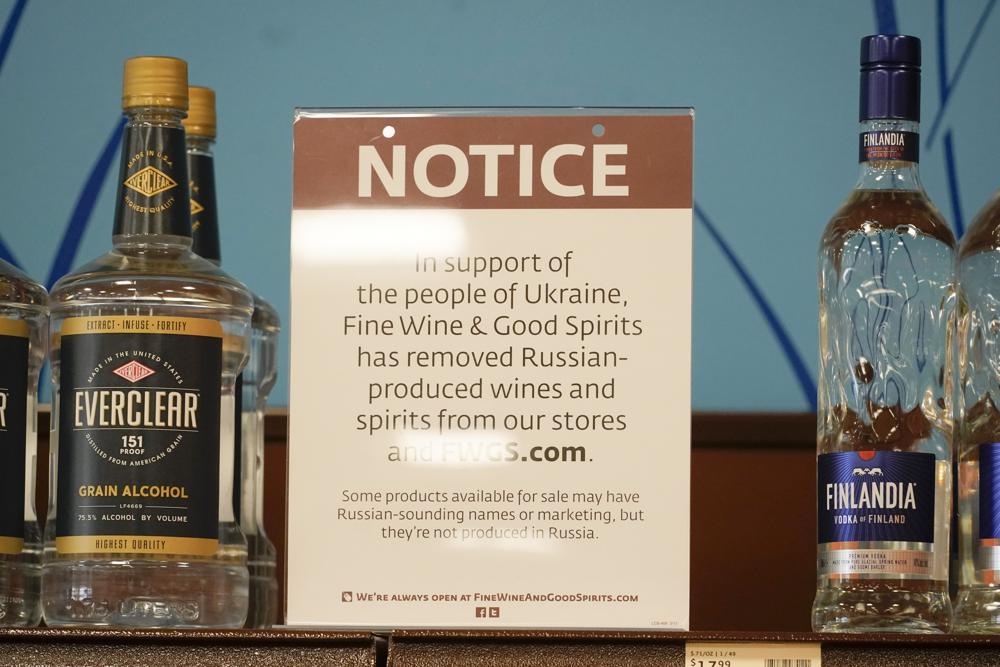
Seeking to tighten the financial squeeze on Russia over its war against Ukraine, governors, and lawmakers in numerous U.S. states were taking actions Monday to pull state investments from Russian companies while encouraging private entities to do the same. The effect of sanctions by U.S. states often pales in comparison to national ones, but state officials said they wanted to show solidarity with Ukraine and do what they could to build upon the penalties imposed on Russia by the U.S. government and other Western nations. Georgia House Speaker David Ralston, a Republican, got a bipartisan standing ovation Monday when he told representatives he would seek to have the state’s retirement funds quickly divested from any Russian assets. “I don’t know about y’all, but I don’t want one penny of Georgians’ money going to subsidize Vladimir Putin,” Ralston said. “While our role in international affairs is limited, we make clear we stand with those who want to live in peace.” Some actions have been largely symbolic. The governors of Arizona, Pennsylvania, and Tennessee ordered their capitols lit with the blue and yellow colors of Ukraine’s flag. Minnesota Gov. Tim Walz, a Democrat, and Ohio Gov. Mike DeWine, a Republican, issued a joint statement condemning Russia’s invasion of Ukraine as co-chairs of the presidentially appointed Council of Governors. Other state actions have potential teeth. On Monday, the Indiana House passed legislation that would block Russian-controlled businesses and nonprofits from acquiring property in Indiana for one year. It now goes to the Senate. “Indiana will not be a safe haven for ill-gotten Russian funds, nor for its oligarchs trying to find financial shelter in the wake of Putin’s unconscionable invasion of Ukraine,” Democratic state Rep. Ryan Dvorak said while proposing the amendment last week. New York Gov. Kathy Hochul signed an executive order Sunday forbidding her state from doing business with Russia. She ordered state agencies to divest money and assets from companies or institutions aiding Russia in its war against Ukraine. The Democratic governor also said New York would welcome Ukrainian refugees, noting that New York already is home to the largest Ukrainian population in the U.S. Pennsylvania lawmakers said Monday they will file legislation requiring state pension funds to pull investments connected to the Russian government and its critical supporters. The state Treasury Department also has begun divesting its minimal holdings in Russian-based companies. In a memo to fellow senators, Democratic state Sen. Sharif Street said Pennsylvania “must wield our economic power to ensure that Russia faces grave consequences for their flagrant violations of international law and human cooperation.” Pennsylvania House Majority Leader Kerry Benninghoff, a Republican seeking co-sponsors for the legislation, said state lawmakers “have a moral obligation to ensure that our public fund investments are not inadvertently supporting those who are engaging in an unprovoked invasion of their democratically elected neighbors.” Arkansas lawmakers have filed proposals authorizing banks in the state to freeze the assets of Russian oligarchs and to require a boycott of Russian-made goods. A bipartisan group of California lawmakers said Monday they also will introduce legislation to divest public money from Russian state entities. Colorado Gov. Jared Polis, a Democrat, has banned state agencies from doing business with Russian state-owned firms and their subcontractors. Colorado’s $61 billion state pension fund is pulling $8 million from a Russian state-owned bank identified in federal sanctions. Governors in Connecticut, New Jersey, Virginia, and Washington also have ordered a review of whether any state money is going to Russian companies or investments supporting the Russian government. A North Dakota investment board was due to meet later this week to discuss its investments in Russia. “If our state can put one brick in the wall around Putin, it will be a good thing, and we intend to do all that we can in this regard,” said Washington Gov. Jay Inslee, a Democrat. Two prominent Republican governors, Florida’s Ron DeSantis and South Dakota’s Kristi Noem, who are widely seen as angling for a White House bid, mostly took aim at President Joe Biden rather than issue executive orders targeting Russia. They criticized his energy policies and said that had made it difficult to slap sanctions on Russia’s exports of oil and gas. Other governors are seeking to sever good-will relationships between their home states and those in Russia. Republican Gov. Larry Hogan announced Monday that he’s dissolving Maryland’s decades-old sister-state relationship with Russia’s Leningrad region after the invasion of Ukraine. Virginia Gov. Glenn Youngkin, a Republican, asked the cities of Norfolk and Roanoke to end their sister city partnerships with Russian cities. Iowa Gov. Kim Reynolds, a Republican, called for an end to its sister-state relationship with Stavrapol Krai, Russia, and a strengthening of its sister-state relationship with Cherkasy Oblast, Ukraine. Several states have expressed a willingness to provide housing to Ukrainian refugees. The Washington state House and Senate each have added amendments to their budget proposals setting aside $19 million to provide services and temporary housing to refugees who come from Ukraine. Texas Gov. Greg Abbott, a Republican, posted on Twitter over the weekend that he has asked restaurants and retailers “ to voluntarily remove all Russian products from their shelves.” Officials in Alabama, Iowa, New Hampshire, Ohio, Pennsylvania, Utah, Vermont, Virginia, and West Virginia — all states that control the sale of alcohol — have directed Russian-sourced alcohol to be removed from store shelves. “Utah stands in solidarity with Ukraine and will not support Russian enterprises, no matter how small the exchange,” Republican Utah Gov. Spencer Cox said. Republished with the permission of the Associated Press.
Donald Trump reasserts GOP dominance as others focus on midterms
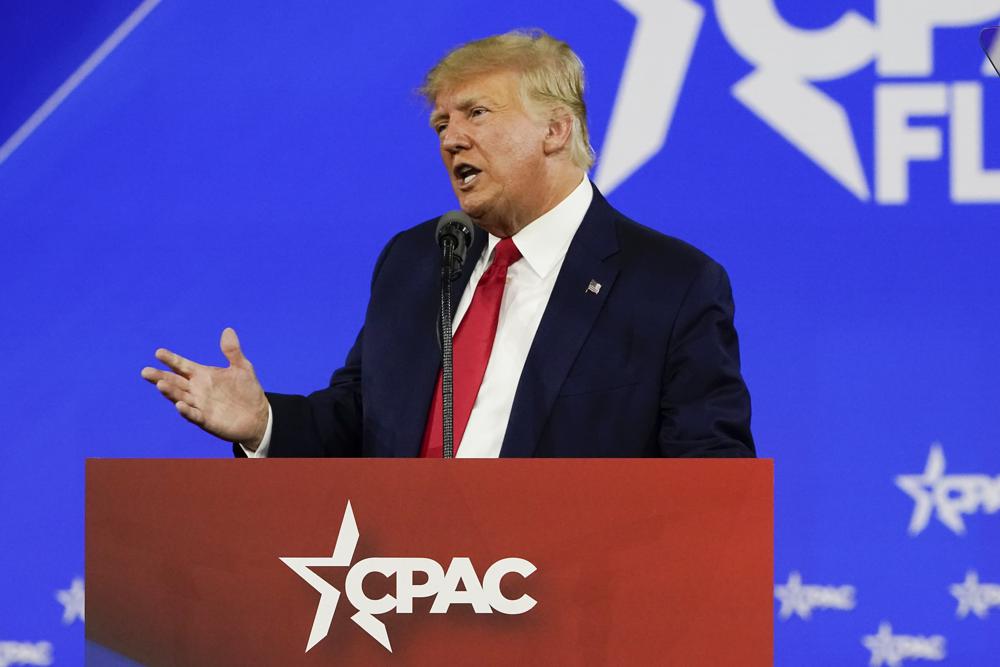
Leading Republicans spent much of three days avoiding Donald Trump’s chief grievances or ignoring him altogether as they unified behind a midterm message designed to win back the voters the polarizing former president alienated while in office. But by the end of the four-day Conservative Political Action Conference, Trump had reminded those who want to move on that he remains the most powerful voice in Republican politics. In his keynote address Saturday night, Trump indicated he planned to run for president a third time in 2024. He falsely blamed his 2020 election loss on widespread voter fraud, for which there is no evidence. And on Sunday, he was the overwhelming winner of a presidential preference straw poll of conference attendees. “We did it twice, and we’ll do it again,” Trump said of running in 2024. Even so, he has teased about a 2024 campaign before, and his vow this time was not necessarily ironclad. As invading Russian troops battled with Ukrainian forces, Trump also described Russian President Vladimir Putin as “smart.” “Of course he’s smart,” Trump said in his remarks Saturday, doubling down on praise of the Russian leader that many other Republicans have avoided after the invasion. “But the real problem is our leaders are dumb. Dumb. So dumb.” While Trump expressed support for the Ukrainian people and called the country’s president, Volodymyr Zelenskyy, a “brave man,” he also noted his ties with other leading autocrats. He specifically pointed to his friendly relationships with Xi Jinping of China and North Korean leader Kim Jong Un. Up until Trump’s appearance, lies about election fraud, the focus of last year’s conference, had been an afterthought among the top speakers. No one parroted Trump’s approving rhetoric toward Putin. And some leading Republicans didn’t even mention Trump’s name. Instead, those most likely to seek the GOP’s 2024 presidential nomination not named Trump united behind an agenda that includes more parental control of schools, opposition to pandemic-related mandates, and a fierce rejection of “woke” culture. The message from more than a half-dozen elected officials, delivered to thousands of mostly white activists at an event that usually celebrates far-right rhetoric, does not mean the party has turned its back on Trumpism. Far from it. The former president was a frequent topic among some of the conference’s lower-profile speakers. T-shirts proclaiming “Trump won” were being sold in the hallways. And in the straw poll of 2,574 conference attendees, Trump earned 59%, followed by Florida Gov. Ron DeSantis with 28%. No one else had more than 2%. When asked for their preference should Trump not run in 2024, DeSantis earned 61%, with no one else earning more than 6% of the vote. The straw poll only measured the opinion of those at the conference, not broader Republican sentiment. Aside from Trump, Florida Gov. Ron DeSantis was a crowd favorite throughout the four-day conference. Audience members applauded almost every time his name was mentioned, or his picture appeared on big screens. Conference organizer Matt Schlapp said Trump remains a dominant force, but he does not have a lock on the party’s base. “No. 1 is, Does he run again? And it’s overwhelming that people want him to,” Schlapp said. “But there’s a diversity of opinion.” And while Trump’s most controversial supporters were generally given lower-profile speaking slots over the four-day program, they were not excluded. Rep. Majorie Taylor Greene, R-Ga., appeared on a Saturday morning panel hours after being featured at a conference of pro-Trump white nationalists. Trump offered Taylor Greene a particularly warm shoutout during his speech as he ticked down the Republican officials in attendance. “I refuse to shut up,” Taylor Greene said earlier in the day during a brief appearance as she railed against “Democrat communists.” Despite Trump’s dominant place at the head of the Republican Party, other party leaders are increasingly optimistic they have found a forward-looking strategy to overcome pro-Trump extremism and expand the party’s appeal with control of Congress at stake in November. It’s essentially the same playbook that Virginia’s Republican Gov. Glenn Youngkin used last fall when he won in the swing state by avoiding Trump and his biggest grievances, including the false notion that the 2020 presidential election was plagued by mass voter fraud. “There are people that perhaps have never voted the same way any of you have in a presidential race, and they’re really angry,” Florida Sen. Marco Rubio said Friday. “And that’s why I believe that for all the negative we’ve heard, the pendulum is swinging.” Democrats are clinging to paper-thin majorities in the House and Senate, and voter sentiment has swung in an ominous direction for them since President Joe Biden took office in January 2021. In an AP-NORC poll conducted Feb. 18-21, 70% of Americans said the country was headed in the wrong direction. As few as 44% said the same in April 2021. Some leading Republicans seemed intent at CPAC on not helping Democrats by embracing Trump. Missouri Sen. Josh Hawley, who tried to block the certification of Biden’s electoral victory after the Jan. 6 Capitol attack, sidestepped a question about whether he would challenge Trump in a 2024 prospective matchup. “I’ve said I’m not planning to run for president,” Hawley said. He also declined to say whether he wants Trump to run again in 2024: “I never give him advice, including on this.” Hawley also said it was a mistake for Republicans like Trump to offer soft praise for Putin: “Putin is our enemy. Let’s be clear about that.” DeSantis, who has also refused to rule out a 2024 presidential bid should Trump run, did not mention the former president in his 20-minute address, focusing instead on his resistance to mask and vaccine mandates. Trump’s former secretary of state, Mike Pompeo, spoke about his work in the Trump administration, but he did not repeat his own recent flattering comments about Putin, in which he called the Russian leader “very capable” and said he has “enormous respect for him.” South Dakota Gov. Kristi
West unleashes SWIFT bans, more crushing penalties on Russia
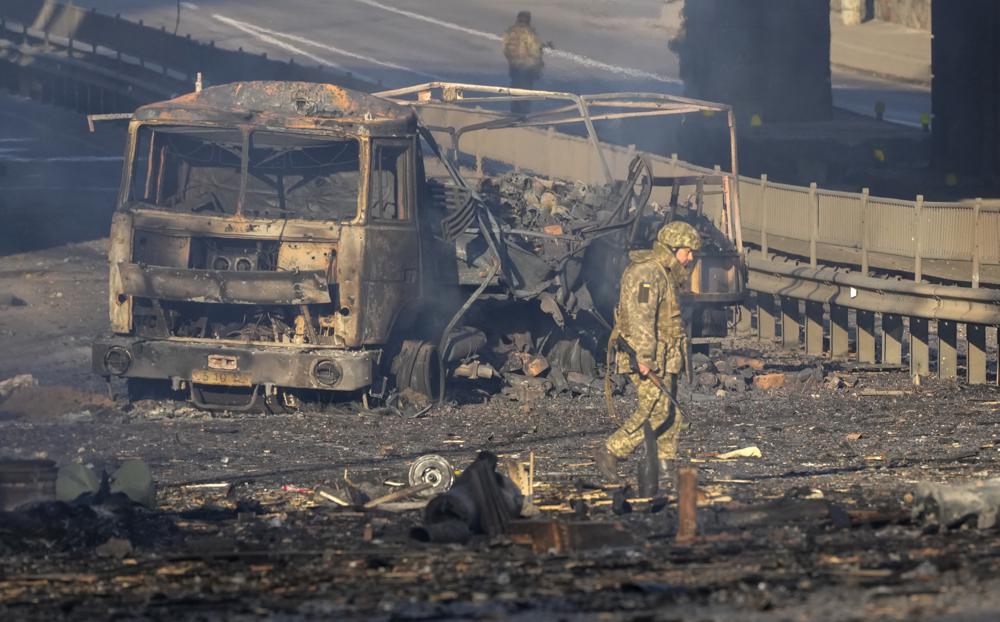
The United States and European nations agreed Saturday to impose the most potentially crippling financial penalties yet on Russia over its unrelenting invasion of Ukraine, going after the central bank reserves that underpin the Russian economy, and severing some Russian banks from a vital global financial network. The decision, announced as Ukrainian forces battled Saturday to hold Russian forces back from Ukraine’s capital and residents sheltered in subway tunnels, basements, and underground garages, has potential to spread the pain of Western retaliation for President Vladimir Putin’s invasion to ordinary Russians far more than previous rounds of penalties. “Putin embarked on a path aiming to destroy Ukraine, but what he is also doing, in fact, is destroying the future of his own country,” EU Commission President Ursula von der Leyen said. The European Union, United States, United Kingdom and other allies have steadily stepped up the intensity of their sanctions since Russia launched the invasion late last week. While U.S. and European officials made clear they still were working out the mechanics of how to implement the latest measures, and intend to spare Russia’s oil and natural gas exports, the sanctions in total potentially could amount to some of the toughest levied on a nation in modern times. If fully carried out as planned, the measures will severely damage the Russian economy and markedly constrain its ability to import and export goods. The U.S. and European allies announced the moves in a joint statement as part of a new round of financial sanctions meant to “hold Russia to account and collectively ensure that this war is a strategic failure for Putin.” The central bank restrictions target access to the more than $600 billion in reserves that the Kremlin has at its disposal, and are meant to block Russia’s ability to support the ruble as it plunges in value amid tightening Western sanctions. The ruble and Russia’s stock market both declined sharply immediately after Russia launched military action in Ukraine on Thursday. The ruble recovered slightly but is still down more than 6 percent from before Putin’s announcement, trading at nearly 84 rubles to the dollar. U.S. officials said Saturday’s steps were framed to send the ruble into “free fall” and promote soaring inflation in the Russian economy. The decline of the ruble would likely send inflation soaring, which would hurt everyday Russians and not just the Russian elites who were the targets of the original sanctions. The resulting economic disruption, if Saturday’s measures are as harsh as described, could leave Putin facing political unrest at home. Analysts predicted intensifying runs on banks by Russians, and falling government reserves as Russians scrambled to sell their targeted currency for safer assets. The U.S. officials noted that previously announced sanctions have already had an impact on Russia, bringing its currency to its lowest level against the dollar in history and giving its stock market the worst week on record. Saturday’s move also includes cutting key Russian banks out of the SWIFT financial messaging system, which daily moves countless billions of dollars around more than 11,000 banks and other financial institutions around the world. The fine print of the sanctions was still being ironed out over the weekend, officials said, as they work to limit the impact of the restrictions on other economies and European purchases of Russian energy. Allies on both sides of the Atlantic also considered the SWIFT option in 2014, when Russia invaded and annexed Ukraine’s Crimea and backed separatist forces in eastern Ukraine. Russia declared then that kicking it out of SWIFT would be equivalent to a declaration of war. The allies — criticized ever after for responding too weakly to Russia’s 2014 aggression — shelved the idea back then. Russia since then has tried to develop its own financial transfer system, with limited success. The U.S. has succeeded before in persuading the Belgium-based SWIFT system to kick out a country — Iran, over its nuclear program. But kicking Russia out of SWIFT could also hurt other economies, including those of the U.S. and key ally Germany. Only rarely has the West and its allies fired a full salvo of its available financial weapons on a country. Iran and North Korea, two previous targets, had far smaller roles in the world economy, while Russia, with its enormous petroleum reserves, plays a much bigger role in global trade, and parts of Europe depend on its natural gas. The disconnection from SWIFT announced by the West on Saturday is partial, leaving Europe and the United States room to escalate penalties later. Officials said they had not fully settled on which banks would be cut off. Announcing the measures in Brussels, the EU Commission president, von der Leyen, said she would push the bloc to “paralyze the assets of Russia’s Central bank” so that its transactions would be frozen. Cutting several commercial banks from SWIFT “will ensure that these banks are disconnected from the international financial system and harm their ability to operate globally,” she added. “Cutting banks off will stop them from conducting most of their financial transactions worldwide and effectively block Russian exports and imports,” she added. Getting the EU on board for sanctioning Russia through SWIFT had been a tough process since EU trade with Russia amounted to 80 billion euros, about 10 times as much as the United States, which had been an early proponent of such measures. Germany specifically had balked at the measure since it could hit them hard. But Foreign Minister Annalena Baerbock said in a statement that “after Russia’s shameless attack … we are working hard on limiting the collateral damage of decoupling (Russia) from SWIFT so that it hits the right people. What we need is a targeted, functional restrictions of SWIFT.” As another measure, the allies announced a commitment “to taking measures to limit the sale of citizenship — so-called golden passports — that let wealthy Russians connected to the Russian government become citizens of our countries and gain access to our financial systems.” The
Alabama leaders support call for U.S. sanctions on Russia
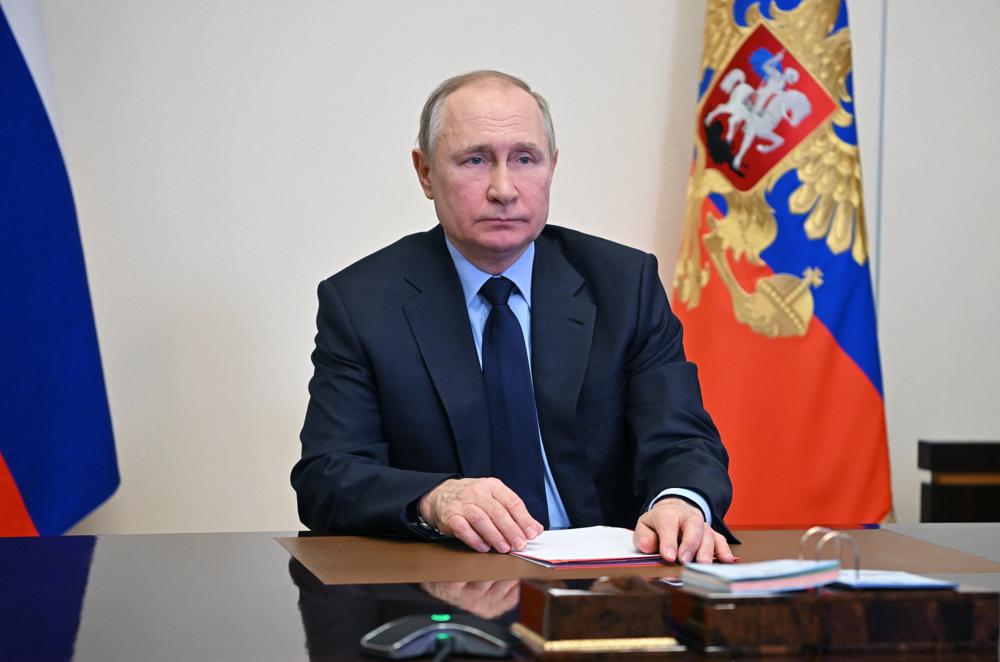
U.S. Congress is largely backing President Joe Biden’s decision to confront Russia with potentially escalating sanctions for the crisis in Ukraine. Russian troops launched their anticipated attack on Ukraine on Thursday, as President Vladimir Putin cast aside international condemnation and sanctions, warning other countries that any attempt to interfere would lead to “consequences you have never seen.” Alabama’s congressional delegation is reacting to the invasion, calling on harsh sanctions, possibly even worse than what the Biden Administration is calling for currently. House Armed Services Committee Lead Republican Mike Rogers, along with other House Armed Services Committee members, released the following statement, “The last few hours have laid bare for the world to witness the true evil that is Vladimir Putin. Today, we stand resolute with the Ukrainian people and resolve to provide them with the tools they need to withstand and repel this unprovoked attack. Every drop of Ukrainian and Russian blood spilled in this conflict is on Putin’s hands, and his alone. “In response, we are committed to enacting the strongest possible sanctions and export controls to cripple Russia’s ability to make war, punish its barbarity and relegate the Putin regime to the status of an international pariah. We cannot respond like we did in 2008 or 2014. The world must never forget or forgive this heinous act.” Rep. Jerry Carl stated on Twitter, “Putin’s invasion of Ukrainian sovereign territory is an act of pure evil, and he should be met with resolve and strength to support #Ukraine and its people. The United States stands with the people of Ukraine and our NATO allies, and I strongly urge @POTUS to enact the toughest possible sanctions to cripple Russia and prevent them from continuing unprovoked attacks.” Rep. Terri Sewell issued a statement commending Biden’s call for sanctions. “I have been closely watching the troubling situation in Ukraine. America must continue to stand for democratic values around the world, and I commend President Biden for standing up to Russian President Vladimir Putin and sending the clear message that America is committed to NATO,” Terri stated. “I was glad to see President Biden attempt to exhaust every diplomatic option possible to avoid a war in Ukraine, and I applaud him for the strong sanctions he announced yesterday. If Russia chooses to continue on this path, there will be swift and severe consequences, including additional crippling sanctions. “As Americans, we will continue to stand with the Ukrainian people and our European allies and support their sovereignty and democratic values.” Congressman Robert Aderholt condemned Russia’s actions, stating in a press release, “What we have seen over the past few hours in Ukraine is truly heartbreaking. Vladimir Putin has attacked a sovereign nation without cause. This is something that has not occurred in Europe since World War II. “Ukraine is a peaceful, freedom-loving people. This invasion is a brutal effort by Putin to stamp out a democratic nation on his doorstep. This invasion will lead to thousands of innocent deaths. I am praying for, and encourage us as a nation, to stand with the Ukrainian people during this dark time.” Barry Moore called the attack “unprovoked” and criticized President Biden. “Vladimir Putin’s invasion of the sovereign nation of Ukraine is unprovoked and evil, but despite what President Biden says, this aggression was not inevitable,” said Moore in a press release. “President Biden’s history of weakness and delayed action opened the door for Putin to continue the annexation of former Soviet territory that began with the invasion of Crimea during the Obama Administration. Pseudo-toughness, passive support and platitudes will never be enough to stop immoral autocrats like Putin. We must never forget what is happening today – and why it happened. I hope you’ll join me in praying for the people of Ukraine as they fight for their freedoms and calling on the Administration to – for once – act decisively and hold Putin accountable for this heinous aggression.” Rep. Mo Brooks condemned the attacks. In a press release, Brooks stated, “Communist dictator Vladimir Putin’s unprovoked invasion of Ukraine is barbaric and evil. Putin brought war to a peaceful people. Unfortunately, Ukrainians are learning the hard way that freedom and a republican form of government are never granted, they are hard-won.” Brooks concluded, “While Putin’s Ukrainian invasion and murders are heinous, this is first and foremost a problem for Western Europe to resolve. America should impose maximum economic sanctions to force a hefty price on Russia for its brutal Ukraine invasion. America should wait and consider military assistance to our European allies only if Europe asks and, even then, only if Europe takes the lead military role in whatever defensive measures, if any, Europe decides is appropriate to counter Russia’s barbaric invasion of an otherwise peaceful nation.” Brook continued his criticism of Biden on social media and praised former President Donald Trump’s handling of Russia. On Twitter, Brooks stated, “Joe Biden has all the strength of a marshmallow. President Trump, on the other hand, had it right and was very forceful in dealing with authoritarian dictator Vladimir Putin.” Over the weekend, Sen. Tommy Tuberville attended the Munich Security Conference with a bipartisan delegation to discuss tensions in Eastern Europe. Tuberville stated, “As we’ve seen from Putin’s aggression, strongly-worded statements don’t stop wars. Rather than discuss a diplomatic resolution, Putin chose to invade Ukraine and test world order. His actions must be met with a tough and targeted response.” Tuberville also called for European countries to contribute more to their own security, stating, “For 80 years, Americans have sacrificed to bring security and peace to the European continent. The events of the past 24 hours underscore that it is time for Europe to contribute more to its own security. The United States should support Ukraine and provide assistance to Ukraine’s military through weapons and funding for emergency equipment while leveling tough and targeted sanctions to halt Russian escalations and cripple Russia’s economy. The incremental sanctions issued by President Biden today are a weak response – the time to have imposed harsh sanctions was yesterday. “Allies and adversaries across the globe
Congress backs Joe Biden on Russia sanctions, clamors for more
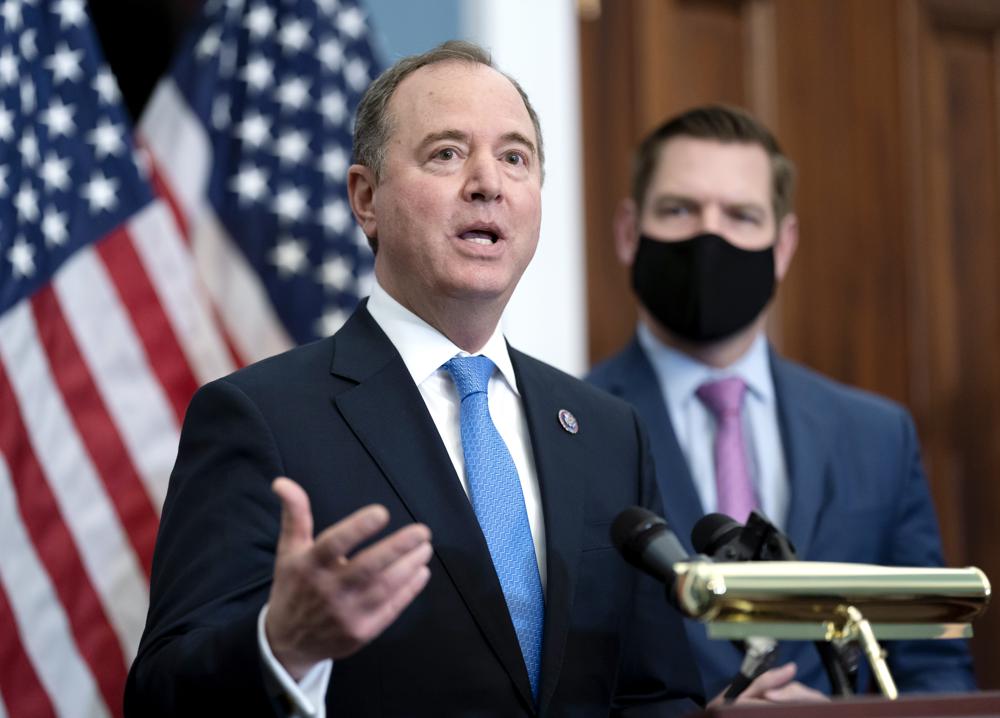
With rare but fragile alignment, the U.S. Congress is largely backing President Joe Biden’s decision to confront Russia with potentially escalating sanctions for the crisis in Ukraine as lawmakers brace for perhaps the most daunting foreign policy crisis the nation has faced in a generation. But the next steps are highly volatile. With isolationist impulses rising at home, Congress has no appetite for war. Yet Americans also appear ambivalent about the U.S. working to keep the peace. New polling from The Associated Press and NORC says just 26% of Americans want the U.S. to play a major role in the Russia-Ukraine conflict. House Speaker Nancy Pelosi said Wednesday that Russia’s aggression toward Ukraine is “an attack on democracy,” vowing that the U.S. will stand united with its allies around the world in swiftly imposing sanctions on Russia and ensuring financial and political support for an independent Ukraine. Pelosi, who returned to the Capitol from a diplomatic overseas trip, situated the aggression from Russia toward Ukraine alongside intervention in the United States’ own democratic process during the 2016 election. “There will be a price to pay for Vladimir Putin,” she said, flanked by lawmakers who had joined her delegation at the annual security conference in Munich. While Republican critics of the Biden administration — and even some Democrats — want the White House to go even tougher with swifter and more severe sanctions on Russia, most have given varying degrees of support for the White House strategy, including Biden’s move Wednesday to sanction the company building the Russia-to-Germany Nord Stream 2 gas pipeline. The top Republican on the Foreign Relations Committee, Sen. Jim Risch of Idaho, said sanctions on Nord Stream 2 are “long overdue, but I cannot overstate how critical they are to showing Putin that violating a nation’s sovereignty has consequences.” Risch, who has worked with colleagues on a bipartisan basis for years trying to end the pipeline, said: “It is good to see President Biden do the right thing.” Republican leaders have sought to steer the conversation to their preferred terms, as the party whose defense hawks once led the nation on the national security front. But it’s not at all clear whether today’s GOP can keep Republicans from tapping into an impassioned non-interventionist strain unleashed by Donald Trump’s “America First” approach. It was Trump who sought to strip protections for Ukraine from the Republican Party platform for the 2016 election and who was impeached by the House for abuse of power after he pressured the Ukrainian president to dig up dirt on Biden ahead of the 2020 campaign. This week, Trump cheered on Putin as he massed military forces near Ukraine’s border and recognized the independence of its separatist regions in a move Biden and others warned was the start of an invasion of Ukraine. As president, Trump had been critical of NATO, working to distance the U.S. from the historic partnership and berating allies to contribute more money to defense. Senate Republican leader Mitch McConnell, a longtime champion of NATO, spoke highly of the Western alliance this week, but some within his party are gravitating away from that traditional Republican position and toward Trump’s views. McConnell said he wants to see Biden impose the “toughest possible sanctions.” Other Republicans, though, most notably Sen. Josh Hawley of Missouri, a potential Republican presidential hopeful, has said the U.S. should be paying closer attention to the greater challenges he believes are posed by China. Still, most Republican senators are backing Biden’s sanctions on Putin, even if some are clamoring for more and taking political punches at Biden for seeming too tepid. Republican Sen. Lindsey Graham of South Carolina, a sometimes Trump ally who is also one of the party’s leading defense hawks and who used to globetrot with fellow GOP Sen. John McCain, invoked his late colleague this week in urging Biden to confront Putin more forcefully. Graham said Congress should impose “sanctions from hell” on Putin and his regime when lawmakers return to work next week. Sen. Ted Cruz, who had single-handedly blocked Biden’s nominees for various State Department posts to halt the Russia-to-Germany pipeline, said with the announced new sanctions, he would lift his blockade. “President Biden has now taken positive steps,” Cruz, R-Texas, said in a statement. “But much more still needs to be done to deter and counter the threat that Putin poses to our allies in Ukraine and across Europe.” Pelosi said Russians need to understand what their leader is doing. “It’s stunning to see in this day and age a tyrant roll into a country,” Pelosi said. “This is the same tyrant who attacked our democracy in 2016,” It’s unclear what more, if anything, Congress will do to confront Russia, as lawmakers hold back their own legislative response to Putin while Biden engages U.S. allies in a more global strategy. The Senate has bipartisan support for a robust sanctions package, but after running into differences over the scope and timing of the response decided to shelve a vote as the White House pursued its own approach. Graham has suggested a supplemental spending package for Ukraine, which already receives money and defensive equipment from the U.S., but it does not yet appear that additional funds are being considered. Republished with the permission of the Associated Press.
AP-NORC poll: Most in U.S. oppose major role in Russia strife
There’s little support among Americans for a major U.S. role in the Russia-Ukraine conflict, according to a new poll, even as President Joe Biden imposes new sanctions and threatens a stronger response that could provoke retaliation from Moscow. Biden has acknowledged a growing likelihood that war in Eastern Europe would affect Americans, though he has ruled out sending troops to Ukraine. Gas prices in the U.S. could rise in the short term. And Russian President Vladimir Putin has a range of tools he could use against the U.S., including cyberattacks hitting critical infrastructure and industries. “Defending freedom will have costs for us as well, here at home,” Biden said Tuesday. “We need to be honest about that.” Just 26% say the U.S. should have a major role in the conflict, according to a new poll from The Associated Press-NORC Center for Public Affairs Research. Fifty-two percent say a minor role; 20% say none at all. The findings are a reminder for Biden and fellow Democrats that while the crisis may consume Washington in the coming months, pocketbook issues are likely to be a bigger priority for voters heading into the midterm elections. A December AP-NORC poll showed that Americans are particularly focused on economic issues, including rising inflation. The Biden administration has argued that supporting Ukraine is a defense of fundamental American values and has made a concerted effort to declassify intelligence findings underscoring the dangers it sees for Ukraine and the wider European region. But the survey shows widespread public skepticism of the U.S. intelligence community. White House press secretary Jen Psaki on Wednesday noted that Americans may have different interpretations of a major U.S. role and reiterated that Biden would not send the U.S. military to Ukraine, though troops have deployed to nearby NATO member countries. “We make national security decisions based on what’s best for our country’s national security, not on the latest polling,” she said. Democrats are more likely than Republicans to think the U.S. should have a major role in the conflict, 32% to 22%. Overall, the poll shows 43% of Americans now approve of Biden’s handling of the U.S. relationship with Russia, a downtick from 49% in June of last year. Despite the clear reluctance about major involvement in the conflict, Americans are hardly looking at Russia through rose-colored glasses. The poll finds 53% say they’re very or extremely concerned that Russia’s influence around the world poses a threat to the U.S., an uptick from 45% in August 2021. Jennifer Rau, a 51-year-old mother of three adopted teenagers who lives on Chicago’s South Side, said she listens to local public radio for her world news. But in recent days, when the news turns to Russia and Ukraine, she has started to turn it off. “I’m so frustrated. It’s enough. We’re bombarded,” Rau said. “There are other stories in Chicago that need to be covered.” Rau is a political independent who voted for Biden. But she believes the U.S. gets involved in foreign wars to make money. She is more concerned about rising crime in Chicago, the prevalence of guns, and systemic racism that affects her three children, who are Hispanic. “I just feel like there’s a war going on in the United States, every day, in Chicago,” she said. “And it is really scary. And I feel like no one helps us.” Edward Eller, a 67-year-old retiree from Shady Valley, Tennessee, said the White House needs to focus on lowering oil prices. “They want to send millions of dollars of ours to stop a war that we have nothing to do with,” he said. “I’m sorry they’re involved in a mess, but it’s not our problem.” The poll was conducted Friday to Monday during a period of rapidly escalating tensions, culminating with Putin recognizing the independence of two separatist regions in eastern Ukraine, widely seen in the West as a step toward a wider war. Russian-backed separatists and Ukrainian forces have been locked since 2014 in fighting that’s killed 14,000 people. Russia has massed at least 150,000 troops on three sides of Ukraine and continues to establish bridges, camps, and logistics necessary for a protracted invasion. U.S. officials believe Putin could attack Ukraine at any time. A full-on war in Ukraine could result in thousands of deaths and huge numbers of refugees fleeing for the U.S. or elsewhere in Europe. The U.S. has imposed sanctions on Russian banks and oligarchs, with more measures possible this week. The White House has warned in increasingly strong words about a Russian invasion while trying to persuade Putin against launching one. It has declassified Russian troop positions and detailed allegations of “false-flag” plots that could set a pretext for a military attack on Ukraine. However, the poll shows there remains skepticism among Americans of the U.S. intelligence community. Only 23% said they had a “great deal of confidence” in intelligence agencies. Another 52% say they have some confidence and 24% have hardly any. U.S. Rep. Mike Quigley, an Illinois Democrat who serves on the House Intelligence Committee, says the intelligence he’s received on Ukraine “has been very, very good. Sadly, it’s been accurate.” But he often hears from constituents who are uninterested in Ukraine and more focused on health care and the coronavirus pandemic. Over time, Quigley said, he has developed comments about why Ukraine matters to the U.S.: its role as a strategic ally and a “sovereign democratic nation at Putin’s doorstep,” and how a new war could hit already disrupted technology supply chains that use exports from Russia and Ukraine. Among Russia’s biggest threats to Americans is its capability to wage cyberwarfare. Previous Russia-linked cyberattacks have cut off services at hospitals and breached the servers of American government agencies. A ransomware attack on Colonial Pipeline linked to a Russia-based hacking group temporarily shut down gas stations across the East Coast. And Russia was accused of interfering in both the 2016 and 2020 presidential elections. “I think it’s an incredibly difficult time to message because of everything else that’s topping the list of what Americans care about. It’s hard to bump COVID, inflation,
War fears grow as Vladimir Putin orders troops to eastern Ukraine
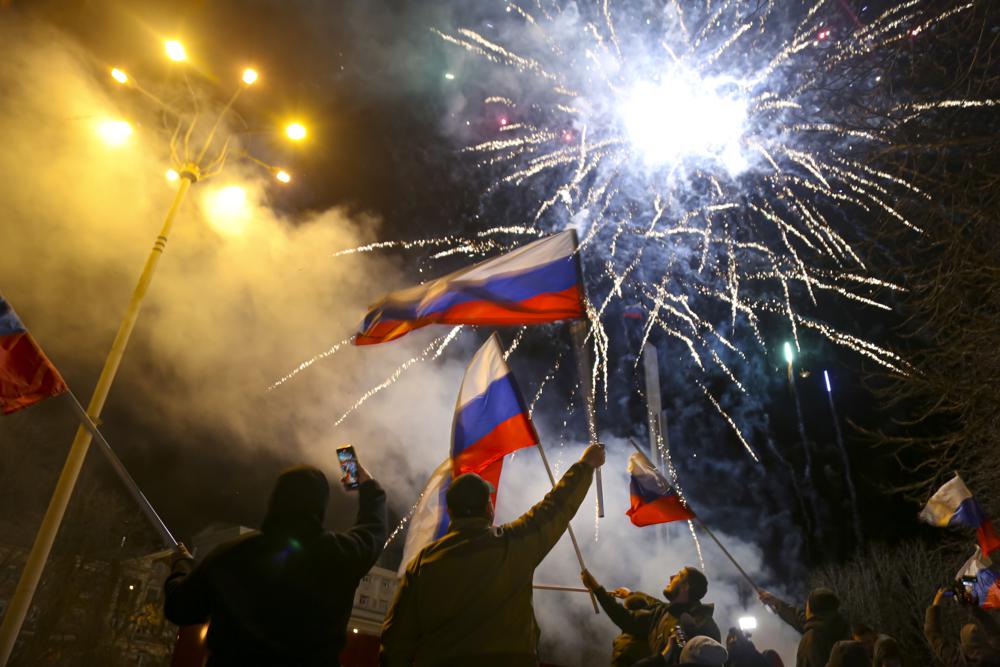
A long-feared Russian invasion of Ukraine appeared to be imminent Monday, if not already underway, with Russian President Vladimir Putin ordering forces into separatist regions of eastern Ukraine. A vaguely worded decree signed by Putin did not say if troops were on the move, and it cast the order as an effort to “maintain peace.” But it appeared to dash the slim remaining hopes of averting a major conflict in Europe that could cause massive casualties, energy shortages on the continent, and economic chaos around the globe. Putin’s directive came hours after he recognized the separatist areas in a rambling, fact-bending discourse on European history. The move paved the way to provide them military support, antagonizing Western leaders who regard such a move as a breach of world order and set off a frenzied scramble by the U.S. and others to respond. Underscoring the urgency, the U.N. Security Council set a rare nighttime emergency meeting on Monday at the request of Ukraine, the U.S., and other countries. Ukraine’s president, Volodymyr Zelenskyy, sought to project calm, telling the country: “We are not afraid of anyone or anything. We don’t owe anyone anything. And we won’t give anything to anyone.” The White House issued an executive order to prohibit U.S. investment and trade in the separatist regions, and additional measures — likely sanctions — were to be announced Tuesday. Those sanctions are independent of what Washington has prepared in the event of a Russian invasion, according to a senior administration official who briefed reporters on the condition of anonymity. The developments came amid a spike in skirmishes in the eastern regions that Western powers believe Russia could use as a pretext for an attack on the western-looking democracy that has defied Moscow’s attempts to pull it back into its orbit. Putin justified his decision in a far-reaching, pre-recorded speech blaming NATO for the current crisis and calling the U.S.-led alliance an existential threat to Russia. Sweeping through more than a century of history, he painted today’s Ukraine as a modern construct that is inextricably linked to Russia. He charged that Ukraine had inherited Russia’s historic lands and, after the Soviet collapse was used by the West to contain Russia. “I consider it necessary to take a long-overdue decision: To immediately recognize the independence and sovereignty of Donetsk People’s Republic and Luhansk People’s Republic,” Putin said. Afterward, he signed decrees recognizing the Donetsk and Luhansk regions’ independence, eight years after fighting erupted between Russia-backed separatists and Ukrainian forces, and called on lawmakers to approve measures paving the way for military support. Until now, Ukraine and the West have accused Russia of supporting the separatists, but Moscow has denied that, saying that Russians who fought there were volunteers. At an earlier meeting of Putin’s Security Council, a stream of top officials argued for recognizing the regions’ independence. At one point, one slipped up and said he favored including them as part of Russian territory — but Putin quickly corrected him. Recognizing the separatist regions’ independence is likely to be popular in Russia, where many share Putin’s worldview. Russian state media released images of people in Donetsk launching fireworks, waving large Russian flags, and playing Russia’s national anthem. Ukrainians in Kyiv, meanwhile, bristled at the move. “Why should Russia recognize (the rebel-held regions)? If neighbors come to you and say, ‘This room will be ours,’ would you care about their opinion or not? It’s your flat, and it will be always your flat,” said Maria Levchyshchyna, a 48-year-old painter in the Ukrainian capital. “Let them recognize whatever they want. But in my view, it can also provoke a war, because normal people will fight for their country.” With an estimated 150,000 Russian troops massed on three sides of Ukraine, the U.S. has warned that Moscow has already decided to invade. Still, Joe Biden and Putin tentatively agreed to a meeting brokered by French President Emmanuel Macron in a last-ditch effort to avoid war. If Russia moves in, the meeting will be off, but the prospect of a face-to-face summit resuscitated hopes in diplomacy to prevent a conflict that could cause massive casualties and huge economic damage across Europe, which is heavily dependent on Russian energy. Russia says it wants Western guarantees that NATO won’t allow Ukraine and other former Soviet countries to join as members — and Putin said Monday that a simple moratorium on Ukraine’s accession wouldn’t be enough. Moscow has also demanded the alliance halt weapons deployments to Ukraine and roll back its forces from Eastern Europe — demands flatly rejected by the West. Macron’s office said both leaders had “accepted the principle of such a summit,” to be followed by a broader meeting that would include other “relevant stakeholders to discuss security and strategic stability in Europe.” U.S. national security adviser Jake Sullivan, meanwhile, said the administration has always been ready to talk to avert a war — but was also prepared to respond to any attack. Putin’s announcement shattered a 2015 peace deal signed in Minsk requiring Ukrainian authorities to offer broad self-rule to the rebel regions, a major diplomatic coup for Moscow. That deal was resented by many in Ukraine who saw it as a capitulation, a blow to the country’s integrity, and a betrayal of national interests. Putin and other officials argued Monday that Ukrainian authorities have shown no appetite for implementing it. Over 14,000 people have been killed since the conflict erupted in the eastern industrial heartland in 2014, shortly after Moscow annexed Ukraine’s Crimean Peninsula. Potential flashpoints multiplied. Sustained shelling continued Monday along the tense line of contact separating the opposing forces. Unusually, Russia said it had fended off an “incursion” from Ukraine — which Ukrainian officials denied. And Russia decided to prolong military drills in Belarus, which could offer a staging ground for an attack on the Ukrainian capital, Kyiv. Ukraine and the separatist rebels have traded blame for massive cease-fire violations, with hundreds of explosions recorded daily. While separatists have charged that Ukrainian forces were firing on residential
Kamala Harris acknowledges ‘real possibility of war’ in Europe
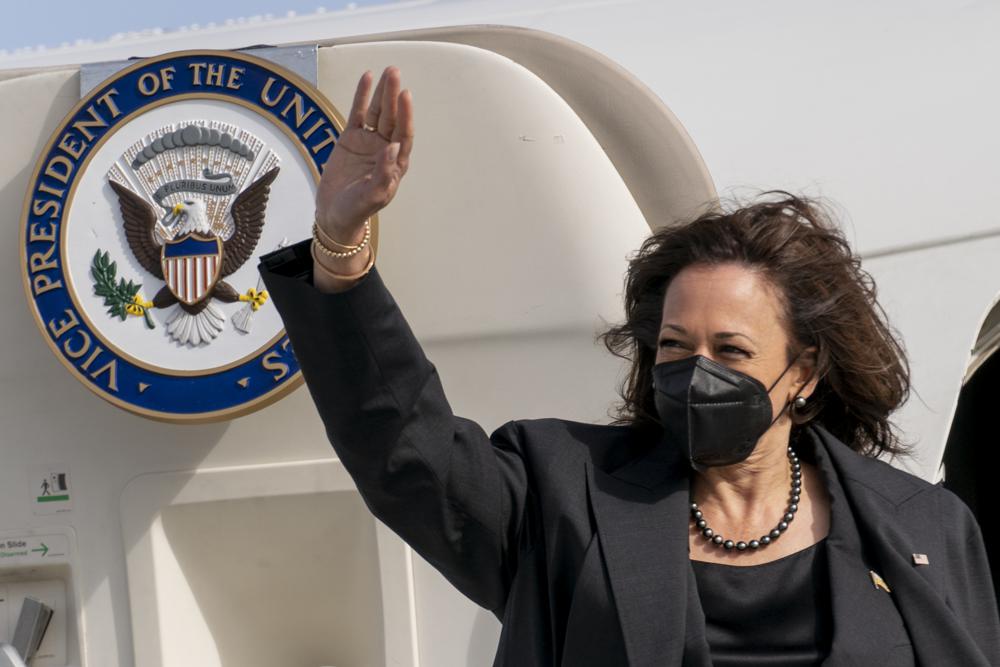
Acknowledging “the real possibility of war,” Vice President Kamala Harris wrapped up a weekend of outreach to European allies with a push to bolster the West’s resolve in confronting Moscow with crippling sanctions as increasingly dire signs suggest Russia’s Vladimir Putin plans to order an invasion of Ukraine. In a burst of diplomacy at the annual Munich Security Conference, Harris tried to make the case to American allies that rapidly escalating tensions on the Ukraine-Russian border meant European security was under “direct threat” and there should be unified support for economic penalties if the Kremlin invades its neighbor. “We’re talking about the potential for war in Europe. I mean, let’s really take a moment to understand the significance of what we’re talking about,” Harris told reporters before her return to Washington. Europe, she said, might be at its most perilous moment since the end of World War II. “It’s been over 70 years, and through those 70 years … there has been peace and security,” she said. “We are talking about the real possibility of war in Europe.” President Joe Biden was to meet with his national security team later Sunday in Washington to discuss the unfolding developments. Harris planned to participate while flying back from Germany. Before leaving Munich, Harris and her team briefed them about her meetings and exchanges at the conference. Biden is scheduled to hold a virtual meeting with Group of Seven leaders on Thursday to discuss Ukraine, and his top diplomat, Secretary of State Antony Blinken, intends to meet in Europe with Russian Foreign Minister Sergey Lavrov this coming week — talks that the American says will be scrapped if Moscow has invaded. In Ukraine, shelling on Sunday escalated in and around territory held by Russia-backed rebels, separatists evacuated thousands of women and children, and Putin oversaw tests of nuclear-capable missiles. Putin has massed more than 150,000 Russian forces at the border. During a series of choreographed meetings and a major address at the security conference, Harris told global leaders they were at a “defining” and “decisive” moment for the world. Harris met with President Volodymyr Zelenskyy of Ukraine, European Commission President Ursula von der Leyen, NATO Secretary-General Jens Stoltenberg, the leaders of the three Baltic nations, German Chancellor Olaf Scholz and Greek Prime Minister Kyriakos Mitsotakis. Biden sent Harris to Germany with straightforward marching orders to amplify his concern that a Russian invasion was highly likely and make clear to European allies that they must be ready to impose the toughest sanctions Moscow has ever seen. Harris told reporters that an invasion — and subsequent sanctions on Russia — would likely have costs for Americans, as well. “When America stands for principles, and all of the things that we hold dear, it requires sometimes for us to put ourselves out there in a way that maybe we will incur some cost,” Harris said. “In this situation, that may relate to energy costs.” The vice president’s appearance in Munich was largely overshadowed by Biden’s declaration from the White House late Friday that he was “convinced” that Putin had decided to invade. And her message of unity in Europe in the face of Russian aggression was overtaken by Zelenskyy. Soon after meeting with Harris on Saturday, he used his appearance at the conference to question why the U.S. and Europe were waiting to impose sanctions against Russia. “What are you waiting for?” Zelenskyy asked of Western leaders. He said the sanctions that targeted Russia after Ukraine’s economy collapses and “parts of our country will be occupied” would provide little comfort. Harris said she wouldn’t “second guess” Zelenskyy’s “desires for his country,” and she stood by the U.S. decision to hold off on preemptive sanctions. “The purpose of the sanctions has always been and continues to be deterrence,” she said. Blinken also told NBC’s “Meet the Press” that “as soon as you trigger the sanctions, of course, any deterrent effect they may have is gone, they get absorbed by President Putin, and he moves on.” Zelenskyy also repeated Ukraine’s desire to join NATO even as Putin demands guarantees from the U.S. and the alliance of that not ever happening. Harris, meantime, heard pleas to increase U.S. troop levels from Baltic leaders who worry their countries could be the next ones that Russia sets its eyes on. Lithuania’s president, Gitanas Nauseda, urged the U.S., which has bolstered its troop presence in the Baltics in recent weeks, to do even more and create a “permanent presence” in Lithuania. Currently, the U.S. deploys a small contingent of troops to the country on a rotational basis. Estonia’s prime minister, Kaja Kallas, echoed that call. “We have lost our independence to Russia once, and we don’t want it to happen again,” she said. Harris offered no promises, though she predicted in her address at the conference that the U.S. “will further reinforce our NATO Allies on the eastern flank” if Russia invades Ukraine. Republished with the permission of the Associated Press.
